
AIM OSCE / OSPE • FINAL YEAR MBBS
Station 02 — Vomiting Across the Lifespan: Pediatric Assessment & Pregnancy Counselling
GIT Module • Final Year MBBS
Rapid Revision • Clinical Skills • Practical Skills • Viva
🎯 Candidate Task
Assess an infant presenting with persistent vomiting, identify important warning signs, interpret the supplied investigations and outline initial management. Then assess and counsel a pregnant patient presenting with severe vomiting, including appropriate treatment, complications and follow-up advice.
⚡ Model Station Answer
Infant assessment: Establish age at onset, bilious versus non-bilious vomiting, projectile nature, feeding, urine output, weight gain and hydration.
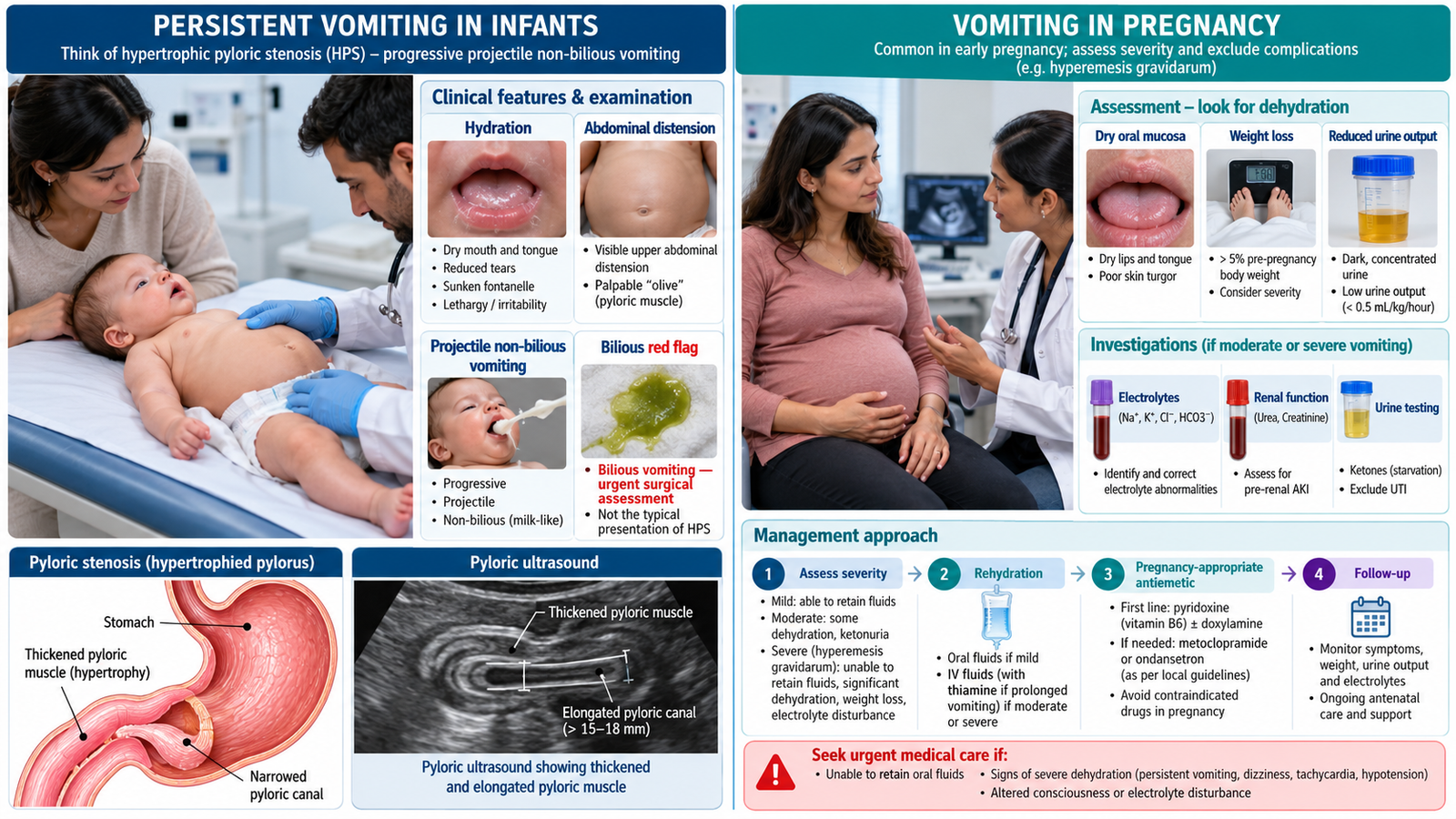
Warning signs: Green bilious vomiting, abdominal distension, shock, lethargy or blood-stained vomitus require urgent evaluation.
Interpretation and action: Ultrasound may identify pyloric stenosis; suspected obstruction requires urgent surgical assessment. Stabilize hydration and correct electrolyte abnormalities.
Pregnancy assessment: Severe persistent vomiting with dehydration, weight loss or electrolyte disturbance suggests hyperemesis gravidarum; assess for alternative causes.
Counselling: “We will assess your hydration, provide fluids and pregnancy-appropriate antiemetics if needed, and monitor your recovery. Please return urgently if you cannot retain fluids, pass very little urine or develop abdominal pain or bleeding.”
🔎 How to Perform / Approach
- Introduce and establish context: Confirm infant/caregiver or pregnant patient’s details, explain the assessment and obtain consent.
- Take focused vomiting history: In infants, ask about onset, frequency, color, projectile vomiting, feeds, stool passage, wet nappies and growth. In pregnancy, assess gestational age, frequency, oral intake, weight loss and associated symptoms.
- Assess severity and warning signs: Check vital signs, hydration, urine output and abdominal findings. Prioritize bilious vomiting in infants and severe dehydration or inability to tolerate oral intake in pregnancy.
- Interpret investigations: Review infant electrolytes and targeted abdominal ultrasound when pyloric stenosis is suspected; obstruction may require urgent imaging and surgical review. In pregnancy, review urine testing, electrolytes, renal function and obstetric assessment as indicated.
- Formulate the clinical conclusion: Differentiate feeding-related vomiting from pyloric stenosis or intestinal obstruction. In pregnancy, identify hyperemesis gravidarum and exclude other causes of severe vomiting.
- Initiate appropriate management: Correct dehydration and electrolyte deficits; refer infants with suspected obstruction urgently. For hyperemesis, use pregnancy-appropriate antiemetics, IV fluids when required and thiamine before dextrose if prolonged poor intake.
- Counsel and arrange follow-up: Explain hydration, tolerable small meals, medication use, warning symptoms and reassessment of vomiting, weight and hydration. Check understanding and invite questions.
🖼️ Visual Learning
Vomiting Across the Lifespan — Infant Red Flags & Hyperemesis Assessment
📝 Important Viva Questions
1. What is the significance of bilious vomiting in an infant?
Answer: It suggests intestinal obstruction, including possible malrotation with volvulus, and requires urgent surgical assessment.
2. What is the characteristic presentation and investigation for infantile hypertrophic pyloric stenosis?
Answer: Progressive projectile non-bilious vomiting in early infancy; abdominal ultrasound is the investigation of choice.
3. What electrolyte abnormality is classically associated with pyloric stenosis?
Answer: Hypochloremic, hypokalemic metabolic alkalosis due to repeated gastric acid loss.
4. Which findings suggest severe hyperemesis gravidarum?
Answer: Persistent vomiting with inability to maintain oral intake, dehydration, significant weight loss or electrolyte disturbance.
5. What are the important counselling and follow-up points in hyperemesis gravidarum?
Answer: Advise hydration, small tolerated meals, prescribed antiemetics and monitoring of symptoms, weight and hydration. Seek urgent review for inability to retain fluids, markedly reduced urine output or worsening symptoms.