
AIM OSCE / OSPE • FINAL YEAR MBBS
Station 08 — Pediatric Diarrhea & Malabsorption: Dehydration Assessment and Dietary Counselling
GIT Module • Final Year MBBS • Pediatrics
Rapid Revision • Clinical Skills • Practical Skills • Viva
🎯 Candidate Task
Assess a child presenting with acute watery diarrhea, demonstrate the clinical assessment and classification of dehydration, and explain the appropriate initial management. Review the supplied history and investigation findings of a child with chronic diarrhea, interpret the results and counsel the parent regarding dietary management and follow-up.
⚡ Model Station Answer
Acute diarrhea: Assess stool frequency, duration, vomiting, oral intake, urine output, fever, blood in stools and nutritional status.
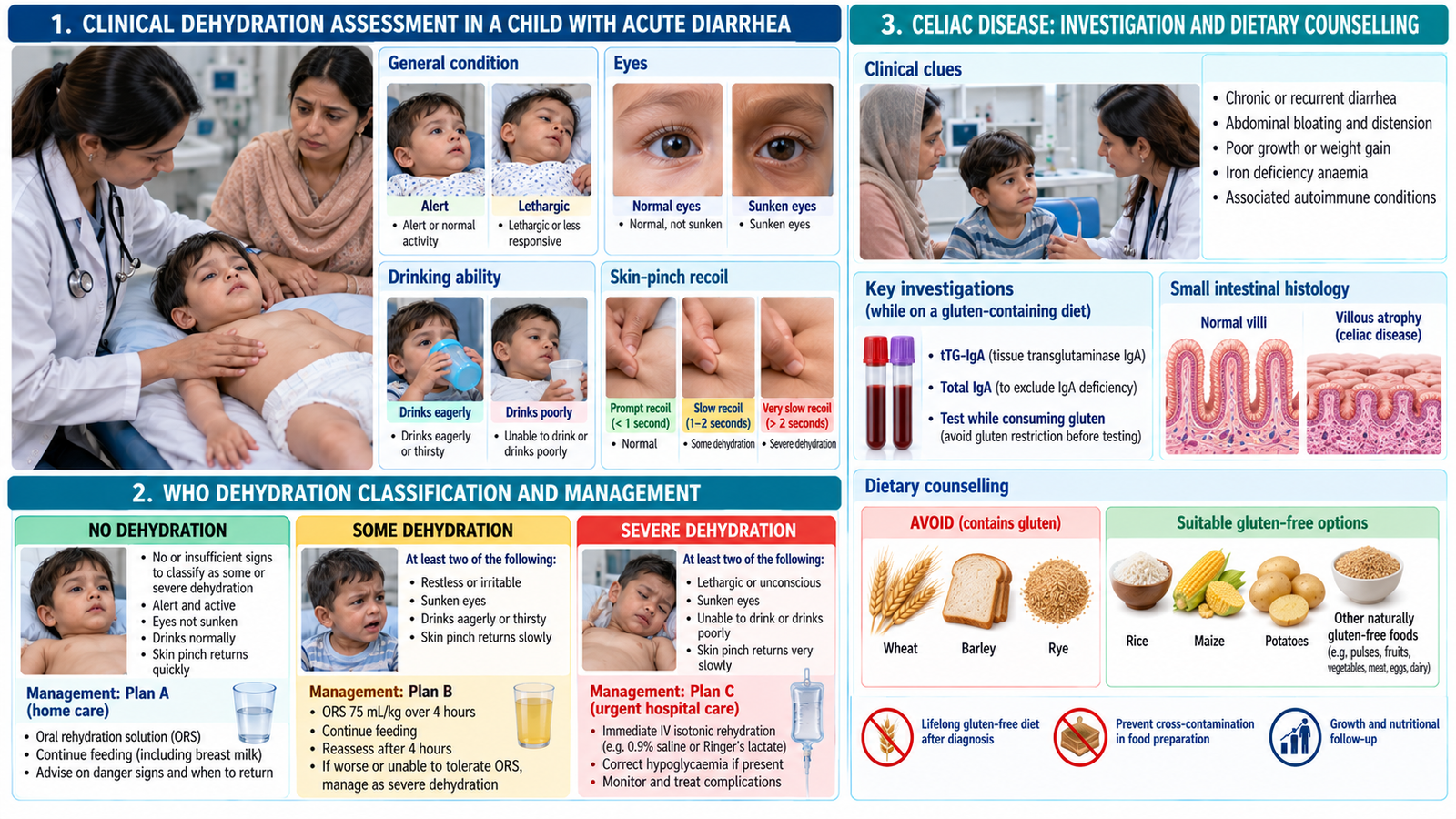
Dehydration: Assess general condition, sunken eyes, ability to drink and skin-pinch recoil. Classify as no dehydration, some dehydration or severe dehydration.
Initial management: Give ORS according to dehydration severity, continue age-appropriate feeding and breastfeeding, provide zinc supplementation and urgently escalate severe dehydration.
Chronic diarrhea: Assess growth faltering, abdominal distension, anemia and malabsorption. Positive tissue transglutaminase IgA with appropriate total IgA supports suspected celiac disease, requiring specialist-directed confirmation.
Parent counselling: “Once celiac disease is confirmed, your child will need a lifelong gluten-free diet, avoiding wheat, barley and rye. We will monitor growth, nutrition and improvement in symptoms.”
🔎 How to Perform / Approach
- Introduce and obtain consent: Confirm the child’s identity, explain the assessment to the caregiver, perform hand hygiene and assess the child’s general appearance and vital signs.
- Take a focused diarrhea history: Ask about duration, frequency, stool consistency, blood or mucus, vomiting, fever, feeding, urine output, weight changes and relevant exposures.
- Examine hydration status: Assess alertness or lethargy, sunken eyes, drinking behavior and abdominal skin-pinch recoil; also check perfusion, pulse and capillary refill when clinically indicated.
- Classify dehydration: Apply the WHO clinical classification. Some dehydration requires at least two relevant signs, while severe dehydration requires at least two severe signs. Recognize shock immediately.
- Initiate rehydration: No dehydration—home fluids and ORS after loose stools; some dehydration—ORS 75 mL/kg over 4 hours with reassessment; severe dehydration—urgent IV isotonic fluid rehydration and monitoring. Continue feeding and provide age-appropriate zinc.
- Evaluate chronic diarrhea and investigations: Assess growth, dietary history, abdominal distension and nutritional deficiencies. Interpret tTG-IgA alongside total IgA, consider IgG-based tests if IgA deficient, and arrange appropriate pediatric evaluation. Do not start a gluten-free diet before diagnostic testing is complete.
- Counsel the caregiver: Explain lifelong gluten avoidance after confirmation, safe foods such as rice and maize, label reading, avoidance of cross-contamination, nutritional support, growth monitoring and follow-up. Give clear dehydration danger signs and check understanding.
🖼️ Visual Learning
Pediatric Dehydration Examination, WHO Classification & Celiac Dietary Counselling
📝 Important Viva Questions
1. Which four clinical features are used in the WHO classification of dehydration in children?
Answer: General condition, sunken eyes, ability to drink and skin-pinch recoil.
2. What is the initial treatment of some dehydration in a child with acute diarrhea?
Answer: WHO Plan B: give ORS approximately 75 mL/kg over 4 hours, continue breastfeeding and reassess hydration.
3. What findings indicate severe dehydration?
Answer: At least two severe signs, such as lethargy or unconsciousness, sunken eyes, inability to drink or drinking poorly, and very slow skin-pinch recoil.
4. Which investigation is commonly used as the initial screening test for celiac disease in children?
Answer: Serum tissue transglutaminase IgA (tTG-IgA) together with total serum IgA, while the child continues consuming gluten.
5. What are the essential dietary and follow-up recommendations for confirmed celiac disease?
Answer: Lifelong avoidance of wheat, barley and rye, prevention of gluten cross-contamination, nutritional support and regular monitoring of growth, symptoms and dietary adherence.