
AIM OSCE / OSPE • FINAL YEAR MBBS
Station 3 — Nephrotic Syndrome / Renal Facial Swelling Focused Assessment
Renal Module • Medicine / Nephrology • Pediatrics
Rapid Revision • Clinical Skills • Practical Skills • Viva
🎯 Candidate Task
A child is brought with facial puffiness and swelling of the lower limbs. Take a focused history from the caregiver, demonstrate the relevant physical examination, and explain your likely clinical diagnosis and appropriate initial investigations to the examiner.
⚡ Model Station Answer
History: Ask about morning periorbital puffiness, dependent swelling, frothy urine, reduced urine output, hematuria and recent infection.
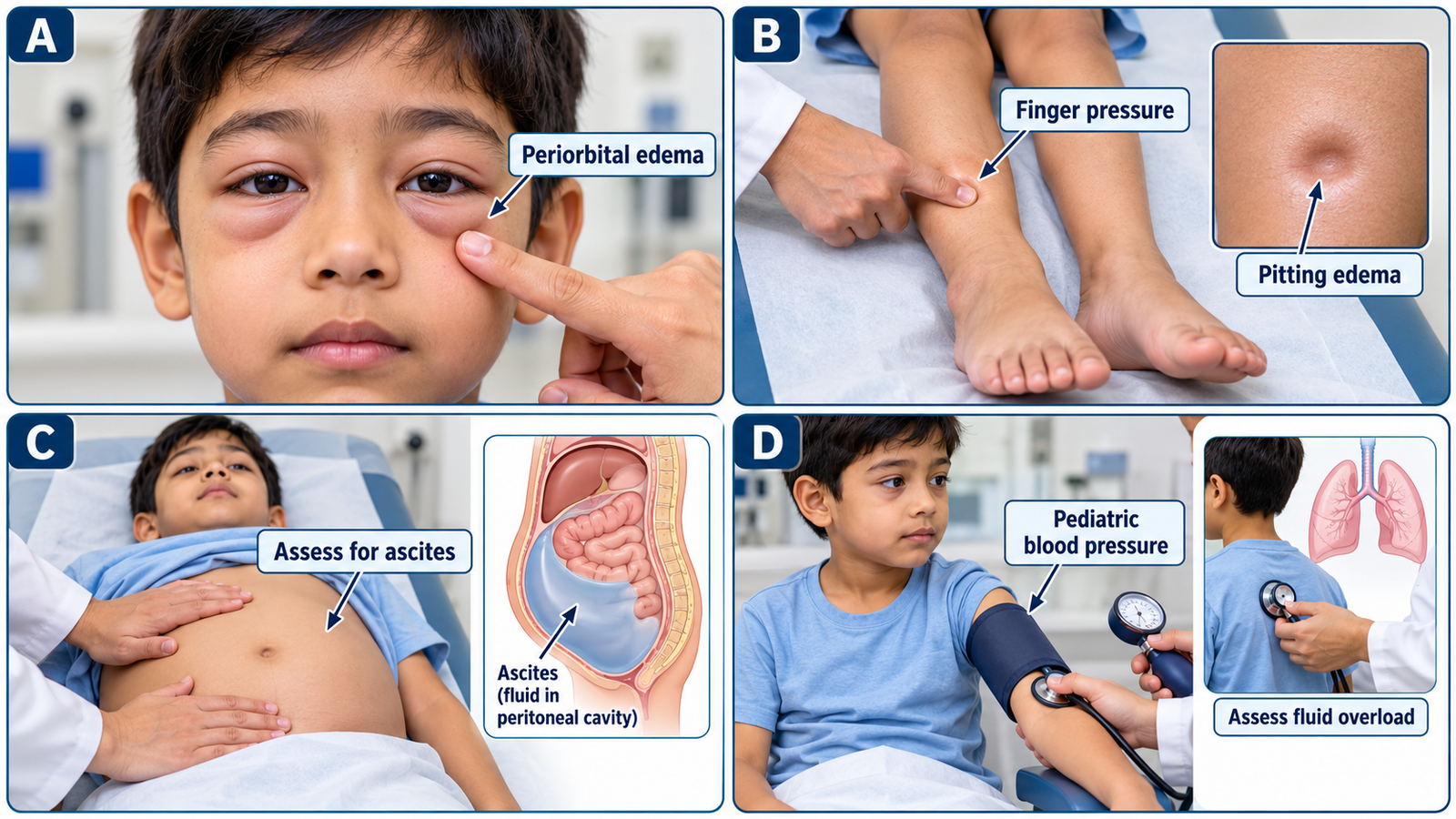
Examination: Assess periorbital and pitting edema, weight, blood pressure, ascites and signs of fluid overload.
Clinical interpretation: Generalized edema with frothy urine suggests nephrotic syndrome; hypertension, visible hematuria and oliguria raise suspicion of glomerulonephritis.
Investigations: Urine dipstick, urine protein/creatinine ratio, serum albumin, renal function and electrolytes.
Conclusion: Renal edema is suspected; nephrotic syndrome or a nephritic presentation should be differentiated using clinical findings and investigations.
🔎 How to Perform / Approach
- Introduce and obtain consent: Confirm the child’s identity, explain the assessment to the caregiver, perform hand hygiene and ensure appropriate exposure and comfort.
- Take a focused swelling history: Ask about onset, duration, morning facial puffiness, progression to legs or abdomen, variation during the day and recent weight gain.
- Ask about renal symptoms and relevant history: Frothy urine, oliguria, cola-colored urine, dysuria, recent throat/skin infection, previous similar episodes and family history of kidney disease.
- Perform general examination: Assess appearance, weight, vital signs and blood pressure using an appropriate cuff. Inspect the face for periorbital edema, especially around the eyelids.
- Examine for edema and fluid overload: Press over the tibia/ankle for pitting edema; assess sacral edema in a recumbent child, abdominal distension/ascites and respiratory signs of pleural effusion or pulmonary congestion.
- Differentiate the clinical patterns: Marked generalized edema with heavy proteinuria favors nephrotic syndrome. Hematuria, hypertension and reduced urine output favor a nephritic/glomerulonephritic presentation; overlap can occur.
- Complete with investigations: Request urinalysis, urine protein/creatinine ratio, serum albumin, creatinine, urea and electrolytes. Consider serum C3 and additional tests if glomerulonephritis is suspected.
🖼️ Visual Learning
Clinical Examination of Renal Edema in a Child
📝 Important Viva Questions
Q1. Why is periorbital edema prominent in renal disease?
Answer: Fluid accumulates readily in loose periorbital tissues, particularly after lying supine overnight.
Q2. What findings suggest nephrotic syndrome in a child?
Answer: Generalized edema with heavy proteinuria and hypoalbuminemia is characteristic; frothy urine may be reported.
Q3. Which clinical findings favor acute glomerulonephritis over uncomplicated nephrotic syndrome?
Answer: Cola-colored urine, hypertension and oliguria favor a nephritic presentation, although nephrotic and nephritic features may overlap.
Q4. How do you assess pitting edema clinically?
Answer: Apply finger pressure over the anterior tibia or ankle for several seconds and observe whether a temporary indentation remains.
Q5. Which investigations help confirm suspected childhood nephrotic syndrome?
Answer: Urine dipstick and protein/creatinine ratio establish proteinuria; serum albumin, renal function and electrolytes support assessment.