
AIM OSCE / OSPE • FINAL YEAR MBBS
Station 4 — Counselling Parents of a Child with Nephrotic Syndrome
Renal Module • Pediatrics
Rapid Revision • Clinical Skills • Practical Skills • Viva
🎯 Candidate Task
A child has recently been diagnosed with nephrotic syndrome. Counsel the parents regarding the condition, treatment, home care, follow-up, possible complications and recurrence, and address their concerns.
⚡ Model Station Answer
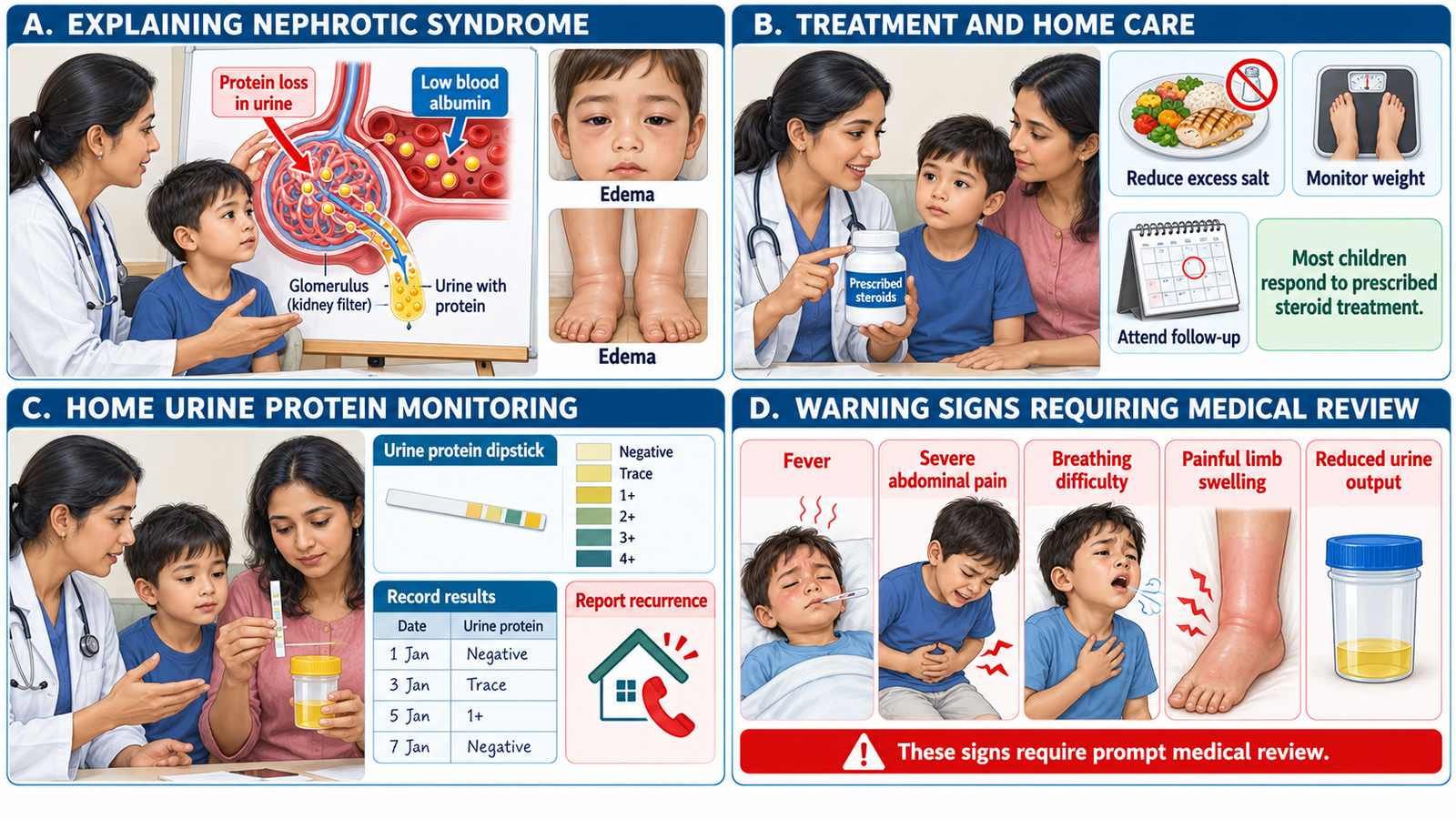
“I understand that your child’s swelling is worrying. Nephrotic syndrome means the kidneys are leaking too much protein into the urine, causing swelling around the eyes, legs or abdomen.
Most children respond well to steroid treatment. Please give the prescribed medicine regularly, reduce excess salt and attend follow-up visits.
We will monitor swelling, weight and urine protein. The condition can return, so you may be taught how to check urine protein at home.
Seek urgent medical advice for fever, severe abdominal pain, breathing difficulty, markedly reduced urine output or sudden painful limb swelling. What concerns would you like us to discuss?”
🔎 How to Perform / Approach
- Introduce and establish rapport: Greet the parents, confirm the child’s identity, ensure privacy and ask what they already understand about the diagnosis.
- Explain the condition simply: The kidneys lose excessive protein in urine, reducing blood albumin and contributing to fluid accumulation. Explain periorbital, pedal and abdominal swelling without unnecessary medical terminology.
- Discuss treatment: Explain that corticosteroids, commonly prednisolone, are the usual initial treatment for childhood idiopathic nephrotic syndrome. Emphasize following the prescribed schedule, avoiding abrupt discontinuation and reporting significant adverse effects.
- Explain home care: Advise reduced dietary salt during edema, appropriate nutrition and fluid intake according to the treating team’s advice. Monitor weight, swelling and urine protein if home testing has been recommended. Avoid unsupervised medicines, particularly NSAIDs.
- Explain recurrence and follow-up: Many children achieve remission but may experience relapses. Teach parents to recognize recurrent puffiness or persistent urine protein and attend scheduled pediatric reviews for urine protein, blood pressure, growth and treatment monitoring.
- Discuss complications and danger signs: Explain infection risk, significant fluid imbalance and thrombosis. Urgent assessment is needed for fever, severe abdominal pain, breathing difficulty, oliguria, sudden painful limb swelling or unusual lethargy.
- Check understanding and close: Invite questions, address concerns and ask the parents to repeat the key home-care and warning-sign instructions. Offer written guidance and clarify how to contact the treating team.
🖼️ Visual Learning
Parent Counselling in Childhood Nephrotic Syndrome — Treatment, Home Monitoring & Warning Signs
📝 Important Viva Questions
Q1. How would you explain nephrotic syndrome to parents in simple language?
Answer: The kidneys are leaking excessive protein into the urine, leading to low blood protein and swelling around the eyes, legs or abdomen.
Q2. What is the usual initial treatment for childhood idiopathic nephrotic syndrome?
Answer: Oral corticosteroid treatment, usually prednisolone, under pediatric supervision. Most children with typical steroid-sensitive disease respond well.
Q3. What important home-care advice should parents receive?
Answer: Ensure treatment adherence, reduce excess dietary salt during edema, monitor weight and swelling, record urine protein when instructed and attend regular follow-up.
Q4. What are the important complications of nephrotic syndrome that parents should recognize?
Answer: Serious infection, hypovolemia, thromboembolism and acute kidney injury. Fever, severe abdominal pain, breathing difficulty or painful limb swelling require urgent assessment.
Q5. What should parents do if nephrotic syndrome recurs?
Answer: Report recurrent edema or persistent urine protein to the treating team promptly. Follow the individualized relapse plan and do not independently restart or alter corticosteroid treatment.