
Station 7 — Ethics and Legal Aspects of Organ Transplantation
🎯 Candidate Task
Discuss the important ethical and legal considerations in organ donation and transplantation in the scenario provided. Explain how you would protect the donor and recipient, apply relevant transplantation ethics and identify potential weaknesses in the transplantation system.
⚡ Model Station Answer
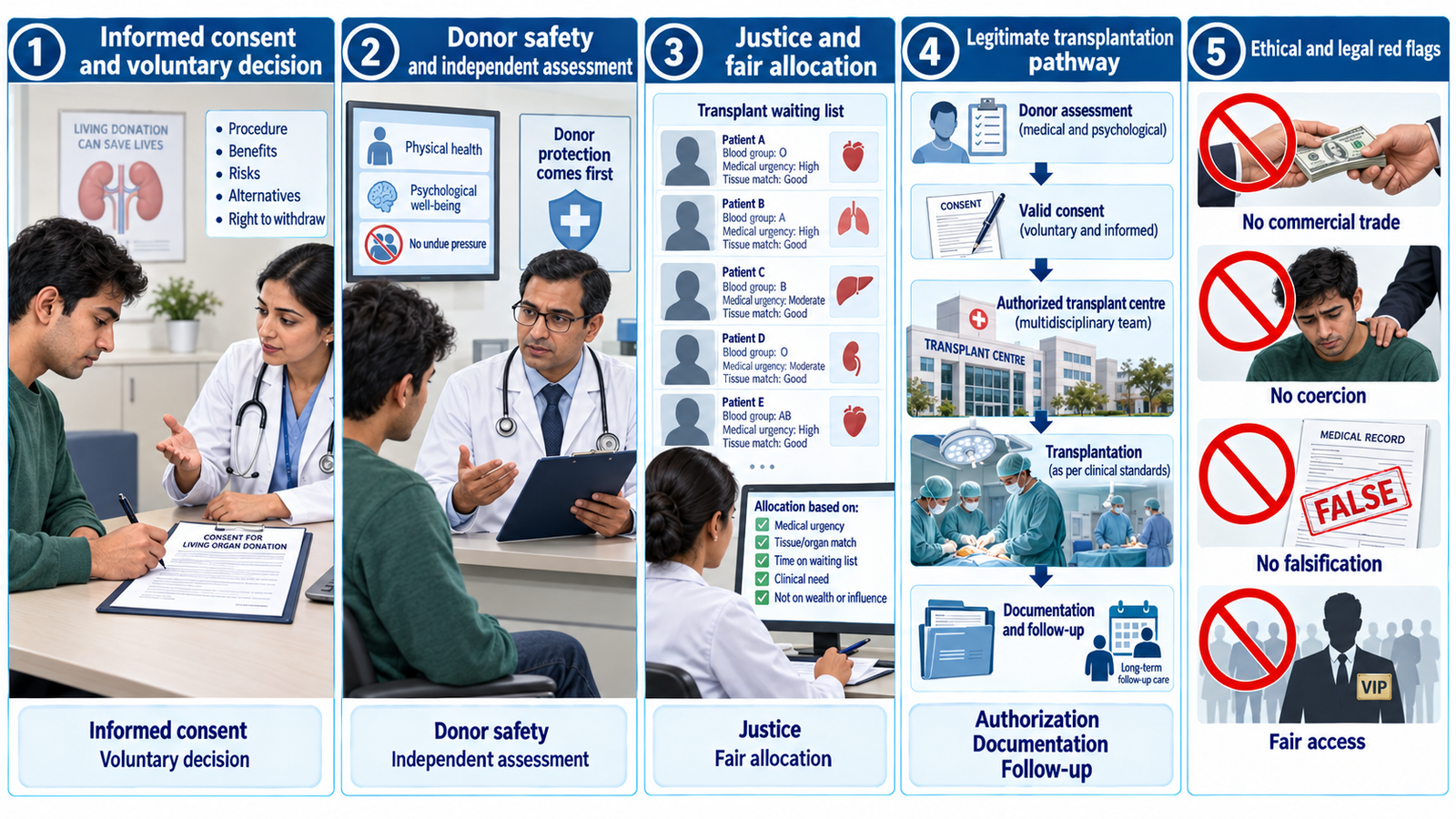
Ethical principles: I would apply autonomy, beneficence, non-maleficence and justice, with particular attention to voluntary informed consent and donor safety.
Donation: The donor should have decision-making capacity, understand the procedure and risks, and make the decision freely without coercion, undue influence or commercial inducement.
Allocation: Recipient selection and organ allocation should be fair, transparent and based on appropriate clinical criteria rather than financial or social influence.
Professional responsibility: Confidentiality, independent assessment, appropriate authorization and documentation should be maintained throughout the transplantation process.
System concerns: Important vulnerabilities include coercion, commercial exploitation, inadequate verification, unfair allocation and weak regulatory oversight.
🔎 How to Perform / Approach
- Identify the ethical issue: Determine whether the scenario concerns consent, donor safety, coercion, commercial donation, allocation or another transplantation-related concern.
- Assess autonomy: Confirm that the potential donor has capacity, adequate information and freedom to decide without pressure or inducement.
- Protect the donor: Consider physical and psychological risks, appropriate assessment and whether donation exposes the donor to unacceptable harm.
- Consider the recipient: Ensure that transplantation and organ allocation are based on appropriate clinical indications and fair criteria.
- Check professional safeguards: Maintain confidentiality, proper documentation, independent assessment and appropriate institutional or regulatory authorization.
- Look for red flags: Identify possible commercial exchange, coercion, falsified relationships or documentation, conflicts of interest, preferential allocation or inadequate oversight.
- State the legal position carefully: Apply the relevant HOTA provisions prescribed in the KMU curriculum without guessing statutory wording or section numbers.
🖼️ Visual Learning
Ethical Safeguards in Organ Donation and Transplantation
.
📝 Important Viva Questions
1. Which major ethical principles apply to organ transplantation?
Answer: The major principles are autonomy, beneficence, non-maleficence and justice, applied particularly to consent, donor safety and fair allocation.
2. What makes consent for living organ donation ethically valid?
Answer: The donor should have capacity, receive adequate information, understand the risks and alternatives, and decide voluntarily without coercion or undue influence.
3. Why is commercial organ donation ethically problematic?
Answer: It creates a risk of exploitation and coercion, particularly of vulnerable persons, and can undermine voluntary donation and equitable access.
4. How does the principle of justice apply to organ transplantation?
Answer: Organs should be allocated using fair and transparent clinical criteria without inappropriate discrimination, financial influence or preferential treatment.
5. What potential weaknesses should you look for in an organ-transplantation system?
Answer: Important concerns include coercion, commercial exploitation, inadequate donor verification, falsified documentation, unfair allocation and insufficient regulatory oversight.