FINAL YEAR MBBS | KMU CURRICULUM | AIM CLINICAL LEARNING
🩺 AIM LONG CASE 05
Systemic Vasculitis — Multisystem Clinical Assessment
MS Module — Final Year MBBS
Related AIM Topic 9: Systemic Vasculitides in Adults & Children
An integrated clinical approach to constitutional symptoms, skin lesions, respiratory disease, renal involvement and peripheral neuropathy.
1. Patient Scenario
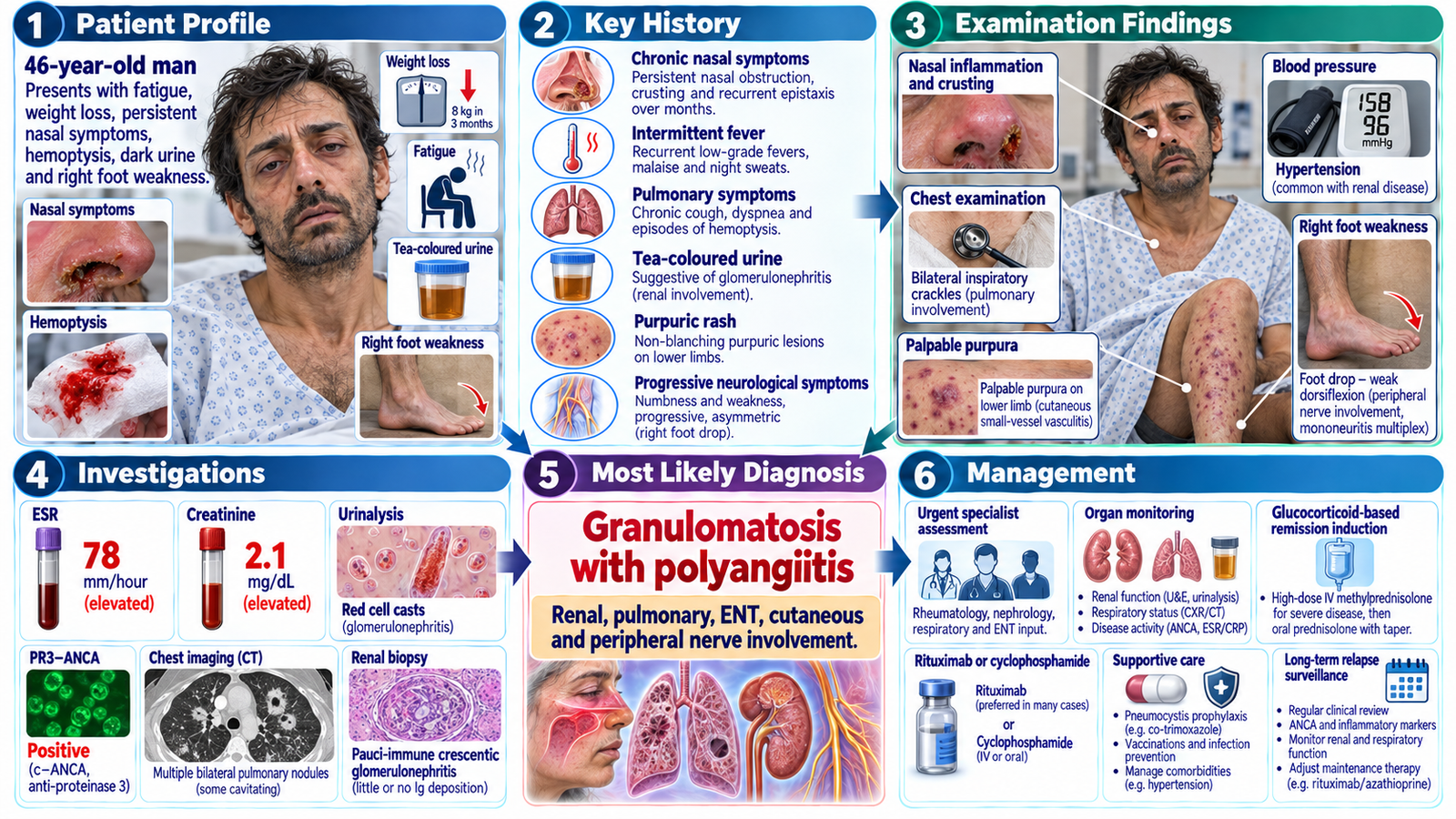
A 46-year-old man, a schoolteacher, presents to the medical outpatient department with fatigue, intermittent fever, weight loss and persistent nasal symptoms for three months. During the past three weeks, he has developed cough, occasional blood-streaked sputum and dark-coloured urine.
He also reports increasing numbness and weakness in his right foot, which is affecting his walking.
He has received several courses of antibiotics for presumed sinusitis without sustained improvement.
2. Student Task
The student is expected to take a focused multisystem history, perform relevant general and systemic examinations, identify evidence of vascular inflammation, formulate appropriate differential diagnoses, interpret inflammatory, autoimmune and organ-specific investigations, and discuss diagnosis, severity, management, complications and long-term follow-up.
3. Relevant History
Presenting illness and constitutional symptoms
The patient describes intermittent low-grade fever, reduced appetite, fatigue and approximately 5 kg unintentional weight loss over three months. These symptoms suggest a chronic systemic inflammatory process, although infection and malignancy must also be considered.
Upper respiratory tract symptoms
He has persistent nasal obstruction, crusting, occasional blood-stained nasal discharge and facial discomfort. The symptoms have not resolved despite antibiotics.
Clinical significance: Persistent destructive or inflammatory sinonasal symptoms can indicate upper airway involvement in granulomatosis with polyangiitis rather than uncomplicated bacterial sinusitis.
Pulmonary symptoms
He reports a persistent cough, occasional blood-streaked sputum and mild exertional breathlessness. There is no history of known tuberculosis exposure or prolonged productive cough.
Clinical significance: Pulmonary inflammation, nodules or alveolar hemorrhage may occur in systemic small-vessel vasculitis. Infection, including tuberculosis, remains an important differential.
Renal and urinary symptoms
He has noticed dark, tea-coloured urine for two weeks. There is no dysuria, loin pain or history of renal stones. He has not noticed marked reduction in urine output.
Clinical significance: Dark urine without urinary tract symptoms raises concern for glomerular hematuria. Significant glomerulonephritis may occur without pain or early urinary symptoms.
Skin and neurological symptoms
He describes a recent non-itchy reddish-purple rash over both lower legs. He also reports numbness over the dorsum of the right foot and difficulty lifting the foot while walking.
Clinical significance: Palpable purpura suggests small-vessel skin inflammation. Asymmetric neurological deficits may indicate vasculitic peripheral neuropathy.
Additional focused history
- Eye symptoms: Ask about painful red eyes, visual blurring or loss of vision, suggesting potentially serious ocular inflammation.
- Ear symptoms: Ask about persistent otitis, hearing impairment or ear discharge.
- Joint symptoms: Ask about arthralgia, swelling and morning stiffness.
- Gastrointestinal symptoms: Ask about abdominal pain or bleeding, which may indicate other forms of systemic vasculitis.
- Drug history: Ask about recent medications associated with drug-induced vasculitis.
- Past and family history: Ask about autoimmune disease, recurrent infections and previous renal disease.
- Social history: Assess smoking, occupational exposures, functional limitation and support at home.
4. Physical Examination
General examination
The patient appears tired and mildly pale. He is alert and oriented.
- Temperature: 37.8°C
- Blood pressure: 148/92 mmHg
- Pulse: 96/min, regular
- Respiratory rate: 20/min
- Oxygen saturation: 96% on room air
Elevated blood pressure and pallor may accompany renal involvement and systemic inflammation.
Skin examination
Multiple non-blanching, slightly raised purpuric lesions are present over both lower legs. There are no large necrotic ulcers.
Interpretation: Palpable purpura supports cutaneous small-vessel vasculitis but is not specific for one disease.
ENT examination
The nasal mucosa is inflamed with crusting and minor bleeding. There is no established saddle-nose deformity.
Interpretation: Chronic inflammatory nasal disease is an important clue to granulomatosis with polyangiitis.
Respiratory examination
Scattered bilateral crackles are audible. There is no marked respiratory distress or cyanosis.
Interpretation: Pulmonary involvement is possible, but chest imaging is needed to characterize the abnormality.
Renal and cardiovascular examination
There is no renal angle tenderness, marked peripheral edema or clinical evidence of heart failure. Blood pressure is elevated.
Interpretation: Absence of edema does not exclude clinically significant glomerulonephritis.
Neurological examination
Right ankle dorsiflexion is reduced to Medical Research Council grade 3/5. Sensation is diminished over the dorsum of the right foot, with preserved higher mental functions and no upper motor neuron signs.
Interpretation: An asymmetric peripheral nerve deficit raises suspicion of vasculitic neuropathy, although local common peroneal nerve compression must also be considered.
5. Clinical Problem Representation
A 46-year-old man presents with a three-month history of systemic inflammation, persistent nasal disease, pulmonary symptoms, glomerular-type hematuria, palpable purpura and asymmetric peripheral nerve dysfunction, with elevated blood pressure.
Main clinical problem: Progressive multisystem inflammatory disease strongly suggestive of systemic small-vessel vasculitis, with potentially organ-threatening renal and pulmonary involvement.
6. Differential Diagnosis
| Diagnosis | Supporting findings | Distinguishing features |
|---|---|---|
| Granulomatosis with polyangiitis | Chronic ENT disease, lung involvement, glomerulonephritis, purpura | PR3-ANCA and compatible tissue biopsy support diagnosis |
| Microscopic polyangiitis | Renal disease, pulmonary hemorrhage, purpura, neuropathy | Destructive granulomatous ENT disease is less typical |
| Polyarteritis nodosa | Constitutional symptoms, neuropathy, skin disease, hypertension | Typically medium-vessel disease without glomerulonephritis |
| Systemic lupus erythematosus | Multisystem disease, rash and renal inflammation | Autoimmune serology and other characteristic lupus findings help distinguish it |
| Infection, including tuberculosis | Fever, weight loss, cough and pulmonary lesions | Microbiological assessment and the renal/ENT pattern help differentiate infection |
Clinical reasoning: The combination of persistent upper airway inflammation, pulmonary abnormalities and glomerular disease particularly favors granulomatosis with polyangiitis.
7. Investigations and Interpretation
Investigations should establish systemic inflammation, identify affected organs, assess severity and support the diagnosis while excluding important mimics.
Initial investigations
- Complete blood count: Hemoglobin 10.5 g/dL with a normocytic pattern; white blood cells 12,000/µL. This is compatible with inflammation-associated anemia and inflammatory leukocytosis.
- ESR and CRP: ESR 78 mm/hour and elevated CRP. These support active inflammation but are not specific for vasculitis.
- Renal function: Creatinine 2.1 mg/dL, with no documented previous baseline. This indicates impaired renal function requiring urgent evaluation.
- Urinalysis: Blood 3+, protein 2+, numerous red cells and red cell casts. This strongly suggests glomerulonephritis.
- Urine protein quantification: Used to assess the extent of proteinuria and provide a baseline for monitoring.
Autoimmune and diagnostic investigations
- ANCA testing: PR3-ANCA is positive. This supports granulomatosis with polyangiitis in the appropriate clinical setting but does not independently establish the diagnosis.
- ANA and complement levels: Help evaluate alternative immune-mediated diseases, particularly lupus and immune-complex glomerulonephritis.
- Renal biopsy: Demonstrates pauci-immune necrotizing crescentic glomerulonephritis, supporting ANCA-associated vasculitis.
- Skin biopsy: May demonstrate leukocytoclastic vasculitis, confirming small-vessel inflammation but not necessarily identifying the underlying systemic disease.
Organ-specific assessment
- Chest X-ray: Shows bilateral patchy pulmonary opacities.
- Chest CT: Demonstrates multiple pulmonary nodules, some with cavitation, consistent with possible granulomatous pulmonary disease. Infection must be excluded.
- ENT assessment: Evaluates persistent sinonasal inflammation and possible tissue damage.
- Neurological assessment: Clinical findings suggest asymmetric peripheral neuropathy; nerve conduction studies may be considered to define the deficit.
- Infection assessment: Appropriate respiratory microbiology, including tuberculosis testing when indicated, is important before immunosuppressive treatment.
8. Final Diagnosis
Granulomatosis with polyangiitis (GPA), an ANCA-associated small-vessel vasculitis, with renal, pulmonary, upper respiratory tract, cutaneous and peripheral neurological involvement.
The patient has organ-threatening disease because of glomerulonephritis with impaired renal function and significant pulmonary involvement. The presentation requires urgent specialist-led management.
9. Management
A. Immediate priorities
Arrange urgent hospital assessment and rheumatology/nephrology involvement because of impaired renal function and potential progression to rapidly progressive glomerulonephritis. Assess respiratory stability, oxygenation, urine output and the presence of active pulmonary hemorrhage.
B. Supportive management
- Monitor blood pressure, fluid balance and renal function.
- Provide appropriate nutritional and general supportive care.
- Avoid nephrotoxic drugs, including unnecessary NSAIDs.
- Assess and manage infection risks before immunosuppression.
- Support mobility and rehabilitation for foot weakness.
C. Specific treatment
Organ-threatening GPA requires remission-induction treatment under specialist supervision, generally involving glucocorticoids combined with rituximab or cyclophosphamide.
The choice depends on disease severity, comorbidities, treatment risks and specialist assessment. Following remission, maintenance immunosuppression is used to reduce relapse risk.
D. Treatment-related precautions
- Screen for relevant infections before immunosuppressive therapy.
- Monitor for cytopenias, infections and drug-specific toxicity.
- Consider appropriate infection prophylaxis and vaccination planning.
- Discuss fertility implications if cyclophosphamide is considered.
- Address bone protection and metabolic effects during prolonged glucocorticoid treatment.
E. Monitoring response
Follow symptoms, blood pressure, urine output, serum creatinine, urine protein and hematuria, inflammatory markers and pulmonary findings. Clinical improvement and organ-function trends are more important than ANCA titres alone.
F. Long-term follow-up
Arrange regular specialist follow-up to monitor remission, detect relapse, assess residual renal or neurological impairment and identify adverse effects of treatment.
10. Complications and Red Flags
Important complications include rapidly progressive glomerulonephritis, chronic kidney disease, pulmonary hemorrhage, persistent pulmonary damage, upper airway injury, peripheral nerve dysfunction, ocular inflammation and treatment-related infections.
- Increasing hemoptysis, severe breathlessness or falling oxygen saturation — possible pulmonary hemorrhage.
- Rapidly rising creatinine or reduced urine output — possible rapidly progressive renal injury.
- Sudden visual impairment or severe painful red eye — possible sight-threatening ocular involvement.
- Stridor or progressive breathing difficulty — possible upper airway compromise.
- High fever or clinical deterioration during immunosuppression — possible serious infection.
These findings require prompt reassessment and escalation of care.
11. Patient Counselling and Follow-Up
Explain that systemic vasculitis involves inflammation of blood vessels and may affect multiple organs, including the kidneys and lungs. The condition can be serious, but appropriate treatment can control inflammation and reduce further organ damage.
- Emphasize adherence to prescribed immunosuppressive treatment and scheduled monitoring.
- Explain that treatment should not be stopped independently, even when symptoms improve.
- Discuss infection precautions and the importance of promptly reporting fever.
- Advise urgent review for worsening breathlessness, blood in sputum, reduced urine output or visual symptoms.
- Explain the possibility of relapse and the need for long-term follow-up.
- Discuss treatment adverse effects, vaccination planning and fertility concerns when relevant.
- Address the patient’s ability to work, mobility difficulties and emotional concerns.
Prognosis: Early diagnosis and effective treatment improve outcomes. Long-term prognosis depends particularly on the severity of organ involvement, treatment response and relapse prevention.
12. Long Case Presentation to the Examiner
“I examined a 46-year-old man presenting with three months of constitutional symptoms, persistent nasal inflammation, cough with occasional hemoptysis, dark urine and progressive right foot weakness. Examination revealed elevated blood pressure, palpable purpura, nasal crusting, pulmonary crackles and an asymmetric peripheral neurological deficit.”
“The combination of upper respiratory, pulmonary, renal, cutaneous and neurological involvement suggests systemic small-vessel vasculitis, most likely granulomatosis with polyangiitis. Investigations demonstrate inflammatory markers, PR3-ANCA positivity, active glomerular urinary sediment, impaired renal function and pulmonary nodules. Renal biopsy supports pauci-immune crescentic glomerulonephritis. This is organ-threatening disease requiring urgent specialist-directed remission induction and close monitoring.”
13. Examiner Discussion / Viva Preparation
Q1. What is the most likely diagnosis, and which findings support it?
Granulomatosis with polyangiitis. Persistent sinonasal inflammation, pulmonary nodules, glomerulonephritis, palpable purpura and PR3-ANCA positivity support the diagnosis.
Q2. How are systemic vasculitides classified by vessel size?
Large-vessel vasculitis includes giant cell arteritis and Takayasu arteritis; medium-vessel vasculitis includes polyarteritis nodosa and Kawasaki disease; small-vessel vasculitis includes GPA, microscopic polyangiitis and IgA vasculitis.
Q3. How does GPA differ from polyarteritis nodosa?
GPA commonly affects the upper respiratory tract, lungs and glomeruli. Polyarteritis nodosa predominantly affects medium-sized arteries and generally does not produce glomerulonephritis or pulmonary capillaritis.
Q4. What is the significance of red cell casts in this patient?
Red cell casts indicate bleeding within renal tubules, strongly suggesting glomerular inflammation in this clinical setting.
Q5. Does a positive ANCA test alone establish the diagnosis?
No. ANCA supports the diagnosis when clinical findings are compatible. Organ assessment, exclusion of mimics and tissue biopsy where appropriate remain important.
Q6. What are the main treatment principles in organ-threatening GPA?
Urgent specialist assessment, remission induction with glucocorticoids and rituximab or cyclophosphamide, supportive organ care, prevention of treatment complications and subsequent maintenance therapy.
Q7. Which complications require urgent recognition?
Rapidly progressive glomerulonephritis, diffuse alveolar hemorrhage, airway compromise, serious ocular disease and severe infection during immunosuppression.
Q8. How is relapse monitored?
Through clinical assessment, renal function, urinalysis, inflammatory markers and relevant organ-specific evaluation. ANCA levels may contribute to assessment but should not independently determine treatment changes.
14. AIM Long Case — High-Yield Review
- Consider systemic vasculitis when constitutional symptoms occur with unexplained multisystem organ involvement.
- Persistent nasal crusting, pulmonary disease and glomerulonephritis strongly suggest GPA.
- Palpable purpura is an important clue to small-vessel inflammation.
- Asymmetric peripheral neuropathy may result from vasculitic nerve ischemia.
- Urinalysis is essential because significant renal involvement may be clinically silent.
- Red cell casts with impaired renal function suggest active glomerulonephritis.
- PR3-ANCA supports GPA but is not diagnostic in isolation.
- Renal biopsy may demonstrate pauci-immune necrotizing crescentic glomerulonephritis.
- Exclude important infections and other mimics before immunosuppressive treatment.
- Renal deterioration and pulmonary hemorrhage are major organ-threatening complications.
- Organ-threatening GPA requires specialist-led remission induction and subsequent maintenance treatment.
- Long-term clinical monitoring is essential because relapse and treatment toxicity can occur.
15. AIM Long Case Visual — Whole-Patient Summary