
Station 01 — Chest Pain History & Focused Cardiovascular Assessment
🎯 Candidate Task
A patient presents with chest pain. Take a focused history, assess relevant cardiovascular risk factors, and explain the focused cardiovascular examination you would perform. At the end, state the important features you would use to identify possible ischemic heart disease, recognize urgent red flags, and outline your initial diagnostic and management approach.
⚡ Model Station Answer
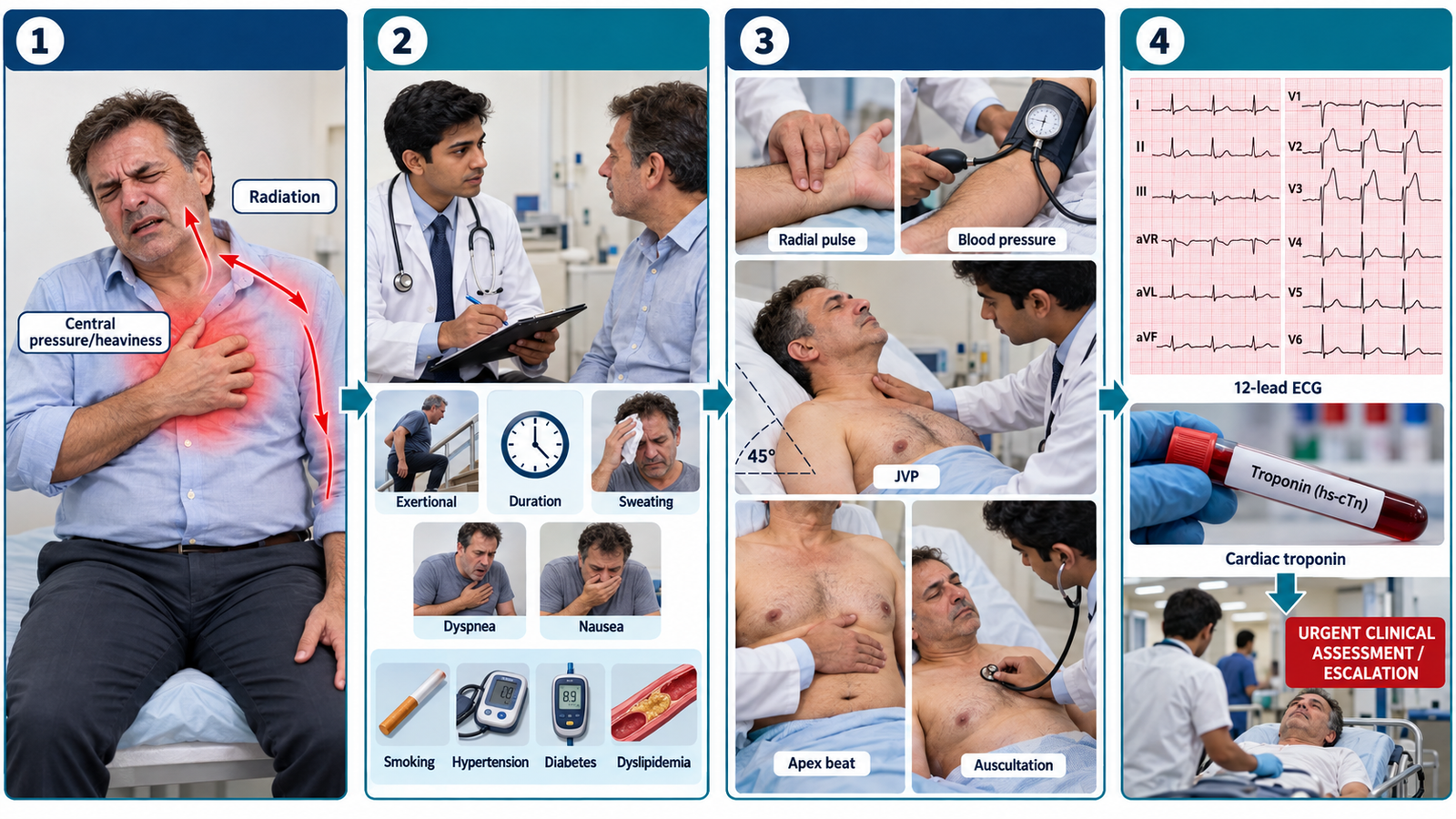
- History: I would characterize the pain by site, onset, character, radiation, duration, severity, precipitating and relieving factors, particularly exertional pain or pain radiating to the arm, shoulder or jaw.
- Associated features: I would ask about dyspnea, sweating, nausea/vomiting, palpitations and syncope, and assess cardiovascular risk factors including hypertension, diabetes, smoking, dyslipidemia, family history and previous cardiovascular disease.
- Examination: I would assess the patient’s general condition and hemodynamic stability, pulse and blood pressure, then perform a focused cardiovascular examination including JVP, precordial palpation and cardiac auscultation, looking for evidence of heart failure or complications.
- Interpretation: Central pressure/heaviness precipitated by exertion and possibly radiating to the arm or jaw suggests myocardial ischemia; prolonged or ongoing pain with autonomic symptoms raises concern for acute coronary syndrome.
- Immediate approach: If ACS is suspected, I would urgently assess ABCs and vital signs, obtain a 12-lead ECG promptly, arrange cardiac troponin testing, institute appropriate initial ACS care and escalate urgently.
🔎 How to Perform / Approach
- Introduce & establish safety: Introduce yourself, confirm the patient, obtain consent and first assess whether the patient appears acutely unwell or unstable.
- Characterize the chest pain: Ask about site, onset, character, radiation, duration, severity, progression, precipitating factors and relieving factors. Specifically establish any relationship to exertion and rest.
- Ask associated symptoms & red flags: Ask about dyspnea, diaphoresis, nausea/vomiting, palpitations, syncope or presyncope. Ongoing severe chest pain, hemodynamic instability, syncope or significant breathlessness requires urgent assessment.
- Assess cardiovascular risk: Ask about smoking, hypertension, diabetes mellitus, dyslipidemia, obesity, previous IHD/MI, relevant medications and family history of premature cardiovascular disease.
- Perform focused cardiovascular assessment: Assess general appearance, pulse, blood pressure and peripheral perfusion; examine the JVP; inspect and palpate the precordium including the apex beat; auscultate the heart for abnormal sounds or murmurs; look for clinical evidence of heart failure.
- Interpret clinically: Decide whether the presentation is compatible with ischemic chest pain and whether it represents a potentially acute or unstable presentation rather than a stable pattern.
- State the next step: In suspected ACS, prioritize urgent ECG and cardiac biomarkers with monitoring, appropriate initial treatment and escalation. Do not delay urgent care for a prolonged routine assessment in an unstable patient.
🖼️ Visual Learning
Chest Pain History & Focused Cardiovascular Assessment
📝 Important Viva Questions
Retrosternal pressure or heaviness, typically precipitated by exertion or emotional stress and possibly radiating to the arm, shoulder or jaw, is characteristic. Relief with rest is particularly supportive of stable angina.
Dyspnea, diaphoresis, nausea or vomiting, syncope and persistent severe chest discomfort increase concern, especially in a high-risk patient.
Smoking, hypertension, diabetes mellitus, dyslipidemia, obesity, previous cardiovascular disease and a relevant family history are important risk factors.
A 12-lead ECG and cardiac troponin are key initial investigations, interpreted alongside the clinical presentation and repeated when clinically indicated.
Stop routine assessment, call for urgent senior/emergency assistance, assess ABCs, monitor the patient and initiate appropriate immediate management without delay.