
Station 13 — Hypertension History, Examination & Counselling
🎯 Candidate Task
Take a focused history and perform an appropriate clinical assessment of this patient with elevated blood pressure. Assess cardiovascular risk and possible target-organ involvement, then counsel the patient regarding hypertension, treatment adherence, prevention and follow-up.
⚡ Model Station Answer
Assessment: I would confirm that blood pressure has been measured correctly and assess the patient for cardiovascular risk factors, symptoms of secondary causes where relevant, and evidence of target-organ involvement.
Examination: I would perform an appropriate general and cardiovascular examination, including pulse, repeated blood-pressure assessment and examination for cardiac, vascular and other signs of end-organ disease.
Red flags: Severe hypertension associated with acute neurological, cardiac, renal or visual symptoms would require urgent assessment and appropriate referral.
Counselling: I would explain that hypertension can damage organs even when the patient feels well, discuss risk-factor modification and treatment adherence, and emphasize regular blood-pressure monitoring, follow-up and specialist referral when indicated.
🔎 How to Perform / Approach
- Focused history: Ask about previous elevated readings, duration of hypertension, current treatment and adherence, and symptoms such as headache, visual disturbance, chest pain, breathlessness, palpitations or neurological symptoms.
- Assess cardiovascular risk: Ask about diabetes, dyslipidemia, smoking, obesity, diet, physical activity, family history and established cardiovascular disease.
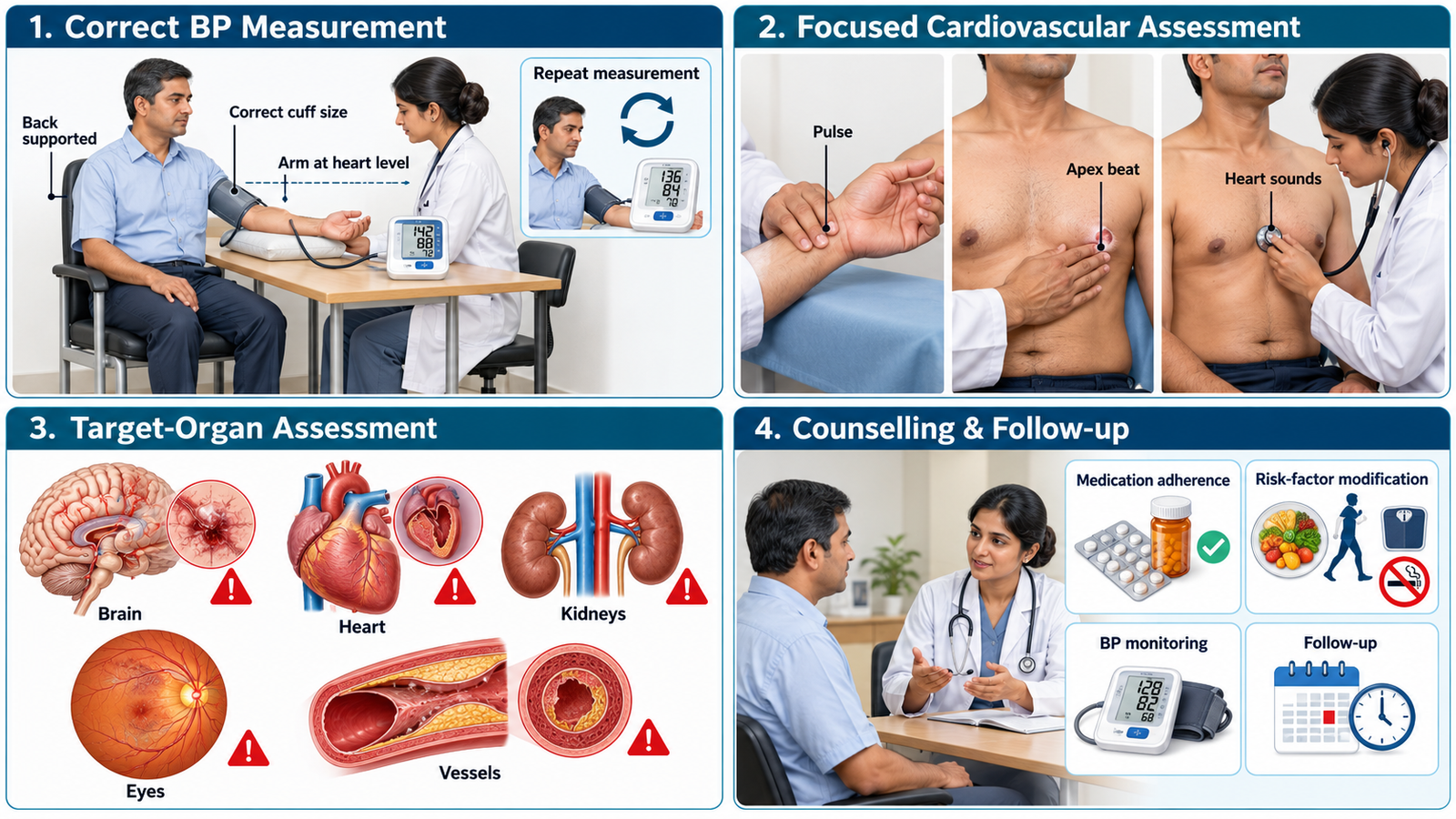
- Measure blood pressure correctly: Ensure the patient is appropriately positioned with the back supported, feet resting, arm supported at heart level and an appropriately sized upper-arm cuff. Obtain appropriate repeat measurements rather than relying on one isolated reading.
- General examination: Assess pulse, body habitus and other relevant general findings, while looking for clinical evidence that may suggest complications or target-organ involvement.
- Focused cardiovascular examination: Examine the precordium, assess the apex beat and heart sounds, and evaluate for signs of cardiovascular disease or hypertensive cardiac involvement.
- Identify red flags and referral needs: Recognize severe hypertension accompanied by acute neurological symptoms, chest pain, acute breathlessness, visual disturbance or other evidence of acute organ dysfunction as requiring urgent escalation.
- Counsel and arrange follow-up: Explain hypertension and its complications, discuss prevention and cardiovascular risk reduction, reinforce adherence to prescribed treatment, and explain the importance of regular monitoring, follow-up and specialist referral when appropriate.
🖼️ Visual Learning
Hypertension Assessment — BP Technique, Target Organs & Counselling
📝 Important Viva Questions
Answer: Blood pressure varies and may be temporarily elevated; persistent hypertension should be confirmed using appropriately performed repeat measurements.
Answer: Important factors include smoking, diabetes, dyslipidemia, obesity, unhealthy diet, physical inactivity, family history and established cardiovascular disease.
Answer: Important target organs include the heart, brain, kidneys, eyes and blood vessels.
Answer: Acute neurological symptoms, chest pain, severe breathlessness, visual disturbance or other evidence of acute target-organ dysfunction requires urgent assessment.
Answer: Explain the risk of complications, encourage cardiovascular risk-factor modification, reinforce medication adherence and emphasize regular blood-pressure monitoring and follow-up.
CVS