
AIM OSCE / OSPE • 3rd Year MBBS
Station 1 — Searching Drug Information in a Formulary
Rapid Revision • Practical Skill • Viva
🎯 Task
Using the provided formulary, locate the monograph of the drug specified by the examiner and rapidly identify the requested prescribing information. Briefly explain what a formulary and a national formulary are when asked.
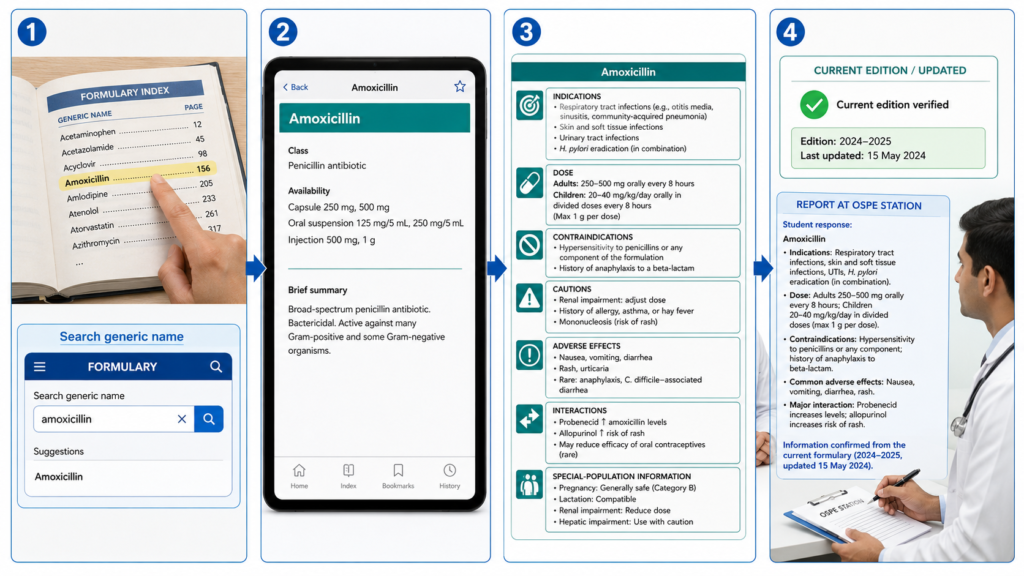
🔹 Stepwise Procedure
- Read the query carefully. Identify exactly what drug information is required.
- Use the generic drug name. Search the alphabetical index, contents, or electronic search field.
- Open the correct drug monograph. Confirm that the selected medicine and formulation are correct.
- Locate the indication. Check that the required clinical use is listed.
- Find the dose. Select the correct route, indication, age group, and formulation.
- Check safety information. Review relevant contraindications, cautions, and renal or hepatic considerations.
- Check adverse effects and interactions. Locate the relevant sections rather than scanning the entire monograph.
- Verify and report. Confirm that the formulary or digital resource is current, then state the requested information clearly and accurately.
🖼️ Visual Learning
Rapid Formulary Search
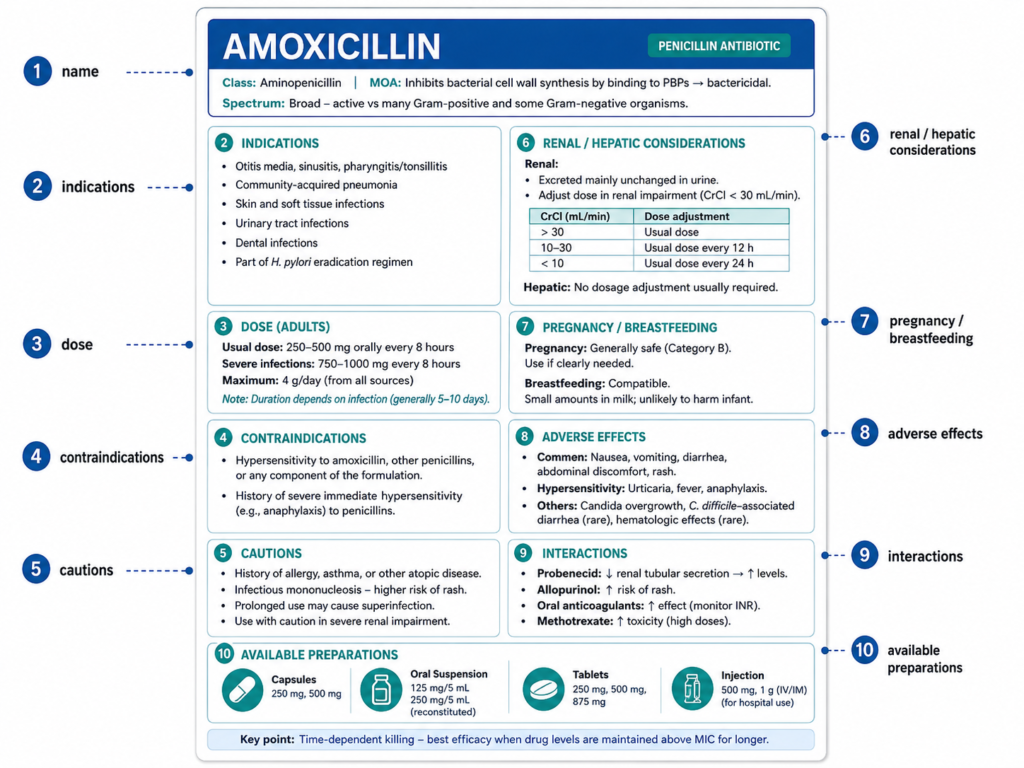
Drug Monograph Structure
🎥 Practical Video
How to Find Drug Information
Source: BNF Publications — Pharmaceutical Press
Official BNF + BNFC app guidance demonstrating how to locate drug information efficiently.
📝 Important Viva Questions
Q1. What is a formulary?
Answer: A formulary is an organized reference containing selected medicines and practical information for their safe, effective, and rational use.
Q2. What is a national formulary?
Answer: A national formulary is a nationally prepared medicines reference that provides standardized information about drugs approved or used within that country.
Q3. What does the Drugs Act 1976 state regarding the Pakistan National Formulary?
Answer: Section 8 provides for the Federal Government to compile and publish the Pakistan National Formulary containing drugs allowed to be imported, manufactured, or sold, with provision for revision when required.
Q4. What information can usually be obtained from a drug monograph?
Answer: It commonly provides indications, doses, contraindications, cautions, adverse effects, interactions, special-population guidance, routes, and available preparations.
Q5. Why should a drug preferably be searched by its generic name?
Answer: The generic name identifies the active medicine consistently and avoids confusion caused by multiple brand names.
Q6. Why must the indication and patient group be checked before quoting a dose?
Answer: The dose of the same drug may differ according to indication, age, route, formulation, and patient factors such as renal or hepatic function.
Q7. Why should the edition or update status of a formulary be checked?
Answer: Drug recommendations, warnings, interactions, and dosing guidance can change, so prescribing information should be taken from the most current available source.