
Hand Washing and Microbiology Laboratory Biosafety
🎯 Task
Demonstrate correct hand washing technique at the provided station. Then briefly explain sterilization and disinfection, identify common physical and chemical methods used for microbial control, and define biosafety and biosecurity in a microbiology laboratory.
🧼 Stepwise Procedure / Approach
- Prepare for hand washing. Remove unnecessary hand/wrist accessories where appropriate and ensure access to running water, soap and a disposable towel.
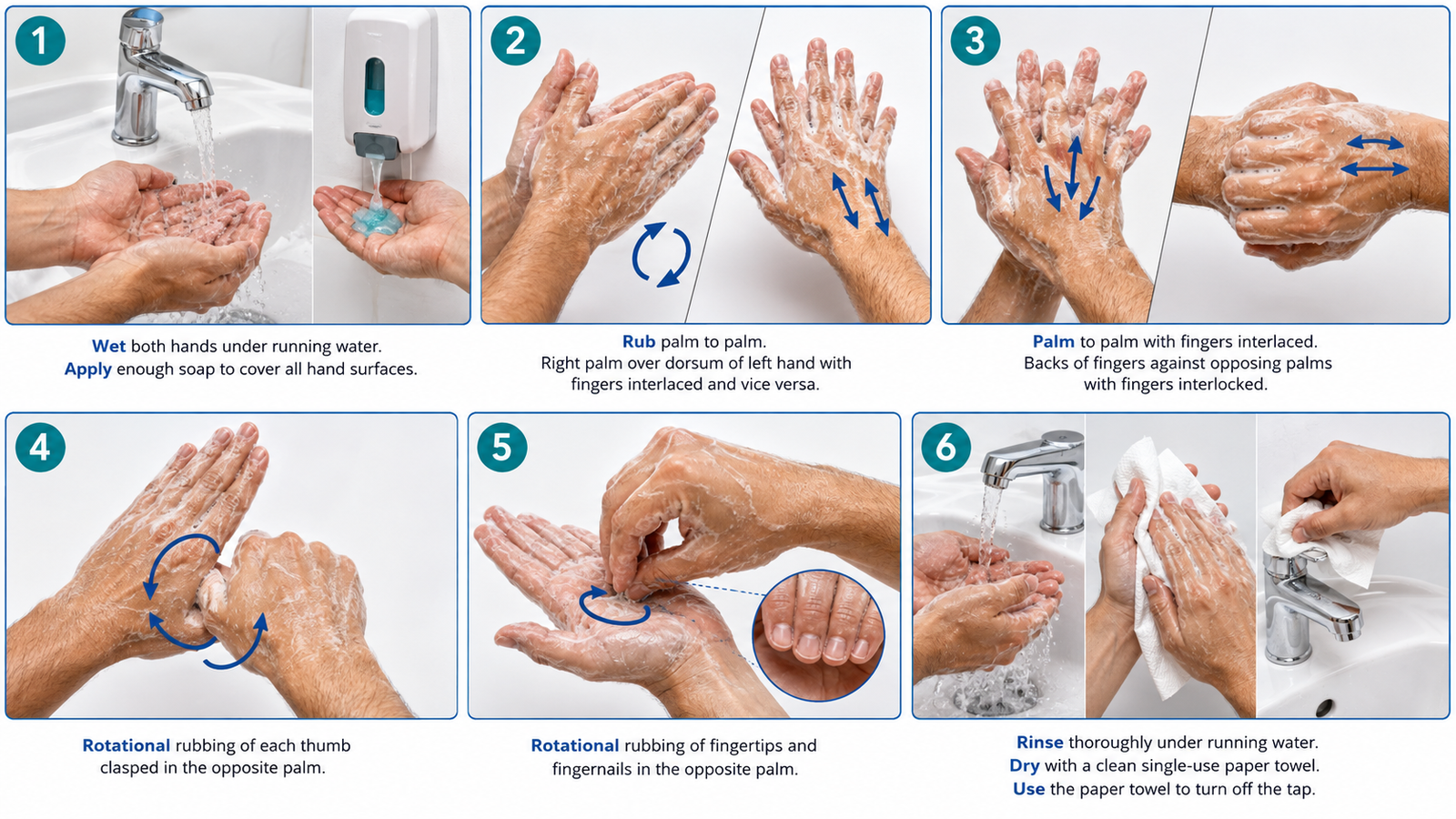
- Wet the hands and apply soap. Use enough soap to cover all hand surfaces.
- Rub palm to palm. Spread the soap thoroughly over both palms.
- Clean the backs and interdigital spaces. Rub each palm over the dorsum of the opposite hand with fingers interlaced, then palm to palm with fingers interlaced.
- Clean fingers, thumbs and fingertips. Rub the backs of fingers against opposing palms, rotationally rub each thumb, then rotationally rub fingertips in the opposite palm.
- Rinse and dry correctly. Rinse thoroughly under running water, dry with a single-use towel and avoid recontaminating clean hands when turning off the tap.
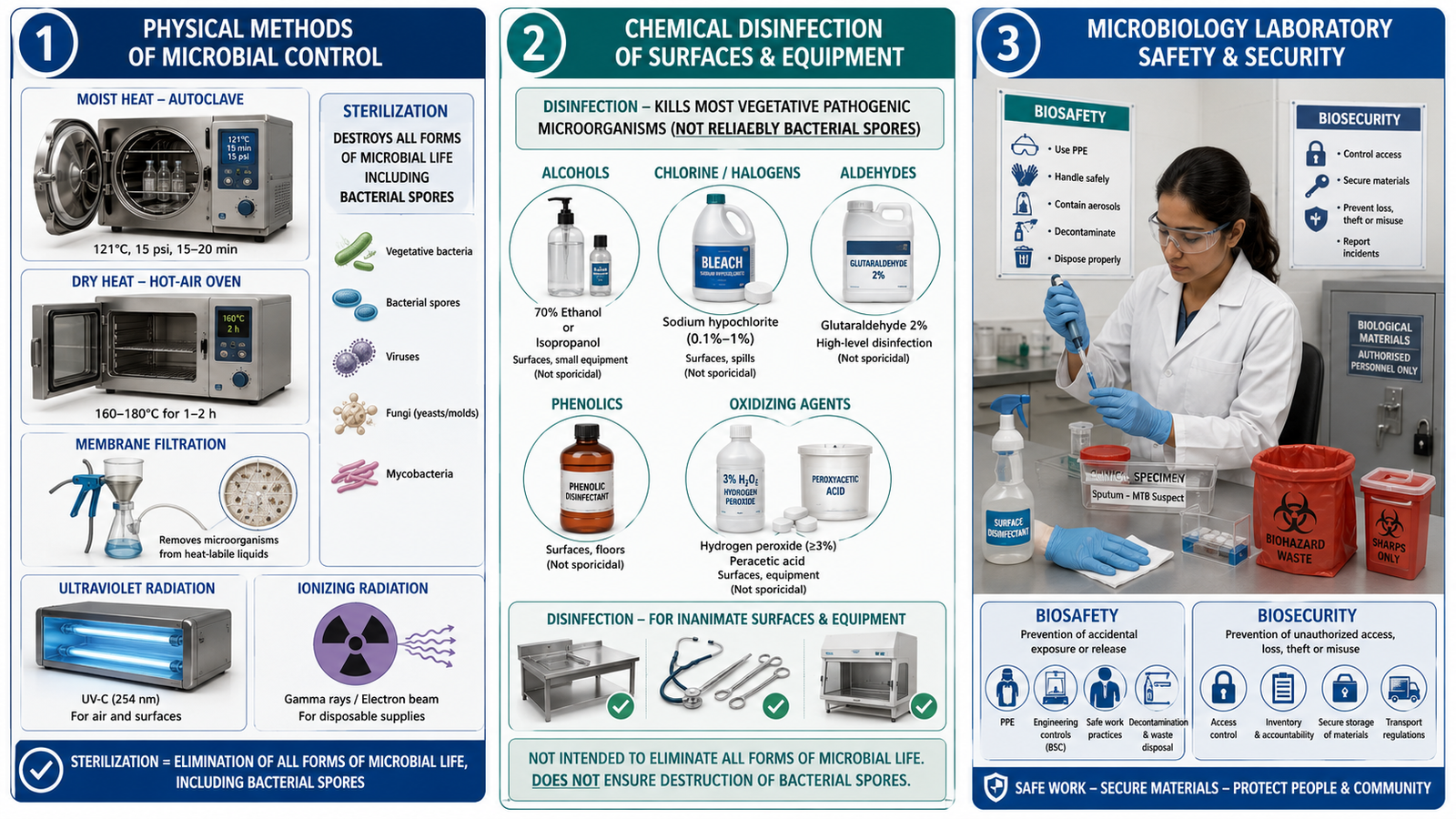
- Differentiate sterilization from disinfection. Sterilization eliminates all forms of microbial life, including bacterial spores; disinfection eliminates many or most pathogenic microorganisms on inanimate objects but may not reliably destroy spores.
- Classify microbial-control methods. Physical methods include moist heat, dry heat, filtration and radiation; chemical methods include alcohols, halogens, aldehydes, phenolics, oxidizing agents and other appropriate disinfectants.
- Apply laboratory biosafety and biosecurity principles. Use appropriate PPE, safe specimen handling, surface decontamination and correct waste/sharps disposal, while maintaining secure control of biological materials to prevent unauthorized access, loss or misuse.
🖼️ Visual Learning
Correct Hand Washing Technique
Sterilization, Disinfection and Laboratory Safety
🎥 Practical Video
How to Wash Your Hands with Hand Gel
WHO Infection Prevention and Control Officer Kevin Ousman demonstrates correct hand-hygiene technique, providing a useful practical demonstration of systematic hand-surface coverage.
📝 Important Viva Questions
Answer: Sterilization is the complete elimination or destruction of all forms of microbial life, including bacterial spores.
Answer: Disinfection is the elimination of many or most pathogenic microorganisms on inanimate objects; routine disinfection may not reliably destroy bacterial spores.
Answer: Moist heat, dry heat, filtration and radiation are important physical methods.
Answer: An autoclave uses saturated steam under pressure, allowing high-temperature moist heat to destroy microorganisms and spores.
Answer: Examples include alcohols, chlorine compounds, aldehydes, phenolics and oxidizing agents.
Answer: Biosafety refers to containment practices, equipment and procedures used to prevent accidental exposure to biological hazards or their unintended release.
Answer: Biosecurity involves measures that prevent unauthorized access, loss, theft, misuse or intentional release of biological materials.
Answer: Approximately 40–60 seconds when performed using the complete recommended technique.
Answer: The thumbs, fingertips, nail areas, interdigital spaces and backs of the hands are commonly missed.
Answer: It reduces accidental exposure, contamination and environmental release of potentially infectious biological material.