
AIM OSCE / OSPE • FINAL YEAR MBBS
OSCE Station 02 — Mental Health Screening, Risk Assessment & Primary Care Consultation
Neuroscience Module • Family Medicine / General Medicine
Rapid Revision • Clinical Skills • Practical Skills • Viva
🎯 Candidate Task
A patient attends a primary healthcare clinic with persistent low mood, excessive worry and difficulty coping with daily activities. Conduct a focused mental health consultation, screen for depression, anxiety and psychotic symptoms, assess important risks, and explain your initial management and referral plan.
⚡ Model Station Answer
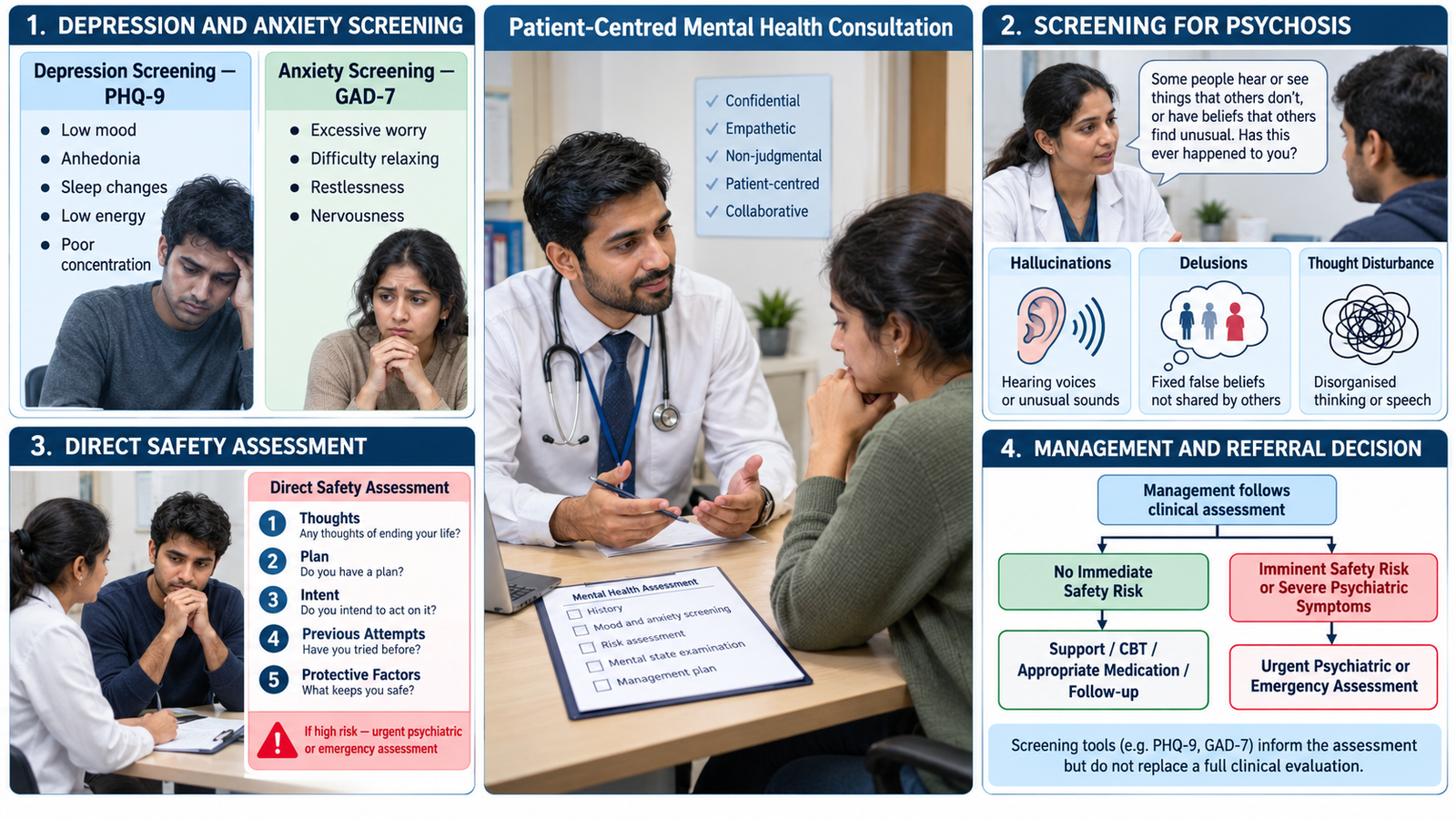
Assessment: “I will explore mood, anxiety, sleep, functioning, psychosocial stressors and duration of symptoms, using PHQ-9 and GAD-7 where appropriate.”
Psychosis screening: “I will ask about hallucinations, delusions, disorganized thinking and unusual experiences.”
Risk assessment: “I will directly assess suicidal thoughts, plans, intent, previous attempts, self-harm, risk to others and the patient’s immediate safety.”
Management: “I will assess severity, offer supportive care and appropriate psychological or pharmacological treatment, arrange follow-up, and urgently refer patients with significant safety risks or severe psychiatric symptoms.”
🔎 How to Perform / Approach
- Introduce and establish rapport: Confirm identity, obtain consent, ensure privacy and use open-ended, nonjudgmental questions.
- Explore presenting symptoms: Ask about low mood, anhedonia, excessive worry, sleep, appetite, energy, concentration, duration, stressors and effects on work or relationships.
- Screen systematically: Use PHQ-2/PHQ-9 for depression and GAD-2/GAD-7 for anxiety where appropriate. Ask about hearing voices, unusual beliefs, thought disturbance and impaired reality testing. Clarify possible mania or hypomania before considering antidepressants.
- Assess immediate risk: Ask directly about suicidal thoughts, self-harm, plans, intent, access to means, previous attempts, risk to others and protective factors. Identify severe agitation, psychosis, inability to care for oneself and safeguarding concerns.
- Complete focused assessment: Review previous psychiatric illness, medications, substance use, relevant medical conditions and family history. Observe appearance, behaviour, speech, mood, affect, thought, perception, cognition and insight.
- Formulate the initial management plan: Explain the probable clinical problem and severity. Offer psychoeducation, supportive intervention, sleep and activity advice, psychological therapy such as CBT and an appropriate SSRI when clinically indicated after assessment.
- Arrange referral and follow-up: Refer urgently for active suicidal intent, severe psychosis, suspected mania or inability to maintain safety. Otherwise agree on treatment, provide safety-net advice, check understanding and arrange timely review.
🖼️ Visual Learning
Mental Health Consultation — Screening, Suicide Risk Assessment & Referral
📝 Important Viva Questions
Q1. Which screening instruments are commonly used for depression and generalized anxiety in primary care?
Answer: PHQ-9 for depression and GAD-7 for anxiety. Positive screening results require clinical assessment.
Q2. How would you screen for symptoms suggestive of schizophrenia or another psychotic disorder?
Answer: Ask about hallucinations, delusions and disorganized thinking, and assess behaviour, functioning and reality testing.
Q3. What are the essential components of suicide risk assessment?
Answer: Assess suicidal thoughts, plan, intent, access to means, previous attempts, immediate safety and protective factors.
Q4. What findings require urgent psychiatric assessment or emergency referral?
Answer: Imminent suicide risk, severe psychosis with safety concerns, suspected mania with significant impairment or inability to maintain basic safety.
Q5. What is the initial primary care management of non-emergency depression or anxiety?
Answer: Provide psychoeducation, collaborative care, psychological interventions such as CBT, appropriate medication when indicated, safety-netting and planned follow-up.