
AIM OSCE / OSPE • MBBS
💉 Station 9 — EPI Vaccination, Route & Cold-Chain Assessment
Rapid Revision • Vaccine Recognition • Administration Route • Cold Chain
🎯 Task
CANDIDATE TASK
You are provided with selected EPI vaccine vials/cards and a vaccine storage or carrier setup. Identify the selected vaccines, state their appropriate route/site of administration, assess maintenance of the cold chain, and mention important contraindications relevant to vaccination.
⚡ Model Station Answer
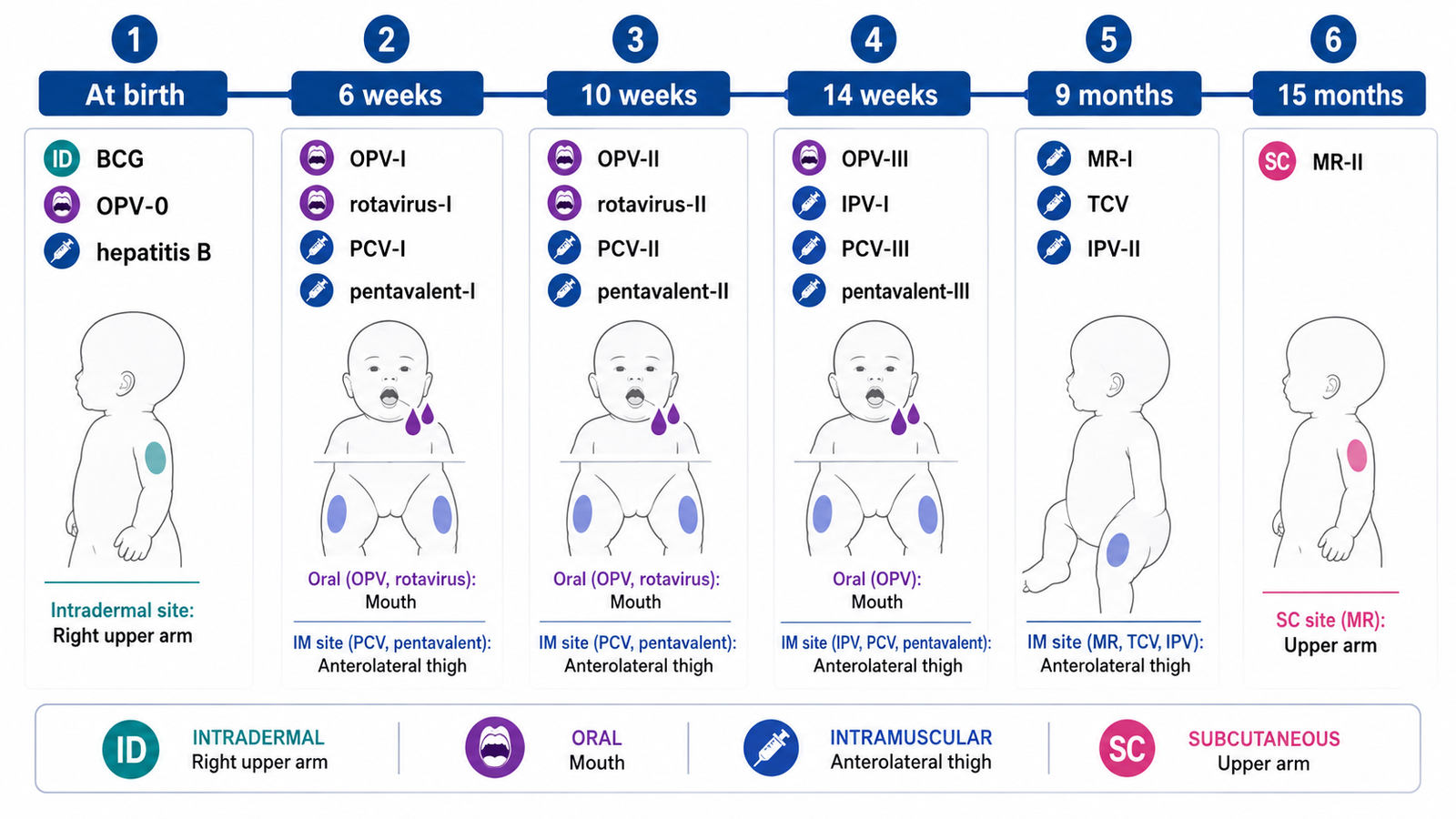
- Pakistan routine childhood EPI visits: birth, 6 weeks, 10 weeks, 14 weeks, 9 months and 15 months.
- Routes: BCG is intradermal; OPV and rotavirus are oral; hepatitis B, pentavalent, PCV, IPV and TCV are intramuscular; MR is subcutaneous.
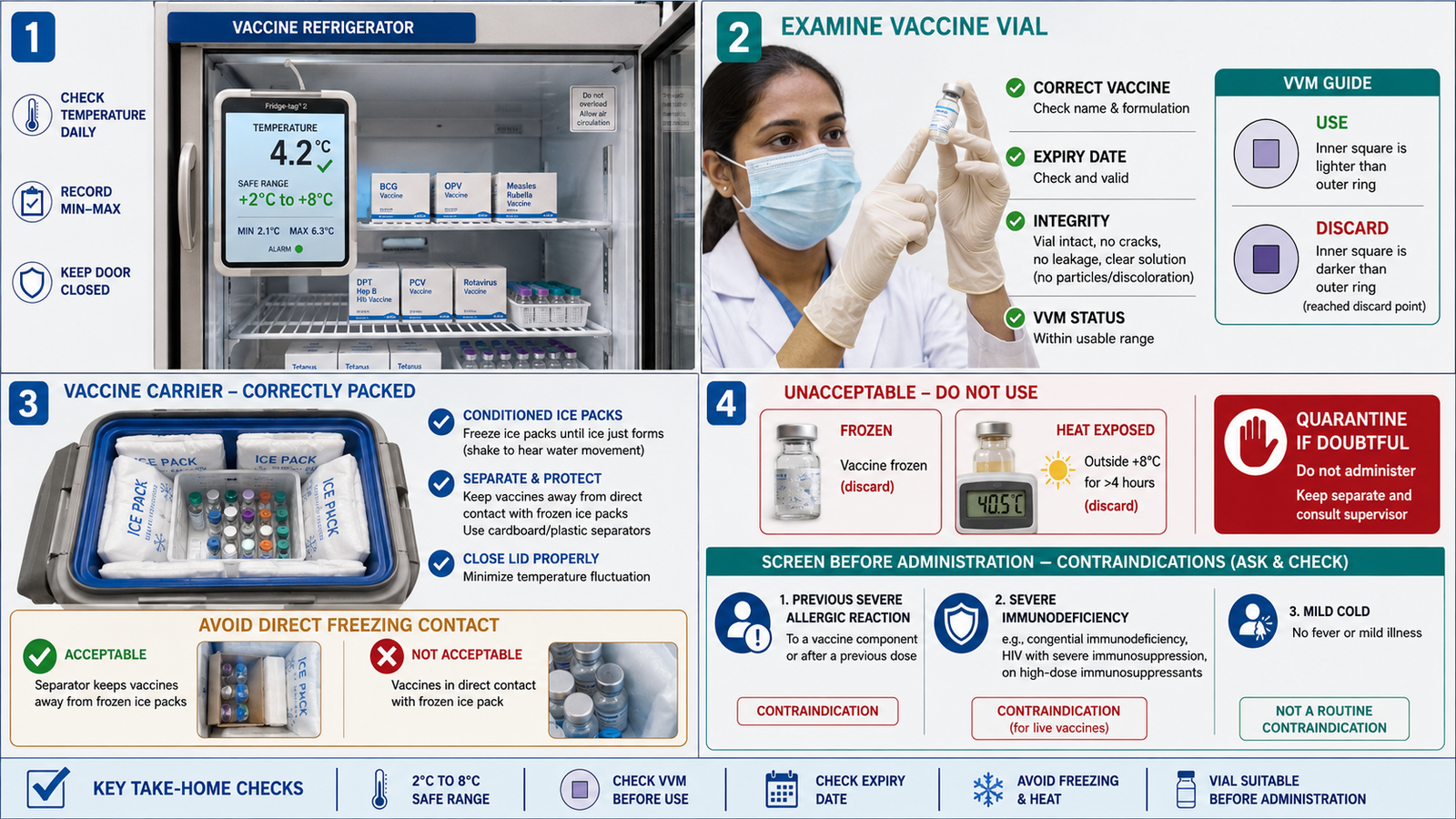
- Cold chain: vaccines at the service-delivery level are generally maintained at +2°C to +8°C; I would check the temperature record, expiry date, VVM and evidence of inappropriate freezing or heat exposure.
- Contraindications: a severe allergic reaction to a previous dose or vaccine component is an important general contraindication; severe immunodeficiency is particularly relevant to live vaccines.
🔎 Stepwise Procedure / Approach
- Inspect the material systematically. Note the child’s stated age, EPI card and the vaccine vial or label presented.
- Identify the vaccine. Read the antigen name and check vial integrity, expiry date and Vaccine Vial Monitor where present.
- Match it to the EPI visit. Birth: BCG, OPV-0, hepatitis B; 6 weeks: OPV-I, rotavirus-I, PCV-I, pentavalent-I; 10 weeks: second doses; 14 weeks: OPV-III, IPV-I, PCV-III and pentavalent-III; 9 months: MR-I, TCV and IPV-II; 15 months: MR-II.
- State the correct route. BCG — intradermal; OPV/rotavirus — oral; hepatitis B/pentavalent/PCV/IPV/TCV — intramuscular; MR — subcutaneous.
- Assess storage temperature. Confirm an appropriate cold-chain temperature, generally +2°C to +8°C at the vaccination facility, using the temperature-monitoring device or record.
- Assess vaccine handling. Check VVM status, avoid direct contact of freeze-sensitive vaccines with frozen ice packs, and look for evidence of heat or freeze damage.
- Screen for contraindications. Ask about previous severe allergic reaction and relevant vaccine-specific contraindications, particularly severe immunodeficiency for live vaccines.
- Conclude clearly. State whether the vaccine is appropriate and safe to use; quarantine and do not administer a vaccine when cold-chain integrity or vial suitability is doubtful.
Exam point: A mild respiratory illness, low-grade fever or antibiotic use alone is not usually a contraindication to routine vaccination.
🖼️ Visual Learning
VISUAL 1
Pakistan EPI Schedule & Administration Routes
🎥 Practical Video
🎥 Practical Demonstration — What Is the Vaccine Cold Chain?
Source: Immunization Academy • WHO-guidance-based training
A short practical demonstration explaining how correct temperature control protects vaccine potency throughout storage and transport.
📝 Important Viva Questions
Q1. What are the routine childhood EPI visit ages in Pakistan?
Birth, 6 weeks, 10 weeks, 14 weeks, 9 months and 15 months.
Q2. Which EPI vaccine is administered intradermally?
BCG is administered intradermally, classically in the right upper arm.
Q3. Which routine childhood vaccines are given orally?
OPV and rotavirus vaccine are given by the oral route.
Q4. What is the usual cold-chain temperature range for vaccines at a vaccination facility?
Most routine vaccines should be maintained at +2°C to +8°C according to approved storage requirements.
Q5. What does a Vaccine Vial Monitor indicate?
A VVM indicates cumulative heat exposure of the vaccine and helps determine whether it remains usable. It does not detect freezing damage.
Q6. What is an important general contraindication to a further dose of a vaccine?
A severe allergic reaction, such as anaphylaxis, following a previous dose or to a vaccine component is an important contraindication.
Q7. Is a mild upper respiratory infection or low-grade fever a contraindication to vaccination?
No. A minor illness or mild fever alone is generally not a reason to postpone routine vaccination.