
This chapter follows the KMU outcomes for hypospadias, male infertility and sexually transmitted infections. First understand the clinical approach and the reason behind each investigation or treatment; use the High-Yield Review at the end for rapid revision.
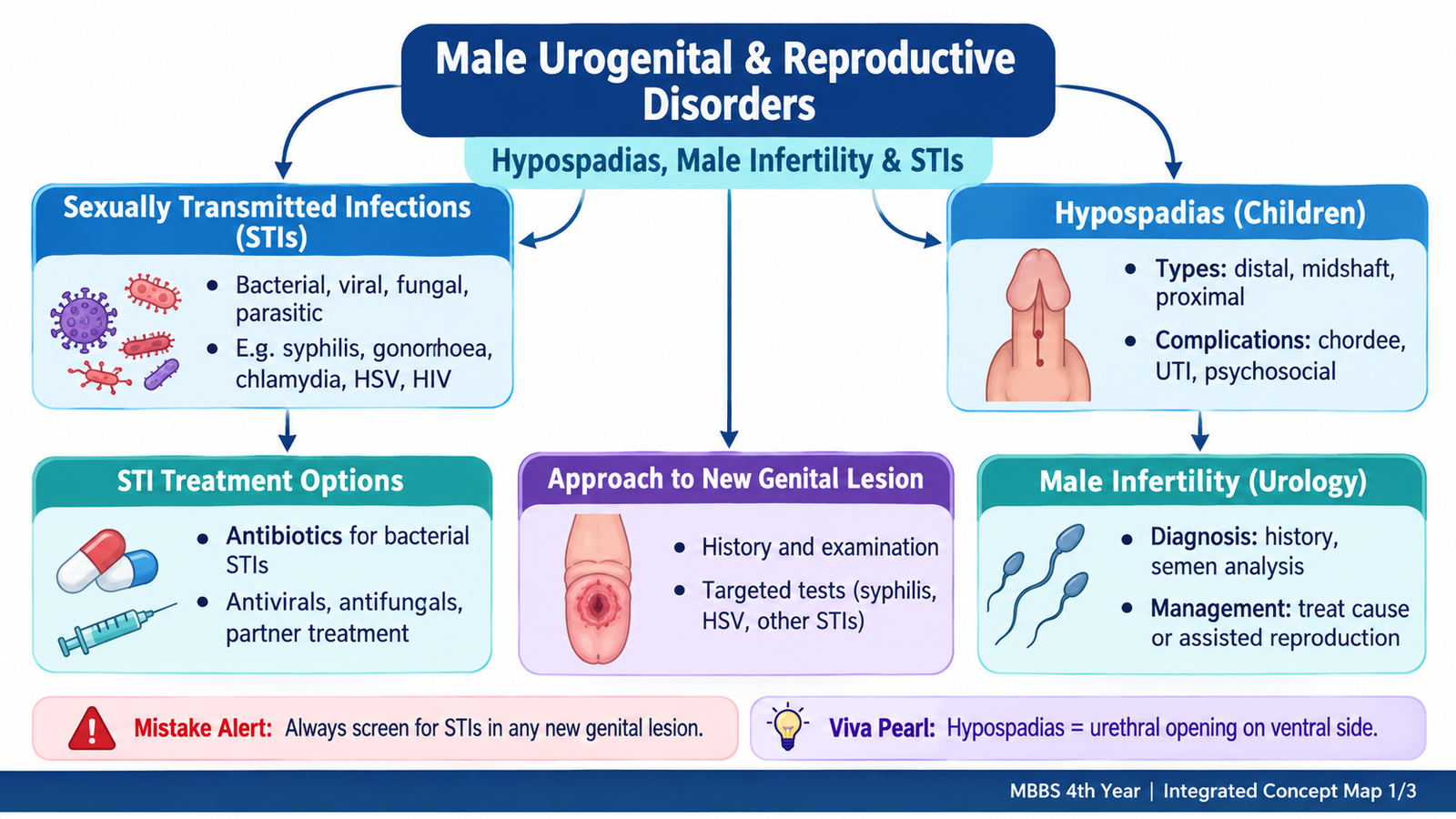
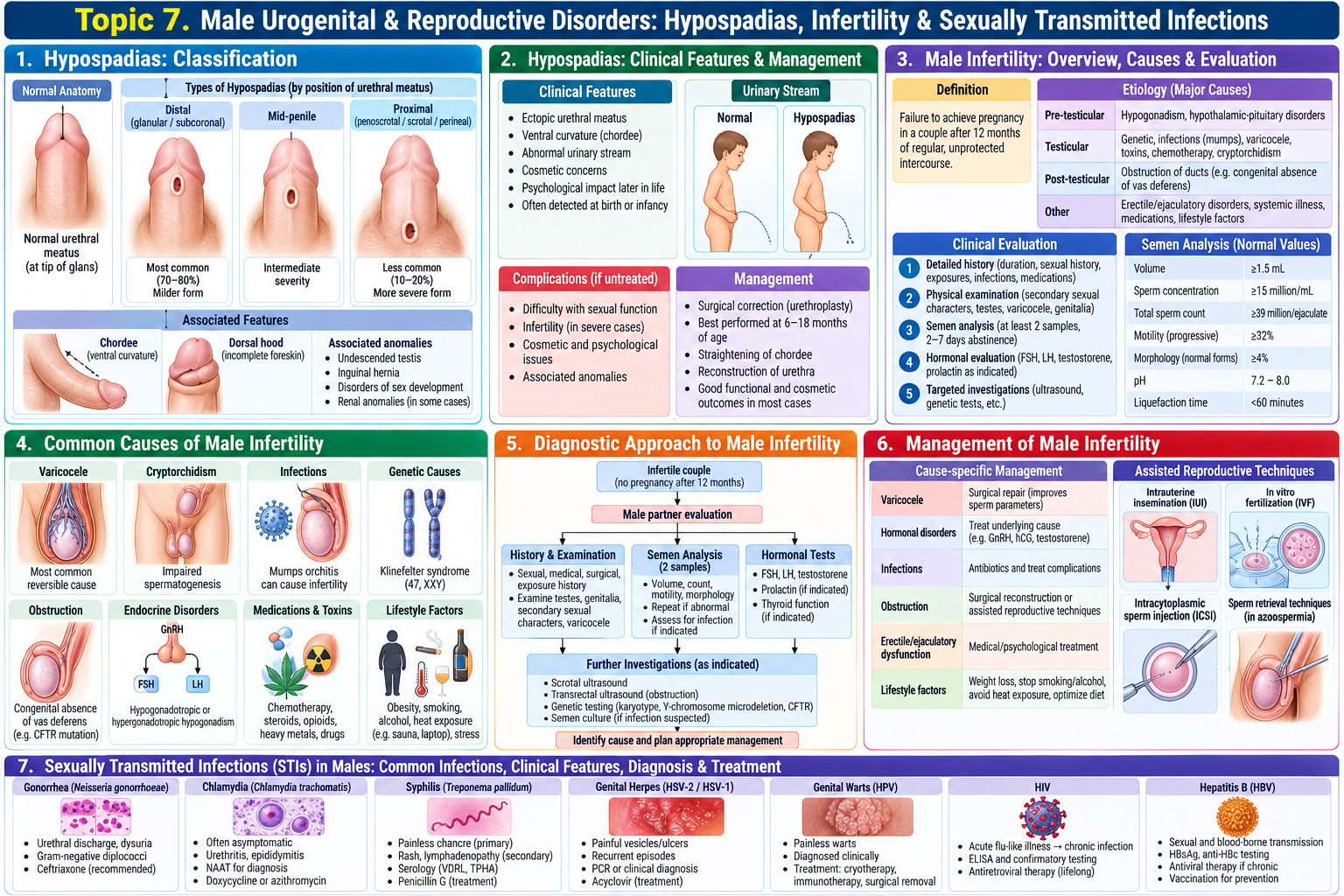
Topic 7. Male Urogenital & Reproductive Disorders: Hypospadias, Infertility & Sexually Transmitted Infections
A clinically connected approach to congenital urethral abnormality, male reproductive failure and sexually transmitted disease, with emphasis on recognition, investigation and appropriate management.
Topic Introduction
This topic brings together three common areas of male urogenital and reproductive practice. Hypospadias is a congenital abnormality in which the urethral opening lies on the ventral surface of the penis rather than at its normal tip. Male infertility requires a systematic search for problems affecting sperm production, transport or sexual function. Sexually transmitted infections (STIs) may present with urethral discharge, ulcers, genital lesions or other symptoms and require careful classification and treatment. Although these problems occur at different ages, the same clinical principle applies: recognize the problem, assess it systematically, select investigations that answer a clinical question, and manage the underlying cause while protecting future function and reproductive health.
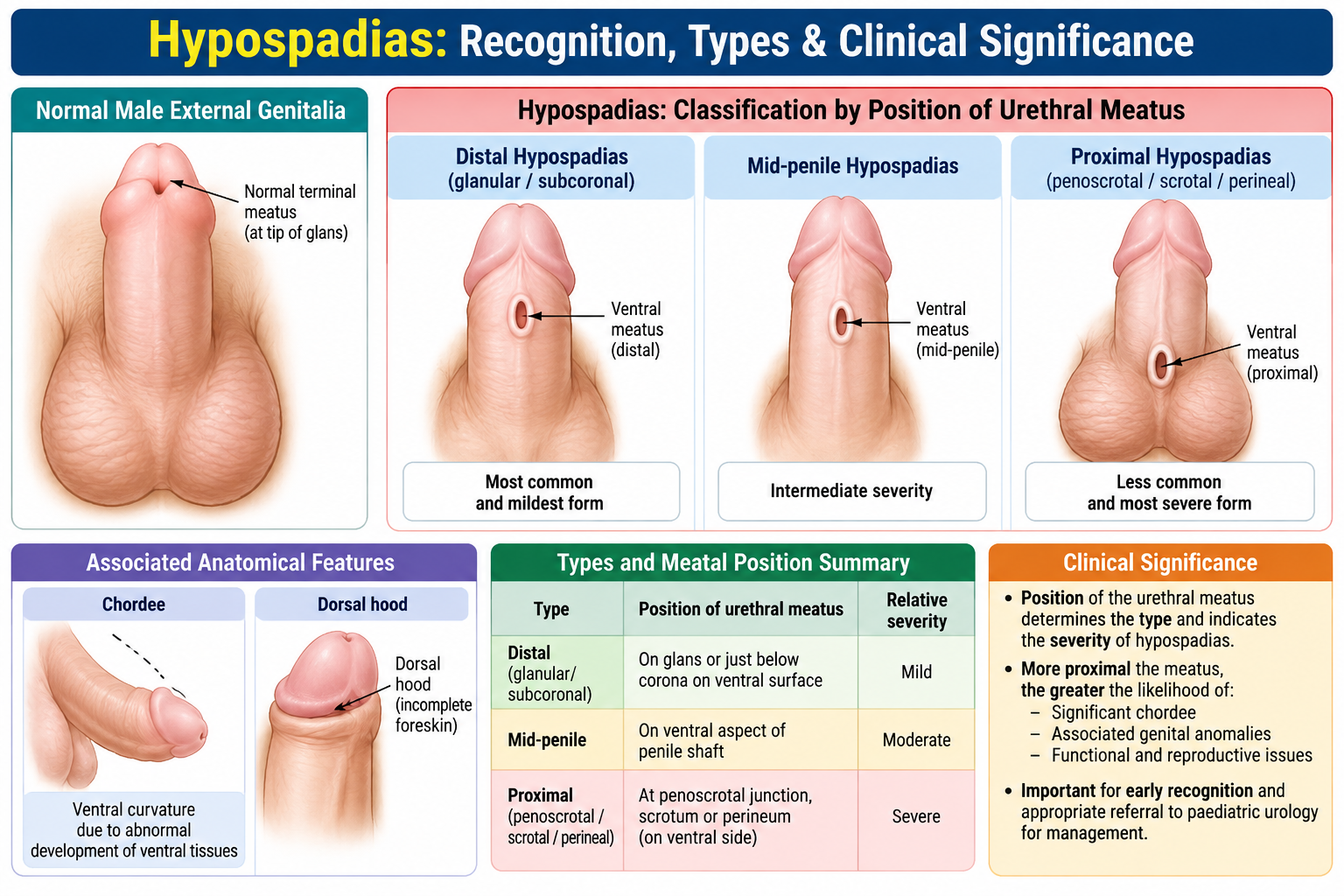
A. Hypospadias: Recognition, Types & Clinical Significance
Hypospadias is a congenital abnormality of the male urethra in which the external urethral meatus opens on the ventral aspect of the penis rather than at the tip of the glans. It results from incomplete development and fusion of the ventral urethral structures during fetal development.
The position of the meatus is clinically important because it reflects the severity of the abnormality and influences urinary function and reconstructive planning.
Types of hypospadias
Hypospadias is commonly classified according to the position of the urethral opening:
- Distal/anterior: the opening is near the glans or distal penile shaft. This is the commonest and usually least severe form.
- Mid-penile: the opening lies along the penile shaft.
- Proximal/posterior: the opening lies near the penoscrotal junction, scrotum or perineum and represents a more severe abnormality.
Associated anatomical features
The abnormal meatal position may occur with ventral curvature of the penis (chordee) and a characteristic incomplete ventral prepuce, producing a dorsal hood of foreskin. More proximal disease tends to have greater functional significance.
B. Hypospadias: Complications & Management in Children
The clinical importance of hypospadias is not simply the abnormal position of the meatus. The abnormality may interfere with the direction of the urinary stream, penile straightness and later sexual or reproductive function. The impact is greatest in more proximal forms and when significant chordee is present.
Important complications and functional problems
- Abnormal or spraying urinary stream.
- Difficulty directing urine while standing, particularly in proximal disease.
- Ventral penile curvature due to chordee.
- Later difficulty with satisfactory sexual intercourse when curvature or proximal displacement is marked.
- Potential fertility difficulty in severe proximal disease because semen may not be deposited normally.
- Psychological and cosmetic concerns as the child grows.
Management principle
Children with hypospadias should be assessed by an appropriate pediatric surgical or urological team. The aim of treatment is to obtain a functionally straight penis and bring the urethral opening toward the tip so that urination and later sexual function are as normal as possible.
Do not circumcise a child with hypospadias before specialist assessment. Preputial tissue may be useful during reconstructive surgery.
Surgical correction generally involves correction of significant chordee and reconstruction of the urethra. Detailed operative techniques belong to specialist surgical training rather than undergraduate learning.
Timing of surgery: Hypospadias repair is usually performed between 6 and 18 months of age. Mild distal hypospadias without functional impairment may be managed individually after specialist assessment, whereas proximal disease or significant chordee generally requires surgical correction.
After repair, recognized complications include urethrocutaneous fistula, meatal or urethral narrowing and recurrent curvature. Follow-up therefore considers both urinary function and the anatomical result.
C. Male Infertility: Causes & Clinical Assessment
Male infertility is evaluated by asking a simple clinical question: is sperm production impaired, is sperm transport obstructed, or is sperm delivery/function impaired? This framework prevents the investigation from becoming a random collection of tests.
Causes can therefore be understood in three broad groups:
Inadequate hypothalamic or pituitary stimulation → reduced testicular sperm production.
Primary testicular dysfunction → impaired spermatogenesis.
Sperm are produced but obstruction or ejaculatory dysfunction prevents effective delivery.
Focused history
Assessment should involve the couple, but the male history specifically searches for factors that may impair sperm production, transport or sexual function.
- Duration of infertility and whether conception has ever occurred previously.
- Sexual history, including erectile or ejaculatory difficulty and frequency/timing of intercourse.
- Past testicular disease, trauma, surgery or infection.
- History of undescended testes.
- Previous genital or sexually transmitted infection.
- Systemic illness and relevant medication or drug exposure.
- Occupational or environmental exposure that may impair testicular function.
- Features suggesting endocrine disease.
Focused examination
Examination looks for evidence that explains the reproductive problem rather than functioning as a complete OSCE checklist. Important findings include secondary sexual characteristics, penile abnormalities, testicular size and consistency, epididymal or vasal abnormalities and the presence of a varicocele.
Small or abnormal testes suggest impaired testicular function, while apparently normal testes with evidence of genital tract obstruction suggest that sperm production may be preserved but transport is impaired.
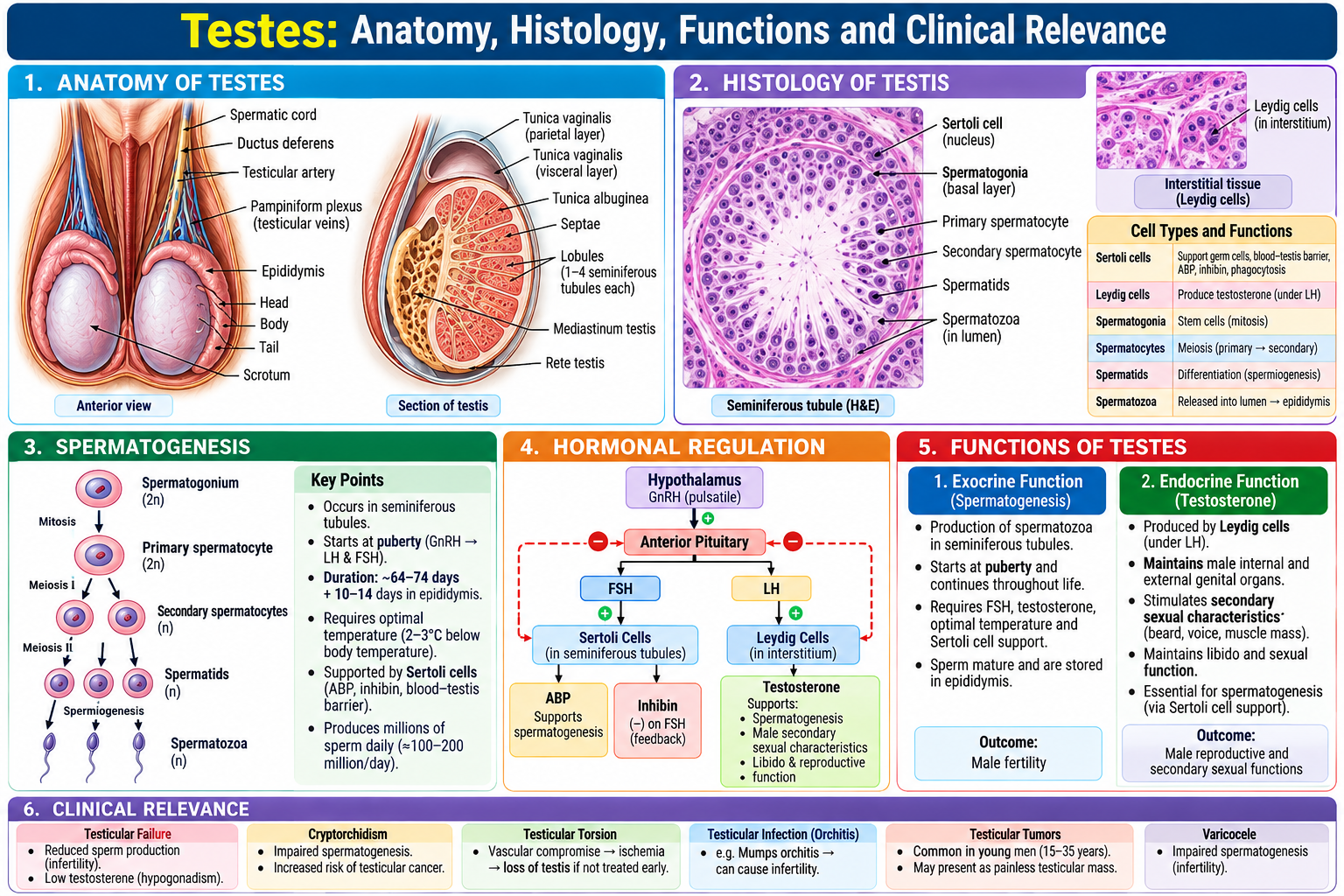
A couple reports inability to conceive despite regular unprotected intercourse. The male partner has no obvious sexual dysfunction and examination is largely unremarkable. Rather than ordering many tests immediately, the first laboratory step is to determine whether semen production and sperm parameters are normal.
- What information should semen analysis provide?
- If the result is abnormal, why should it usually be confirmed?
- Which further tests should be selected according to the pattern found?
D. Male Infertility: Diagnostic Pathway & Management
Semen analysis is the central initial investigation in male infertility because it directly evaluates the ejaculate and provides information about sperm concentration, motility and morphology, as well as semen volume. An abnormal result should be interpreted in clinical context and is generally confirmed because semen parameters vary between samples.
How to interpret the diagnostic pathway
| Finding / test | What it helps determine | Clinical direction |
|---|---|---|
| Semen analysis | Sperm number, motility, morphology and semen characteristics | Establishes the pattern of male-factor abnormality |
| FSH, LH and testosterone | Hypothalamic-pituitary-testicular function | Helps distinguish primary testicular dysfunction from endocrine causes |
| Scrotal ultrasound when indicated | Testicular and scrotal structural abnormality | Supports evaluation of selected structural causes |
| Further targeted testing | Selected endocrine, obstructive or genetic causes | Used when history, examination or semen pattern provides an indication |
The key principle is that additional investigations should answer a question raised by the history, examination or semen analysis. They should not be ordered indiscriminately.
Management options
Treatment depends on the cause. The goal may be to correct a reversible factor, restore sperm delivery or enable conception when natural conception remains difficult.
- Address reversible factors: manage relevant systemic or endocrine disease and reduce harmful exposures where identified.
- Treat infection when a clinically relevant reproductive tract infection is present.
- Correct selected anatomical causes when appropriate, such as surgically correctable obstruction or other clinically significant abnormalities.
- Hormonal treatment is useful when infertility results from a specific treatable endocrine deficiency; it is not a universal treatment for male infertility.
- Assisted reproductive techniques may be considered when correction of the underlying cause is not possible or is insufficient.
Specific treatment options: Varicocelectomy may improve fertility in selected men with a palpable varicocele and abnormal semen parameters. Hypogonadotropic hypogonadism may be treated with gonadotropin therapy under specialist supervision. Assisted reproductive techniques include intrauterine insemination (IUI), IVF and intracytoplasmic sperm injection (ICSI). Exogenous testosterone should be avoided in men actively seeking fertility because it suppresses sperm production.
Find the level of dysfunction first → treat a reversible cause when possible → use reproductive assistance when necessary. Management should be individualized and couple-centred.
E. Sexually Transmitted Infections: Clinical Classification & Treatment Principles
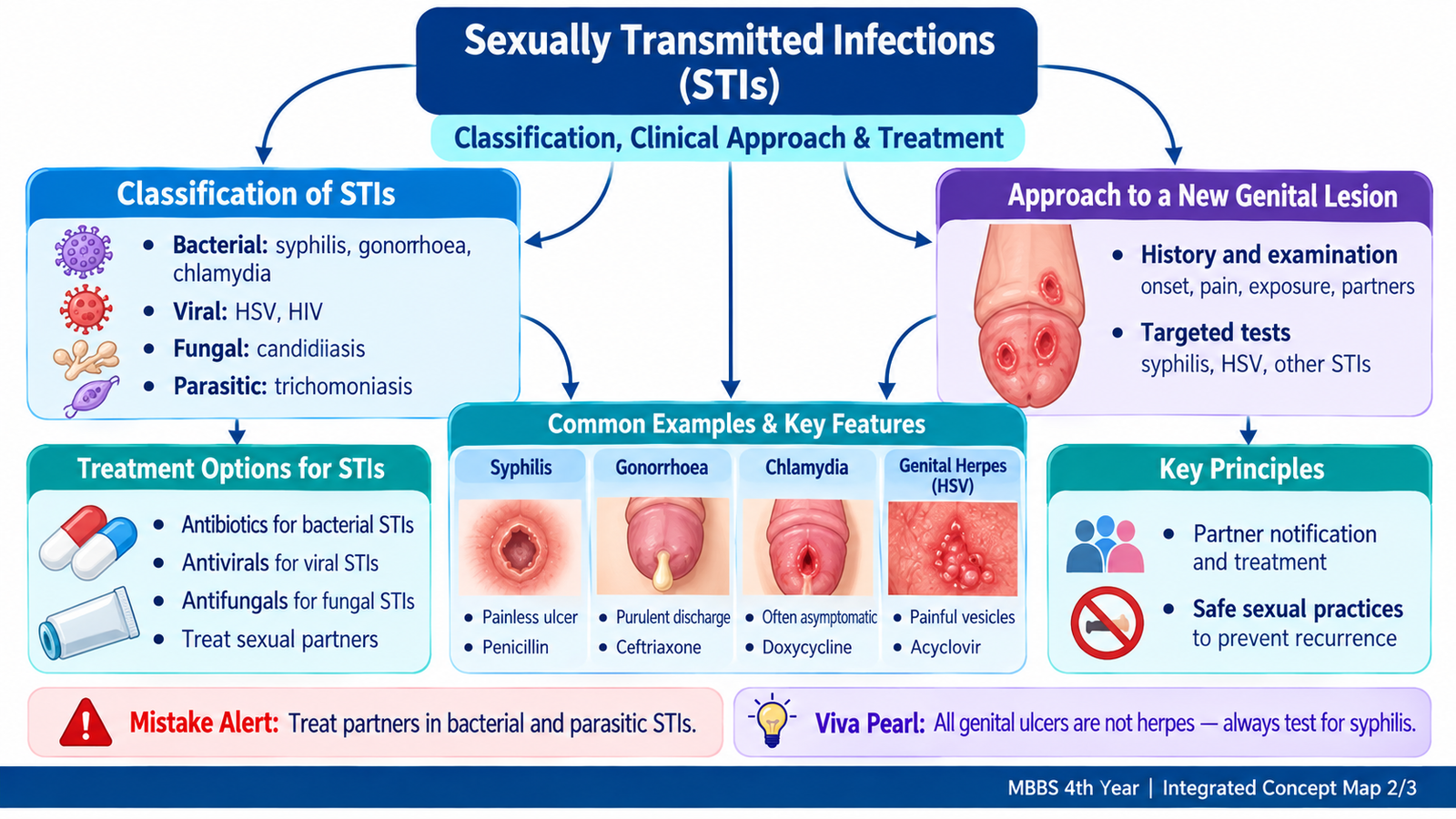
Sexually transmitted infections are best approached clinically by recognizing the syndrome or lesion pattern and then considering its likely infectious cause. This is more useful at the bedside than memorizing a long list of organisms without linking them to presentation.
Practical clinical classification
| Clinical pattern | Important examples | Useful clue |
|---|---|---|
| Urethral discharge / urethritis | Gonorrhea, chlamydial infection | Discharge with dysuria suggests urethral infection |
| Genital ulcer disease | Syphilis, genital herpes, chancroid | Pain, number and character of ulcers help narrow the differential |
| Genital warts | Human papillomavirus infection | Exophytic or verrucous lesions |
Etiologically, STIs include bacterial infections such as gonorrhea, chlamydial infection and syphilis, and viral infections such as genital herpes and human papillomavirus infection. The clinically important point is to connect the likely organism with the syndrome and select appropriate treatment or further testing.
Treatment principles
Treatment is directed at the identified or strongly suspected infection. Common bacterial STIs require appropriate antimicrobial therapy, whereas viral infections are managed according to their specific disease process; for example, antiviral therapy can reduce the severity and duration of genital herpes episodes but does not eradicate latent herpes infection.
Management should also consider the wider sexual-health context. Patients should receive clear advice about transmission, adherence to treatment, prevention of further transmission and the need for assessment or treatment of sexual partners where appropriate.
First-line treatment of common STIs (adults):
-
Gonorrhea: Ceftriaxone 500 mg IM once (for patients under 150 kg); add doxycycline if chlamydia has not been excluded.
-
Chlamydia: Doxycycline 100 mg orally twice daily for 7 days.
-
Primary syphilis: Benzathine penicillin G 2.4 million units IM once.
-
Genital herpes (first episode): Acyclovir 400 mg orally three times daily for 7–10 days.
-
Genital warts: Topical imiquimod or cryotherapy, according to lesion characteristics.
The clinical pattern guides the initial differential, but treatment should be linked to the likely or confirmed cause and the patient’s overall STI assessment.
F. New-Onset Genital Lesion: Clinical & Management Approach
A new genital lesion should be approached systematically rather than diagnosed from appearance alone. The first task is to determine whether the lesion is an ulcer, vesicle, papule, wart or another lesion, and then combine morphology with pain, duration, associated symptoms and sexual history.
Focused clinical assessment
- Onset and progression: sudden or gradual, first episode or recurrent.
- Pain: painful versus painless lesions provide an important diagnostic clue.
- Associated symptoms: urethral discharge, dysuria, fever, lymph-node enlargement or other genital symptoms.
- Sexual history: recent sexual exposure, new partners, barrier protection and previous STI history, asked confidentially and without judgment.
- Lesion morphology: ulceration, vesicles, warty surface, number and distribution.
- Regional lymph nodes: inguinal lymphadenopathy may support particular infectious diagnoses.
High-yield lesion patterns
Classically a painless genital ulcer (chancre).
Painful grouped vesicles that may ulcerate.
Typically painful genital ulceration.
Papillary or verrucous lesions associated with HPV.
Investigations and interpretation
Investigations should be selected according to the suspected lesion. Appropriate microbiological or serological testing may confirm the cause, while patients with one suspected STI should be assessed for the possibility of other sexually transmitted infections according to clinical risk.
Lesion morphology + pain pattern + sexual history + associated findings → focused differential → appropriate diagnostic testing → cause-directed treatment.
Management approach
Management combines treatment of the likely or confirmed infection with prevention of onward transmission. Explain the diagnosis sensitively, provide appropriate infection-specific treatment, reinforce adherence, discuss safer sexual practices and ensure appropriate partner assessment or treatment. Persistent, atypical or uncertain genital lesions require reassessment rather than repeated empirical treatment without clarification of the diagnosis.
Initial clinical action: Obtain syphilis serology and HSV testing from an active ulcer when indicated; offer HIV testing and assessment for other STIs. If early syphilis or first-episode genital herpes is strongly suspected, initiate appropriate treatment without unnecessarily delaying for laboratory confirmation. Advise avoidance of sexual contact until appropriate treatment and clinical resolution, with partner assessment as indicated.
A genital lesion should not automatically be assumed to be an STI. An atypical, persistent or unexplained lesion requires proper diagnostic evaluation.
Integrated Mechanism Flow
Congenital abnormality, infertility or genital lesion
Anatomical, reproductive or infectious
History + relevant examination
Answer a clinical question
Identify cause or severity
Restore function, treat infection or prevent complications
Important Comparison — Common Genital Lesion Patterns
| Condition | Typical lesion | Pain | Key recognition clue |
|---|---|---|---|
| Primary syphilis | Chancre | Usually painless | Painless genital ulcer |
| Genital herpes | Grouped vesicles → ulcers | Painful | Painful vesicular/ulcerative lesions |
| Chancroid | Genital ulcer | Usually painful | Painful ulceration |
| Genital warts | Papillary/verrucous growth | Often painless | Warty rather than ulcerative lesion |
AIM High-Yield Review
- ⭐ Hypospadias = urethral meatus on the ventral surface of the penis; classify it according to the position of the meatus.
- More proximal hypospadias generally means a more severe anatomical and functional abnormality and is more likely to be associated with chordee.
- ⭐ Do not circumcise before specialist assessment in a child with hypospadias because preputial tissue may be required for reconstruction.
- Hypospadias repair aims for a straight penis, a functionally positioned urethral opening and satisfactory urinary and later sexual function.
- Male infertility can be organized into pre-testicular, testicular and post-testicular causes.
- ⭐ Semen analysis is the central initial laboratory investigation in the male partner; further testing is directed by history, examination and the semen pattern.
- Hormonal testing helps determine whether impaired sperm production reflects primary testicular dysfunction or an endocrine disturbance.
- Male infertility treatment is cause-directed; hormonal therapy is appropriate only for specific endocrine causes rather than all male infertility.
- Urethral discharge with dysuria should suggest an STI-associated urethritis such as gonorrheal or chlamydial infection.
- ⭐ Painless genital ulcer → think primary syphilis; painful grouped vesicles/ulcers → think genital herpes.
- Genital warts are characteristically papillary/verrucous lesions associated with HPV infection.
- A new genital lesion requires morphology + pain pattern + sexual history + associated findings, followed by targeted investigation rather than diagnosis from appearance alone.
- STI management includes appropriate infection-specific treatment plus prevention of onward transmission and appropriate partner assessment/treatment.
- Persistent, atypical or unexplained genital lesions require reassessment and diagnostic clarification rather than repeated empirical treatment.
Male Urogenital & Reproductive Disorders
Hypospadias • Male Infertility • Sexually Transmitted Infections
1. Hypospadias — Pediatric Surgery
Focus: types, clinical features, management and complications.
2. Male Infertility — Clinical Approach
Focus: causes, semen analysis, investigation and management approach.
Pre-testicular, testicular and post-testicular causes → semen analysis → hormonal/structural evaluation → cause-directed management.
3. Sexually Transmitted Infections
Focus: classification, common presentations, diagnosis and treatment principles.