
📖 AIM Learning Material
TOPIC 3. PREOPERATIVE ASSESSMENT, SURGICAL SAFETY, CONSENT & OPERATIVE PRINCIPLES
Foundation Module · From deciding whether a patient is ready for surgery to protecting that patient throughout the operation.
Safe surgery begins before the patient enters the operating theatre. The team must understand the patient’s medical condition, the proposed operation and anaesthetic, and the risks that can be reduced beforehand. The patient must have a meaningful opportunity to decide whether to proceed. In theatre, clear communication and reliable safety checks support careful operative technique. This chapter explains that connected process, then introduces the practical principles of incisions, closure, drains, diathermy, laparoscopy and robotic surgery. The aim is to understand why each decision matters for the patient, rather than memorise a list of procedures.
A. What “fitness for surgery and anaesthesia” means
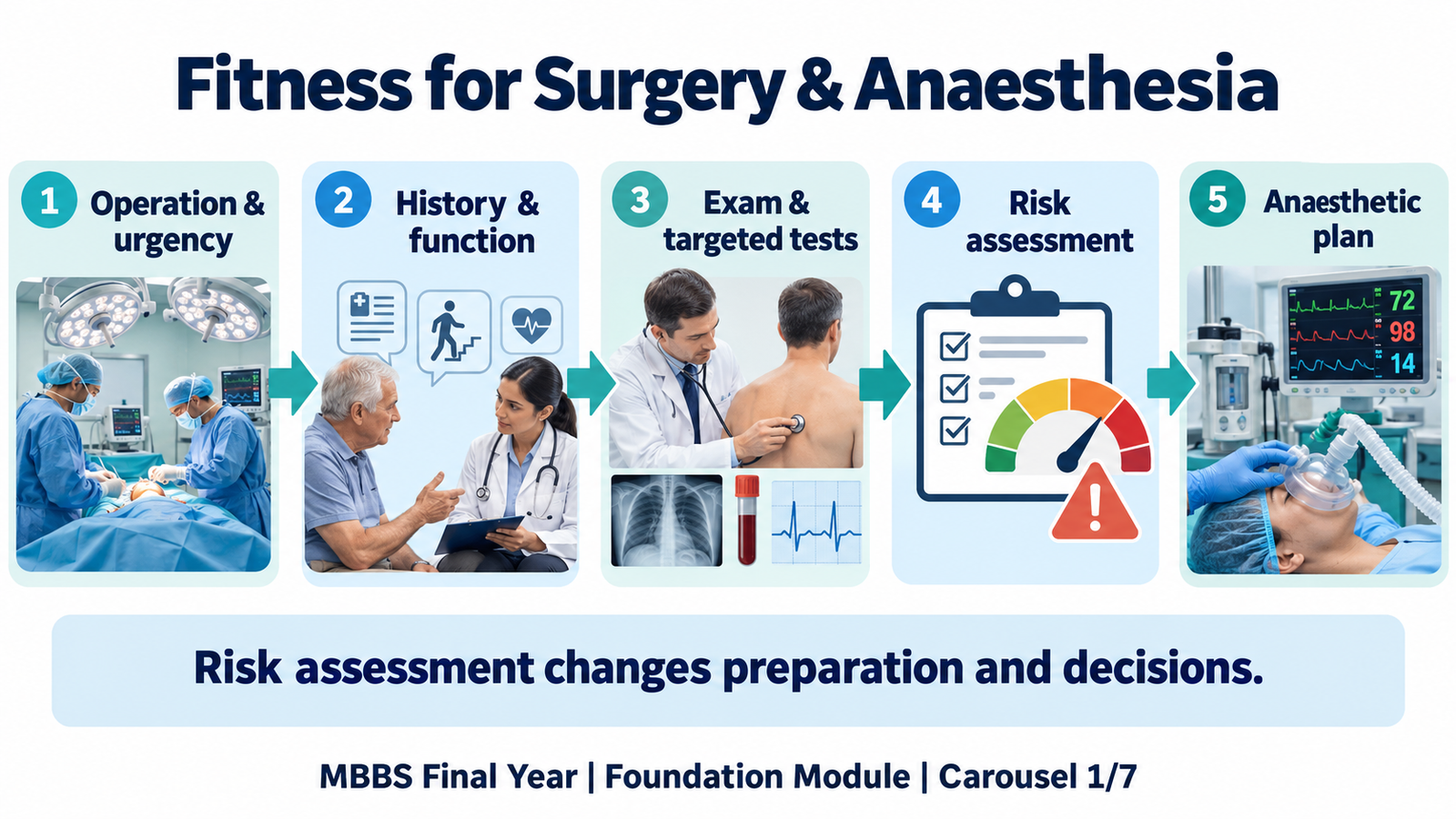
Preoperative assessment estimates whether the patient can tolerate the combined stresses of the operation, anaesthesia and recovery. It identifies problems that should be treated or planned for beforehand. “Fit” is not an absolute label: a patient may face substantial risk yet still need urgent, potentially lifesaving surgery. The useful decision is whether the expected benefit justifies the risk now, whether risk can be reduced, and what level of perioperative care is needed.
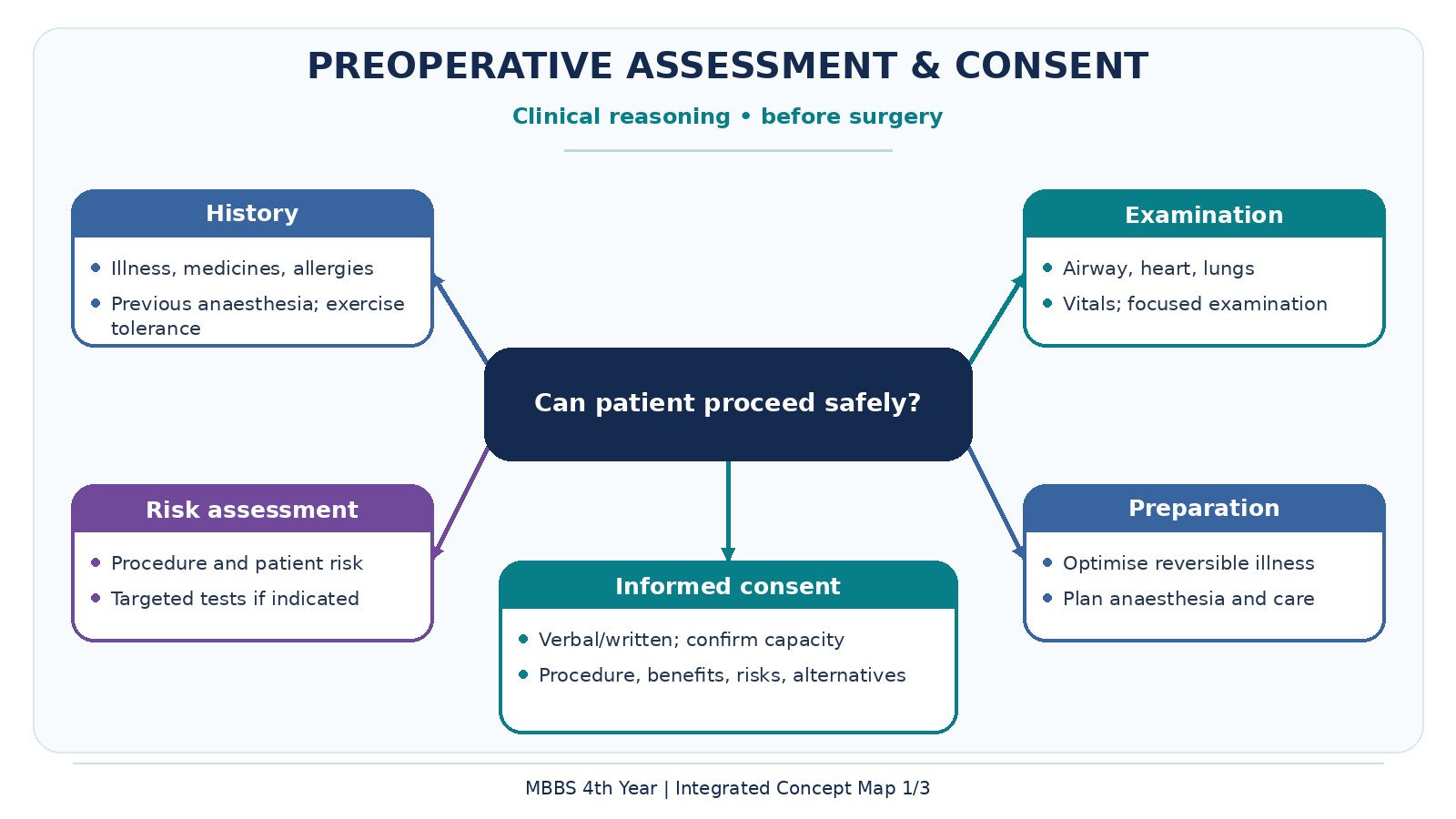
The assessment starts with the procedure and its urgency. A short superficial operation differs from major abdominal surgery; elective surgery allows time to optimise disease, whereas an emergency may require resuscitation and surgery together. Focused history then looks for exertional chest pain, breathlessness, poor exercise tolerance, known heart or lung disease, diabetes, kidney disease, bleeding problems, previous anaesthetic difficulty, allergies, smoking, alcohol use and current medicines. Ask specifically about anticoagulants, antiplatelet drugs, insulin and other medicines that may affect bleeding, glucose control or anaesthesia. A previous airway or anaesthetic complication is particularly important to communicate to the anaesthesia team.
Examination addresses vital signs and the patient’s general condition, with focused cardiovascular and respiratory findings. Airway assessment helps anticipate difficulty with ventilation or intubation. Functional capacity—what the patient can do in daily life without limiting symptoms—adds information about physiological reserve. The anaesthetist makes the anaesthetic assessment and plan; the surgical and medical teams contribute information about the operation and associated conditions.
Investigations answer clinical questions. A blood count may reveal anaemia relevant to expected blood loss; renal function can affect fluid and medicine decisions; an ECG may clarify suspected or established cardiac disease. Tests are selected according to the patient, procedure and findings rather than ordered automatically for everyone. The ASA physical status classification describes the burden of systemic illness; it helps communicate risk but does not, by itself, decide whether surgery is safe. :contentReference[oaicite:0]{index=0}
B. Turning assessment into a safer operative plan
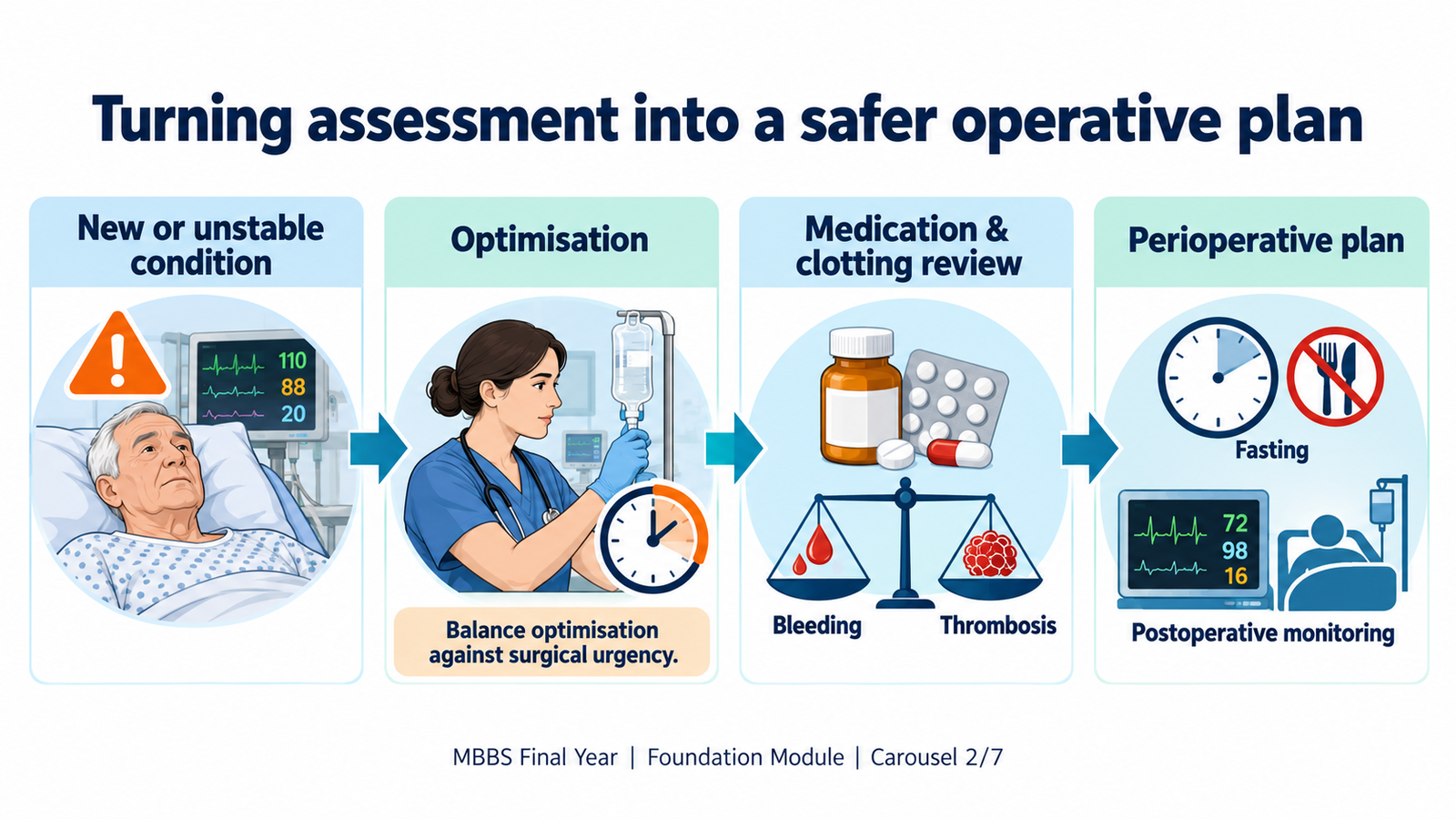
Finding a risk matters only if it changes preparation or the plan. For elective surgery, an acute illness or poorly controlled condition may justify treatment and reassessment first. Examples include a respiratory infection with significant symptoms, uncontrolled blood pressure with concerning features, decompensated heart failure or marked anaemia before an operation with expected blood loss. The response depends on urgency and clinical judgement: delaying essential emergency surgery can itself cause harm.
The team should agree on management of long-term medicines, diabetes, anticipated bleeding, blood availability when relevant, airway concerns and postoperative monitoring. Anticoagulants and antiplatelet medicines require an individual decision balancing bleeding against thrombosis; a patient should not stop them simply because an operation is planned. Fasting and aspiration precautions follow the anaesthesia team’s instructions and local policy. Infection prevention and venous thromboembolism prevention are considered according to the procedure and patient risk.
Preparation also includes a clear handover: what the operation is, why it is needed, important medical risks, allergies, relevant results and any unresolved concern. A useful preoperative conclusion is therefore more than “cleared for surgery.” It states the identified risks, what has been optimised, and what precautions are needed during anaesthesia and recovery.
C. Informed surgical consent as a patient decision
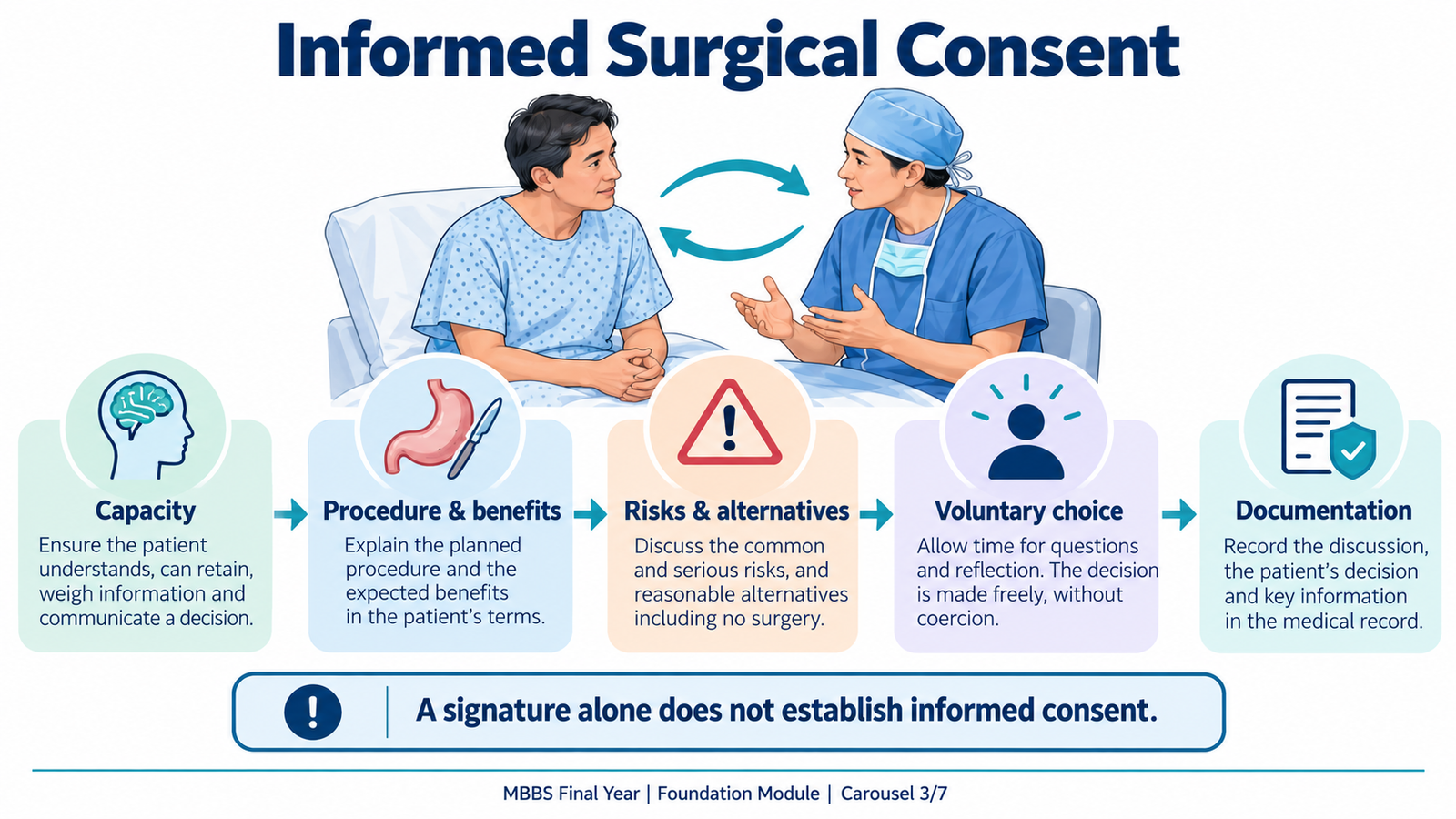
Informed consent is a discussion and a decision, not merely a signature. A patient with decision-making capacity should understand the proposed procedure and its purpose, likely benefits, important risks and limitations, reasonable alternatives—including no operation when relevant—and what recovery may involve. The discussion should address risks that matter particularly to that patient. The patient needs an opportunity to ask questions and decide voluntarily, without pressure. The discussion and decision are documented. :contentReference[oaicite:1]{index=1}
Consent may be implied for a simple, low-risk interaction when a patient knowingly cooperates; expressed verbally when a clear spoken agreement is appropriate; or expressed in writing for an operation, where documentation of the discussion and decision is particularly important. Written consent does not replace understanding. Surgical consent should identify the intended operation and relevant site or side, and should explain a realistic possibility of changing or extending the procedure when this is foreseeable. Anaesthesia also requires its own appropriate discussion.
Capacity concerns the particular decision at the particular time. Assess whether the patient can understand, retain and use the relevant information and communicate a choice; support understanding with suitable language or an interpreter where needed. A capable adult may refuse treatment even when clinicians believe the operation would help. If the patient lacks capacity, follow the applicable legal and institutional process for an authorised decision-maker or a decision in the patient’s interests. In a genuine emergency, necessary treatment may have to proceed when the patient cannot decide and delay would cause serious harm; the reasoning and circumstances must be documented. These principles do not create a blanket permission for unrelated procedures.
🩺 AIM Clinical Bridge
A patient with diabetes and a previous coronary stent is scheduled for an elective abdominal operation. Preoperative assessment finds that the patient takes an antiplatelet medicine and has recently developed breathlessness. The team investigates the new symptom, discusses bleeding and thrombosis risks together, and decides what must be addressed before proceeding. The consent discussion then covers the operation, its meaningful risks, alternatives and the possibility that the surgical approach may need to change. In theatre, the whole team confirms the agreed plan before incision.
D. Protecting the patient in the operating theatre
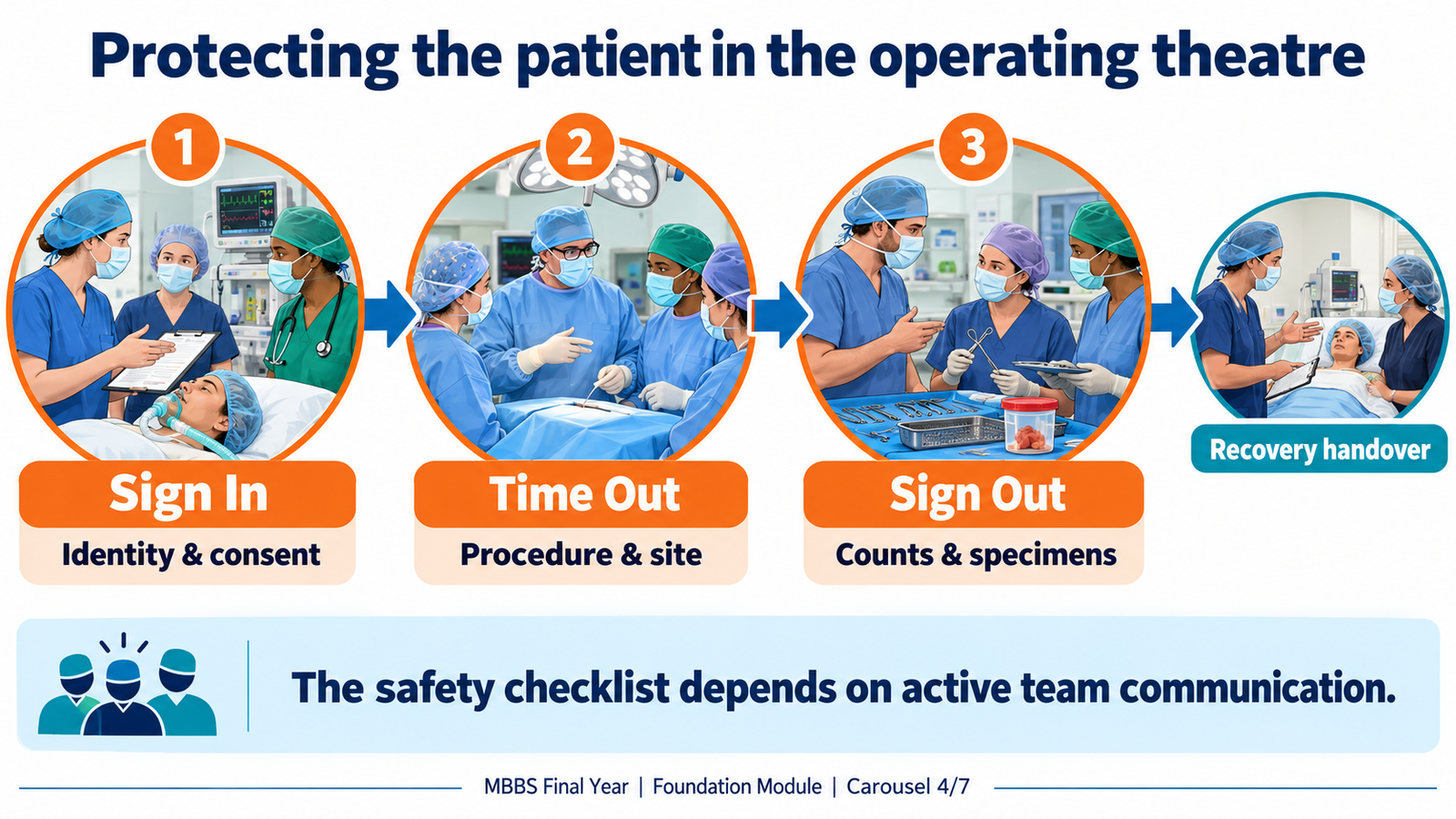
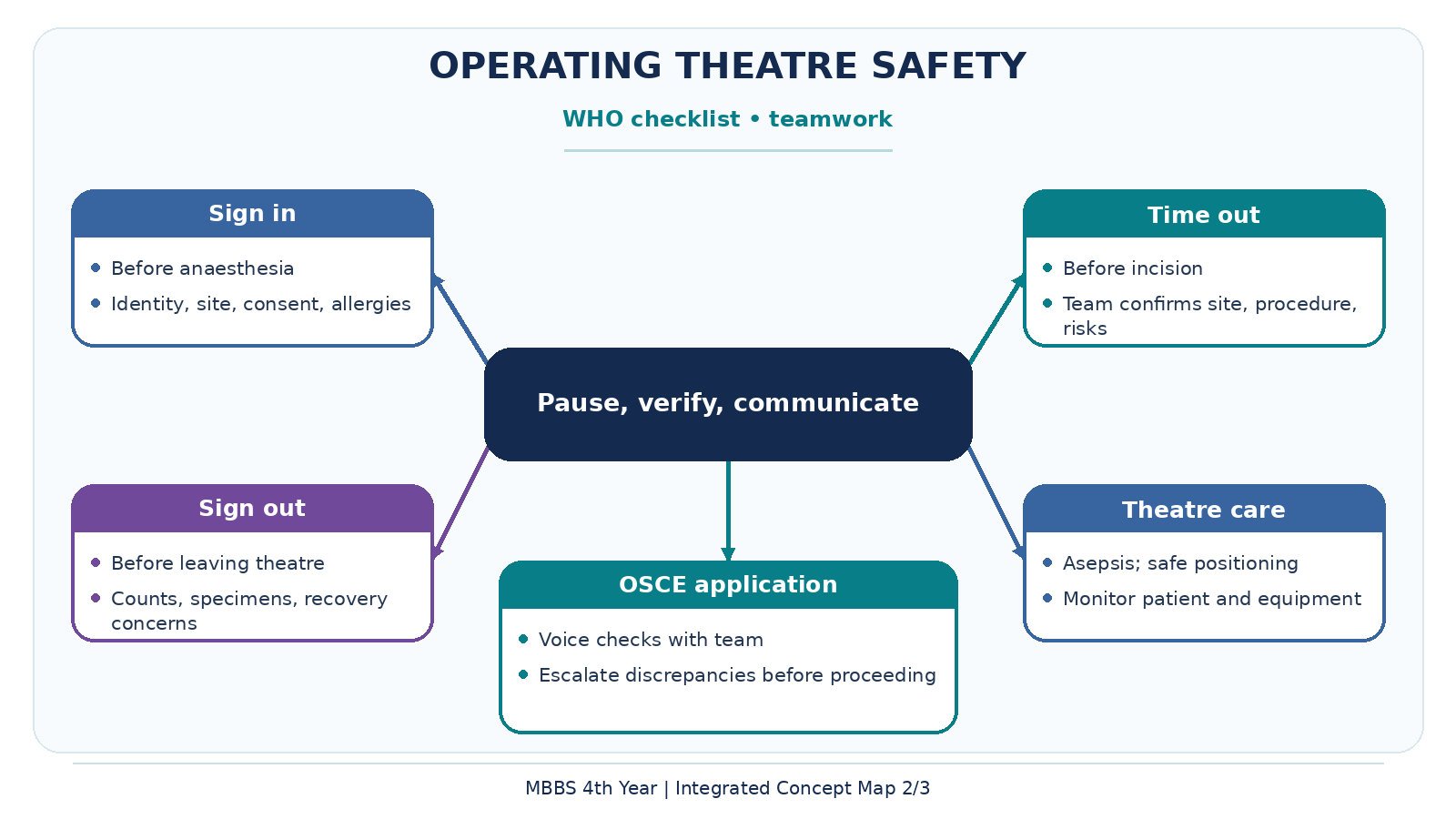
The operating theatre combines anaesthesia, invasive surgery, equipment and several professionals working at once. Safety therefore depends on shared information and deliberate checks. The team verifies the patient, planned operation and site, reviews consent and allergies, anticipates airway or blood-loss problems, maintains aseptic practice, positions the patient to prevent injury, and checks that instruments and equipment are suitable. Surgical counts, specimen identification and a clear recovery handover protect the patient after the incision has been closed.
The WHO Surgical Safety Checklist structures a brief team conversation at three points: Sign In before induction of anaesthesia, Time Out before skin incision, and Sign Out before the patient leaves the operating room. Sign In confirms key identity, procedure, consent and anaesthetic safety information. Time Out brings the team together to confirm the correct operation and site and share anticipated problems. Sign Out checks completion details such as counts, specimen labelling, equipment concerns and the postoperative plan. The checklist supports active communication; silently ticking boxes misses its purpose. :contentReference[oaicite:2]{index=2}
These steps apply the patient-safety principles introduced in Topic 1. Here, the important connection is practical: an unrecognised allergy, wrong-site operation, missing instrument or unclear recovery instruction can become patient harm unless somebody identifies and communicates it at the right time.
E. Skin and abdominal incisions, then secure wound closure
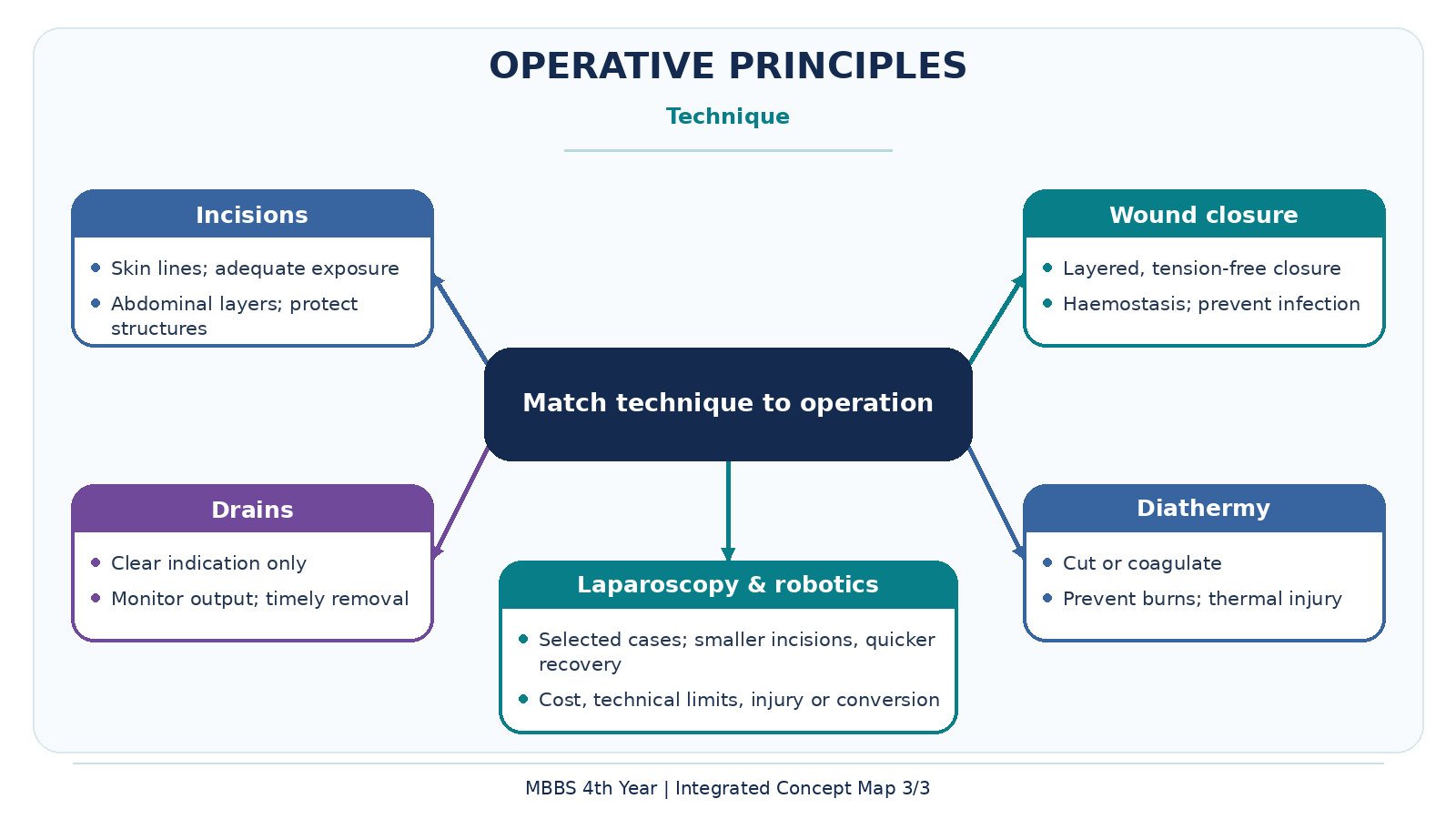
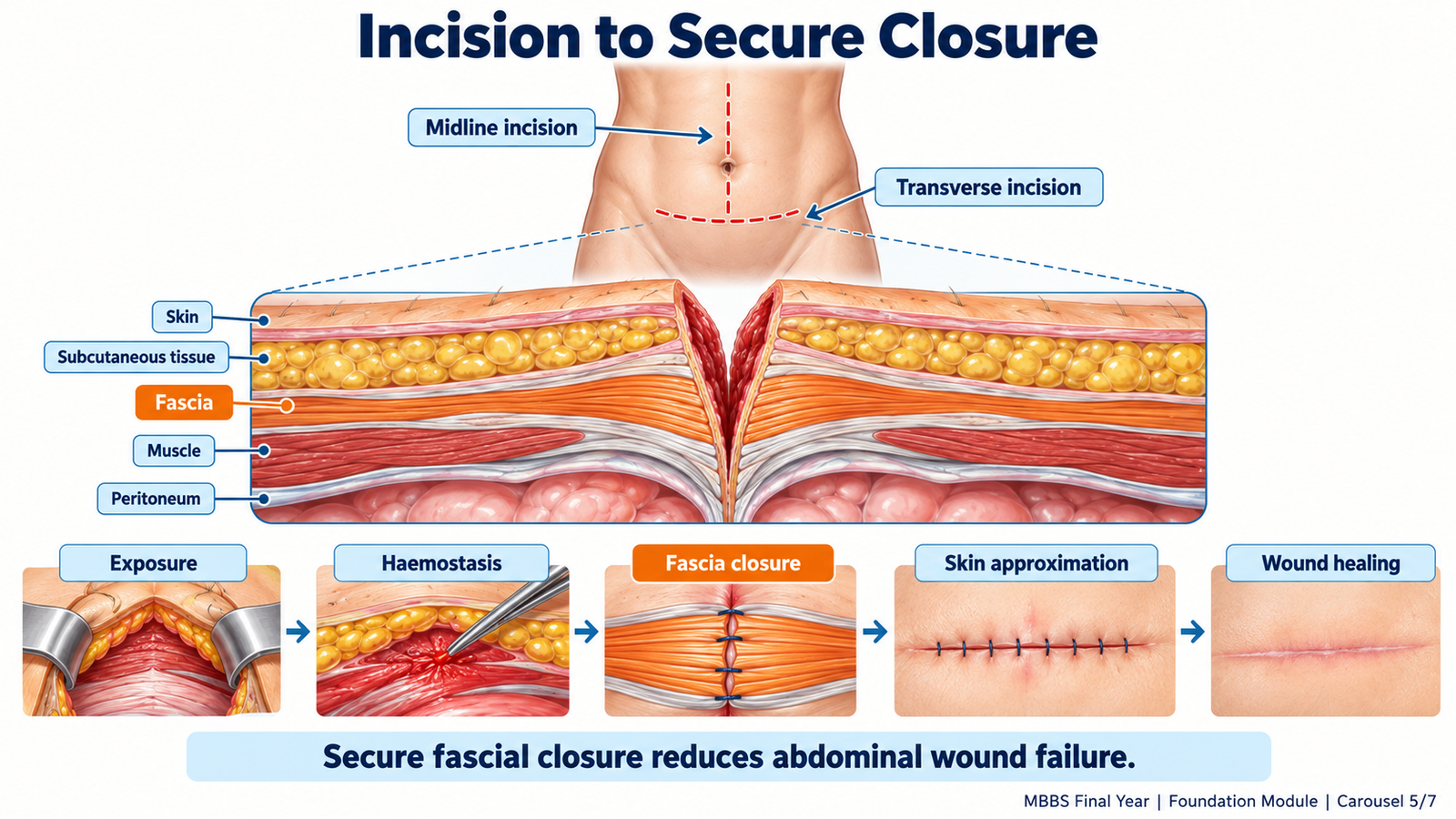
An incision must provide adequate access while limiting avoidable tissue injury and allowing reliable closure. The surgeon considers the target organ, expected exposure, previous scars, blood supply, important nerves, skin creases and whether the incision may need to be extended. Gentle tissue handling and haemostasis help reduce bleeding, tissue damage and subsequent wound problems.
In the abdomen, a midline incision gives broad access and is comparatively quick to extend, which is useful when the pathology is uncertain or access is urgent. A transverse or oblique incision may suit a particular region and can align more favourably with local tissues, but provides different exposure and may be less easily extended. The “best” incision follows the operation and patient, not a single rule for all abdominal surgery.
Closure aims to restore the strength and function of the divided layers. In abdominal surgery, secure fascial closure is especially important because weak fascial healing can lead to wound separation or an incisional hernia. Sutures may be absorbable or non-absorbable; choice depends on how long the tissue needs support and the tissue being closed. Skin can be approximated with sutures, staples or suitable adhesive where appropriate. Edges should meet without excessive tension or loss of blood supply. Infection, impaired perfusion, excessive tension and poor nutritional or metabolic status can compromise healing. A contaminated wound may require a different closure strategy from a clean wound.
F. Drains and diathermy: useful tools with specific risks
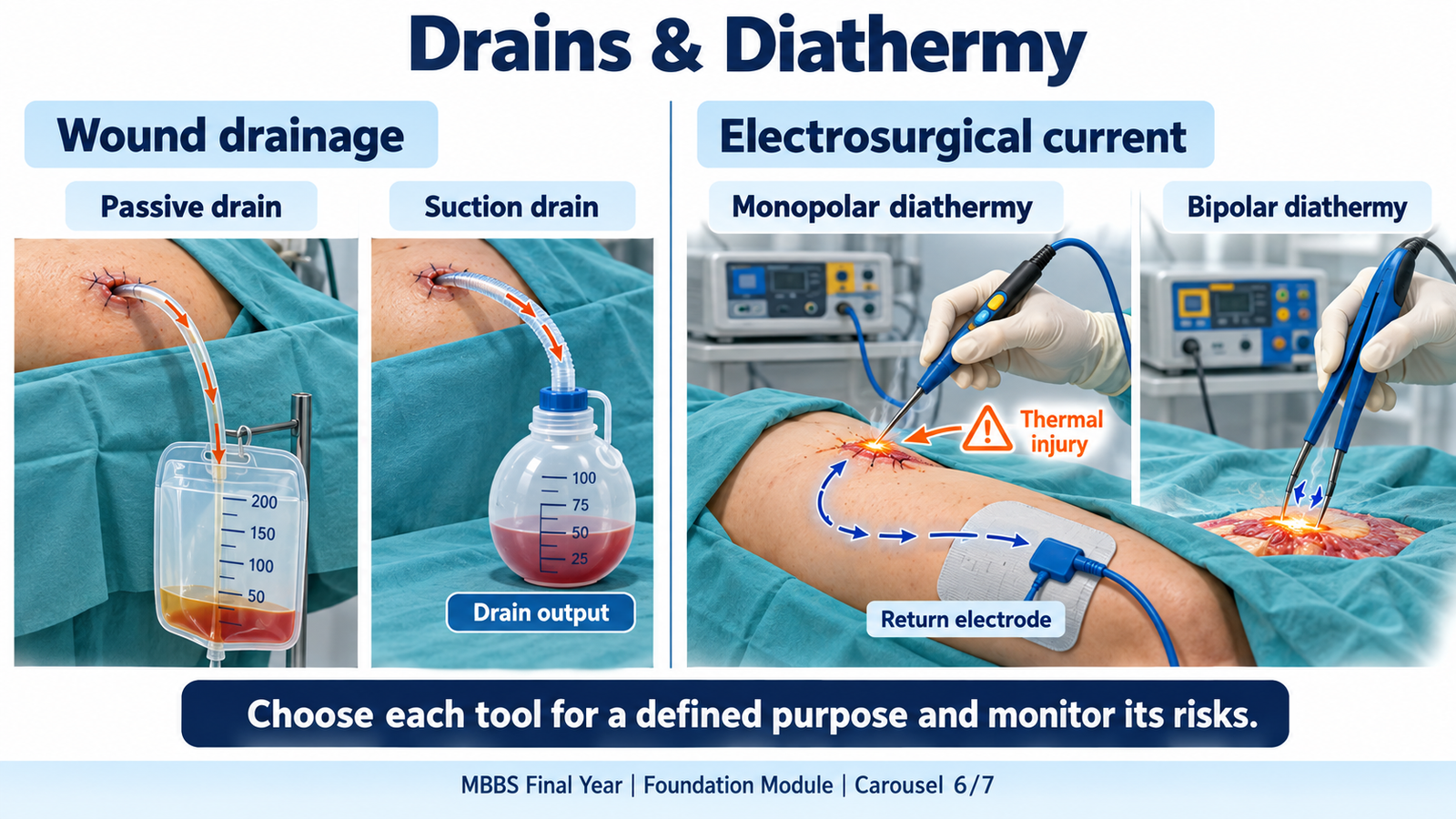
A surgical drain provides a route for fluid or air to leave an operative area when that is clinically useful. It may help remove or reveal a collection, such as blood or other postoperative fluid. A passive drain relies mainly on pressure and gravity; an active drain uses suction. The team must know why the drain was placed, observe the nature and amount of output, keep it secure and remove it when its purpose has ended. A drain cannot compensate for inadequate haemostasis or treatment of the underlying problem. Potential harms include infection, blockage, dislodgement and tissue injury.
Diathermy uses electrical energy to generate heat for cutting tissue or controlling bleeding. In monopolar diathermy, current passes from the instrument through the patient to a return electrode; correct electrode placement and equipment checks help prevent unintended burns. In bipolar diathermy, current passes between two closely spaced tips, concentrating the effect near the instrument. Neither method replaces careful identification of tissue: heat can injure nearby structures, and surgical smoke and fire hazards require appropriate precautions.
The common principle is purposeful use. A drain should answer a clinical need, and diathermy should achieve a controlled tissue effect. Both require awareness of what can go wrong and observation after use.
G. Laparoscopic and robotic surgery: choosing an approach
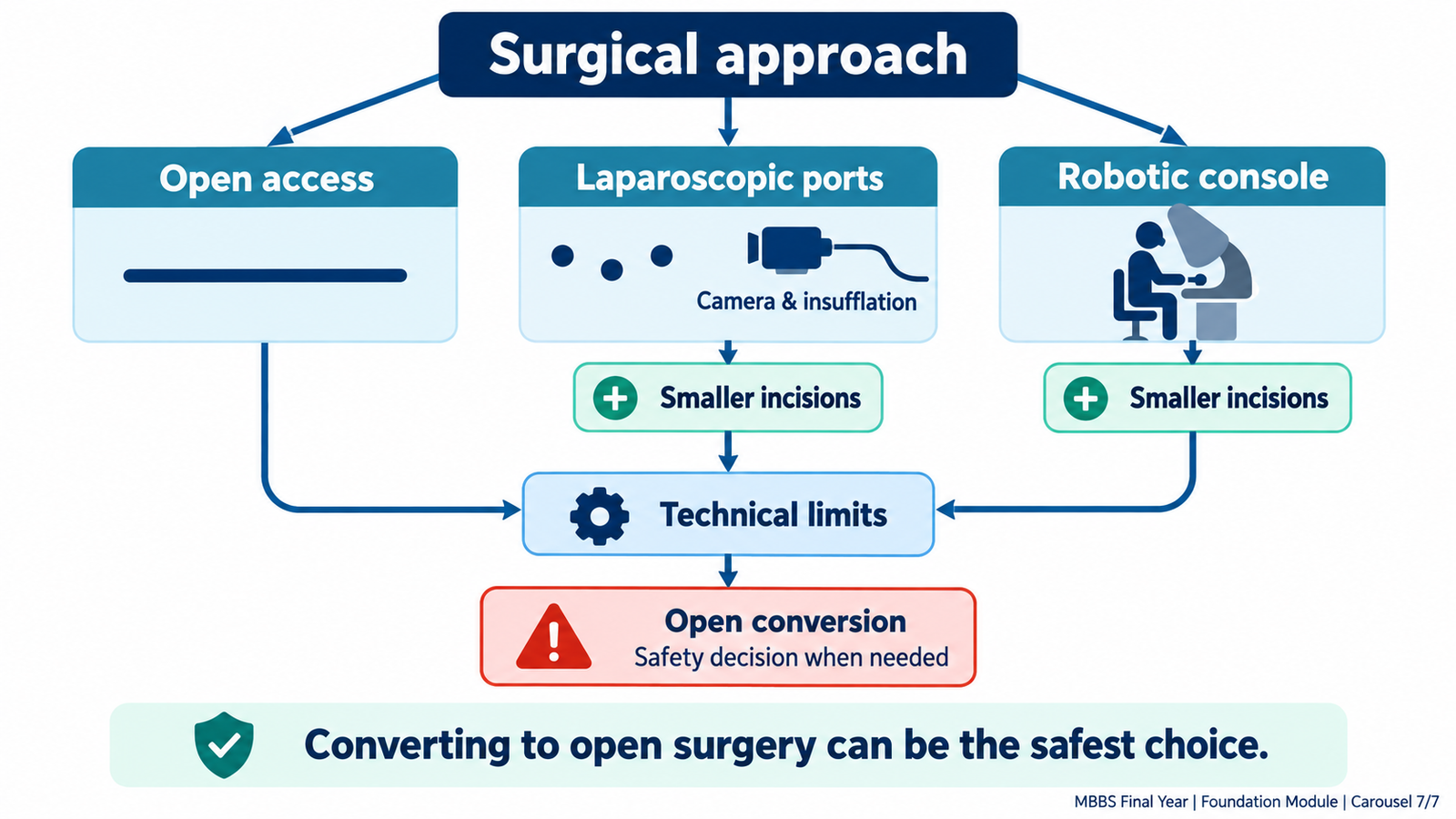
In laparoscopic surgery, a camera and instruments enter through small abdominal ports. Gas creates working space in the abdomen, allowing the surgeon to view and operate on internal structures. It may be used for selected diagnostic or therapeutic abdominal operations when the patient, disease and available expertise make it suitable. Compared with an appropriate open approach, smaller incisions may reduce wound pain and support earlier mobilisation and recovery. These benefits are possible advantages, not guarantees for every patient or procedure. :contentReference[oaicite:3]{index=3}
The approach has limits: it requires equipment, trained staff and an adequate view and working space. Access and instrument use can injure vessels or organs; gas insufflation has physiological effects that matter to anaesthesia. Bleeding, difficult anatomy or failure to progress safely may require conversion to an open operation. Conversion is a safety decision, not automatically a complication or failure.
Robotic surgery is a form of surgeon-controlled, instrument-assisted minimally invasive surgery. The surgeon operates from a console; the robot does not decide or operate independently. Articulated instruments and a magnified view can help in selected technically demanding procedures. Possible advantages must be weighed against cost, availability, training needs, operating time and the same fundamental risks of access, bleeding and organ injury. A robotic approach is not inherently the best option for every patient.
For either approach, the patient should understand why it is proposed, its likely benefits and limitations, reasonable alternatives and the possibility of conversion when relevant. The operative method follows the patient’s needs and the team’s ability to deliver it safely.
AIM High-Yield Review
- Preoperative assessment considers the patient, the operation, anaesthesia and recovery together.
- Fitness for surgery is a risk–benefit judgement; urgency changes how much optimisation is possible.
- History, examination and targeted tests should identify risks that can change the plan.
- ASA physical status describes systemic illness; it is not a stand-alone permission to operate.
- ⭐ Anticoagulant or antiplatelet decisions balance bleeding against thrombosis and must be individualised.
- Informed consent requires capacity, relevant information, voluntariness and a documented decision.
- Signing a consent form does not replace a meaningful discussion.
- The surgical safety checklist uses Sign In, Time Out and Sign Out to support team communication.
- Incision choice balances exposure with tissue injury; secure abdominal fascial closure helps prevent wound failure.
- Drains serve a defined purpose and require monitoring; they do not replace good operative technique.
- Diathermy controls bleeding or cuts tissue through heat but can cause unintended thermal injury.
- Laparoscopic and robotic approaches offer benefits in selected patients; conversion to open surgery may be the safest decision.
🎬 Topic 3 — Preoperative Assessment & Surgical Safety
Watch how a patient is assessed before anaesthesia, then see how the operating team uses Sign In, Time Out and Sign Out to protect the patient.