
📖 AIM Learning Material
TOPIC 4. PERIOPERATIVE FLUIDS, NUTRITION, RECOVERY & PAIN CARE
Foundation Module · Supporting the patient before surgery, recognising problems afterward and helping recovery begin safely.
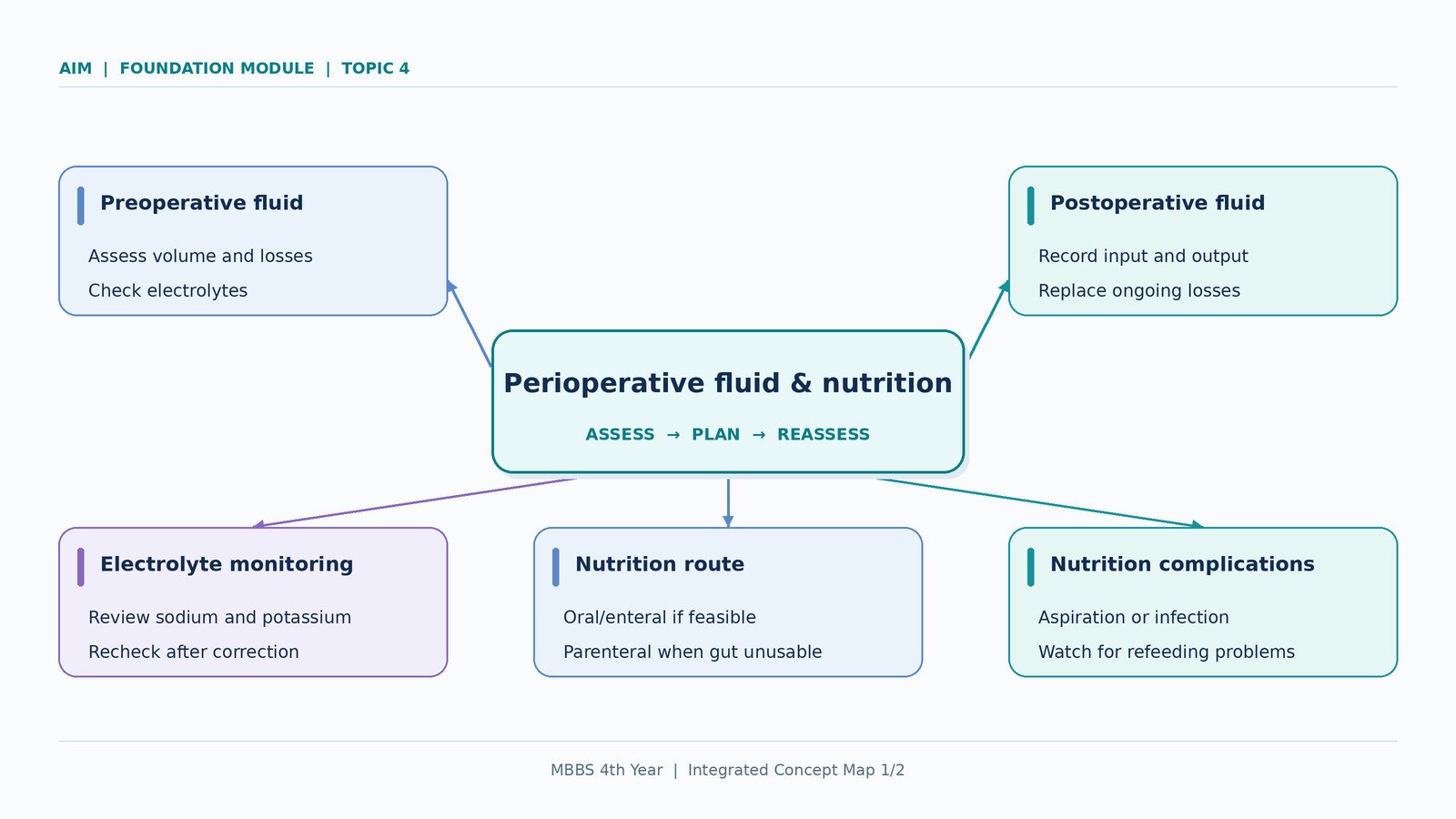
An operation temporarily changes a patient’s normal intake, fluid losses, movement and ability to eat. Anaesthesia and surgical stress also affect breathing, circulation and pain. Perioperative care aims to meet the patient’s needs without giving too much or too little treatment, detect complications early, and restore normal function as soon as it is safe. This chapter follows that journey: assess fluids and electrolytes, choose nutritional support, monitor recovery, recognise deterioration, understand enhanced recovery after surgery, and control pain. The central question throughout is simple: What does this patient need now, and how will we know whether the plan is working?
A. Assessing fluid and electrolyte needs before and after surgery
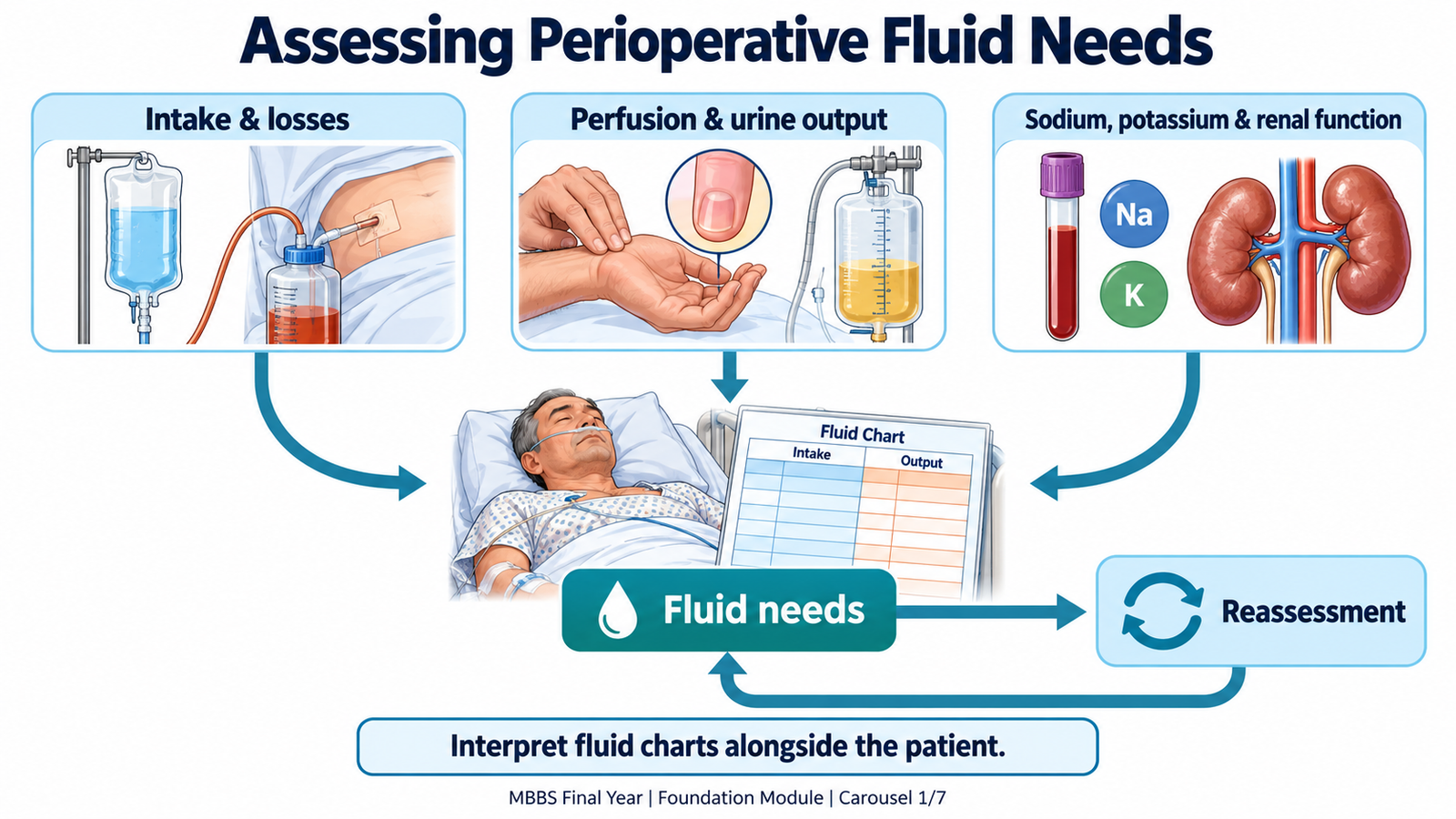
Fluid assessment begins with the patient’s circulation, intake, losses and ability to drink. A prescription cannot be based only on the fact that the patient is having surgery. Before the operation, ask about vomiting, diarrhoea, poor intake and diuretic use; look for thirst, dry mucous membranes, postural symptoms, oedema and signs of poor perfusion. Review blood pressure, pulse, urine output, weight where available, and relevant blood results, especially sodium, potassium and renal function. Heart and kidney disease affect how well a patient tolerates either fluid loss or fluid administration.
After surgery, reassess because the situation may have changed. Record oral and intravenous intake and measure clinically important output, including urine, vomiting, nasogastric losses and drain fluid. Examine the patient alongside the chart: a rising pulse, low blood pressure, cool peripheries or falling urine output may suggest impaired circulation, while breathlessness, crackles and new oedema may suggest fluid excess. An apparently “positive” or “negative” balance on paper must be interpreted with the examination and results.
It helps to distinguish resuscitation for poor perfusion, maintenance when normal intake is insufficient, and replacement of an identified abnormal loss. Redistribution—for example, fluid moving into inflamed tissues—may also complicate assessment. Whichever need is identified, reassessment closes the loop: prescribe, observe the response, and change the plan.
B. Matching fluid treatment to the problem
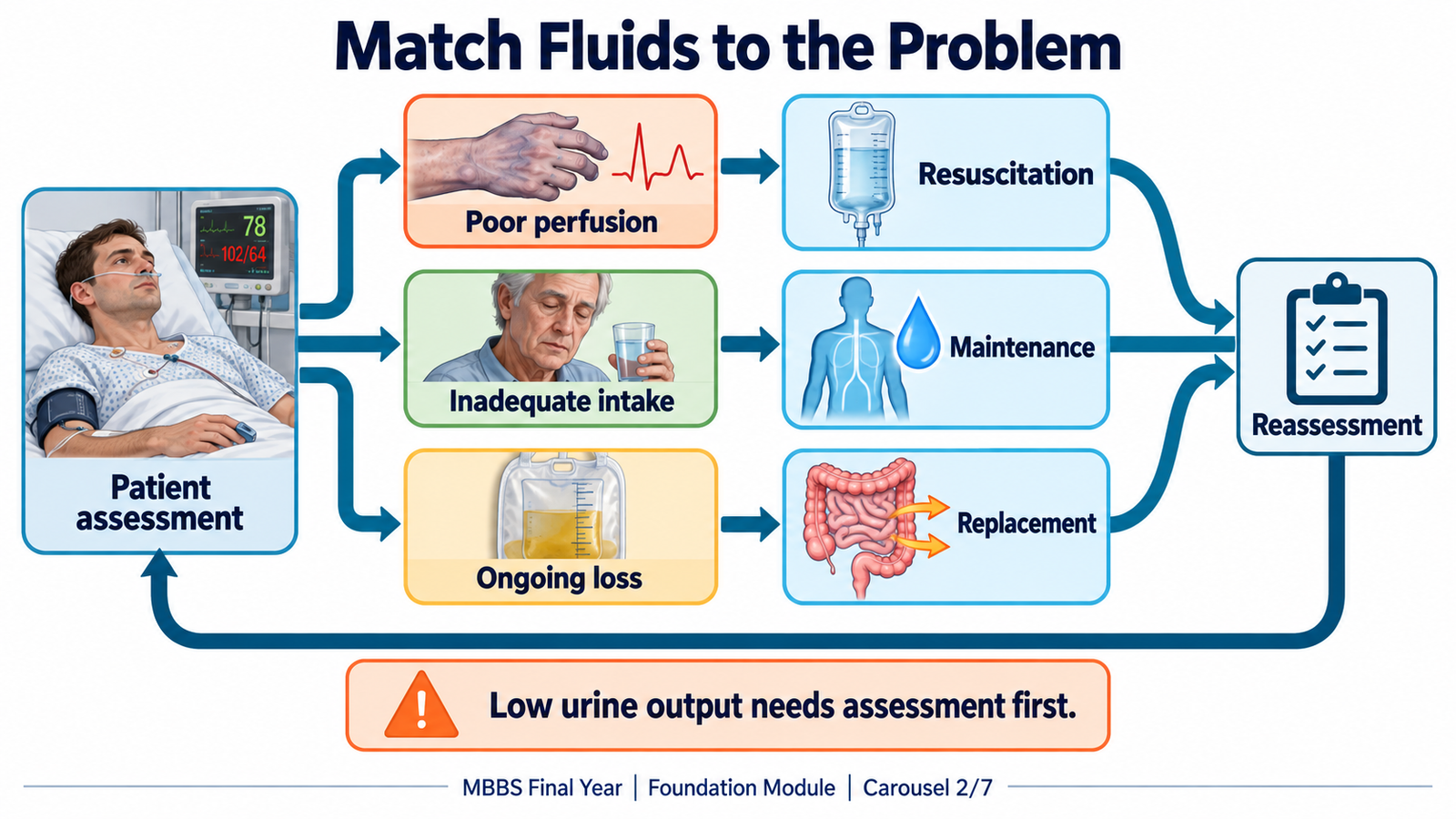
Resuscitation, maintenance and replacement are different jobs. A patient with suspected intravascular depletion and poor perfusion needs prompt clinical review and appropriate intravenous resuscitation with repeated assessment. A stable patient who temporarily cannot drink may instead need routine maintenance. A patient losing gastrointestinal fluid needs the ongoing loss recognised and replaced in addition to ordinary needs. Giving the same fluid regimen to all three patients risks both under-treatment and overload.
The type of loss also matters. Vomiting or nasogastric drainage can disturb chloride and potassium; diarrhoea or other gastrointestinal losses can cause different electrolyte disturbances. Check serum electrolytes and renal function when clinically indicated, interpret the result alongside losses and medicines, and adjust replacement accordingly. Potassium should not be added or continued without considering the measured level and kidney function. A patient with impaired kidneys or heart failure may require particularly careful monitoring because excess fluid can worsen oedema or pulmonary congestion.
Postoperative low urine output is a finding to investigate, not an automatic instruction to give more fluid. Consider circulation, recent blood loss, intake and output, renal function, and whether a urinary catheter is obstructed. Reassess after an intervention. As soon as the patient can meet needs safely by mouth, oral intake usually reduces the need for intravenous maintenance.
C. Choosing nutritional support and recognising its complications
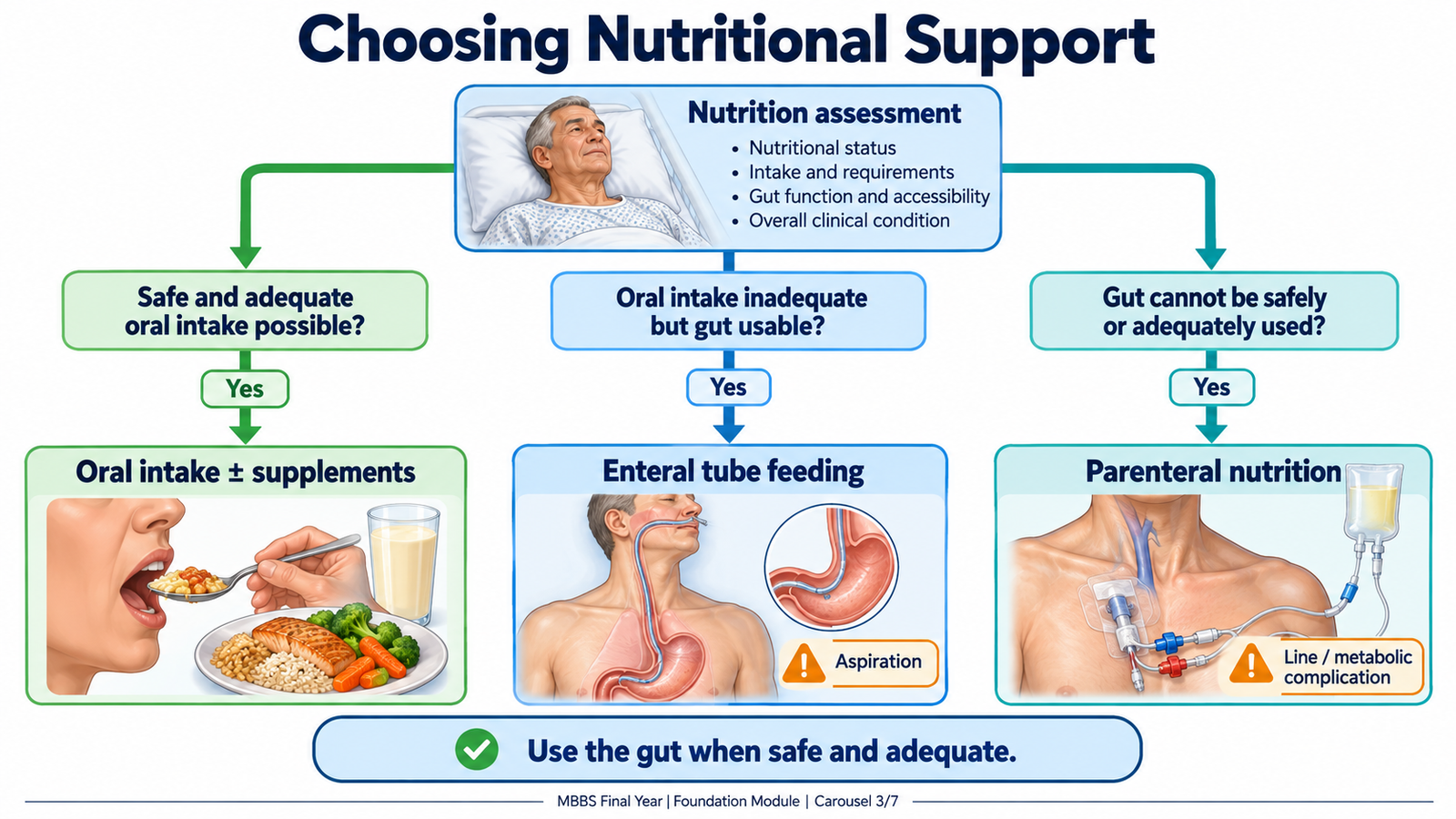
Nutrition supports tissue repair, immune function and recovery. Before and after surgery, consider recent weight loss, reduced intake, difficulty swallowing and whether the patient is likely to eat adequately during recovery. A patient who is eating enough needs support to continue normal intake; a patient whose intake is inadequate needs a plan matched to the reason.
Oral intake is preferred when safe and sufficient. Food advice and oral nutritional supplements may help a patient who can swallow but cannot meet requirements with meals alone. Enteral nutrition supplies nutrients through the gastrointestinal tract, often by a feeding tube, when oral intake is inadequate but the gut can be used. Parenteral nutrition supplies nutrients intravenously when the gastrointestinal route cannot meet needs. The choice is reviewed as the patient’s condition changes; parenteral support is not automatically necessary because the patient has had abdominal surgery.
| Route | When it fits | Important problem to watch for |
|---|---|---|
| Oral | Safe swallowing and adequate gut function | Intake remains below requirements |
| Enteral tube | Gut usable; oral intake inadequate | Aspiration, tube problems or intolerance |
| Parenteral | Gut route unable to meet needs | Line infection or metabolic disturbance |
Enteral feeding may cause nausea, diarrhoea, tube blockage or aspiration if feeding is unsafe. Parenteral feeding needs intravenous access and monitoring for line complications, abnormal glucose and electrolyte changes. In a severely undernourished patient, increasing nutrition too rapidly can cause serious electrolyte shifts; nutritional support therefore requires assessment and monitoring rather than an automatic standard feed.
D. What safe postoperative care checks first
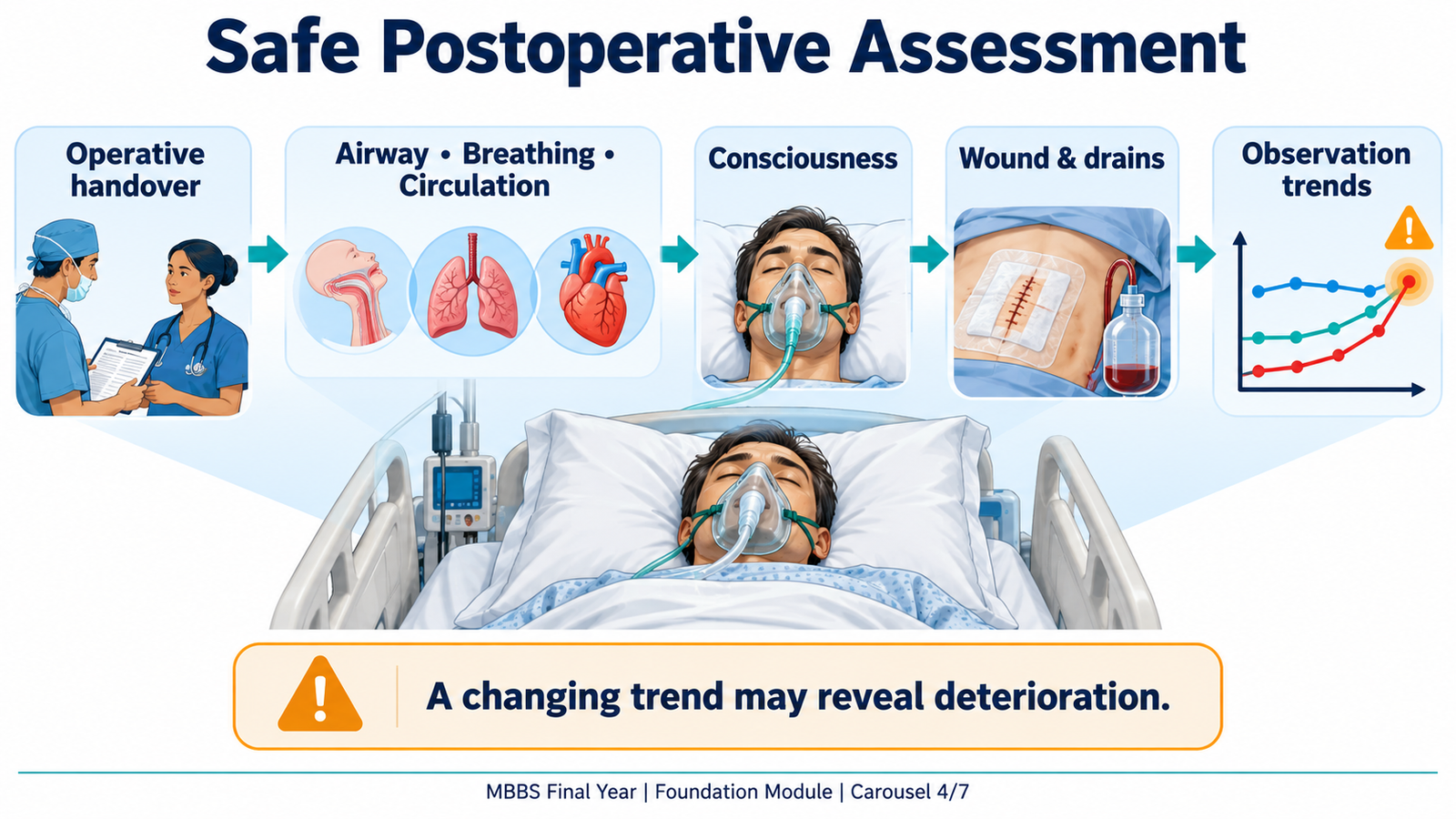
Recovery begins with a clear handover from the operating and anaesthesia teams: the procedure performed, anaesthesia given, important events, blood loss, fluids, medicines, drains and the intended monitoring plan. Immediately afterward, priorities are airway, breathing, circulation and level of consciousness. These are reassessed because a patient who was stable on arrival can deteriorate later. The frequency and setting of observation depend on the procedure and the patient’s risk.
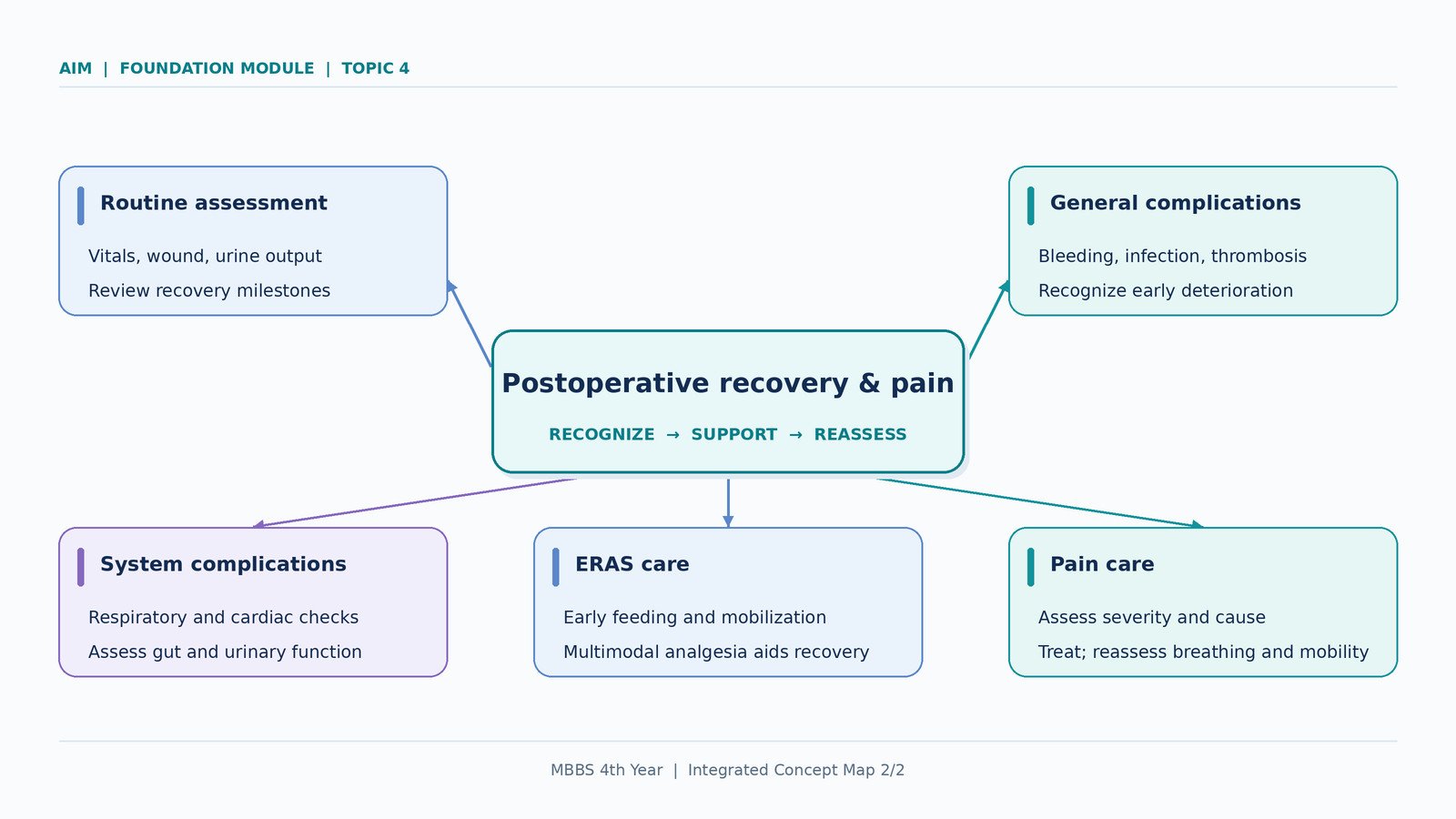
Monitor vital signs, oxygenation, comfort and urine output where relevant. Review the wound and drains for bleeding; assess nausea and the ability to resume drinking, eating and movement safely. Preventive care includes appropriate breathing support and mobilisation, infection prevention, and measures against venous thromboembolism according to individual risk. Document findings, actions and a clear plan for the next team. Postoperative care is active surveillance: the purpose of observations is to recognise a change early enough to act. :contentReference[oaicite:2]{index=2}
A single observation is less informative than a trend. A gradually increasing pulse or falling blood pressure may be more concerning than one isolated measurement. Similarly, increasing pain despite treatment, new confusion or worsening oxygenation needs reassessment rather than simply recording another number.
E. Recognising general and system-specific complications
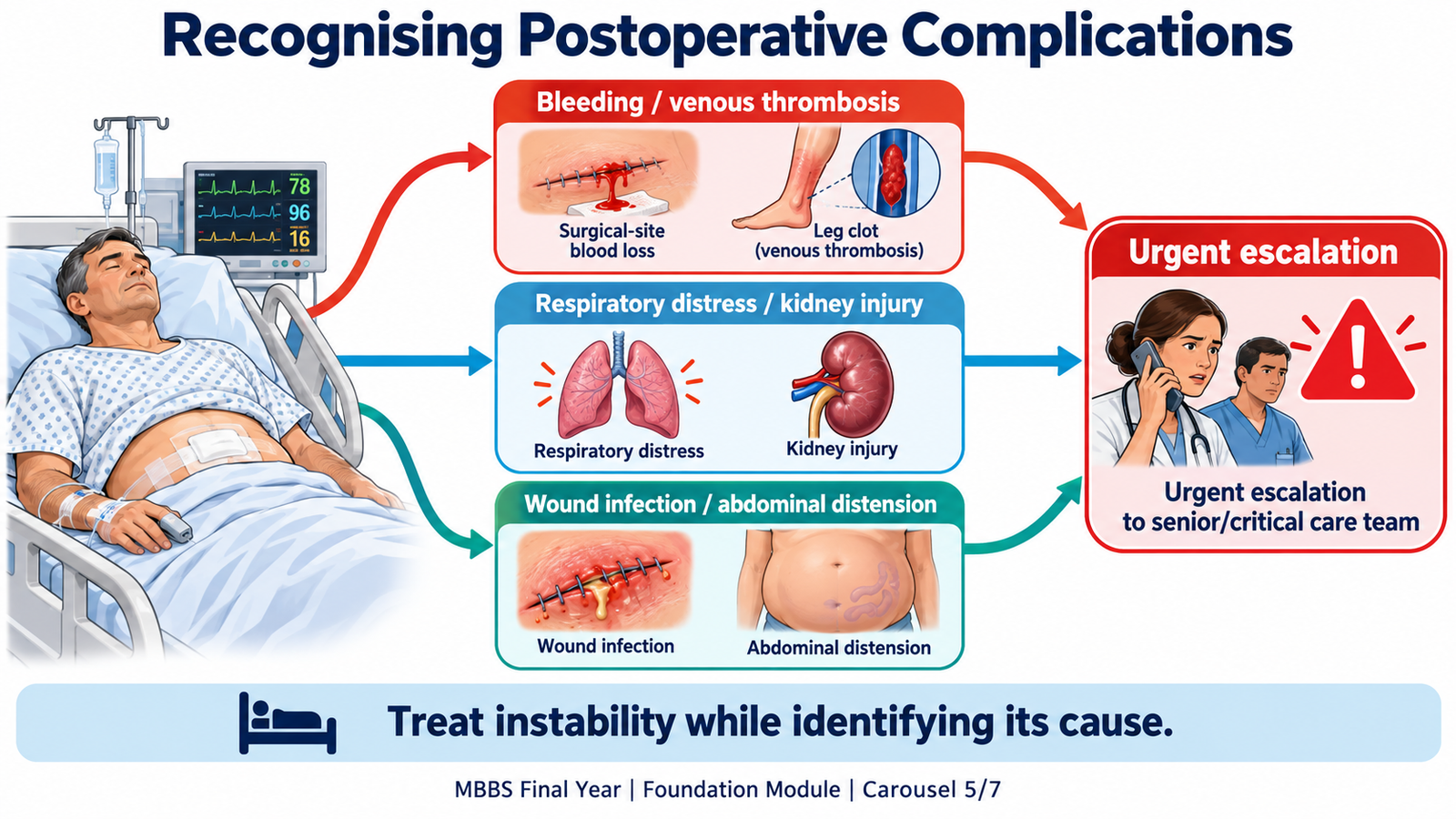
When a patient deteriorates after surgery, first identify whether there is an immediate threat to breathing or circulation. Bleeding may present with a rising pulse, falling blood pressure, pallor, increasing wound or drain blood, and reduced urine output. Respiratory problems may cause breathlessness, low oxygenation or increased work of breathing; possibilities include poor lung expansion, infection or a thromboembolic event. The clinical pattern and urgency guide examination and investigation.
Other complications become apparent through focused observations. Fever with an increasingly painful, red wound or discharge raises concern for a surgical-site infection. Abdominal distension, vomiting and failure to tolerate intake may suggest postoperative ileus or another abdominal problem. A swollen painful leg may raise concern for deep-vein thrombosis. Reduced urine output with worsening renal results may indicate acute kidney injury, although circulation, fluid balance and catheter function must also be considered. Chest discomfort or new cardiovascular instability needs prompt assessment.
Respond to the patient, not only the label. Support airway and breathing, assess circulation, seek senior help promptly for instability, and investigate the likely cause while treatment begins. A patient with significant postoperative pain may also have a complication: do not attribute new or escalating pain automatically to the expected effect of surgery.
🩺 AIM Clinical Bridge
Several hours after abdominal surgery, a patient becomes pale and restless. The pulse is rising, blood pressure is falling, urine output is decreasing and the drain contains increasing fresh blood. Together, these findings suggest possible blood loss with impaired circulation. The immediate priority is reassessment and escalation while the team evaluates and treats the cause. Giving maintenance fluid without recognising the bleeding would miss the central problem.
F. Enhanced Recovery After Surgery: planning recovery from the start
Enhanced Recovery After Surgery (ERAS) is a coordinated perioperative pathway designed to help patients regain function sooner. It is not a single drug or an instruction to discharge everyone early. The team prepares the patient before surgery, limits avoidable physiological stress during surgery and supports safe return to eating, movement and independence afterward. The details vary by procedure and patient.
Common components include preoperative information and optimisation; an evidence-based fasting plan; appropriate anaesthesia and prevention of nausea; thoughtful rather than excessive intravenous fluid use; effective pain relief that supports movement; and early oral intake and mobilisation when safe. Tubes and catheters are reviewed so they remain only as long as clinically useful. These measures work together: controlling nausea and pain helps the patient eat and move; movement supports recovery and reduces immobility-related problems.
The expected benefits include earlier return of normal function, fewer avoidable recovery barriers and, for suitable patients, a shorter hospital stay. Early never means regardless of safety. Suspected bleeding, ileus or respiratory deterioration calls for assessment and a change in the plan, even when an ERAS pathway is in use.
G. Assessing and treating perioperative pain
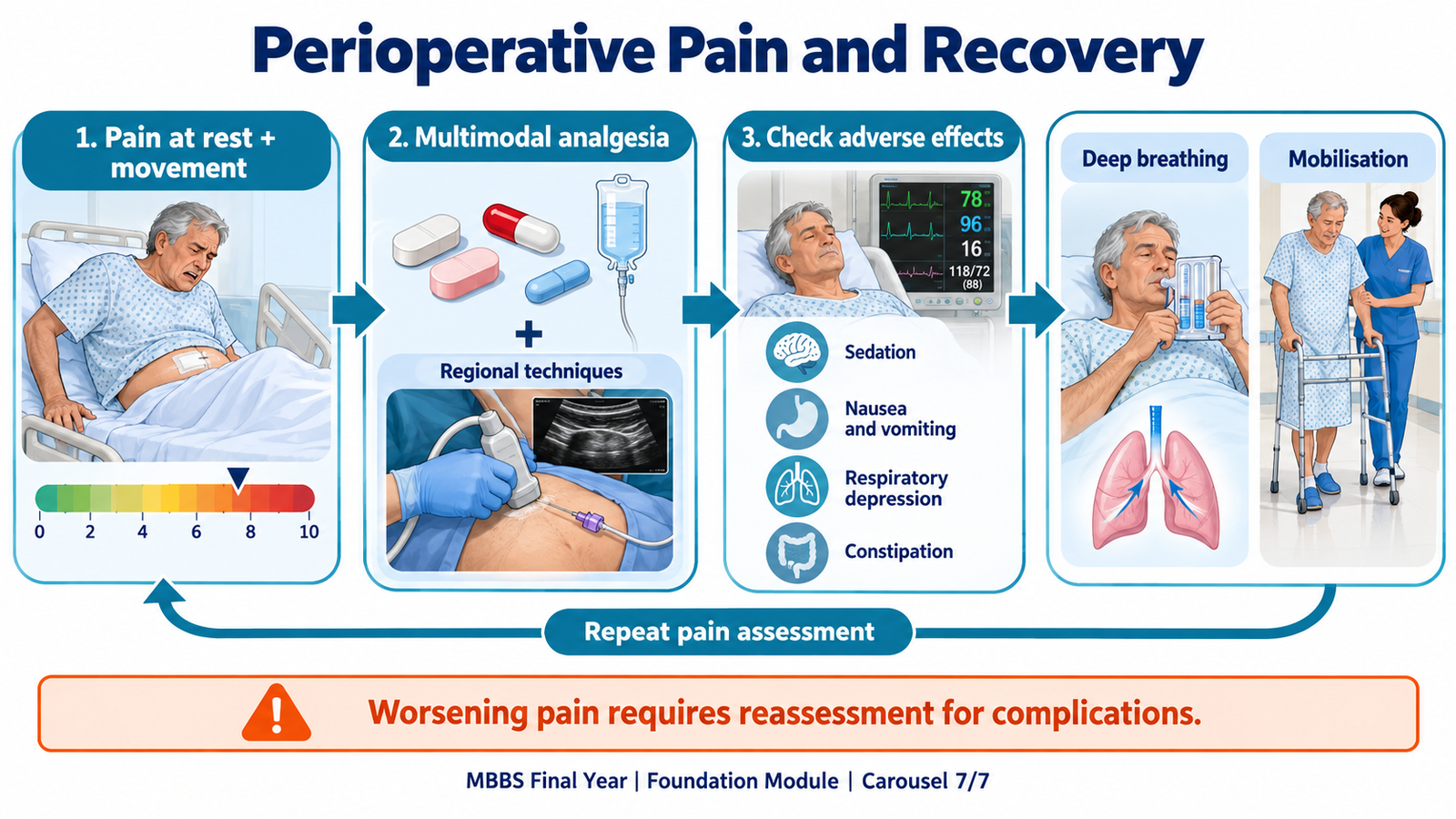
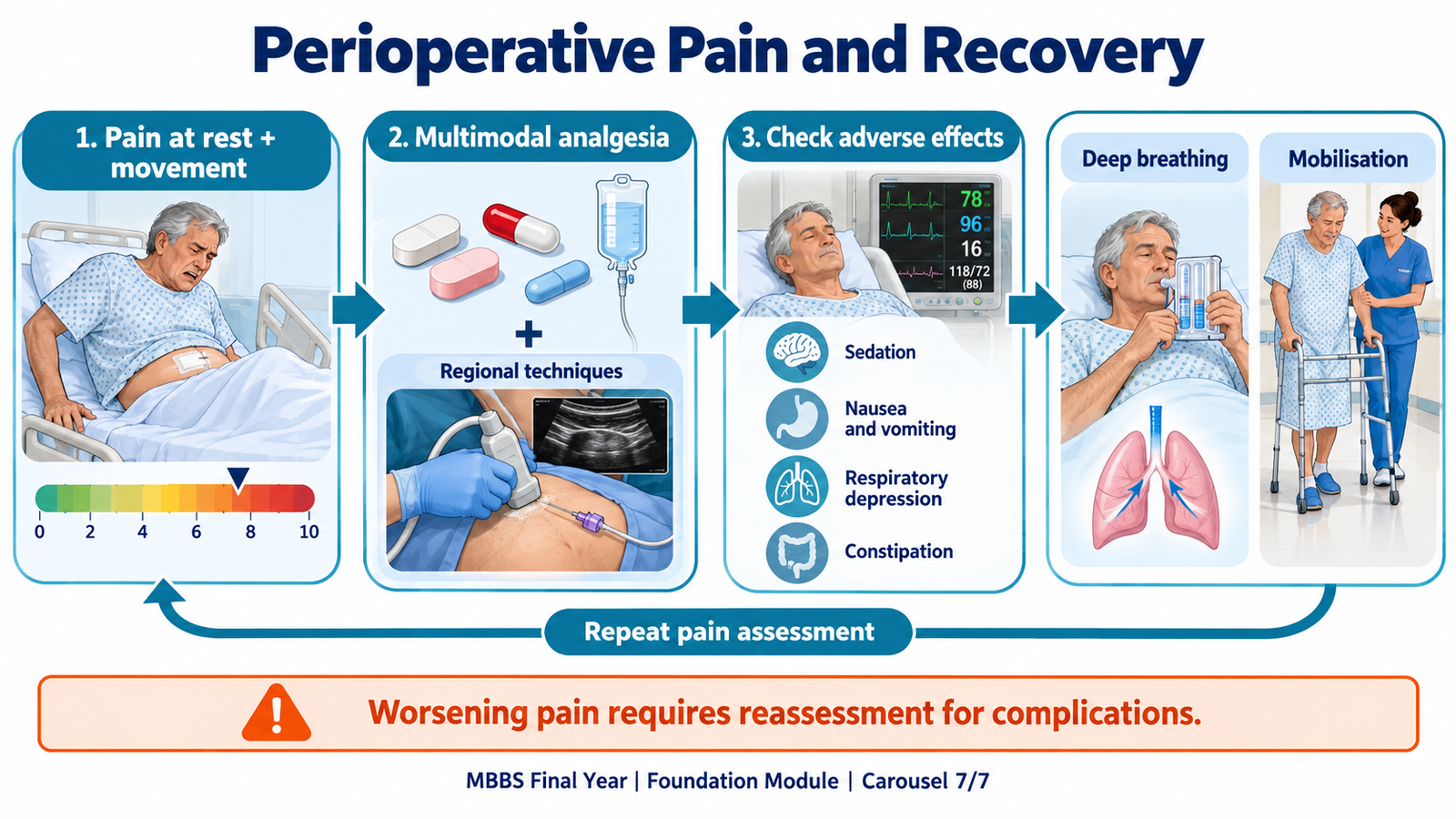
Pain assessment asks where the pain is, how severe it is, whether it changes, and what it prevents the patient from doing. Assess pain at rest and with movement or breathing, then check the effect of treatment. Pain that is unexpectedly severe or worsening needs examination for a complication, such as bleeding, infection or another problem; increasing the analgesic dose without reassessment may delay recognition.
Management is usually multimodal: combine suitable methods that work in different ways, tailored to the patient and operation. Paracetamol can form a basic component. A non-steroidal anti-inflammatory drug may help where appropriate, but bleeding risk, kidney function and other patient factors matter. Opioids may be required for stronger pain and need monitoring for sedation, respiratory depression, nausea and constipation. Local or regional analgesic techniques can reduce pain in the operated area and may lessen the need for systemic medicines. Reassess pain and adverse effects, and adjust the plan. :contentReference[oaicite:4]{index=4}
Untreated pain has consequences beyond discomfort. A patient may avoid deep breathing or coughing, increasing the chance of poor lung expansion. Pain can delay walking, sleep, eating and participation in recovery. Conversely, excessive sedation from analgesia may impair breathing and alertness. The goal is comfortable enough to breathe, move and recover safely, with tolerable adverse effects.
AIM High-Yield Review
- Fluid requirements depend on circulation, normal intake, abnormal losses and repeated clinical assessment.
- Resuscitation treats poor perfusion; maintenance covers ordinary needs; replacement addresses measured losses.
- Low urine output is a clinical clue, not an automatic indication for more intravenous fluid.
- Electrolyte replacement must reflect measured levels, ongoing losses and kidney function.
- Use oral nutrition when adequate; consider enteral feeding when the gut works but oral intake does not meet needs.
- Parenteral nutrition needs intravenous access and monitoring for infection and metabolic disturbance.
- Postoperative assessment prioritises airway, breathing, circulation and consciousness, then follows trends and operative concerns.
- A rising pulse, falling blood pressure, reduced urine output and fresh drain blood together suggest possible bleeding.
- New respiratory distress, marked bleeding or altered consciousness requires immediate reassessment and escalation.
- ERAS combines preparation, appropriate fluids, nutrition, pain care and early safe movement to support recovery.
- Assess pain at rest and with activity; unexpectedly worsening pain may indicate a complication.
- Multimodal analgesia aims to relieve pain while limiting adverse effects and enabling breathing and mobilisation.
Topic 4 | Perioperative Fluids, Nutrition, Recovery and Pain Care
Watch the videos alongside the Topic 4 learning material.