
TOPIC 6. Constipation, Pediatric Bowel Obstruction & Hirschsprung’s Disease
GIT Module · A clinically connected approach to constipation, childhood obstruction, diagnosis and treatment.
Topic Introduction
Constipation is a frequent presenting complaint, but its significance varies greatly. Most patients have functional constipation that improves with appropriate bowel care. A smaller group has a medical or structural cause, and a child who has been constipated since birth may have congenital intestinal obstruction. This chapter explains how stool becomes hard, how history and examination distinguish uncomplicated symptoms from danger signs, when investigations are useful, and how treatment is selected. It then follows Hirschsprung’s disease from the developmental absence of enteric nerve cells to its typical neonatal presentation, definitive diagnosis by rectal biopsy and surgical management. The main aim is to recognize which patient needs reassurance and medical treatment—and which needs prompt surgical evaluation.
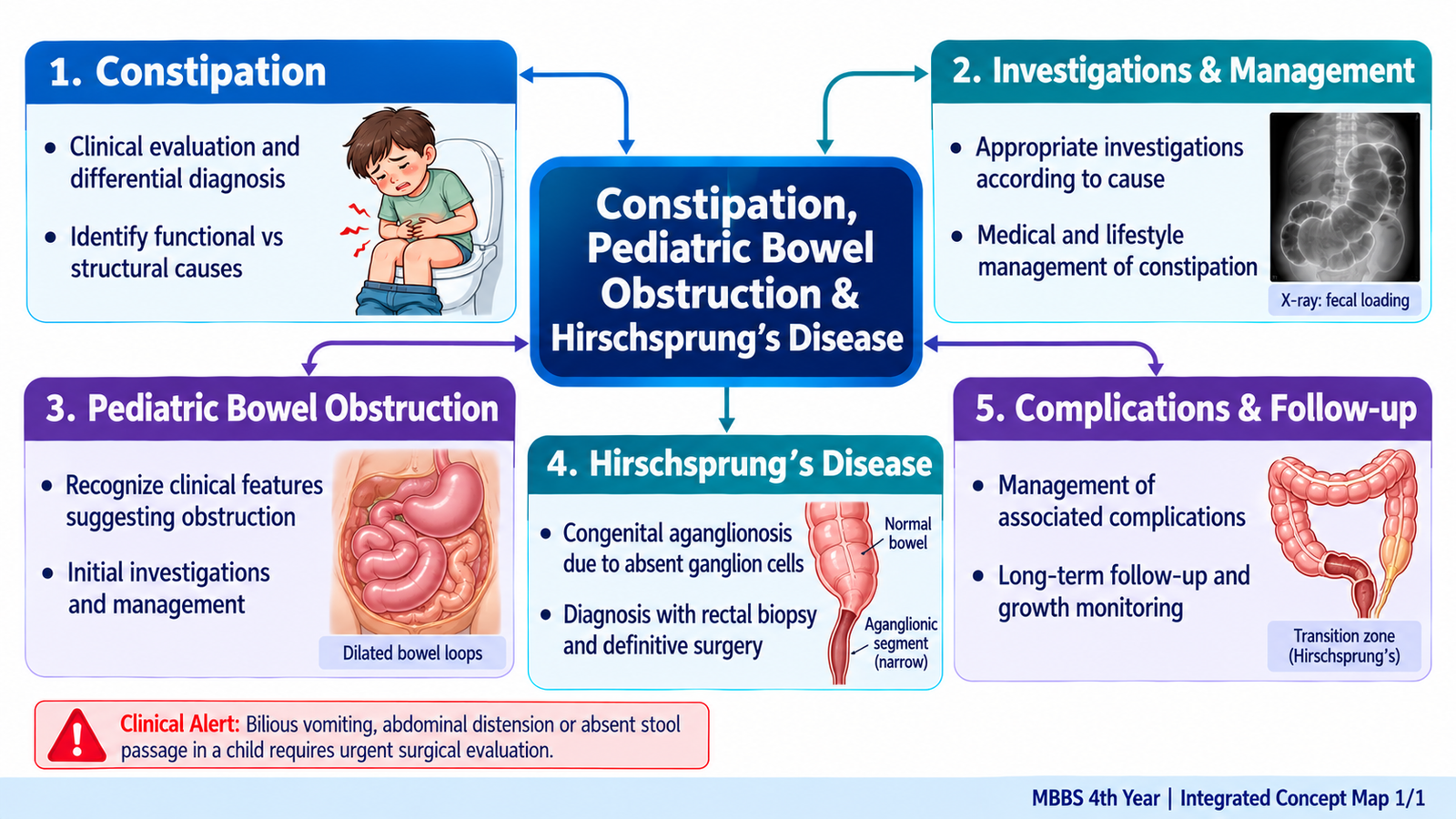
A. Understanding Constipation: Normal Transit and Major Causes
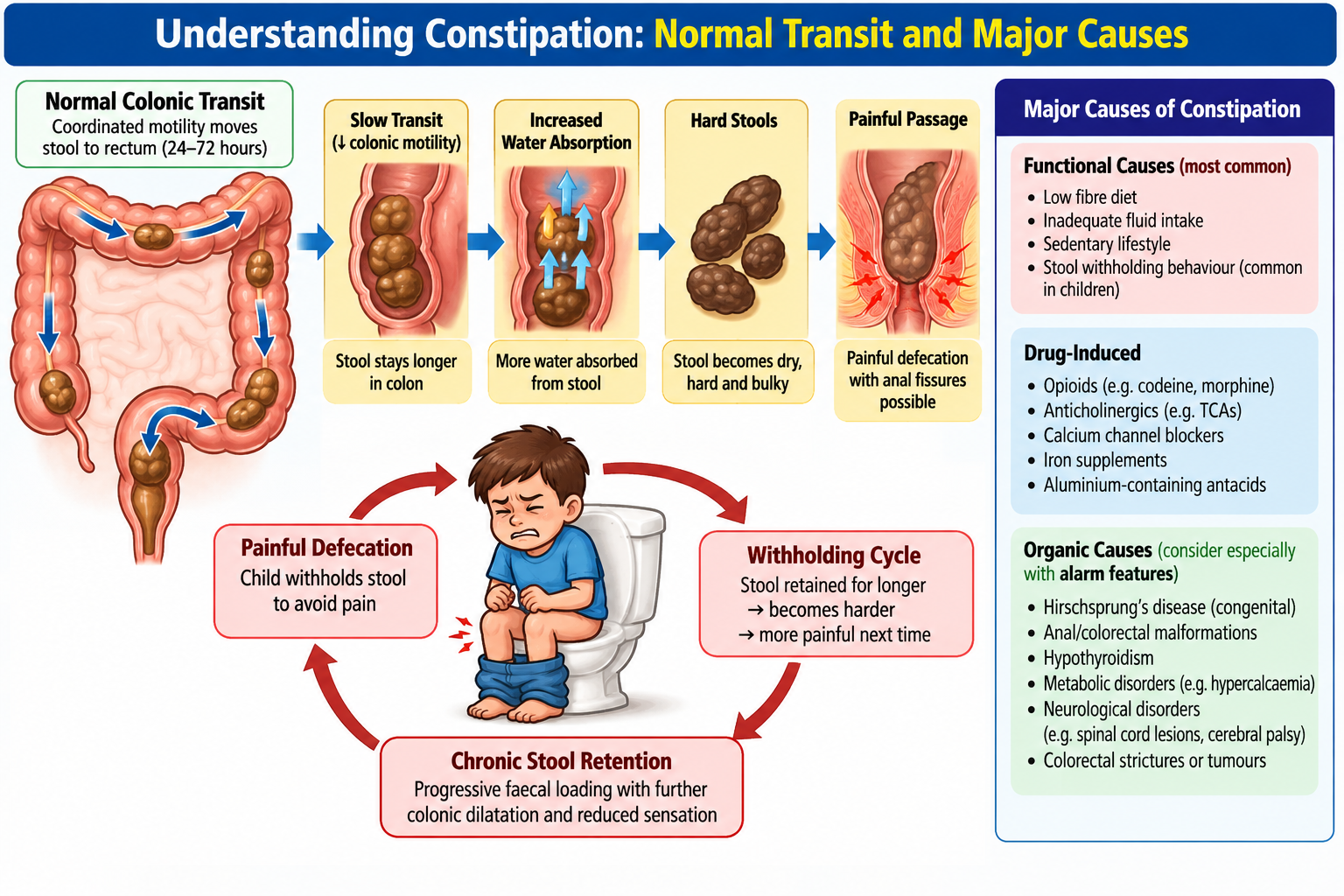
Constipation means difficult or infrequent passage of stool, often with hard stools, straining or a sense of incomplete evacuation. Stool frequency alone is not enough: a patient who passes soft stool every other day may have normal bowel function, whereas one who strains daily with hard stools may be constipated.
As stool moves slowly through the colon, more water is absorbed, making it harder. Pain during defecation can then cause voluntary stool withholding, particularly in children. Withholding increases rectal stool retention and can produce a self-perpetuating cycle.
Functional constipation occurs without an identifiable structural bowel lesion and is common in both adults and children. Secondary or organic constipation results from a drug, metabolic problem, neurological disorder or anatomical disease.
- Functional contributors: low dietary fibre, insufficient fluid intake, inactivity, change in routine, painful defecation and stool withholding.
- Medication-related: opioids, anticholinergic drugs, iron supplements and some calcium-containing preparations slow bowel transit or make stool harder.
- Medical causes: hypothyroidism, hypercalcaemia, diabetes-associated autonomic dysfunction and neurological disease.
- Structural causes: colorectal narrowing, impacted stool and congenital disorders such as Hirschsprung’s disease.
Clinical connection: constipation is a symptom, not a final diagnosis. The important first decision is whether it is likely functional or whether an underlying disorder or obstruction needs evaluation.
B. Clinical Assessment: History, Examination and Warning Features
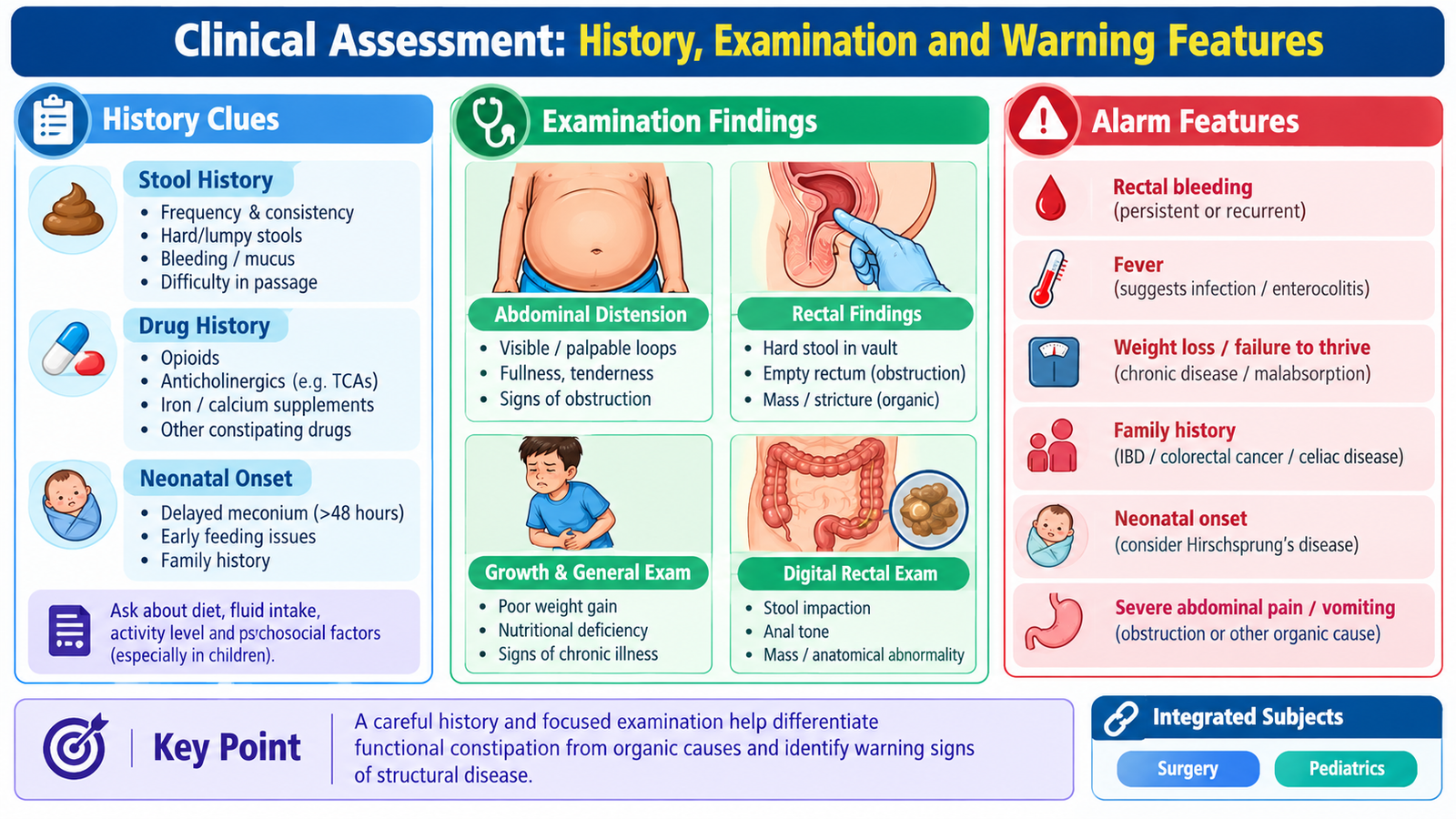
Focused assessment identifies the stool pattern, how symptoms began, and whether the patient has evidence of an organic disorder. Ask about duration, stool consistency, painful defecation, straining, rectal bleeding, abdominal distension, dietary pattern, medication use and the effect on daily life.
In adults, new or progressive constipation, especially with weight loss, anaemia or rectal bleeding, raises concern for structural pathology. In children, ask whether the baby passed meconium normally, whether constipation began from birth or after weaning, and whether there has been poor weight gain, vomiting or severe distension.
Examination should assess hydration and general condition, abdominal distension, tenderness, palpable fecal masses, perianal fissures and—when indicated and appropriate—a rectal examination by a trained clinician. A painful anal fissure can explain withholding; an enlarged, stool-filled rectum is more consistent with longstanding functional retention. Rectal examination is not routinely necessary for every child and should be performed only when clinically indicated.
C. Distinguishing Functional Constipation from Intestinal Obstruction
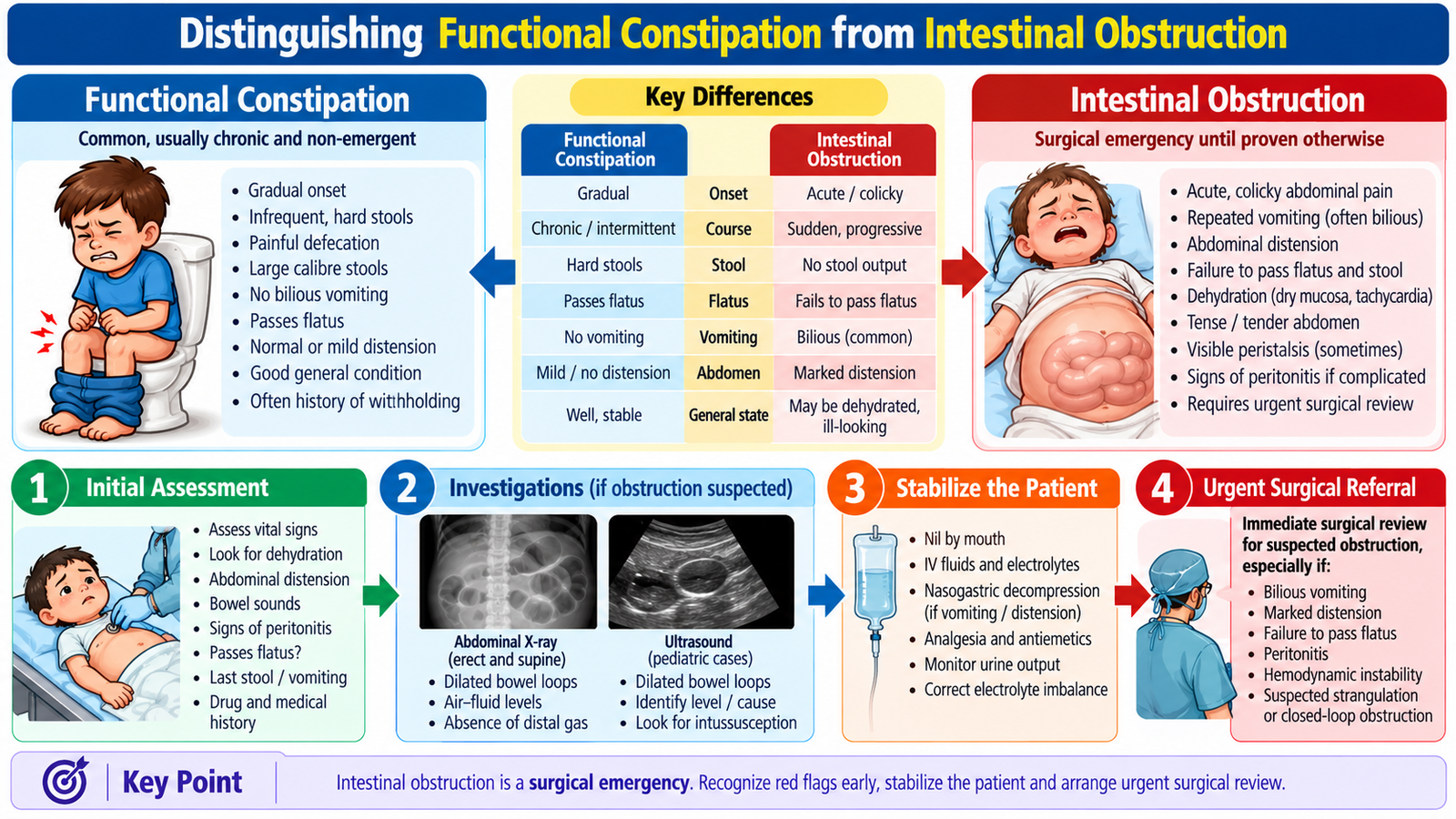
Intestinal obstruction prevents normal progression of bowel contents. Unlike uncomplicated constipation, it often produces a combination of increasing abdominal distension, colicky pain, vomiting and failure to pass flatus or stool. The exact pattern depends on the site and completeness of the obstruction. Continued stool passage early in the illness does not reliably exclude obstruction.
In a child, consider congenital obstruction or Hirschsprung’s disease when symptoms start in the neonatal period. Acquired obstruction has other causes, such as intussusception or adhesions after previous surgery; these are important alternatives when an acutely ill child presents with pain and vomiting, not diagnoses to explore exhaustively in a constipation chapter.
Assessment begins with clinical stability: vital signs, hydration, perfusion, abdominal tenderness and signs of peritonitis. A toxic appearance, rigid abdomen, bilious vomiting or shock indicates an emergency. Abdominal radiography may demonstrate dilated bowel loops and air–fluid levels, while ultrasound or additional imaging is selected according to the suspected cause and clinical setting.
Immediate management when obstruction is suspected: stop oral feeding, establish intravenous access, correct fluid and electrolyte loss, provide appropriate analgesia, consider nasogastric decompression when indicated, and obtain urgent surgical assessment. Do not give a routine purgative to a patient with suspected mechanical obstruction.
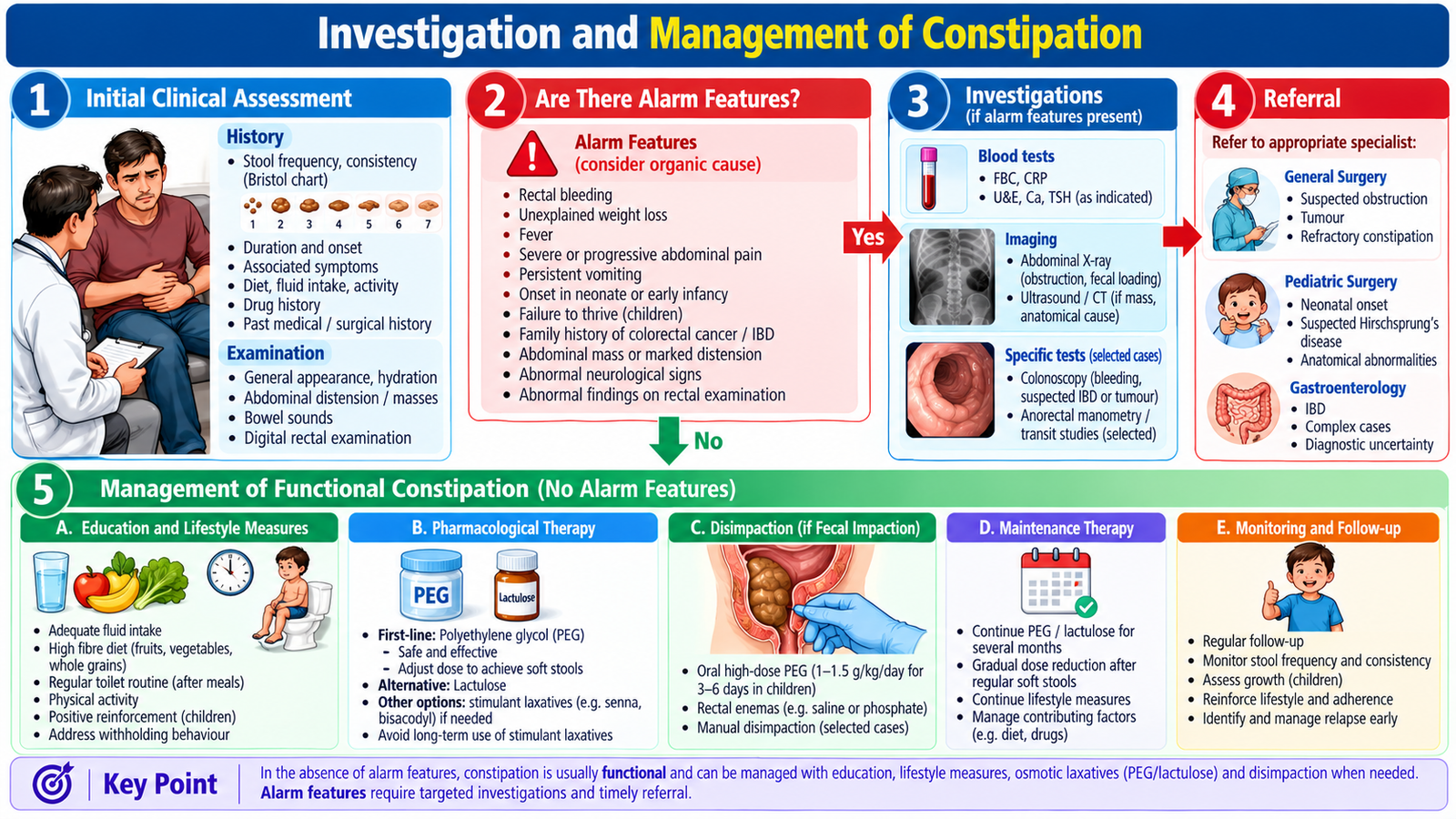
D. Investigation and Management of Constipation
Uncomplicated functional constipation is usually diagnosed clinically. Routine blood tests, abdominal X-rays or endoscopy are not needed for every patient. Investigations are chosen when the history or examination suggests an underlying cause, symptoms persist despite suitable treatment, or red flags are present.
- Targeted blood tests: thyroid function, serum calcium or other investigations when history or examination suggests a metabolic cause; a full blood count when anaemia or other concerning features are present.
- Imaging or endoscopic evaluation: for suspected obstruction, structural disease or appropriate adult alarm features—not simply because stool passage is infrequent.
- Child with suspected congenital obstruction: proceed to targeted studies for Hirschsprung’s disease rather than relying on routine constipation testing.
Management follows the likely mechanism. Explain regular unhurried toilet opportunities, adequate fluid intake, an age-appropriate fibre-containing diet and physical activity. In a child, use a supportive, non-punitive approach and address painful defecation, which otherwise perpetuates stool withholding.
Osmotic laxatives, such as polyethylene glycol (PEG), retain water in the intestinal lumen and soften stool; they are commonly used for functional constipation. Lactulose is an alternative. A short course of a stimulant laxative may be useful when clinically indicated; it increases intestinal motility. Where fecal impaction is present, disimpaction is required before long-term maintenance treatment can work effectively. Avoid using these measures as substitutes for investigation when obstruction is suspected.
Review response by asking whether stools have become softer and easier to pass, abdominal discomfort has improved and impaction or withholding has resolved. Persistent symptoms, recurrent impaction or newly emerging red flags require reassessment.
E. Hirschsprung’s Disease: Congenital Aganglionosis and Presentation
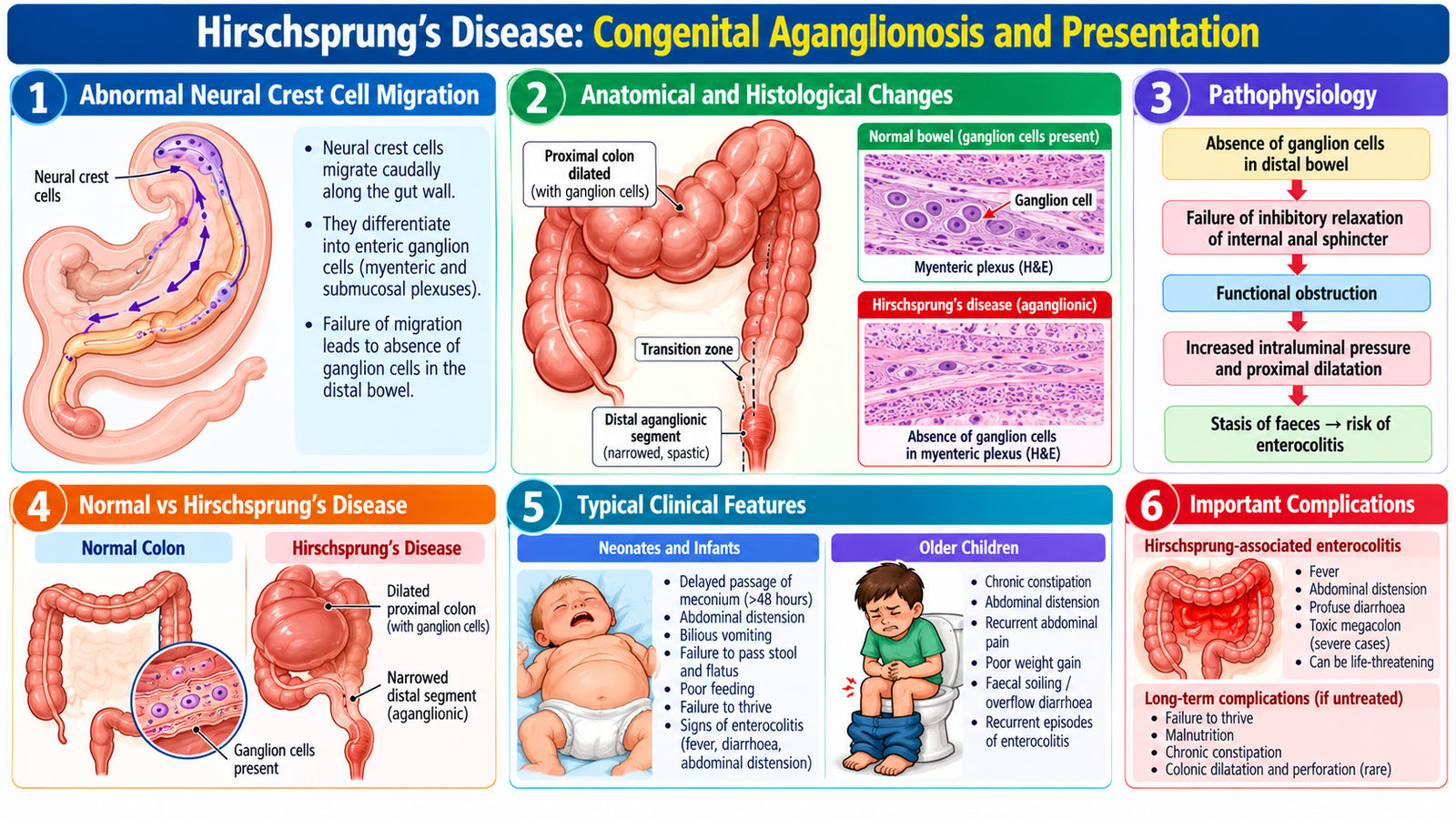
Hirschsprung’s disease is a congenital cause of functional intestinal obstruction. It occurs because enteric ganglion cells are absent from a variable length of distal bowel, most commonly the rectum and sigmoid colon. These nerve cells normally coordinate bowel relaxation and propulsion. Without them, the affected segment cannot relax properly, so stool and gas accumulate in the normally innervated bowel above the narrowed segment.
The classic neonatal presentation is delayed passage of meconium (particularly beyond the first 48 hours in a term infant), abdominal distension and bilious vomiting. Some children present later with longstanding severe constipation, abdominal swelling, poor weight gain or failure to thrive. A history of constipation since birth is especially important.
Examination may reveal a distended abdomen and poor growth. The rectum may contain little stool despite marked proximal retention; explosive passage of stool or gas after rectal examination can occur but is not sufficient to establish the diagnosis. Hirschsprung-associated enterocolitis may cause fever, increasing abdominal distension, foul diarrhoea, lethargy and rapid deterioration; it is a potentially life-threatening complication.
F. Confirming Hirschsprung’s Disease and Definitive Surgical Care
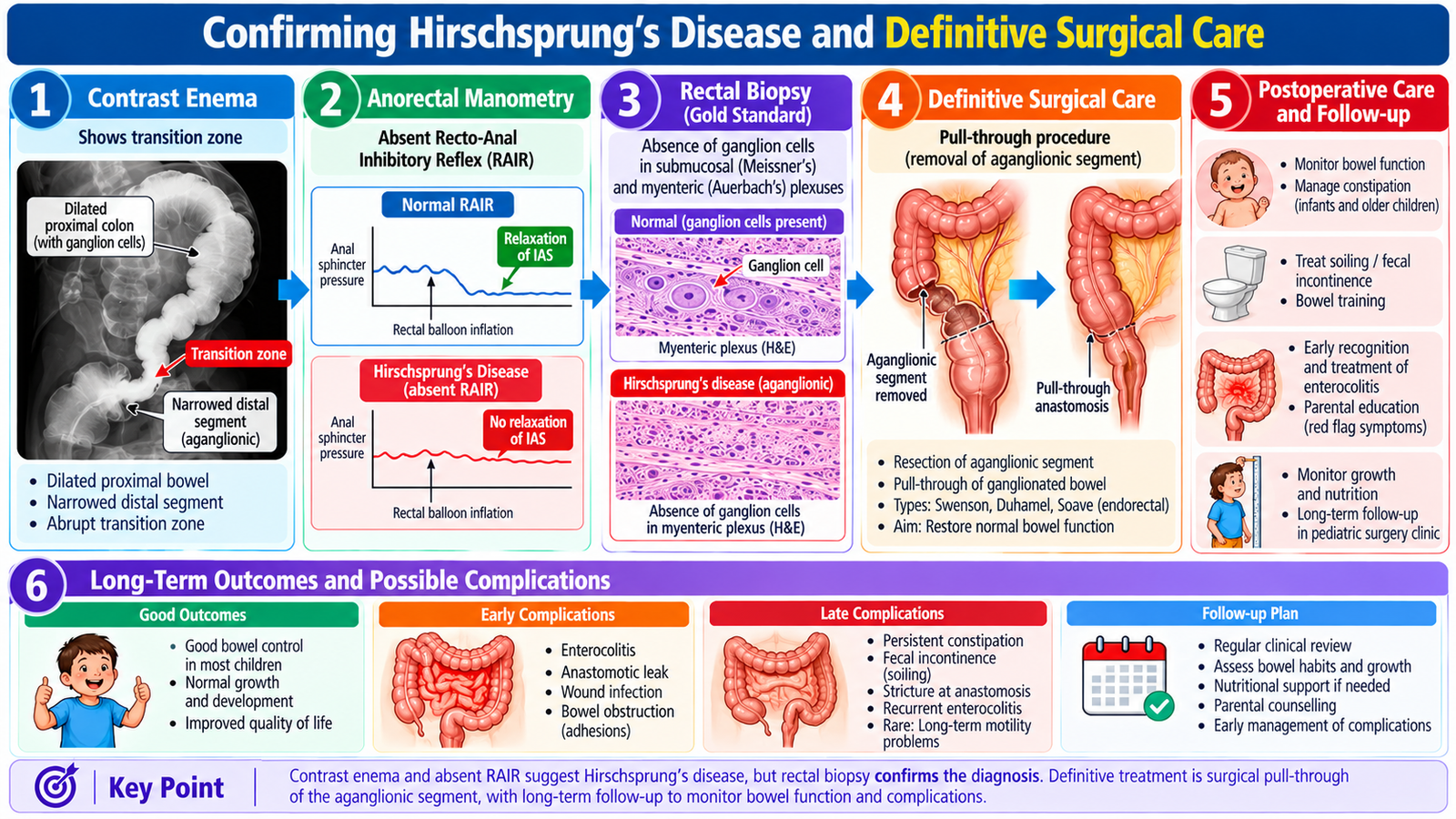
Clinical suspicion must be followed by investigations that identify the obstructed segment and confirm the absence of ganglion cells. A contrast enema may reveal a narrow distal segment, a dilated proximal colon and a transition zone. However, an early or atypical study can be inconclusive, so it cannot reliably exclude the disease.
Anorectal manometry assesses the rectoanal inhibitory reflex (RAIR), the normal relaxation of the internal anal sphincter after rectal distension. Absence of this reflex supports Hirschsprung’s disease, although the result is not, by itself, the definitive diagnosis.
Rectal biopsy is the definitive diagnostic investigation. Histological absence of ganglion cells in an adequately sampled rectal specimen establishes congenital aganglionosis; hypertrophied nerve trunks may be seen. A suction rectal biopsy is commonly used, with further biopsy if the sample is inadequate.
Initial care addresses obstruction and fluid/electrolyte disturbances. Specialist teams may use careful rectal irrigations to decompress the bowel while preparing for surgery. The definitive treatment is pull-through surgery: the aganglionic portion is removed or bypassed and normally innervated bowel is brought down to the anus. A temporary stoma may be required in selected patients with severe distension, enterocolitis or unstable condition.
After surgery, follow-up looks for bowel obstruction, recurrent constipation, soiling, anastomotic problems and Hirschsprung-associated enterocolitis. Families should understand that urgent review is needed for fever, abdominal swelling, vomiting, explosive diarrhoea or reduced feeding. Many children achieve good bowel function, although some need ongoing bowel-management support.
Important Comparison: Functional Constipation versus Hirschsprung’s Disease
| Feature | Functional constipation | Hirschsprung’s disease |
|---|---|---|
| Onset | Often after infancy; may follow painful stool | Frequently from neonatal period |
| Meconium | Usually passed normally | May be delayed beyond 48 hours |
| Mechanism | Stool retention / withholding; no aganglionosis | Distal bowel lacks enteric ganglion cells |
| Examination | Rectal stool retention often present | Marked distension; rectum may be empty |
| Diagnosis | Usually clinical | Confirmed by rectal biopsy |
| Definitive care | Bowel regimen and laxative therapy | Surgical pull-through |
AIM High-Yield Review
- Constipation is defined by difficult stool passage, not frequency alone.
- Slow transit increases water absorption and produces hard stool; pain may trigger further withholding.
- Most longstanding constipation without warning features is functional and diagnosed clinically.
- New adult constipation with bleeding, weight loss or anaemia requires investigation for structural disease.
- ⭐ Bilious vomiting, major distension and failure to pass flatus point toward intestinal obstruction.
- Suspected obstruction requires stabilization and urgent surgical evaluation—not routine laxatives.
- Osmotic laxatives such as PEG retain water in stool; address impaction and withholding when present.
- ⭐ Delayed meconium passage, distension and vomiting suggest Hirschsprung’s disease in a neonate.
- Hirschsprung’s disease results from absent enteric ganglion cells and impaired distal bowel relaxation.
- A contrast enema may show a transition zone; absent RAIR supports the diagnosis.
- ⭐ Rectal biopsy showing absence of ganglion cells is the definitive diagnostic test.
- ⭐ Pull-through surgery provides definitive treatment; enterocolitis remains an important emergency.
Topic 6 — Video Learning
Constipation, Pediatric Bowel Obstruction & Hirschsprung’s Disease
Hirschsprung’s Disease — Video Explanation
Osmosis educational animation covering congenital aganglionosis, impaired intestinal motility, bowel obstruction and important clinical manifestations.
Video source: Osmosis. If embedded playback is restricted, watch directly on YouTube.
Learning Focus
Understand how absent enteric ganglion cells lead to functional intestinal obstruction, delayed passage of meconium, abdominal distension and proximal bowel dilatation. Relate these mechanisms to diagnosis and surgical treatment.