
AIM OSCE / OSPE • MBBS
☠️ Station 7 — Identification of Cannabis as a Cardiac Toxin
Rapid Revision • Practical Recognition • Viva
🎯 Task
CANDIDATE TASK
Examine the provided plant-derived specimen/material. Identify it and state the important visual features supporting your identification and its relevant cardiovascular toxic effect.
⚡ Model Station Answer — What to say in the exam
Identification: The specimen is Cannabis sativa (cannabis).
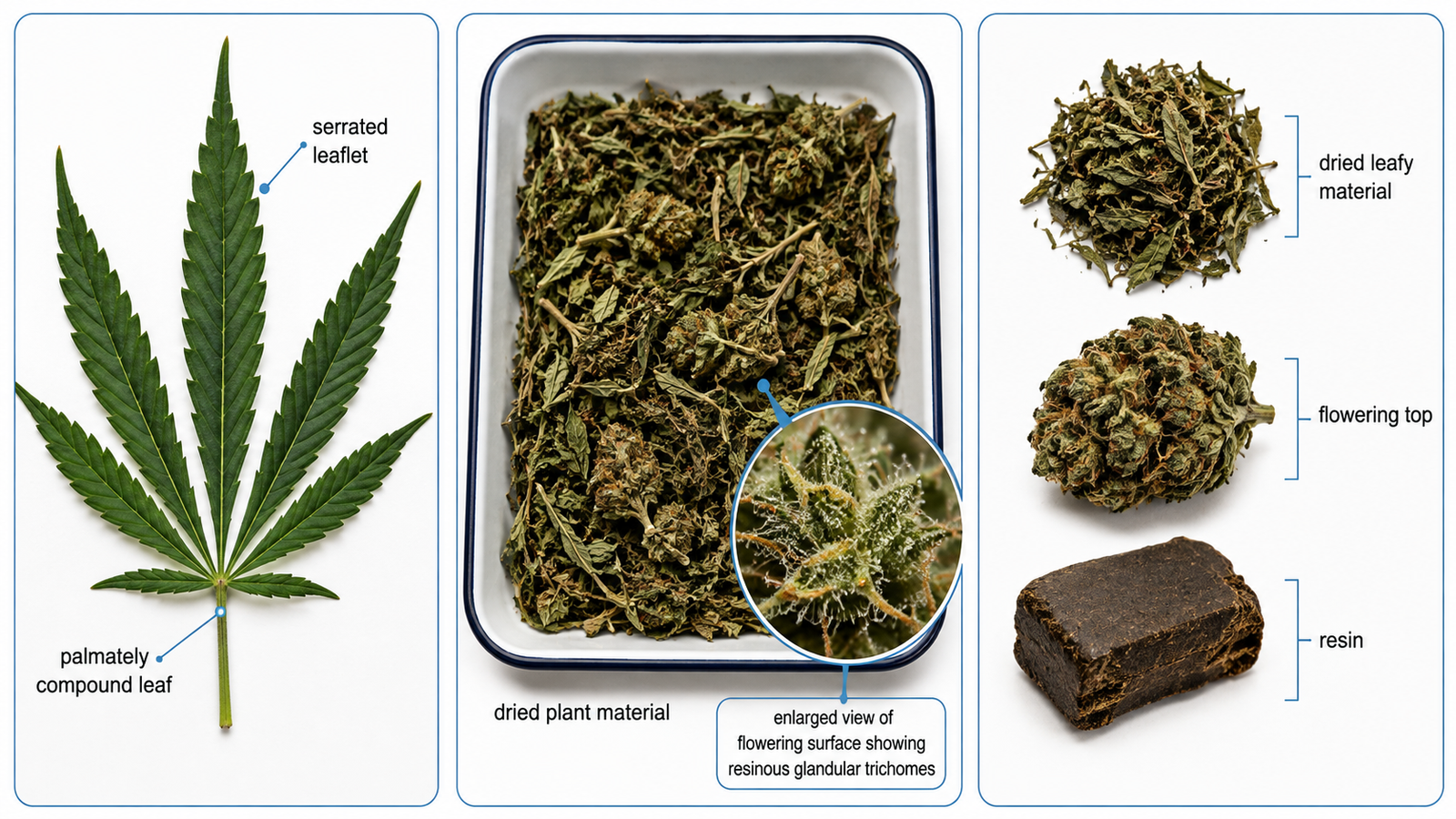
Key features: The characteristic leaf is palmately compound with usually 5–7 narrow, pointed leaflets having coarsely serrated margins. Dried specimens may contain green-brown fragmented leaves and resinous flowering material.
Active principle: The major psychoactive cannabinoid is Δ9-tetrahydrocannabinol (THC).
Cardiovascular effect: Acute exposure commonly produces tachycardia and changes in blood pressure and may increase myocardial oxygen demand.
🔎 Stepwise Procedure / Approach
Handle safely. Use the supplied specimen for visual examination only; do not taste or deliberately inhale unidentified plant material.
-
- Identify the specimen form. Determine whether you are viewing an intact leaf, dried plant material, flowering tops or a resinous preparation.
- Assess the leaf pattern. Look for a palmately compound leaf in which several leaflets arise from a common point.
- Inspect individual leaflets. Cannabis leaflets are typically narrow to lanceolate, long-pointed and have prominent serrated margins.
- Look for supporting material. Dried cannabis may appear green to brown and contain fragmented leaves, stems and compact resinous flowering material.
- Correlate the features. Do not identify the specimen from colour or smell alone; use the characteristic combination of plant morphology.
- State the identification clearly. Identify the material as Cannabis sativa and, if asked, mention THC and the important cardiovascular effects.
Exam point: The strongest gross clue is the characteristic palmately compound leaf with multiple narrow, sharply serrated leaflets.
🖼️ Visual Learning
VISUAL 1
Cannabis — Practical Specimen Recognition
🎥 Practical Video
🎥 Practical Demonstration — Processing Cannabis Samples
Source: National Institute of Standards and Technology (NIST)
This verified laboratory demonstration shows real cannabis botanical samples and their practical handling and processing, helping students relate the OSPE specimen to material encountered in a forensic laboratory.
📝 Important Viva Questions
Q1. What is the botanical name of cannabis?
Answer: Cannabis sativa.
Q2. What is the most characteristic leaf feature of Cannabis sativa?
Answer: A palmately compound leaf with several narrow, pointed leaflets having prominent serrated margins.
Q3. What is the principal psychoactive constituent of cannabis?
Answer: Δ9-tetrahydrocannabinol, commonly abbreviated as THC.
Q4. Name common traditional preparations of cannabis.
Answer: Bhang mainly contains leaves, ganja consists mainly of flowering tops, and charas/hashish is the resinous preparation.
Q5. What is a common acute cardiovascular effect of cannabis?
Answer: Tachycardia is common. Blood pressure may also change, including postural hypotension in some individuals.
Q6. Why can cannabis be important in a patient with cardiovascular disease?
Answer: Tachycardia and autonomic cardiovascular effects can increase myocardial oxygen demand and may precipitate adverse cardiac symptoms in susceptible individuals.
Q7. Can an unknown plant specimen be conclusively identified as cannabis by smell alone?
Answer: No. Gross morphology provides recognition clues, while forensic confirmation may require microscopic, chemical or instrumental analysis.