
Station 2 — Prescription Writing for Hypertension
🎯 Task
A 52-year-old adult with uncomplicated hypertension requires pharmacological treatment. Write a complete and safe outpatient prescription for an appropriate antihypertensive medicine.
🔎 Stepwise Procedure / Approach
- Review the scenario and confirm the indication for antihypertensive treatment.
- Confirm patient details and check relevant drug allergies.
- Consider important contraindications, comorbidities and current medicines before selecting the drug.
- Write the date and use the medicine’s generic name.
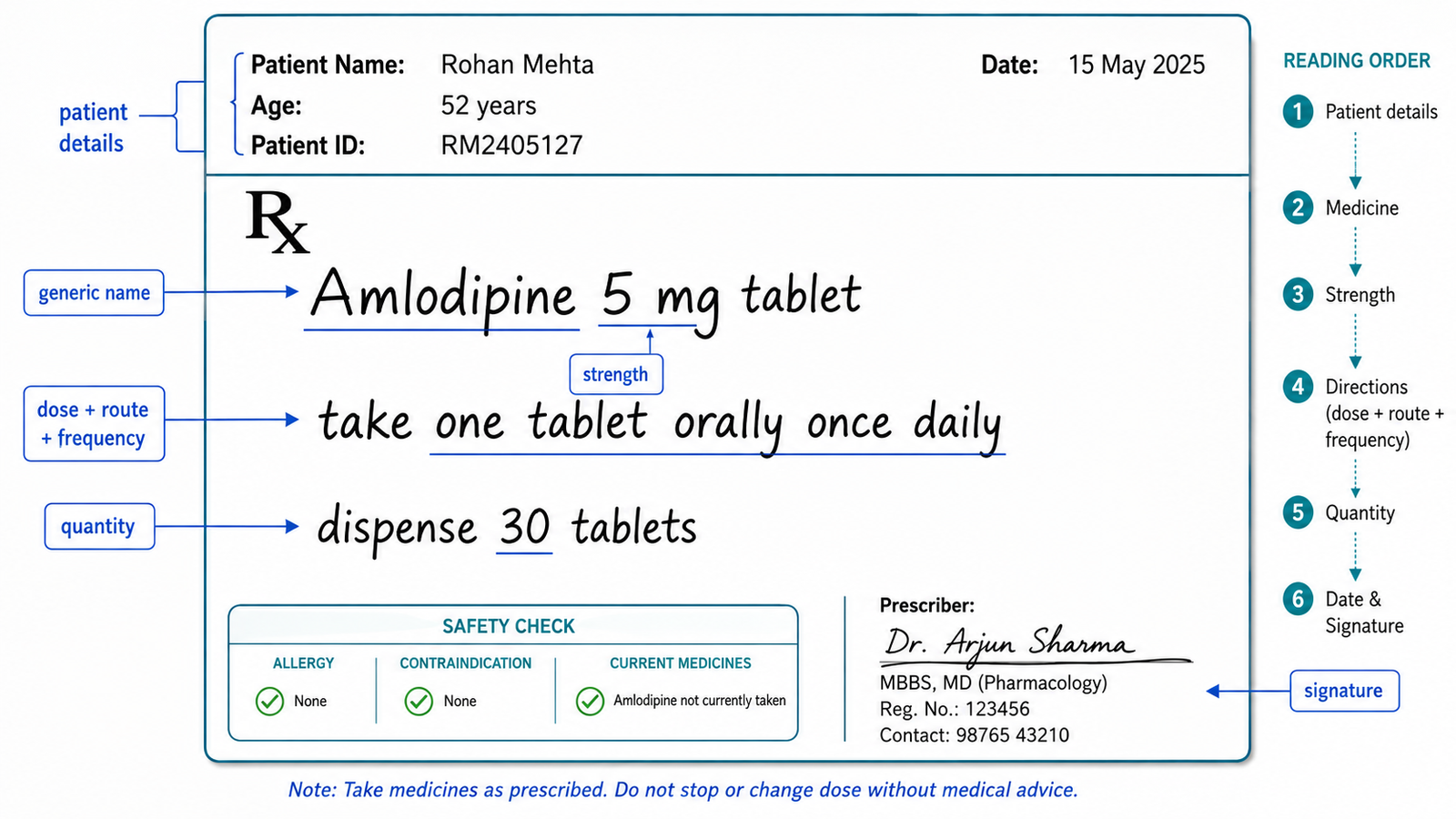
- State the dosage form and strength clearly: amlodipine 5 mg tablet.
- Write an unambiguous dose, route and frequency: one tablet orally once daily.
- Specify the required quantity or duration.
- Check the completed prescription for omissions, unclear instructions or dosing errors.
- Sign and identify the prescriber according to the prescription format in use.
“`
“`
🖼️ Visual Learning
Correct Structure of a Hypertension Prescription
🎥 Practical Video
How to Write a Prescription
A concise demonstration of the main components of a prescription, including patient particulars, medicine details, clear directions, date, signature and prescriber information.
📝 Important Viva Questions
Q1. What are the essential components of a complete prescription?
Answer: Patient details, date, medicine name, dosage form and strength, dose, route, frequency, quantity or duration, clear patient directions and prescriber authentication.
Q2. Why is the generic name of a medicine preferred in a prescription?
Answer: It provides standardized drug identification, reduces confusion between different brand names and supports clear prescribing.
Q3. Give one appropriate prescription example for uncomplicated hypertension.
Answer: Amlodipine 5 mg tablet, one tablet orally once daily, with the required quantity or duration clearly documented.
Q4. What should be reviewed before prescribing an antihypertensive medicine?
Answer: Check the indication, allergies, important contraindications, comorbidities, current medication and relevant clinical information.
Q5. What is a common adverse effect of amlodipine?
Answer: Peripheral ankle edema is common. Headache, flushing and dizziness may also occur.
Q6. Why should unclear abbreviations be avoided in prescriptions?
Answer: Abbreviations may be misread or misinterpreted and can lead to medication errors. Clear written directions are safer.
Q7. What common prescription-writing errors may cause loss of marks in an OSCE?
Answer: Missing the drug strength, dose, route, frequency, quantity or duration, date or signature, and writing ambiguous patient instructions.