
☠️ Station 8 — Identification of Heroin as a Cardiac Toxin
Rapid Revision • Practical Recognition • Viva
🎯 Task
Examine the provided toxicological specimen/material. Identify the substance and state its relevant toxicological nature.
Identification: The specimen is heroin, also called diacetylmorphine.
Nature: It is a potent opioid narcotic poison and is recognized in this station as a cardiogenic/cardiac toxin.
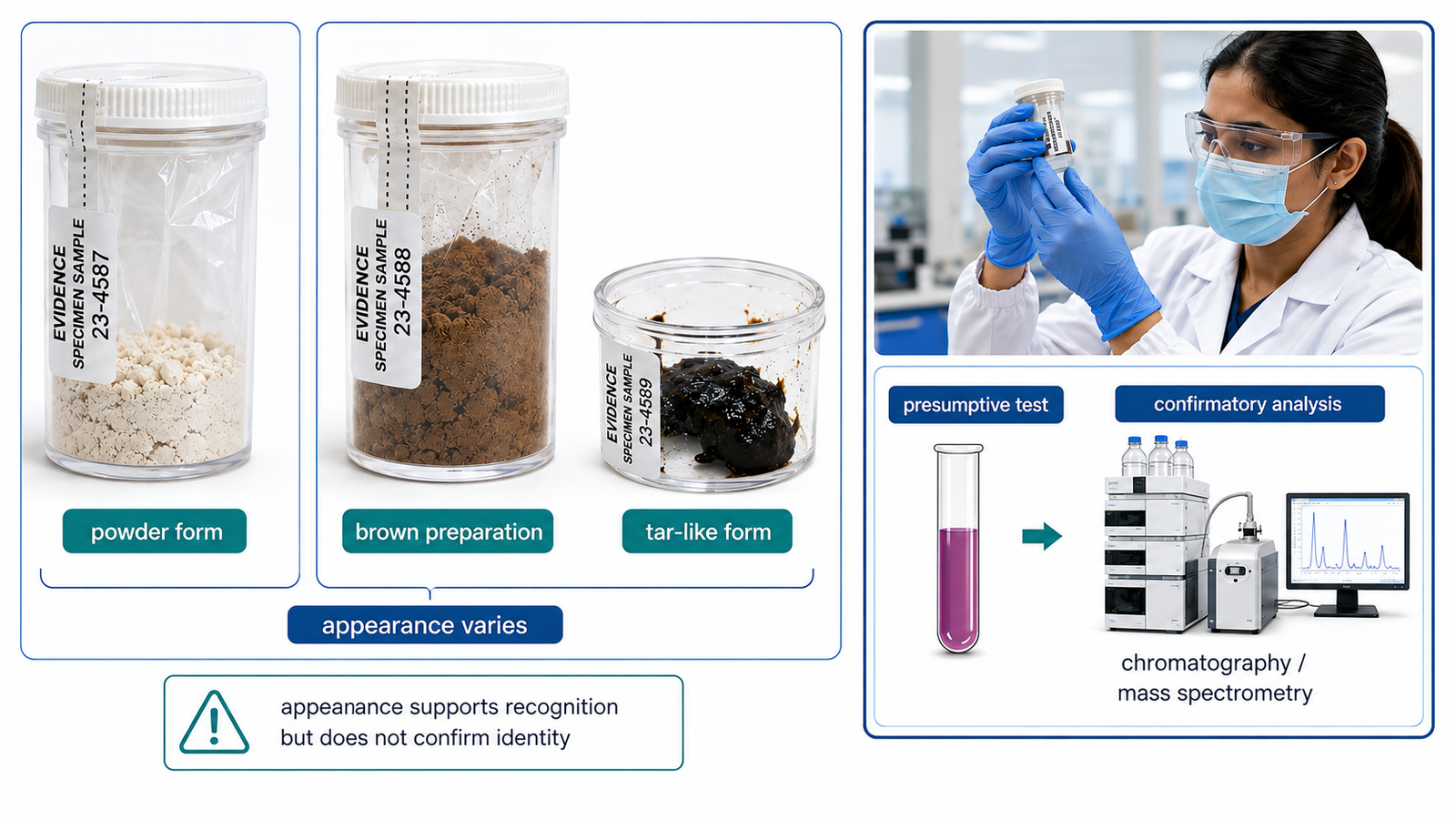
Recognition: Illicit heroin may occur as an off-white, beige or brown powder, while some preparations are darker or tar-like; physical appearance alone is not confirmatory.
🔎 Stepwise Procedure / Approach
- Observe the specimen without direct handling. Note whether the material is powder, granules or a darker tar-like preparation.
- Assess the general colour and consistency. Heroin preparations may vary considerably because of impurities and adulterants.
- Look for the station context. Correlate the specimen with the toxicology spotter setup and any permitted identifying information supplied with it.
- Avoid identification by colour alone. A similar-looking powder may represent another substance.
- State the identification clearly: heroin (diacetylmorphine).
- State its toxicological nature: a potent opioid narcotic poison, categorized as a cardiac/cardiogenic toxin for this station.
- If asked about confirmation, mention that forensic identification requires appropriate presumptive testing followed by confirmatory analytical testing.
🖼️ Visual Learning
Recognition of Heroin in a Forensic Toxicology Spotter
🎥 Practical Video
This official forensic-science demonstration shows how suspected drug powders are handled and tested while minimizing accidental exposure. It reinforces the important OSPE principle that an unknown powder should be treated safely and its identity confirmed analytically rather than assumed from appearance alone.