
Follow the KMU learning outcomes from headache recognition to safe management. Understand each explanation first; use the final review for rapid revision.
Topic 6. Acute & Chronic Headache and Migraine Across the Lifespan
Understand → recognize → investigate → manage → prevent
Topic Introduction
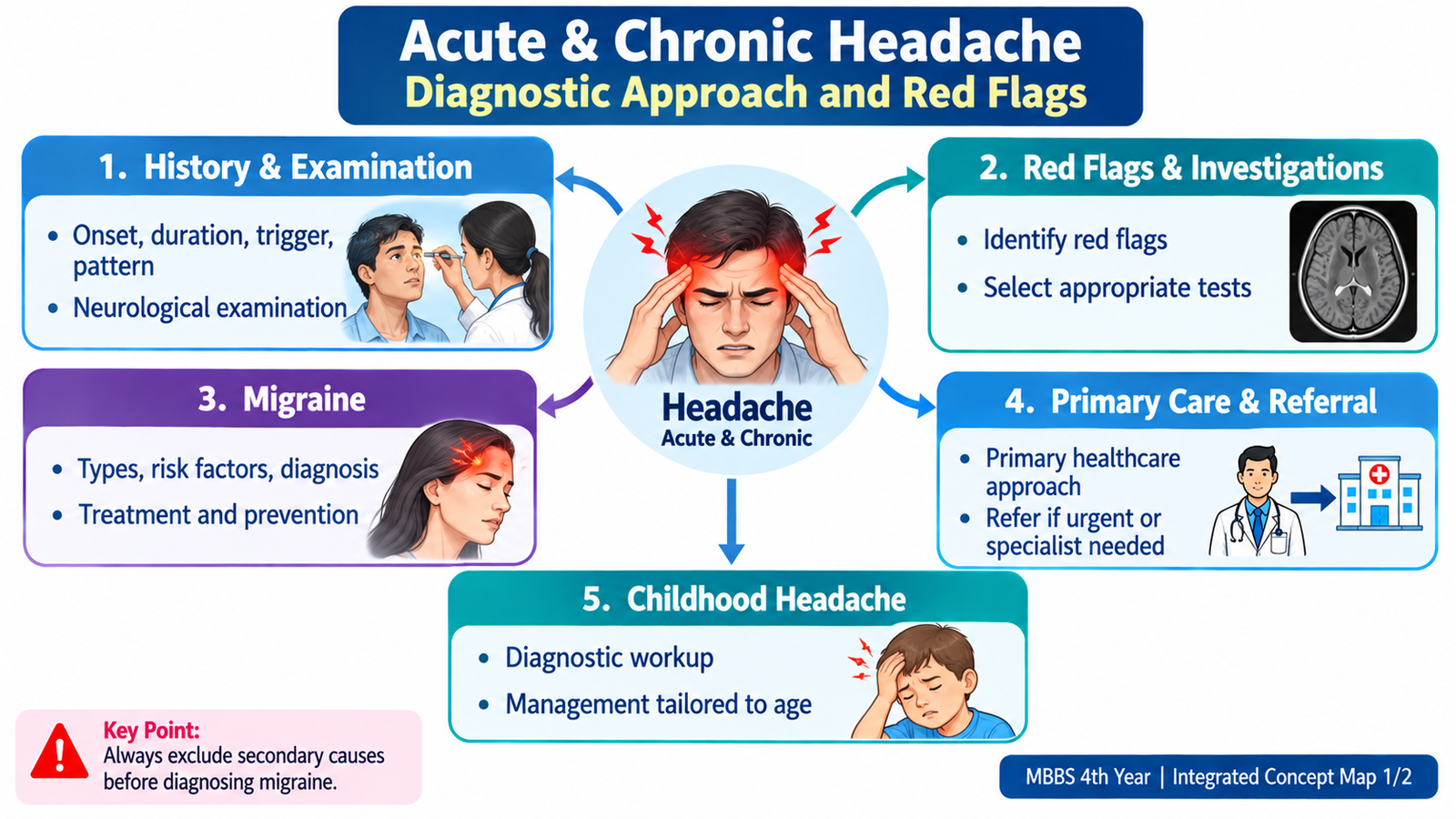
Headache is a common reason for consultation in emergency departments and primary care. Most headaches are primary disorders, such as migraine or tension-type headache, but a minority reflect serious secondary disease. The first clinical task is therefore to distinguish a familiar, stable headache pattern from a new or dangerous presentation. Once urgent causes are excluded, accurate classification guides acute treatment, prevention and counselling. Children require an age-sensitive assessment.
A. Understanding Headache: Primary, Secondary, Acute and Chronic
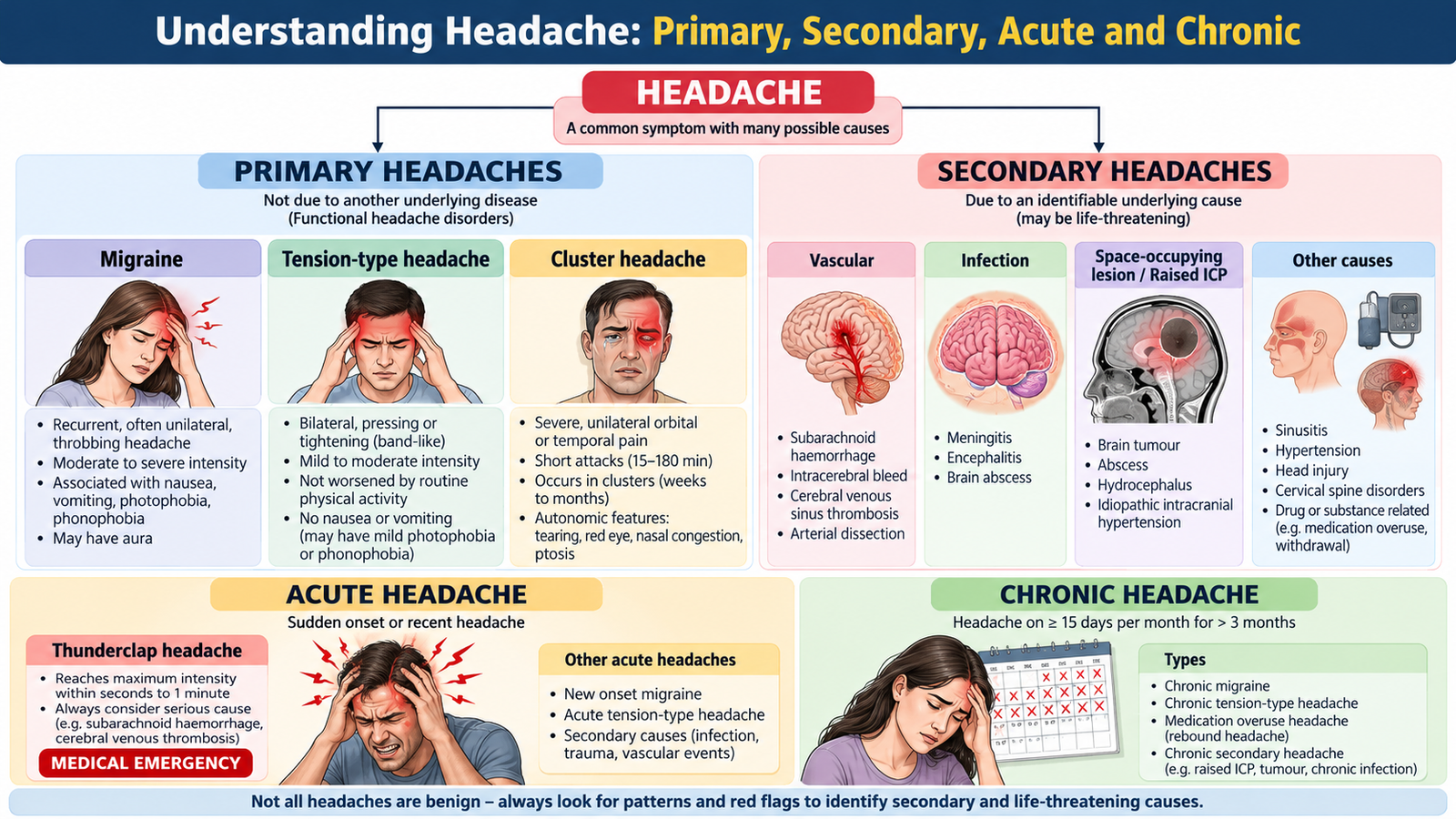
Primary headache is itself the disorder: migraine, tension-type headache and cluster headache are important examples. Secondary headache results from another condition such as infection, intracranial bleeding, raised intracranial pressure, trauma or medication overuse. Primary does not mean trivial, and secondary does not automatically mean dangerous; the underlying cause determines risk.
Acute headache may be a first episode or a sudden change from baseline. Sudden maximal intensity within seconds to one minute is a thunderclap headache and demands urgent evaluation for subarachnoid hemorrhage and other vascular causes. Chronic headache describes a long-standing pattern; chronic daily headache generally means headache on at least 15 days per month for more than three months. Chronic migraine has headache on at least 15 days per month for over three months, including migraine features on at least eight days per month.
Tension-type headache is typically bilateral, pressing or tightening, mild to moderate and not worsened by routine activity. Cluster headache causes severe strictly unilateral orbital or temporal pain lasting 15–180 minutes, with ipsilateral tearing, nasal congestion or other autonomic features and marked restlessness. Migraine commonly causes episodic moderate-to-severe headache with nausea and/or sensitivity to light and sound, often aggravated by activity.
B. Clinical Assessment: History, Examination and Red Flags
Focused history
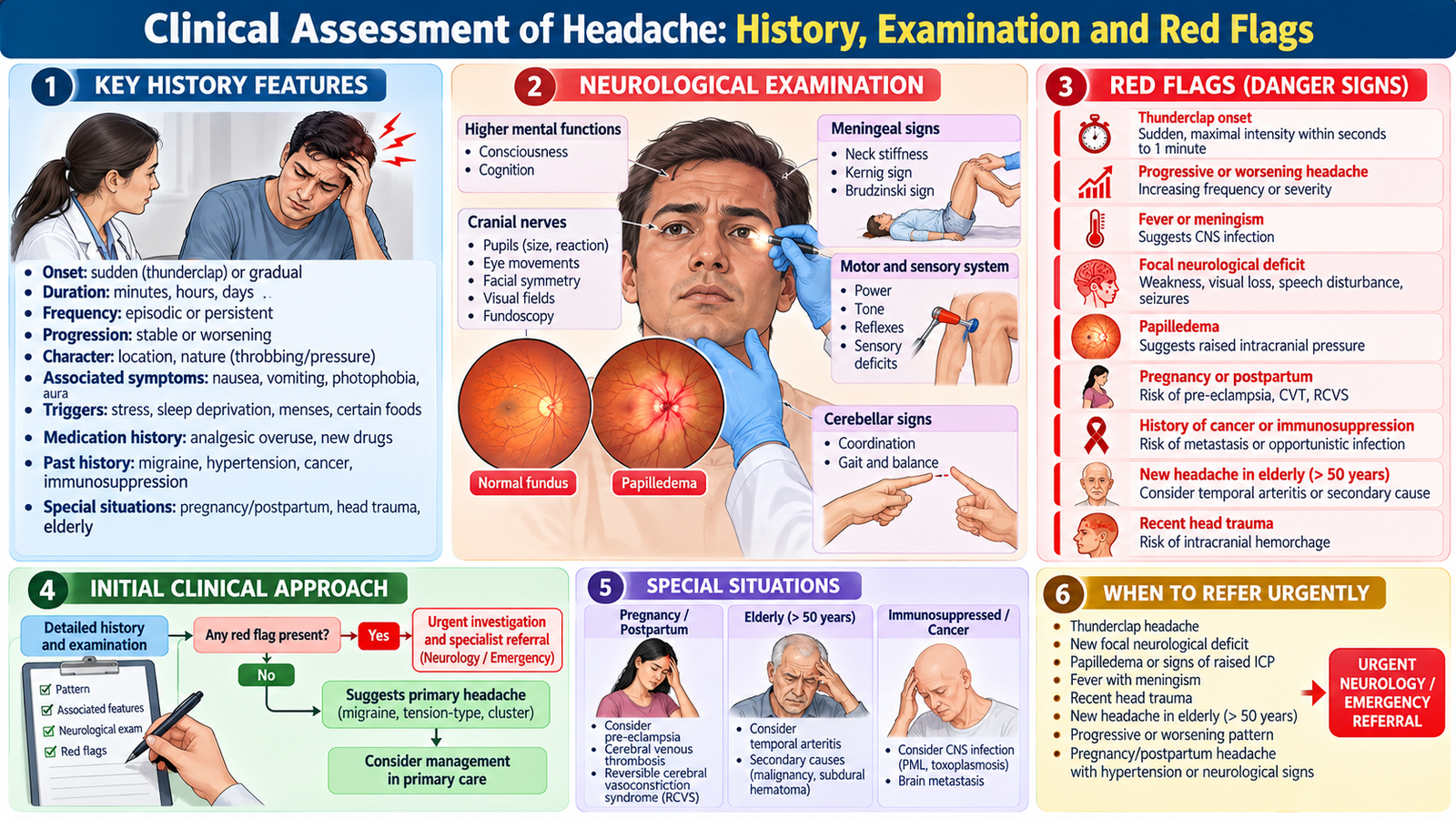
Establish the onset (sudden or gradual), duration, frequency, progression, location, quality, severity, functional impairment and associated symptoms. Ask whether this is the patient’s usual headache or a new pattern. Explore nausea, vomiting, photophobia, phonophobia, visual or sensory aura, fever, neck stiffness, focal weakness, seizures, recent trauma and positional or exertional triggers. Review sleep, meals, hydration, menstruation, stress, family history, pregnancy status where relevant, and all analgesics or migraine medicines including frequency of use.
Focused examination
Assess vital signs, blood pressure, temperature and general appearance. Perform a neurological examination including consciousness, cranial nerves, limb power, sensation, coordination and gait; assess pupils and visual function. Fundoscopy for papilledema is important when raised intracranial pressure is suspected. Examine for meningism when infection or hemorrhage is possible. A normal examination supports a primary headache diagnosis in a typical stable presentation but does not exclude every dangerous cause.
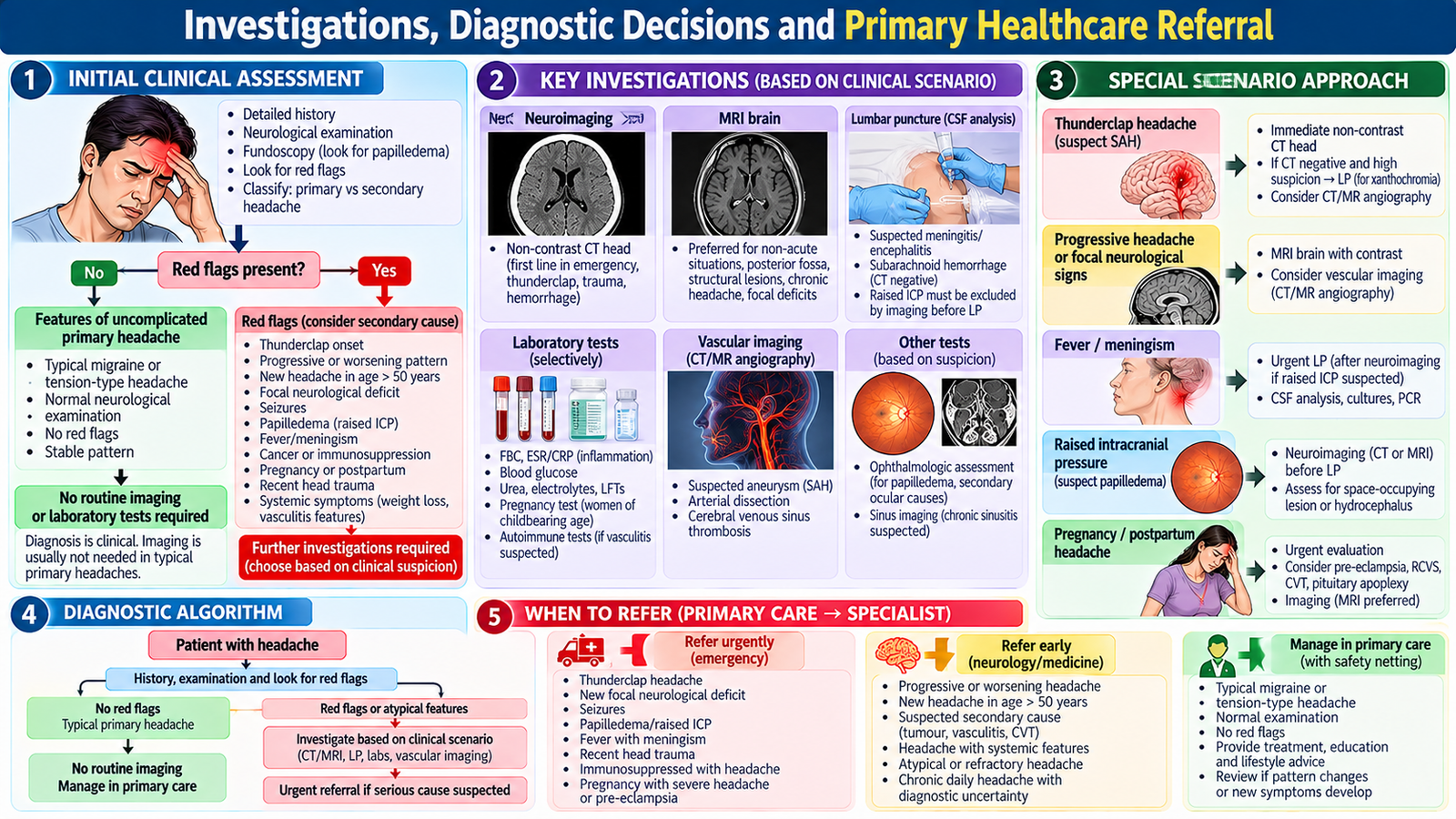
Red flags requiring urgent consideration
- Thunderclap onset: possible subarachnoid hemorrhage or another acute vascular disorder.
- Fever, neck stiffness or altered consciousness: possible meningitis or encephalitis.
- New focal deficit, seizure or persistent confusion: possible structural or vascular intracranial disease.
- Progressive headache, papilledema or persistent unexplained vomiting: possible raised intracranial pressure.
- New headache after head injury: consider intracranial bleeding.
- New headache in pregnancy/postpartum, with cancer or immunosuppression, or at older age: consider important secondary causes.
- New visual loss, painful red eye or jaw claudication with temporal pain in an older adult: urgent assessment for vision-threatening causes.
Clinical safety: red flags determine urgency even when the pain resembles a previous migraine.
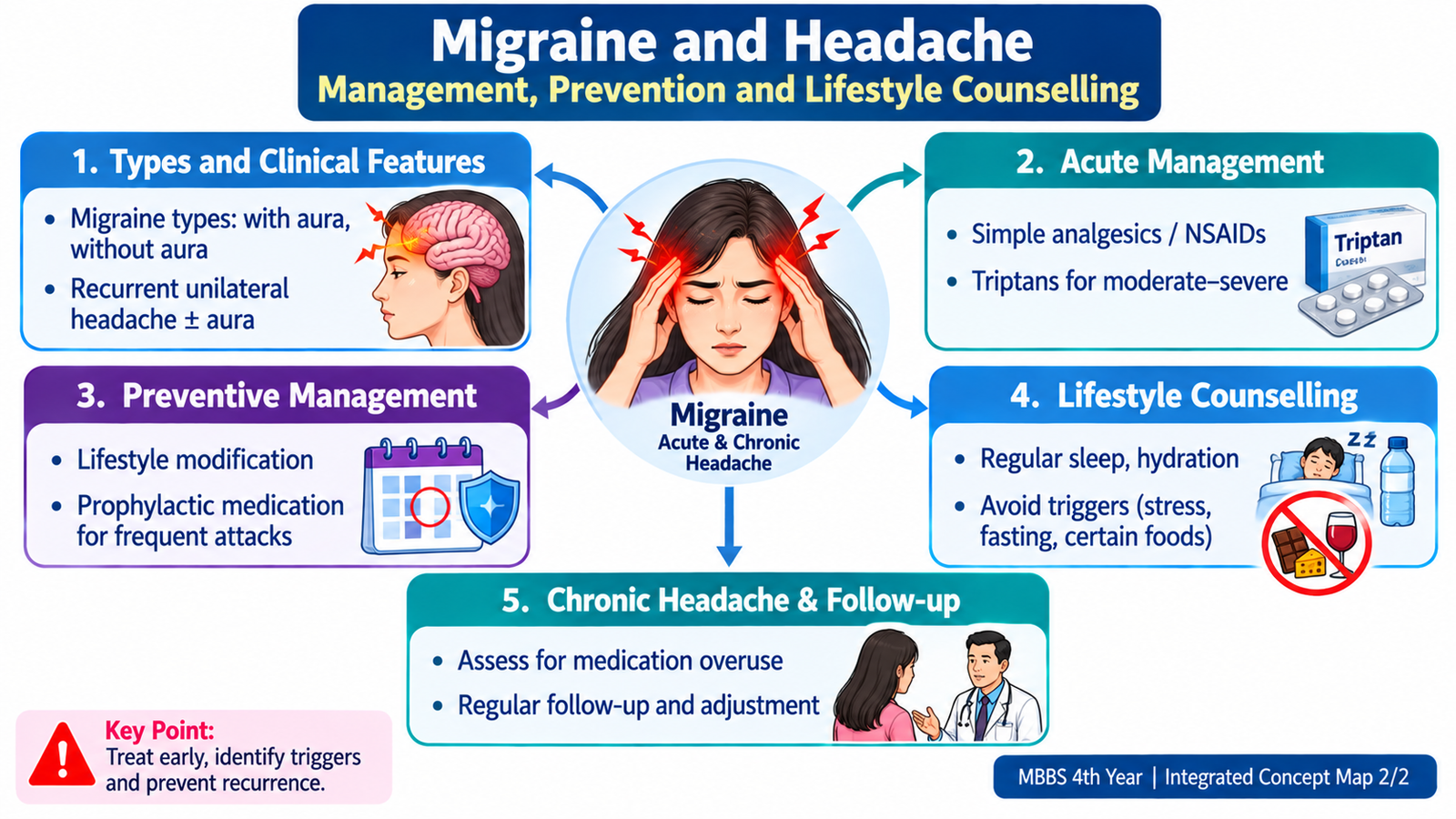
C. Migraine: Mechanism, Types, Risk Factors and Diagnosis
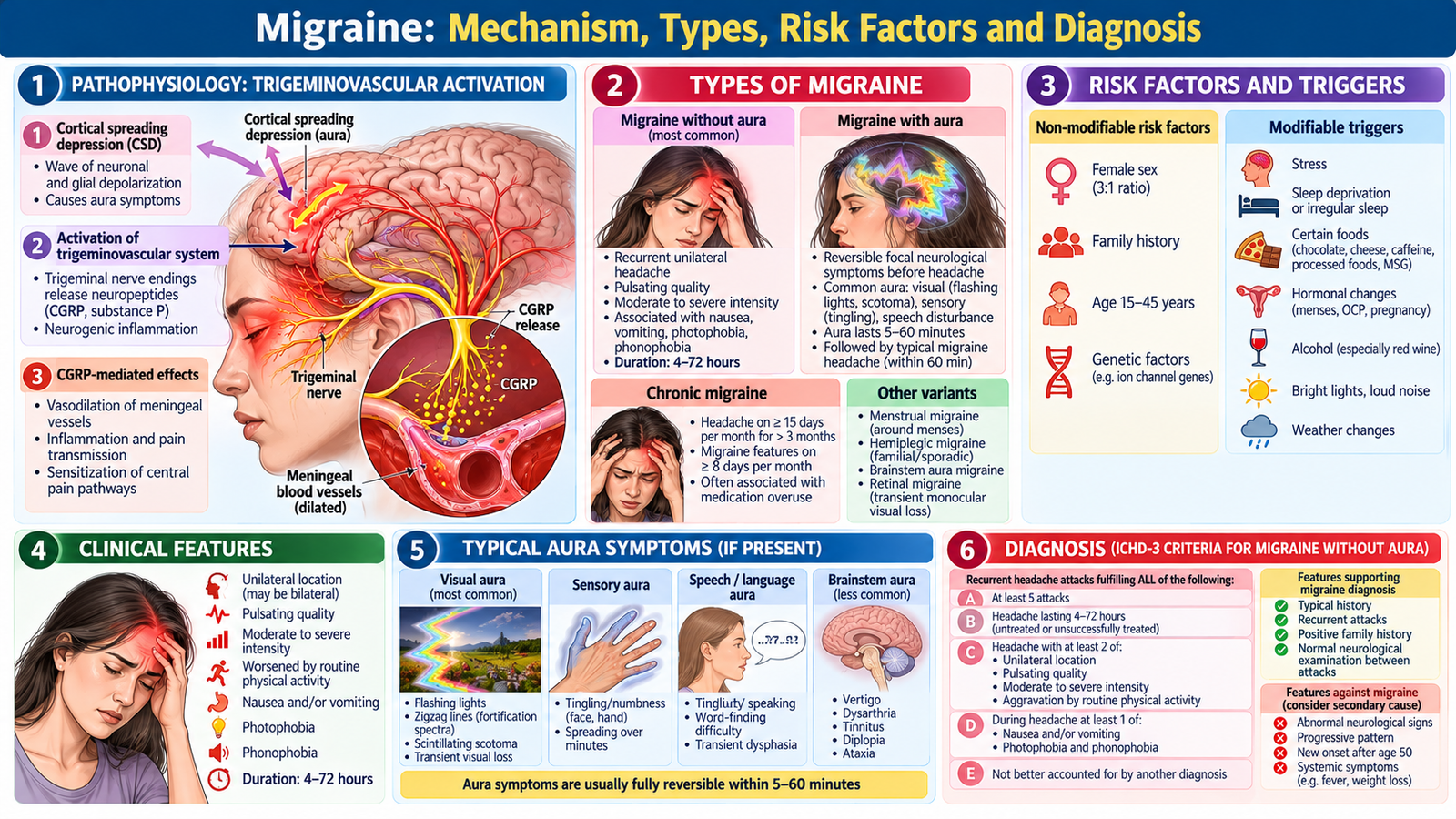
Migraine is a recurrent neurological disorder involving altered sensory processing and activation of trigeminovascular pain pathways. Release of mediators including calcitonin gene-related peptide (CGRP) contributes to pain signalling. Aura is linked to cortical spreading depression, a wave of altered neuronal activity. These mechanisms help explain headache, nausea and sensitivity to sensory stimuli.
Recognizing a typical attack
Untreated migraine in adults commonly lasts 4–72 hours. Headache may be unilateral and pulsating, but neither feature is compulsory. It is often moderate to severe, aggravated by ordinary physical activity, and accompanied by nausea/vomiting or both photophobia and phonophobia. Some patients notice prodromal fatigue, yawning or food cravings; postdromal tiredness may follow.
Types
- Migraine without aura: recurrent attacks with characteristic headache and associated symptoms.
- Migraine with aura: reversible visual, sensory or language symptoms that usually develop gradually, often over at least five minutes, and generally last 5–60 minutes per individual symptom. Typical visual aura includes shimmering zigzags or expanding blind spots.
- Chronic migraine: headache at least 15 days/month for over three months, with migraine features at least eight days/month.
Risk and trigger factors include family predisposition, irregular sleep, skipped meals, dehydration, stress, hormonal fluctuation and certain individually identified triggers. A trigger is not the same as the underlying cause; unnecessary universal food restrictions are unhelpful.
Diagnosis is mainly clinical. Recurrent stereotyped attacks with a normal neurological examination and no red flags usually do not require routine neuroimaging. New atypical aura, persistent neurological symptoms or a substantially changing pattern requires reassessment for secondary disease.
D. Investigations, Diagnostic Decisions and Primary Healthcare Referral
Investigation is guided by the presentation, not by headache intensity alone. A patient with longstanding typical migraine, unchanged pattern and normal examination generally needs no routine CT, MRI or laboratory panel. In primary care, record a headache diary, review analgesic frequency, assess disability and arrange follow-up.
- Suspected acute intracranial hemorrhage: urgent non-contrast CT brain; further emergency assessment depends on timing and clinical suspicion, even if initial imaging is negative.
- Suspected mass lesion, focal neurological signs or progressive atypical headache: brain imaging, often MRI when clinically appropriate.
- Suspected CNS infection: urgent hospital evaluation, blood tests/cultures and lumbar puncture when safe; do not delay emergency antimicrobial treatment when bacterial meningitis is suspected.
- Suspected raised intracranial pressure: urgent specialist assessment and appropriate neuroimaging before considering lumbar puncture.
- Possible giant cell arteritis: inflammatory markers and urgent specialist management, particularly with visual symptoms.
Urgent referral is needed for thunderclap headache, neurological deficit, suspected meningitis, papilledema, severe headache in pregnancy/postpartum or other major red flags. Nonurgent referral may be appropriate for diagnostic uncertainty, refractory attacks, substantial disability, atypical aura or persistent medication-overuse headache.
Primary care sequence: assess stability → identify red flags → classify headache → treat appropriately → counsel → review response and medication use. Safety-net patients to return urgently if headache changes suddenly or new neurological or systemic symptoms appear.
E. Migraine Treatment, Prevention and Lifestyle Counselling
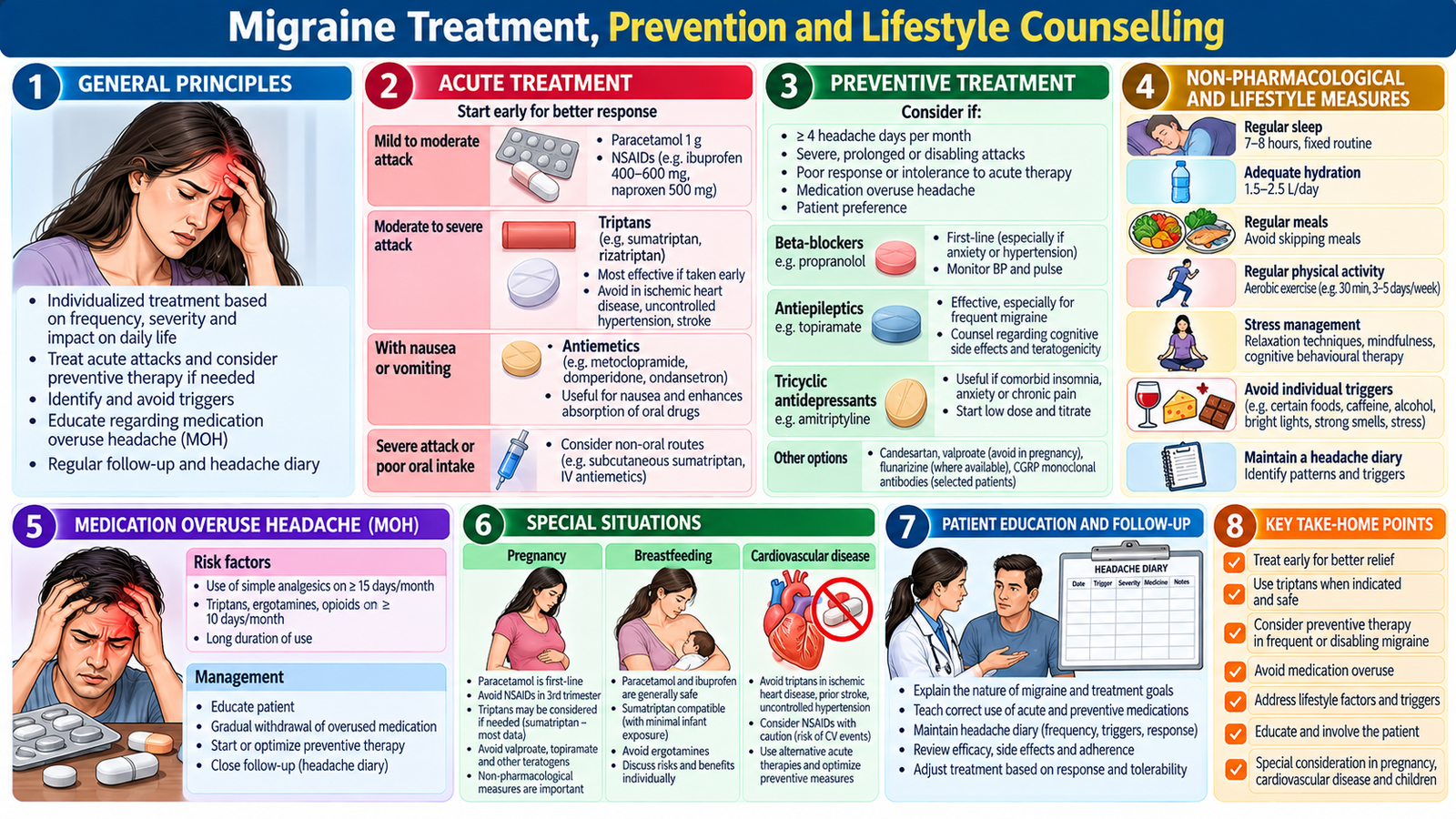
Acute attack treatment
Encourage early treatment once migraine is recognized, rest in a quiet dark room if helpful, and maintain hydration. Paracetamol or an NSAID may treat mild-to-moderate attacks when suitable. Triptans, such as sumatriptan, stimulate serotonin 5-HT1B/1D receptors and are useful for moderate-to-severe migraine or inadequate response to simple analgesics. An antiemetic such as metoclopramide may help nausea and improve tolerance of oral treatment. Avoid opioids for routine migraine treatment. Check contraindications: NSAIDs can cause gastrointestinal and renal harm; triptans should be avoided in significant ischemic cardiovascular or cerebrovascular disease and uncontrolled hypertension.
For acute migraine, an oral triptan combined with an NSAID (e.g., sumatriptan plus naproxen) or paracetamol may provide better relief than either drug alone, provided there are no contraindications. If severe vomiting prevents oral medication, consider a non-oral antiemetic and an appropriate non-oral migraine treatment.
When to start prevention
Consider preventive therapy when attacks are frequent, disabling, prolonged or inadequately controlled, or when acute medicines are being overused. Common undergraduate-level options include propranolol, topiramate and amitriptyline, selected according to comorbidity and contraindications. Propranolol may worsen asthma or bradycardia; topiramate can cause cognitive slowing and is contraindicated for migraine prevention in pregnancy; amitriptyline may cause sedation and anticholinergic effects. Explain that preventive medicines are taken regularly and usually need weeks to demonstrate benefit. Treatment selection and follow-up should be individualized.
Medication-overuse headache
Frequent use of acute medicines can perpetuate headache. As a practical warning, triptans or combination analgesics used on 10 or more days/month, or simple analgesics on 15 or more days/month, over more than three months may indicate medication overuse in a patient with frequent headache. Counsel on limiting rescue treatment, considering prevention and planning a supervised reduction when appropriate.
Patient-centred counselling
Encourage regular sleep, meals, hydration, physical activity, stress management and a headache diary tracking attacks, disability, menstrual association, triggers and medication days. Explain that migraine is a real neurological condition and that a predictable management plan can reduce disruption to study, work and family life. Review response, adverse effects, adherence and the need for preventive treatment.
F. Childhood Headache: Age-Specific Assessment and Management
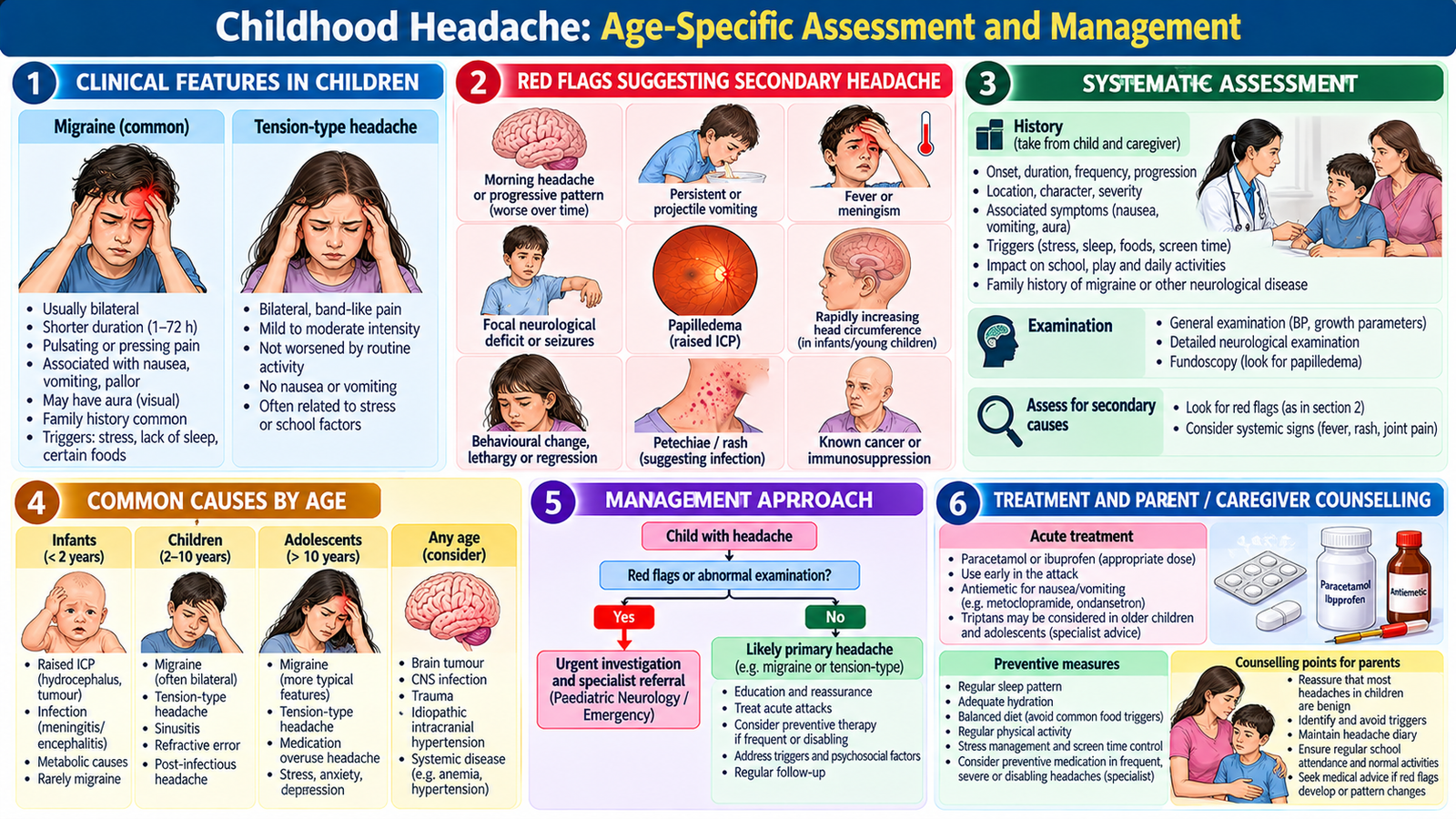
Children can have migraine, tension-type headache or secondary headache. Younger children may describe pain poorly; parents may instead report pallor, vomiting, withdrawal from play, reduced school attendance or a wish to sleep. Pediatric migraine may be bilateral, shorter than adult migraine, and associated with abdominal discomfort or vomiting. Ask the child and caregiver about onset, progression, school stress, sleep, meals, hydration, family history, vision and medicine use.
Examine temperature, blood pressure, hydration, growth, neurological function, gait and eyes/fundi when possible. Particular red flags include progressive or morning headache with vomiting, abnormal neurological examination, altered consciousness, fever with meningism, seizures, significant trauma or a headache that awakens a child from sleep in a concerning clinical context. A child with these findings needs prompt assessment rather than a routine migraine label.
For uncomplicated childhood migraine, provide reassurance, rest, regular sleep and meals, hydration, headache diary and appropriate age-/weight-based acute analgesia such as ibuprofen or paracetamol. Selected adolescents may benefit from migraine-specific therapy under age-appropriate guidance. Avoid routine neuroimaging in children with a typical recurrent primary headache and normal examination. Consider specialist preventive management when attacks cause major disability or school absence. Include parents in planning without excluding the child’s own account.
AIM Clinical Bridge
A 22-year-old student reports recurrent 12-hour headaches associated with nausea and light sensitivity. Episodes interfere with classes, and neurological examination is normal. This pattern supports migraine; routine brain imaging is not indicated if there are no red flags. Discuss early acute treatment, a headache diary and regular sleep. If she begins taking painkillers most days, reassess for medication overuse and consider preventive treatment. A sudden explosive headache or new weakness would change the pathway to urgent evaluation.
Important Comparison: Common Primary Headaches
| Feature | Migraine | Tension-type | Cluster |
|---|---|---|---|
| Pain | Moderate–severe, often throbbing | Pressing/tightening | Excruciating unilateral orbital |
| Duration | 4–72 h in adults | 30 min–7 days | 15–180 min |
| Associated clue | Nausea, light/sound sensitivity | No prominent nausea | Tearing, nasal symptoms, restlessness |
| Activity | Often worsens pain | Usually not worsened | Patient often restless |
AIM High-Yield Review
- Distinguish primary headache from secondary headache before selecting routine treatment.
- Thunderclap headache is a vascular emergency until appropriately evaluated.
- Typical stable migraine with a normal examination and no red flags needs no routine imaging.
- Migraine aura is usually gradual and reversible; persistent focal deficits require reassessment.
- Triptans treat acute migraine but are unsuitable in significant ischemic vascular disease.
- Preventive therapy is considered for frequent or disabling attacks, not just severe individual attacks.
- Frequent rescue-medication use can perpetuate headache through medication overuse.
- Childhood migraine may be bilateral and shorter; age-specific history and red flags are essential.
- Headache diary, regular sleep, hydration and scheduled follow-up support long-term care.
Topic 6 — Acute & Chronic Headache and Migraine Across the Lifespan
Neuroscience-III | KMU Integrated Curriculum
Clinical Approach to Headache & Migraine
Understand primary versus secondary headache, recognize migraine patterns, identify dangerous headache red flags, select appropriate investigations, and learn initial treatment and prevention principles.
Supplementary video resource for AIM Learning Cycle. The AIM Learning Material remains the primary source for complete KMU learning-outcome coverage.