
AIM OSCE / OSPE • FINAL YEAR MBBS
Station 6 — Common Poisoning: Toxidrome, Investigation & Antidote Interpretation
MS Module • Medicine • Rapid Revision • Toxicology • Clinical Interpretation • Viva
🎯 Candidate Task
You are provided with clinical findings and investigation results from patients presenting with suspected drug or chemical poisoning. Identify the likely toxidrome or poisoning, interpret the relevant investigations, select an appropriate antidote or supportive treatment, and recognize complications requiring urgent intervention.
⚡ Model Station Answer
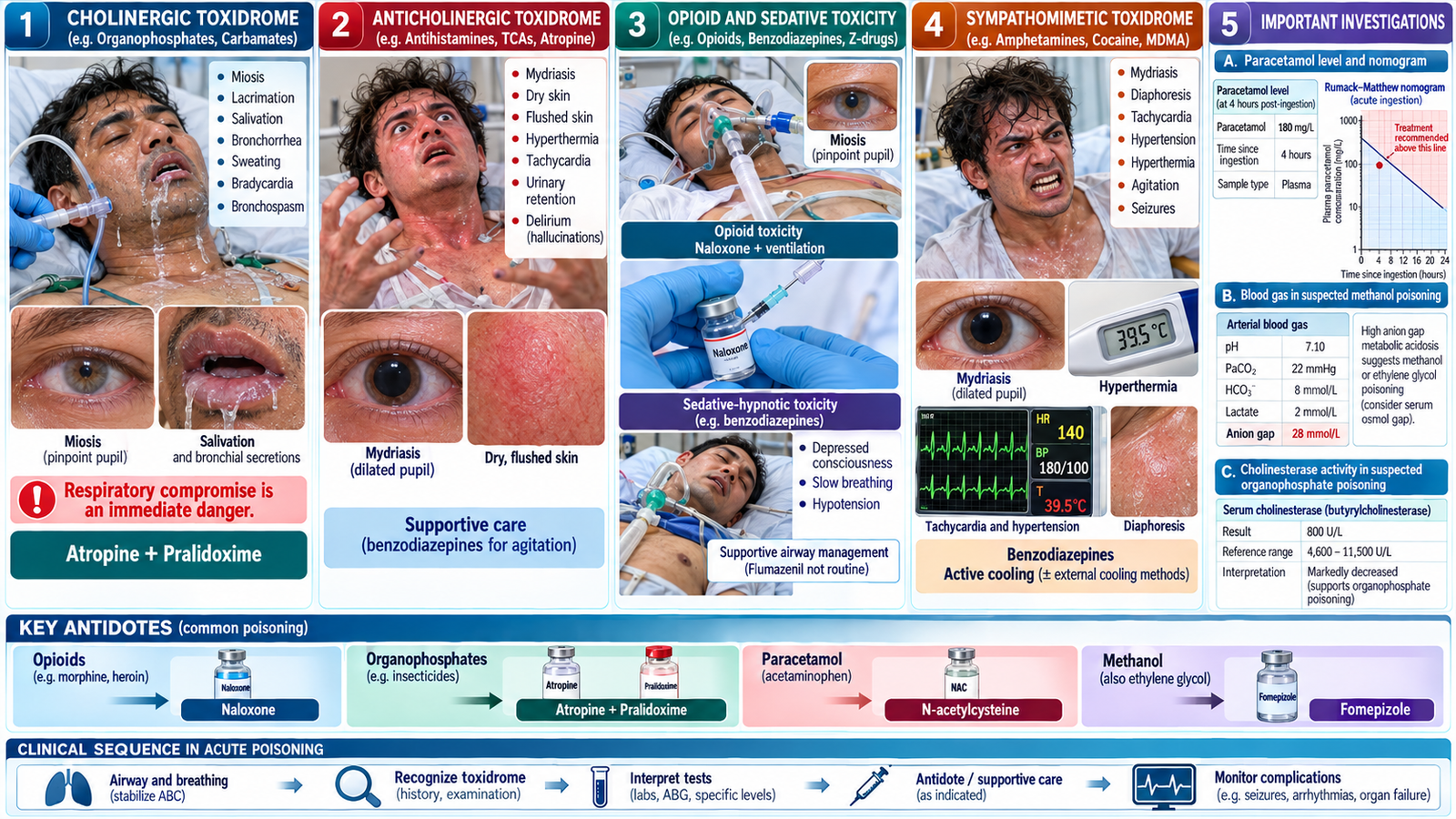
Recognition: Pinpoint pupils and respiratory depression suggest opioid poisoning; salivation, bronchorrhea and miosis suggest organophosphate poisoning; dry skin, mydriasis and delirium suggest anticholinergic toxicity.
Investigations: Assess glucose, ECG, electrolytes, renal function and blood gases as indicated. Use specific tests such as timed paracetamol levels, cholinesterase activity or toxic alcohol testing where appropriate.
Antidotes: Select naloxone for opioid toxicity, atropine with pralidoxime for significant organophosphate poisoning, N-acetylcysteine for paracetamol toxicity and fomepizole for methanol poisoning.
Priority: Stabilize airway, breathing and circulation, provide supportive care and urgently treat respiratory failure, seizures, arrhythmias, hyperthermia or severe metabolic acidosis.
🔎 How to Perform / Approach
- Assess immediate danger: Review consciousness, respiratory rate, oxygenation, pulse, blood pressure and temperature. Identify patients needing immediate resuscitation.
- Recognize the toxidrome: Examine pupil size, sweating, secretions, skin temperature, bowel activity, mental status and neuromuscular findings. Differentiate cholinergic, anticholinergic, sympathomimetic, opioid and sedative-hypnotic presentations.
- Identify the likely toxin: Correlate the clinical pattern with the suspected substance, exposure history, timing and available medication or chemical containers.
- Interpret investigations: Check bedside glucose, ECG and relevant blood tests. Interpret paracetamol concentration against time since ingestion when eligible for nomogram assessment; recognize high anion-gap metabolic acidosis in toxic alcohol poisoning.
- Select the antidote: Choose the appropriate agent when indicated, remembering that not all poisonings have specific antidotes and supportive treatment remains essential.
- Provide supportive treatment: Maintain airway and ventilation, support circulation, correct glucose or electrolyte abnormalities and manage seizures or hyperthermia as clinically indicated.
- Recognize complications and escalate: Identify respiratory failure, severe arrhythmias, seizures, shock, acute kidney injury, liver injury and severe acidosis. Arrange urgent senior and toxicology consultation where required.
🖼️ Visual Learning
Common Toxidromes, Investigations & Antidote Recognition
📝 Important Viva Questions
Q1. How do you differentiate cholinergic and anticholinergic toxidromes?
Answer: Cholinergic poisoning causes miosis, sweating, salivation and bronchorrhea; anticholinergic poisoning causes mydriasis, dry skin, urinary retention and delirium.
Q2. Which antidotes are used in organophosphate poisoning?
Answer: Atropine reverses muscarinic effects, especially bronchorrhea and bronchospasm. Pralidoxime may reactivate acetylcholinesterase when given appropriately.
Q3. How is a paracetamol concentration interpreted after acute overdose?
Answer: A level obtained at least 4 hours after a known-time single acute ingestion is plotted on the Rumack–Matthew nomogram to guide N-acetylcysteine treatment. It is not valid for staggered ingestion or unknown ingestion time.
Q4. What findings suggest methanol poisoning and what is its antidote?
Answer: Visual disturbance and high anion-gap metabolic acidosis suggest methanol toxicity. Fomepizole is the preferred antidote; severe cases may require hemodialysis.
Q5. What complications require urgent intervention in acute poisoning?
Answer: Respiratory failure, seizures, life-threatening arrhythmias, shock, severe hyperthermia and profound metabolic acidosis require immediate stabilization and escalation.