
Station 3 — Nasogastric Tube Insertion & Patient Counselling
MS Module • Surgery • Final Year MBBS
Rapid Revision • Clinical Skills • Practical Skills • Viva
🎯 Candidate Task
Assess the indications and contraindications for nasogastric tube insertion, explain the procedure and obtain informed consent from the simulated patient. Demonstrate safe nasogastric tube insertion on the provided mannequin, explain how placement is confirmed, and outline important complications and patient advice.
⚡ Model Station Answer
Indications: Enteral feeding when swallowing is unsafe but the gastrointestinal tract is functional, or gastric decompression in selected patients.
Safety: Exclude important contraindications, particularly suspected basal skull fracture or severe midfacial trauma; explain the procedure and obtain consent.
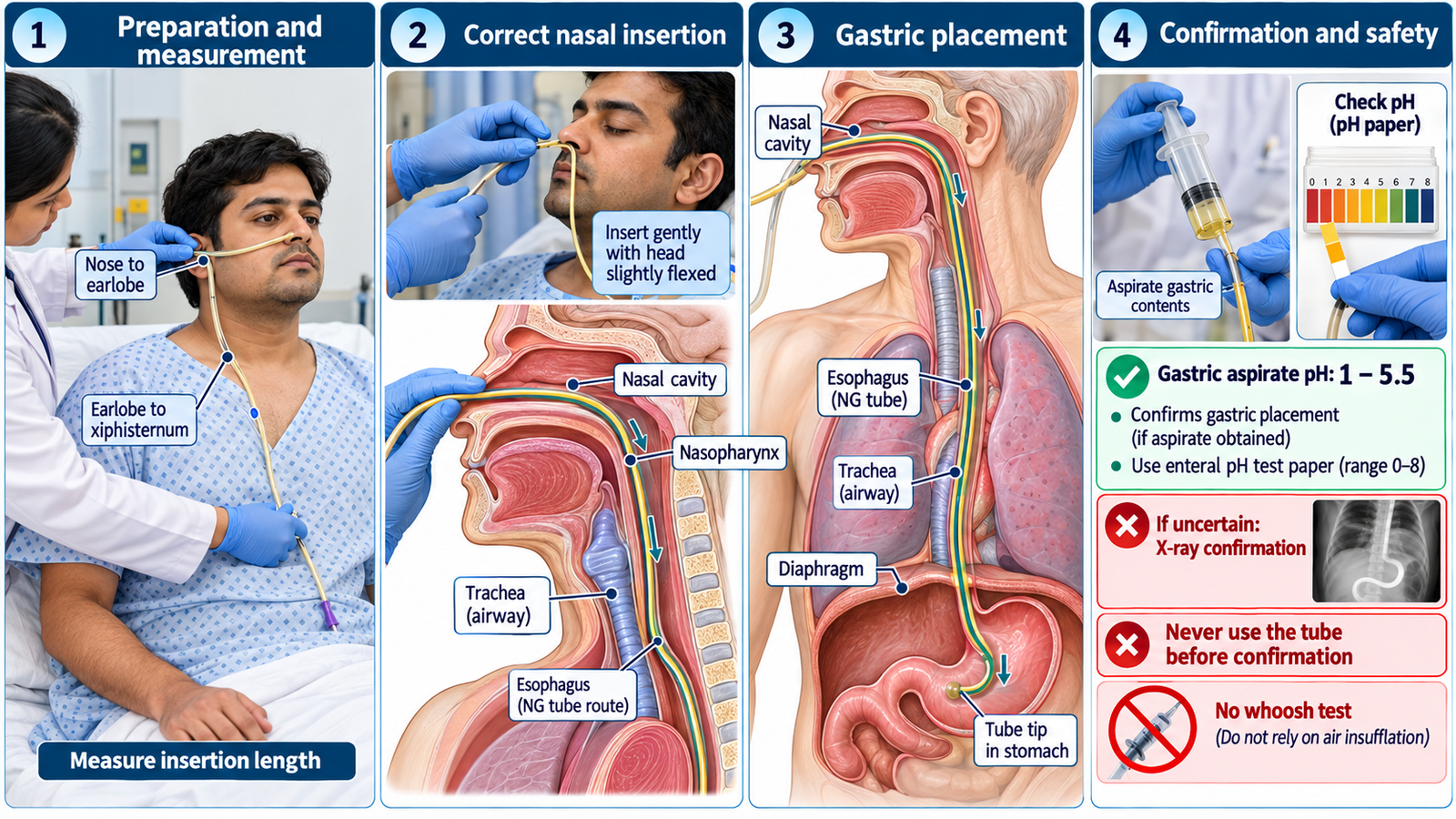
Technique: Position upright, measure the insertion length, lubricate and gently advance the tube through the nostril into the stomach.
Confirmation: Check gastric aspirate pH (safe range 1–5.5) or obtain an appropriately interpreted X-ray when required. Do not use the tube before confirming placement.
Completion: Secure the tube, explain discomfort and warning symptoms, document the procedure and communicate whether the tube is safe to use.
🔎 How to Perform / Approach
- Assess suitability: Confirm the indication; check for facial or basal skull trauma, major nasal obstruction and significant esophageal pathology. Seek senior guidance if insertion is unsafe.
- Explain and obtain consent: Inform the patient that a flexible tube will pass through the nose into the stomach. Explain temporary discomfort, benefits, important risks and the option to request a pause.
- Prepare equipment: Perform hand hygiene, wear gloves, arrange the NG tube, water-soluble lubricant, syringe, gastric pH strips and fixation tape. Position the patient upright.
- Measure insertion length: Estimate the length from the nose to the earlobe and down towards the xiphisternum, using the tube manufacturer’s recommended measurement technique. Mark the intended insertion length.
- Insert on the mannequin: Lubricate the tip, advance gently along the floor of the selected nostril, and guide the tube posteriorly. Ask the patient to swallow when safe; stop if resistance, marked coughing or respiratory distress occurs.
- Confirm placement: Obtain gastric aspirate and test with appropriate pH strips; pH 1–5.5 is acceptable under relevant safety guidance. If aspirate is unavailable, the pH is above 5.5 or uncertainty exists, arrange radiographic confirmation. Never rely on the air-insufflation or “whoosh” test.
- Secure, counsel and document: Secure the tube after insertion, confirm safety before feeding or medication, explain warning symptoms and record the indication, consent, insertion length, position-check result, complications and instructions for use.
🖼️ Visual Learning
Nasogastric Tube Insertion — Landmarks, Technique & Placement Confirmation
🎥 Practical Demonstration
Nasogastric (NG) Tube Insertion — Geeky Medics
OSCE-focused demonstration of equipment preparation, patient positioning, insertion technique, tube fixation and placement assessment. Follow current institutional safety guidance for confirmation before use.
📝 Important Viva Questions
Q1. What are the common indications for nasogastric tube insertion?
Answer: Short-term enteral feeding or medication delivery when oral intake is unsafe or inadequate, and gastric decompression in selected conditions.
Q2. What are important contraindications to nasal NG tube insertion?
Answer: Suspected basal skull fracture or severe midfacial trauma; significant esophageal injury, obstruction or pathology also requires specialist assessment.
Q3. How do you confirm correct nasogastric tube placement?
Answer: Confirm by appropriate gastric aspirate pH testing (safe range 1–5.5) or correctly interpreted X-ray where indicated. The whoosh test is unreliable.
Q4. What complications may occur during NG tube insertion?
Answer: Nasal trauma, epistaxis, gagging or vomiting, and potentially serious airway misplacement causing aspiration or pulmonary injury.
Q5. What essential advice should you give the patient after NG tube insertion?
Answer: Explain that mild discomfort may occur, ask the patient to avoid pulling or manipulating the tube, and immediately report coughing, breathing difficulty, vomiting or suspected tube displacement.