🩺 Station 1 — Lab Safety, Protocols and Basic Lab Equipment
AIM OSPE/OSCE Lab — Practical Station | KMU Style | MBBS Practical + Viva
📋 Complete OSPE Station Content
OSPE Station Name
Station 1 — Lab Safety, Protocols and Basic Lab Equipment
Module: Neuroscience
Year: 2nd Year MBBS
Subject / Integration: Integrated Practical Skills — Anatomy, Histology, Physiology, Biochemistry and Clinical Lab Discipline
Learning Target
By the end of this station, the student should be able to:
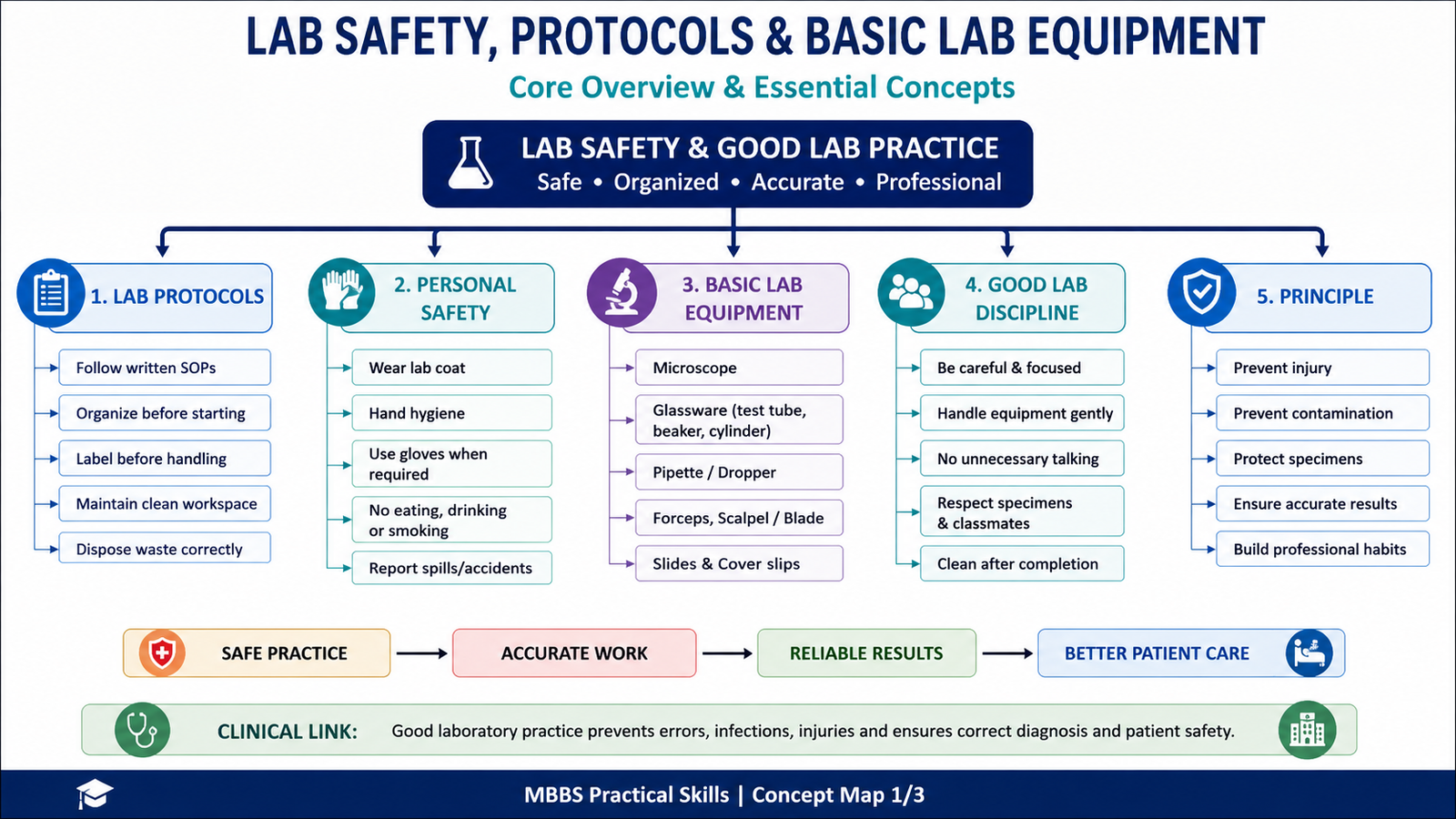
- Follow basic laboratory safety protocols and demonstrate organized practical work.
- Identify common laboratory equipment and state their safe use in practical sessions.
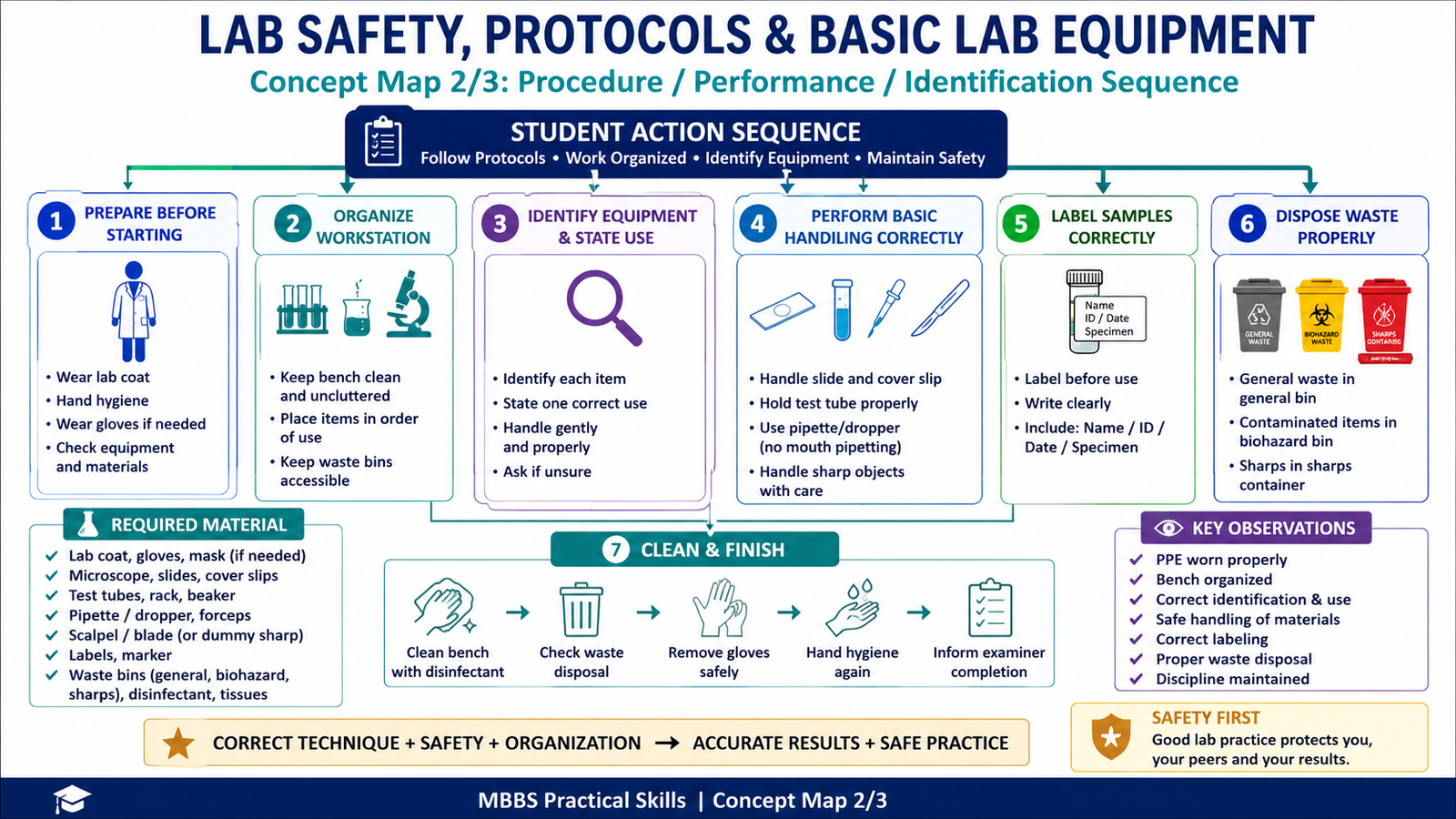
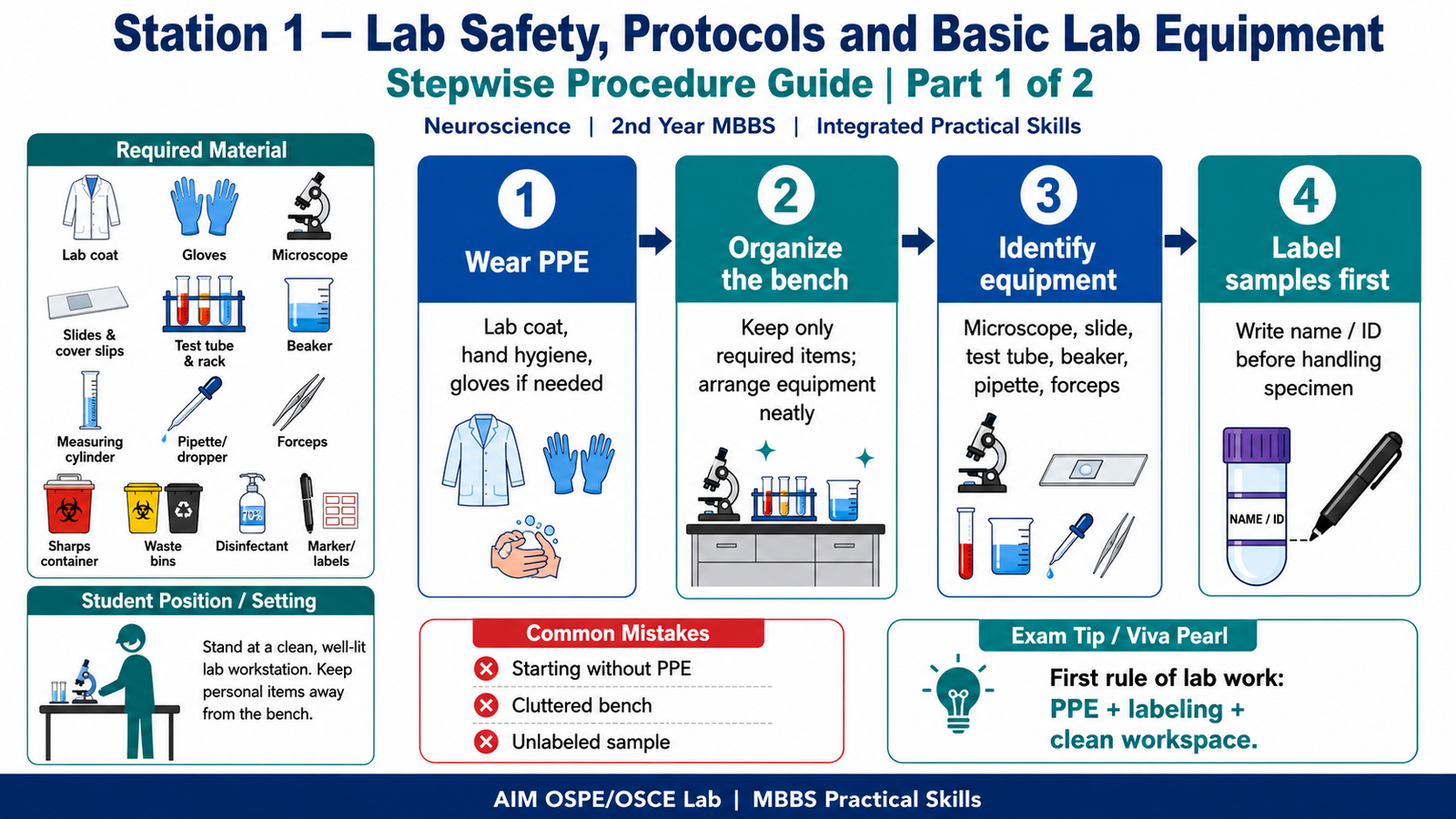
Required Material
- Laboratory coat
- Gloves
- Face mask / protective eyewear, if required
- Hand sanitizer / hand-washing facility
- Microscope
- Glass slides and cover slips
- Test tubes
- Test tube rack
- Beaker
- Measuring cylinder
- Pipette / dropper
- Forceps
- Scalpel / blade model or dummy sharp object
- Marker / label stickers
- Waste bins: general waste, biological waste, sharps container
- Disinfectant bottle
- Tissue paper / absorbent paper
- Sample labels or dummy specimens
Student Task / Procedure
- Wear appropriate personal protective equipment before starting work.
- Arrange the workstation in a clean and organized manner.
- Identify the given laboratory equipment.
- State one safe use of each equipment item.
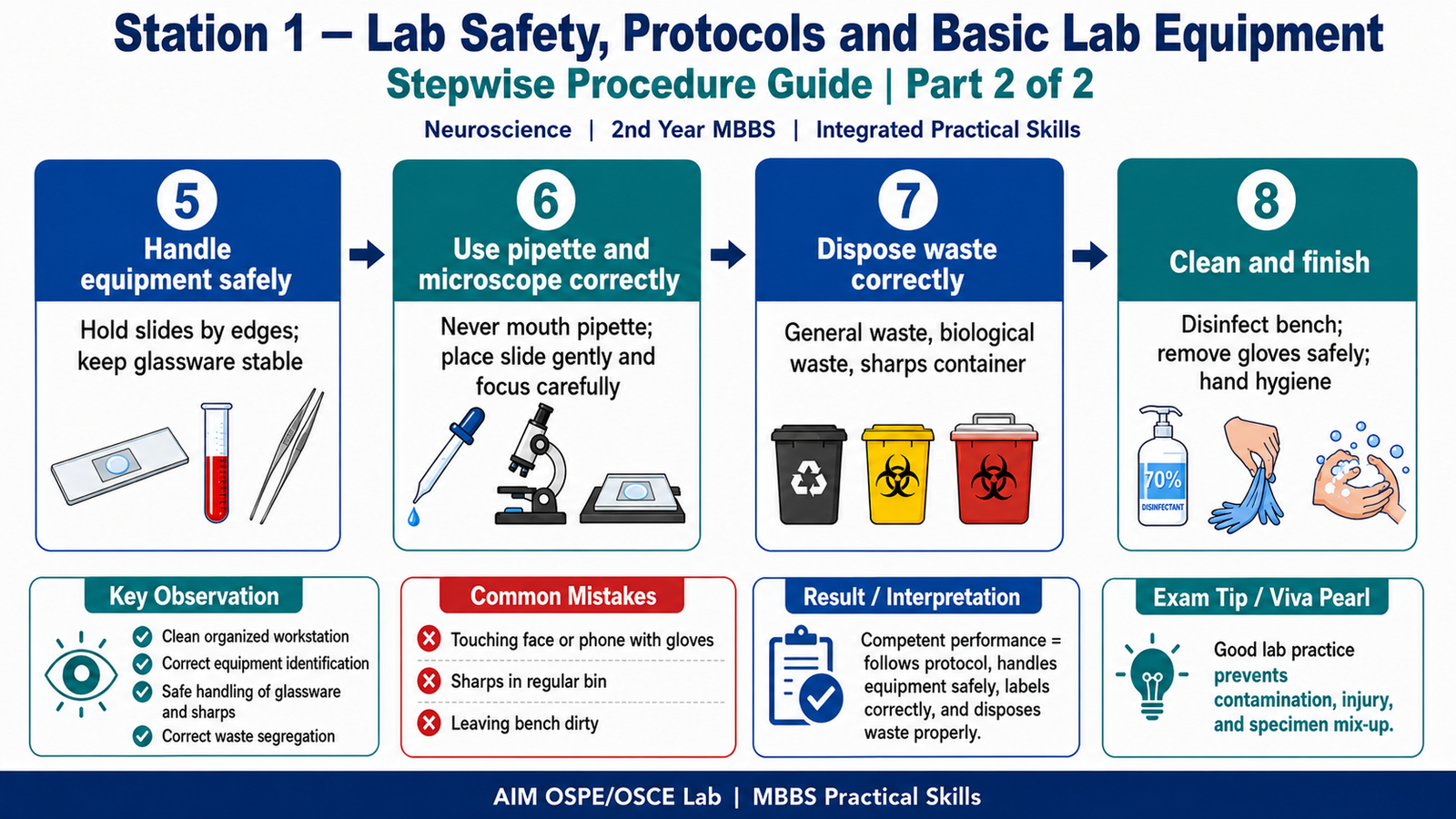
- Demonstrate correct handling of a slide, test tube, pipette, and sharp object.
- Show how to label a sample correctly.
- Dispose of general waste, biological waste, and sharps in the correct containers.
- Clean the workstation after completion.
Observation / Identification Points
The student should demonstrate or identify:
- Proper use of lab coat, gloves, and hand hygiene.
- Clean and uncluttered working area.
- Correct identification of common lab equipment.
- Safe handling of glassware and sharp objects.
- Correct use of pipette/dropper without mouth pipetting.
- Proper labeling of samples before use.
- Correct placement of slides on microscope stage.
- Correct disposal of sharps into sharps container.
- Correct disposal of contaminated material into biological waste bin.
- Good lab discipline: no eating, drinking, unnecessary talking, or careless handling.
Result / Interpretation
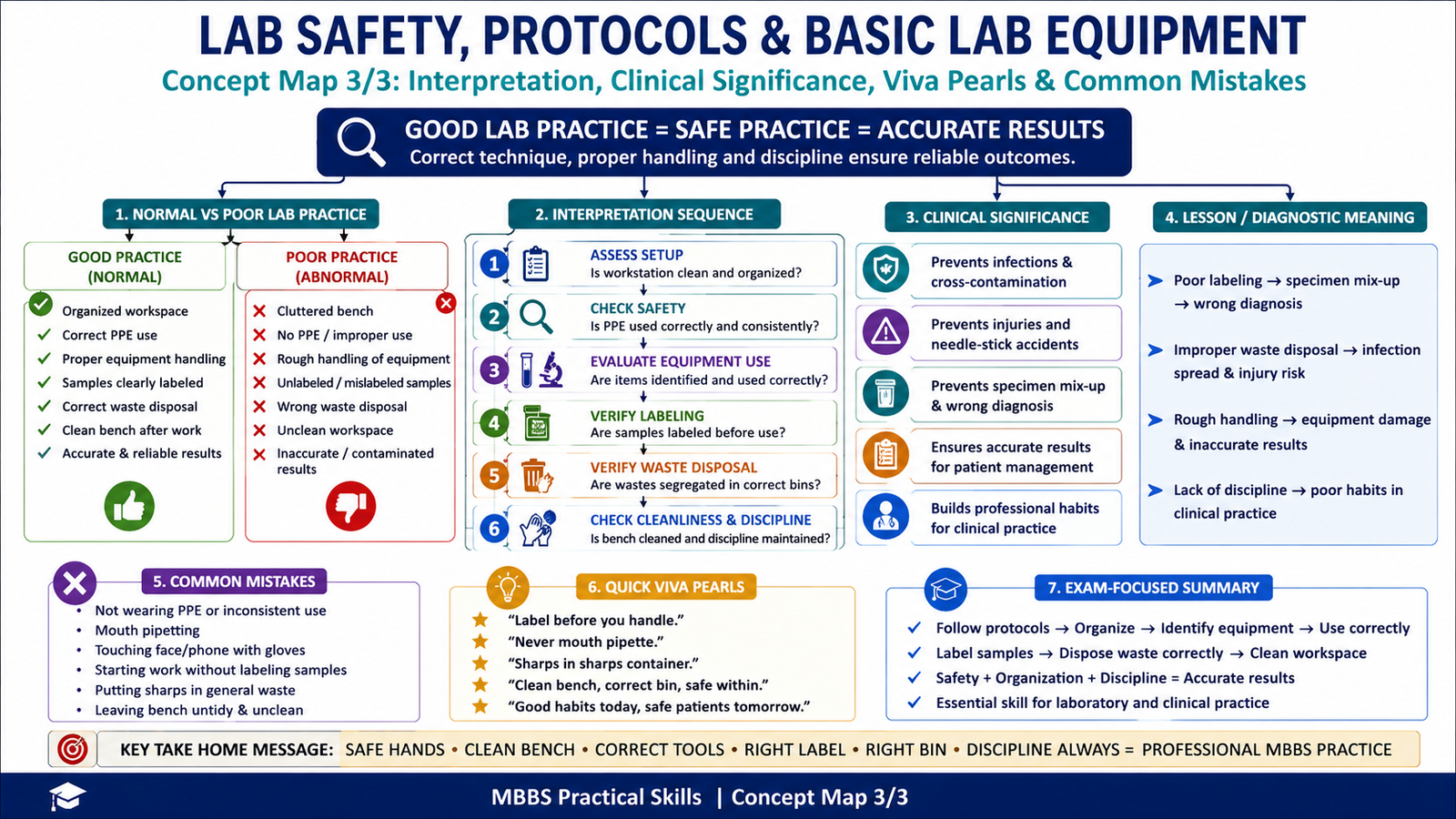
A student is considered competent if they can safely prepare and organize the workstation, identify basic laboratory equipment, handle equipment without contamination or injury risk, and dispose of waste correctly.
Principle:
Good laboratory practice reduces risk of infection, injury, sample contamination, wrong results, and damage to equipment.
Clinical significance:
Poor lab discipline in medical training can lead to specimen mix-up, inaccurate results, needle-stick injury, exposure to biological material, and unsafe clinical habits.
Viva Questions
1. Why is hand hygiene important before and after lab work?
It prevents contamination of samples and reduces transmission of infectious material.
2. Why should mouth pipetting never be done?
It can cause accidental ingestion or inhalation of harmful chemicals or biological material.
3. What is the correct container for disposal of used blades or needles?
A puncture-proof sharps container.
4. Why should samples be labeled before starting the procedure?
To prevent specimen mix-up and ensure accurate identification.
5. What should you do if a chemical or biological sample spills on the bench?
Inform the supervisor, avoid direct contact, use disinfectant or spill protocol, and clean safely using protective equipment.
Common Student Mistakes
- Wearing gloves but touching face, phone, or personal items during practical work.
- Placing sharps or contaminated material in the general waste bin.
- Starting the task without labeling samples or organizing the workstation.
AIM Feedback
You performed well if you worked safely, kept your bench organized, identified equipment correctly, and disposed of waste in the correct bins. In future attempts, focus on developing automatic lab discipline: wear PPE first, label before handling samples, avoid contamination, and clean your station before leaving. These habits are essential not only for OSPE but also for safe clinical and diagnostic practice.
🖼️ Visual / Image Support
🧩 Concept Map / Interpretation Support