🩺 Station 3 — pH and Buffer Solution Practical
AIM OSPE/OSCE Lab — Practical Station | KMU Style | MBBS Practical + Viva
📋 Complete OSPE Station Content
OSPE Station Name
Station 3 — pH and Buffer Solution Practical
Year: 2nd Year MBBS
Subject / Integration: Biochemistry / Physiology / Clinical Integration
Learning Target
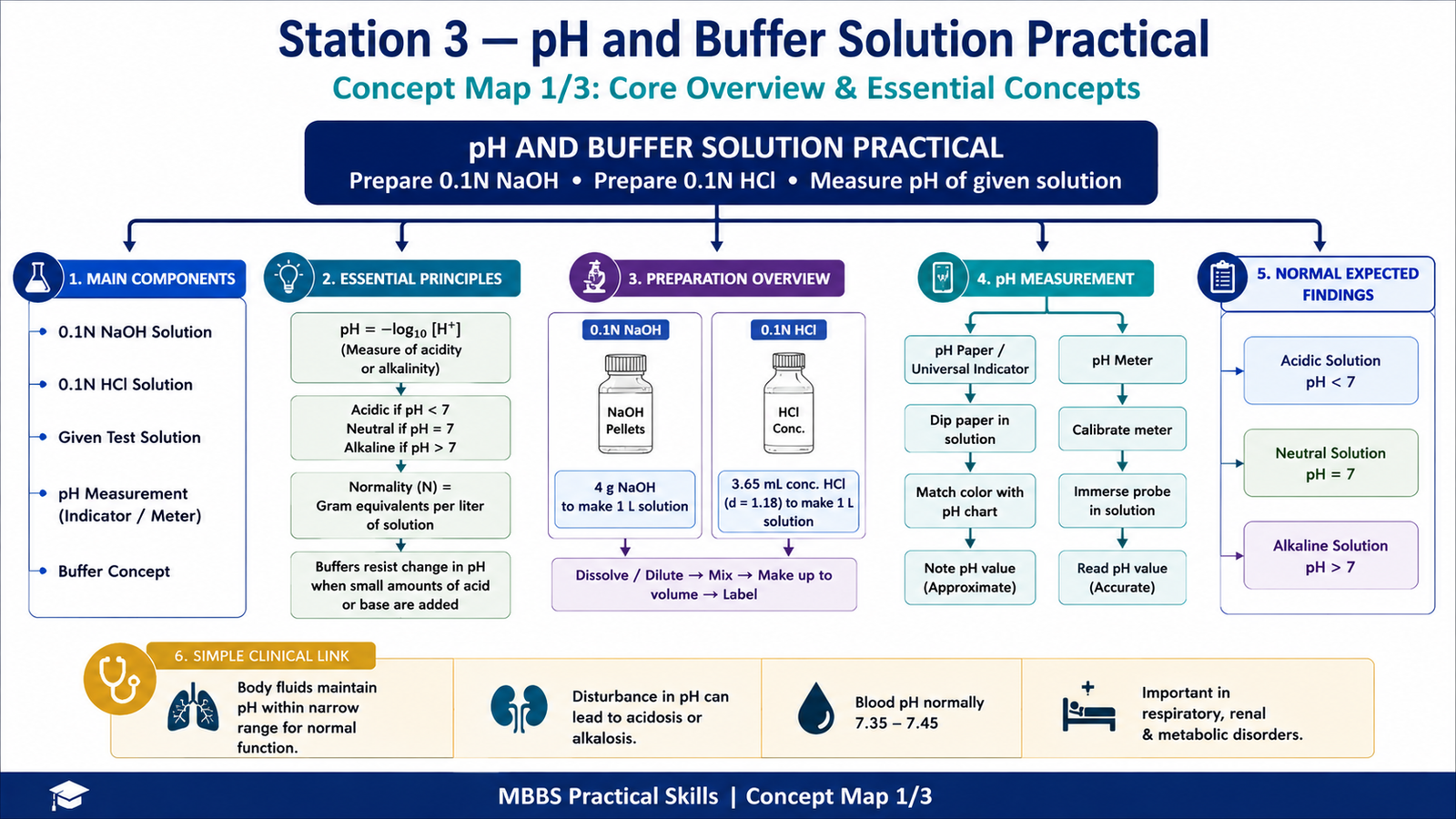
By the end of this station, the student should be able to:
- Prepare simple standard solutions of 0.1N NaOH and 0.1N HCl using correct lab technique.
- Measure and interpret the pH of a given solution using pH paper or pH meter.
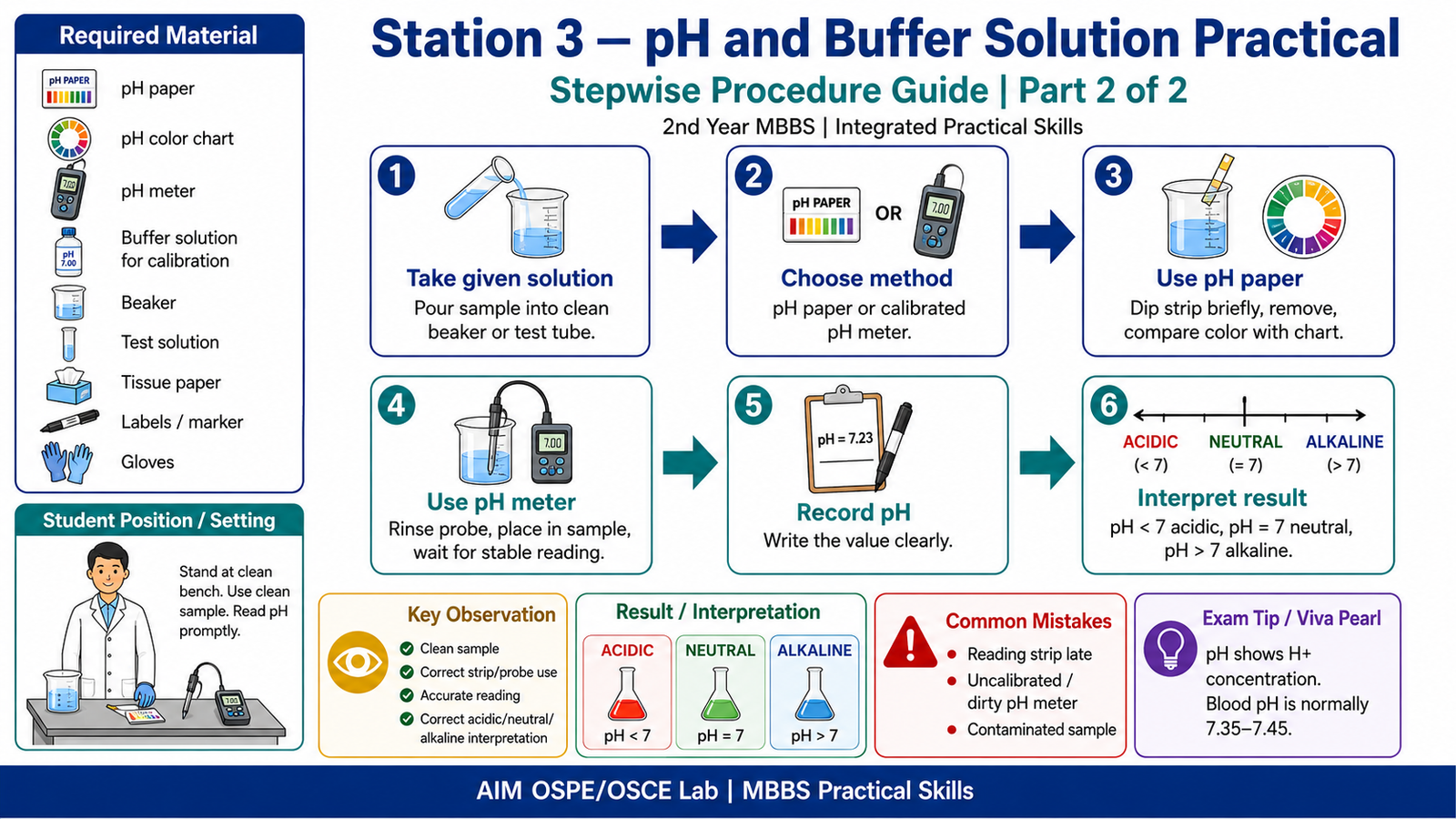
Required Material
- Sodium hydroxide pellets
- Concentrated hydrochloric acid
- Distilled water
- Volumetric flask
- Measuring cylinder
- Beaker
- Glass rod
- Funnel
- Dropper / pipette
- Weighing balance
- Watch glass / weighing boat
- pH paper / universal indicator paper
- pH meter, if available
- Standard buffer solutions for calibration, if pH meter is used
- Test tubes
- Test tube rack
- Gloves
- Lab coat
- Protective eyewear, if required
- Labels / marker
- Tissue paper
- Waste container
Student Task / Procedure
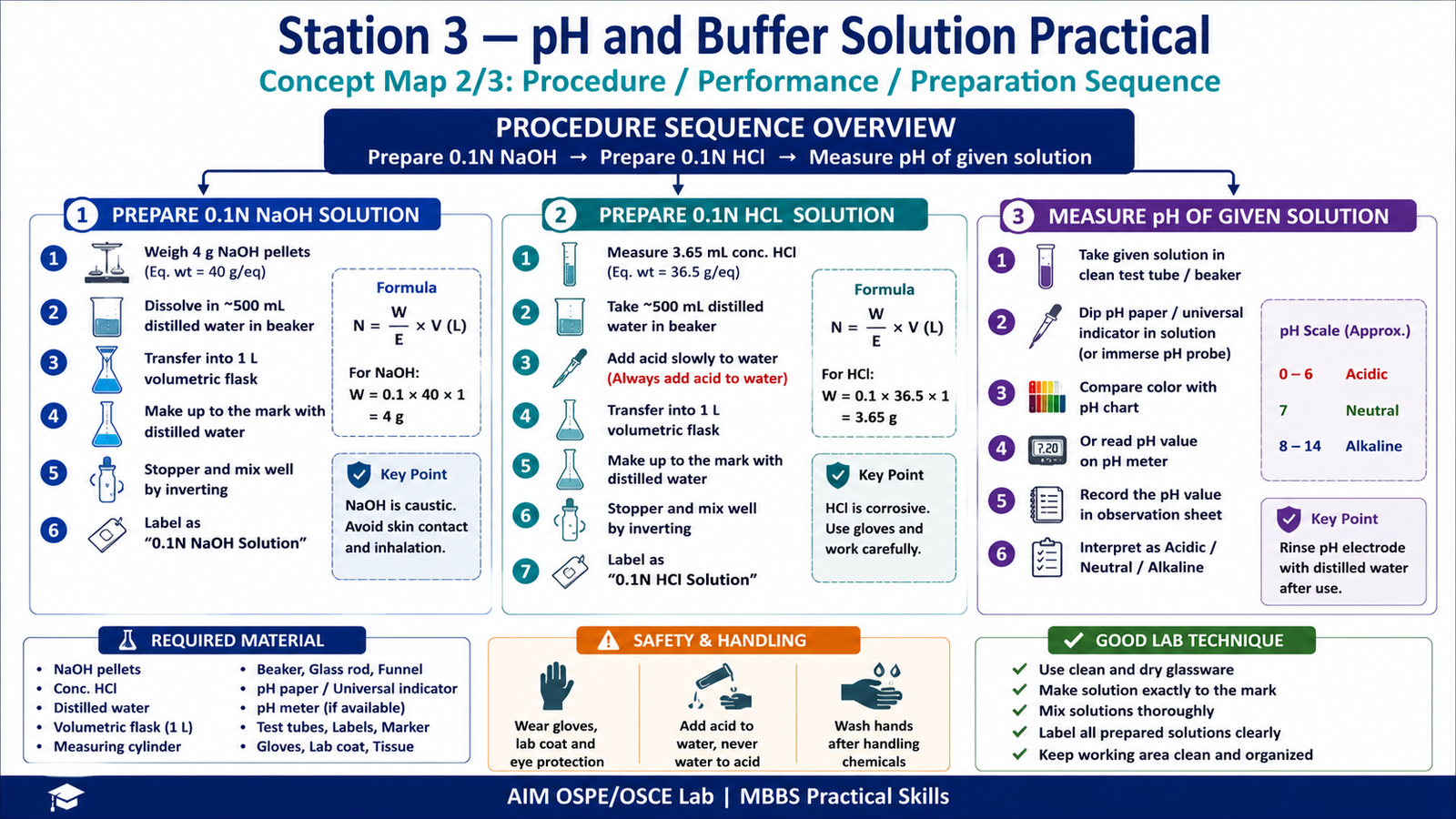
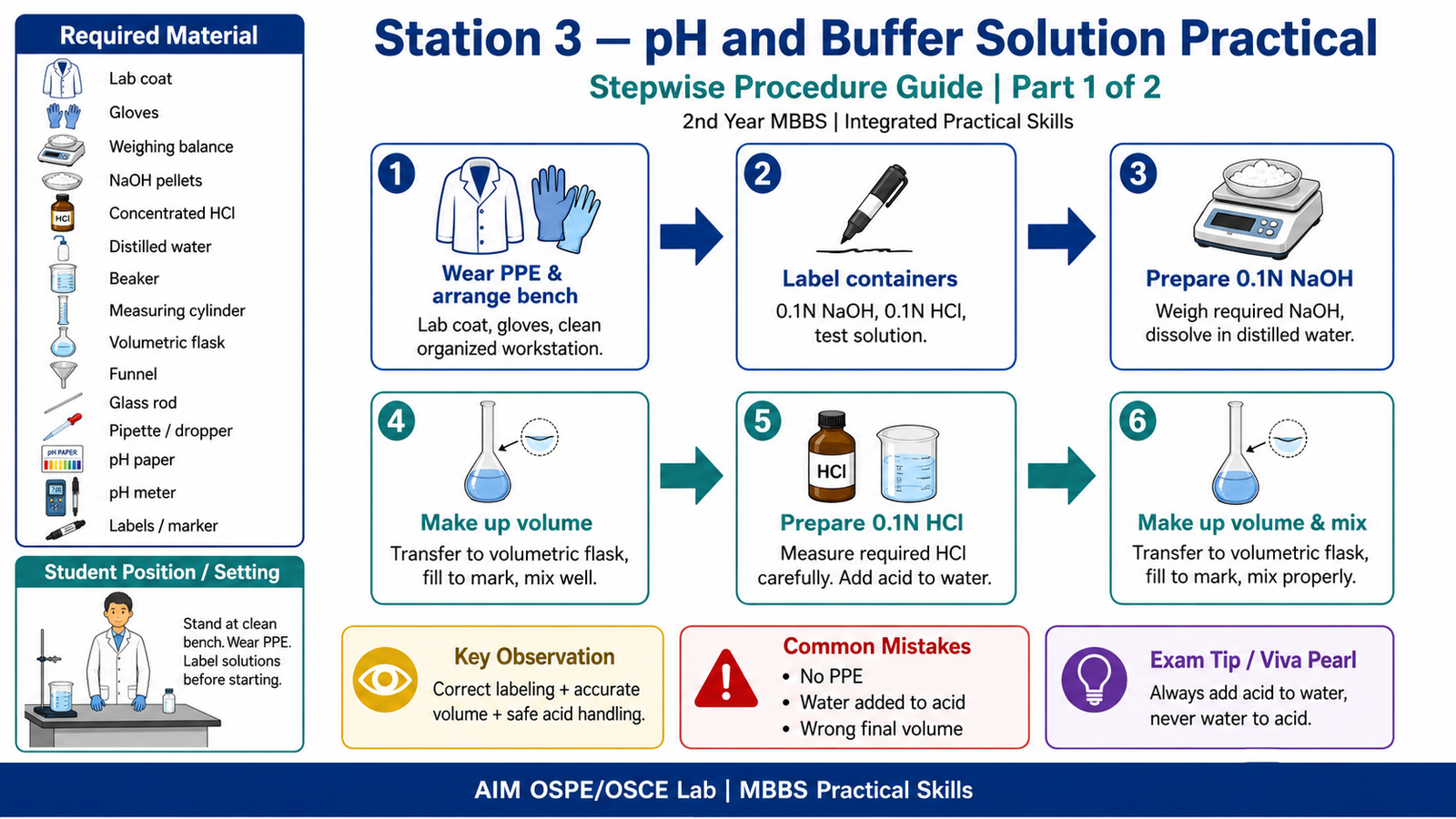
- Wear lab coat and gloves before starting.
- Clean and arrange the workstation.
- Label the containers as 0.1N NaOH, 0.1N HCl, and test solution.
- Prepare 0.1N NaOH by dissolving the required amount of NaOH in distilled water and making the final volume up to the mark in a volumetric flask.
- Prepare 0.1N HCl by carefully diluting the required volume of concentrated HCl with distilled water and making the final volume up to the mark.
- Mix each solution properly.
- Take the given solution in a clean test tube or beaker.
- Measure its pH using pH paper or pH meter.
- Compare the color of pH paper with the pH scale, or read the pH meter value.
- Record whether the solution is acidic, neutral, or alkaline.
- Clean the working area and dispose of waste safely.
Observation / Identification Points
The student should observe, identify, or demonstrate:
- Correct use of PPE.
- Proper labeling of prepared solutions.
- Correct handling of NaOH pellets.
- Correct handling and dilution of concentrated HCl.
- Use of volumetric flask up to the calibration mark.
- Proper mixing of solutions.
- Correct use of pH paper or pH meter.
- Correct comparison with pH color scale.
- Correct interpretation of pH value.
- Safe disposal and clean workstation.
Result / Interpretation
Expected interpretation:
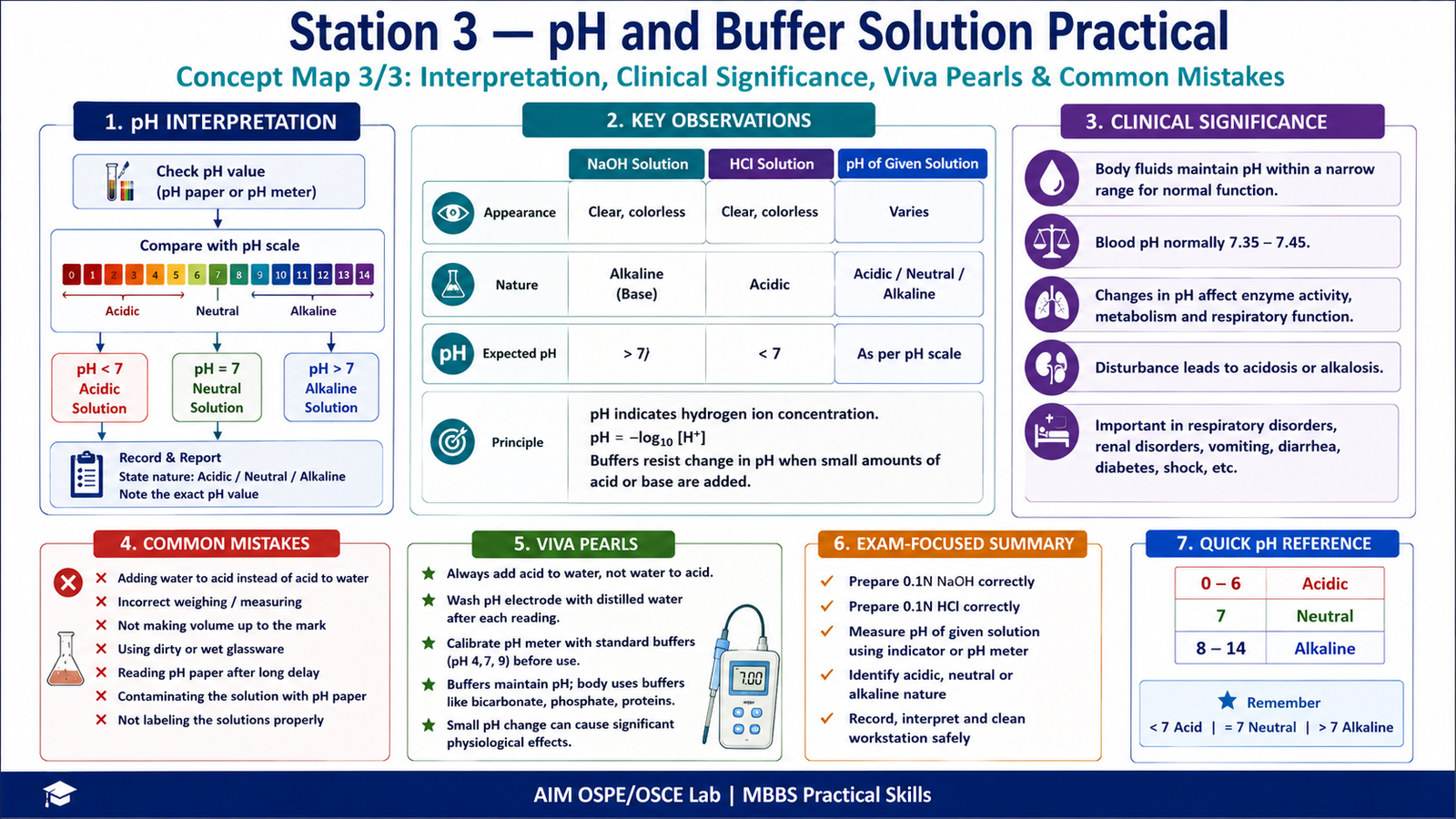
- pH less than 7 = acidic solution
- pH equal to 7 = neutral solution
- pH greater than 7 = alkaline / basic solution
Principle:
pH is the negative logarithm of hydrogen ion concentration. It indicates the acidity or alkalinity of a solution.
Clinical significance:
Body fluids maintain pH within a narrow range. Blood pH is normally around 7.35–7.45. Disturbance in pH can lead to acidosis or alkalosis, which are clinically important in respiratory, renal, and metabolic disorders.
Viva Questions
1. What is pH?
pH is the negative logarithm of hydrogen ion concentration.
2. What is the pH of a neutral solution?
pH 7.
3. What type of solution has pH less than 7?
An acidic solution.
4. What type of solution has pH greater than 7?
An alkaline or basic solution.
5. Why should acid be added to water and not water to acid?
Because dilution of acid releases heat. Adding acid slowly to water reduces splashing and injury risk.
Common Student Mistakes
- Adding water directly into concentrated acid.
- Not labeling the prepared solutions before use.
- Using wet or contaminated glassware.
- Reading pH paper after too long delay, causing inaccurate color interpretation.
- Touching pH paper with fingers or dipping the whole strip into contaminated solution bottle.
AIM Feedback
This station tests safe chemical handling, accurate solution preparation, and correct pH interpretation. To improve, always begin with PPE and labeling, use clean glassware, make the final volume exactly up to the calibration mark, and remember the basic pH rule: less than 7 is acidic, 7 is neutral, and more than 7 is alkaline. For clinical integration, connect pH with blood acid–base balance, acidosis, alkalosis, respiratory function, and renal regulation.
🖼️ Visual / Image Support
🧩 Concept Map / Interpretation Support