🩺 Station 12 — Arterial Blood Gas Analysis
AIM OSPE/OSCE Lab — Practical Station | KMU Style | MBBS Practical + Viva
📋 Complete OSPE Station Content
OSPE Station Name
Station 12 — Arterial Blood Gas Analysis
Module: Renal
Year: 2nd Year MBBS
Subject / Integration: Physiology + Biochemistry + Clinical Integration
Learning Target
By the end of this station, the student should be able to:
- Demonstrate the correct approach to arterial blood sampling and sample handling for ABG analysis.
- Interpret basic ABG values to identify acidosis, alkalosis, respiratory/metabolic cause, and compensation.
Required Material
- ABG sample report/card
- Heparinized ABG syringe
- Gloves
- Alcohol swab
- Cotton/gauze
- Radial artery anatomical site diagram or hand model
- Ice container/sample transport pouch
- Normal ABG values chart
- Pen/pencil for interpretation
- Waste disposal bin/sharps container
Student Task / Procedure
- Identify the preferred site for ABG sampling.
- Mention the importance of checking collateral circulation before radial artery puncture.
- Demonstrate correct sample collection steps on a model.
- Explain how the sample should be handled after collection.
- Read the given ABG report.
- Identify whether the patient has acidosis or alkalosis.
- Decide whether the primary disorder is respiratory or metabolic.
- Comment briefly on compensation.
Observation / Identification Points
The student should demonstrate or identify:
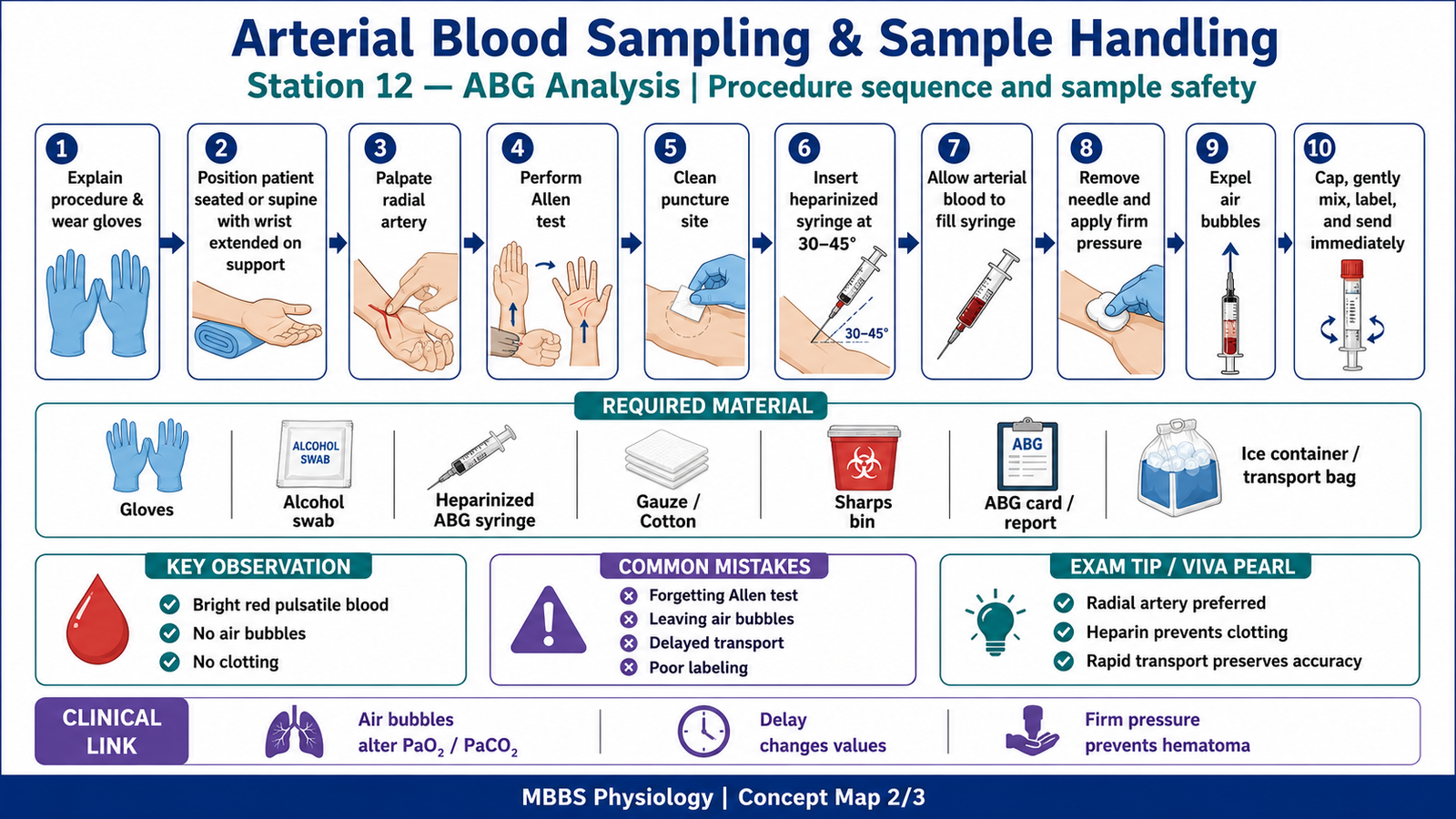
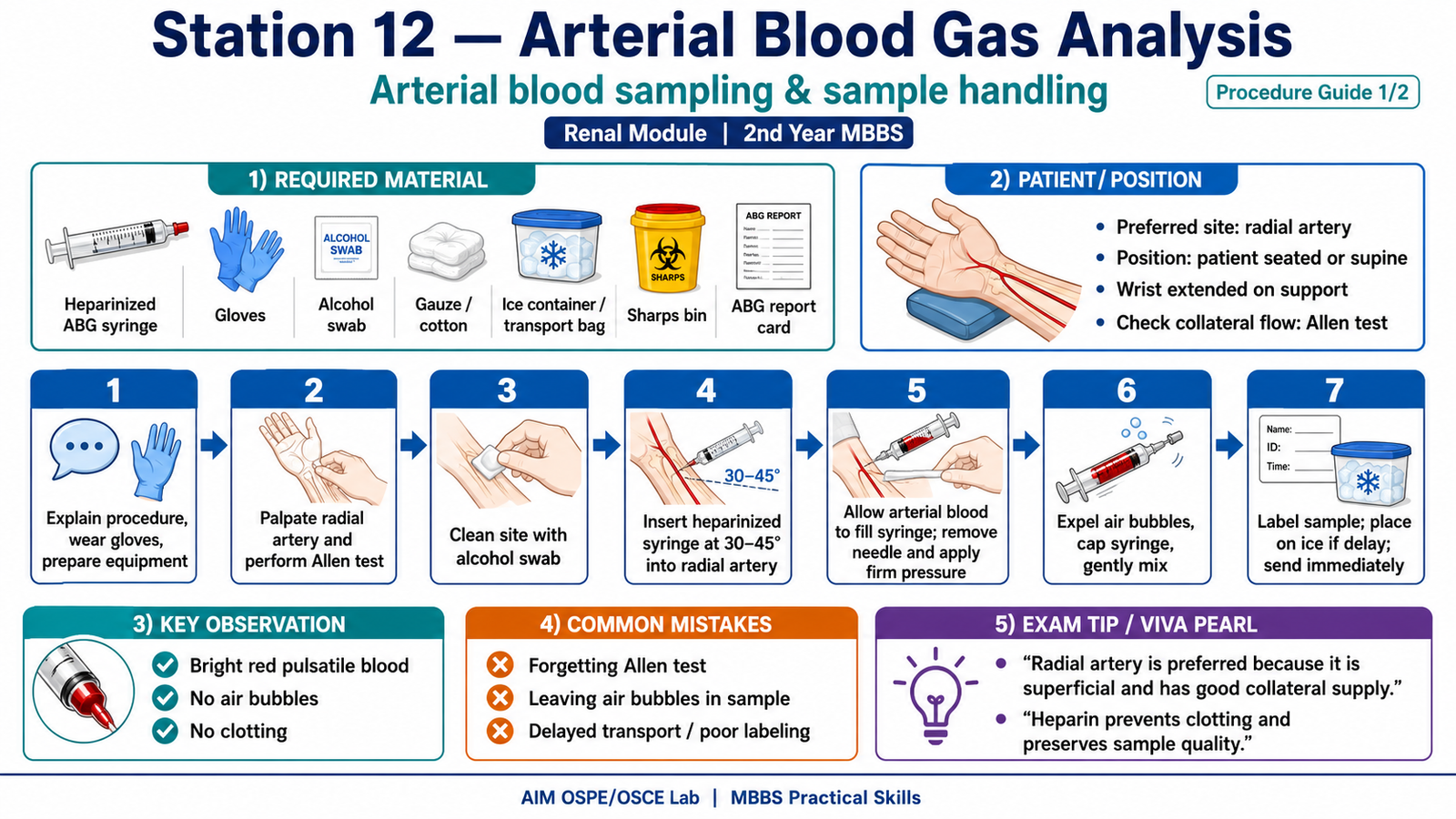
- Radial artery as the preferred site for ABG sampling.
- Allen test before radial artery puncture.
- Use of a heparinized syringe.
- Removal of air bubbles from the sample.
- Immediate labeling and rapid transport of sample.
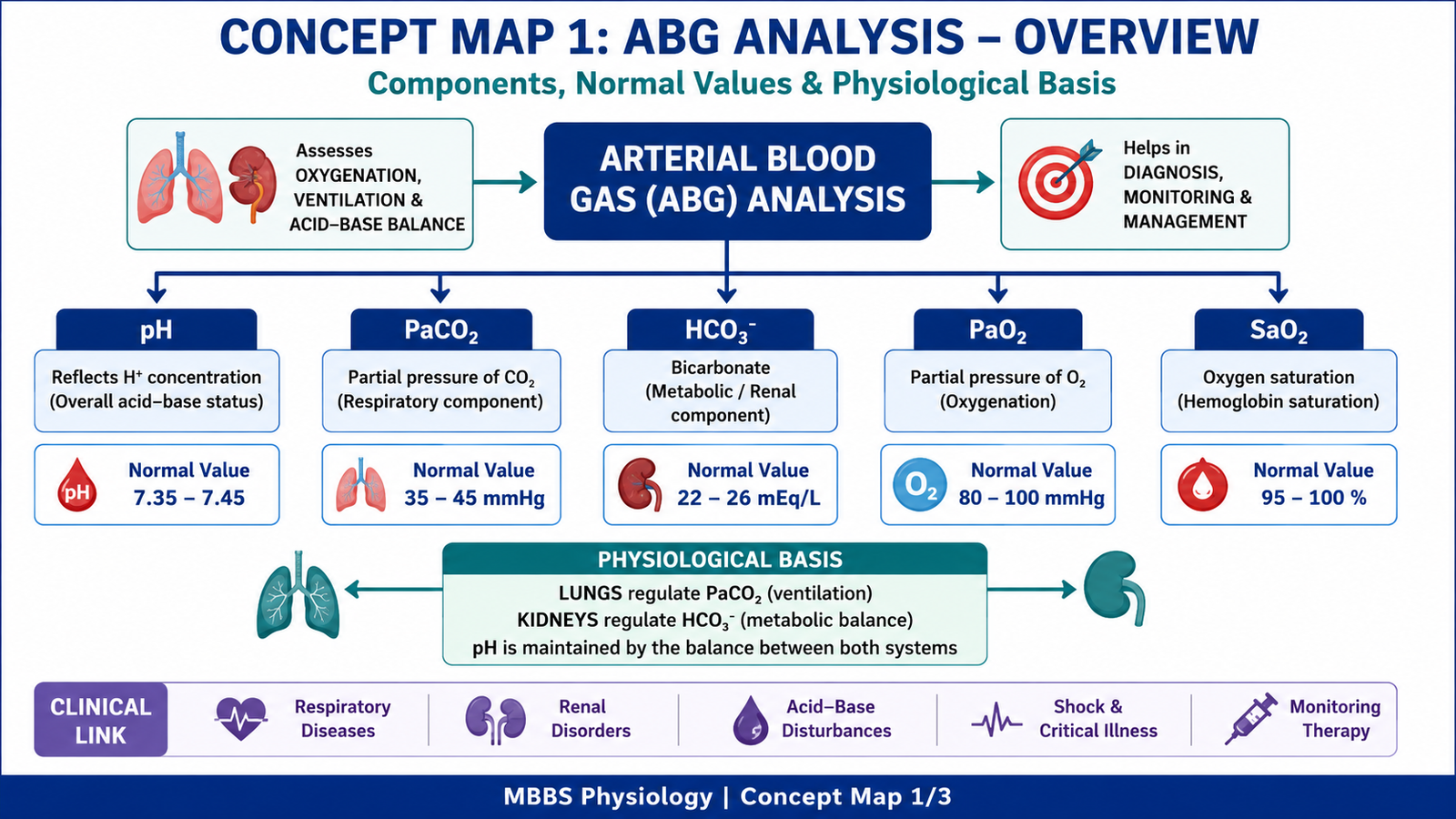
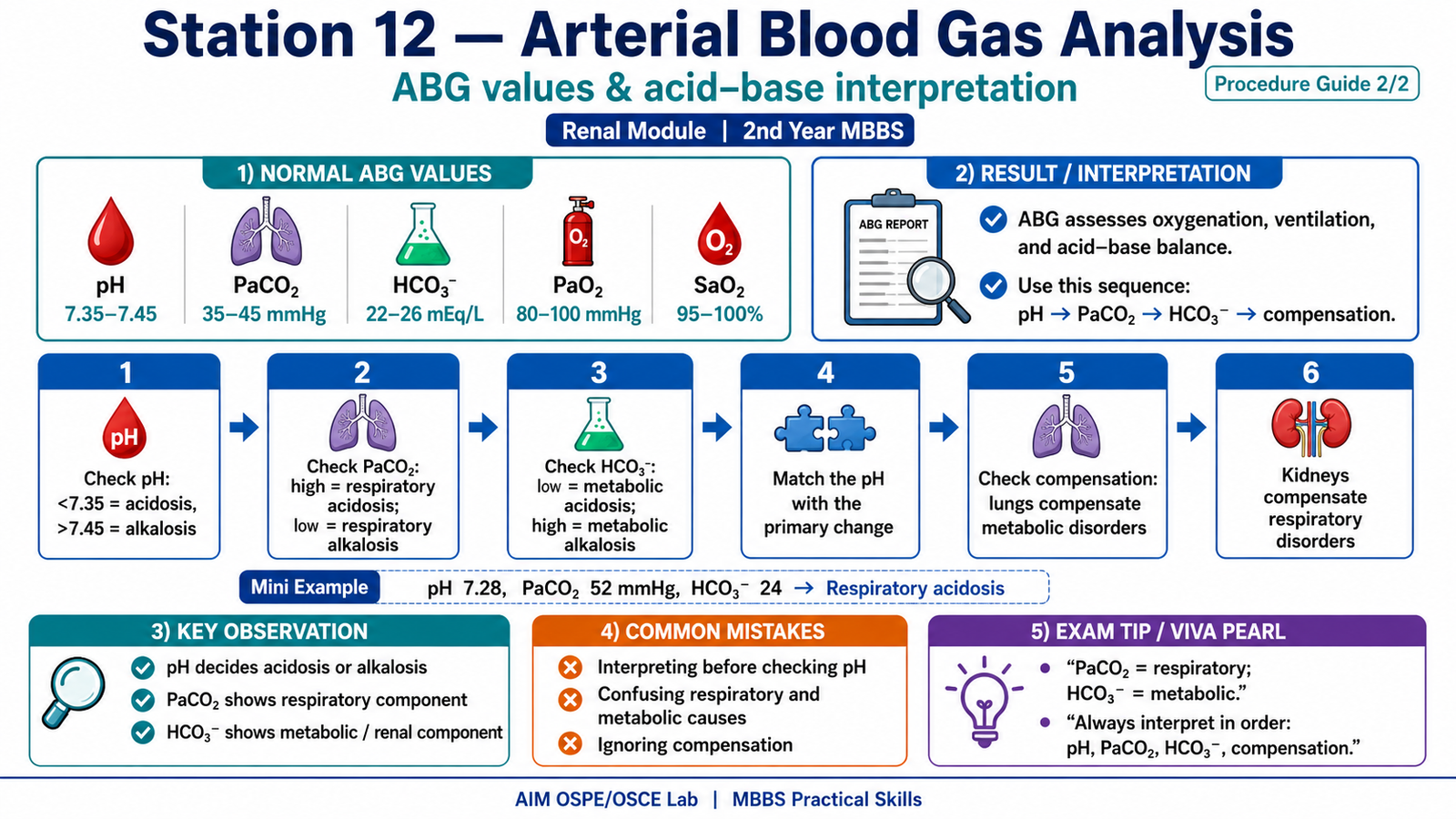
- Normal ABG values:
- pH: 7.35–7.45
- PaCO₂: 35–45 mmHg
- HCO₃⁻: 22–26 mEq/L
- PaO₂: 80–100 mmHg
- SaO₂: 95–100%
- pH decides acidosis or alkalosis.
- PaCO₂ reflects respiratory component.
- HCO₃⁻ reflects metabolic/renal component.
- Compensation is assessed by checking whether the other system is changing in the expected direction.
Result / Interpretation
ABG analysis helps assess oxygenation, ventilation, and acid-base balance.
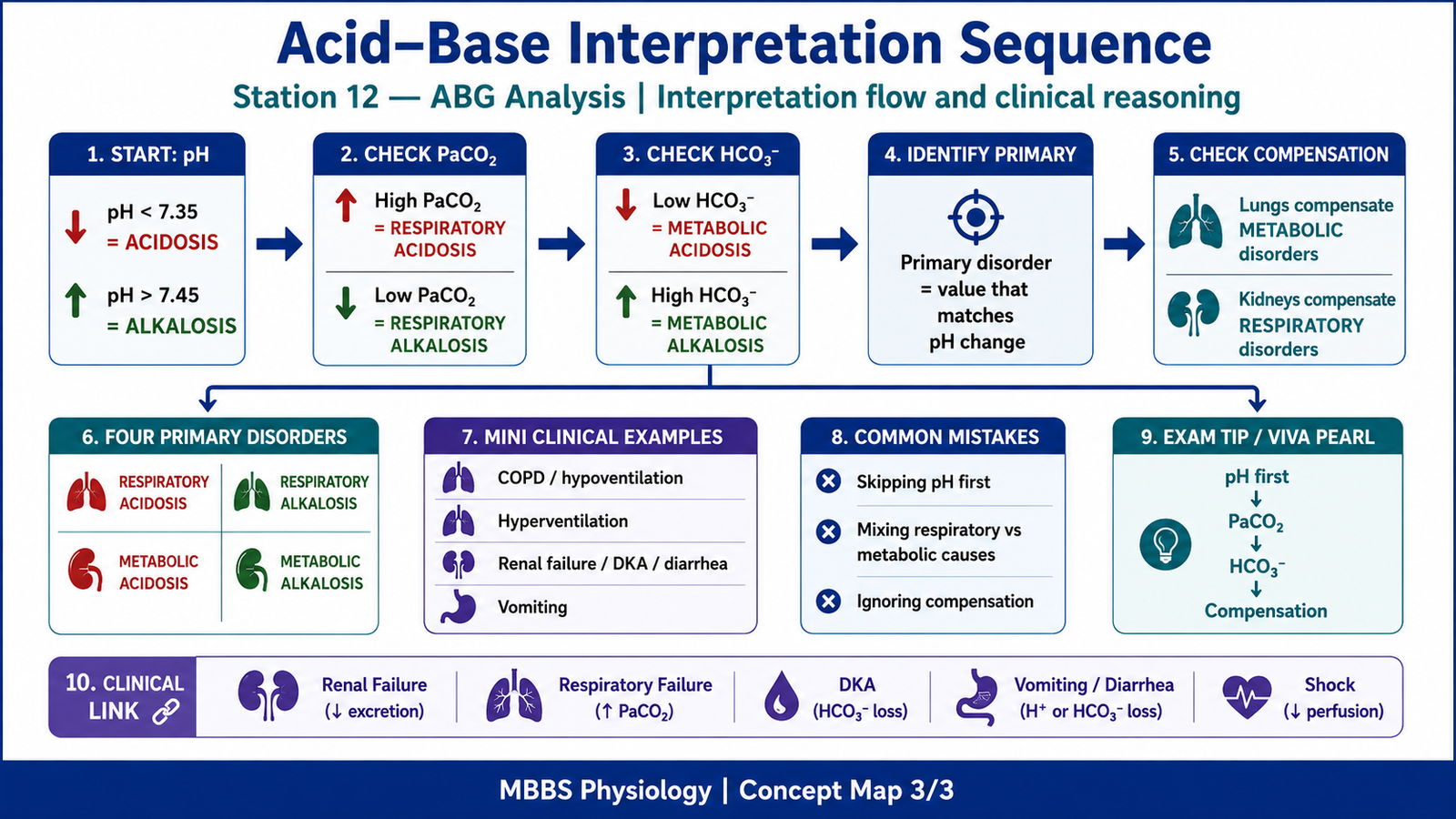
Basic interpretation sequence:
- Check pH
- pH < 7.35 = acidosis
- pH > 7.45 = alkalosis
- Check PaCO₂
- High PaCO₂ causes respiratory acidosis.
- Low PaCO₂ causes respiratory alkalosis.
- Check HCO₃⁻
- Low HCO₃⁻ causes metabolic acidosis.
- High HCO₃⁻ causes metabolic alkalosis.
- Check compensation
- Respiratory disorders are compensated mainly by kidneys.
- Metabolic disorders are compensated mainly by lungs.
Clinical significance:
ABG is useful in respiratory failure, renal failure, shock, diabetic ketoacidosis, severe vomiting, diarrhea, and acid-base disturbances.
Viva Questions
1. Why is the radial artery commonly used for ABG sampling?
Because it is superficial, easily accessible, and has good collateral circulation through the ulnar artery.
2. Why is Allen test performed before radial artery puncture?
To check adequate collateral blood supply to the hand through the ulnar artery.
3. Why should air bubbles be removed from an ABG sample?
Air bubbles can alter gas values, especially PaO₂ and PaCO₂.
4. Which ABG parameter shows the respiratory component of acid-base balance?
PaCO₂.
5. Which ABG parameter reflects the metabolic or renal component?
HCO₃⁻.
Common Student Mistakes
- Interpreting PaCO₂ and HCO₃⁻ before checking pH.
- Forgetting to remove air bubbles from the ABG syringe.
- Confusing respiratory acidosis with metabolic acidosis.
- Ignoring compensation.
- Forgetting normal ABG values.
AIM Feedback
ABG interpretation becomes easy when you follow a fixed sequence: pH first, then PaCO₂, then HCO₃⁻, then compensation. In practical exams, do not start with long theory. First identify the disorder clearly, then give one short reason using the abnormal value. For procedure marks, remember three key safety points: Allen test, heparinized syringe, and no air bubbles.
🖼️ Visual / Image Support
🧩 Concept Map / Interpretation Support