🩺 Station 4 — Titratable Acidity / pH of Urine
AIM OSPE/OSCE Lab — Practical Station | KMU Style | MBBS Practical + Viva
📋 Complete OSPE Station Content
OSPE Station Name
Station 4 — Titratable Acidity / pH of Urine
Module: Renal
Year: 2nd Year MBBS
Integration: Physiology + Biochemistry + Clinical
Learning Target
By the end of this station, the student should be able to:
- Demonstrate proper handling of a urine sample and determine urinary pH using pH paper/strip.
- Interpret acidic or alkaline urine and relate it to renal acid–base regulation and common clinical conditions.
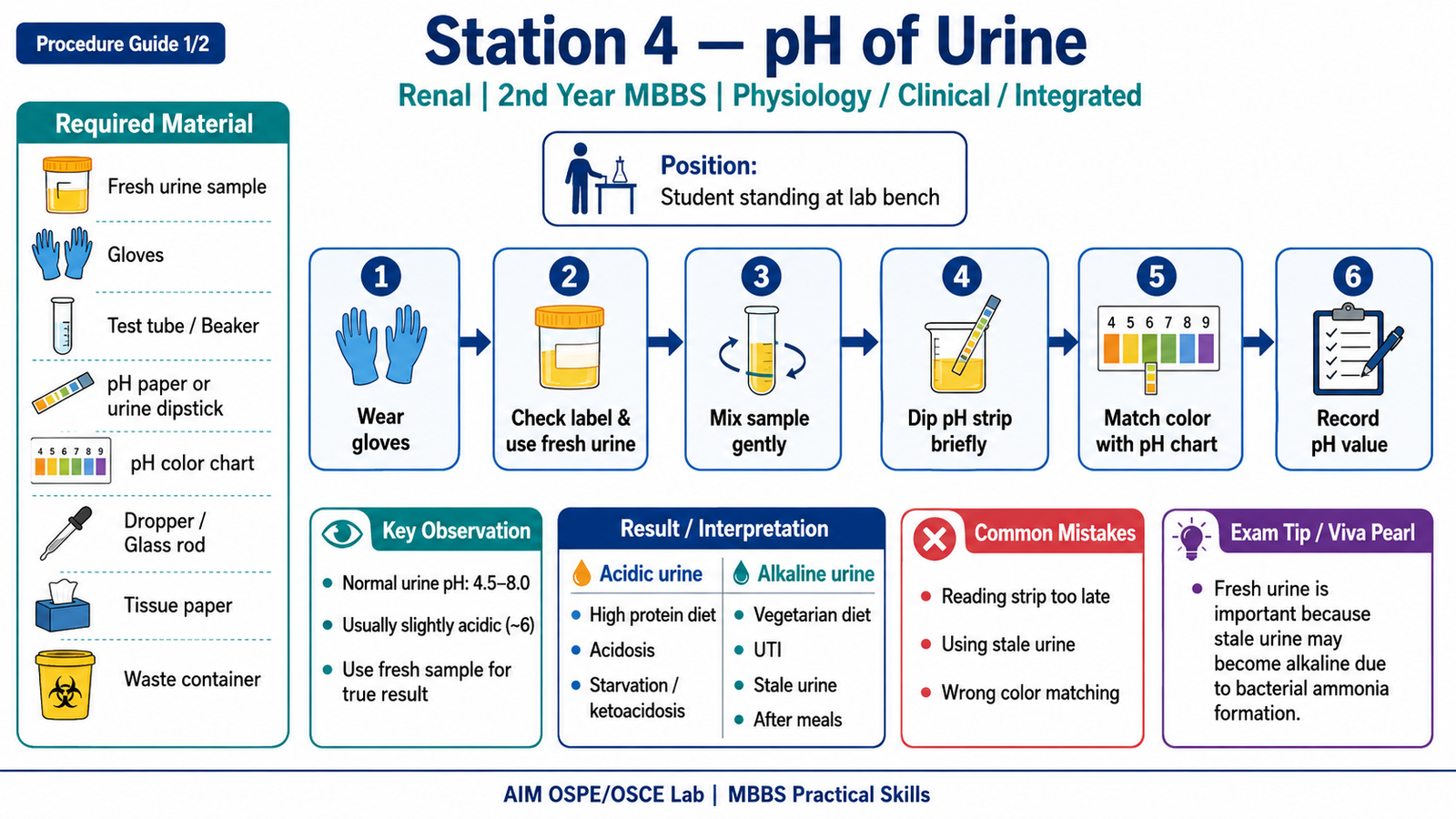
Required Material
- Fresh urine sample in labeled container
- Gloves
- Test tube / beaker
- pH paper or urine reagent strip
- Standard pH color chart
- Dropper / glass rod
- Tissue paper
- Waste container
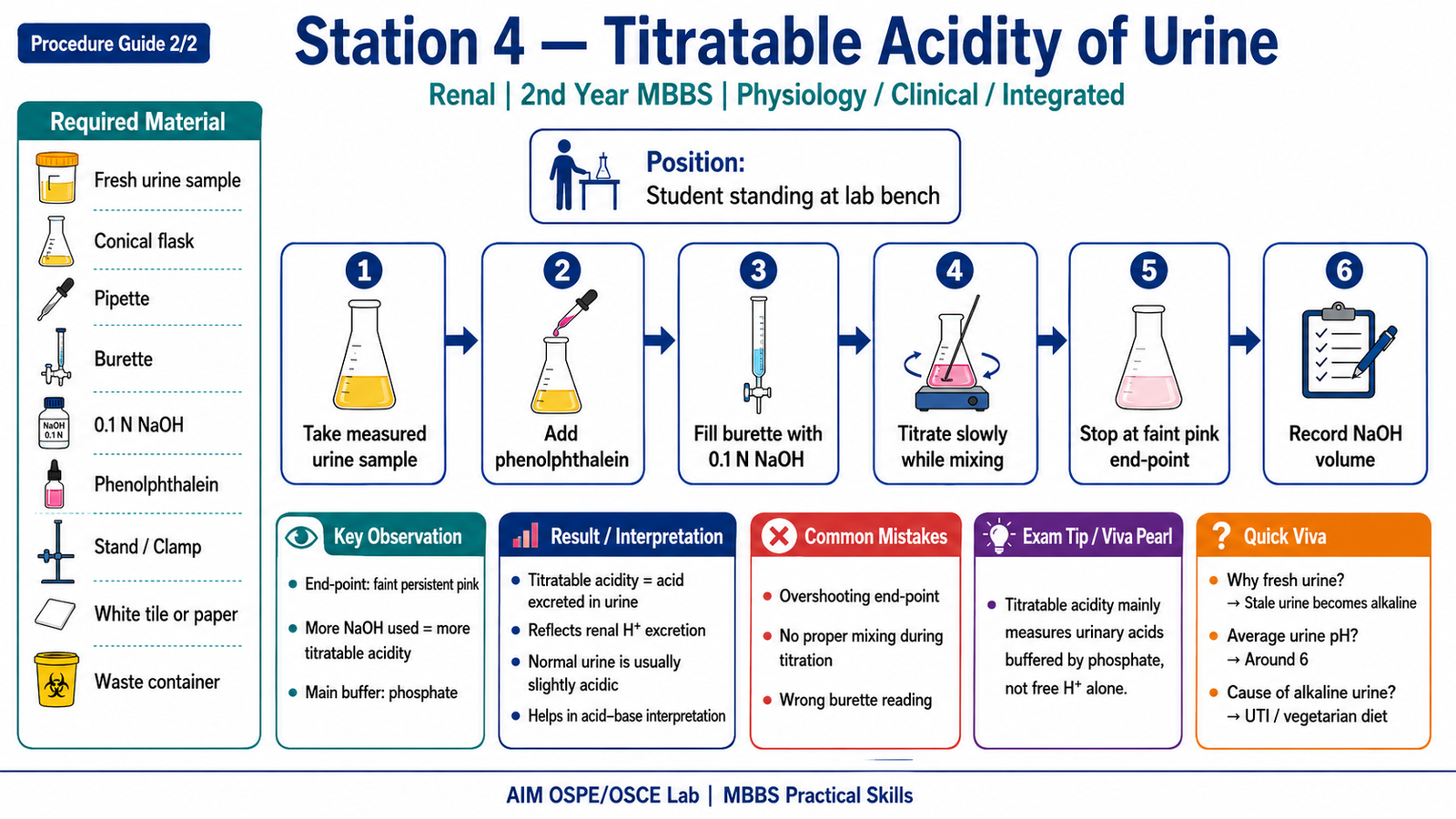
- For titratable acidity demonstration:
- Burette
- Pipette
- Conical flask
- 0.1 N NaOH
- Phenolphthalein indicator
Student Task / Procedure
- Wear gloves and check that the urine sample is properly labeled.
- Observe the urine sample for general appearance and freshness.
- Mix the sample gently without shaking vigorously.
- Dip the pH strip briefly into urine or place a drop of urine on pH paper.
- Remove excess urine by touching the strip edge to tissue paper.
- Compare the color change with the pH chart within the recommended time.
- Record the urinary pH.
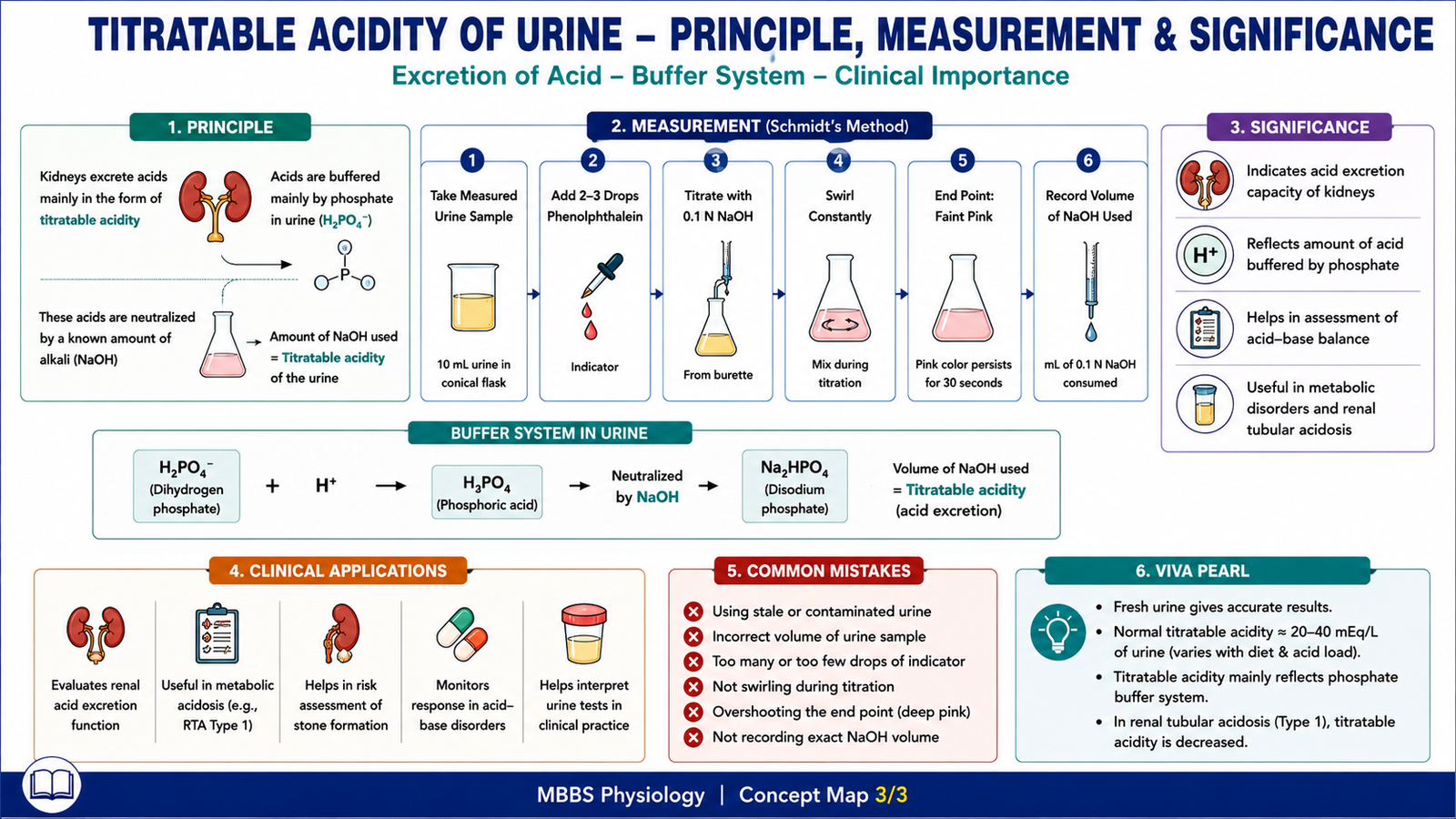
- If titration is required:
- Take a measured volume of urine in a conical flask.
- Add 2–3 drops of phenolphthalein.
- Titrate with 0.1 N NaOH until a faint pink endpoint appears.
- Record the volume of NaOH used.
Observation / Identification Points
The student should observe or demonstrate:
- Correct sample handling with gloves.
- Use of fresh, labeled urine sample.
- Correct dipping or application of urine on pH paper/strip.
- Accurate comparison with the pH color chart.
- Correct recording of pH value.
- Recognition of acidic, neutral, or alkaline urine.
- For titration, correct identification of endpoint as faint persistent pink color.
Result / Interpretation
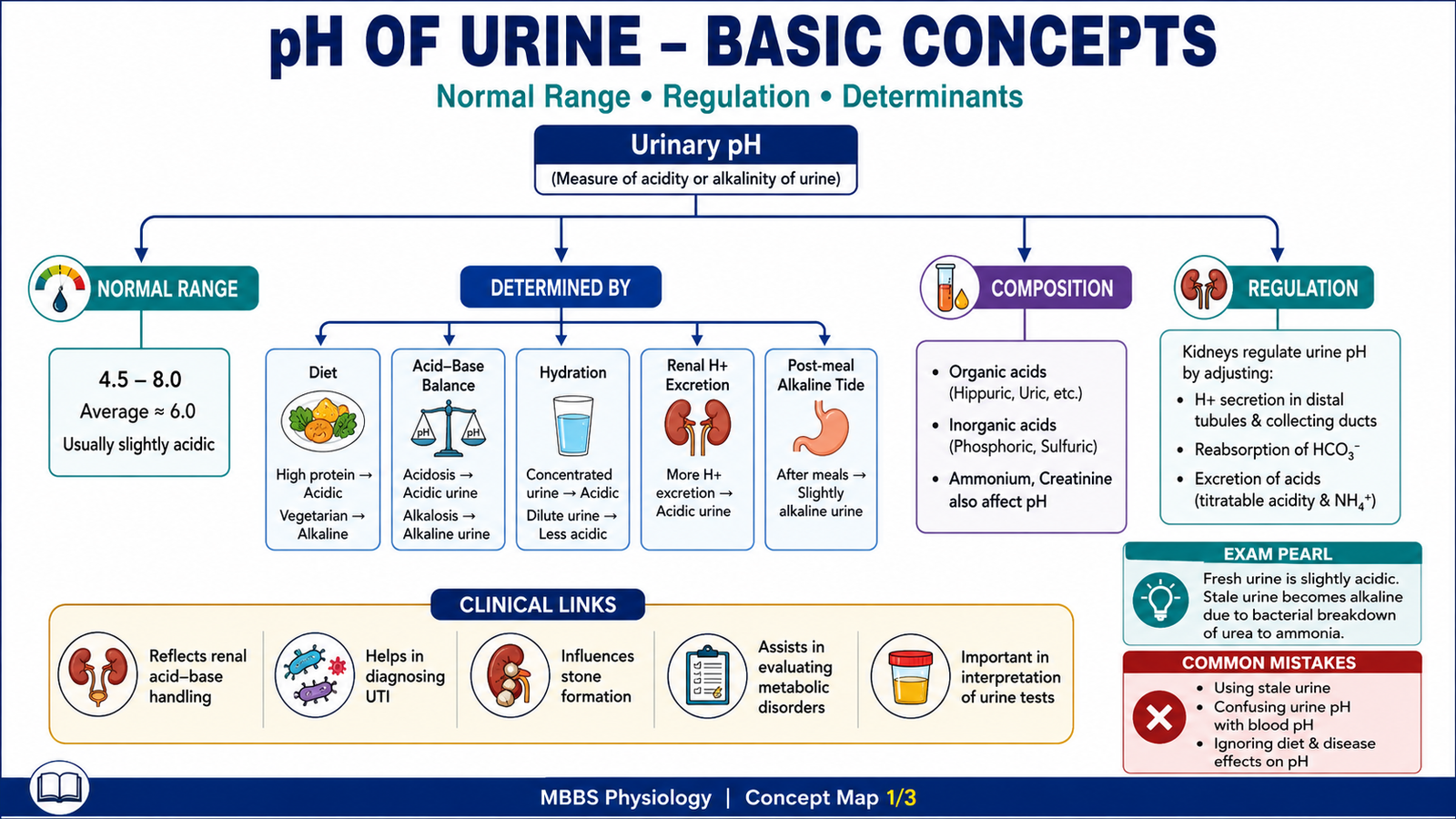
Normal urine pH is usually slightly acidic, commonly around pH 6, but may range from 4.5 to 8.0 depending on diet, metabolism, hydration, and acid–base status.
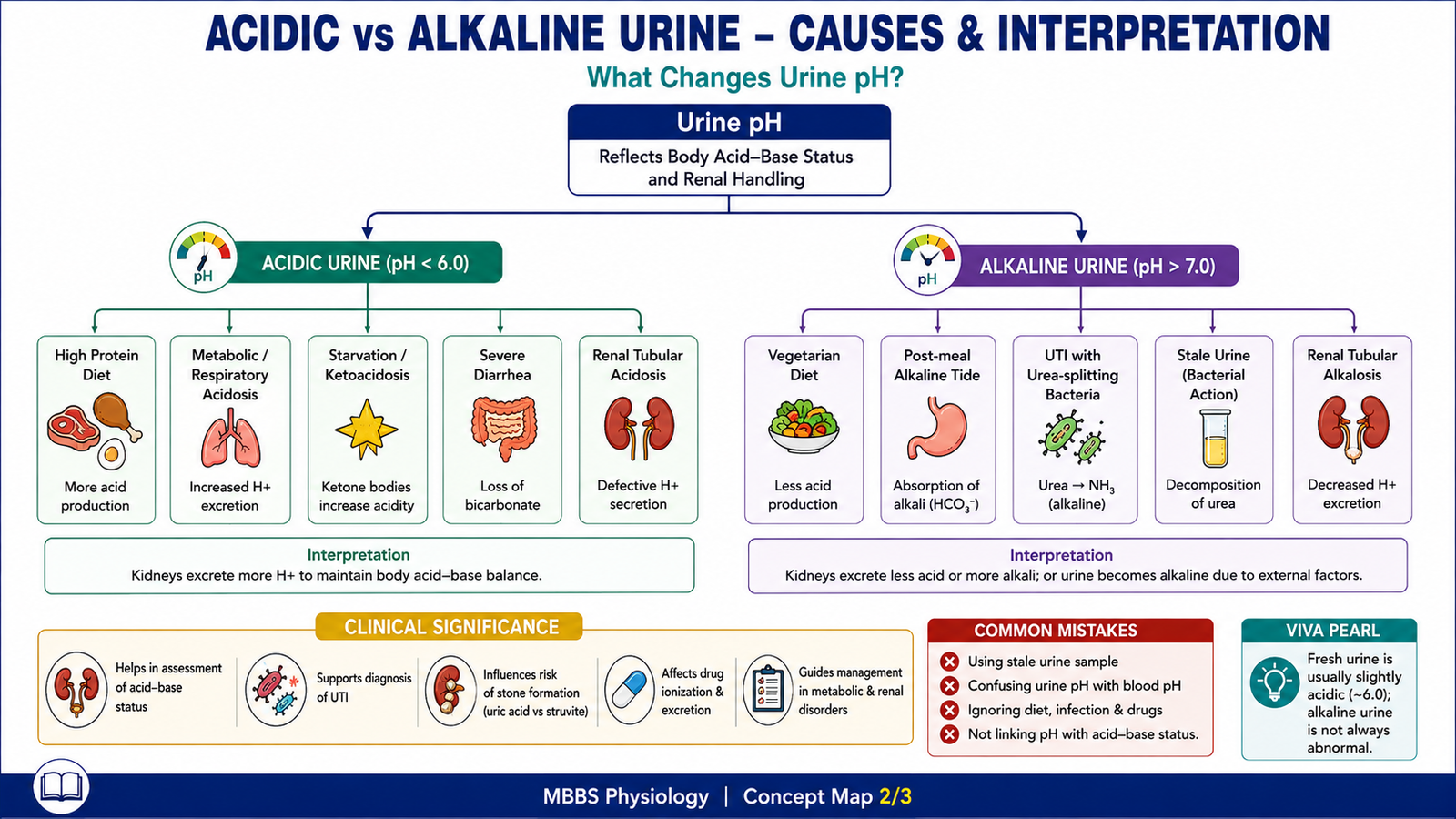
Acidic urine may be seen in:
- High protein diet
- Metabolic or respiratory acidosis
- Starvation / ketoacidosis
- Severe diarrhea
Alkaline urine may be seen in:
- Vegetarian diet
- After meals due to alkaline tide
- Urinary tract infection with urea-splitting organisms
- Stale urine due to bacterial decomposition of urea
Titratable acidity represents the amount of alkali required to neutralize urinary acids. It reflects renal excretion of acids mainly buffered by urinary phosphate.
Clinical significance:
Urinary pH helps assess renal handling of acid–base balance and may support interpretation of metabolic acidosis, renal tubular acidosis, urinary tract infection, and stone risk.
Viva Questions
1. What is the normal pH of urine?
Normal urine pH ranges from about 4.5 to 8.0, with an average around 6.0.
2. Why is normal urine usually acidic?
Because the kidneys excrete excess hydrogen ions and metabolic acids to maintain body acid–base balance.
3. Name one cause of alkaline urine.
Urinary tract infection with urea-splitting bacteria, vegetarian diet, stale urine, or post-meal alkaline tide.
4. What does titratable acidity indicate?
It indicates the amount of urinary acid buffered mainly by phosphate and neutralized by a measured amount of alkali.
5. Why should fresh urine be used for pH testing?
Stale urine may become alkaline due to bacterial breakdown of urea into ammonia, giving a false result.
Common Student Mistakes
- Reading the pH strip too late or too early.
- Touching the strip directly to the container or contaminating the sample.
- Interpreting stale alkaline urine as a true physiological finding.
- Confusing urinary pH with blood pH.
- Overshooting the titration endpoint instead of stopping at faint pink color.
AIM Feedback
Urine pH testing is a simple practical, but the interpretation is important. Always use a fresh sample, read the strip at the correct time, and link the result with renal acid–base regulation. Acidic urine usually reflects hydrogen ion excretion, while alkaline urine may occur due to diet, infection, or stale sample changes. In titratable acidity, focus on the endpoint and understand that the kidney excretes acids in buffered form, especially through phosphate buffers.
🖼️ Visual / Image Support
🧩 Concept Map / Interpretation Support