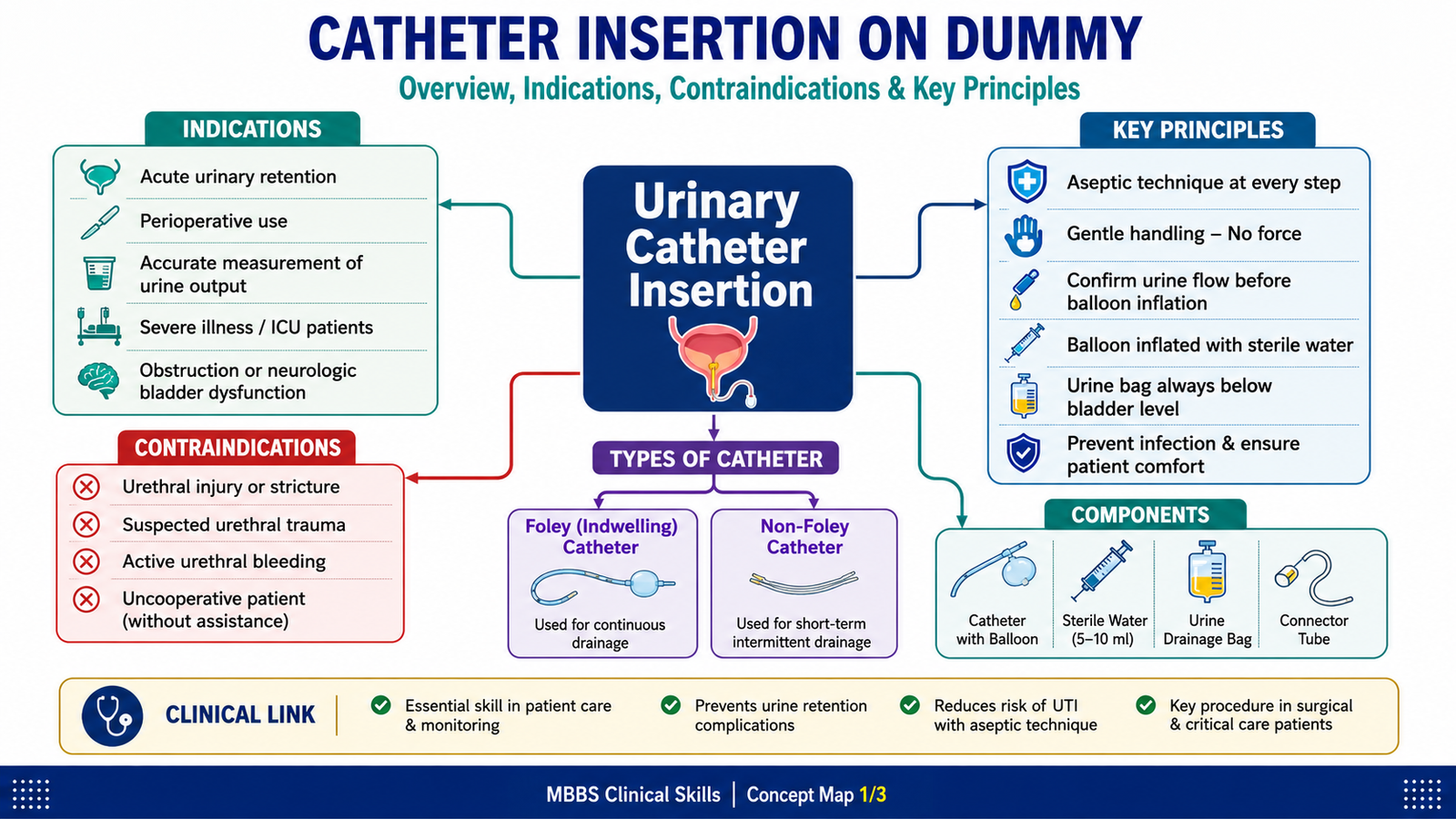
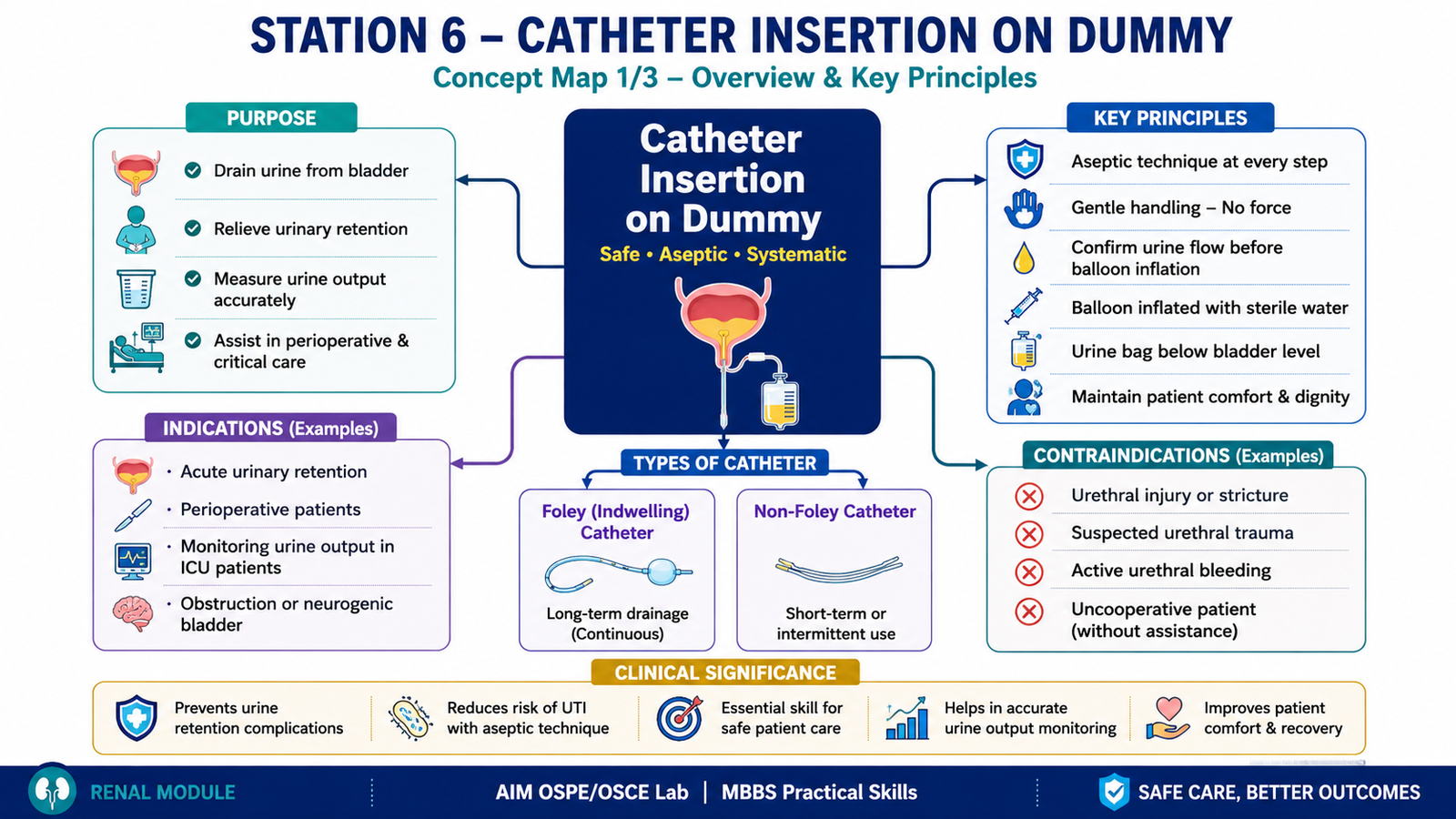
🩺 Station 6 — Catheter Insertion on Dummy
AIM OSPE/OSCE Lab — Practical Station | KMU Style | MBBS Practical + Viva
📋 Complete OSPE Station Content
OSPE Station Name
Station 6 — Catheter Insertion on Dummy
Module: Renal
Year: 2nd Year MBBS
Subject / Integration: Clinical Skills / Anatomy / Physiology Integrated
Learning Target
- Perform the basic steps of urinary catheter insertion on a dummy using aseptic technique.
- Demonstrate safe catheter handling, balloon inflation, urine drainage, and key precautions.
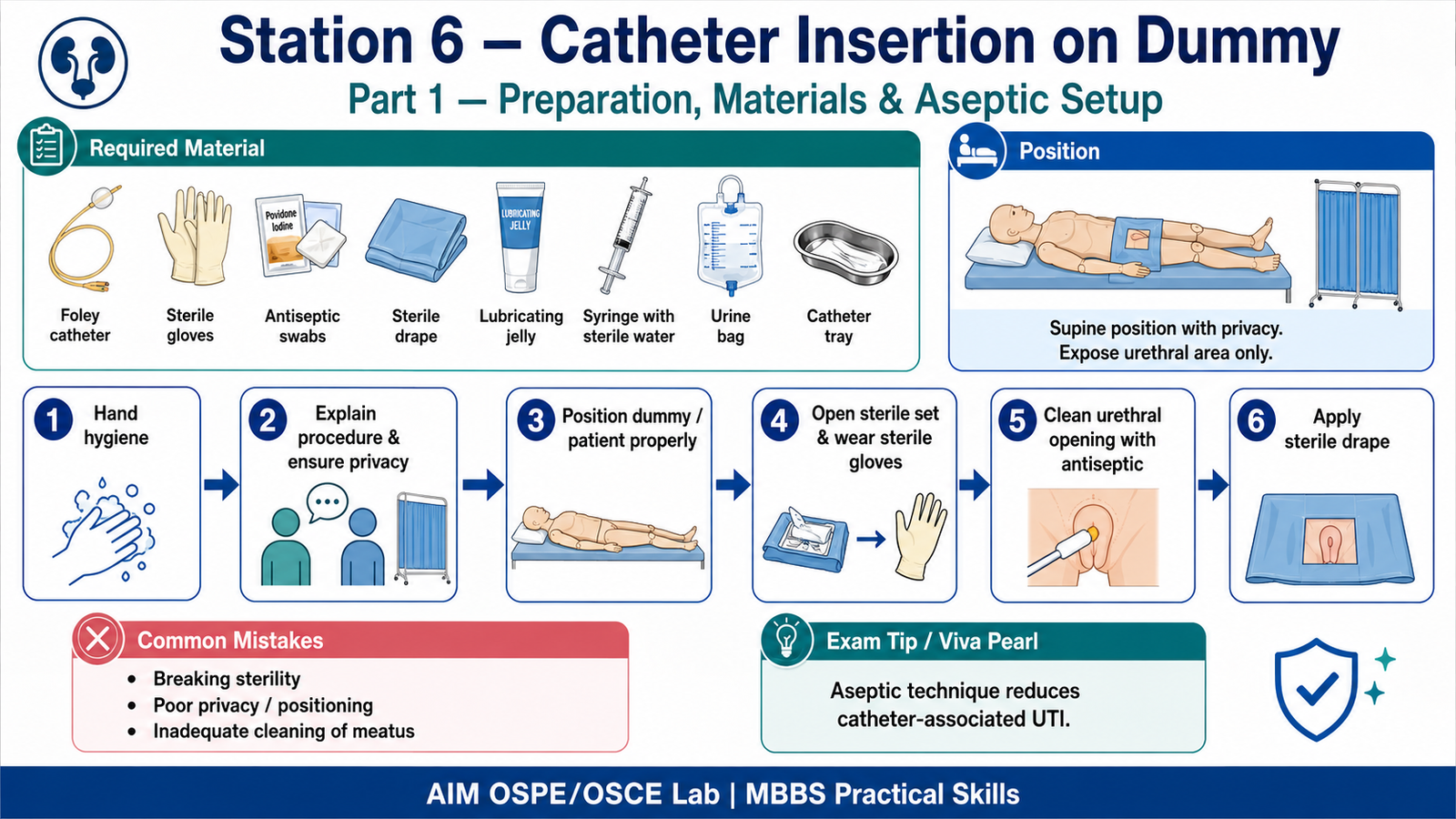
Required Material
- Male/female catheterization dummy
- Foley catheter
- Sterile gloves
- Sterile catheterization tray
- Antiseptic solution/swabs
- Sterile drape
- Lubricating jelly
- Sterile water syringe for balloon inflation
- Urine drainage bag
- Kidney tray/waste bin
- Hand sanitizer
- Apron/mask if available
Student Task / Procedure
- Wash or sanitize hands.
- Introduce yourself and explain the procedure to the patient/dummy.
- Ensure privacy and proper positioning.
- Open the sterile catheterization set carefully.
- Wear sterile gloves.
- Clean the urethral opening with antiseptic swabs.
- Drape the area aseptically.
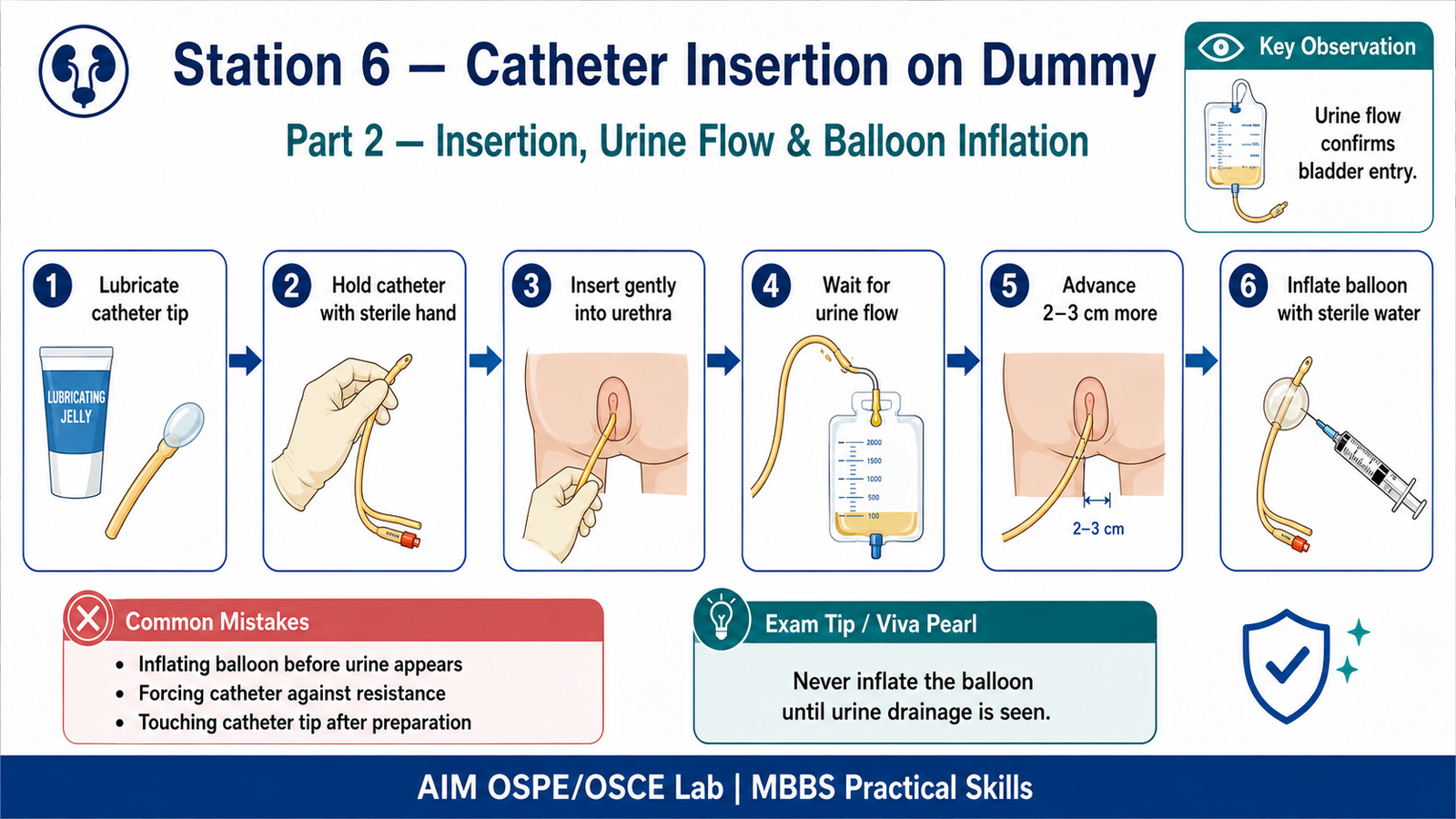
- Lubricate the catheter tip.
- Insert the catheter gently into the urethra.
- Advance the catheter until urine starts to drain.
- Advance slightly more before balloon inflation.
- Inflate the balloon with sterile water as per catheter marking.
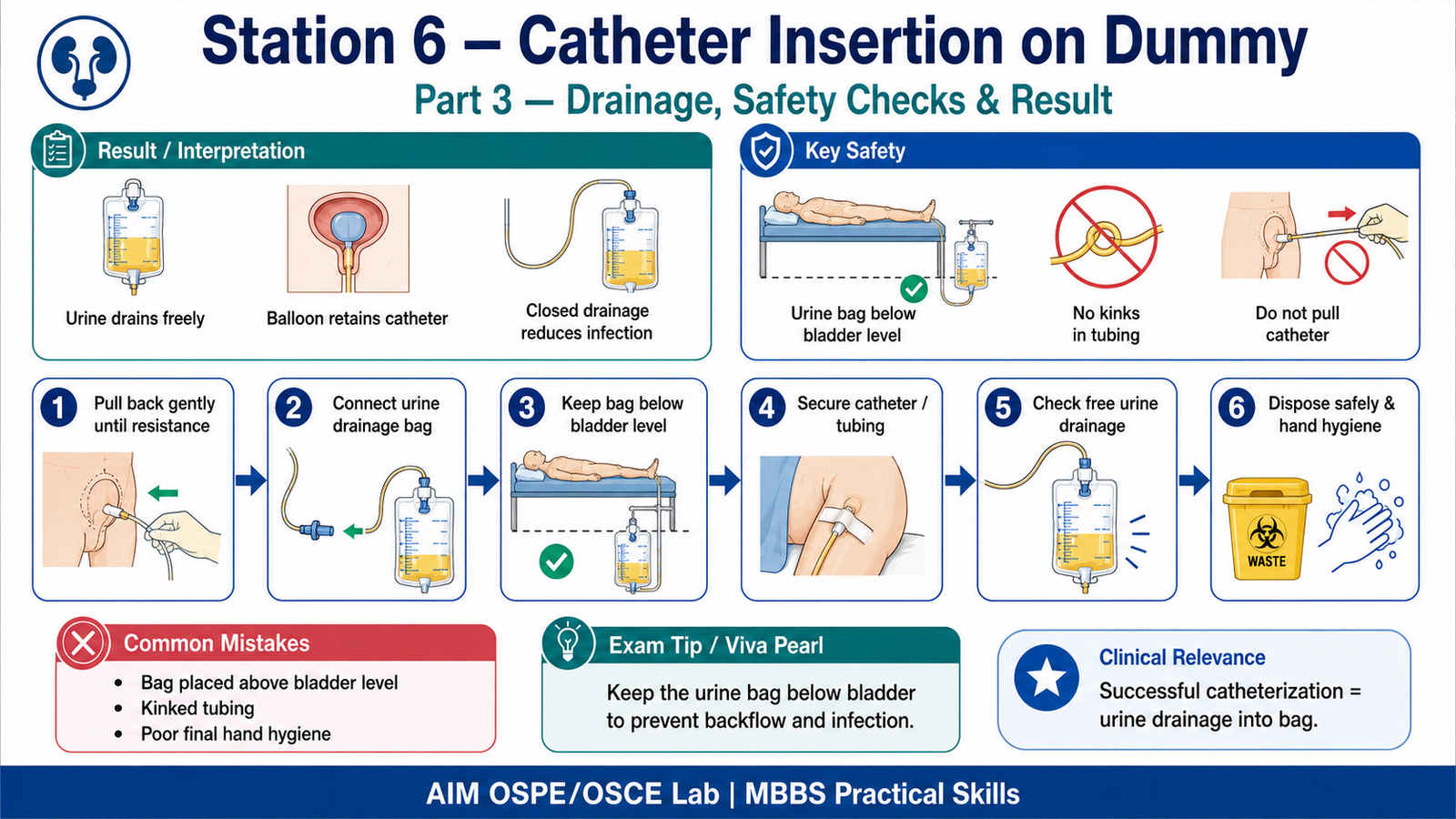
- Gently pull back until resistance is felt.
- Connect catheter to urine drainage bag.
- Keep drainage bag below bladder level.
- Dispose of used material safely and perform hand hygiene.
Observation / Identification Points
- Maintains aseptic technique throughout the procedure.
- Cleans urethral opening correctly before insertion.
- Lubricates catheter before insertion.
- Inserts catheter gently without force.
- Waits for urine drainage before balloon inflation.
- Inflates balloon with sterile water, not air.
- Connects drainage bag correctly.
- Keeps urine bag below bladder level.
- Mentions patient comfort, privacy, and infection prevention.
Result / Interpretation
Successful catheterization is indicated by urine drainage through the catheter into the urine bag.
The catheter balloon prevents accidental slipping of the catheter from the bladder.
Aseptic technique is essential to reduce the risk of catheter-associated urinary tract infection.
The drainage bag must remain below bladder level to prevent backflow of urine and ascending infection.
Viva Questions
1. Why is aseptic technique important during catheter insertion?
To prevent introduction of microorganisms into the urinary tract and reduce catheter-associated UTI.
2. When should the catheter balloon be inflated?
Only after urine starts draining, confirming that the catheter tip is inside the bladder.
3. Why should the drainage bag be kept below bladder level?
To allow gravity drainage and prevent backflow of urine into the bladder.
4. Why is lubricating jelly used before catheter insertion?
It reduces friction, minimizes urethral trauma, and makes insertion easier.
5. What should you do if resistance is felt during catheter insertion?
Do not force the catheter; stop and seek senior help because force may cause urethral injury.
Common Student Mistakes
- Inflating the balloon before urine appears.
- Touching sterile catheter or gloves with non-sterile surfaces.
- Forgetting to keep the urine bag below bladder level.
- Inserting catheter forcefully when resistance is felt.
AIM Feedback
Your main focus in this station is safe sequence and asepsis. Remember: clean first, lubricate, insert gently, confirm urine flow, then inflate the balloon. The most dangerous OSPE mistake is balloon inflation before confirming bladder entry because it can injure the urethra. Always protect sterility and maintain patient dignity throughout the procedure.
🖼️ Visual / Image Support
🧩 Concept Map / Interpretation Support