🩺 Station 5 — Intake–Output Chart
AIM OSPE/OSCE Lab — Practical Station | KMU Style | MBBS Practical + Viva
📋 Complete OSPE Station Content
OSPE Station Name
Station 5 — Intake–Output Chart
Module: Renal
Year: 2nd Year MBBS
Integration: Physiology + Clinical Medicine + Nursing Skills
Learning Target
By the end of this station, the student should be able to:
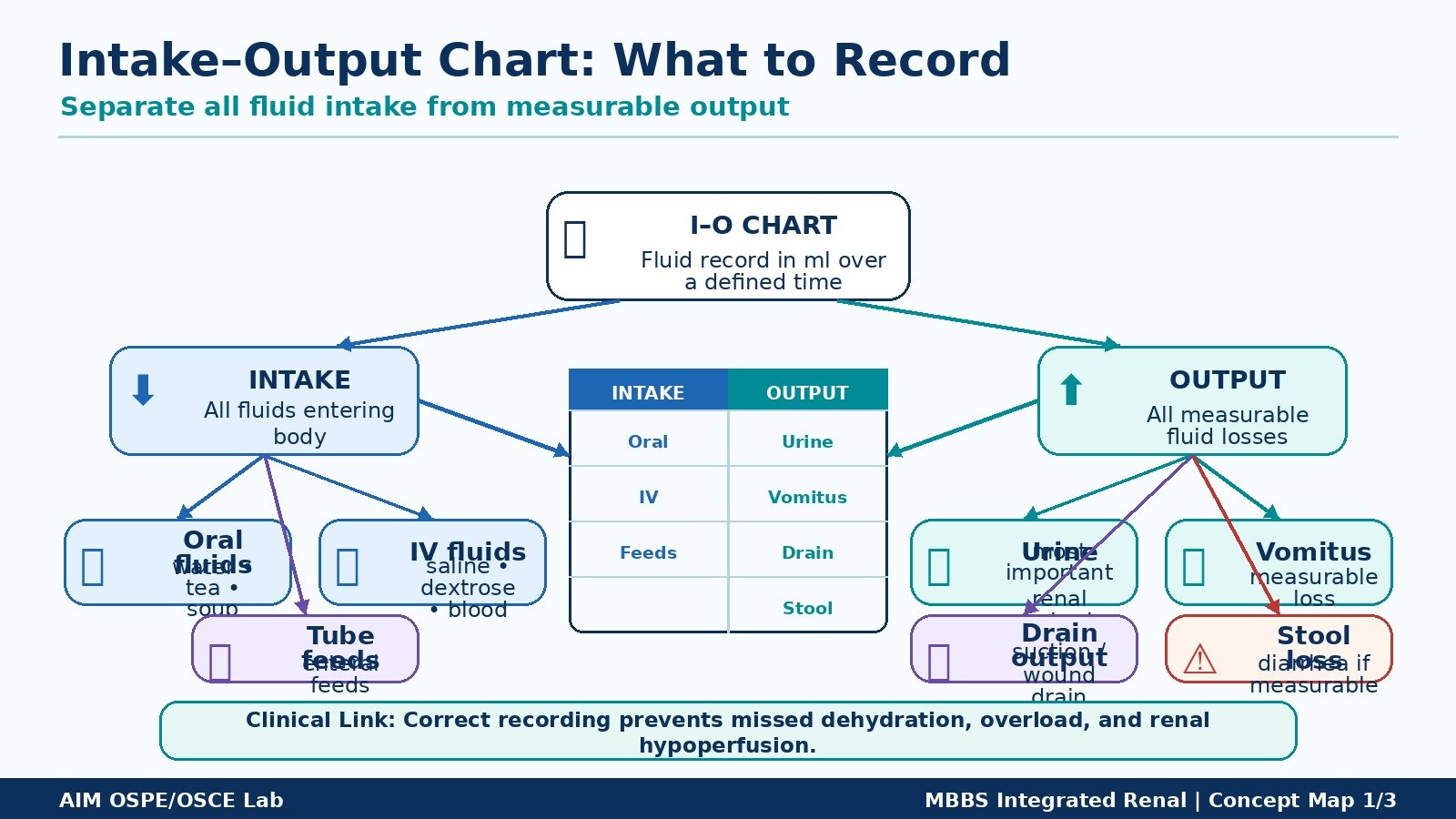
- Record oral intake, IV intake, urine output, and other fluid losses on an intake–output chart.
- Calculate fluid balance and interpret whether the patient has positive, negative, or balanced fluid status.
Required Material
- Intake–output chart / sample chart
- Patient scenario card
- Pen / marker
- Measuring jug / urine collection bag image
- IV fluid record
- Oral intake record
- Calculator, if allowed
Student Task / Procedure
- Read the given patient scenario carefully.
- Record all intake:
- Oral fluids
- IV fluids
- Tube feeds, if given
- Record all output:
- Urine
- Vomitus
- Drain output
- Stool loss, if mentioned
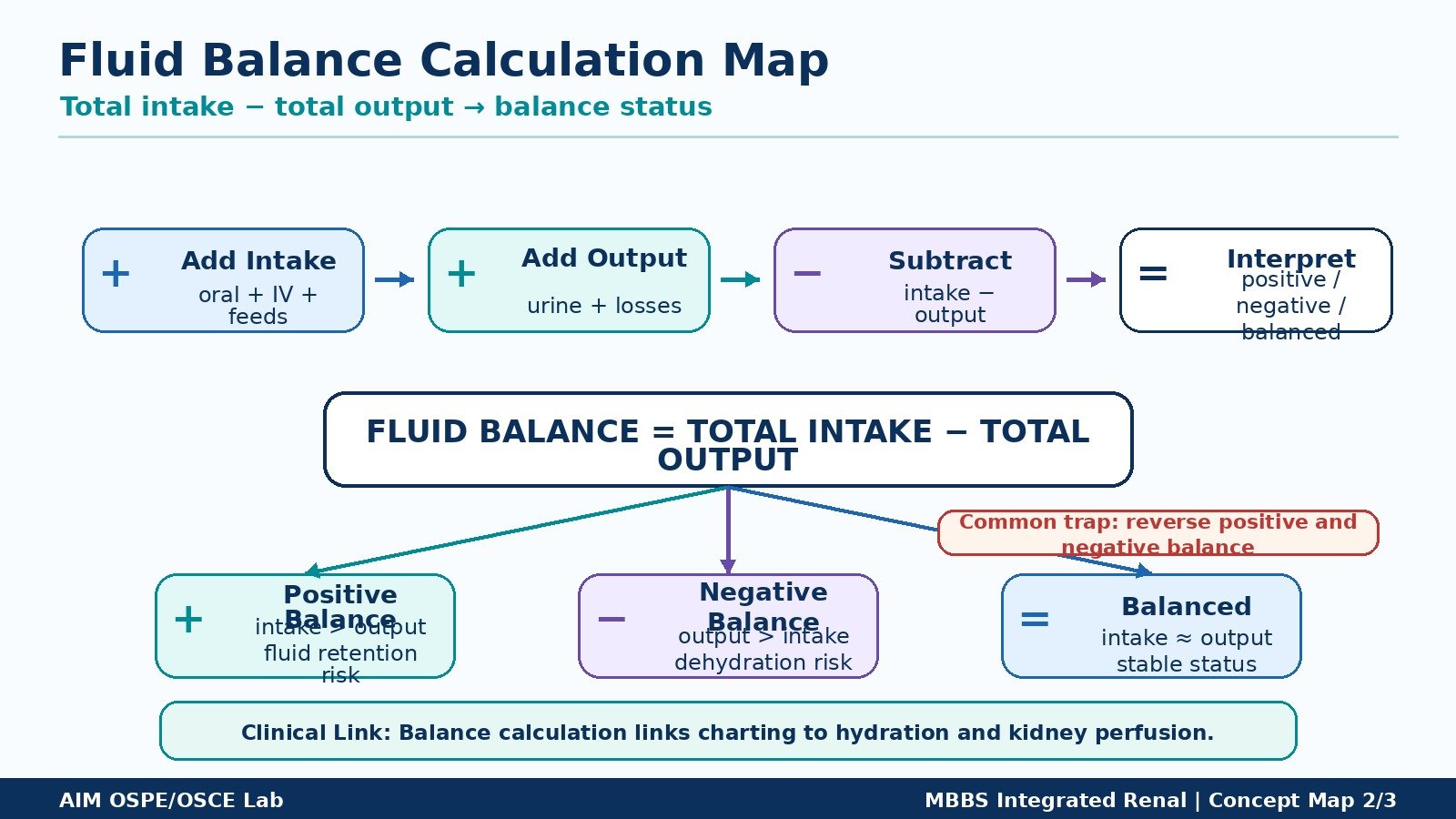
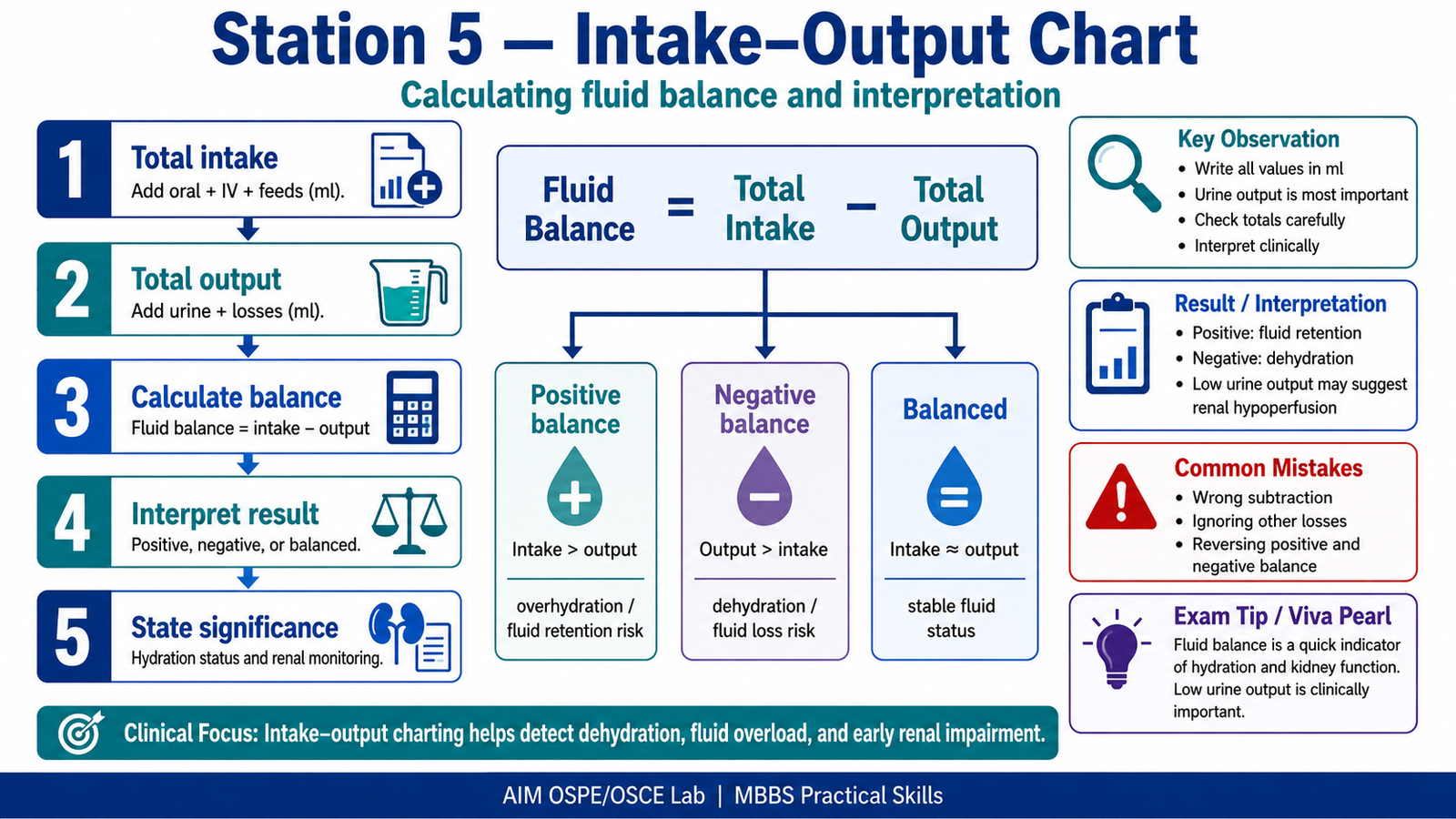
- Add total intake in milliliters.
- Add total output in milliliters.
-
Calculate fluid balance:
Fluid balance = Total intake − Total output
- Interpret the result as:
- Positive fluid balance
- Negative fluid balance
- Balanced / near-balanced
- State one clinical significance of abnormal fluid balance.
Observation / Identification Points
The student should demonstrate:
- Correct separation of intake and output columns.
- Oral intake recorded in milliliters.
- IV fluids included in total intake.
- Urine output included in total output.
- Other losses included when given.
- Correct total intake calculation.
- Correct total output calculation.
- Correct fluid balance calculation.
- Correct interpretation of positive or negative balance.
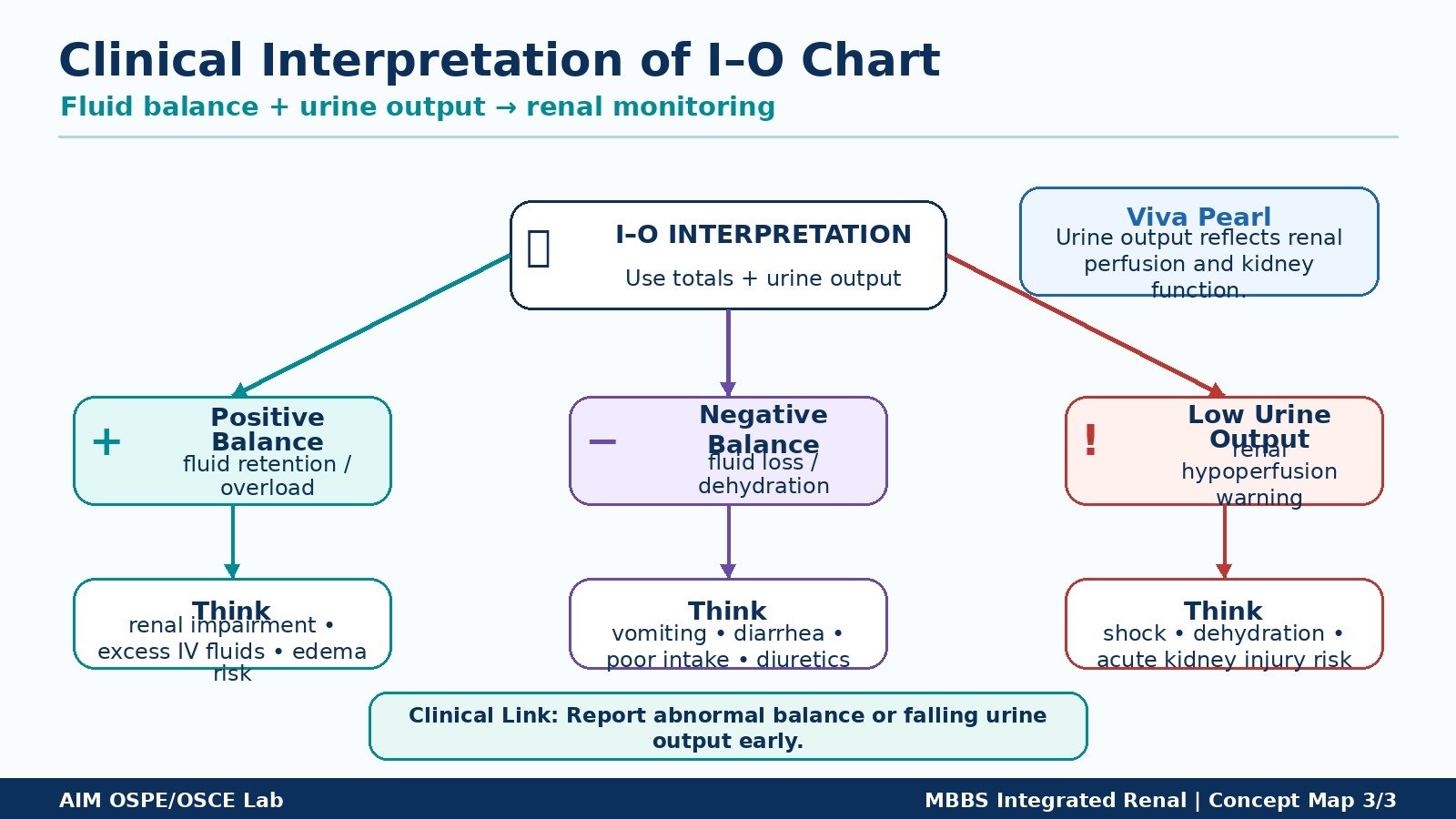
- Awareness that low urine output may indicate dehydration, shock, renal hypoperfusion, or renal impairment.
Result / Interpretation
Formula:
Fluid balance = Total intake − Total output
Positive fluid balance:
Intake is greater than output. This may suggest fluid retention, overhydration, renal impairment, or risk of edema.
Negative fluid balance:
Output is greater than intake. This may suggest dehydration, excessive fluid loss, vomiting, diarrhea, diuretic use, or inadequate intake.
Balanced fluid status:
Intake and output are approximately equal.
Clinical significance:
Intake–output charting is important in bedridden patients because it helps monitor hydration status, renal function, response to IV fluids, and risk of fluid overload or dehydration.
Viva Questions
1. What is an intake–output chart?
It is a chart used to record all fluids taken into the body and all fluids lost from the body.
2. What are included in fluid intake?
Oral fluids, IV fluids, tube feeds, and blood products if given.
3. What are included in fluid output?
Urine, vomitus, drain output, diarrhea, and other measurable fluid losses.
4. How do you calculate fluid balance?
Fluid balance is calculated as total intake minus total output.
5. What does low urine output indicate?
It may indicate dehydration, shock, renal hypoperfusion, or renal impairment.
Common Student Mistakes
- Forgetting to include IV fluids in total intake.
- Recording urine output but not calculating total output.
- Mixing intake and output in the same column.
- Writing values without units.
- Interpreting positive and negative balance incorrectly.
AIM Feedback
An intake–output chart is a simple but clinically important tool. Always separate intake from output, record values in milliliters, add totals carefully, and then calculate fluid balance. In renal module, focus especially on urine output because it reflects kidney perfusion and renal function. A correct chart helps detect dehydration, fluid overload, and early renal impairment.
🖼️ Visual / Image Support
🧩 Concept Map / Interpretation Support