🩺 Station 7 — Routine Urine Analysis
AIM OSPE/OSCE Lab — Practical Station | KMU Style | MBBS Practical + Viva
📋 Complete OSPE Station Content
OSPE Station Name
Station 7 — Routine Urine Analysis
Module: Renal
Year: 2nd Year MBBS
Subject / Integration: Biochemistry + Physiology + Clinical Integration
Learning Target
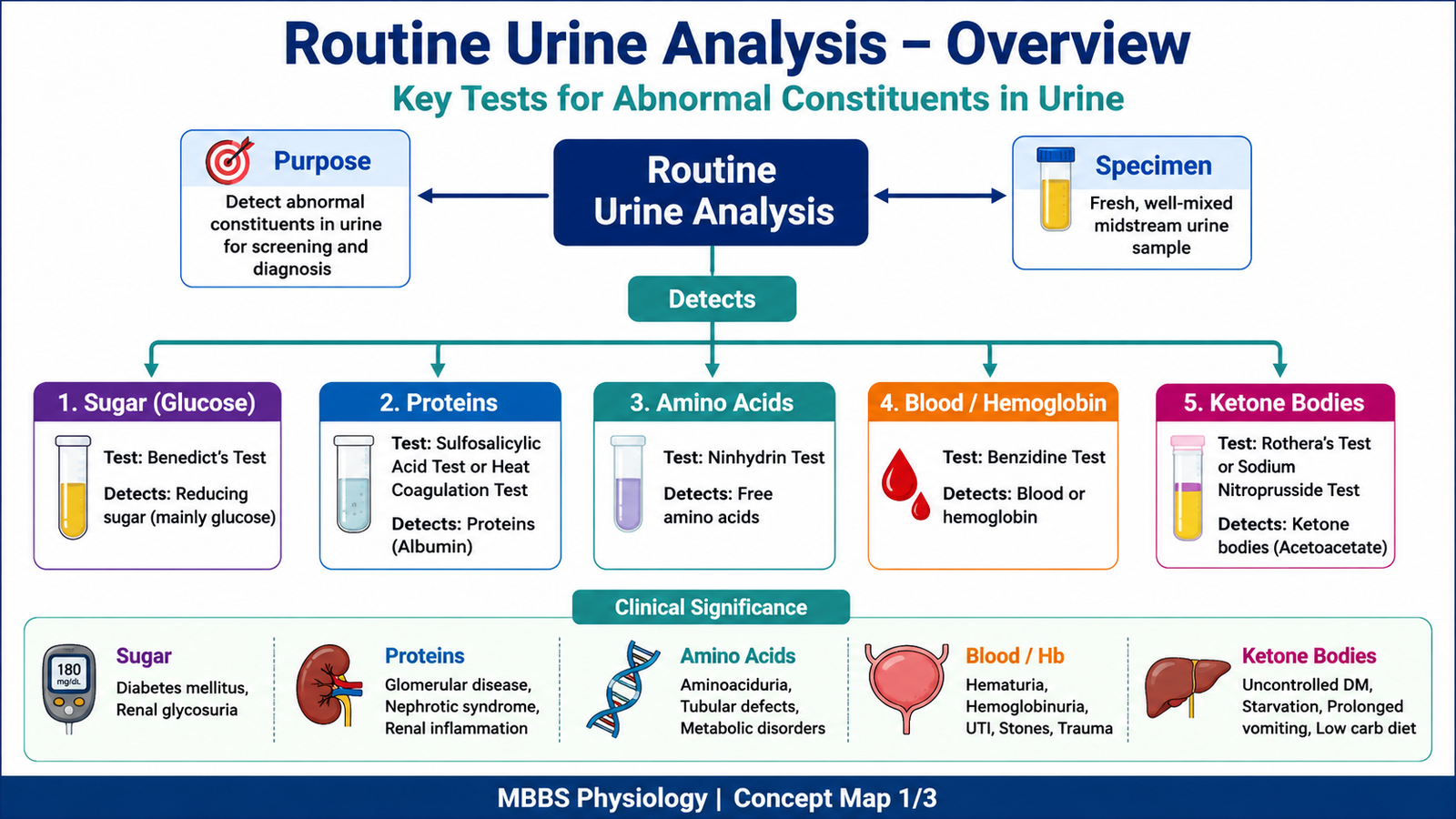
- Perform basic qualitative tests for abnormal constituents of urine including sugar, proteins, amino acids, blood/hemoglobin, and ketone bodies.
- Interpret urine test results and correlate them with common renal, metabolic, and clinical conditions.
Required Material
- Fresh urine sample
- Test tubes and test tube rack
- Droppers / Pasteur pipettes
- Test tube holder
- Spirit lamp / Bunsen burner / water bath
- Benedict’s reagent
- Ninhydrin reagent
- Sulfosalicylic acid or heat and acetic acid setup
- Benzidine reagent / prepared demonstration reagent
- Rothera’s reagent or sodium nitroprusside reagent
- Glacial acetic acid / acetic acid
- Ammonia solution, if required for ketone test
- Gloves
- Waste container
- Result recording sheet
Student Task / Procedure
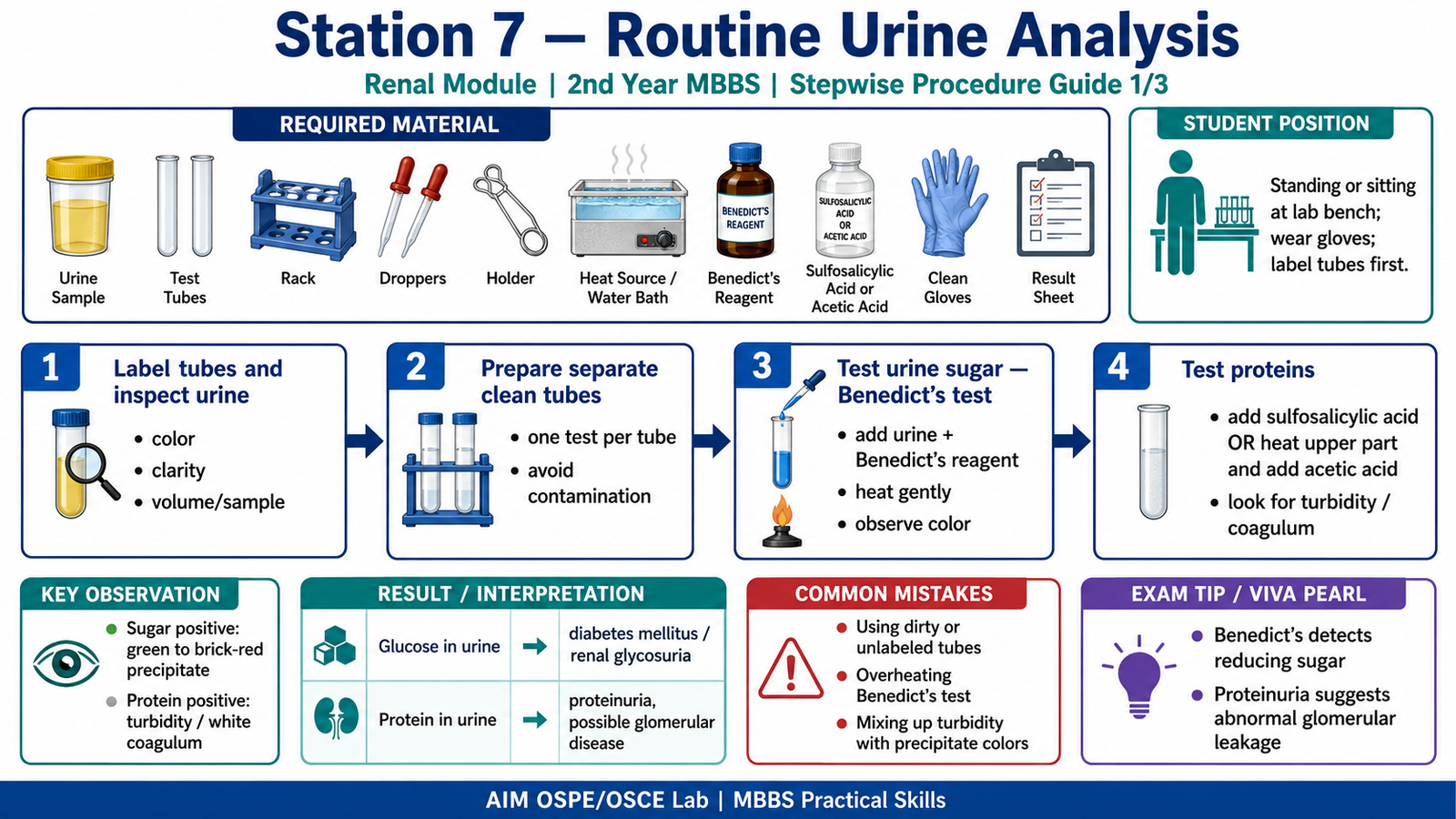
- Wear gloves and label the test tubes properly.
- Observe the urine sample for color, clarity, and any visible abnormality.
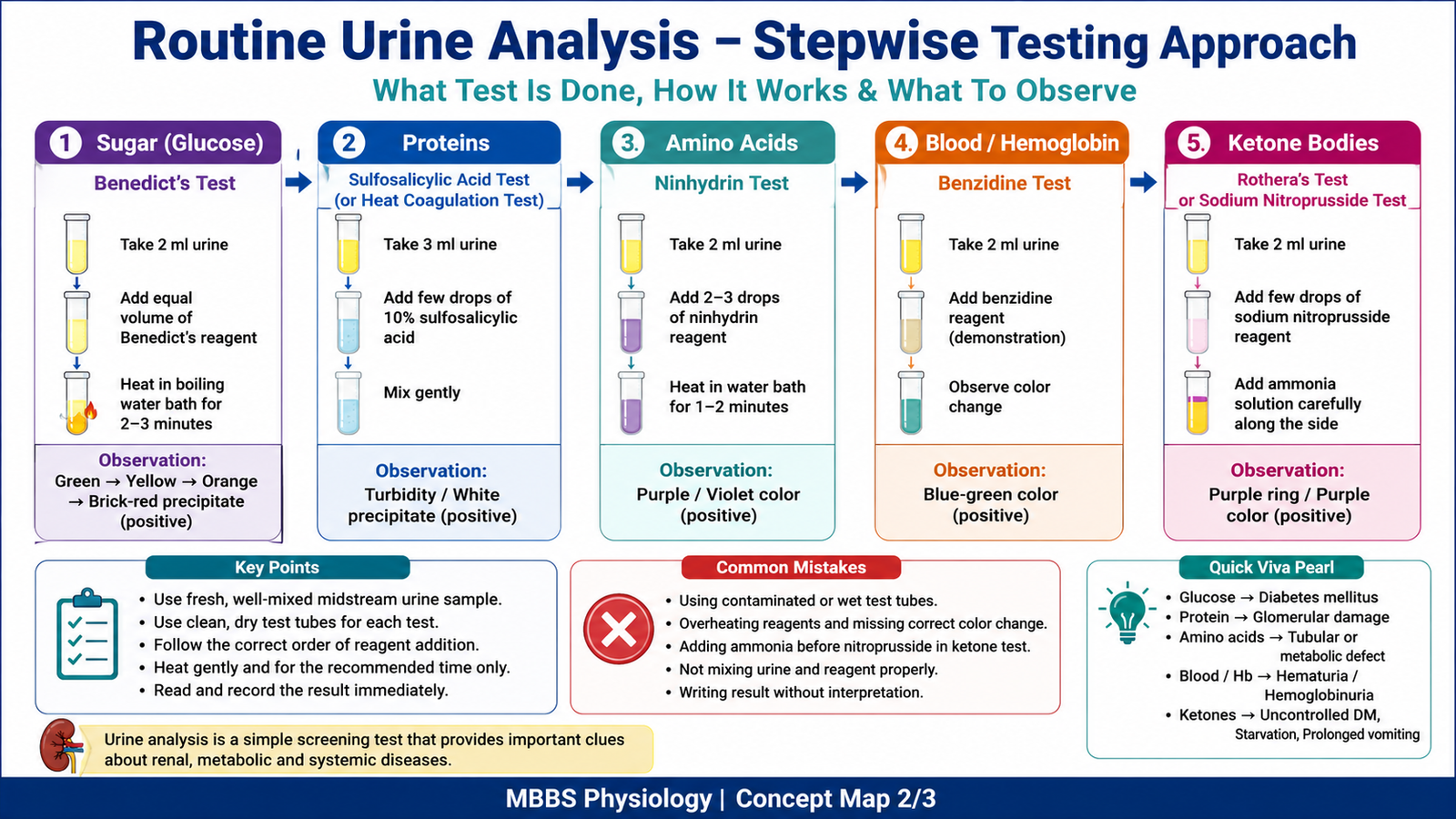
- Perform Benedict’s test for urine sugar.
- Perform protein test using sulfosalicylic acid or heat coagulation method.
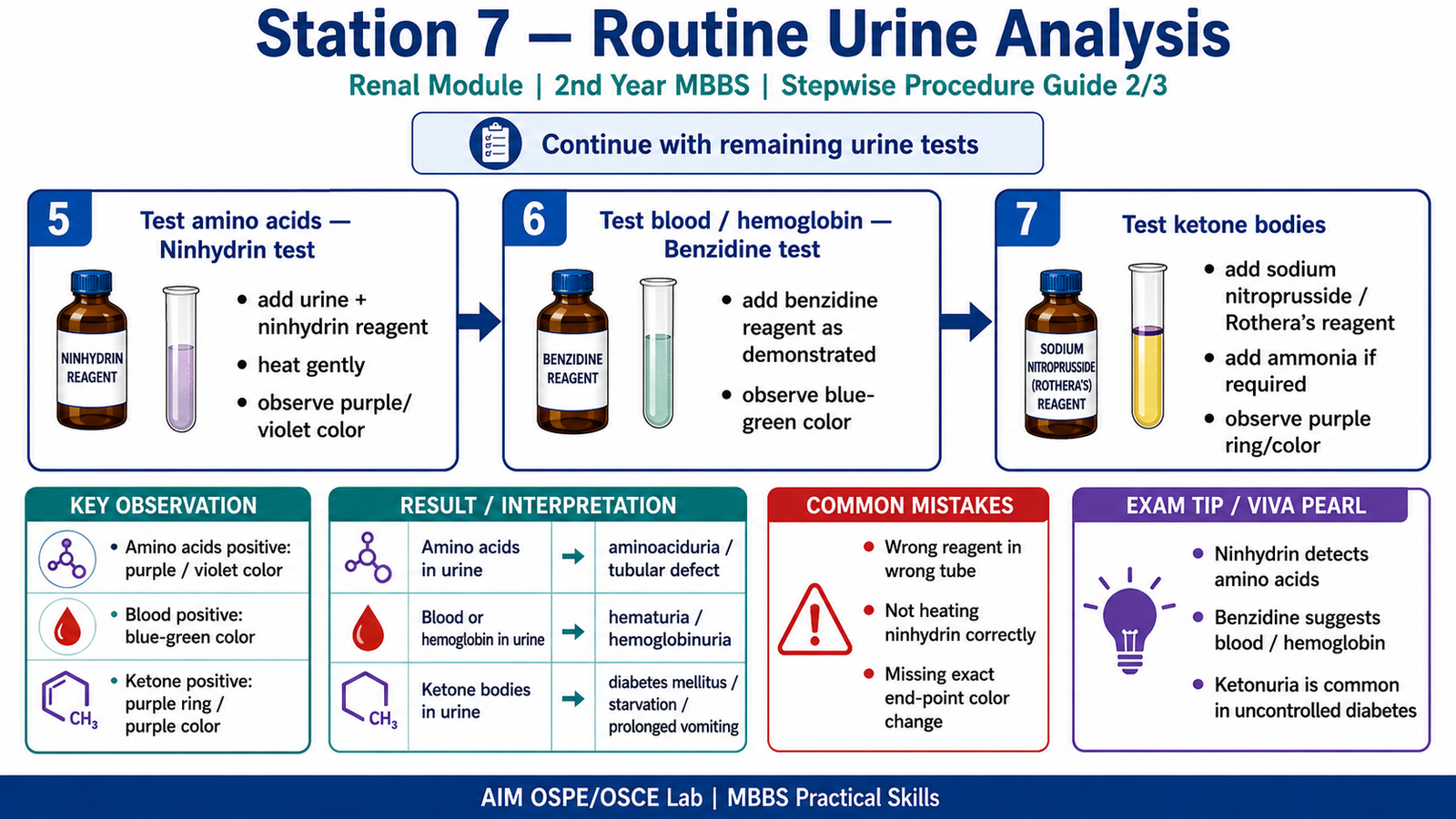
- Perform ninhydrin test for amino acids.
- Perform benzidine test for blood/hemoglobin as demonstrated.
- Perform ketone body test using Rothera’s / sodium nitroprusside method.
- Record the color change or precipitate in each test.
- Write the result and give one possible clinical interpretation.
Observation / Identification Points
- Correct labeling and handling of urine sample
- Proper use of clean test tubes and droppers
- Heating Benedict’s test carefully without splashing
- Recognizing color change in Benedict’s test
- Recognizing turbidity or coagulum in protein test
- Identifying purple/violet color in ninhydrin test
- Identifying color change in benzidine test for blood/hemoglobin
- Identifying purple ring/color in ketone body test
- Correctly recording positive and negative results
- Linking abnormal findings with clinical conditions
Result / Interpretation
Principle:
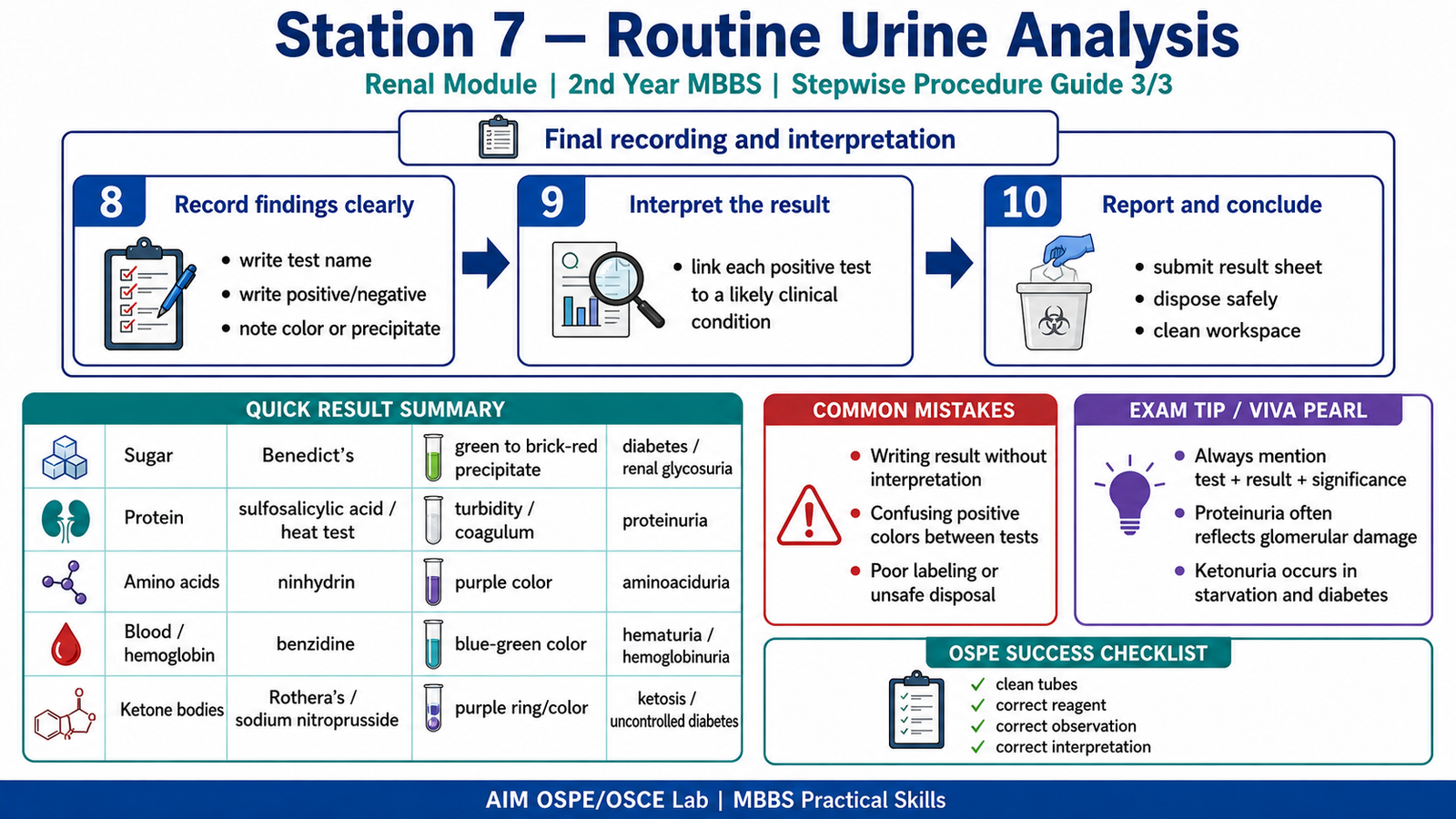
Routine urine analysis detects abnormal urinary constituents by observing characteristic color changes or precipitate formation after adding specific chemical reagents.
Clinical Significance:
Urine analysis is a simple screening test for renal disease, diabetes mellitus, metabolic disorders, urinary tract pathology, and abnormal renal tubular handling of substances.
Viva Questions
1. Which test is used for detecting reducing sugar in urine?
Benedict’s test.
2. What does brick-red precipitate in Benedict’s test indicate?
A strong positive result for reducing sugar, commonly glucose.
3. What is the clinical significance of proteinuria?
It may indicate glomerular damage, nephrotic syndrome, renal inflammation, or transient causes like fever and exercise.
4. Which urine test is commonly used for ketone bodies?
Rothera’s test or sodium nitroprusside test.
5. What does a positive benzidine test indicate?
Presence of blood or hemoglobin in urine.
Common Student Mistakes
- Using contaminated or unlabeled test tubes.
- Overheating Benedict’s test and missing the correct color change.
- Confusing turbidity in protein test with color change reactions.
- Writing only “positive” or “negative” without clinical interpretation.
- Not correlating ketonuria with diabetes mellitus, starvation, or prolonged vomiting.
AIM Feedback
Routine urine analysis is not just a set of color reactions. Each positive result should be linked with renal physiology and clinical reasoning. Sugar in urine suggests abnormal glucose handling, protein suggests possible glomerular leakage, ketones suggest fat metabolism, amino acids suggest tubular or metabolic defects, and blood/hemoglobin suggests urinary tract or renal pathology. In OSPE, focus on clean technique, correct observation, and one clear clinical interpretation for each abnormal result.
🖼️ Visual / Image Support
🧩 Concept Map / Interpretation Support