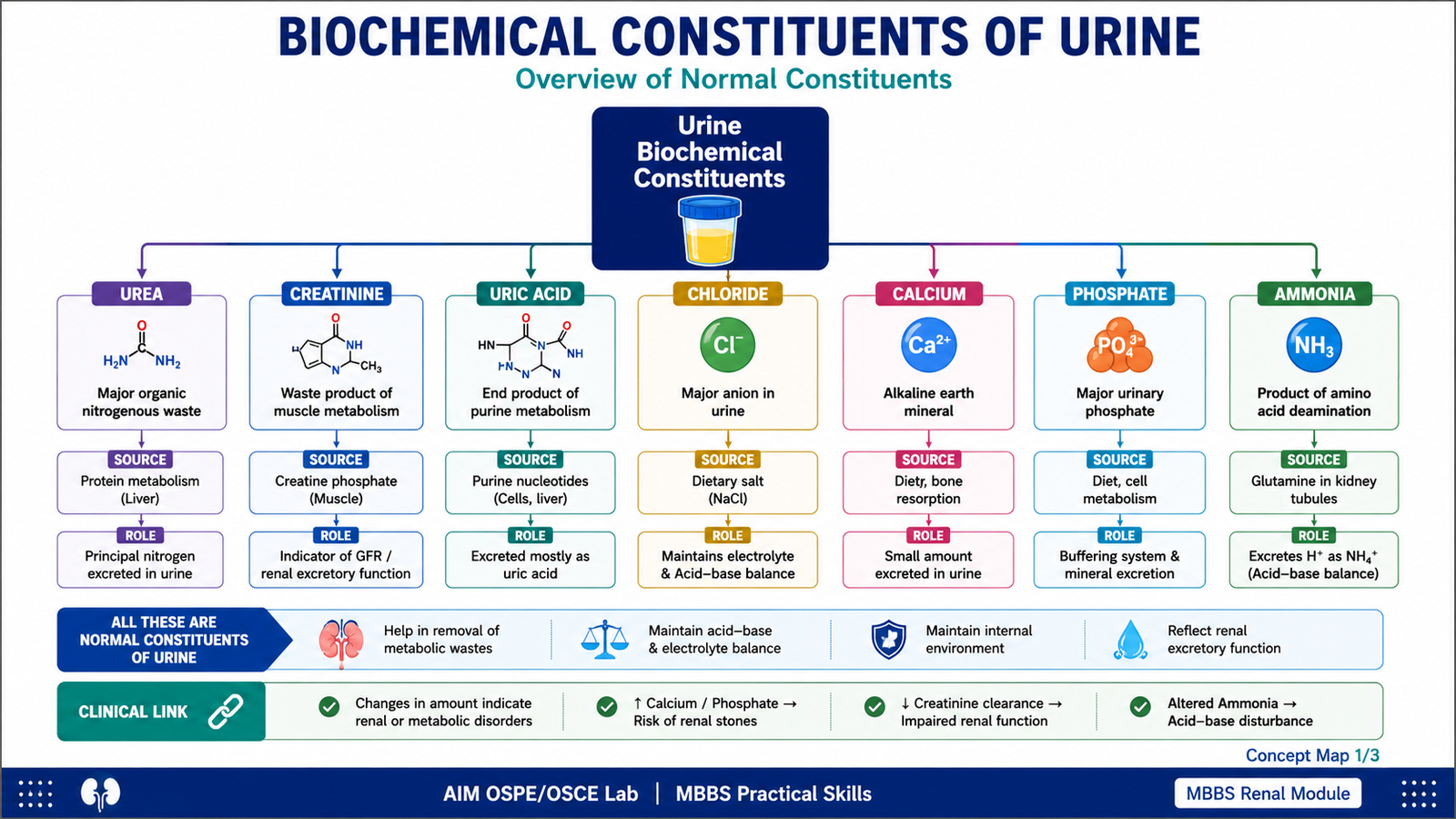
🩺 Station 8 — Biochemical Constituents of Urine
AIM OSPE/OSCE Lab — Practical Station | KMU Style | MBBS Practical + Viva
📋 Complete OSPE Station Content
OSPE Station Name
Station 8 — Biochemical Constituents of Urine
Module: Renal
Year: 2nd Year MBBS
Subject / Integration: Biochemistry / Physiology / Clinical Integrated
Learning Target
- Identify the major normal biochemical constituents of urine.
- Interpret whether a urinary constituent pattern is normal or abnormal and state its basic clinical significance.
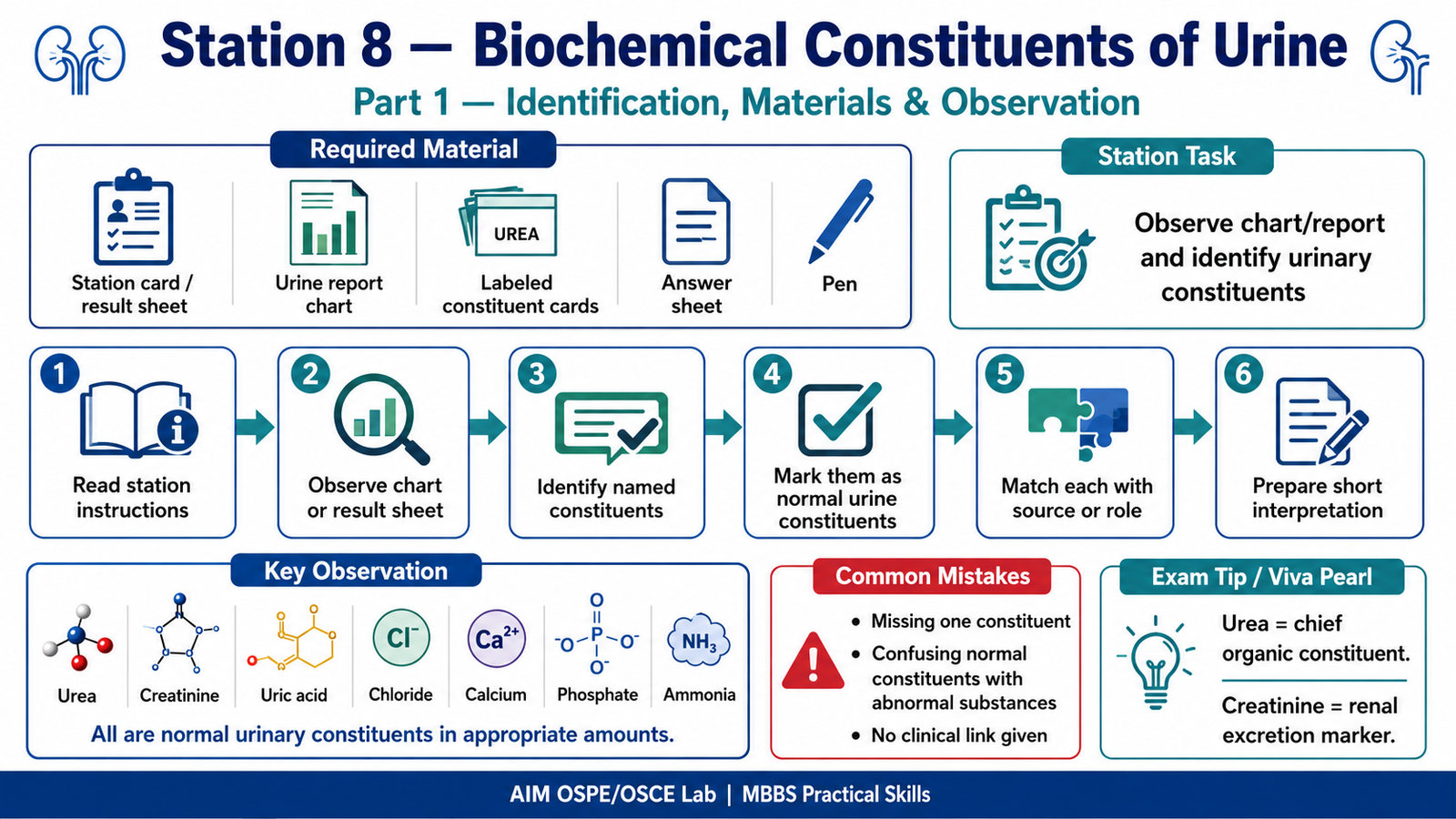
Required Material
- OSPE station card / question sheet
- Chart or table showing biochemical constituents of urine
- Labeled result sheet / sample report
- Pen / answer sheet
- Optional display cards showing: uric acid, urea, creatinine, chloride, calcium, phosphate, ammonia
Student Task / Procedure
- Read the station instructions carefully.
- Observe the displayed chart / result sheet.
- Identify the listed biochemical constituents of urine.
- Separate them into normal constituents and abnormal finding if altered/excessive.
- State one important role or significance of each major constituent where possible.
- Write a short interpretation of the overall result.
- Answer the viva questions briefly.
Observation / Identification Points
The student should be able to identify and mention:
- Urea – major nitrogenous waste in urine
- Creatinine – waste from muscle metabolism; useful indicator of renal excretion
- Uric acid – end product of purine metabolism
- Chloride – major urinary electrolyte
- Calcium – normally present in small amount
- Phosphate – contributes to buffering and mineral excretion
- Ammonia – helps in acid-base balance by excreting acid
The student should also recognize:
- These substances are normal constituents of urine in appropriate amounts
- Abnormal increase or decrease may indicate renal, metabolic, or acid-base disturbance
Result / Interpretation
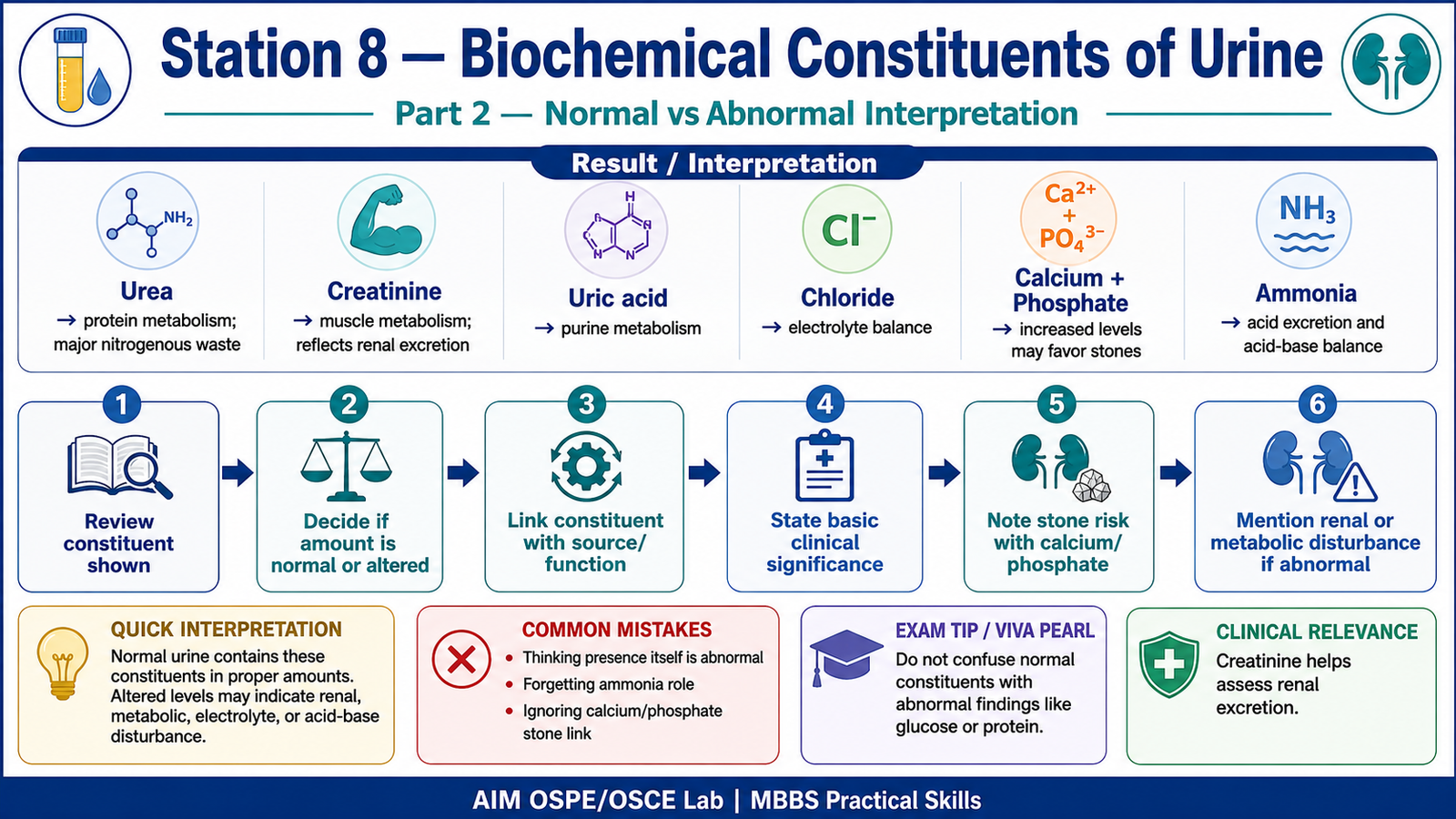
Normal urine contains urea, creatinine, uric acid, chloride, phosphate, ammonia, and small amounts of calcium.
Basic Interpretation
- Urea: major end product of protein metabolism; normal constituent
- Creatinine: normal waste product; useful in assessing renal excretory function
- Uric acid: normal constituent from nucleic acid/purine metabolism
- Chloride: reflects electrolyte balance
- Calcium / phosphate: normally excreted in small amounts; increased levels may be associated with renal stones
- Ammonia: important for acid excretion and acid-base regulation
Abnormal Interpretation
- Marked reduction or abnormal excretion pattern may suggest impaired renal function
- Excess calcium / phosphate may favor urinary calculi
- Altered ammonia excretion may reflect acid-base disturbance
- Abnormal biochemical profile should always be interpreted with clinical context
Viva Questions
1. What is the chief organic constituent of urine?
Ideal answer: Urea.
2. Which urinary constituent is commonly used as a rough indicator of renal excretory function?
Ideal answer: Creatinine.
3. Uric acid is the end product of metabolism of which substances?
Ideal answer: Purines / nucleic acids.
4. Which urinary constituent helps in acid-base regulation?
Ideal answer: Ammonia.
5. Increased urinary calcium and phosphate may predispose to what condition?
Ideal answer: Renal stones / urinary calculi.
Common Student Mistakes
- Forgetting that these constituents are normal in urine in appropriate amounts
- Confusing normal urinary constituents with abnormal substances like protein or glucose
- Giving no clinical significance when interpreting altered levels
AIM Feedback
In this station, your success depends on clear identification + simple interpretation. First memorize the major normal urinary biochemical constituents, then connect each one with its source or function. Finally, remember one clinical link: calcium/phosphate → stones, ammonia → acid-base balance, creatinine → renal excretion. This makes viva answering much easier.
🖼️ Visual / Image Support
🧩 Concept Map / Interpretation Support