
🫀🔍 AIM OSPE/OSCE Lab — GIT and Metabolism
Uncategorized

About Course

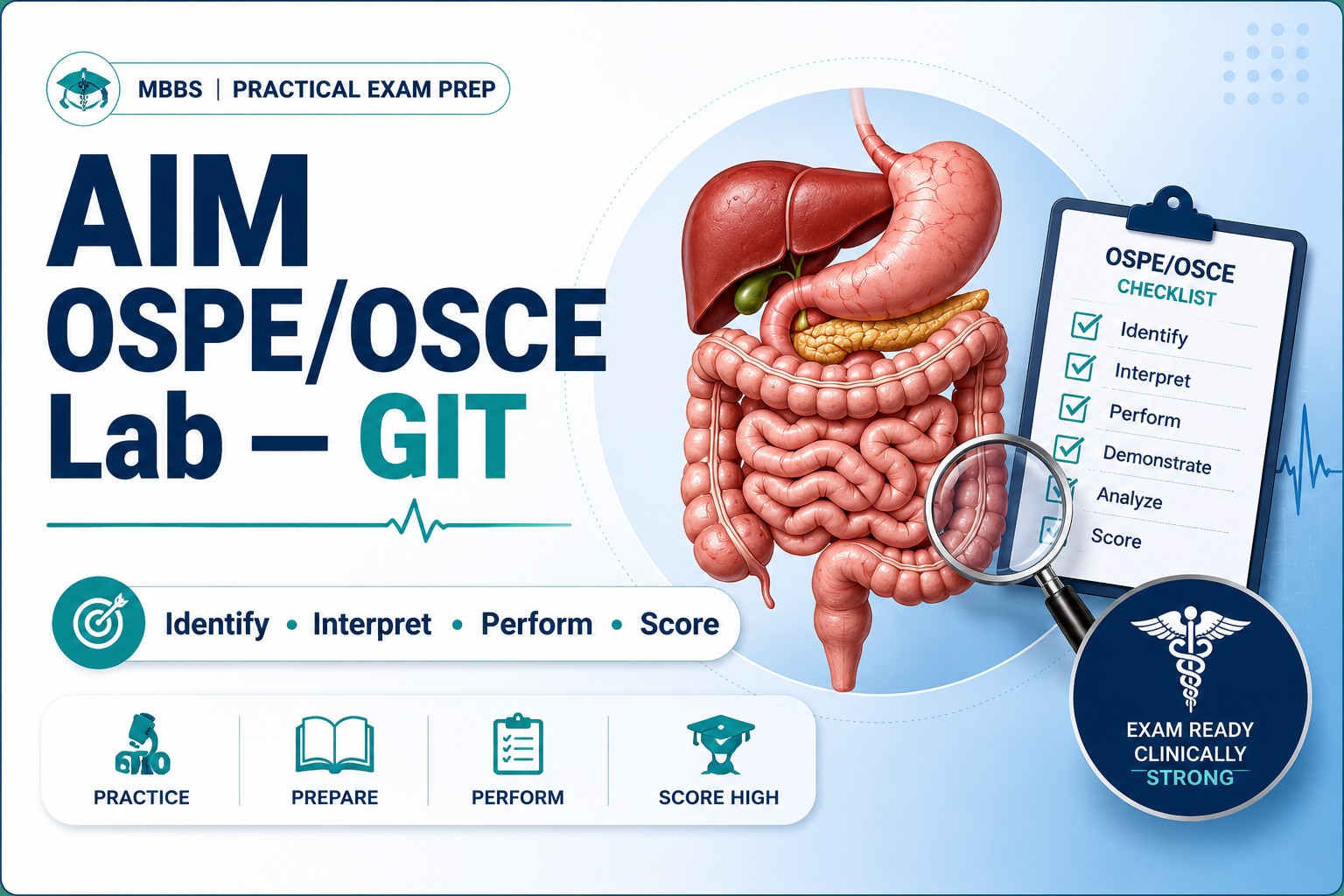
AIM OSPE/OSCE Lab — GIT is a practical exam-focused course designed to help MBBS students master gastrointestinal OSPE stations through histology slide identification, abdomen examination, biochemical estimations, interpretation, and structured viva preparation.

Students will practice GIT histology slides, clinical abdominal examination, plasma protein estimation, gastric juice acidity, serum bilirubin, urine titratable acidity, serum cholesterol, and KMU-style conceptual viva questions in an exam-ready OSPE/OSCE format.

Course Content

🔬👅 Station 1 — Histology of Lips and Tongue
Covers: Identification of lip slide Identification of tongue slide Key microscopic features under microscope

🔬🧫 Station 2 — Histology of Esophagus
Covers: Identification of esophageal slide Epithelium and glands Muscular layer recognition

🔬🍽️ Station 3 — Histology of Stomach
Covers: Identification of stomach slide Gastric glands Mucosal layers

🔬🟡 Station 4 — Histology of Duodenum
Covers: Identification of duodenum slide Villi and intestinal glands Brunner’s glands

🔬🟤 Station 5 — Histology of Liver
Covers: Identification of liver slide Hepatic lobule Portal triad

🔬🟢 Station 6 — Histology of Gall Bladder
Covers: Identification of gall bladder slide Folded mucosa Characteristic microscopic features

🔬🌀 Station 7 — Histology of Jejunum and Ileum
Covers: Identification of jejunum slide Identification of ileum slide Plicae circulares, villi, Peyer’s patches

🔬🛡️ Station 8 — Histology of Appendix
Covers: Identification of appendix slide Lymphoid follicles Mucosa and lumen recognition

🔬🧱 Station 9 — Histology of Colon and Rectum
Covers: Identification of colon slide Identification of rectum slide Goblet cells and intestinal glands

🩺🤲 Station 10 — Examination of Abdomen
Covers: Examination of standardized patient’s abdomen Inspection, palpation, percussion, and auscultation Proper patient positioning and exposure Basic clinical interpretation

🧪🩸 Station 11 — Estimation of Plasma Proteins
Covers: Blood sample handling Estimation of plasma proteins Result reading and interpretation

🧪🍋 Station 12 — Free, Total and Combined Acidity of Gastric Juice
Covers: Gastric juice sample handling Titration method Free acidity, total acidity, and combined acidity interpretation

🧪🟡 Station 13 — Estimation of Serum Bilirubin
Covers: Serum sample handling Bilirubin estimation Interpretation in jaundice

🧪🚽 Station 14 — Estimation of Titratable Acidity of Urine
Covers: Urine sample handling Titration procedure Endpoint identification and interpretation

🧪🧈 Station 15 — Estimation of Serum Cholesterol
Covers: Serum sample handling Cholesterol estimation Basic interpretation

🎯📚 Station 16 — GIT Most Important Viva Questions with Answers
Covers: High-yield conceptual viva questions from all GIT practical stations Histology slide identification viva Abdomen examination viva Biochemistry practical interpretation viva KMU-style integrated GIT viva questions

Want to receive push notifications for all major on-site activities?

Scroll to Top
Enable Notifications OK No thanks