
This chapter follows the KMU learning outcomes for mechanical asphyxial deaths. First understand how interference with breathing or neck structures causes death, then use the final high-yield review to revise the distinguishing forensic findings.
Asphyxia and Mechanical Asphyxial Deaths
A structured introduction to asphyxia, hanging, strangulation, drowning, suffocation and other mechanical forms of interference with respiration, with emphasis on mechanisms, autopsy findings and medico-legal interpretation.
Topic Introduction
Asphyxia is a condition in which the body does not receive or use sufficient oxygen, usually with accumulation of carbon dioxide. In forensic medicine, particular importance is given to mechanical asphyxia, in which an external or internal mechanical factor interferes with breathing, the airway, the neck vessels or normal respiratory movements. The major forms include hanging, strangulation, drowning, suffocation, smothering, choking, gagging, overlaying and traumatic asphyxia. Although some general signs may occur in many asphyxial deaths, they are not individually diagnostic. Correct interpretation therefore depends on understanding the mechanism of death, the pattern of injuries and the circumstances in which the body is found. Sexual asphyxia is an additional medico-legal situation in which intentional restriction of oxygen for sexual gratification may unintentionally become fatal.
A. General Principles of Asphyxia and Anoxia
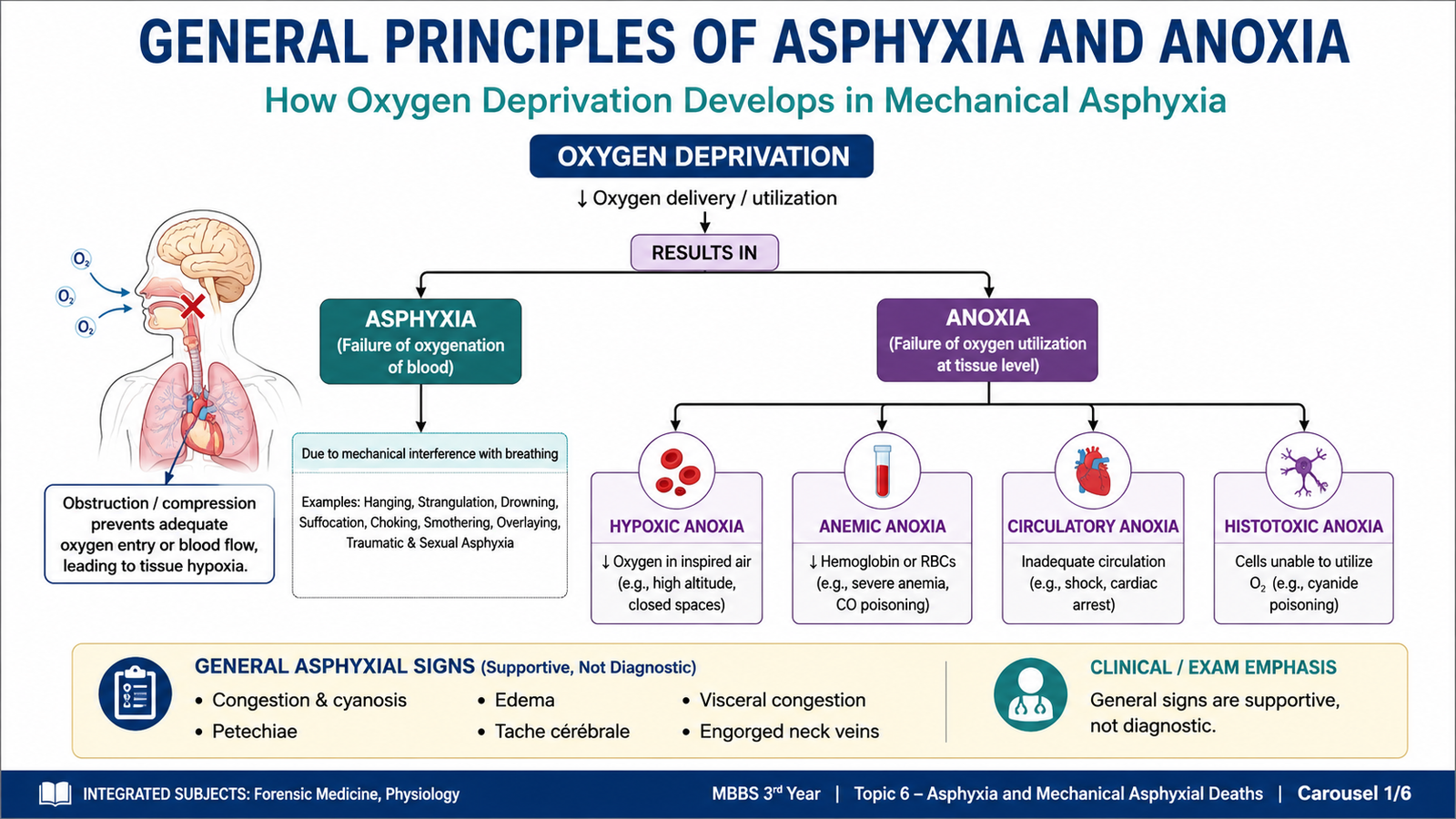
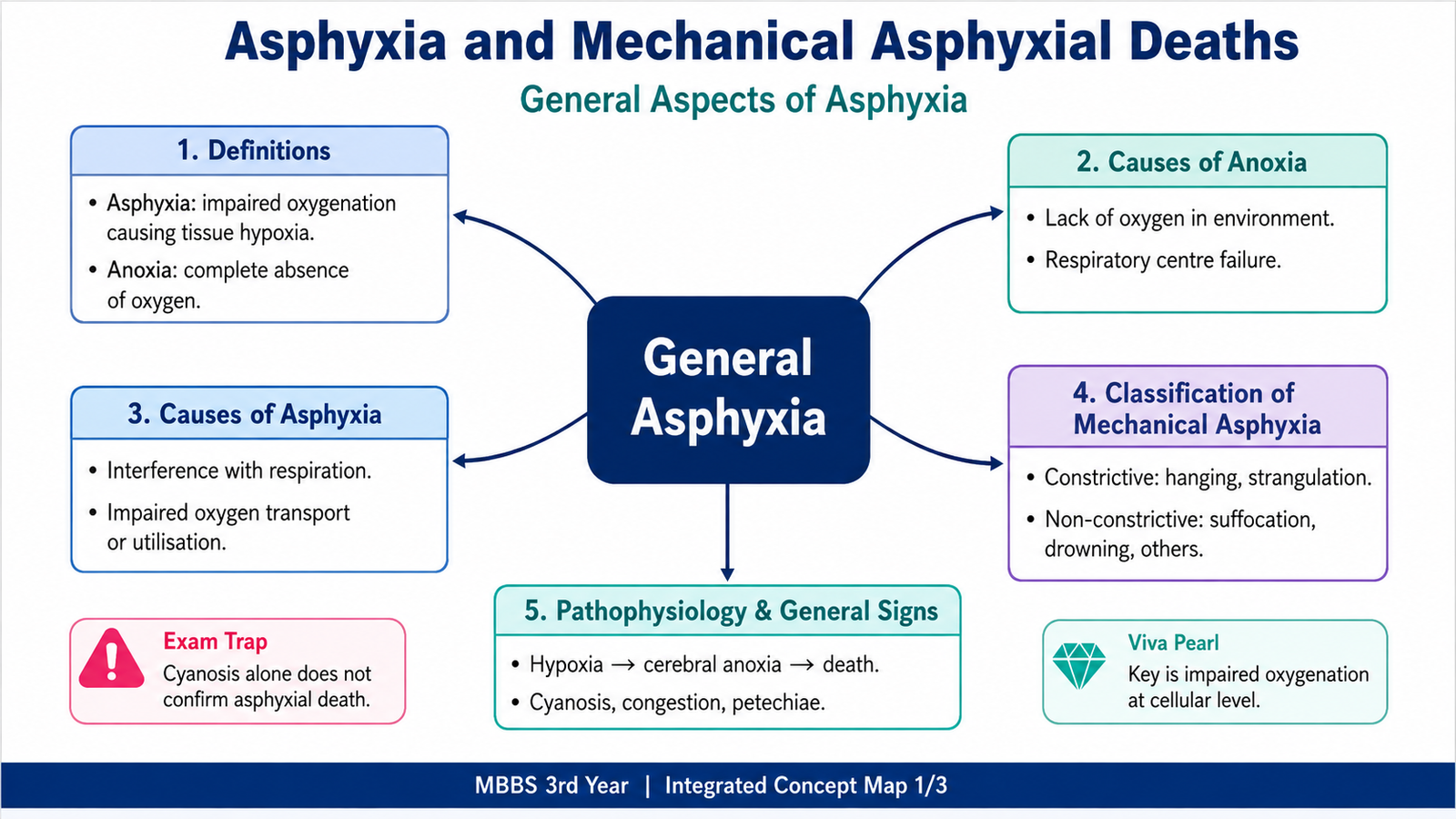
Asphyxia is best understood as a disturbance of normal oxygen supply accompanied, in many cases, by impaired removal of carbon dioxide. The term anoxia refers to absence or extreme deficiency of oxygen at the tissue level. In practice, complete absence is uncommon, and hypoxia may be physiologically more accurate in many situations, but “anoxia” remains an important forensic teaching term.
Causes of anoxia
Tissue oxygen deficiency can arise at different points between the atmosphere and the cells. Understanding these categories explains why not every oxygen-deficient death is caused by mechanical obstruction of breathing.
- Anoxic or hypoxic anoxia: insufficient oxygen reaches the blood, for example when breathing is obstructed or environmental oxygen is inadequate.
- Anemic anoxia: the blood cannot carry enough usable oxygen because the amount or function of hemoglobin is reduced.
- Stagnant or circulatory anoxia: oxygenated blood does not reach tissues adequately because circulation is severely impaired.
- Histotoxic anoxia: oxygen reaches the tissues but cells cannot utilize it properly.
Causes and classification of mechanical asphyxia
Mechanical asphyxia occurs when a physical factor interferes with entry of air, movement of the chest or neck structures involved in oxygen delivery to the brain. Major forms required for this topic include:
- Hanging
- Strangulation
- Suffocation and smothering
- Choking and gagging
- Overlaying
- Drowning
- Traumatic asphyxia
Pathophysiology
When respiration or oxygen delivery is seriously impaired, arterial oxygen falls while carbon dioxide may rise. Cerebral function is especially sensitive to oxygen deprivation. Progressive cerebral hypoxia produces impaired judgment, loss of consciousness and, if the process continues, irreversible brain injury and death. In neck compression, cerebral hypoxia may develop not only from airway obstruction but also from compression of the carotid arteries, jugular veins or other vital neck structures.
Mechanical interference → impaired ventilation and/or cerebral circulation → reduced cerebral oxygenation → loss of consciousness → irreversible hypoxic injury → death
General signs of asphyxia
Several findings are traditionally associated with asphyxial deaths. They develop mainly from venous congestion, capillary pressure changes and reduced oxygenation. However, these findings can occur in other deaths and may be absent in genuine asphyxia. They must therefore be interpreted cautiously.
- Cyanosis: bluish discoloration caused by increased reduced hemoglobin.
- Congestion: impaired venous return may produce facial and organ congestion.
- Petechial hemorrhages: small hemorrhages may result from rupture of congested capillaries, particularly where venous pressure rises.
- Dark, fluid blood: may be described at autopsy but is not specific for asphyxia.
- Visceral congestion and edema: may accompany impaired venous drainage and hypoxia.
B. Hanging
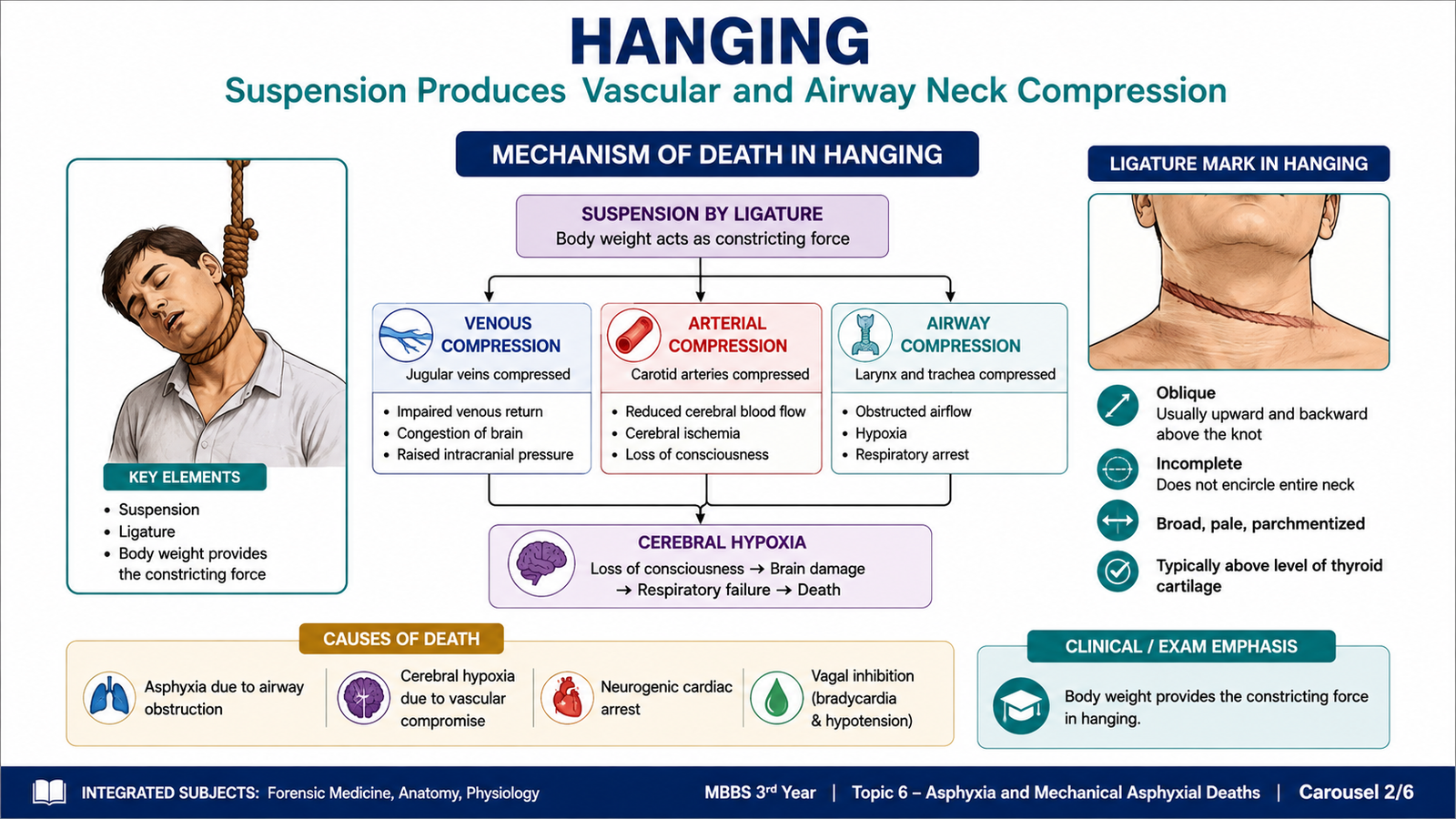
Hanging is a form of mechanical asphyxial death in which the neck is constricted by a ligature, with the constricting force being supplied wholly or partly by the weight of the body. Complete suspension is therefore not essential. A person may be found partially suspended while the ligature still produces sufficient neck compression.
Mechanisms and causes of death
Death in hanging is not explained simply by closure of the trachea. Several mechanisms may operate together, and their relative importance varies with the position of the ligature and circumstances of suspension.
- Compression of neck veins obstructs venous drainage and produces cerebral congestion.
- Compression of carotid arteries reduces arterial blood flow to the brain and causes cerebral ischemia.
- Airway compression can reduce ventilation and contribute to hypoxia.
- Reflex cardiac effects may contribute in some cases through stimulation of structures in the neck.
- Spinal cord or upper cervical injury may occur in circumstances involving substantial force but should not be assumed in ordinary hanging.
Autopsy findings
The most important external finding is the ligature mark. Its appearance is influenced by the ligature material, position of the knot, degree of suspension and duration of pressure. A typical hanging mark tends to run obliquely upward toward the point of suspension and is often incomplete where the knot interrupts pressure.
- Ligature mark on the neck, commonly oblique rather than completely horizontal.
- The mark may be pale, dry, parchment-like or abraded depending on the ligature and postmortem interval.
- Facial congestion and petechiae may occur but vary considerably.
- Internal neck tissues should be examined for soft-tissue hemorrhage and injury.
- Fractures of laryngeal or hyoid structures may occur, particularly according to age, force and circumstances, but are not obligatory.
Medico-legal aspects
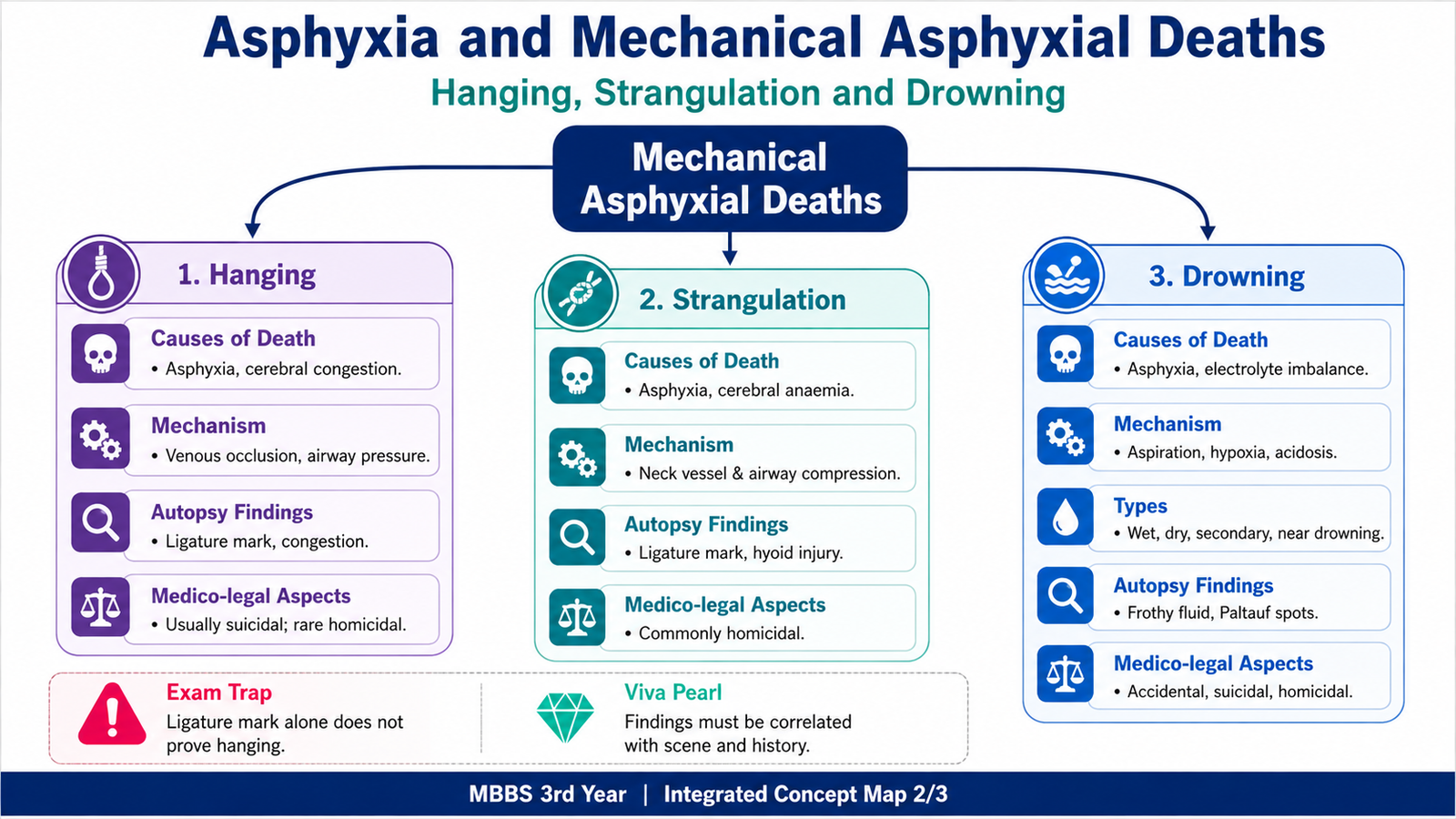
The forensic examiner must determine whether the findings are compatible with hanging and whether the suspension occurred during life. The ligature, knot, suspension point, scene circumstances and neck findings should be considered together. Hanging is commonly associated with self-inflicted death, but the manner of death must never be decided from the ligature mark alone. Accidental circumstances are possible, and unusual cases require careful investigation.
C. Strangulation
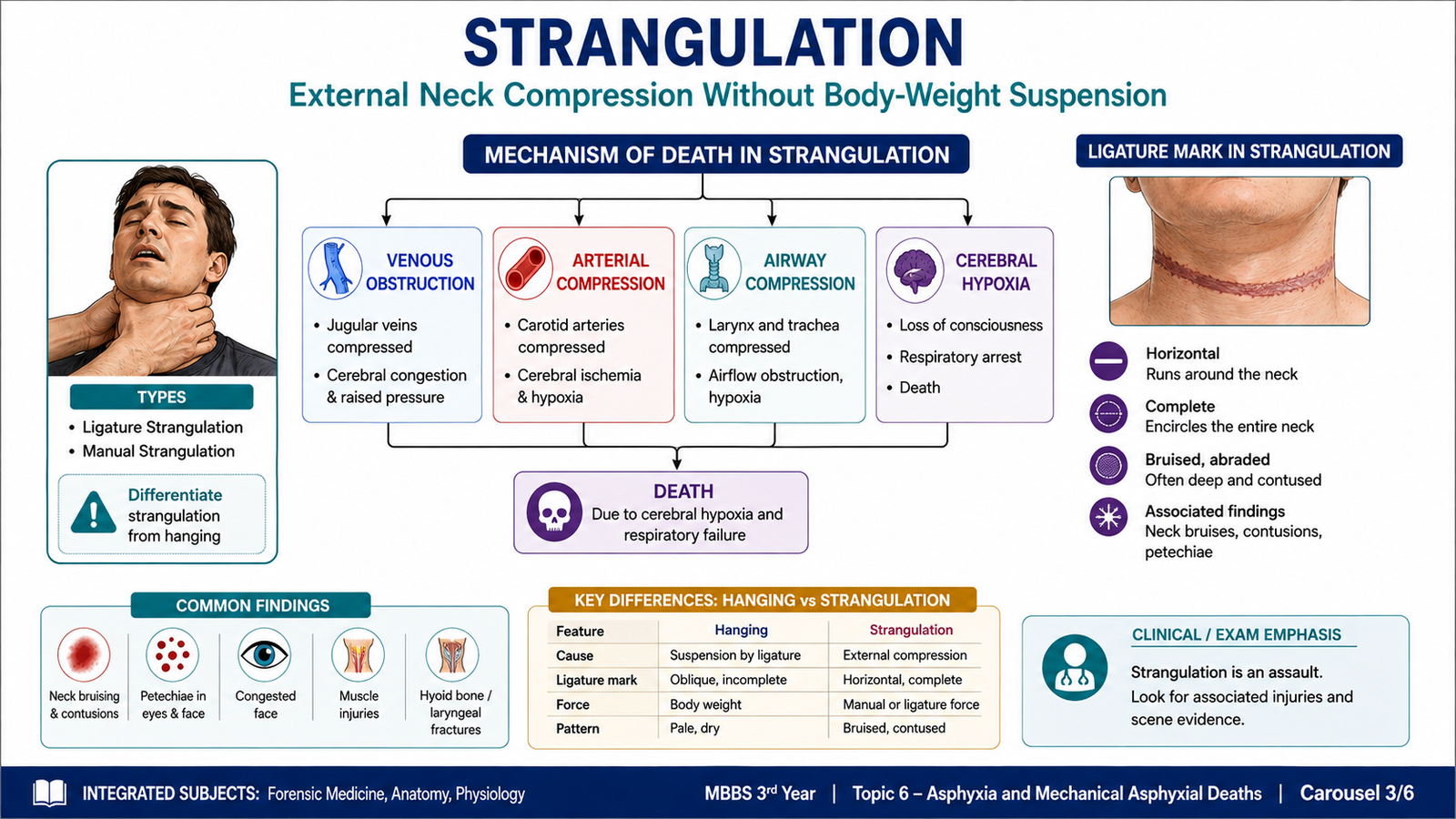
Strangulation is constriction of the neck by a force other than the weight of the body. The constriction may be produced by a ligature, hands or another external force. This distinction is fundamental: in hanging, body weight supplies the constricting force; in strangulation, another force applies the compression.
Forms and mechanism
Important forms include ligature strangulation and manual strangulation. Compression affects the soft tissues and vascular structures of the neck. Obstruction of venous return can produce marked congestion and petechiae, while arterial compression reduces cerebral perfusion. Airway compression and reflex mechanisms may also contribute.
Autopsy findings
Strangulation commonly produces more evidence of local trauma than uncomplicated hanging because force is directly applied to the neck, although the severity of findings varies.
- Ligature strangulation: the ligature mark is commonly more horizontal or transverse and may encircle the neck more completely than in hanging.
- Manual strangulation: bruises, abrasions, fingernail marks or patterned injuries may occur on the neck.
- Facial congestion, cyanosis and petechial hemorrhages may be prominent.
- Internal neck dissection may reveal hemorrhage in subcutaneous tissues and muscles.
- Hyoid or laryngeal cartilage injury may be present depending on force and age.
Medico-legal aspects
Strangulation is particularly important because the pattern and distribution of injuries may indicate the application of external force. The examiner should document the entire neck carefully and look for other injuries that may show restraint or struggle. Nevertheless, no single injury should be interpreted in isolation. The scene, history and complete autopsy findings determine the final medico-legal interpretation.
D. Drowning
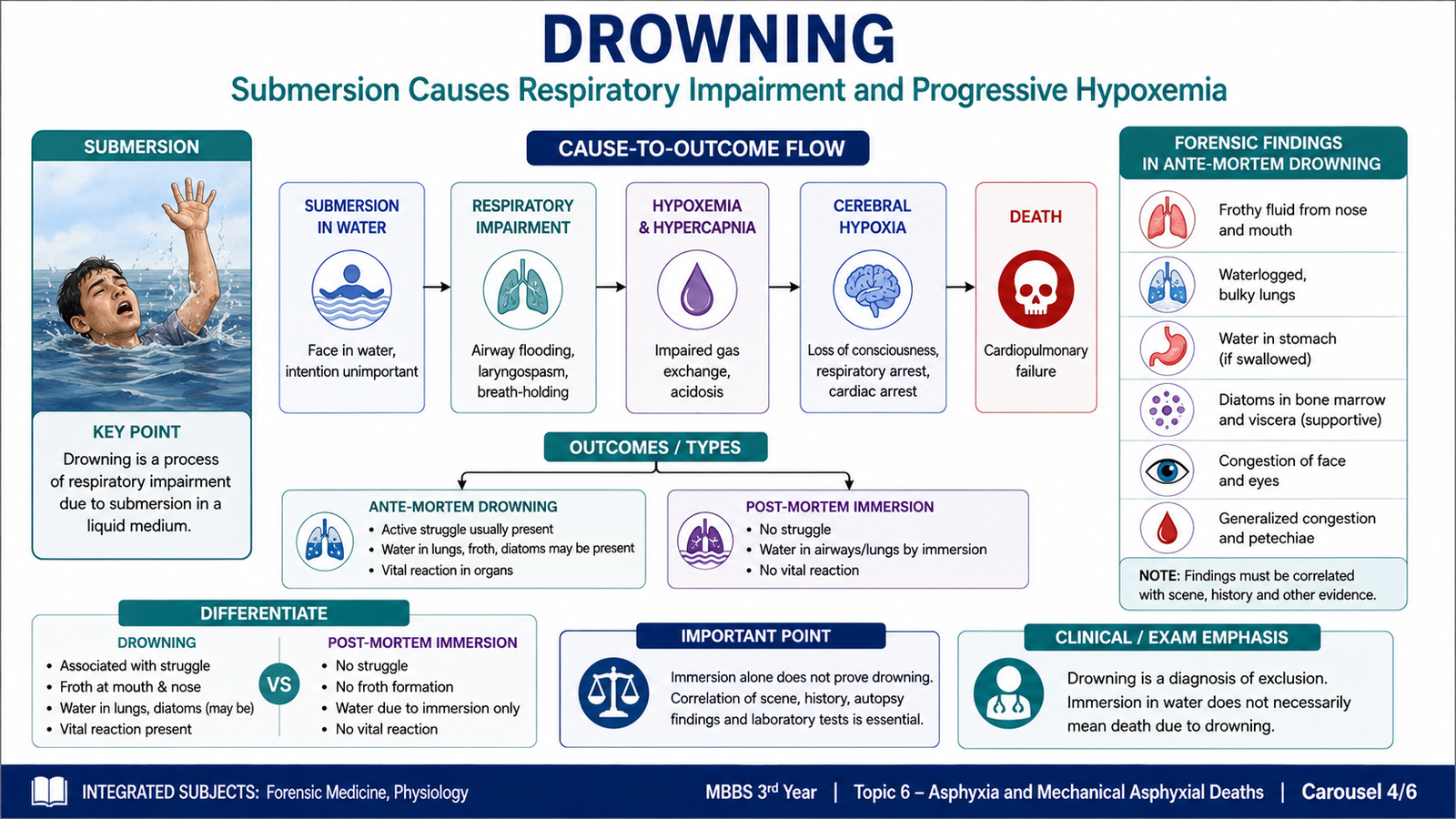
Drowning is a process resulting in respiratory impairment due to submersion or immersion in liquid. From the forensic perspective, the important questions are whether the person was alive when entering the water, how the respiratory impairment developed and whether the findings support drowning as part of the cause of death. No single autopsy sign establishes drowning with absolute certainty.
Mechanism of death
When the airway is submerged, the person initially attempts to protect it and may voluntarily hold the breath. Continued submersion produces increasing carbon dioxide and decreasing oxygen. Respiratory effort eventually resumes, allowing liquid to enter the airway in many cases. Gas exchange becomes severely impaired, causing progressive hypoxemia, cerebral dysfunction, loss of consciousness and death if rescue does not occur.
Types of drowning
For undergraduate understanding, drowning may be described according to the respiratory events and circumstances involved. Liquid aspiration may be substantial in many deaths, while some cases show relatively little aspirated liquid. Terms such as wet and dry drowning have been used traditionally, but autopsy interpretation should focus on the actual findings rather than relying on one label alone.
Autopsy findings
Autopsy findings reflect immersion, respiratory struggle and liquid entering the respiratory tract. Several findings are supportive but none is completely specific.
- Fine persistent froth may be present around the mouth and nostrils or within the air passages.
- The lungs may be enlarged, heavy and waterlogged.
- Fluid and froth may be found in the respiratory passages.
- Water may be present in the stomach when swallowed during the drowning process, but interpretation requires caution.
- Changes related simply to immersion can occur in a body placed in water after death and must not be mistaken for proof of drowning.
Ante-mortem versus post-mortem immersion
The central distinction is whether respiratory and vital reactions occurred while the person was alive. Findings such as froth in the respiratory passages, fluid aspiration and compatible pulmonary changes may support ante-mortem drowning. In contrast, external immersion changes alone can develop after death and therefore cannot prove that the person drowned.
| Feature | Ante-mortem drowning | Post-mortem immersion |
|---|---|---|
| Respiratory activity in water | Present before death | Absent |
| Aspiration-related findings | May support drowning | True vital aspiration absent |
| Immersion changes | May occur | May also occur |
| Interpretation | Combination of findings and circumstances required | Water exposure alone does not establish drowning |
Medico-legal aspects
The forensic investigation must establish the identity of the deceased where necessary, the circumstances of entry into water, whether injuries occurred before or after immersion and whether another disease or injury contributed to death. Accidental, self-inflicted and homicidal circumstances may all be considered according to the evidence. The manner of death should not be inferred from the mere recovery of a body from water.
E. Suffocation, Smothering, Choking, Gagging and Overlaying
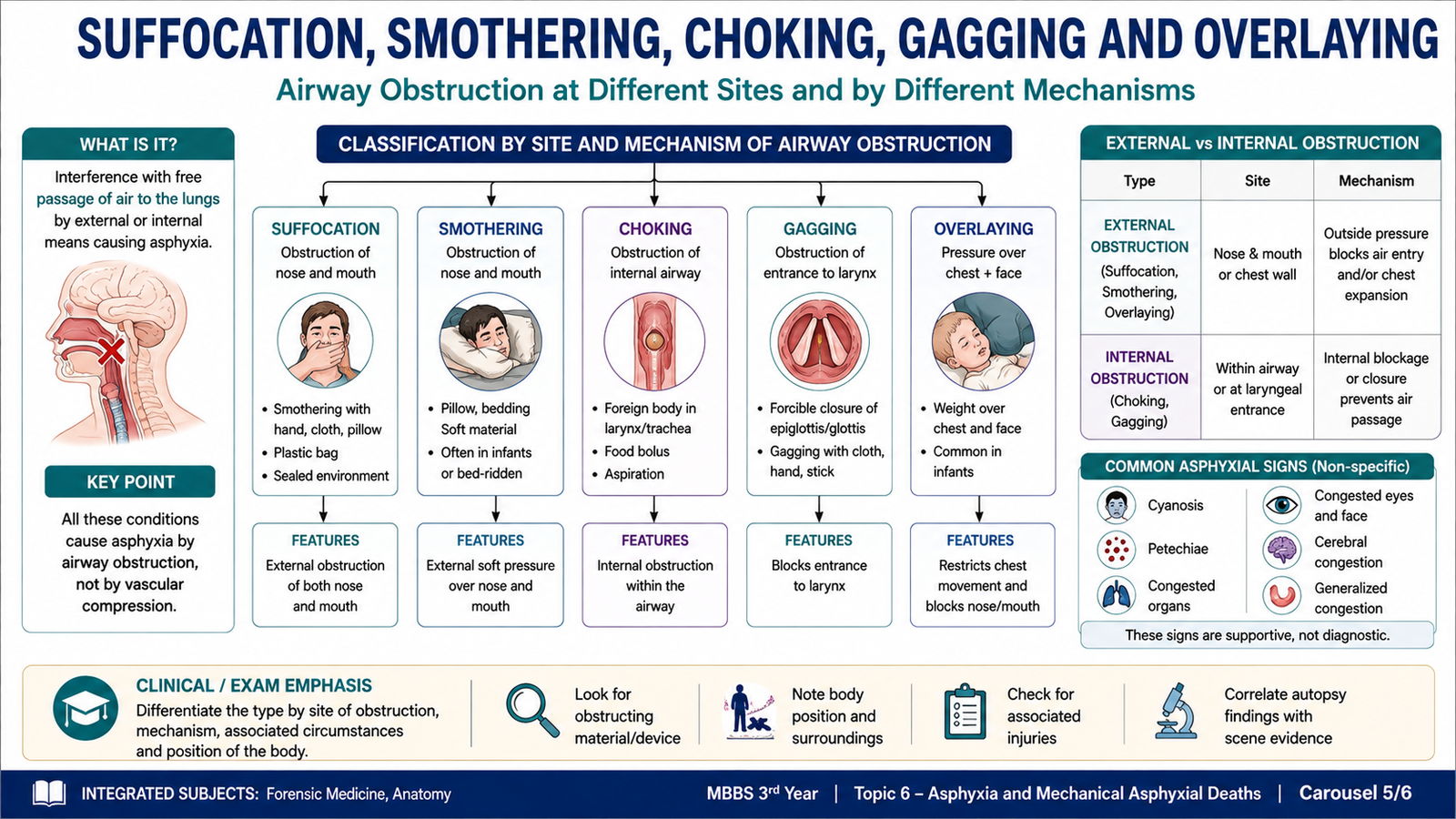
Suffocation is a broad form of asphyxia in which oxygen availability or the passage of air to the lungs is mechanically interfered with without primary neck constriction. Several distinct mechanisms fall within this group. Their medico-legal significance differs, so the exact method of respiratory obstruction must be identified whenever possible.
Smothering
Smothering is obstruction of the external openings of the respiratory tract, mainly the nose and mouth. This prevents adequate air entry. It may occur when these openings are covered by a hand, soft material or another object.
External injuries may be minimal, particularly when a soft object is used. Abrasions or bruises around the mouth and nose may support the diagnosis when present, but their absence does not exclude it. The scene and surrounding circumstances therefore have major medico-legal importance.
Choking
Choking occurs when a foreign body blocks the internal airway. The obstruction prevents effective ventilation and can rapidly produce hypoxia. Food material is a familiar example, but the forensic principle is obstruction of the internal respiratory passage by a foreign object.
At autopsy the obstructing material should be identified and its relationship to the airway documented carefully. The circumstances are commonly accidental, but interpretation must remain evidence-based.
Gagging
Gagging involves placing material in or across the mouth, usually to prevent speech or calling for help. If the gag obstructs the airway, especially when nasal breathing is also impaired, fatal asphyxia may result. Its forensic significance is particularly important when restraint or assault is suspected.
Overlaying
Overlaying refers to compression or obstruction of an infant’s breathing by the body of another person, traditionally during shared sleeping. Respiratory movements or the airway may be compromised. Because external injuries may be limited, careful scene investigation and exclusion of other possible causes of death are essential.
Medico-legal interpretation
These mechanisms may occur accidentally or, in particular circumstances, through deliberate interference. The manner of death cannot be assigned simply from the name of the mechanism. Findings must be correlated with the scene, the position of the body, any restraints, injuries and the object responsible for obstruction.
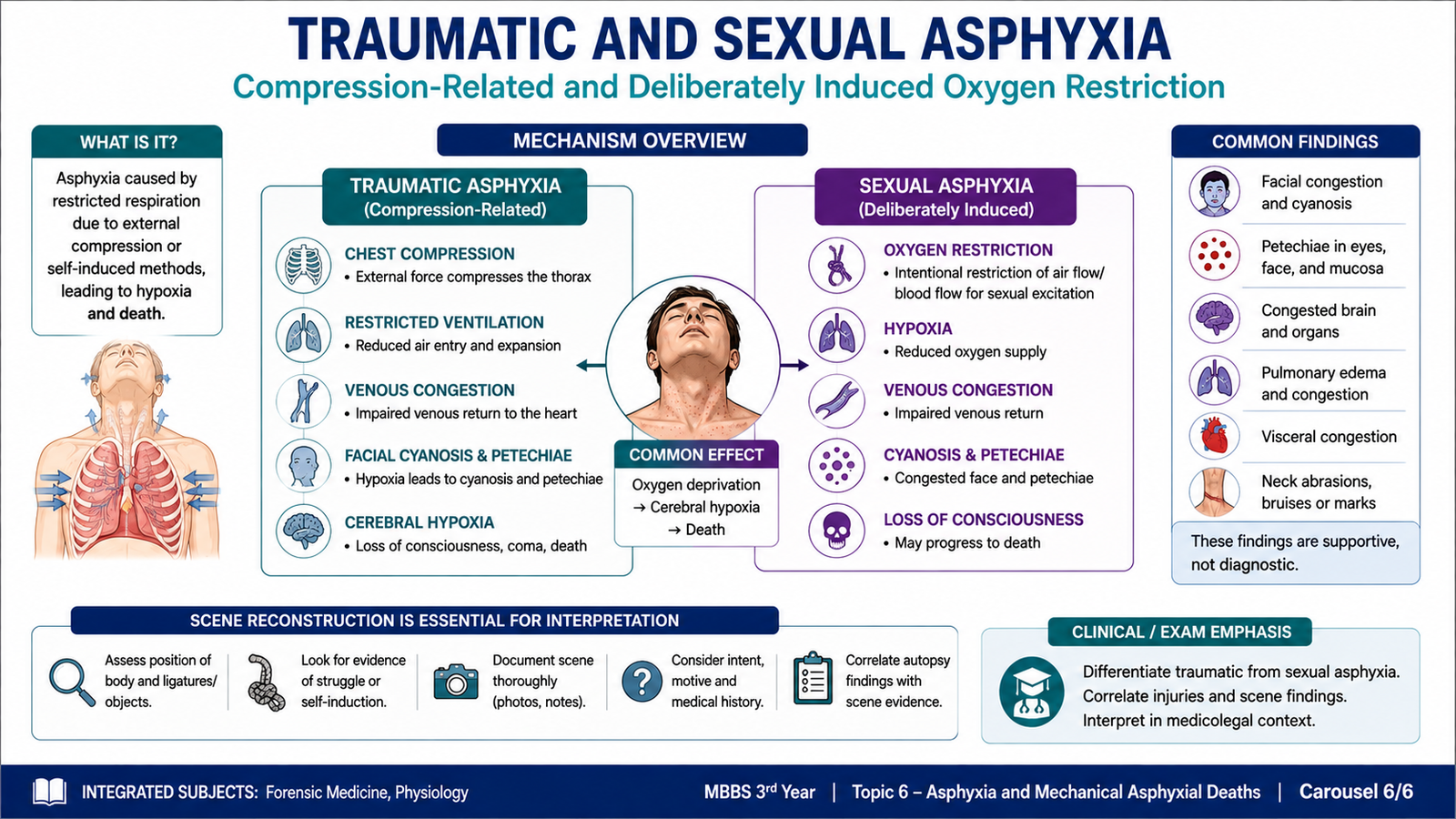
F. Traumatic and Sexual Asphyxia
Traumatic asphyxia
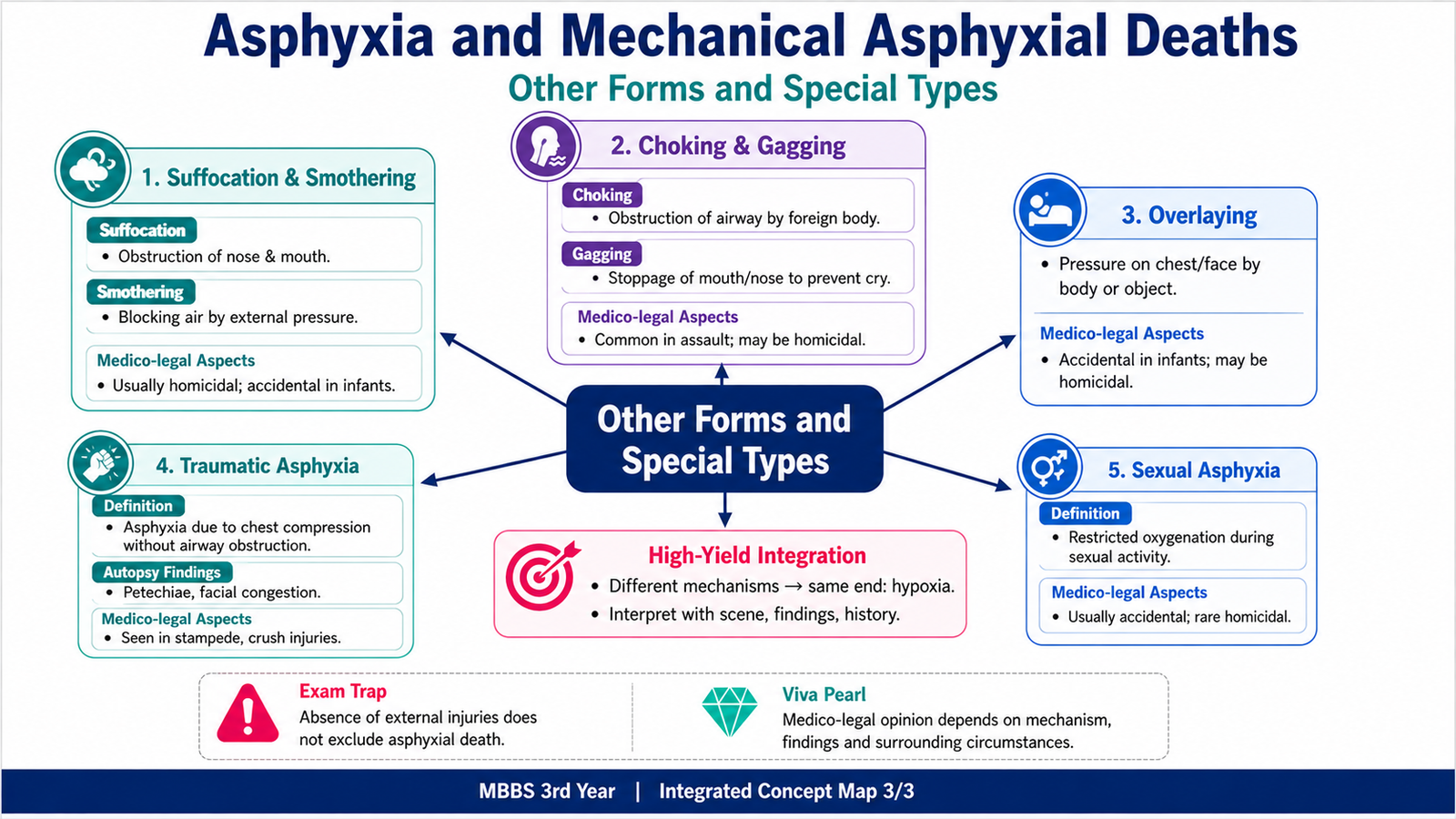
Traumatic asphyxia results from severe external compression of the chest, abdomen or both, preventing normal respiratory movement and causing a sudden marked rise in venous pressure. When the chest is fixed by a heavy compressive force, effective ventilation becomes impossible. At the same time, increased intrathoracic pressure is transmitted backward into the veins of the head and neck.
Autopsy findings of traumatic asphyxia
The striking external pattern is mainly explained by sudden venous congestion above the level of compression.
- Marked cyanosis and congestion of the face, neck and upper chest.
- Numerous petechial hemorrhages in the same distribution.
- Conjunctival petechiae or hemorrhage may be present.
- Associated injuries caused by the compressive trauma may also be found.
Medico-legal importance of traumatic asphyxia
Traumatic asphyxia is typically associated with circumstances in which the chest is trapped or crushed. The forensic examination must document both the asphyxial pattern and the associated traumatic injuries. The cause of death should reflect the actual effects of compression rather than relying solely on the external appearance.
Sexual asphyxia
Sexual asphyxia refers to deliberate reduction of oxygen supply during sexual activity to increase sexual arousal. The restriction may involve the neck, breathing or another mechanism. Death can occur when the person loses consciousness and is then unable to release the constriction or terminate the procedure.
The medico-legal interpretation requires particular care because the scene may initially resemble suicidal or homicidal asphyxia. Relevant features may include evidence that the restriction was intended to be reversible, mechanisms designed for self-release and circumstances suggesting sexual activity. However, conclusions must be based on the complete scene and postmortem evidence rather than assumptions about any single finding.
Integrated Mechanism Flow
The exact pathway differs between hanging, strangulation, drowning and other mechanisms, but inadequate cerebral oxygenation is a common final pathway.
Important Comparison: Major Mechanical Asphyxial Mechanisms
| Condition | Main mechanical event | Important forensic clue |
|---|---|---|
| Hanging | Neck compression by body weight | Usually oblique ligature mark |
| Strangulation | Neck compression by another force | Horizontal mark or manual neck injuries may occur |
| Drowning | Respiratory impairment due to immersion/submersion | Supportive aspiration and pulmonary findings |
| Smothering | External nose/mouth obstruction | Scene evidence; facial injuries may be absent |
| Choking | Foreign body inside airway | Obstructing material identified in airway |
| Traumatic asphyxia | Severe chest/abdominal compression | Upper-body congestion and petechiae |
⭐ AIM High-Yield Review
- Asphyxia involves inadequate oxygenation, often with impaired carbon dioxide removal.
- Anoxia may result from inadequate oxygenation, abnormal oxygen carriage, circulatory failure or failure of cellular oxygen utilization.
- Mechanical asphyxia includes hanging, strangulation, drowning, suffocation, choking and traumatic compression.
- General findings such as cyanosis, congestion and petechiae are supportive but not specific.
- In hanging, body weight supplies the constricting force and the ligature mark is usually oblique.
- In strangulation, neck compression comes from a force other than body weight.
- A more horizontal ligature mark favors ligature strangulation over typical hanging.
- Drowning is respiratory impairment caused by submersion or immersion in liquid.
- Recovery of a body from water does not by itself prove drowning.
- Ante-mortem drowning is supported by vital respiratory responses and compatible aspiration-related findings.
- Smothering obstructs the external respiratory openings; choking obstructs the internal airway.
- Gagging becomes fatal when the material interferes sufficiently with respiration.
- Traumatic asphyxia follows severe chest compression and may produce striking congestion, cyanosis and petechiae above the compression.
- Sexual asphyxia may become fatal when loss of consciousness prevents release of an intentionally applied restriction.
- Cause, mechanism and manner of death are separate medico-legal concepts and should not be inferred from one isolated finding.
Asphyxia and Mechanical Asphyxial Deaths
Watch the video to reinforce the key concepts covered in this topic.