
2. Core Learning Material
This section covers the supplied Community Medicine, ENT and Pediatrics learning outcomes for upper-airway disorders and acute respiratory infections. The diseases are arranged so that epidemiology and prevention are linked naturally with clinical recognition and basic management, without extending into specialist protocols.
A. Diphtheria — Epidemiological Determinants, Prevention and Public-Health Importance
Diphtheria is an acute communicable disease caused mainly by toxigenic Corynebacterium diphtheriae. From a Community Medicine perspective, the central issue is not detailed microbiology but how the infection persists and spreads in a population, which children are most vulnerable, and how vaccination and rapid control measures interrupt transmission. The organism usually spreads through respiratory droplets or close contact. Disease becomes especially important when a susceptible person acquires a toxin-producing strain, because the toxin can produce severe local airway disease and systemic complications.
Epidemiological determinants
Diphtheria transmission depends on interaction between the infectious source, the route of spread and the immunity of exposed people. Humans are the main reservoir. A symptomatic patient or an infected carrier may transmit the organism, so control cannot rely only on recognizing severe cases.
- Agent: toxigenic strains of C. diphtheriae capable of producing diphtheria toxin.
- Reservoir/source: infected humans, including clinical cases and carriers.
- Transmission: mainly respiratory droplets and close contact; contaminated material can contribute less commonly.
- Host susceptibility: greatest in people without adequate protective immunization.
- Environmental and social determinants: crowding, delayed recognition, poor access to vaccination and incomplete immunization facilitate spread.
Cause-and-effect link:
Prevention and control
The most effective long-term preventive measure is maintaining high routine immunization coverage with diphtheria-containing vaccine. During suspected disease, public-health action aims to identify the case early, reduce further exposure and protect susceptible contacts.
- Routine immunization: keeps the number of susceptible children low.
- Early recognition and notification: allows prompt public-health response.
- Appropriate isolation precautions: reduce respiratory spread from infectious patients.
- Contact assessment: identifies exposed people who may require clinical evaluation, prophylactic measures and review of immunization status.
- Catch-up immunization: reduces immunity gaps in children who missed scheduled doses.
Current public-health importance in Pakistan
Diphtheria remains important in Pakistan because it is vaccine-preventable yet can reappear wherever routine immunization is incomplete or children remain zero-dose or under-immunized. Pakistan’s national immunization programme includes protection against diphtheria, so prevention depends strongly on reaching every eligible child and closing missed-immunization gaps. For examination purposes, the important public-health message is that even a relatively uncommon severe disease can cause outbreaks when population immunity falls.

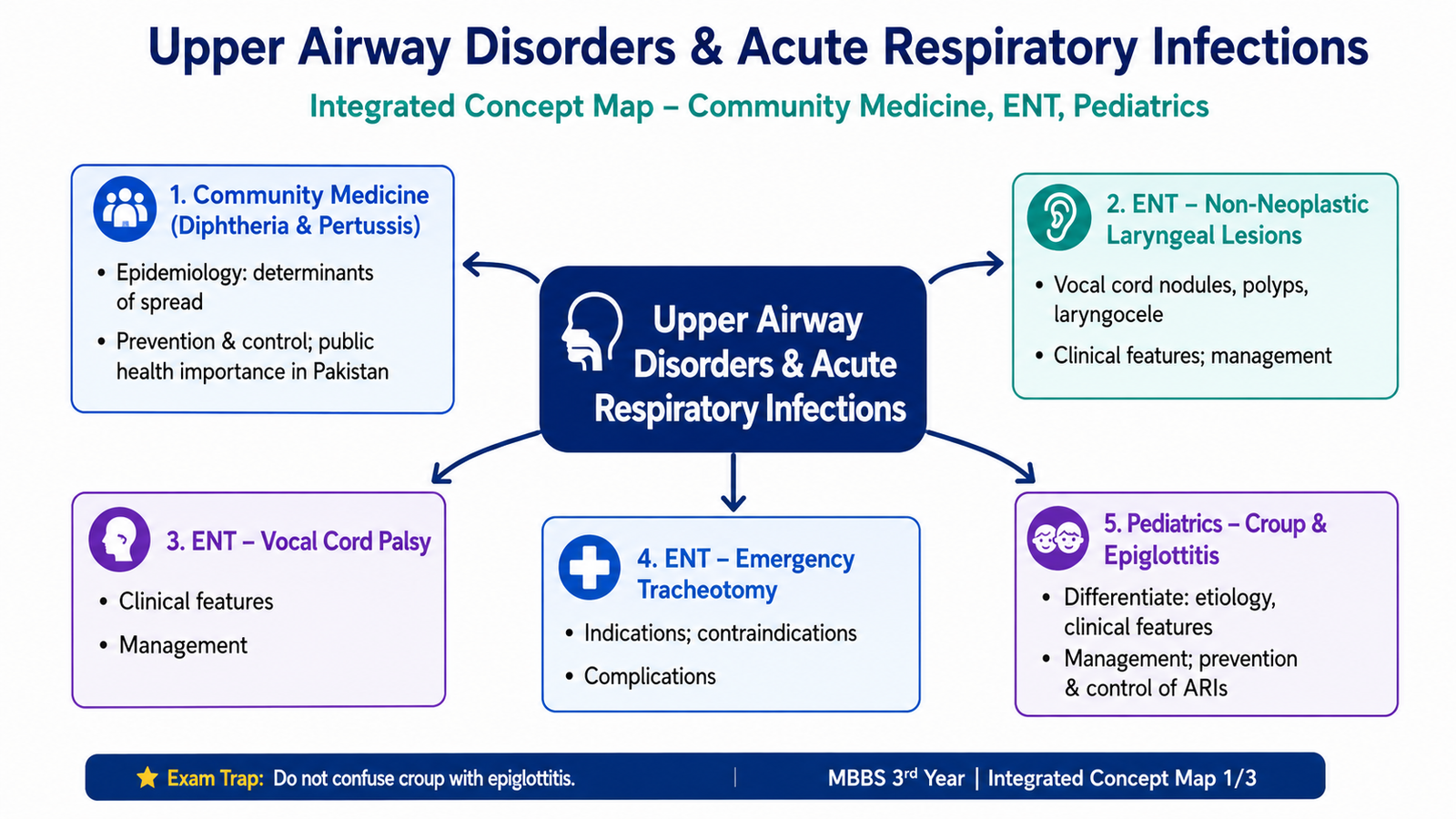
B. Pertussis — Epidemiological Determinants, Prevention and Public-Health Importance
Pertussis, or whooping cough, is a highly contagious respiratory infection caused by Bordetella pertussis. Its public-health importance comes from efficient respiratory transmission and the risk of severe disease in young infants. Older children and adults may have milder or atypical disease and can still transmit infection, which helps the organism circulate within families and communities.
Epidemiological determinants
Pertussis spreads when respiratory secretions from an infected person reach a susceptible contact. Close household exposure is especially important because repeated contact increases the chance of transmission.
- Agent: Bordetella pertussis.
- Reservoir: humans.
- Transmission: respiratory droplets during close contact.
- High-risk host: young infants, especially before adequate vaccine protection has developed.
- Important determinant: incomplete immunization creates a larger susceptible pool.
Why infants are important:
Prevention and control
Control depends primarily on vaccination, early recognition of infectious cases and protection of close contacts. Because pertussis may be transmitted before the classic cough is obvious, prevention must focus on maintaining high community immunization rather than relying only on symptom-based isolation.
- Routine pertussis-containing vaccination: reduces severe disease and population susceptibility.
- Timely completion of scheduled doses: is particularly important in infancy.
- Early diagnosis and appropriate treatment of cases: helps reduce ongoing transmission.
- Assessment of close contacts: is important because household spread is common.
- Respiratory hygiene and reducing exposure: support outbreak control.
Current public-health importance in Pakistan
Pertussis remains relevant in Pakistan because protection depends on timely childhood immunization and because missed doses leave infants vulnerable. Pakistan’s routine immunization programme includes pertussis-containing vaccine. Therefore, improving routine coverage, identifying missed children and maintaining confidence in vaccination are central public-health measures.

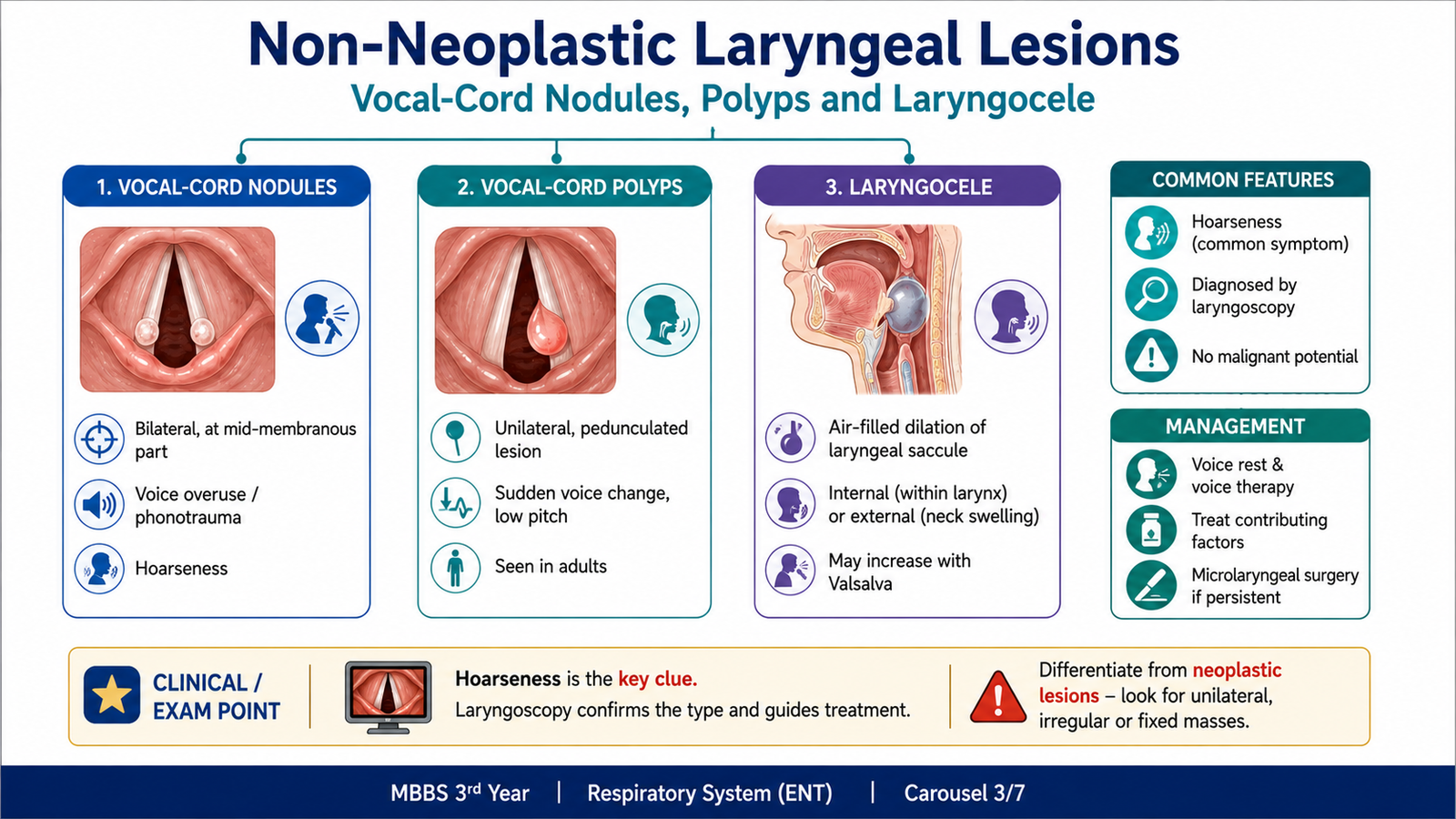
C. Non-Neoplastic Laryngeal Lesions — Vocal-Cord Nodules, Polyps and Laryngocele
Non-neoplastic laryngeal lesions are structural abnormalities of the larynx that can alter voice or, less commonly, airway function without being malignant tumours. For this curriculum, the important lesions are vocal-cord nodules, vocal-cord polyps and laryngocele. They can all present with hoarseness, but their causes and anatomical patterns differ. Understanding those differences helps the student recognize the likely lesion and the broad principles of management.
Vocal-cord nodules
Vocal-cord nodules are usually small, benign, bilateral swellings that develop because of repeated mechanical trauma from voice overuse or misuse. Repeated collision of the vibrating vocal folds produces local tissue injury and thickening. Because both cords are exposed to similar mechanical stress, nodules are commonly bilateral and relatively symmetrical.
- Typical presentation: persistent or recurrent hoarseness, vocal fatigue and reduced voice quality.
- Typical setting: people who use the voice heavily, such as teachers, singers or children who frequently shout.
- Management principle: voice rest or modification, voice therapy and correction of contributing vocal habits; persistent lesions require ENT assessment.
Vocal-cord polyps
A vocal-cord polyp is a benign localized lesion that is usually unilateral. It may follow acute or chronic phonotrauma and can interfere with regular vocal-fold vibration. The resulting disturbance of vibration produces hoarseness.
- Clinical feature: hoarseness is the dominant complaint.
- Appearance: often a solitary, localized lesion rather than the paired pattern of nodules.
- Management principle: address voice misuse and irritants; persistent or significant lesions may require endoscopic removal and histological assessment.
Laryngocele
A laryngocele is an air-filled dilatation of the laryngeal saccule that communicates with the laryngeal lumen. It may remain internal or extend through the thyrohyoid membrane to produce an external neck swelling. Because the sac communicates with the airway, the swelling may become more obvious when intralaryngeal pressure rises.
- Internal laryngocele: may cause hoarseness, cough or a sensation of airway obstruction.
- External component: may present as a soft upper-neck swelling that becomes more prominent with coughing or straining.
- Management principle: ENT evaluation and surgical treatment when symptomatic, enlarging or causing airway/voice problems.
| Feature | Vocal-cord nodule | Vocal-cord polyp | Laryngocele |
|---|---|---|---|
| Usual pattern | Usually bilateral | Usually unilateral | Air-filled saccular dilatation |
| Main clue | Chronic voice overuse | Localized fold lesion | Voice symptoms ± neck swelling |
| Broad management | Voice therapy first | Voice care ± excision | ENT assessment ± surgery |
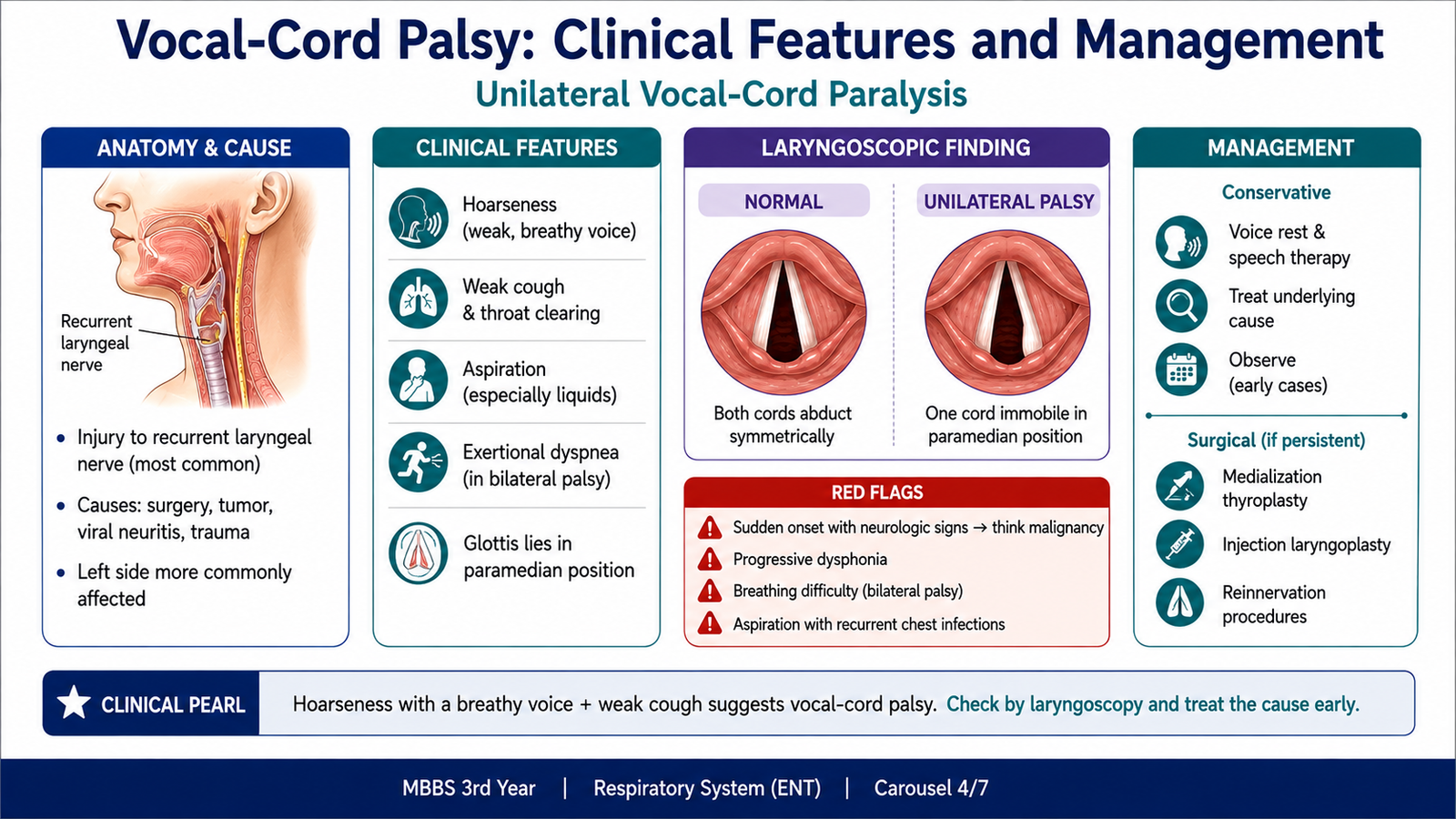
D. Vocal-Cord Palsy — Clinical Features and Management
Vocal-cord palsy occurs when one or both vocal folds cannot move normally because their motor nerve supply is impaired. The clinical effect depends mainly on whether the palsy is unilateral or bilateral and on the position of the affected cord. The recurrent laryngeal nerve supplies most intrinsic muscles of the larynx, so injury anywhere along its course can disturb vocal-fold movement.
Unilateral vocal-cord palsy
When one cord is paralyzed, the opposite cord may still move toward the midline, so the airway is usually adequate. The main problem is incomplete or inefficient closure during phonation, which allows air to escape and weakens the voice.
- Hoarseness or a breathy, weak voice.
- Vocal fatigue, especially during prolonged speaking.
- Aspiration or coughing while swallowing may occur if glottic closure is poor.
Bilateral vocal-cord palsy
Bilateral palsy can be much more dangerous because both cords may lie close to the midline and fail to abduct adequately during inspiration. This narrows the glottic opening and can produce significant airway obstruction.
- Inspiratory stridor is an important warning sign.
- Dyspnea may worsen with exertion.
- Severe bilateral dysfunction can become an airway emergency.
Airway danger:
Basic diagnostic and management approach
Diagnosis requires visualization of vocal-fold movement, usually by laryngeal examination. Once palsy is identified, management is guided by airway safety, severity of voice or swallowing impairment, and the underlying cause.
- Assess the airway first if stridor or respiratory distress is present.
- Examine vocal-fold movement to confirm unilateral or bilateral dysfunction.
- Look for the cause along the relevant nerve pathway when clinically indicated.
- Unilateral palsy: may be managed with voice therapy and selected procedures if disability persists.
- Bilateral palsy: airway protection takes priority; an airway procedure may be required when obstruction is significant.
E. Emergency Tracheotomy — Indications, Contraindications and Complications
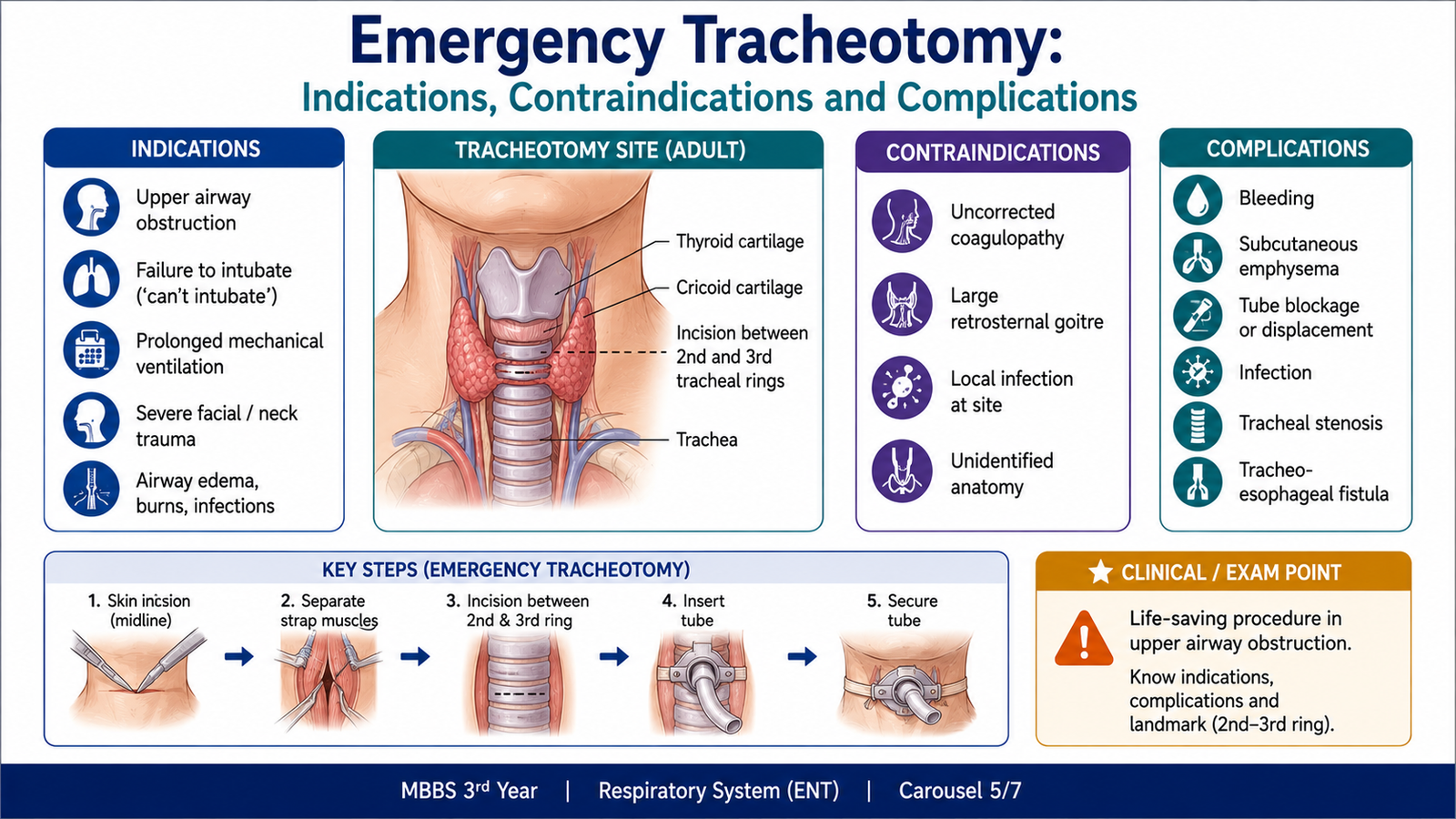
A tracheotomy is the surgical creation of an opening in the trachea to establish an airway. In an emergency setting, its purpose is to bypass severe upper-airway obstruction when adequate ventilation cannot be maintained by safer or faster airway methods. At third-year cognitive level, the important concepts are when it may be required, why contraindications are mostly relative in a life-threatening airway emergency, and which complications should be anticipated.
Indications
The common principle is a threatened or obstructed upper airway. The procedure is considered when airflow through the larynx is critically impaired and a secure airway cannot otherwise be established adequately.
- Severe upper-airway obstruction that cannot be relieved promptly.
- Major laryngeal obstruction or trauma with impending airway loss.
- Bilateral vocal-cord paralysis causing significant airway compromise.
- Selected situations in which prolonged or definitive airway access is required after specialist assessment.
Contraindications
In a true life-threatening airway emergency, there is usually no absolute contraindication if tracheotomy is the only effective method of establishing an airway. However, certain conditions make the procedure more difficult or dangerous and are therefore relative contraindications or caution factors.
- Uncorrected bleeding tendency.
- Distorted neck anatomy or major local injury.
- Local infection at the operative site.
- Very difficult access due to body habitus or anatomical variation.
Complications
Complications may occur immediately, early after the procedure or later. They result from injury to nearby structures, bleeding, tube problems, infection or healing-related changes in the trachea.
- Immediate/early: hemorrhage, false passage, tube displacement or blockage, pneumothorax, subcutaneous emphysema and injury to adjacent structures.
- Infective: wound or tracheal infection.
- Late: tracheal stenosis, granulation tissue, tracheoesophageal fistula or persistent tracheocutaneous fistula.
Examination principle:
F. Croup and Epiglottitis — Etiology, Clinical Differentiation and Management
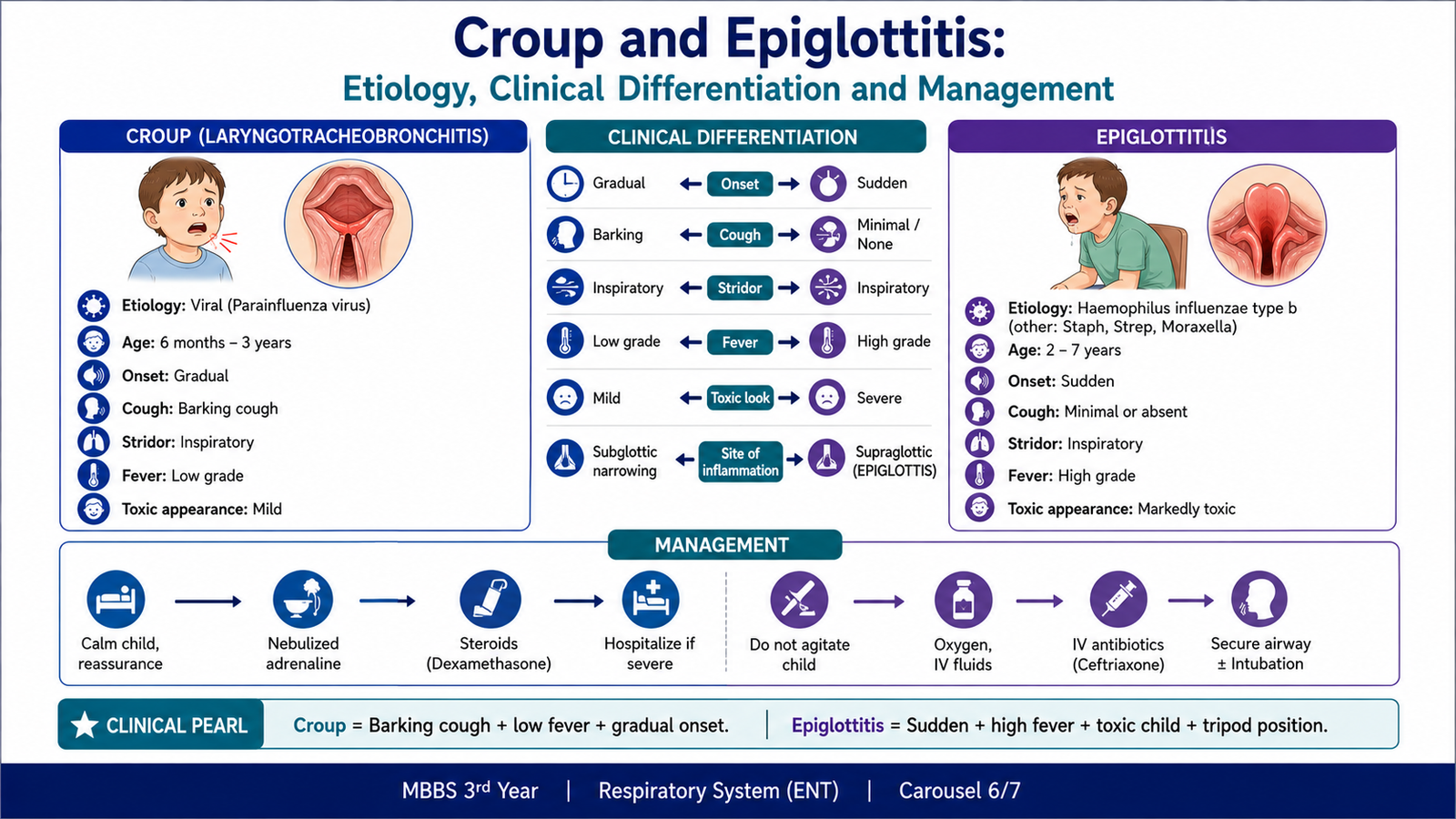
Croup and epiglottitis can both present with upper-airway symptoms in children, but their usual causes, clinical appearance and urgency are different. Croup is usually a viral laryngotracheal illness producing subglottic inflammation and narrowing. Epiglottitis is an acute inflammatory swelling of the epiglottis and nearby supraglottic tissues that can progress rapidly to life-threatening airway obstruction. Recognizing the pattern is more important than memorizing isolated symptoms.
Croup
Viral infection causes edema in the subglottic region. Because a child’s airway is already narrow, even modest mucosal swelling produces a proportionally large reduction in airway diameter. Turbulent airflow through the narrowed upper airway produces inspiratory stridor, while laryngeal involvement creates the characteristic barking cough.
- Usual etiology: viral infection, classically parainfluenza viruses.
- Typical onset: often preceded by coryzal symptoms.
- Characteristic cough: barking or “seal-like.”
- Voice: hoarse.
- Airway sound: inspiratory stridor, more concerning when present at rest.
Epiglottitis
Epiglottitis produces rapid swelling above the glottis. The swollen epiglottis can obstruct airflow, and agitation may worsen airway compromise. The child therefore often looks much more toxic and distressed than a child with uncomplicated croup.
- Etiology: bacterial infection; historically Haemophilus influenzae type b was a major cause, although vaccination has greatly changed its epidemiology.
- Typical onset: abrupt, with high fever and marked illness.
- Swallowing: painful or difficult; drooling is an important clue.
- Voice: muffled rather than simply hoarse.
- Posture: the child may sit leaning forward to improve airflow.
| Feature | Croup | Epiglottitis |
|---|---|---|
| Usual cause | Viral | Bacterial |
| Onset | More gradual; coryzal prodrome common | Often abrupt and rapidly progressive |
| Cough | Barking cough prominent | Usually not the dominant feature |
| Drooling | Usually absent | Common and important |
| Voice | Hoarse | Muffled |
| General appearance | Variable distress | Toxic, anxious, may sit forward |
| Key management priority | Assess severity and reduce airway edema | Urgently secure/protect the airway and treat infection |
Management of croup
Management is based on severity. A calm child with mild disease may need supportive care, while stridor at rest, significant retractions or respiratory distress indicates more severe upper-airway narrowing.
- Keep the child calm and minimize unnecessary agitation.
- Give corticosteroid therapy to reduce inflammatory airway edema.
- More severe disease may require nebulized adrenaline and close observation.
- Escalate airway support if fatigue, hypoxia or worsening obstruction develops.
Management of epiglottitis
Epiglottitis is treated as a potential airway emergency. The priority is to avoid provoking complete obstruction and to arrange controlled airway management by experienced personnel.
- Keep the child calm and avoid unnecessary throat manipulation.
- Urgently involve experienced airway and ENT/anesthesia personnel.
- Secure the airway when clinically required in a controlled setting.
- Give appropriate systemic antibiotic therapy after airway priorities are addressed.
- Provide supportive care and monitoring for respiratory deterioration.
Critical distinction:
G. Prevention and Control of Acute Respiratory Infections in Children
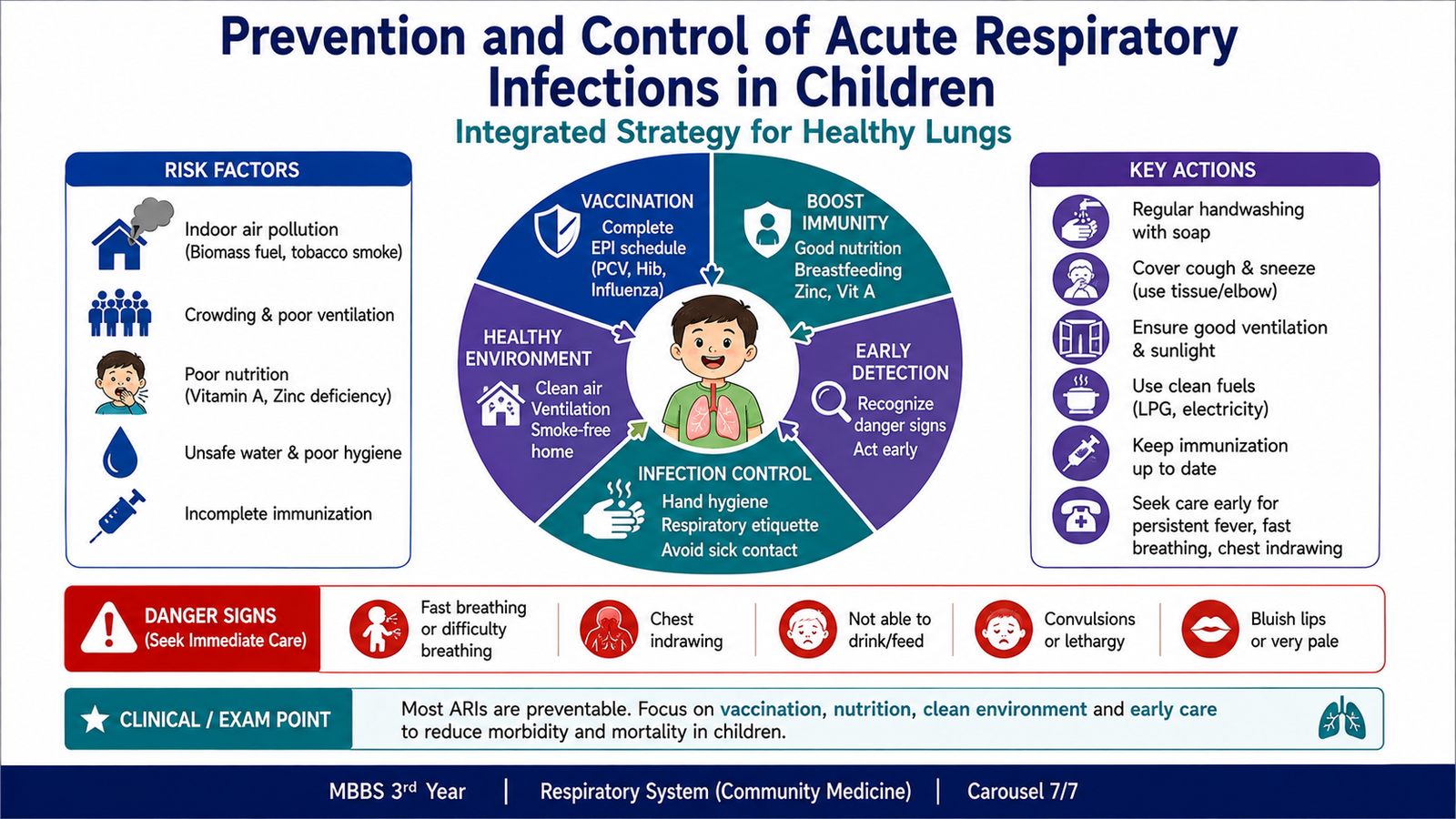
Prevention of acute respiratory infections (ARIs) requires more than one intervention because respiratory infections arise from different organisms and are influenced by host immunity, nutrition and exposure. The most effective public-health approach combines vaccination, reduction of avoidable exposure, support of normal child nutrition and early recognition of severe illness. These measures lower both the frequency of infection and the risk that an infection will become severe.
Primary prevention
Primary prevention acts before disease occurs. In children, immunization is especially important because several serious respiratory infections are vaccine-preventable. Good nutrition and breastfeeding support immune function, while reducing smoke exposure and improving respiratory hygiene reduce the chance of infection or severe disease.
- Routine childhood immunization: protects against important vaccine-preventable respiratory infections.
- Breastfeeding and adequate nutrition: support host defense and reduce vulnerability to severe infection.
- Hand and respiratory hygiene: reduce transmission of infectious droplets and secretions.
- Reduce tobacco smoke and indoor air pollution exposure: decreases respiratory irritation and susceptibility.
- Reduce avoidable crowding and close exposure to infectious persons where practical.
Early recognition and control of severe disease
Prevention also includes preventing complications. Parents and health workers should recognize features that suggest significant airway obstruction or respiratory compromise so that the child is referred or treated promptly.
- Stridor at rest or rapidly increasing airway noise.
- Marked chest retractions or severe work of breathing.
- Cyanosis, exhaustion or reduced level of consciousness.
- Drooling with difficulty swallowing and a toxic appearance.
- Inability to feed or signs of significant respiratory distress.
Public-health logic:
3. Integrated Mechanism Flow
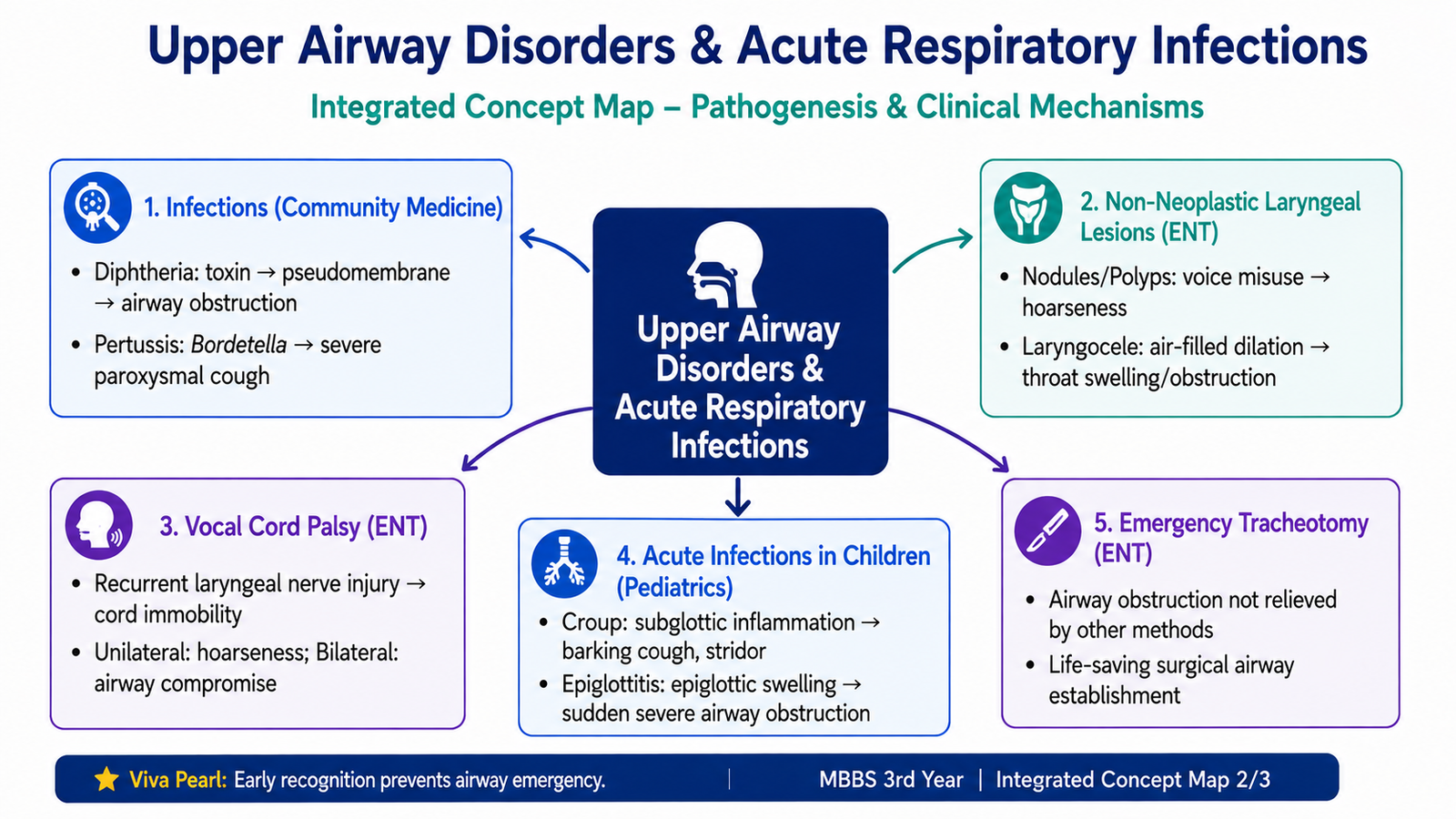
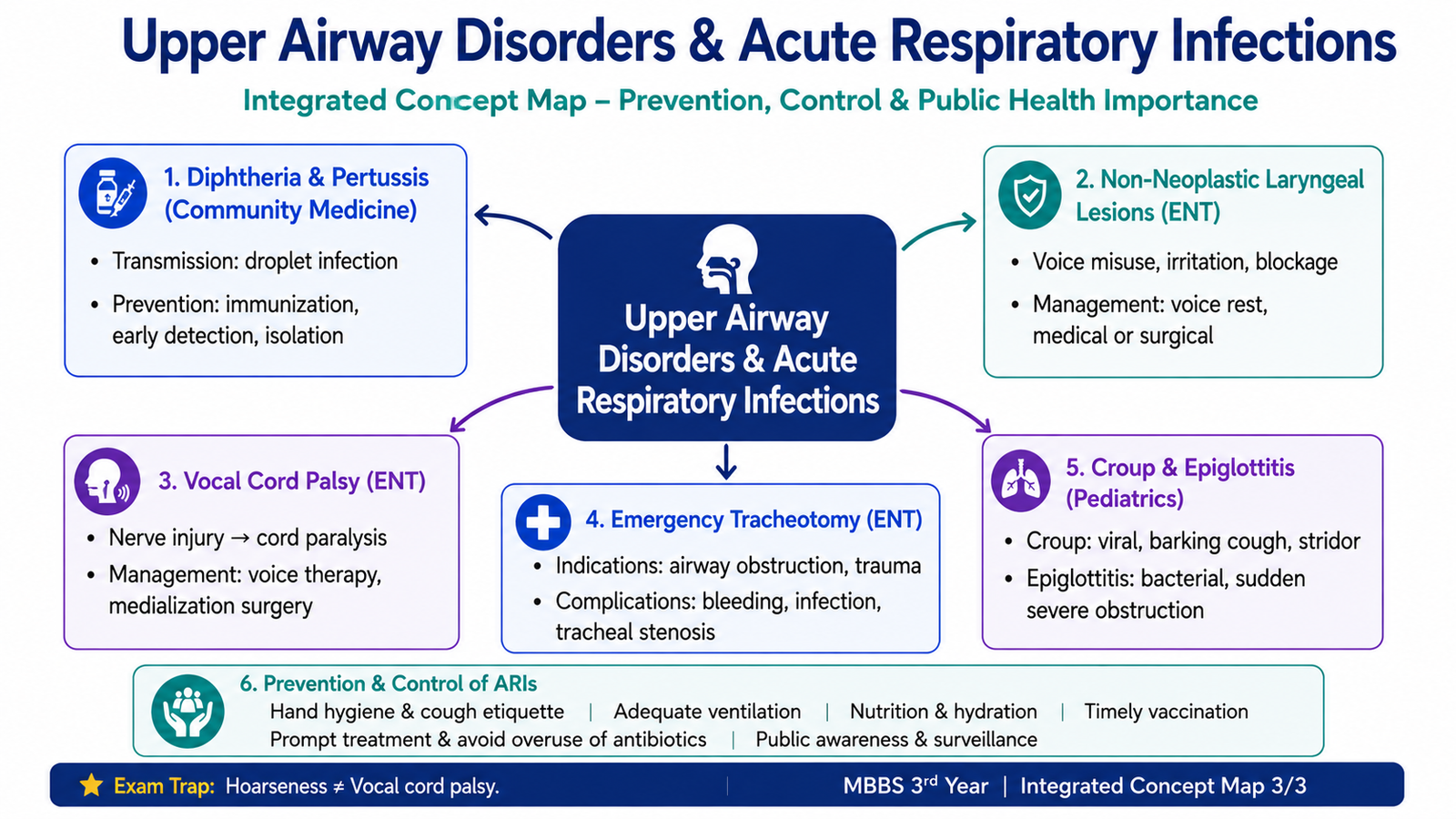
The major disorders in this topic become easier to understand when they are linked through one central idea: disease or structural dysfunction in the upper airway changes airflow, voice or airway protection. The severity depends on the site and degree of narrowing.
Infection, inflammation, nerve injury or structural lesion
Edema, impaired cord movement or abnormal laryngeal structure
Altered vibration, narrowed airway or impaired glottic closure
Hoarseness, barking cough, drooling, stridor or dyspnea
Treat cause and protect the airway when threatened
Croup causes subglottic edema; epiglottitis causes supraglottic swelling; bilateral vocal-cord palsy limits glottic opening. Different mechanisms can therefore produce the same danger sign—stridor from upper-airway narrowing.
4. Important Comparison
The highest-yield clinical distinction in this topic is between croup and epiglottitis. Both can cause stridor, but the accompanying features reveal the site, likely cause and urgency of the airway problem.
| Feature | Croup | Epiglottitis |
|---|---|---|
| Main site | Subglottic larynx/trachea | Epiglottis and supraglottic tissues |
| Typical cause | Viral | Bacterial |
| Onset | Often follows coryzal symptoms | More abrupt and rapidly progressive |
| Cough | Characteristic barking cough | Not usually prominent |
| Voice | Hoarse | Muffled |
| Drooling | Generally absent | Important diagnostic clue |
| General appearance | Variable respiratory distress | Toxic, anxious, may lean forward |
| Basic management | Corticosteroid; nebulized adrenaline if more severe | Urgent airway protection plus antibiotics |
Barking cough strongly favors croup; drooling with a muffled voice and toxic appearance strongly favors epiglottitis.
5. AIM High-Yield Review
- ⭐ Diphtheria spreads mainly through respiratory droplets and becomes a public-health threat when population immunity is inadequate.
- ⭐ Pertussis is caused by Bordetella pertussis; young, incompletely immunized infants are particularly vulnerable to severe disease.
- Routine immunization is the central preventive measure for both diphtheria and pertussis.
- Vocal-cord nodules are commonly bilateral and associated with chronic voice misuse; voice therapy is an important first management step.
- Vocal-cord polyps are more commonly solitary and unilateral than nodules.
- Laryngocele is an air-filled dilatation communicating with the laryngeal lumen and may produce a neck swelling that becomes prominent with coughing or straining.
- Unilateral vocal-cord palsy mainly causes voice disturbance, whereas bilateral palsy may threaten the airway.
- ⭐ Inspiratory stridor in bilateral vocal-cord palsy signals potentially important glottic narrowing.
- Emergency tracheotomy may be required when severe upper-airway obstruction cannot be relieved by more appropriate immediate airway measures.
- Bleeding, tube displacement or blockage, pneumothorax and subcutaneous emphysema are important early tracheotomy complications; tracheal stenosis is an important late complication.
- ⭐ Croup: viral illness + barking cough + hoarse voice + inspiratory stridor.
- ⭐ Epiglottitis: high fever + drooling + painful swallowing + muffled voice + toxic appearance.
- Do not provoke the airway in suspected epiglottitis; controlled airway assessment takes priority.
- Corticosteroid therapy reduces inflammatory airway edema in croup; nebulized adrenaline is used when disease is more severe.
- Childhood ARI prevention combines immunization, breastfeeding and nutrition, respiratory hygiene, reduced smoke exposure and early recognition of danger signs.
🎥 Video Learning Support
Use this supplementary lecture after reading the chapter to reinforce upper-airway obstruction, including clinically important causes such as epiglottitis and bilateral vocal-cord dysfunction.
While watching, concentrate on the relationship between the site of upper-airway narrowing, stridor, signs of impending obstruction and the need for airway protection.
If the embedded player is blocked by the LMS or browser, open the video directly:
Watch on YouTube