
🩺 Station 13 — Effect of Posture and Exercise on Blood Pressure
AIM OSPE/OSCE Lab — Practical Station | KMU Style | MBBS Practical + Viva
📌 Station Overview
Module: Cardiovascular System
Year: 1st Year MBBS
Focus: Identification • Procedure • Interpretation • Viva
Total Marks: 5
📋 Complete OSPE Station Content
Learning Target
- Measure blood pressure correctly before and after change of posture or mild exercise.
- Interpret the physiological changes in blood pressure using venous return, cardiac output, and baroreceptor reflex.
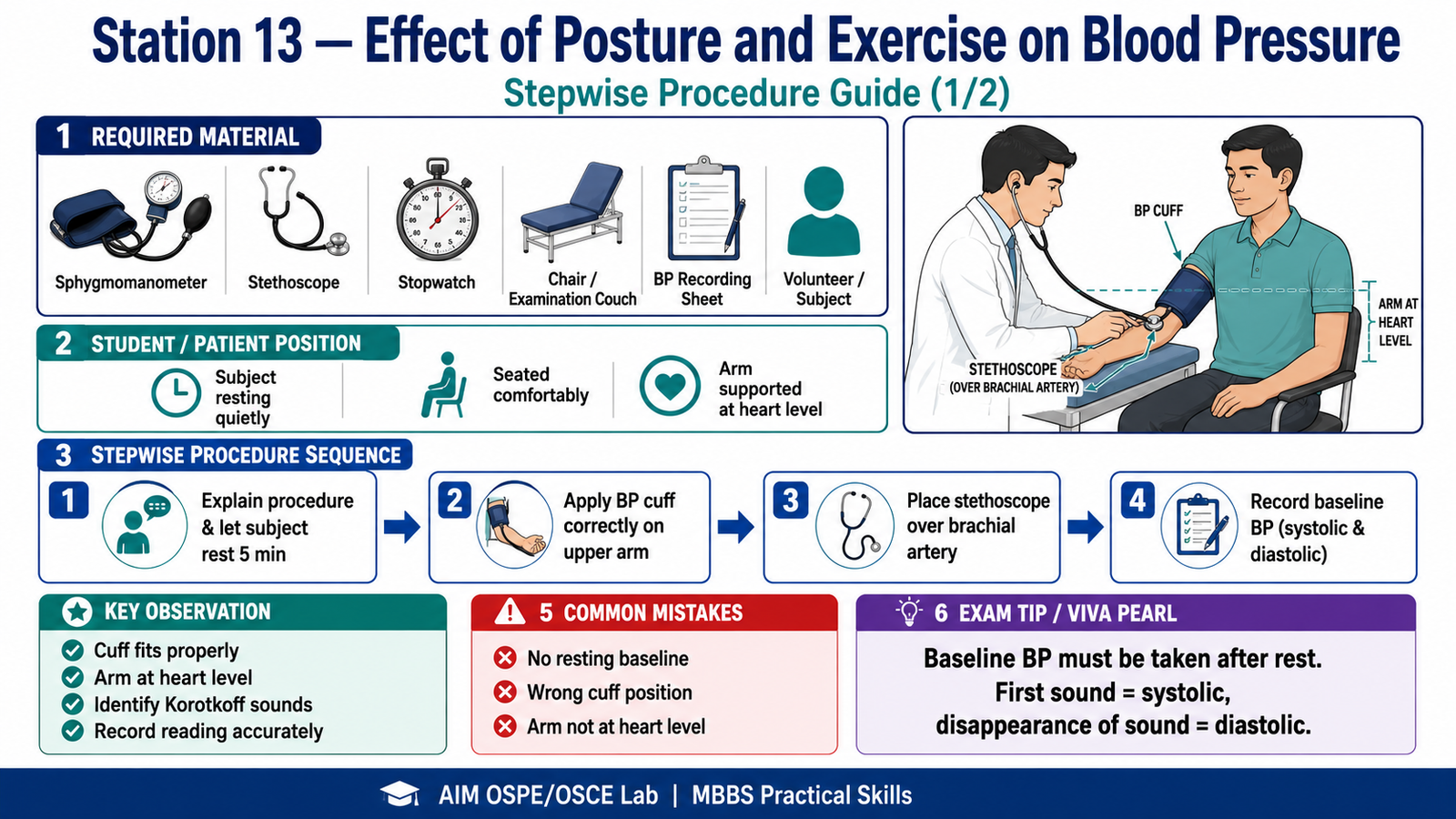
Required Material
- Sphygmomanometer
- Stethoscope
- Chair / examination couch
- Stopwatch
- BP recording sheet
- Hand sanitizer
- Volunteer / student subject
Student Task / Procedure
- Explain the procedure briefly to the subject.
- Ask the subject to rest quietly for 5 minutes.
- Apply the BP cuff properly on the upper arm at heart level.
- Record baseline blood pressure in sitting or lying position.
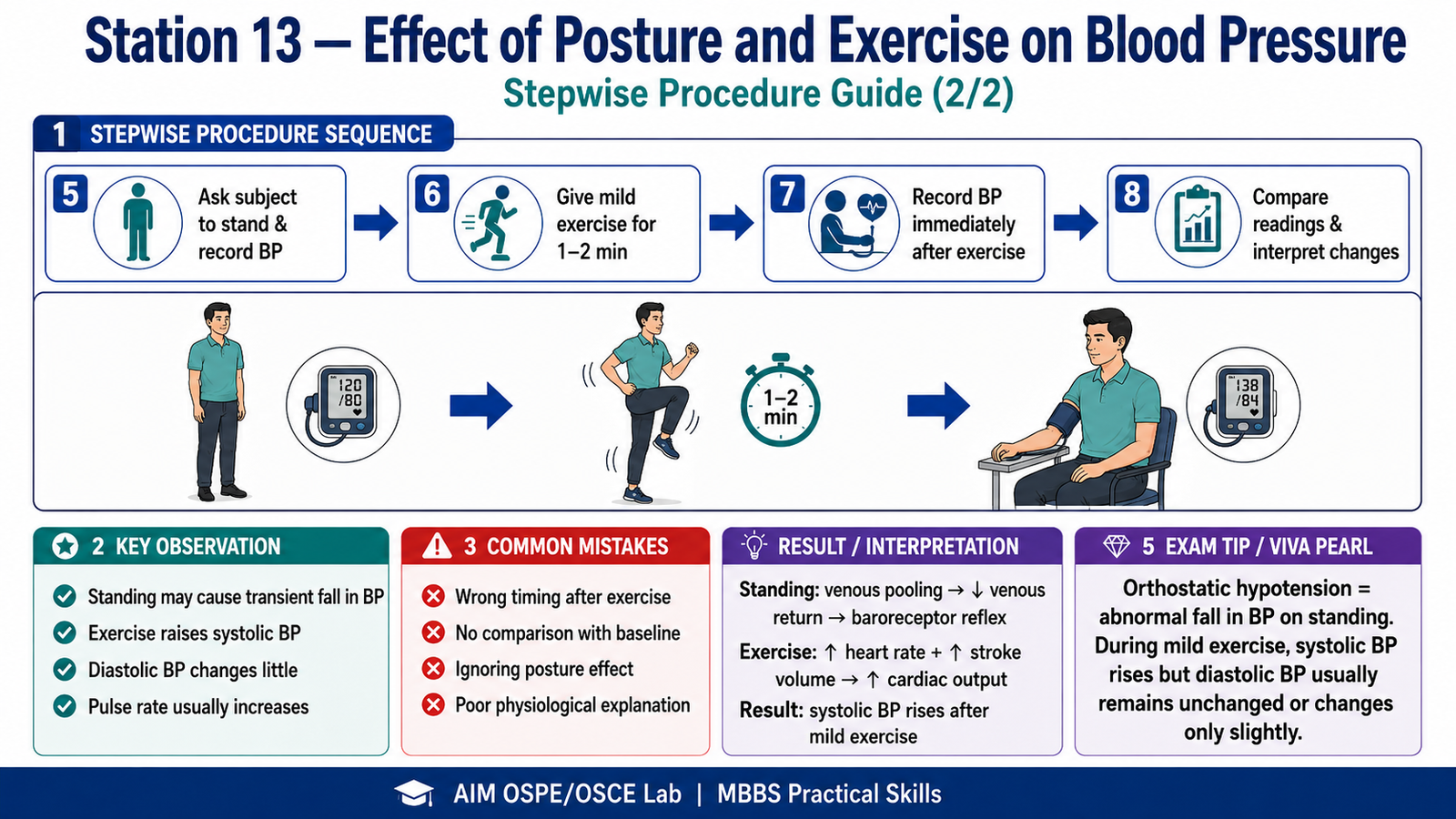
- Ask the subject to stand and record BP after standing.
- Ask the subject to perform mild exercise, such as stepping or spot jogging for 1–2 minutes.
- Record BP immediately after exercise.
- Compare the readings before and after posture change or exercise.
- Interpret the physiological reason for the change.
Observation / Identification Points
- Correct cuff placement on upper arm
- Arm kept at heart level
- Korotkoff sounds identified correctly
- Systolic and diastolic BP recorded accurately
- BP compared before and after posture change
- BP compared before and after exercise
- Student relates BP changes to venous return, cardiac output, and autonomic reflexes
Result / Interpretation
Effect of posture:
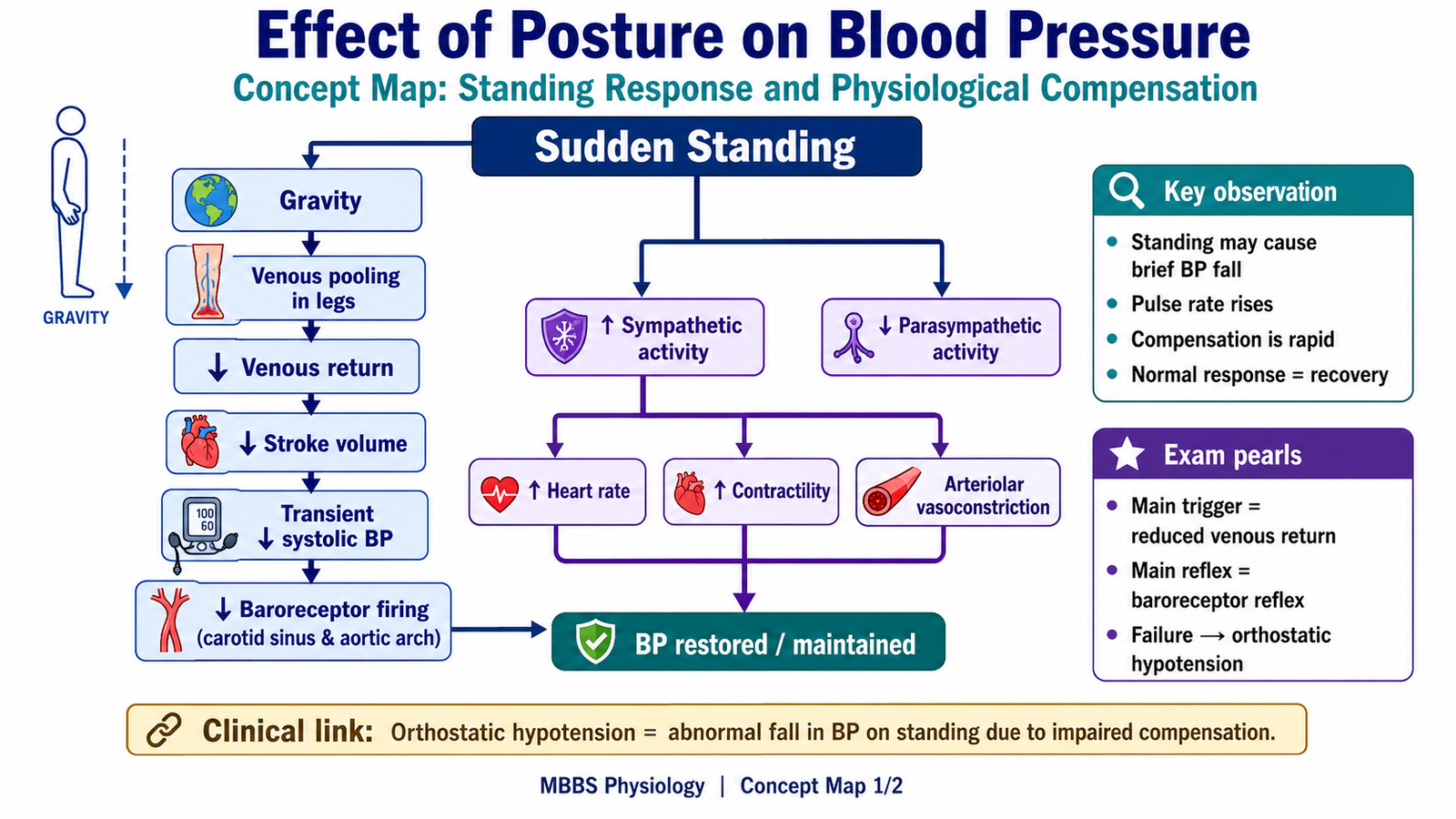
On standing, venous pooling occurs in the lower limbs. This may cause a temporary fall in venous return and systolic blood pressure. The baroreceptor reflex increases sympathetic activity, causing increased heart rate and peripheral vasoconstriction to maintain BP.
Effect of exercise:
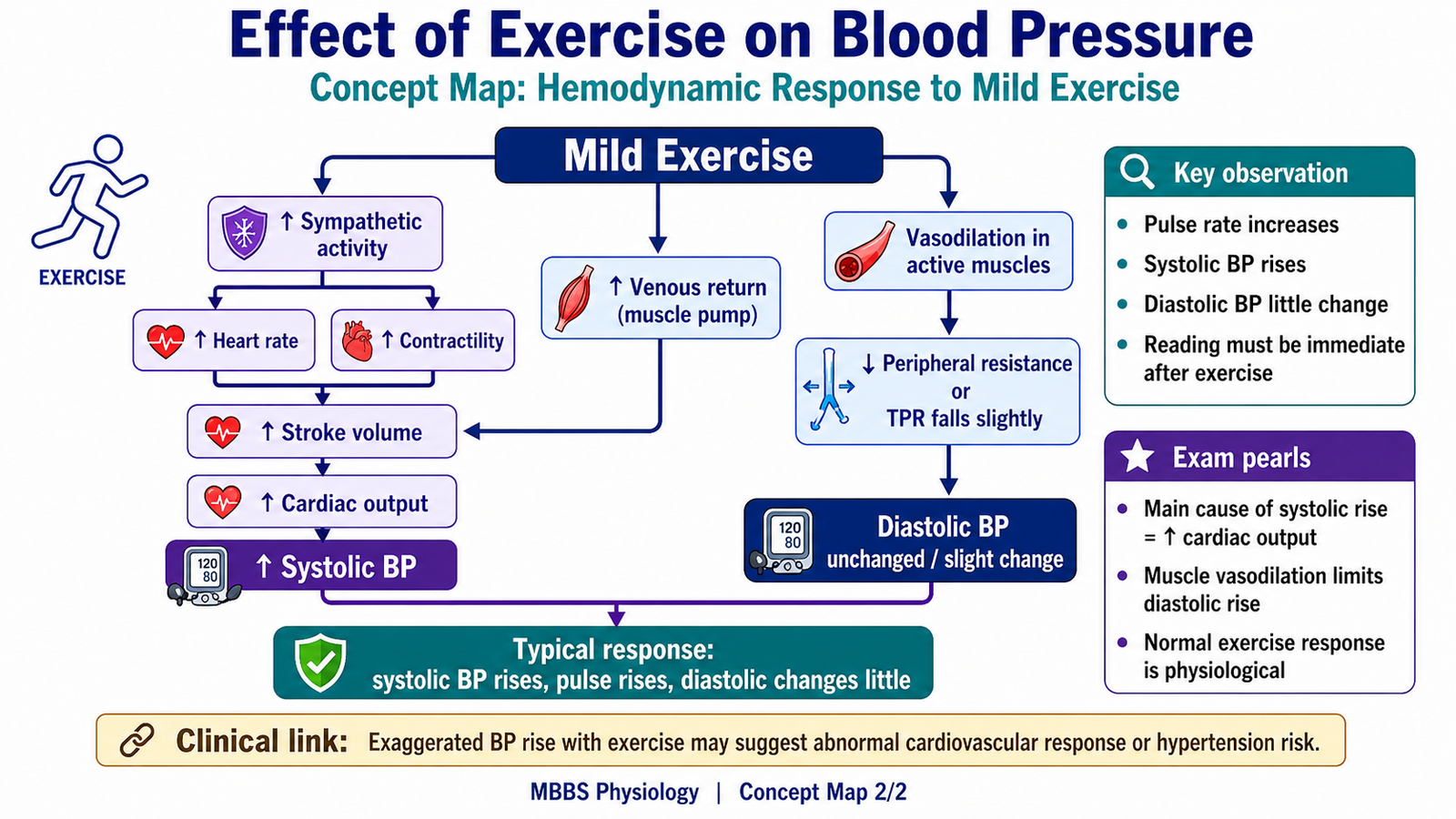
After mild exercise, systolic blood pressure usually increases because cardiac output increases. Diastolic blood pressure remains unchanged or may change only slightly because peripheral vasodilation occurs in exercising muscles.
Clinical significance:
Failure to maintain BP on standing may suggest orthostatic hypotension.
Viva Questions
Q1. What happens to venous return when a person stands suddenly?
A: Venous return decreases due to pooling of blood in the lower limbs.
Q2. Which reflex helps maintain blood pressure after standing?
A: Baroreceptor reflex.
Q3. Why does systolic BP increase after exercise?
A: Because cardiac output increases due to increased heart rate and stroke volume.
Q4. What happens to diastolic BP during mild exercise?
A: It usually remains unchanged or changes slightly because of vasodilation in skeletal muscles.
Q5. What is orthostatic hypotension?
A: A significant fall in blood pressure on standing, usually due to failure of normal compensatory reflexes.
Marking Scheme
Total Marks: 5
| Component | Marks |
|---|---|
| Correct identification / performance | 2 |
| Key observation / procedure steps | 1 |
| Interpretation / principle | 1 |
| Viva answer | 1 |
Common Student Mistakes
- Measuring BP without allowing rest before baseline reading
- Keeping the arm below or above heart level
- Confusing systolic and diastolic Korotkoff sounds
- Not interpreting the effect of posture using venous return and baroreceptor reflex
- Assuming both systolic and diastolic BP must rise equally after exercise
AIM Feedback
Your main goal is not only to record blood pressure, but to explain why it changes.
After standing, think of venous pooling → reduced venous return → baroreceptor reflex.
After exercise, think of increased sympathetic activity → increased cardiac output → rise in systolic BP.
Always connect the observation with the physiological principle.
🖼️ Visual / Image Support
🧩 Concept Map / Interpretation Support
🎥 Video Demonstration / Procedure Support