
2. Core Learning Material
Immunization, Vaccination and Pakistan’s Expanded Programme on Immunization
A. Immunization, Vaccination and Immunizing Agents
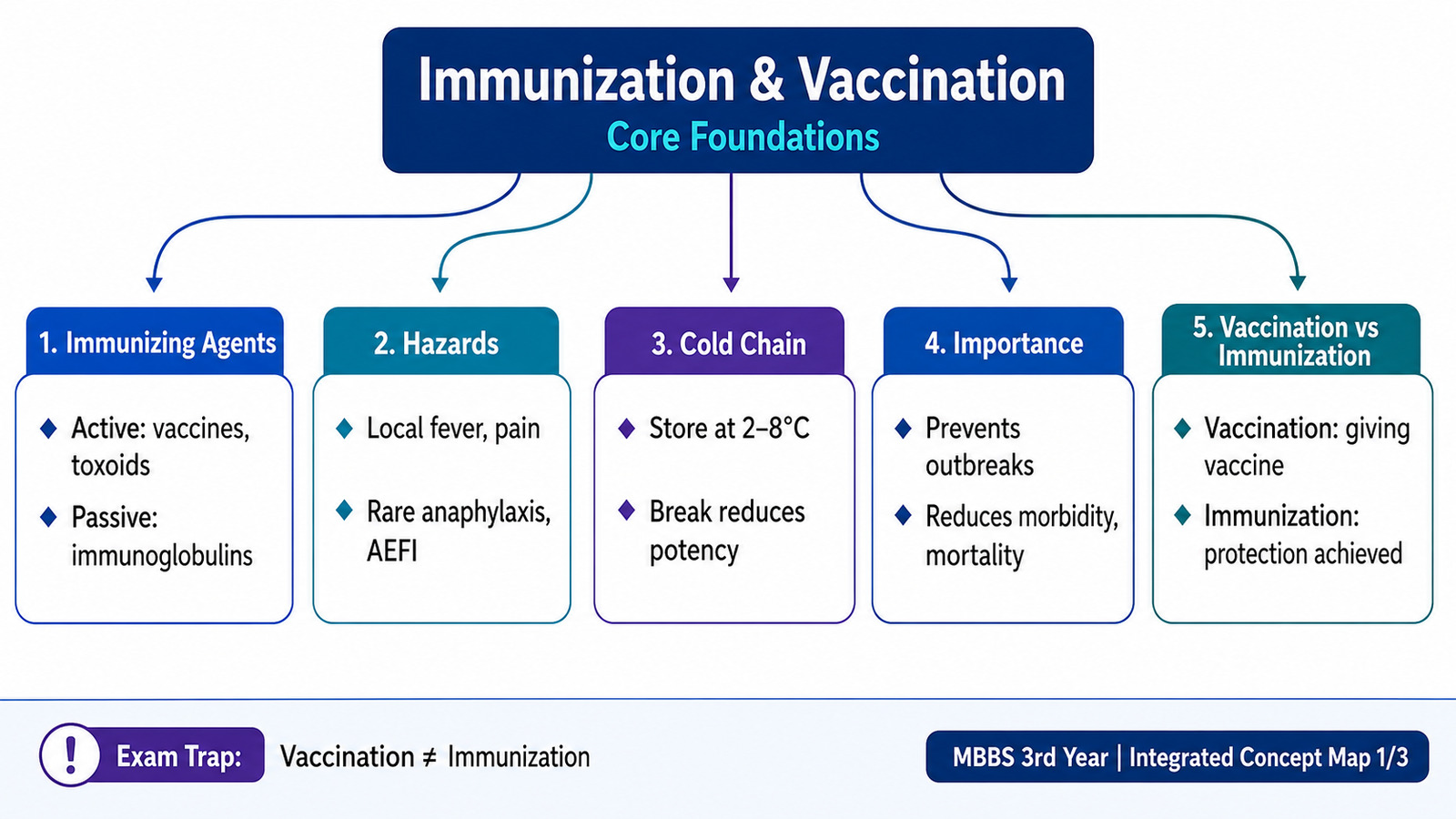
Immunization is the process by which a person becomes protected against an infectious disease through the development or provision of specific immunity. This protection may be produced by giving a vaccine, or it may be provided directly by administering ready-made antibodies. Vaccination, therefore, is one method of producing immunization, but the two terms are not exactly identical.
The substances used to produce protection are called immunizing agents. They can be divided broadly into agents that stimulate the person’s own immune system and agents that provide antibodies produced elsewhere. This distinction gives rise to active immunization and passive immunization.
Active immunization
In active immunization, an antigen is introduced into the body, usually in the form of a vaccine. The immune system recognizes this antigen and develops a specific immune response. B lymphocytes produce antibodies, while other immune cells contribute to cellular immunity where appropriate. Importantly, memory cells are formed. If the person later encounters the actual infectious agent, the immune system responds more rapidly and effectively.
Important characteristics of active immunization include:
- Protection usually develops after the immune system has had time to respond.
- Immunity is generally longer lasting than passive immunity.
- Some vaccines require more than one dose to establish adequate protection.
- Some vaccines require later booster doses to maintain or strengthen immunity.
- Immunological memory is an important feature.
Passive immunization
In passive immunization, preformed antibodies are given to the individual. Because the antibodies are already available, protection begins rapidly. However, the recipient’s immune system has not produced these antibodies itself and significant immunological memory is not generated. Protection therefore decreases as the administered antibodies are removed from the circulation.
Important passive immunizing agents include:
- Human normal immunoglobulin, which contains antibodies obtained from pooled human plasma.
- Specific or hyperimmune immunoglobulins, which contain high concentrations of antibody against a particular infection or toxin.
- Antisera or antitoxins, used in selected situations to provide immediate antibody-mediated protection.
Passive immunization is especially useful when protection is required immediately and there is not enough time for active immunity to develop. In some exposure situations, active and passive immunization may both be used because they serve different purposes: passive antibodies provide immediate protection, while vaccination develops longer-term active immunity.
Vaccination versus immunization
These terms are often used together, but the distinction is examination-important. Vaccination describes administration of a vaccine, whereas immunization describes the process of becoming protected. Immunization can therefore result from vaccination or from passive administration of antibodies.
| Feature | Vaccination | Immunization |
|---|---|---|
| Meaning | Administration of a vaccine | Process of acquiring specific protection |
| Usual mechanism | Stimulates active immunity | May be active or passive |
| Agents | Vaccines | Vaccines or antibody-containing preparations |
| Key idea | An intervention is given | Protective immunity is produced or provided |

B. Principles, Types and Public-Health Importance of Vaccination
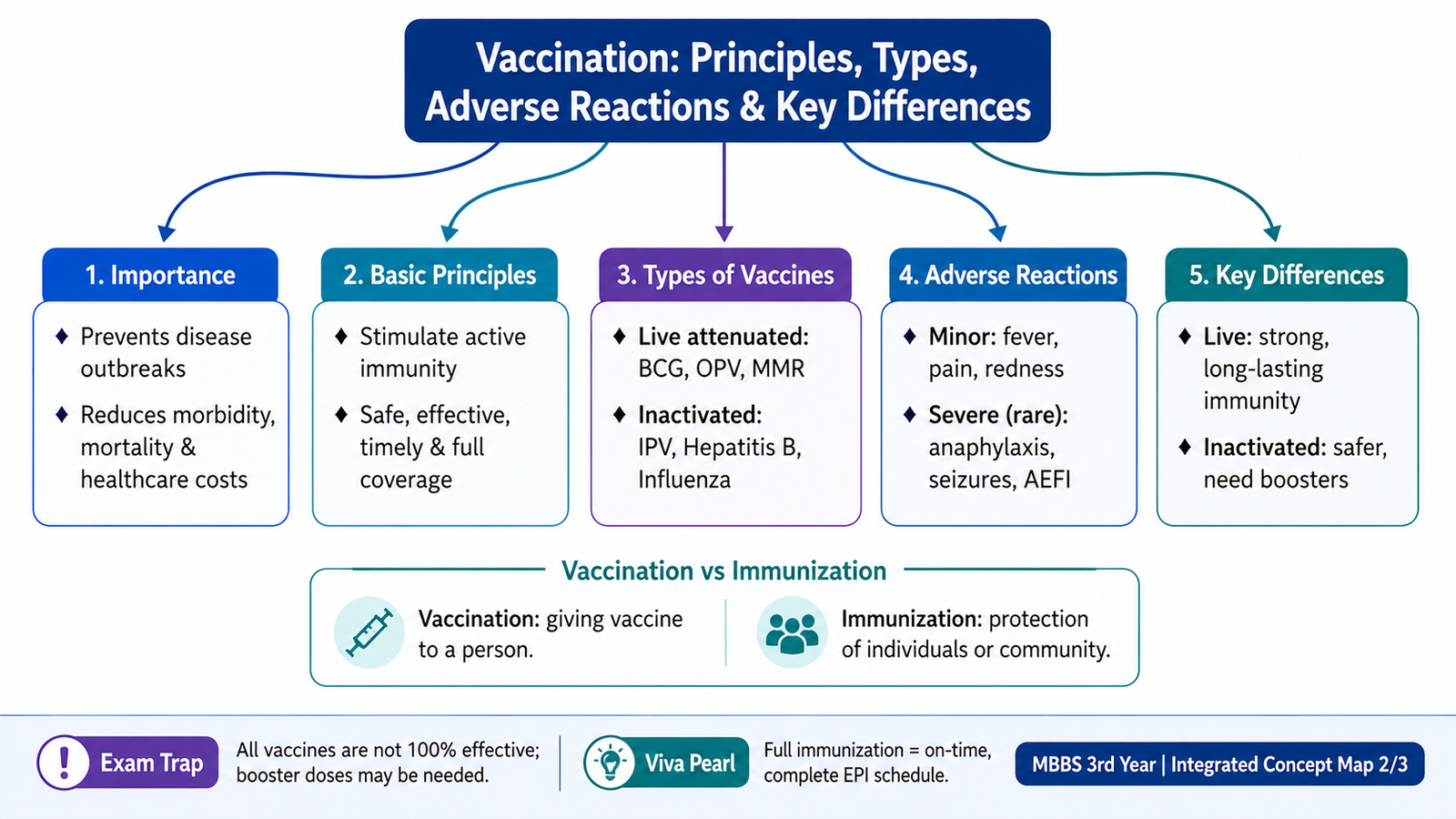
Vaccination exposes the immune system to an antigen in a form that produces protective immunity without causing the full natural disease. The central idea is to create immune memory before dangerous exposure occurs. When the real organism is encountered later, the immune response can act more rapidly and reduce the risk of infection, severe disease, complications or death, depending on the vaccine.
Basic principles of vaccination
An effective vaccination programme depends not only on having an effective vaccine but also on administering it correctly, at the appropriate time, and maintaining its potency until it reaches the recipient.
- Vaccinate before significant exposure: protection is most useful when immunity has developed before the person encounters the infection.
- Follow the recommended schedule: timing and spacing of doses are designed to produce an adequate immune response.
- Complete the required series: one dose is not sufficient for every vaccine.
- Use boosters where required: a booster re-stimulates immune memory and strengthens or prolongs protection.
- Maintain vaccine potency: vaccines that are damaged by incorrect storage may fail to produce the expected immunity.
- Achieve high population coverage: infectious-disease control requires protection of individuals and reduction of the number of susceptible persons in the community.
- Use safe administration practices: correct handling and administration reduce preventable immunization-related harm.
Major types of vaccines
Vaccines can be classified according to the form in which the antigen is presented to the immune system. Different types produce immunity in different ways, which explains differences in the strength and duration of response, number of doses required and adverse-effect profile.
- Live attenuated vaccines: contain living organisms that have been weakened so that they can replicate to a limited extent without producing normal disease in an immunocompetent recipient. Examples include BCG, oral polio vaccine (OPV), measles-rubella vaccine, MMR and varicella vaccine.
- Inactivated or killed vaccines: contain organisms that have been killed and cannot replicate. Examples include inactivated polio vaccine (IPV), rabies vaccine, hepatitis A vaccine and inactivated influenza vaccine.
- Toxoid vaccines: contain bacterial toxins that have been rendered non-toxic while retaining their antigenicity. The immune response is therefore directed against the toxin. Important examples are tetanus and diphtheria toxoids.
- Subunit or recombinant vaccines: contain selected antigenic components rather than the whole organism. Examples include hepatitis B vaccine and human papillomavirus vaccine.
- Conjugate vaccines: contain a poorly immunogenic polysaccharide antigen linked to a protein carrier. This improves the immune response, particularly in young children. Examples include Haemophilus influenzae type b vaccine, pneumococcal conjugate vaccine and typhoid conjugate vaccine.
Live attenuated versus inactivated vaccines
The most important difference is that a live attenuated organism can undergo limited replication, whereas an inactivated organism cannot. Limited replication often produces an immune response that resembles natural infection more closely. Inactivated vaccines are incapable of causing infection by replication but often require repeated doses or boosters to maintain adequate protection.
| Feature | Live attenuated vaccine | Inactivated vaccine |
|---|---|---|
| Organism | Living but weakened | Killed or inactivated |
| Replication | Limited replication occurs | Cannot replicate |
| Immune response | Often strong and similar to natural infection | Usually less similar to natural infection |
| Doses | Often fewer doses are sufficient | Repeated doses or boosters are commonly required |
| Use in severe immunodeficiency | Generally avoided because the organism can replicate | Cannot cause infection through replication |
| Examples | BCG, OPV, MR/MMR | IPV, rabies, hepatitis A |
Why vaccination controls infectious diseases
Vaccination has both an individual effect and a population effect. A vaccinated individual is less likely to develop the disease against which effective protection has been produced. When a sufficiently large proportion of a community is immune to an infection that spreads from person to person, the organism finds fewer susceptible hosts, so transmission becomes more difficult.
This indirect reduction in transmission is often described as community or herd protection. It can also reduce the chance that susceptible people who cannot be effectively vaccinated will encounter an infected person. However, herd protection is relevant mainly to infections transmitted between people. It does not apply in the same way to diseases such as tetanus, because tetanus is acquired from environmental spores rather than through person-to-person transmission.
When effective vaccines are combined with high and sustained coverage, surveillance and appropriate public-health action, vaccination can markedly reduce disease incidence, interrupt transmission, contribute to elimination of selected infections and, in exceptional circumstances, support eradication.

C. Hazards and Adverse Reactions Associated with Immunization
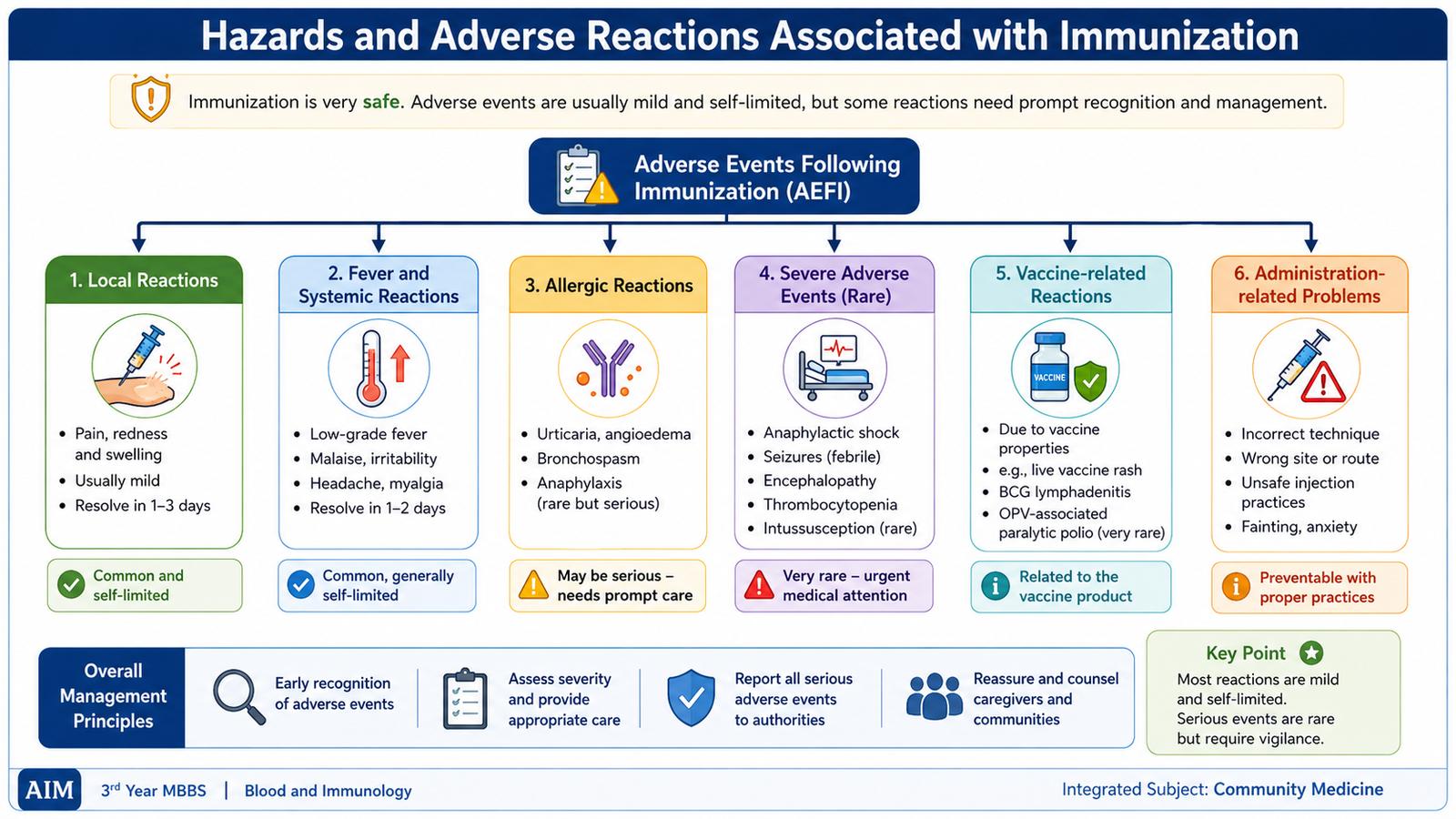
Vaccines are given to healthy people, so safety is an essential part of every immunization programme. Most reactions after vaccination are mild and temporary, such as pain at the injection site or a short period of fever. Serious reactions are much less common. An important public-health principle is that an event occurring after vaccination is not automatically caused by the vaccine.
The term Adverse Event Following Immunization (AEFI) refers to any medical event that occurs after immunization and causes concern. Its timing creates a possible association, but investigation may show that the event was caused by the vaccine, an error in the immunization process, anxiety related to vaccination, or an unrelated illness that happened coincidentally.
Main categories of hazards
- Vaccine product-related reactions: these result from properties of the vaccine itself when it has been correctly manufactured, stored and administered. Examples include local pain, swelling or fever.
- Vaccine quality-related problems: these may occur if there is a defect affecting the vaccine or its delivery device.
- Immunization error-related reactions: these are preventable events caused by incorrect storage, preparation or administration. Examples include contamination, incorrect reconstitution or inappropriate injection technique.
- Immunization anxiety-related reactions: fear of injection or the vaccination process may produce symptoms such as fainting, hyperventilation or stress-related responses.
- Coincidental events: an illness may begin after vaccination but be unrelated to it. This is especially important in infants and young children, who commonly develop infections and other illnesses during the same age period in which several vaccines are given.
Common and important vaccine-associated reactions
The expected adverse-effect pattern depends on the vaccine. Students should distinguish a common mild response from an unusual or serious event requiring assessment.
- BCG: a local reaction followed by a small scar is expected. Regional lymph-node enlargement may occur, while serious disseminated BCG infection is very rare and is mainly a concern in severe immunodeficiency.
- Pertussis-containing vaccines such as pentavalent vaccine: pain, swelling, irritability and fever may occur after administration.
- Measles-rubella-containing vaccine: fever or a mild rash may occur several days after vaccination because an immune response to the live attenuated viruses is developing.
- Oral polio vaccine: it is generally well tolerated, but vaccine-associated paralytic poliomyelitis is a very rare recognized complication because OPV contains live attenuated poliovirus.
- Injectable vaccines: transient pain, redness and swelling at the injection site are common because the injection and local immune response produce inflammation.
- Severe allergic reaction: anaphylaxis is a rare but potentially life-threatening reaction that can occur after a vaccine or one of its components and requires immediate recognition and treatment.
Why safe immunization practice matters
A safe vaccination programme therefore requires more than a safe vaccine. Correct storage preserves potency, correct preparation prevents contamination or administration errors, trained staff recognize contraindications and serious reactions, and an AEFI surveillance system allows important events to be reported, investigated and interpreted appropriately. Maintaining public confidence depends on responding to genuine safety concerns without incorrectly attributing every illness after vaccination to the vaccine itself.
D. Cold Chain and Preservation of Vaccine Potency
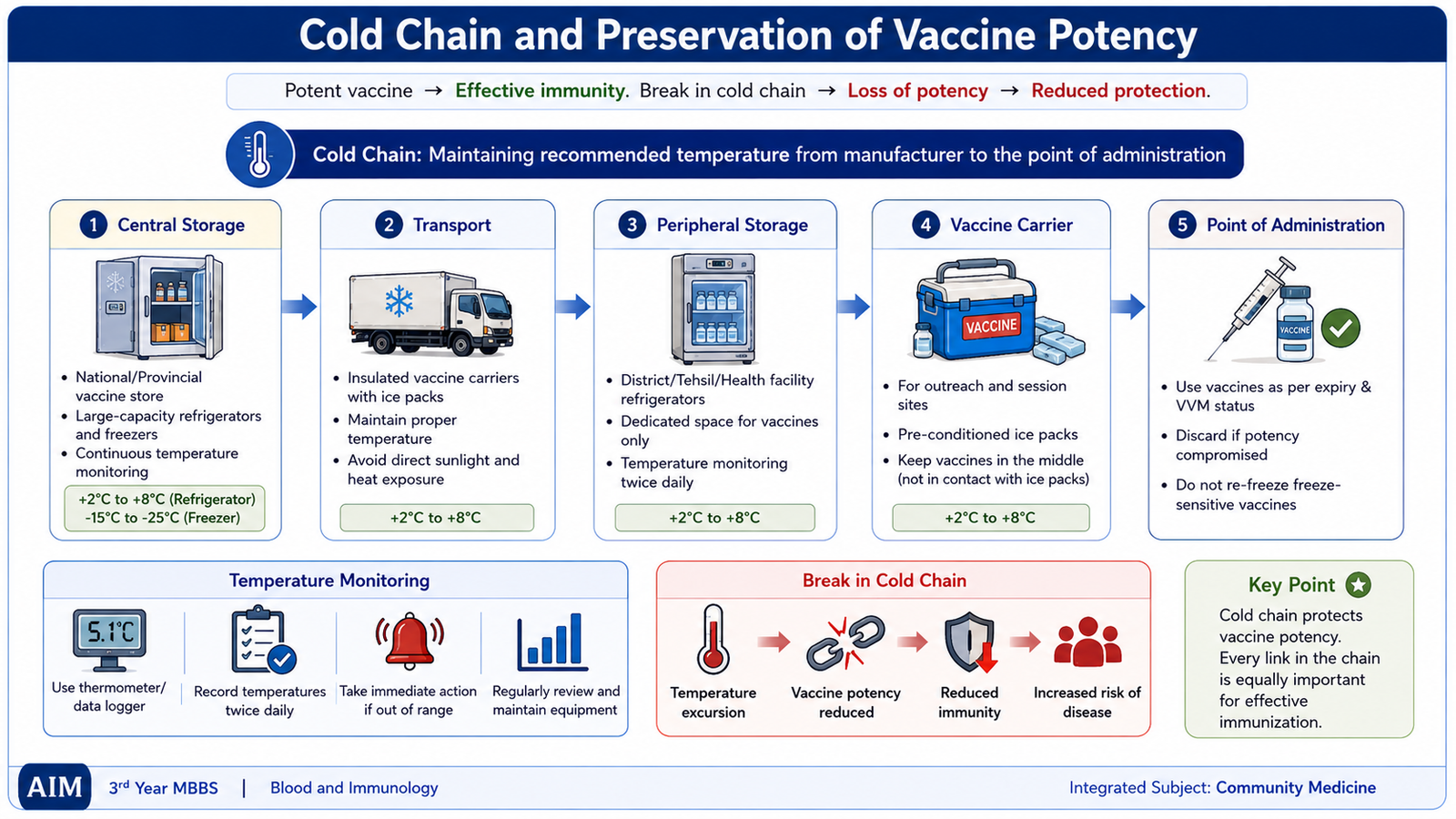
Vaccines are biological products whose effectiveness can be reduced by inappropriate temperature exposure. The cold chain is the system used to store, transport and handle vaccines under the temperature conditions required to preserve their potency from the time they are supplied until they are administered to the recipient. A cold chain is therefore not simply a refrigerator; it is a continuous system involving equipment, trained personnel, transport procedures and temperature monitoring.
Most routine vaccines are stored and transported under the traditional cold-chain range of approximately +2°C to +8°C. The exact storage requirement of the individual vaccine must always be respected. Pakistan’s immunization policy also requires appropriate cold-chain maintenance and temperature monitoring for vaccine storage and transport. :contentReference[oaicite:2]{index=2}
Components of the cold chain
A functioning cold chain depends on several connected components. Failure at any one stage can affect the quality of vaccines delivered later in the chain.
- Cold rooms and vaccine refrigerators for storage at central, regional and health-facility levels.
- Cold boxes for transport or temporary storage of larger quantities of vaccine.
- Vaccine carriers for carrying smaller quantities to vaccination sessions and outreach sites.
- Cool packs or appropriately prepared water packs to maintain the required temperature during transport.
- Temperature-monitoring devices to detect exposure outside the required storage conditions.
- Vaccine vial monitors where provided, which help indicate cumulative heat exposure.
- Trained staff and standard handling procedures to ensure that equipment is used correctly.
Pakistan’s national immunization policy specifically emphasizes the use of appropriate vaccine carriers or cold boxes with cool packs during transport and functional temperature-monitoring devices in cold-chain equipment. :contentReference[oaicite:3]{index=3}
Heat, freezing and light damage
Vaccines do not all respond to environmental conditions in the same way. Some are particularly sensitive to heat, while others can be damaged by freezing. Some vaccines are also sensitive to light. This is why merely making a vaccine “as cold as possible” is unsafe; the objective is to keep each vaccine within its recommended conditions.
- Heat exposure can progressively reduce the potency of heat-sensitive vaccines.
- Freezing can damage several freeze-sensitive vaccines, particularly adsorbed vaccines containing aluminium-based adjuvants.
- Light exposure can damage certain vaccines and must be avoided when relevant.
- Reconstituted vaccines require especially careful handling because their stability after reconstitution is limited.
Why a cold-chain break is important
If a vaccine loses potency because of damaging temperature exposure, simply returning it to the refrigerator does not restore the lost potency. A child may then receive a vaccine that appears normal but produces inadequate protection. Cold-chain failure may therefore lead to vaccination failure, accumulation of susceptible individuals and continued transmission of vaccine-preventable disease.
Maintaining an effective cold chain is especially important in outreach services and remote communities, where vaccines must remain protected during transport away from fixed health facilities. Vaccine carriers and cold boxes therefore allow routine immunization to reach populations that would otherwise have difficulty accessing vaccination services. :contentReference[oaicite:4]{index=4}
E. Pakistan’s Expanded Programme on Immunization: Schedule, Community Strategies and Programme Performance
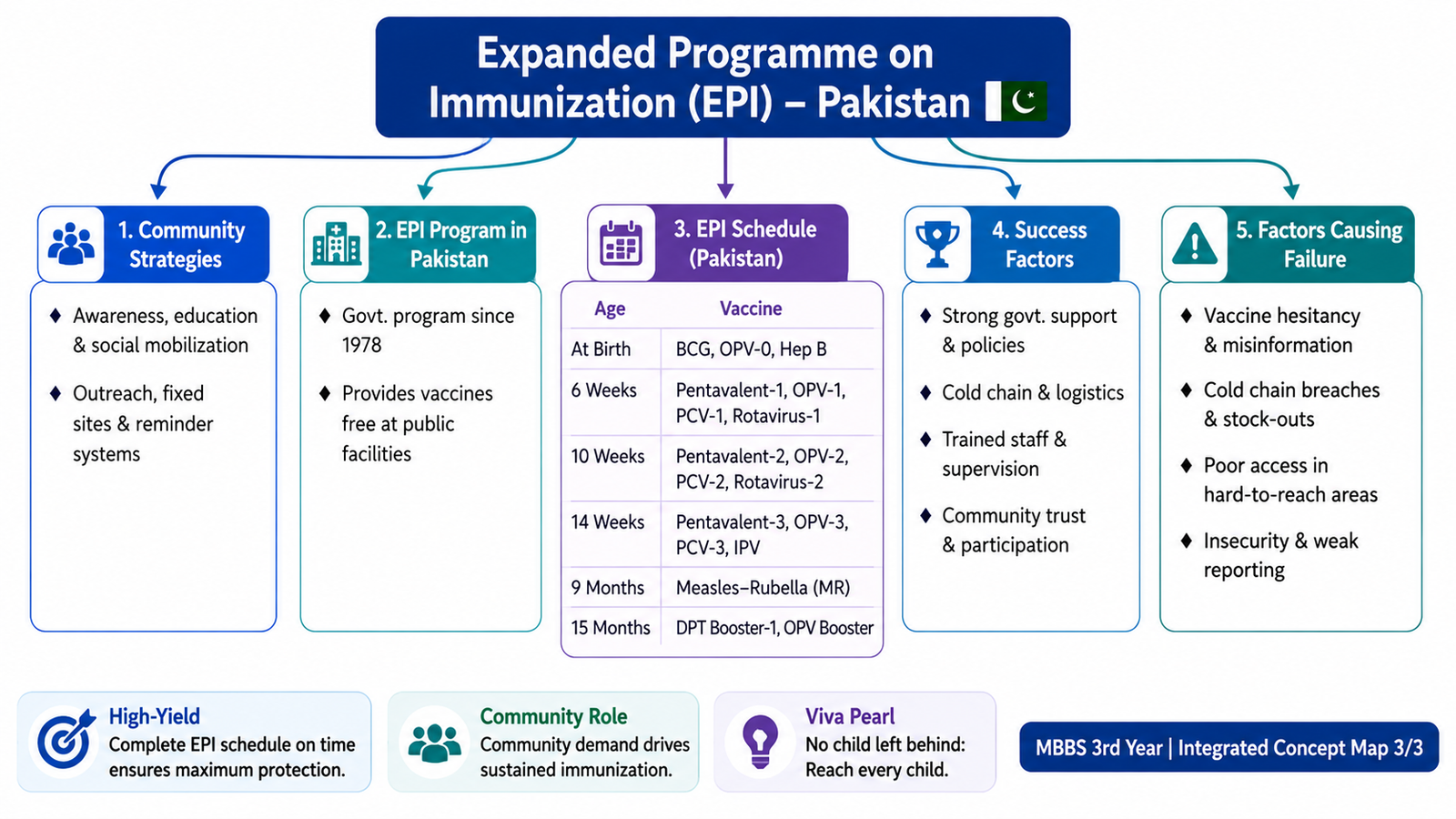
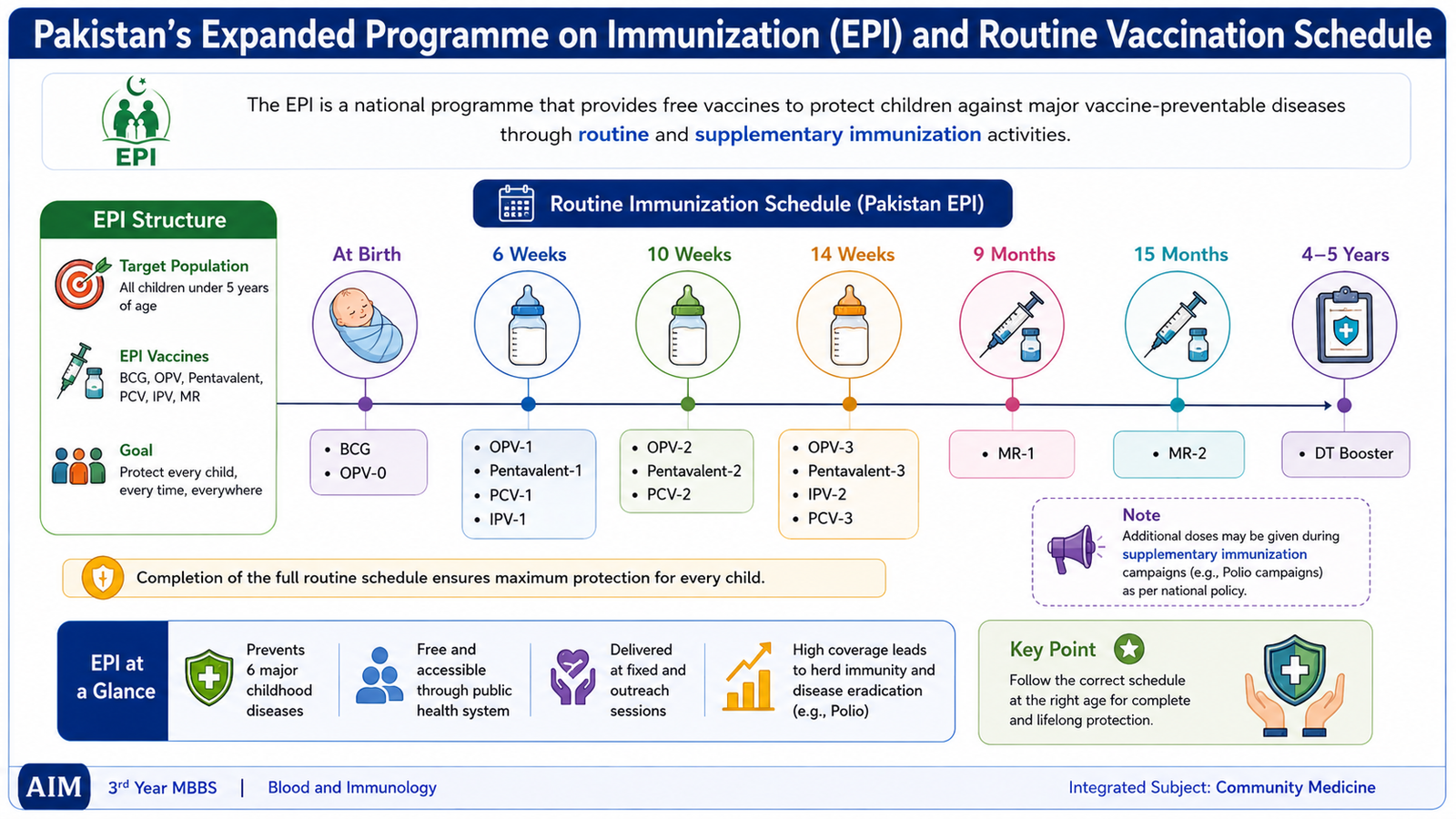
Pakistan’s Expanded Programme on Immunization (EPI), currently administered federally through the Federal Directorate of Immunization and through provincial immunization programmes, provides routine vaccination against important vaccine-preventable diseases. The current federal programme describes routine protection of children from birth through 15 months against 12 vaccine-preventable diseases and also includes immunization of pregnant women. :contentReference[oaicite:5]{index=5}
The diseases included in the childhood programme are:
- Childhood tuberculosis
- Poliomyelitis
- Diphtheria
- Pertussis
- Tetanus
- Hepatitis B
- Haemophilus influenzae type b meningitis
- Pneumococcal disease
- Rotavirus diarrhoea
- Measles
- Rubella
- Typhoid
Routine childhood EPI schedule in Pakistan
The schedule is organized around a small number of age-linked vaccination contacts. This arrangement allows several compatible vaccines to be administered during the same visit, reducing missed opportunities and making completion of the programme easier for families.
| Routine contact | Age | Vaccines | Main protection |
|---|---|---|---|
| 1st visit | At birth | BCG, OPV-0, Hepatitis B | Tuberculosis, polio, hepatitis B |
| 2nd visit | 6 weeks | OPV-1, Rotavirus-1, PCV-1, Pentavalent-1 | Polio, rotavirus diarrhoea, pneumococcal disease, diphtheria, pertussis, tetanus, hepatitis B and Hib disease |
| 3rd visit | 10 weeks | OPV-2, Rotavirus-2, PCV-2, Pentavalent-2 | Continuation of the primary vaccine series |
| 4th visit | 14 weeks | OPV-3, IPV-1, PCV-3, Pentavalent-3 | Completion of major infant primary series and additional polio protection |
| 5th visit | 9 months | MR-1, TCV, IPV-2 | Measles, rubella, typhoid and additional polio protection |
| 6th visit | 15 months | MR-2 | Second measles-rubella dose |
The six-contact structure through 15 months is confirmed by Pakistan’s current immunization programme. Current programme material also identifies TCV, MR and a second IPV dose at the 9-month contact, with MR-2 at 15 months. :contentReference[oaicite:6]{index=6}
Pregnant women are also part of Pakistan’s immunization programme for prevention of maternal and neonatal tetanus. The tetanus-containing vaccine required for an individual woman depends on her previous documented vaccination and the applicable programme schedule; therefore, immunization history must be considered rather than assuming that every pregnancy begins a completely new series. The Federal Directorate of Immunization identifies pregnant women as part of the programme’s target population. :contentReference[oaicite:7]{index=7}
Community-based strategies for promoting vaccination
A vaccine can prevent disease only if it reaches the people who need it. Community-based vaccination therefore aims to reduce practical barriers, create trust, identify missed children and make vaccination services available close to where families live.
- Fixed-site services: regular vaccination at government health facilities provides a dependable point for routine immunization.
- Outreach sessions: vaccinators travel from health facilities to communities where families have difficulty reaching a fixed EPI centre.
- Mobile services: mobile teams can reach remote, nomadic, migrant, underserved or otherwise difficult-to-access populations.
- Community engagement: trusted community members, local leaders, health workers and other community networks can explain the purpose of vaccination and address misconceptions.
- Health education: parents should understand which diseases vaccines prevent, when the next dose is due and why completion of the full schedule matters.
- Defaulter tracing and reminders: children who begin but do not complete vaccination should be identified and linked back to services.
- Microplanning: vaccination teams identify target populations, settlements, service points and hard-to-reach groups so that underserved areas are not repeatedly missed.
- Supplementary vaccination activities when required: campaigns may be used for selected diseases or outbreak-control objectives, but they complement rather than replace a strong routine immunization system.
Pakistan’s immunization programme specifically identifies social mobilization, equitable coverage, improved surveillance, staff capacity and stronger community demand as important programme priorities. :contentReference[oaicite:8]{index=8}
Factors responsible for success of vaccination programmes
Successful vaccination programmes depend on both the health system and the community. High-quality vaccines alone cannot achieve disease control if families cannot access them or if doses are repeatedly missed.
- Adequate and uninterrupted vaccine supply.
- Reliable cold-chain and logistics systems.
- Trained and adequately supported vaccinators.
- Accessible fixed, outreach and mobile vaccination services.
- High community awareness and trust.
- Clear communication about vaccine benefits and adverse events.
- Timely completion of the vaccination schedule.
- Identification and follow-up of zero-dose and partially vaccinated children.
- Accurate recording, reporting and monitoring of coverage.
- Surveillance for vaccine-preventable diseases and AEFI.
- Supportive supervision, programme review and sustained administrative commitment.
Factors responsible for failure or poor performance
Vaccination programmes perform poorly when children remain outside the health system, when families start but do not complete the schedule, or when service quality becomes unreliable. Many of these problems are interconnected.
- Poor geographical access to vaccination centres or outreach services.
- Missed or zero-dose children, particularly in underserved communities.
- Dropout between doses because families are not reminded or followed up.
- Vaccine hesitancy, misinformation or lack of trust.
- Weak communication about schedules, expected reactions and the benefits of completing vaccination.
- Stock-outs or supply interruptions.
- Cold-chain failures that threaten vaccine potency.
- Shortage, inadequate training or poor distribution of vaccination staff.
- Weak recording and inaccurate coverage data, making missed populations difficult to identify.
- Inadequate disease surveillance and programme monitoring.
- Social, geographic or security barriers that prevent vaccination teams from consistently reaching some populations.
The goal of EPI is therefore broader than simply supplying vaccine. An effective programme must ensure that the right vaccine reaches the right target population at the right time, remains potent, is administered safely, is accepted by the community and is followed by completion of the required schedule. These elements together convert vaccine availability into actual population protection.
F. Community-Based Vaccination Strategies and Factors Affecting Programme Success
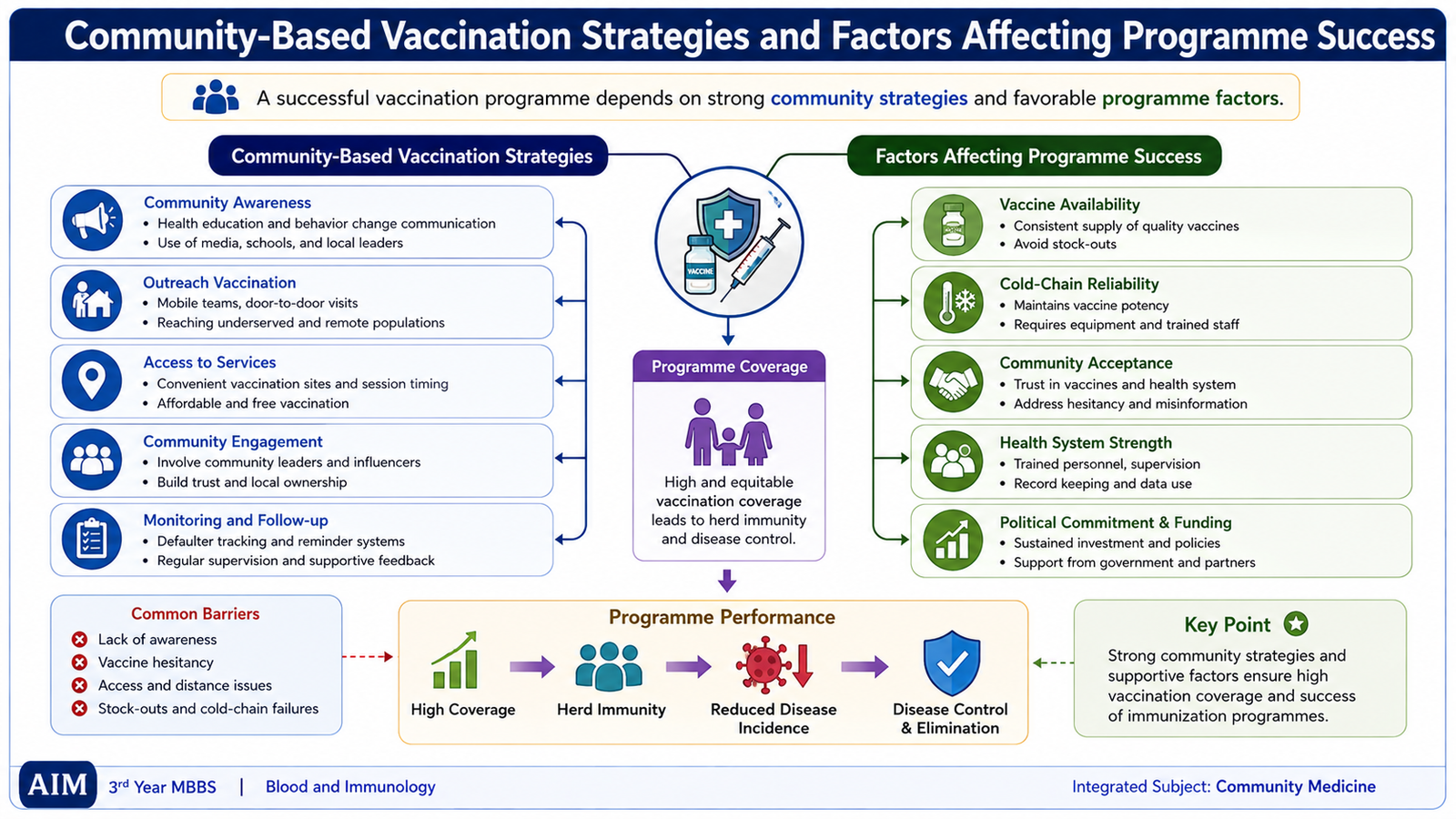
A vaccination programme can control infectious disease only when vaccines actually reach the target population and people complete the recommended schedule. For this reason, community-based vaccination is not limited to giving injections at health facilities. It also involves identifying unvaccinated children, improving access to services, educating families, building community trust and following individuals who miss scheduled doses.
The success of a vaccination programme therefore depends on two closely connected sides: the health system must provide reliable vaccination services, and the community must be able and willing to use those services. Failure on either side can leave groups of susceptible people in the population and allow vaccine-preventable diseases to continue circulating.
Community-Based Strategies for Promoting Vaccination
Community strategies are designed to bring vaccination closer to families, reduce missed opportunities and increase acceptance. Different approaches may be combined according to local population needs.
-
- Fixed-site vaccination services: routine vaccination at health facilities provides families with a regular and predictable place to receive scheduled vaccines.
“`
-
- Outreach vaccination: vaccination teams travel from health facilities to communities where distance or transport difficulties limit access to fixed centres.
- Mobile vaccination services: mobile teams help reach remote, migrant, nomadic or otherwise underserved populations.
- Community mobilization: health workers, community representatives and other trusted local individuals can encourage families to attend vaccination sessions and complete the schedule.
- Health education: parents and caregivers should understand which diseases vaccination prevents, when doses are due and why completion of the full schedule is important.
- Addressing vaccine hesitancy: clear and respectful communication can correct misinformation, explain expected minor adverse reactions and reduce unnecessary fear.
- Defaulter tracing: children who start vaccination but miss later doses should be identified and encouraged to return for completion.
- Identifying zero-dose children: special attention should be given to children who have not received routine vaccination because they often represent communities with poor access to health services.
- Reminder systems: vaccination cards, counselling and community follow-up help caregivers remember the next scheduled visit.
- Local microplanning: vaccination teams identify target populations, settlements and hard-to-reach areas so that services can be organized according to local needs.
“`
Factors Responsible for Success of Vaccination Programmes
Successful vaccination programmes require a continuous chain from vaccine supply to actual immunization of the population. Each part of this chain must function properly. For example, an effective vaccine provides little public-health benefit if it is unavailable, loses potency because of poor storage, or cannot be accessed by the community.
-
- Reliable vaccine supply: vaccines must remain available so that eligible individuals are not turned away because of stock shortages.
“`
-
- Effective cold chain: correct storage and transport preserve vaccine potency until administration.
- Trained vaccination staff: competent staff improve correct vaccine handling, administration, record keeping and communication with families.
- Accessible services: fixed centres, outreach activities and mobile services reduce geographical barriers.
- High community awareness: understanding the benefits of vaccination increases acceptance and timely attendance.
- Community trust: confidence in health workers and vaccination services improves uptake and reduces hesitancy.
- Completion of the vaccination schedule: receiving only the first dose of a multidose series may leave protection incomplete.
- Accurate records and monitoring: reliable data help health teams identify missed populations and assess programme performance.
- Disease surveillance: monitoring vaccine-preventable diseases helps detect continuing transmission or outbreaks.
- Supportive programme management: planning, supervision and regular review help identify weaknesses and improve service delivery.
“`
Factors Responsible for Failure of Vaccination Programmes
Vaccination programmes usually fail because of several interacting problems rather than one isolated cause. A weak supply system may combine with poor access, inadequate communication and missed follow-up. The final result is a population in which many children remain completely unvaccinated or receive only part of the recommended schedule.
-
- Poor geographical access: long distances, difficult terrain or lack of transport can prevent families from reaching vaccination services.
“`
-
- Vaccine stock-outs: unavailable vaccines create missed opportunities and may discourage families from returning.
- Cold-chain failure: inappropriate storage or transport can reduce vaccine potency and therefore reduce effective protection.
- Inadequate staffing or training: shortages or poor training can reduce service quality and coverage.
- Vaccine hesitancy and misinformation: incorrect beliefs about vaccination can reduce acceptance.
- Poor communication: caregivers may not know when the next dose is due or may mistake expected minor reactions for dangerous vaccine effects.
- Failure to trace missed children: children who miss one visit may remain incompletely vaccinated if no follow-up occurs.
- Weak record keeping: inaccurate data make it difficult to identify low-coverage communities and measure programme performance.
- Social and economic barriers: poverty, migration and competing family responsibilities may interfere with attendance.
- Security or access problems: disruption of health services can prevent vaccination teams from reaching some communities consistently.
“`
| Programme Area | Factor Supporting Success | Factor Leading to Failure |
|---|---|---|
| Vaccine supply | Continuous availability | Stock-outs |
| Cold chain | Reliable storage and transport | Temperature-control failure |
| Access | Fixed, outreach and mobile services | Geographical and social barriers |
| Community | Awareness and trust | Hesitancy and misinformation |
| Follow-up | Defaulter tracing and reminders | Dropout between doses |
| Monitoring | Accurate records and surveillance | Weak data and poor programme review |
“`
The overall aim of community vaccination is therefore to convert vaccine availability into actual population immunity. This requires potent vaccines, accessible services, trained health workers, informed communities, timely completion of scheduled doses and continuous monitoring. When these elements work together, vaccination coverage improves and the burden of vaccine-preventable disease falls.
🎥 AIM Video Learning
Use these short videos after completing the learning material to reinforce vaccine mechanisms, cold-chain principles and the public-health role of Pakistan’s Expanded Programme on Immunization.
How Do Vaccines Work?
A concise World Health Organization video explaining how vaccination activates the immune system and produces protection against infectious diseases.
What Is the Vaccine Cold Chain?
Explains why vaccines require controlled storage and transport conditions and how cold-chain failure can reduce vaccine potency.
Expanded Programme on Immunization — Pakistan
Official Federal Directorate of Immunization resource presenting the journey, public-health importance and development of Pakistan’s EPI programme.