
This chapter follows the supplied KMU learning outcomes in a logical sequence. First understand what each laboratory method, research principle and ethical duty means; then use the AIM High-Yield Review for examination revision.
Topic 11 — Forensic Laboratory Systems, Research Integrity, Medical Ethics and Confidentiality
Blood and Immunology
Topic Introduction
This topic brings together three areas of professional medical practice. The first is the forensic laboratory, where biological or chemical evidence is received, examined, analysed and reported using methods such as histopathology, extraction techniques, chromatography and spectroscopy. The second is research integrity, particularly clear academic writing and avoidance of plagiarism. The third is medical ethics, especially the four major ethical principles and the duty to protect patient privacy and confidentiality. The key idea is that reliable medical and forensic work depends not only on scientific techniques, but also on correct documentation, honest communication and responsible handling of information.
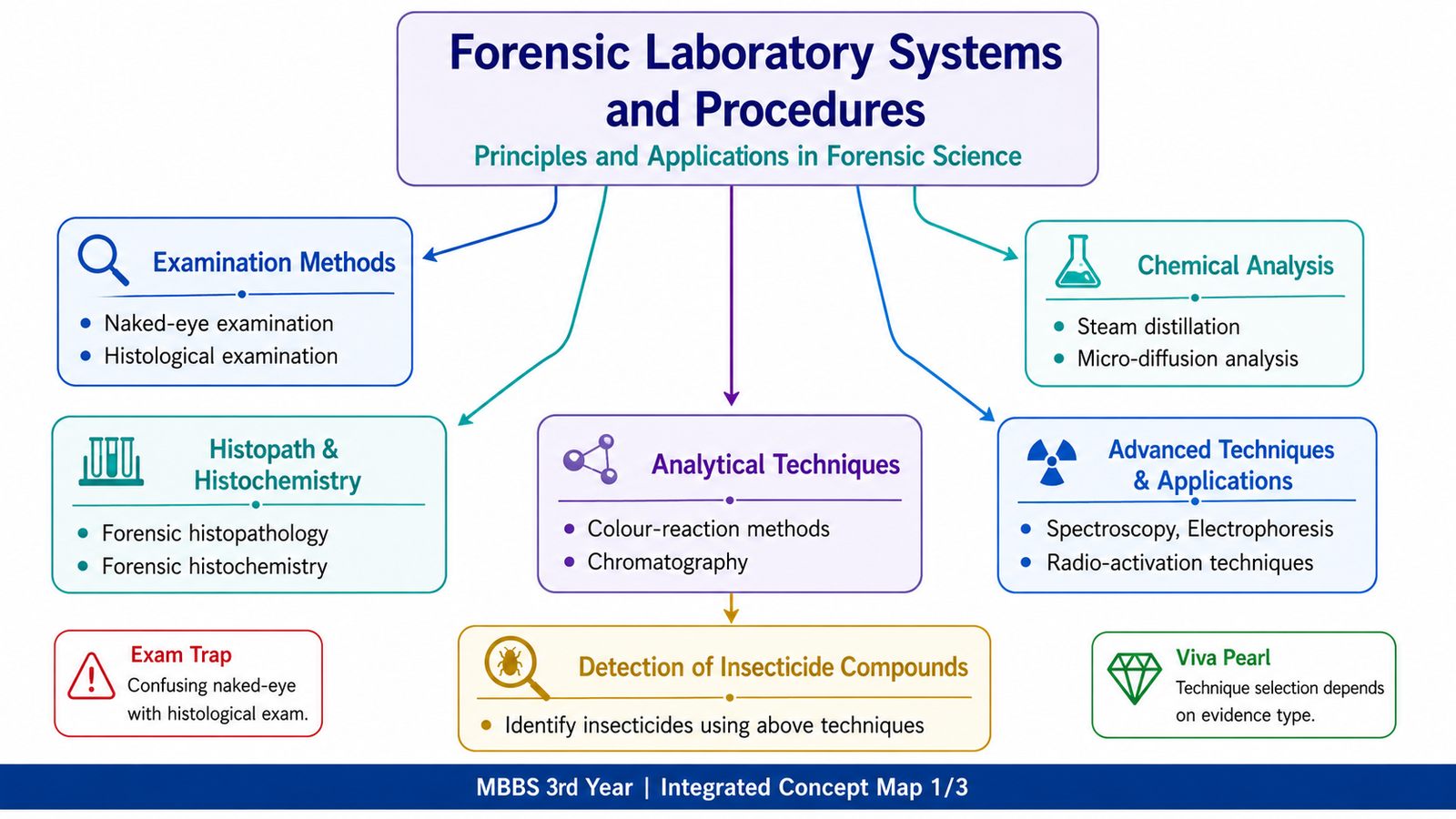
A. Forensic Laboratory Systems and Reliable Evidence Handling
A forensic laboratory is a specialized scientific service that examines material connected with legal investigation. Its purpose is not simply to perform a laboratory test. The laboratory must receive the material correctly, preserve its identity, choose an appropriate analytical method, document the work and communicate the findings in a form that can be interpreted responsibly.
Basic forensic laboratory system
Forensic laboratory work usually follows a controlled sequence. A specimen or item is received and identified, assigned a laboratory record or accession, examined and directed to the appropriate analytical section. The analytical findings are recorded, reviewed and finally issued in a report.
The identity of evidence must remain traceable throughout this sequence. This is the basis of chain of custody: documentation of who received, handled, transferred or examined an item. If the identity or continuity of evidence becomes uncertain, even an analytically correct result may have reduced medico-legal value.
Important components of a forensic laboratory system
- Specimen reception: receiving and identifying submitted material.
- Documentation: maintaining an accurate record of the material and examinations performed.
- Analytical sections: using appropriate laboratory techniques for different types of evidence.
- Quality assurance: procedures intended to maintain reliability and reduce analytical error.
- Interpretation: deciding what the laboratory finding supports and recognizing its limitations.
- Reporting: communicating findings clearly without making conclusions that exceed the evidence.

B. Forensic Histopathology, Naked-Eye Examination and Histochemistry
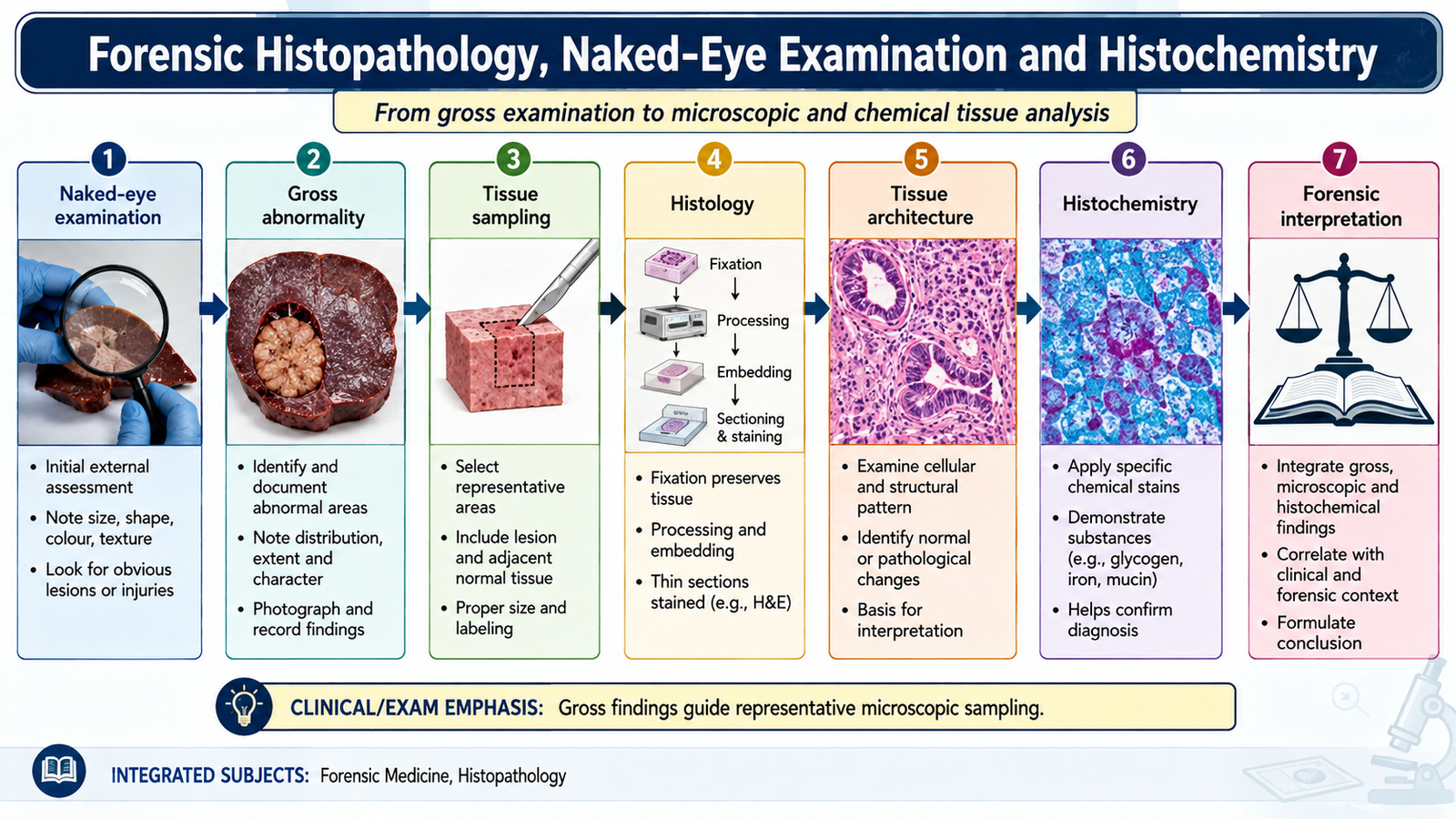
Forensic histopathology is the examination of tissues to identify structural changes that may help explain injury, disease or another medico-legal finding. It begins with examination visible to the naked eye and may then proceed to microscopic examination. Histochemical techniques can provide additional information by demonstrating particular chemical substances or reaction products within tissues.
Naked-eye examination
Naked-eye, or gross, examination is the direct visual examination of an organ, tissue or lesion before microscopic study. The examiner may assess features such as site, size, shape, colour, surface appearance, consistency and distribution.
Gross examination is important because it guides further sampling. A visibly abnormal area can be selected for histological examination rather than examining tissue randomly.
Histological examination
Histological examination studies tissue architecture and cellular changes under the microscope. Tissue sections allow the examiner to identify features that cannot be reliably recognized by gross inspection alone.
Depending on the forensic question, microscopy may demonstrate tissue injury, inflammation, disease or other structural alteration. The microscopic finding should always be interpreted together with the gross examination and the circumstances of the case rather than in isolation.
Forensic histochemistry
Histochemistry uses chemical reactions within tissue sections to demonstrate particular tissue components or substances. The reaction produces a visible change, commonly a characteristic colour or deposit at the site where the target substance is present.
Its value lies in combining chemical information with tissue localization. Instead of merely showing that a substance is present somewhere in a sample, histochemistry may demonstrate where it is located within the tissue.
C. Steam Distillation, Micro-Diffusion and the Stas-Otto Method
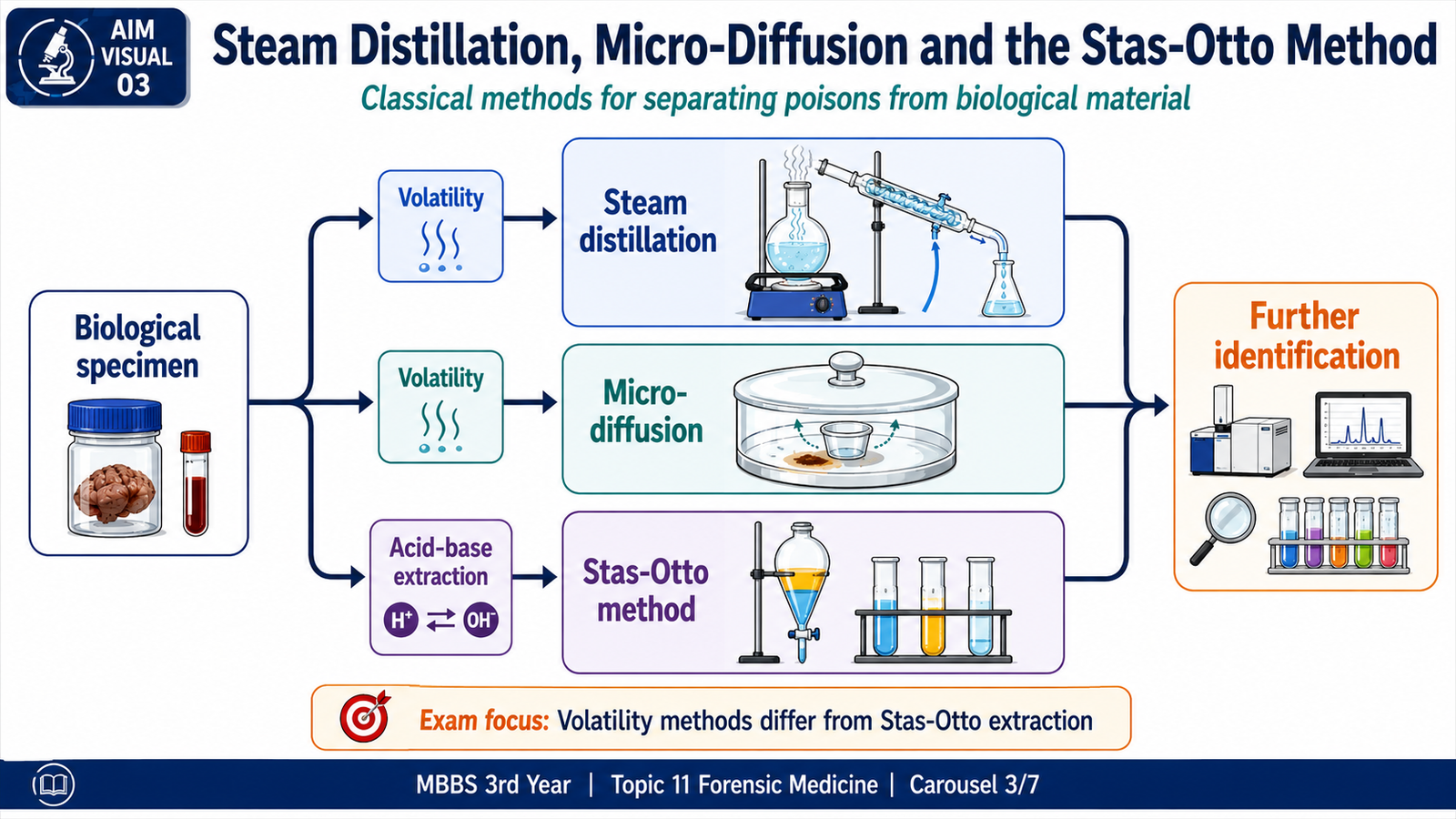
Biological specimens contain proteins, lipids, salts and many other substances that can interfere with toxicological analysis. Therefore, a suspected poison often has to be separated from the biological material before it can be identified. Steam distillation, micro-diffusion and the Stas-Otto method are classical approaches based on different physical or chemical properties of the substance being investigated.
Steam distillation
Steam distillation is used to separate substances that can pass into the vapour phase with steam. When the sample is heated in the presence of water or steam, suitable volatile substances enter the vapour, leave much of the non-volatile biological material behind and are then collected after condensation.
The method is therefore particularly relevant when the toxic substance is sufficiently volatile to be separated from the specimen in this way.
Micro-diffusion analysis
Micro-diffusion separates a volatile substance by allowing it to diffuse from the sample through a closed space into a suitable receiving solution. The sample and receiving solution remain physically separate, but the volatile substance can move between them.
This approach allows a small amount of a volatile analyte to be separated from interfering biological material before detection or measurement.
Stas-Otto method
The Stas-Otto method is a classical toxicological extraction procedure developed mainly for separating non-volatile organic poisons, particularly alkaloidal substances, from biological material.
The principle is based on changing the chemical form and solubility of a substance so that it can first be separated from biological tissue and later transferred into a suitable solvent for further testing. Acid-base manipulation is important because many alkaloids behave differently in acidic and alkaline conditions.
The method is best understood as an extraction procedure, not as the final proof of identity. After extraction, additional analytical tests are required to determine which substance is present.
D. Analytical Identification: Colour Reactions, Chromatography, Spectroscopy, Electrophoresis and Radio-Activation
After a substance has been isolated or prepared for examination, the forensic laboratory must determine what it is. Different analytical methods answer this question in different ways. Some provide rapid preliminary information, whereas others separate compounds or produce characteristic physical measurements that provide stronger identification.
Colour-reaction methods
A colour reaction occurs when a chemical reagent reacts with a substance and produces a characteristic colour. These tests are relatively simple and can help indicate that a particular substance or chemical group may be present.
However, a colour reaction is not automatically specific. Different substances may occasionally produce similar colours. For this reason, colour tests are commonly interpreted as screening or presumptive evidence and should not be given greater certainty than the method supports.
Chromatography
Chromatography separates the components of a mixture because different substances interact differently with a stationary phase and a mobile phase. A substance that interacts strongly with the stationary phase moves differently from one that remains mainly in the mobile phase.
Common chromatographic approaches include thin-layer chromatography, gas chromatography and liquid chromatography. The most suitable method depends on the physical and chemical properties of the compound being investigated.
Spectroscopy
Spectroscopy studies the interaction between matter and electromagnetic radiation. Different substances absorb, emit or otherwise interact with radiation in characteristic ways. The resulting spectrum can therefore provide information about the identity or chemical structure of a substance.
Forensic laboratories may use different spectral regions depending on the analytical purpose. The important undergraduate principle is that a spectrum provides a measurable physical pattern that can be compared with expected characteristics of a substance.
Electrophoresis
Electrophoresis separates electrically charged molecules by causing them to move in an electric field. Their movement depends mainly on properties such as electrical charge, molecular size and the supporting medium.
The technique is useful when biological molecules or related components need to be separated into distinguishable patterns. Historically and practically, electrophoretic principles have been important in the examination of proteins, enzymes and other biological material.
Radio-activation techniques
Radio-activation analysis identifies elements by converting stable atoms in a specimen into radioactive forms through irradiation. The activated atoms emit characteristic radiation, and the pattern of this radiation can be analysed to identify elements present in the specimen.
A major forensic application is the analysis of very small quantities of elements in trace material. The principle is valuable because elemental composition can sometimes help compare or characterize evidence.
Detection of insecticide compounds
Insecticides form chemically diverse groups, so there is no single universal test for every insecticide. Laboratory investigation therefore begins by considering the suspected chemical group and the characteristics of the specimen.
The toxic compound must first be separated from interfering biological material where necessary. A preliminary chemical or chromatographic test may then indicate its presence, while a more specific analytical technique is used to strengthen identification.
Chromatographic techniques are particularly useful because they can separate an insecticide from other substances in a complex specimen. Detection may then be supported by an appropriate physical or chemical identification method. The final interpretation must take account of the specificity and limitations of the method used.
Important Comparison: What Each Method Mainly Does
| Method | Main Principle | Main Role |
|---|---|---|
| Colour reaction | Characteristic chemical colour change | Preliminary screening |
| Chromatography | Differential movement between stationary and mobile phases | Separation of mixture components |
| Spectroscopy | Interaction with electromagnetic radiation | Chemical identification or characterization |
| Electrophoresis | Movement of charged molecules in an electric field | Separation of biological molecules |
| Radio-activation | Element activation followed by radiation analysis | Trace elemental analysis |
E. Academic Writing, Grammarly and Plagiarism
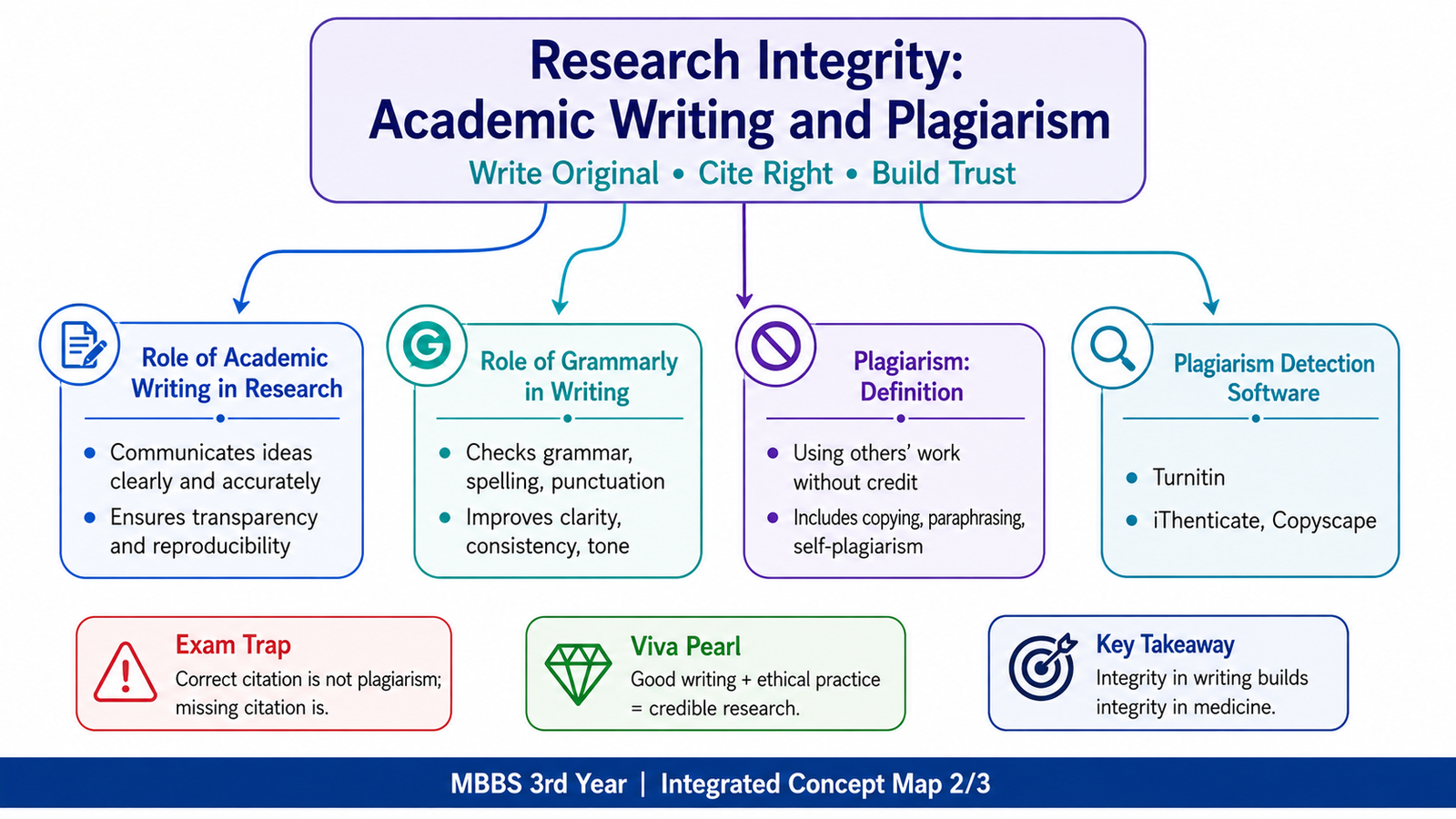
Academic writing is the structured communication of scholarly information in a clear, evidence-based and appropriately referenced form. In research, good academic writing allows the reader to understand what was studied, how the work was performed, what was found and how the findings should be interpreted.
Research has little scientific value if its methods and results cannot be communicated accurately. Academic writing therefore supports transparency, reproducibility and critical appraisal.
Role of academic writing in research
- Communicates the research question and objectives clearly.
- Explains methods in an organized manner.
- Presents results accurately.
- Separates evidence from unsupported opinion.
- Allows readers to evaluate the work critically.
- Provides acknowledgement of previous work through citation and referencing.
Role of Grammarly
Grammarly is a digital writing-support tool. It can assist with features such as spelling, grammar, punctuation, sentence clarity and aspects of writing style. Such software may help an author identify language problems that are easily missed during proofreading.
However, writing software does not replace scientific judgement. A researcher remains responsible for the accuracy of medical statements, interpretation of evidence, correct citation of sources and final wording of the work. A grammatically polished sentence can still be scientifically incorrect.
Plagiarism
Plagiarism is presenting another person’s words, ideas or intellectual work as one’s own without appropriate acknowledgement. It is a form of academic misconduct because it falsely represents the origin of the work.
Plagiarism is not limited to directly copying a long paragraph. It can also occur when wording is copied without quotation or acknowledgement, when another person’s ideas are paraphrased without citation, or when material is reproduced in a way that hides its original source.
Plagiarism-detection software
Electronic similarity-checking systems compare submitted writing with large collections of published and previously submitted material. Examples include:
- Turnitin
- iThenticate
- Ouriginal
A similarity report requires interpretation. Similar text does not automatically prove misconduct, and a low similarity score does not automatically prove that academic writing is ethically sound. The context, source acknowledgement and nature of the matching material must be considered.
F. Four Pillars of Medical Ethics
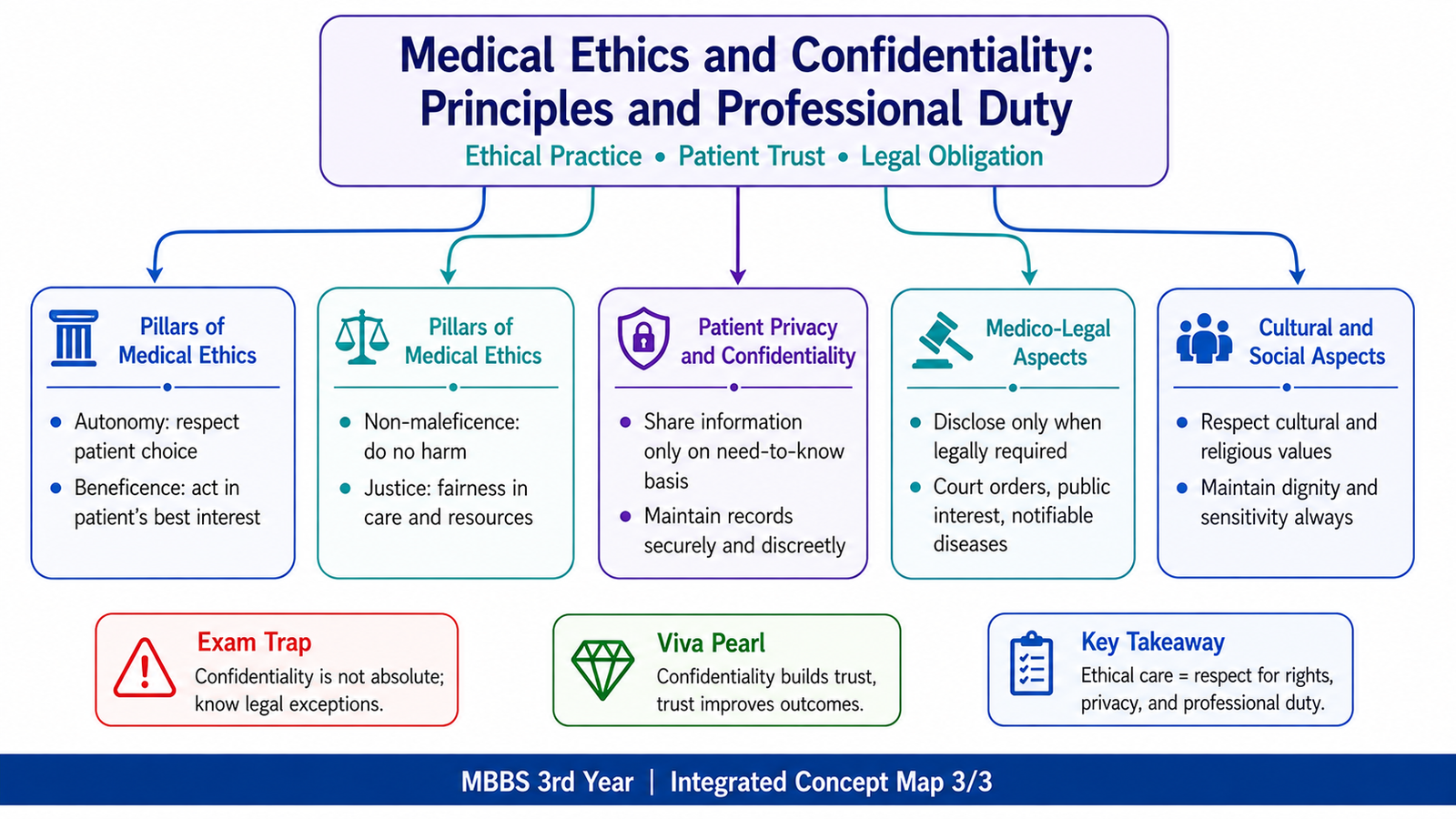
Medical ethics provides principles that help doctors make responsible decisions when different duties, interests or values must be balanced. Four principles are commonly used as the foundation of modern clinical ethics: autonomy, beneficence, non-maleficence and justice.
These principles should not be treated as four unrelated definitions. In practice, a doctor often has to consider several of them at the same time.
1. Autonomy
Autonomy means respecting a person’s right to make informed decisions about matters affecting them. In medical practice, this requires giving the patient relevant information and respecting a competent patient’s voluntary decisions.
Respect for autonomy is closely related to informed consent, privacy and confidentiality because meaningful choice requires control over personal decisions and information.
2. Beneficence
Beneficence means acting for the benefit of the patient. A doctor should aim to promote health, relieve suffering and provide interventions in which expected benefits justify the intervention.
3. Non-maleficence
Non-maleficence means avoiding or minimizing unnecessary harm. Medical interventions can produce both benefit and harm, so the doctor must consider whether the expected benefit is sufficient to justify the risk.
4. Justice
Justice concerns fairness. Similar patients should be treated fairly, and healthcare decisions should not be based on irrelevant discrimination. Justice is also important when limited healthcare resources must be distributed responsibly.
| Ethical Principle | Central Question |
|---|---|
| Autonomy | Is the patient’s informed choice being respected? |
| Beneficence | Does the action promote the patient’s welfare? |
| Non-maleficence | Is unnecessary harm being avoided? |
| Justice | Is the decision fair? |
G. Patient Privacy and Confidentiality: Ethical, Medico-Legal and Cultural Aspects
Privacy concerns a person’s control over access to themselves and their personal information. Confidentiality is the professional duty to protect information learned during the doctor-patient relationship from inappropriate disclosure.
Patients often disclose sensitive information because they trust the medical team. Protecting that information therefore supports patient dignity, autonomy and trust in healthcare.
What information is confidential?
Confidentiality applies broadly to information obtained through professional care, including history, examination findings, investigation results, diagnoses, treatment information and other identifiable personal details.
The duty continues when information is stored electronically, written in records or communicated between healthcare professionals.
Practical protection of confidentiality
- Discuss patient information only with people who have a legitimate professional need to know it.
- Avoid discussing identifiable cases in public places.
- Protect medical records from unauthorized access.
- Avoid sharing identifiable patient material through inappropriate personal or social-media channels.
- Use only the information necessary for the legitimate purpose of communication.
- Where teaching or research does not require patient identification, remove unnecessary identifying information.
Disclosure and its limits
Confidentiality is a strong professional duty, but it is not an absolute rule in every circumstance. Information may be disclosed with the patient’s valid consent. Disclosure may also sometimes be necessary when required by applicable law or when a sufficiently serious concern creates a recognized professional or legal justification.
When disclosure is justified, the doctor should disclose only the information necessary for that purpose and follow the appropriate professional or institutional process. The existence of a medico-legal reason does not justify unrestricted disclosure of the entire medical record.
Medico-legal aspects
Medical information can become relevant to legal proceedings, insurance processes, forensic investigation or other formally authorized purposes. A doctor should not interpret the existence of a legal issue as permission for casual disclosure. Requests for confidential information should be managed through appropriate channels and in accordance with applicable professional and legal requirements.
Good documentation is important because the record may later demonstrate what information was disclosed, why disclosure was considered appropriate and to whom it was communicated.
Cultural aspects
Cultural and family values influence how patients communicate and make decisions. In some families, relatives may be closely involved in healthcare discussions. Their involvement can support the patient, but family interest does not automatically remove the patient’s right to privacy.
A respectful doctor should ask the patient whom they wish to involve, protect sensitive information and avoid assuming that every patient from the same cultural background has identical preferences.
⭐ AIM High-Yield Review
- A forensic laboratory system includes evidence receipt, identification, examination, analysis, interpretation and reporting.
- Chain of custody maintains documented continuity and identity of forensic evidence.
- Naked-eye examination identifies gross abnormalities and guides representative tissue sampling.
- Histological examination demonstrates tissue architecture and cellular changes under the microscope.
- Histochemistry demonstrates selected chemical substances or reaction products within their tissue location.
- Steam distillation and micro-diffusion are useful for separating substances on the basis of volatility.
- The Stas-Otto method is a classical extraction method particularly associated with non-volatile organic poisons such as alkaloids.
- Colour reactions are generally screening or presumptive methods and must be interpreted according to their specificity.
- Chromatography separates mixture components by differential interaction with stationary and mobile phases.
- Spectroscopy identifies or characterizes substances through their interaction with electromagnetic radiation.
- Electrophoresis separates charged molecules in an electric field, while radio-activation techniques can identify trace elements.
- Plagiarism is presenting another person’s intellectual work as one’s own without appropriate acknowledgement; similarity software assists detection but does not independently prove misconduct.
- The four pillars of medical ethics are autonomy, beneficence, non-maleficence and justice.
- Confidentiality protects information obtained through professional care and permits disclosure only with appropriate consent or another recognized justification.
- Family or cultural involvement should be respected without automatically overriding the individual patient’s privacy and preferences.
Forensic Laboratory Systems, Research Integrity, Medical Ethics and Confidentiality
Watch these focused videos after completing the learning material to reinforce the major concepts covered in this topic.
1. Forensic Toxicology — Core Concept
Introduces forensic toxicology and the role of laboratory examination of drugs, poisons and other toxic substances in medico-legal investigation.
2. Chromatography and Mass Spectrometry in Forensic Analysis
Reinforces the principle of chromatographic separation followed by instrumental identification in forensic toxicology.
3. Grammarly and Plagiarism Checking
Demonstrates how Grammarly can assist students in identifying similarity and potential plagiarism during academic writing.
4. Four Principles of Medical Ethics
Reviews autonomy, beneficence, non-maleficence and justice—the four major pillars of medical ethics.
5. Patient Confidentiality and Privacy
Explains confidentiality and privacy in medical practice and reinforces their importance in the doctor-patient relationship.