
This chapter follows the KMU learning outcomes and explains sleep disorders and their pharmacology in a logical sequence. First understand the concepts and drug mechanisms; then use the final AIM High-Yield Review for rapid revision.
Sleep Disorders, Insomnia and Sedative–Hypnotic Pharmacology
Neuroscience Module • Psychiatry + Pharmacology
Understand the major sleep disorders, healthy sleep principles and insomnia management, then connect these clinical concepts with benzodiazepines, barbiturates, buspirone, ramelteon and the pharmacological basis of sedation and hypnosis.
1. Topic Introduction
Sleep is a normal biological process that restores physical and mental function. A sleep disorder occurs when the timing, duration, quality or behaviour associated with sleep becomes abnormal enough to cause difficulty at night or impaired functioning during the day. In this topic, the main clinical emphasis is on insomnia, sleep–wake cycle disorders and sleepwalking. The pharmacological part explains drugs that reduce anxiety, produce sedation or promote sleep. Particular attention is given to benzodiazepines and barbiturates, including their important mechanistic differences, as well as flumazenil, buspirone and ramelteon. The aim is to connect the clinical sleep problem with the pharmacological action and limitations of the drugs used to manage it.
A. Sleep Disorders, Healthy Sleep and Sleepwalking
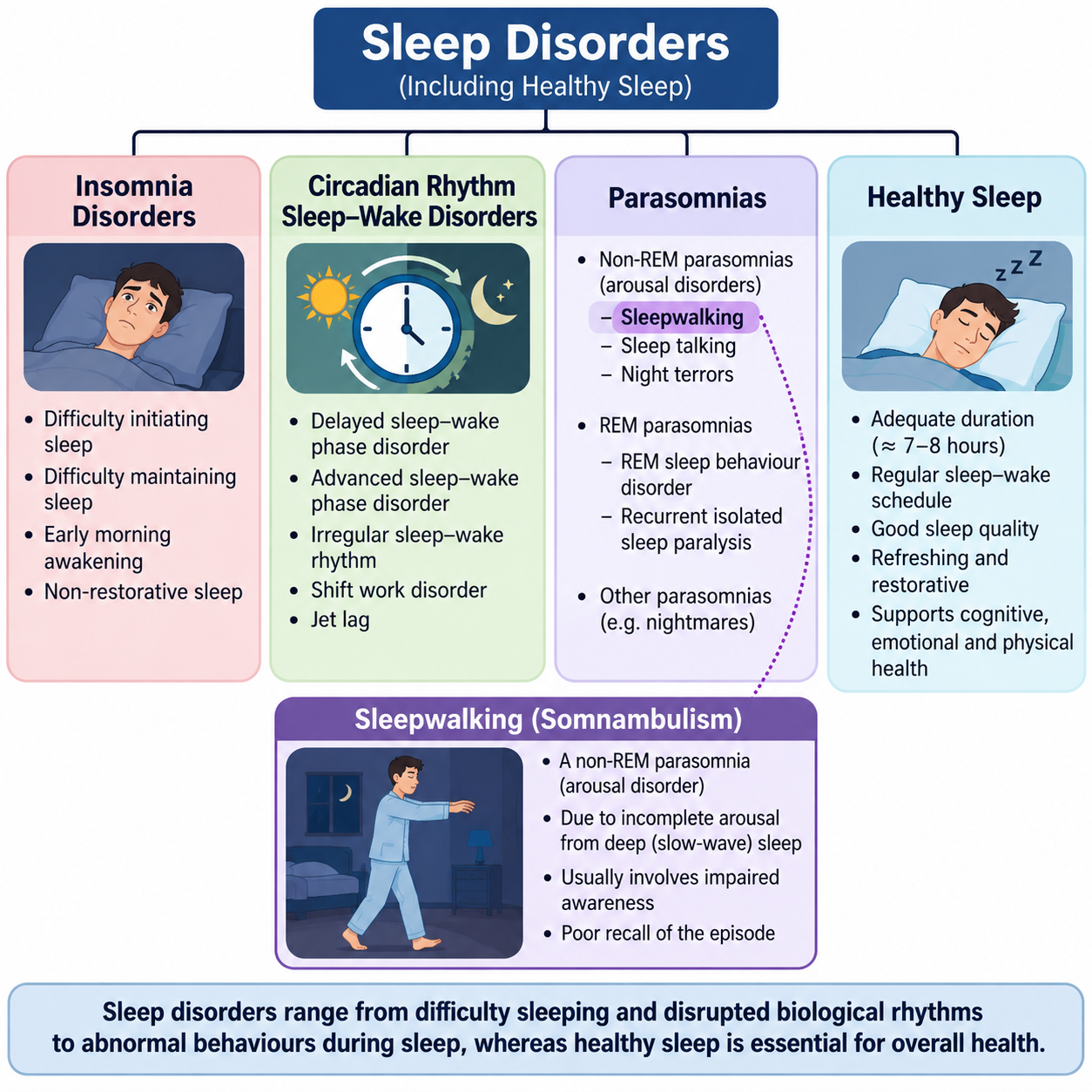
Sleep disorders are not a single disease. They include conditions in which a person cannot obtain satisfactory sleep, sleeps excessively, sleeps at an inappropriate biological time, or develops abnormal behaviours during sleep. Correctly identifying the type of sleep problem is important because a hypnotic drug is not the correct treatment for every sleep disorder.
Major types of sleep disorders
A practical undergraduate classification includes the following major groups:
- Insomnia disorders: difficulty initiating sleep, maintaining sleep or obtaining restorative sleep.
- Hypersomnolence disorders: excessive sleepiness or an excessive need for sleep.
- Sleep-related breathing disorders: sleep is disturbed by abnormal respiration.
- Sleep–wake cycle or circadian rhythm disorders: the internal biological clock is poorly aligned with the time at which sleep is required.
- Parasomnias: unwanted behaviours or experiences occurring during sleep or transitions between sleep and wakefulness. Sleepwalking belongs to this group.
- Sleep-related movement disorders: repetitive movements or uncomfortable sensations interfere with sleep.
Healthy sleep and sleep hygiene
Sleep hygiene means everyday behavioural and environmental practices that support normal sleep. These measures are useful for healthy individuals and form part of the management of many sleep complaints. Sleep hygiene alone, however, may not be sufficient when a patient has established persistent insomnia.
- Maintain a reasonably consistent sleep and wake time.
- Create a quiet, dark and comfortable sleeping environment.
- Avoid excessive caffeine, nicotine and other stimulants, particularly later in the day.
- Avoid alcohol as a sleep aid. It may initially cause drowsiness but can later fragment sleep.
- Exercise regularly, while avoiding vigorous exercise immediately before intended sleep if it causes alertness.
- Reduce intense light and stimulating screen activity close to bedtime.
- Avoid large meals immediately before sleeping.
- Use the bed mainly for sleep rather than prolonged wakeful activities.
- Keep daytime naps limited when they interfere with night-time sleep.
- Address stress, worry and environmental factors that repeatedly delay sleep.
Sleepwalking
Sleepwalking, or somnambulism, is a parasomnia in which a person partially awakens from sleep and performs motor activity while remaining incompletely conscious. Episodes commonly arise from deep non-REM sleep. The person may sit up, walk or perform apparently purposeful actions, but awareness and judgement are reduced and memory for the event is usually poor or absent.
The central problem is an incomplete transition from deep sleep to wakefulness. Sleep deprivation, irregular sleep, stress and some medicines or substances may increase the likelihood of episodes in susceptible people.
Deep non-REM sleep → incomplete arousal → motor behaviour begins → awareness remains impaired → little or no memory the next morning.
Management of sleepwalking
Treatment is mainly directed at safety and removal of precipitating factors rather than automatically prescribing sedative medication.
- Maintain regular and adequate sleep.
- Reduce sleep deprivation and relevant precipitating stress.
- Make the sleeping environment safe by removing hazards and securing dangerous exits.
- Family members should gently guide the person back to bed when possible.
- Review medicines or substances that appear to aggravate episodes.
- When episodes are frequent, dangerous or atypical, further clinical assessment is appropriate.
- Medication such as a benzodiazepine may occasionally be considered for severe recurrent episodes under appropriate clinical supervision, but it is not routine treatment for every patient.
B. Insomnia and Sleep–Wake Cycle Disorders
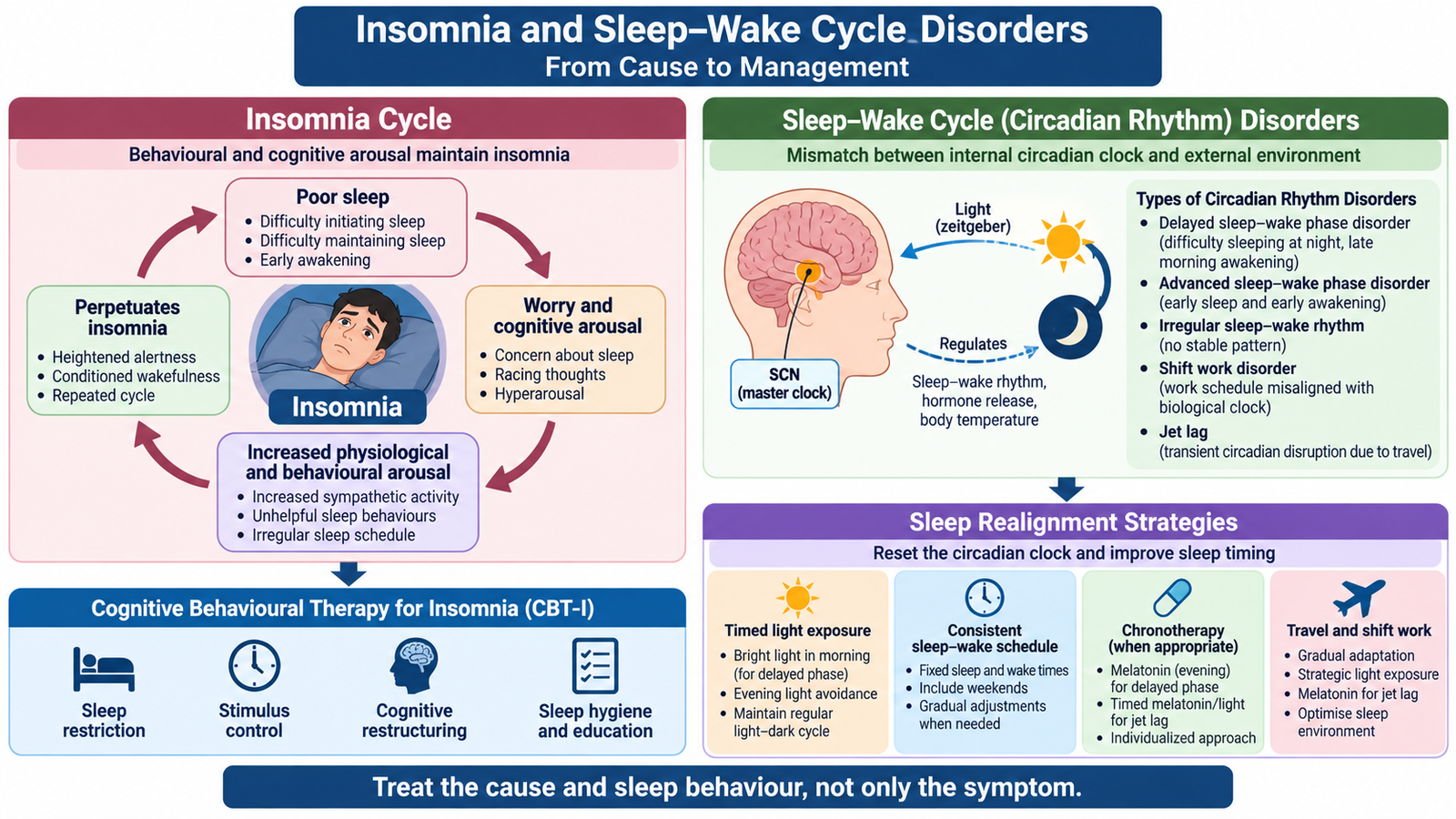
Insomnia is a complaint of unsatisfactory sleep despite an appropriate opportunity to sleep. The difficulty may involve falling asleep, staying asleep, waking earlier than intended, or experiencing sleep that does not feel restorative. The clinical importance of insomnia lies not only in the night-time complaint but also in associated daytime problems such as tiredness, impaired concentration, irritability and reduced performance.
Non-organic insomnia
The term non-organic insomnia is used in the curriculum and in older psychiatric classification systems for insomnia in which psychological and behavioural factors are prominent and the sleep complaint is not adequately explained by a primary organic disorder. The patient may become increasingly preoccupied with the inability to sleep. This worry produces greater arousal at bedtime, which then makes sleep even more difficult.
Poor sleep → worry about not sleeping → increased cognitive and autonomic arousal → greater difficulty sleeping → further worry.
Approach to insomnia
Management begins by identifying what is maintaining the sleep difficulty. A sedative should not simply be prescribed before considering behavioural factors, psychiatric symptoms, substances, medicines and medical conditions that may disturb sleep.
Important areas of assessment include:
- The main sleep complaint: difficulty initiating sleep, maintaining sleep or early awakening.
- Usual sleep and wake times.
- Daytime sleepiness, fatigue and functional impairment.
- Caffeine, nicotine, alcohol and other substance use.
- Medicines that may cause stimulation or sedation.
- Anxiety, depressive symptoms and significant stress.
- Symptoms suggesting another sleep disorder or a medical cause.
Non-pharmacological management
Behavioural and psychological treatment is central because it targets the factors that maintain insomnia rather than simply producing temporary sedation. Cognitive behavioural therapy for insomnia (CBT-I) combines several useful principles.
- Stimulus control: rebuild the association between bed and sleep rather than bed and prolonged wakefulness.
- Sleep scheduling: establish a stable sleep–wake pattern and reduce excessive time spent awake in bed.
- Cognitive techniques: reduce unrealistic fears and persistent thoughts about the consequences of not sleeping.
- Relaxation strategies: reduce mental and physical arousal before sleep.
- Sleep hygiene: correct behavioural and environmental factors that interfere with normal sleep.
Pharmacological management
Medication may be useful when insomnia is sufficiently troublesome and a pharmacological intervention is appropriate. Drug choice should match the clinical problem while taking account of next-day sedation, dependence, interactions and other safety concerns.
Relevant drug groups in this topic include:
- Benzodiazepines: facilitate inhibitory GABA transmission and can produce sedation and sleep.
- Non-benzodiazepine hypnotics: act through the benzodiazepine-sensitive GABAA receptor system but are structurally different.
- Melatonin-receptor agonists: such as ramelteon, promote physiological sleep-onset signalling.
- Barbiturates: are older sedative–hypnotics with considerably greater toxicity and dependence risk and are not preferred routine hypnotics.
Benzodiazepines can relieve insomnia quickly, but repeated use may produce tolerance and dependence. Therefore, the reason for insomnia and the expected duration of treatment matter as much as the immediate ability of the drug to induce sleep.
Sleep–wake cycle disorders
Sleep–wake cycle disorders occur when the person’s internal circadian timing is out of alignment with the time at which the environment requires sleep and wakefulness. The individual may be able to sleep normally at a biologically preferred time but cannot easily sleep or remain alert at the socially required time.
Examples include delayed sleep timing, disturbances related to shift work and temporary circadian disruption after rapid travel across time zones.
Management principles
- Establish a structured sleep–wake schedule.
- Use appropriately timed exposure to light to help shift the biological clock.
- Reduce strong light exposure when it is working against the desired sleep schedule.
- Correct sleep deprivation and poor sleep hygiene.
- Use appropriately timed melatonin-based approaches in selected circadian problems when clinically indicated.
- Address work, behavioural or environmental factors that repeatedly force sleep at an unsuitable biological time.
C. Sedative–Hypnotic Classification and Benzodiazepine Pharmacology
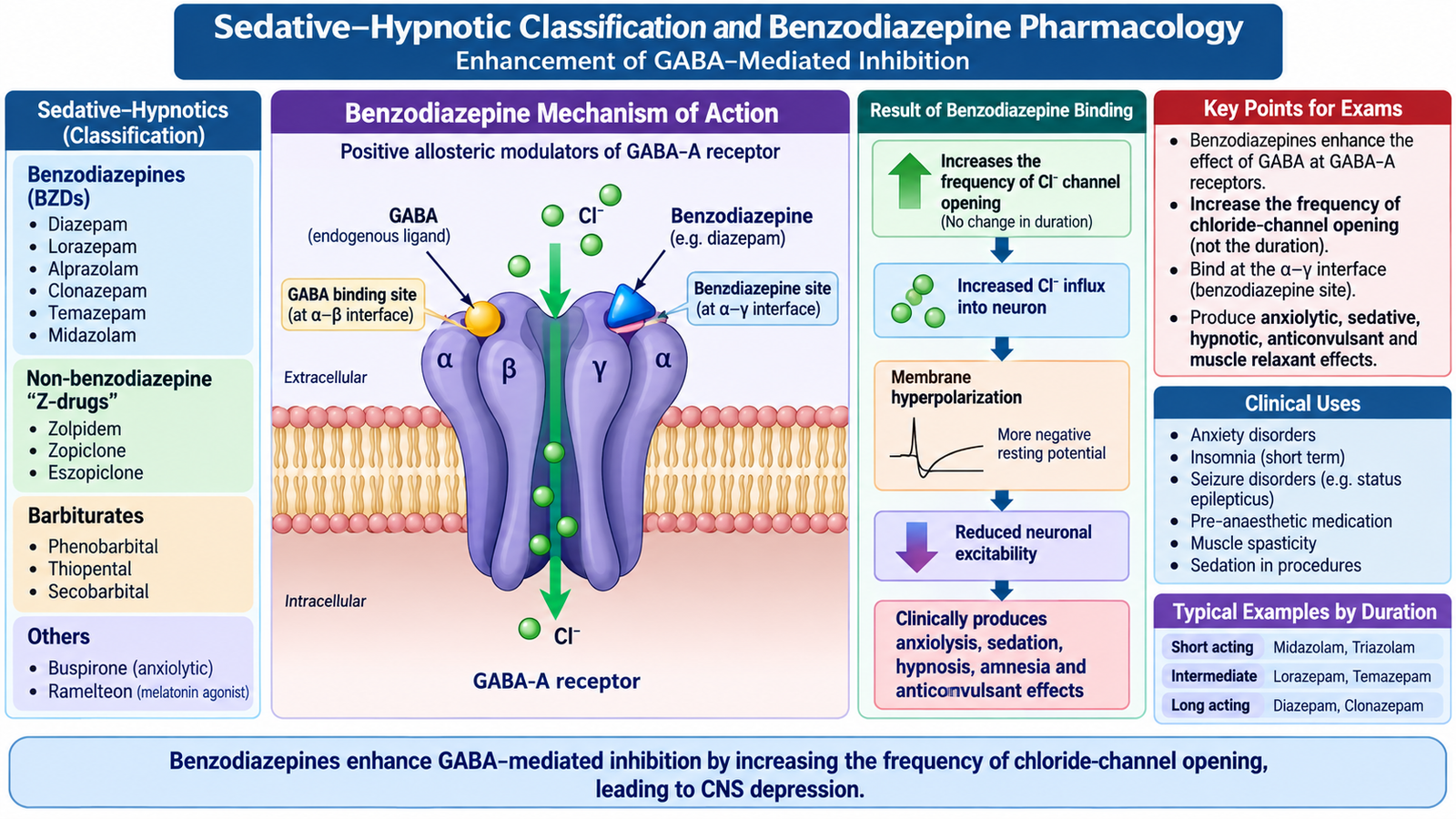
Sedatives reduce anxiety, excitement and motor activity, whereas hypnotics produce drowsiness and facilitate sleep. These effects lie on a continuum: increasing the dose of many sedative drugs produces progressively greater CNS depression. Benzodiazepines are important because they can produce anxiolysis, sedation, hypnosis, anticonvulsant activity and skeletal-muscle relaxation through enhancement of GABA-mediated inhibition.
Classification of sedative–hypnotic drugs
- Benzodiazepines: for example diazepam, lorazepam, alprazolam, temazepam, midazolam and clonazepam.
- Barbiturates: for example phenobarbital and thiopental.
- Non-benzodiazepine hypnotics: the “Z-drugs,” such as zolpidem, zaleplon and eszopiclone.
- Melatonin-receptor agonists: ramelteon.
- Other sedating agents: selected drugs from other pharmacological groups may cause or be used for sedation, but they are not the main focus of this topic.
Buspirone should not be confused with a classical sedative–hypnotic. It is primarily a non-sedating anxiolytic and is discussed later because the curriculum specifically compares it with benzodiazepines.
Classification of benzodiazepines by duration of action
The duration of action influences whether a benzodiazepine is more suitable for a short procedure, a sleep problem or a clinical situation requiring a longer effect.
- Short acting: examples include midazolam and triazolam.
- Intermediate acting: examples include lorazepam, oxazepam, temazepam and alprazolam.
- Long acting: examples include diazepam, clonazepam, flurazepam and chlordiazepoxide.
Mechanism of action
Gamma-aminobutyric acid, or GABA, is the major inhibitory neurotransmitter in the brain. The GABAA receptor is a ligand-gated chloride channel. When GABA binds, chloride enters the neuron and makes neuronal firing less likely.
Benzodiazepines bind to an allosteric benzodiazepine-binding site on the GABAA receptor. They do not replace GABA. Instead, they make the receptor respond more effectively to GABA.
Benzodiazepine binds GABAA receptor → GABA action is enhanced → frequency of chloride-channel opening increases → neuronal hyperpolarization increases → CNS excitability falls → anxiolysis, sedation, hypnosis, anticonvulsant activity and muscle relaxation.
Because benzodiazepines depend on endogenous GABA for their main action, they have a wider safety margin than barbiturates when taken alone. This advantage is reduced when they are combined with other CNS depressants.
Pharmacokinetics
Most benzodiazepines are well absorbed and enter the CNS because they are lipid soluble. Their duration of clinical action is influenced by redistribution, hepatic metabolism and the presence or absence of active metabolites.
- Many benzodiazepines undergo hepatic oxidative metabolism and may be affected by drugs that inhibit or induce hepatic enzymes.
- Some long-acting agents, particularly diazepam, form active metabolites that prolong their effects.
- Lorazepam, oxazepam and temazepam are mainly metabolized by conjugation and do not depend to the same degree on oxidative hepatic metabolism.
- Metabolites are ultimately eliminated mainly through the kidneys.
- Accumulation is more likely with long-acting agents, repeated administration and impaired drug clearance.
Pharmacological effects
- Anxiolysis: reduces pathological anxiety and emotional tension.
- Sedation and hypnosis: decreases arousal, shortens sleep latency and facilitates sleep.
- Anticonvulsant action: enhanced GABA inhibition suppresses excessive neuronal firing.
- Skeletal-muscle relaxation: central inhibitory pathways reduce muscle tone.
- Anterograde amnesia: formation of new memories may be impaired, which can be useful during certain procedures but is an adverse effect in ordinary activity.
Clinical uses
The specific benzodiazepine is selected according to the desired speed and duration of effect.
- Short-term management of severe anxiety when drug treatment is appropriate.
- Short-term treatment of selected insomnia problems.
- Acute control of seizures and status epilepticus with appropriate agents.
- Management of alcohol withdrawal.
- Premedication and procedural sedation.
- Relief of selected muscle spasms.
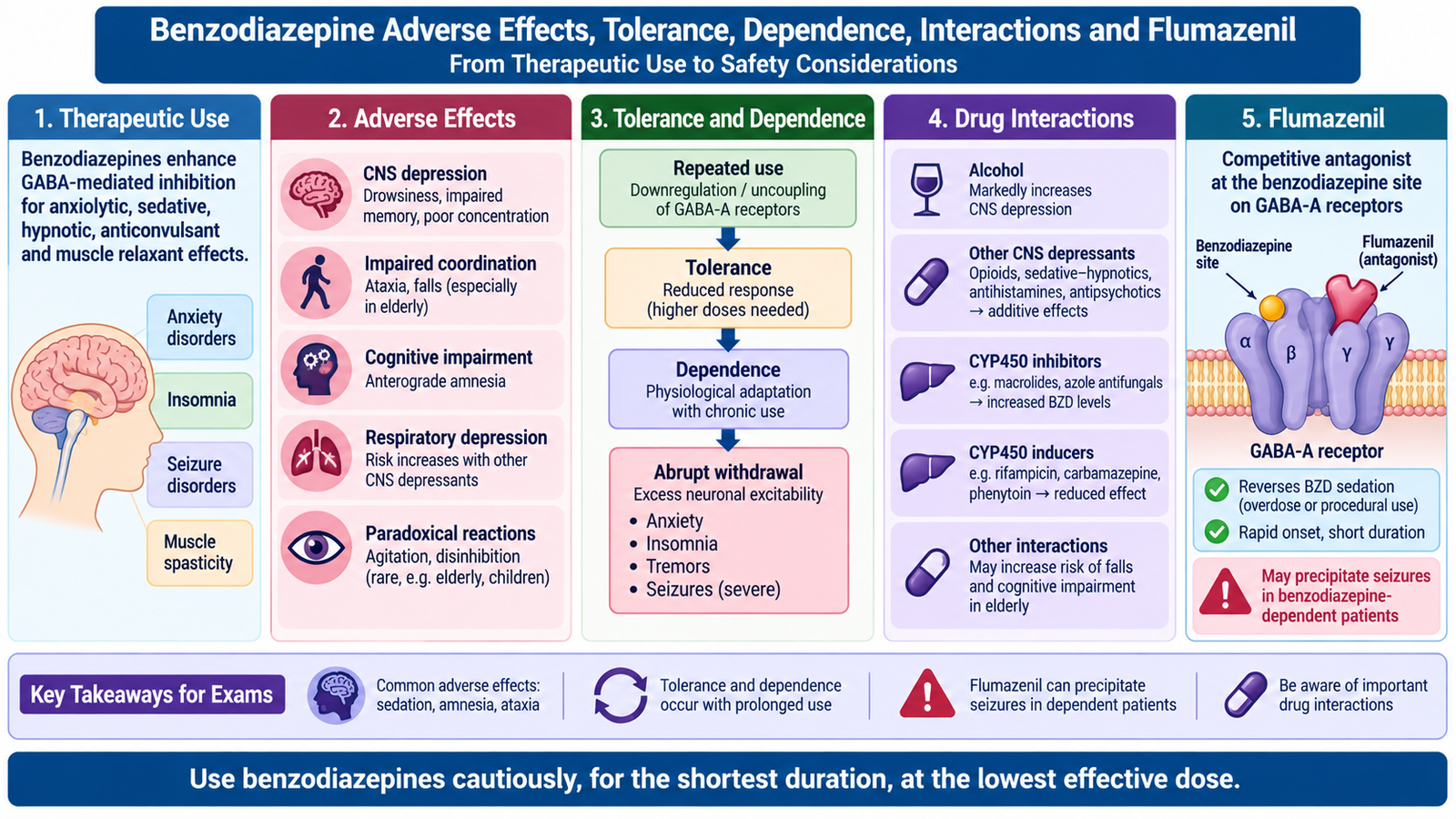
D. Benzodiazepine Adverse Effects, Tolerance, Dependence, Interactions and Flumazenil
The usefulness of benzodiazepines must always be balanced against CNS depression and the possibility of tolerance and dependence. Their safety profile is generally better than that of barbiturates, but they are not harmless. Problems become particularly important when treatment is prolonged or when benzodiazepines are combined with alcohol, opioids or other sedating drugs.
Adverse effects
- Drowsiness and fatigue: excessive CNS inhibition may continue into daytime activity.
- Impaired psychomotor performance: reaction time, coordination and driving ability may be reduced.
- Ataxia and falls: particularly important in older or vulnerable patients.
- Anterograde amnesia: patients may have difficulty forming new memories after taking the drug.
- Confusion: more likely in susceptible individuals.
- Paradoxical disinhibition: agitation, irritability or unusual behavioural excitation may occasionally occur rather than sedation.
- Respiratory depression: usually limited at ordinary therapeutic exposure when used alone, but can become clinically serious when combined with other CNS depressants.
Tolerance
Tolerance means that repeated exposure produces a smaller effect from the same dose, so a greater amount would be needed to obtain the previous effect. Tolerance can develop to some benzodiazepine effects, especially with repeated use. This reduces their suitability as a simple long-term solution for chronic insomnia.
Dependence and withdrawal
Physical dependence means that the nervous system has adapted to continued drug exposure. If the drug is suddenly stopped after substantial regular use, the loss of GABA-facilitating action can produce excessive CNS activity.
Repeated benzodiazepine exposure → CNS adapts to persistent inhibitory effect → abrupt withdrawal removes that inhibition → rebound neuronal excitability → anxiety, insomnia, tremor and, in severe withdrawal, seizures.
Possible withdrawal manifestations include:
- Rebound anxiety.
- Rebound insomnia.
- Restlessness and irritability.
- Tremor and autonomic symptoms.
- Perceptual disturbance in more severe cases.
- Seizures in severe withdrawal.
Important drug interactions
The most clinically important interactions either increase CNS depression or alter benzodiazepine metabolism.
- Alcohol: additive CNS depression.
- Opioids: markedly increased risk of sedation and respiratory depression.
- Other sedating medicines: may further impair consciousness, coordination and respiration.
- Enzyme inhibitors: can increase the effects of benzodiazepines that depend on oxidative hepatic metabolism.
- Enzyme inducers: can reduce concentrations and clinical effects of susceptible benzodiazepines.
Flumazenil
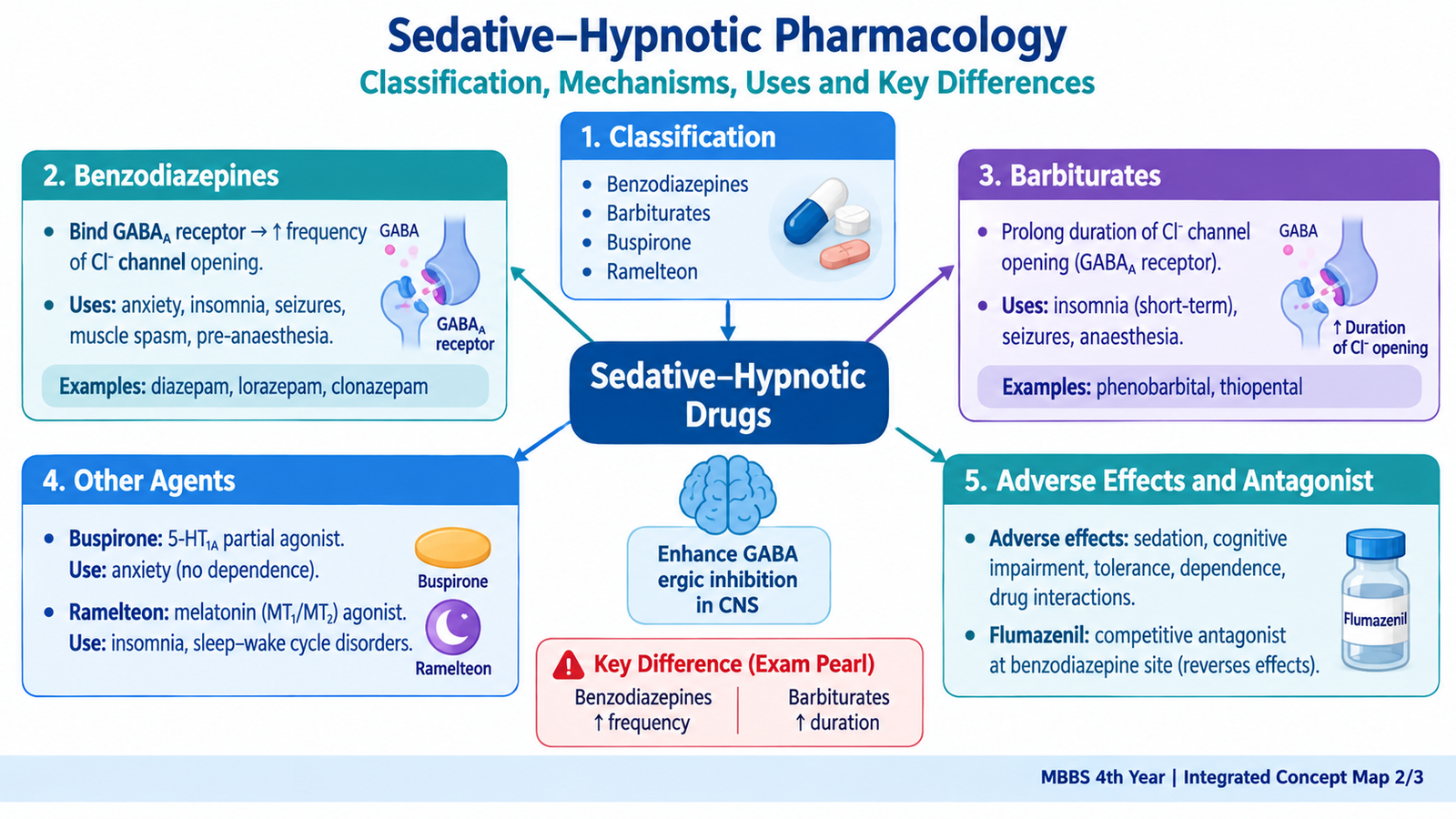
Flumazenil is a benzodiazepine-receptor antagonist. It binds competitively at the benzodiazepine-binding site on the GABAA receptor and can reverse benzodiazepine-induced sedation.
Flumazenil occupies benzodiazepine site → benzodiazepine facilitation of GABA is blocked → sedative effect decreases → consciousness may improve.
Clinical uses include reversal of benzodiazepine sedation in selected circumstances and treatment of selected benzodiazepine intoxications. Its effect may be shorter than that of the benzodiazepine involved, so recurrence of sedation can occur.
Flumazenil must be used cautiously because rapid antagonism can precipitate acute withdrawal and seizures, especially in a person with benzodiazepine dependence or in certain mixed-drug overdoses. It does not reverse sedation caused by barbiturates or opioids.
E. Barbiturates and Their Distinction from Benzodiazepines
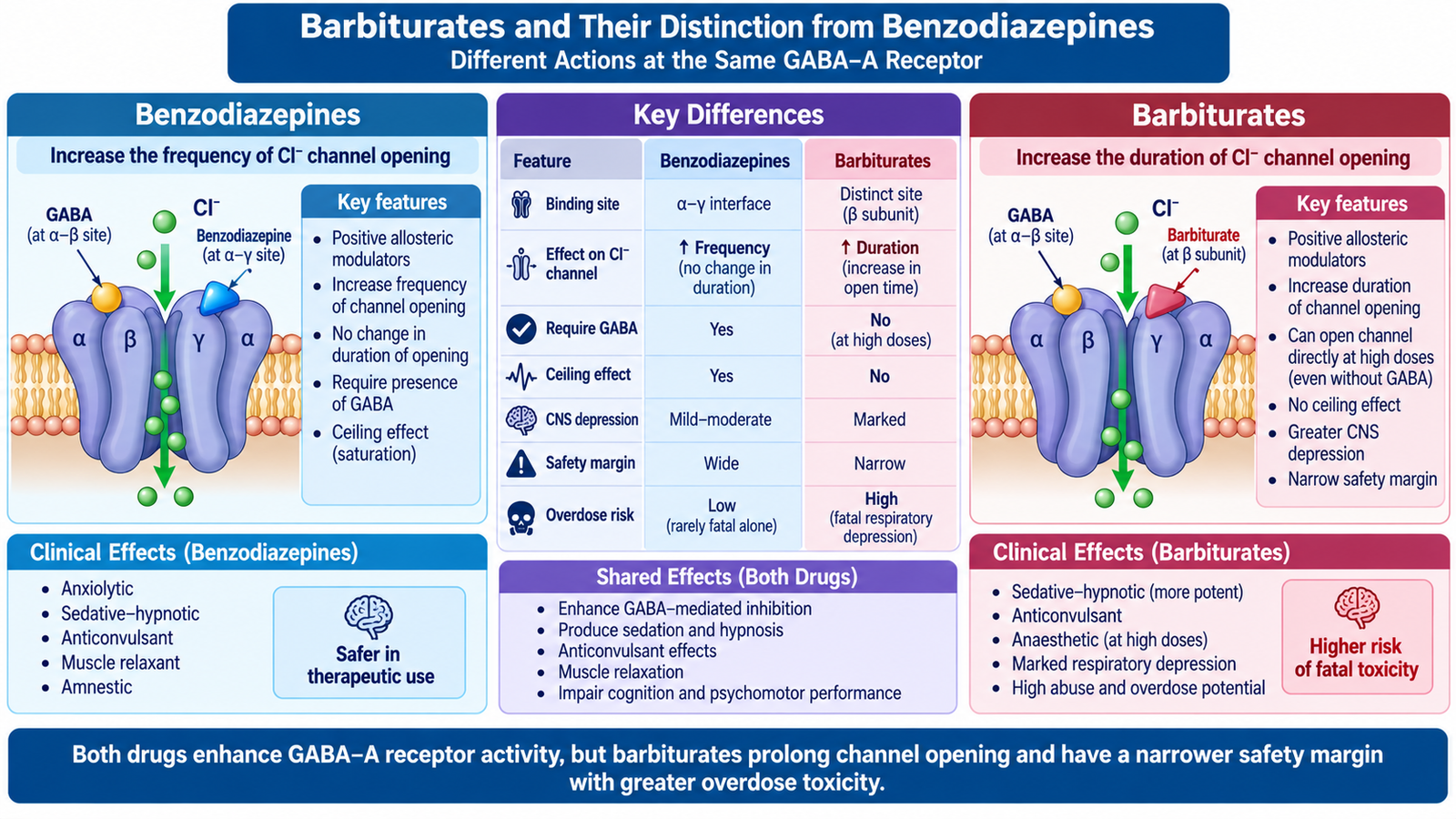
Barbiturates are older sedative–hypnotic drugs that depress the CNS by enhancing GABA-mediated inhibition. Their major educational importance is that they produce stronger and less self-limited CNS depression than benzodiazepines. This explains both their useful pharmacological effects and their much narrower safety margin.
Classification
Barbiturates can be classified according to duration of action. For undergraduate learning, it is useful to recognize representative agents rather than memorize a long list.
- Very short acting: thiopental is an important example.
- Short/intermediate acting: older agents in this group were historically used as hypnotics but are now much less important clinically.
- Long acting: phenobarbital is the major prototype.
Mechanism of action
Like benzodiazepines, barbiturates act mainly through GABAA receptors, but their effect on the chloride channel is different. Barbiturates increase the duration of GABA-activated chloride-channel opening. At sufficiently high concentrations, they can produce much greater receptor activation and CNS depression.
Barbiturate binds GABAA receptor complex → chloride-channel opening is prolonged → neuronal inhibition increases → CNS activity progressively falls → sedation, hypnosis, anesthesia or anticonvulsant effect depending on drug and exposure.
At high exposure, barbiturates can depress vital medullary centres more profoundly than benzodiazepines. This contributes to serious respiratory and cardiovascular toxicity in overdose.
Clinical uses
- Phenobarbital: remains useful as an anticonvulsant in selected seizure disorders.
- Thiopental: is an ultra-short-acting barbiturate historically important for rapid intravenous induction of anesthesia.
- Routine treatment of insomnia with barbiturates is generally avoided because safer alternatives are available and dependence and overdose risks are greater.
Why barbiturates are more dangerous
Barbiturates have a steeper dose–response relationship for CNS depression. Increasing exposure can move from sedation to hypnosis, anesthesia, coma and severe respiratory depression. They also produce tolerance and physical dependence and can induce hepatic drug-metabolizing enzymes, creating important interactions with other medicines.
F. Buspirone and Ramelteon
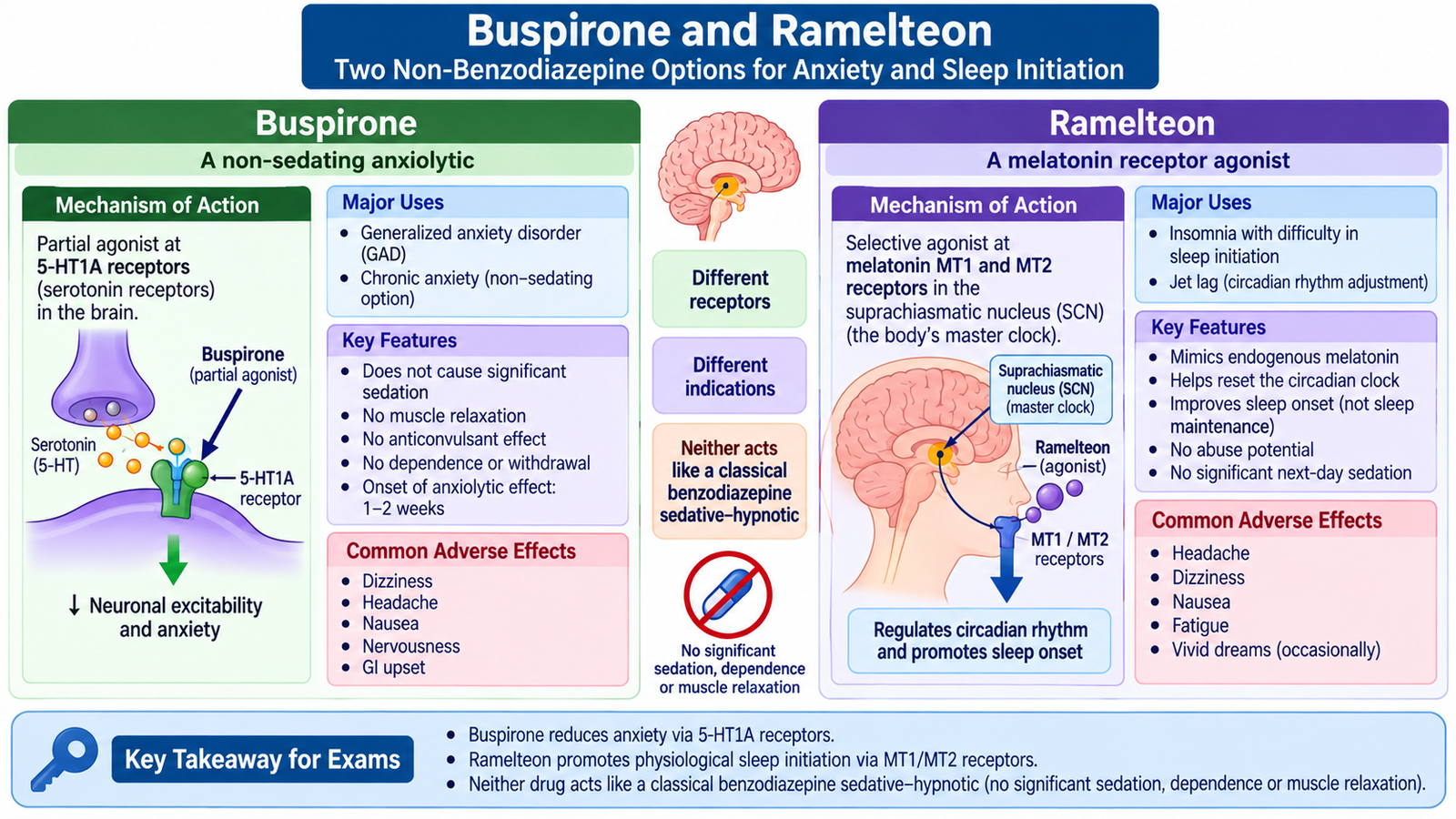
Buspirone and ramelteon are important because they achieve different therapeutic goals from classical GABA-based sedative–hypnotics. Buspirone primarily treats anxiety without producing the typical benzodiazepine pattern of sedation and dependence. Ramelteon promotes sleep through the melatonin system rather than through GABAA receptors.
Buspirone
Buspirone is a non-benzodiazepine anxiolytic. Its main mechanism is partial agonist activity at serotonin 5-HT1A receptors. Its clinical effect develops gradually, so it is useful for ongoing anxiety management rather than immediate relief of an acute anxiety episode.
5-HT1A partial agonism → modulation of serotonergic signalling → gradual reduction of anxiety → anxiolysis with little direct sedative–hypnotic effect.
Clinical use
Buspirone is mainly used for generalized anxiety symptoms when a non-sedating anxiolytic approach is suitable. It is not an effective immediate substitute for a benzodiazepine during an acute panic-like state, severe agitation or benzodiazepine withdrawal because its therapeutic effect is delayed.
Merits compared with benzodiazepines
- Little sedation at usual therapeutic use.
- Minimal impairment of psychomotor function compared with classical sedative benzodiazepines.
- No clinically important muscle-relaxant or anticonvulsant action.
- Low abuse and dependence potential.
- Does not produce the same pattern of withdrawal dependence associated with regular benzodiazepine use.
Limitations compared with benzodiazepines
- The anxiolytic response is delayed rather than immediate.
- It is not useful when rapid sedation is required.
- It is not a treatment for benzodiazepine withdrawal.
- It is not primarily a hypnotic for insomnia.
- It lacks the anticonvulsant and muscle-relaxant actions of benzodiazepines.
Ramelteon
Ramelteon is a melatonin-receptor agonist used to facilitate sleep onset. It acts mainly at MT1 and MT2 receptors in the suprachiasmatic nucleus, the central biological clock of the hypothalamus.
Melatonin signalling normally communicates information about environmental darkness to the circadian system. Ramelteon mimics this sleep-promoting signal rather than causing generalized GABA-mediated CNS depression.
MT1/MT2 receptor activation in the suprachiasmatic nucleus → reinforcement of night-time circadian signalling → facilitation of sleep initiation.
Clinical use and advantages
Ramelteon is useful particularly when the main problem is difficulty initiating sleep. Because it does not act through the benzodiazepine-binding site, it does not produce the same pattern of GABA-mediated muscle relaxation, anticonvulsant activity or benzodiazepine-type dependence.
Possible adverse effects include somnolence, fatigue and dizziness. Its major conceptual advantage is that it promotes sleep through the physiological melatonin system rather than by broadly depressing CNS activity.
Integrated Mechanism Flow
The major drugs in this topic alter sleep or anxiety through different neurochemical pathways.
Important Comparison — Benzodiazepines versus Barbiturates
The most important distinction is not simply that both enhance GABA. They modify the GABAA receptor differently, and this produces major differences in safety and clinical use.
| Feature | Benzodiazepines | Barbiturates |
|---|---|---|
| Main receptor | GABAA | GABAA |
| Chloride-channel effect | Increase frequency of opening | Increase duration of opening |
| Dependence on endogenous GABA | Strongly dependent on GABA-mediated activation | Greater direct depressant potential at high exposure |
| Respiratory depression alone | Usually less severe | Can be profound |
| Safety margin | Wider when used alone | Narrower |
| Hepatic enzyme induction | Not a characteristic major effect | Important with several barbiturates |
| Tolerance/dependence | Can occur | Can occur and may be severe |
| Routine hypnotic use | Selected short-term use | Generally avoided because of toxicity |
| Specific antagonist | Flumazenil at benzodiazepine site | Flumazenil is ineffective |
⭐ AIM High-Yield Review
🎥 Video Learning — Sleep Disorders & Insomnia
Review the clinical concept of insomnia and major sleep disorders before moving to sedative–hypnotic pharmacology.
💊 Video Learning — Sedative–Hypnotic Pharmacology
Focus on GABA-A receptor pharmacology, benzodiazepines, barbiturates and non-benzodiazepine hypnotics.