
This chapter follows the KMU learning outcomes and builds the topic in a simple sequence. First understand how mental health is viewed at population level, then revise the high-yield points after learning the prevention and professional conflict-resolution principles.
Population Mental Health and Professional Conflict Resolution
Neuroscience Module • Community Medicine and Professionalism
Understand mental health as a population-health issue, its major categories and determinants, patterns of disease burden, approaches to prevention and control, and the leadership principles required for safe and respectful management of difficult patient or attendant situations.
1. Topic Introduction
Mental health is an important part of overall health. It influences how a person thinks, feels, manages stress, forms relationships, studies, works and participates in society. Population mental health examines these issues beyond the individual patient by considering how mental disorders are distributed in communities, which factors increase or reduce risk, and how illness can be prevented or controlled. This topic also connects mental-health principles with professional leadership. Doctors frequently work in emotionally difficult situations involving patients, attendants and healthcare teams. Understanding respectful communication, emotional control and structured conflict resolution helps protect the patient, healthcare staff and therapeutic relationship.
A. Mental Health: Meaning and Classification of Mental Disorders
Mental health is more than the absence of psychiatric illness. It refers to a person’s psychological and social well-being and the ability to cope with ordinary stresses, function productively, maintain relationships and participate in community life. Mental health therefore exists on a continuum. A person may have good mental well-being, temporary emotional distress, or a clinically significant mental disorder depending on the severity, duration and functional effect of symptoms.
A mental disorder is a clinically important disturbance of thinking, mood, perception, behaviour or related psychological functioning that causes significant distress or interferes with social, occupational, academic or other important areas of life. Classification is useful because it provides a common language for recognition, research, planning of services and communication between healthcare professionals.
Broad Classification
At undergraduate level, mental disorders can be understood through broad groups rather than by memorizing every diagnostic subtype. Major groups include:
- Anxiety and related disorders: excessive fear, anxiety or avoidance becomes persistent enough to impair functioning.
- Mood disorders: disturbances of mood such as depressive or manic syndromes become sustained and clinically important.
- Psychotic disorders: disturbances may involve delusions, hallucinations, disorganized thinking or impaired contact with reality.
- Substance-related disorders: harmful patterns of psychoactive-substance use may cause dependence, impairment or associated mental and physical problems.
- Neurodevelopmental disorders: difficulties arise during development and affect areas such as cognition, communication, behaviour or social functioning.
- Neurocognitive disorders: acquired decline in cognitive functions such as memory, attention or executive ability occurs because of brain disease or dysfunction.
- Personality disorders: long-standing maladaptive patterns of thinking, emotional response and behaviour interfere with relationships or functioning.
- Other behavioural and stress-related disorders: clinically important disturbances may follow severe stress or involve specific patterns of behaviour.


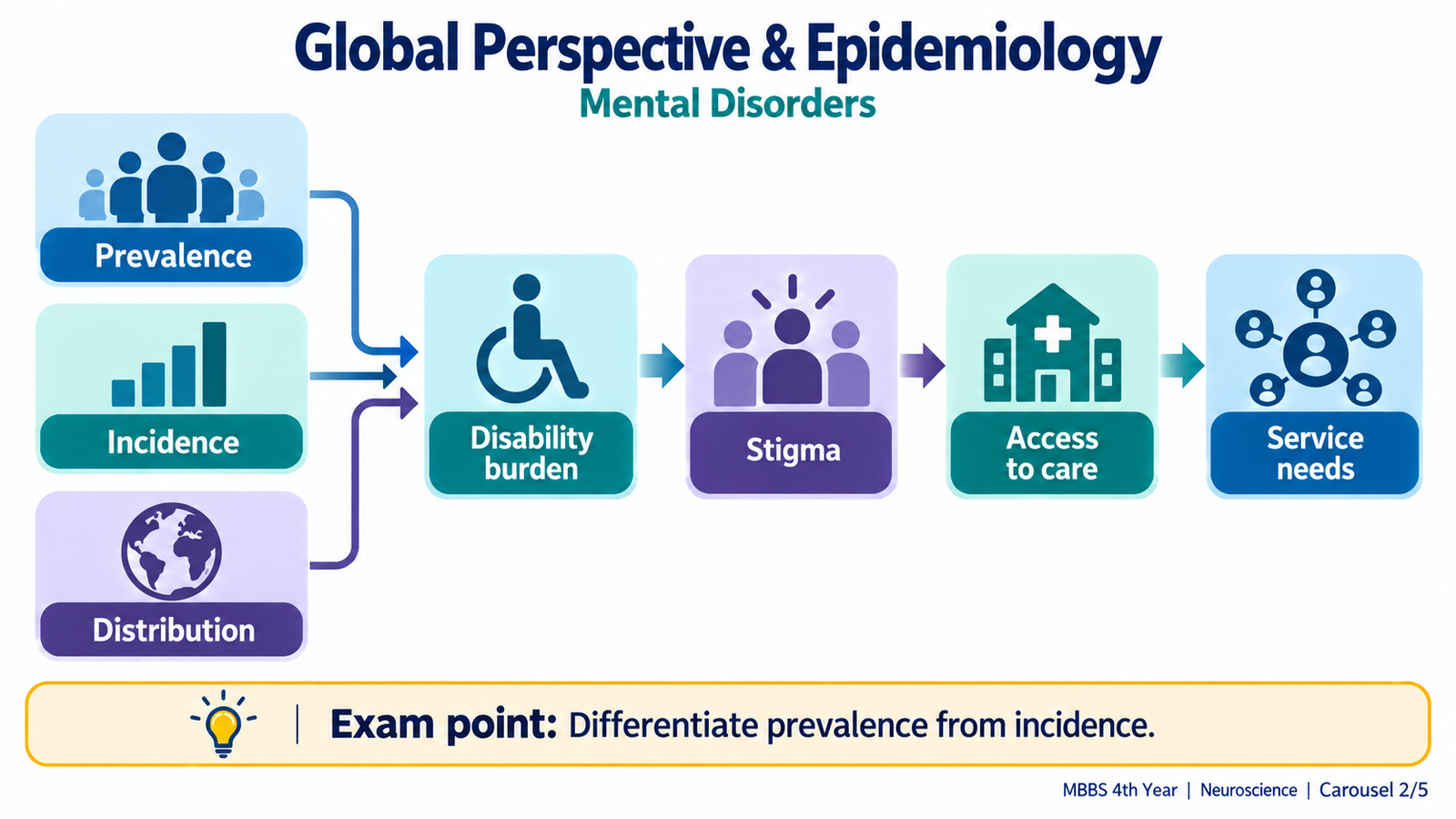
B. Global Perspective and Epidemiology of Mental Disorders
Mental disorders occur in every region of the world and affect people across age groups, cultures and socioeconomic backgrounds. Their importance in public health arises not only from symptoms themselves but also from their effects on education, employment, relationships, physical health, quality of life and long-term disability. Population mental health therefore considers both the occurrence of disorders and the social environment in which people live.
Understanding Epidemiology
Epidemiology studies the frequency, distribution and determinants of health conditions within populations. In mental health, epidemiology helps answer three practical questions: how common a disorder is, which groups are more affected, and which factors are associated with greater or lower risk.
- Prevalence describes existing cases in a population during a defined period and is particularly useful for understanding the total burden on health services.
- Incidence describes new cases developing during a defined period and helps study risk and possible causal determinants.
- Distribution may vary according to age, sex, socioeconomic conditions, exposure to adversity and other population characteristics.
- Burden includes illness, disability, reduced functioning, family effects and social consequences rather than mortality alone.
Important Global Perspectives
Mental-health needs are influenced by social and economic conditions as well as access to care. Stigma may prevent individuals or families from recognizing illness, discussing symptoms or seeking professional help. Limited access to trained professionals and uneven availability of mental-health services may create a gap between people who require care and those who actually receive appropriate support.
A population approach therefore emphasizes equity, dignity, early access to appropriate care, community participation and integration of mental-health services with general healthcare. Cultural beliefs must also be understood because they influence how symptoms are described, interpreted and treated. Culture changes the expression and help-seeking pattern of illness, but it does not remove the need for respectful clinical assessment.
C. Determinants and Risk Factors for Mental Disorders
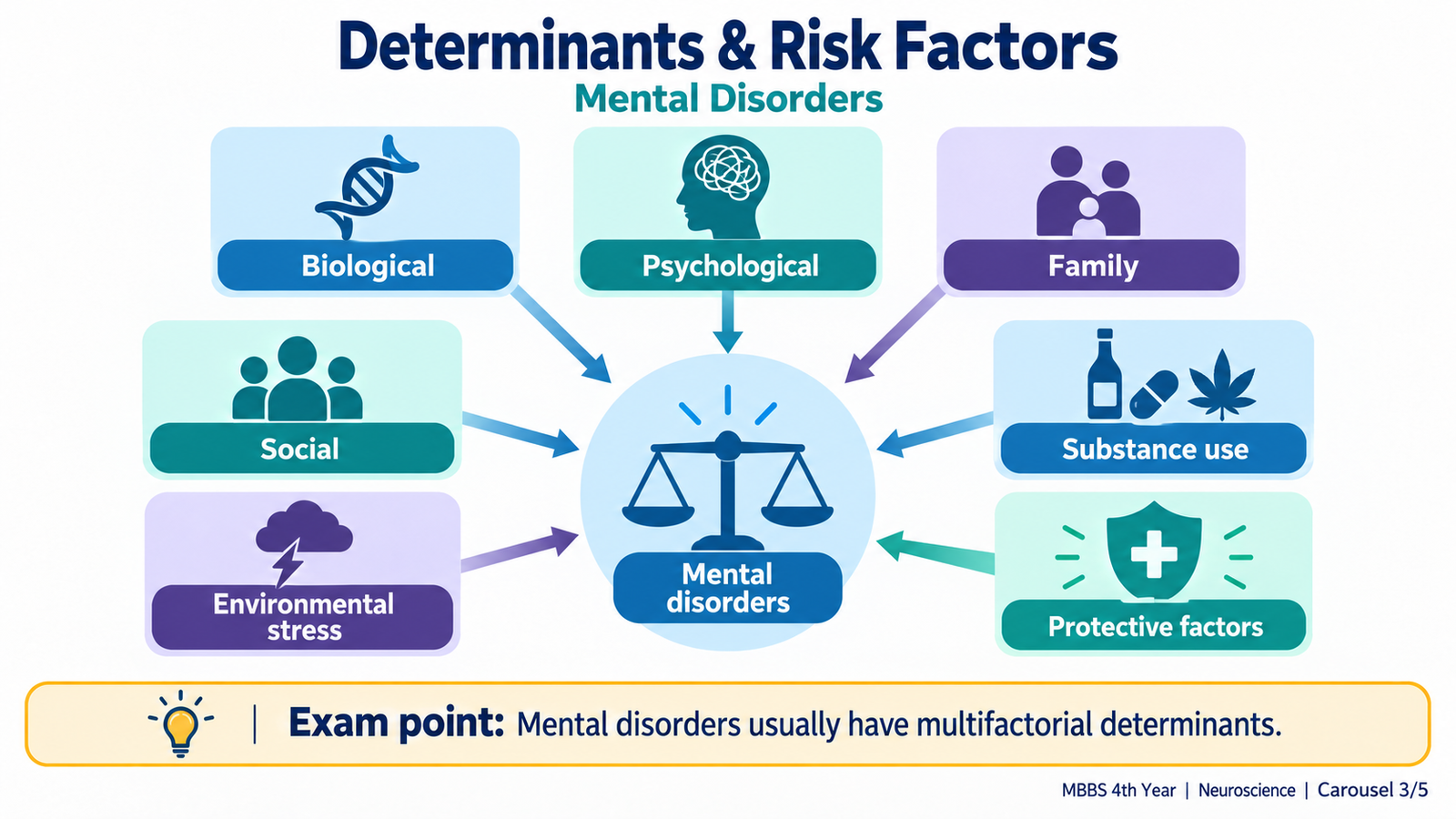
Most mental disorders do not result from one isolated cause. They develop through interaction between biological vulnerability, psychological characteristics and social or environmental exposures. The effect of a risk factor also depends on protective factors. For example, exposure to severe stress may have a greater effect when social support is poor, while supportive relationships may reduce its impact.
This is important in Community Medicine because prevention becomes more effective when modifiable determinants are recognized before severe illness and disability develop.
Major Groups of Risk Factors
- Biological factors: genetic susceptibility, neurological or other chronic physical illness, developmental problems and biological changes affecting brain function.
- Psychological factors: ineffective coping, persistent negative thinking patterns, poor emotional regulation and previous psychological trauma.
- Family and interpersonal factors: family conflict, neglect, abuse, poor social support, bereavement and prolonged relationship difficulties.
- Social and economic factors: poverty, unemployment, insecure housing, social exclusion, discrimination and restricted access to education or healthcare.
- Environmental and life-event factors: violence, displacement, disasters, occupational stress and other severe or prolonged stressful experiences.
- Substance use: harmful use of alcohol or other psychoactive substances may precipitate, worsen or complicate mental-health problems.
Protective Factors
Protective factors reduce vulnerability or improve a person’s ability to cope with adversity. These include supportive family relationships, social connectedness, stable housing and education, meaningful activity, healthy coping skills and access to appropriate healthcare.
D. Prevention and Control of Mental Health Disorders
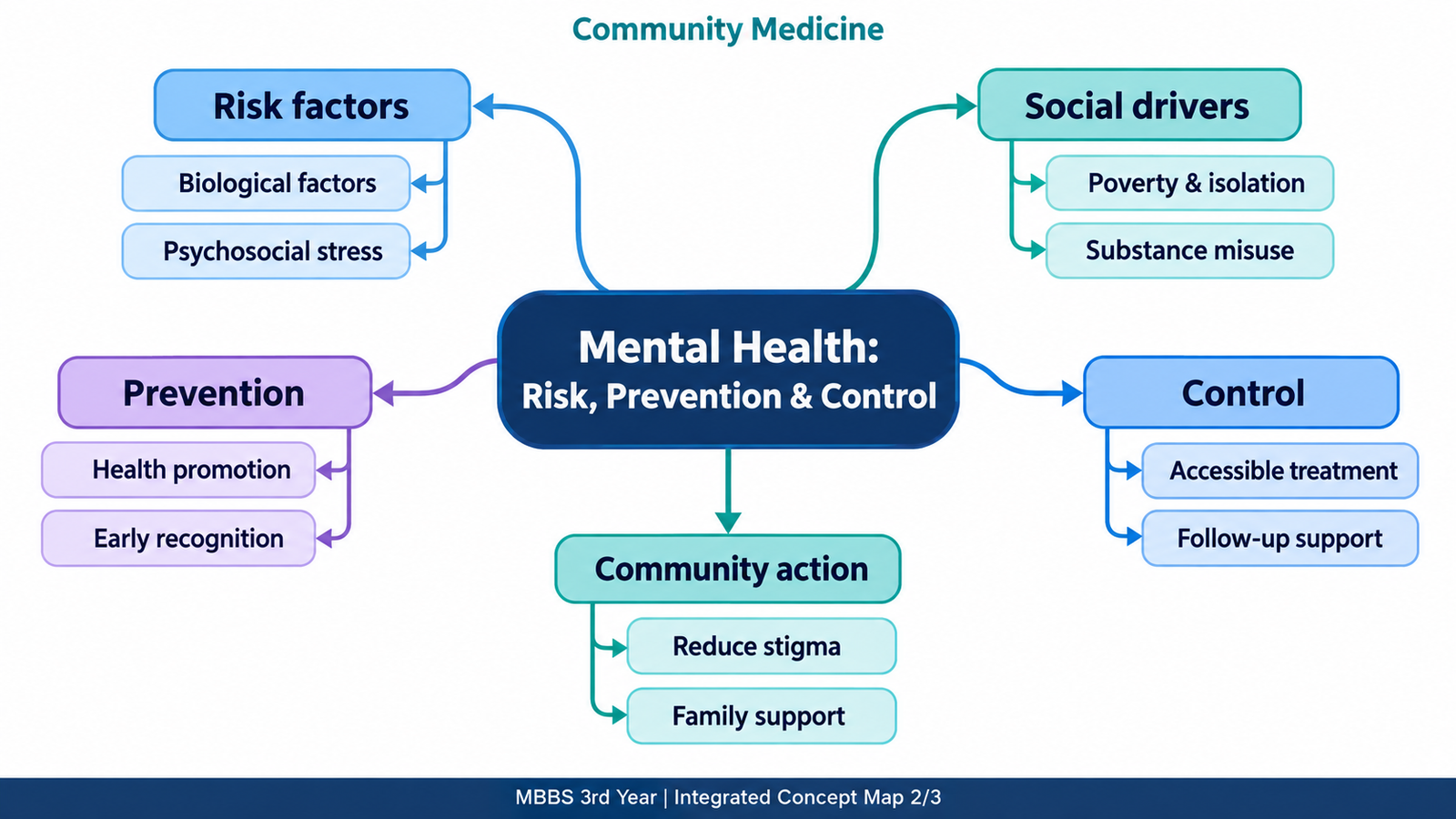
Prevention and control of mental disorders require more than treating established illness. A population approach tries to reduce exposure to risk, strengthen protective factors, recognize problems early and limit disability when illness has already developed. Prevention therefore operates at different stages of the disease process.
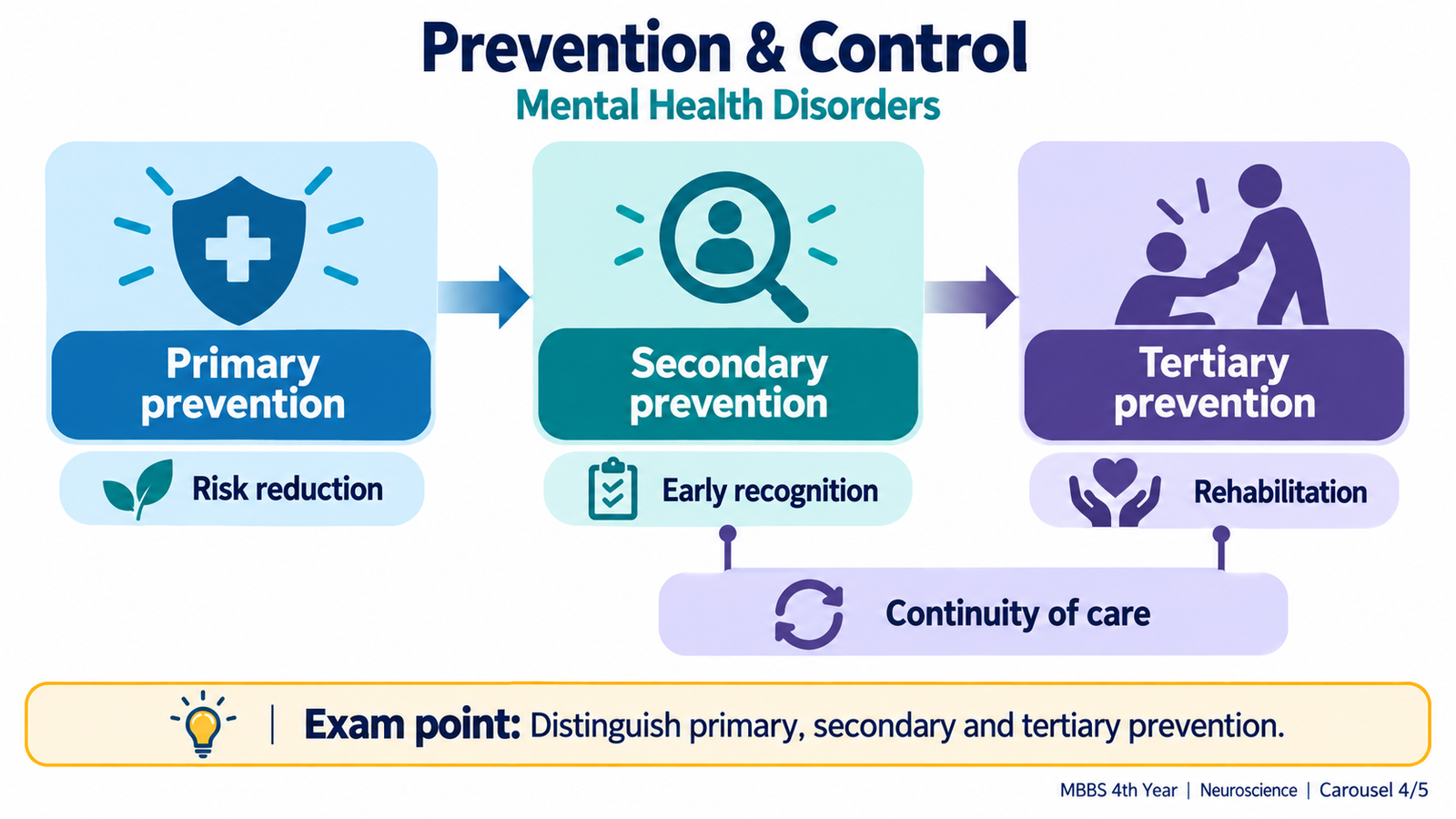
Primary Prevention
Primary prevention acts before a mental disorder becomes established. Its aim is to reduce modifiable risk factors and strengthen psychological and social resilience.
- Promotion of supportive family, school and workplace environments.
- Reduction of violence, abuse, neglect and avoidable social stressors.
- Education about mental well-being and healthy coping.
- Reduction of harmful substance use and other preventable behavioural risks.
- Improvement of social support and timely access to healthcare.
Secondary Prevention
Secondary prevention aims at early recognition and early intervention. The principle is that identifying clinically important symptoms at an earlier stage can reduce progression, shorten suffering and prevent deterioration in social or occupational functioning.
Healthcare workers should recognize warning symptoms, assess people at increased risk, use appropriate screening or case-finding approaches where suitable, and provide or arrange timely professional assessment. Detection is useful only when it is connected to an appropriate pathway for further evaluation and care.
Tertiary Prevention
Tertiary prevention applies when a disorder is already established. Its purpose is to reduce relapse, complications and long-term disability and to restore the highest possible level of functioning.
- Continuity of appropriate treatment and follow-up.
- Psychological and social rehabilitation.
- Support for return to education, employment and family roles.
- Reduction of stigma and social isolation.
- Coordination between healthcare, family and community support when required.
Population-Level Control
Control combines prevention with accessible services. Important principles include mental-health education, reducing stigma, strengthening early referral, integrating mental-health care with general health services, maintaining continuity of care and using population information to identify unmet needs. The objective is not merely to reduce symptoms but also to reduce avoidable disability and improve participation in family and community life.
E. Professional Leadership and Conflict Resolution in Difficult Patient or Attendant Situations
Conflict in healthcare may develop when patients, attendants or healthcare workers have different expectations, incomplete information, fear, grief, frustration or concerns about care. A leader’s role is not simply to “win” the disagreement. The aim is to identify the real concern, maintain safety and professionalism, communicate clearly and work toward a reasonable solution without damaging the therapeutic relationship.
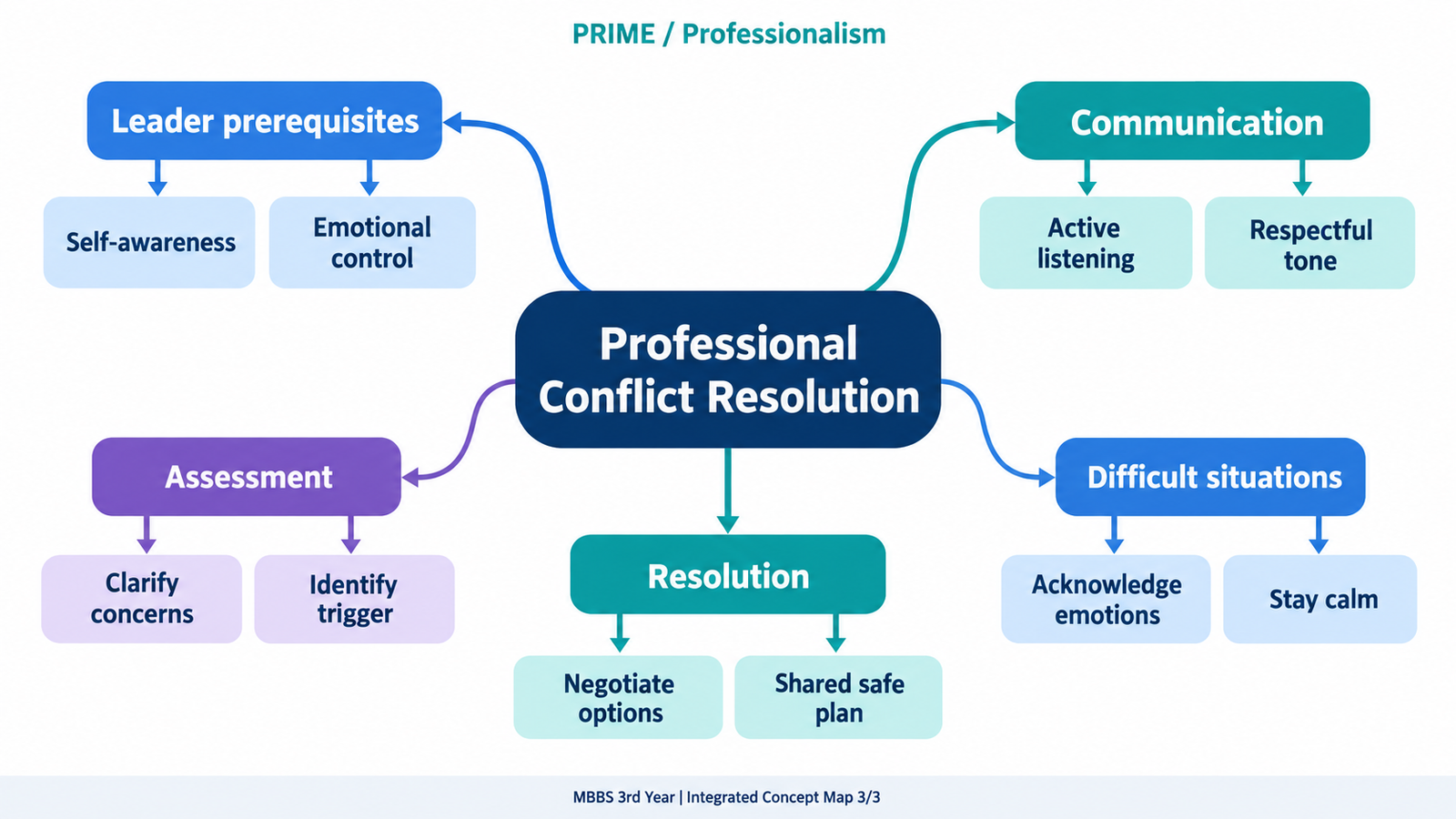
Prerequisites for Effective Conflict Resolution as a Leader
Effective conflict resolution begins with the behaviour of the leader. A doctor who cannot regulate his or her own emotional response is more likely to escalate an already difficult interaction.
- Self-awareness: recognize personal emotions, assumptions and possible biases.
- Emotional regulation: remain calm despite criticism, anger or pressure.
- Active listening: allow the other person to explain the concern before responding.
- Empathy and respect: acknowledge distress without necessarily agreeing with every demand.
- Clear communication: explain facts, uncertainty and available options in understandable language.
- Impartiality: focus on the problem rather than personalities or blame.
- Problem-solving ability: identify the main issue and distinguish solvable concerns from unrealistic expectations.
- Team coordination: know when another team member or senior professional should participate.
- Safety awareness: recognize when behaviour is becoming threatening and normal discussion is no longer sufficient.
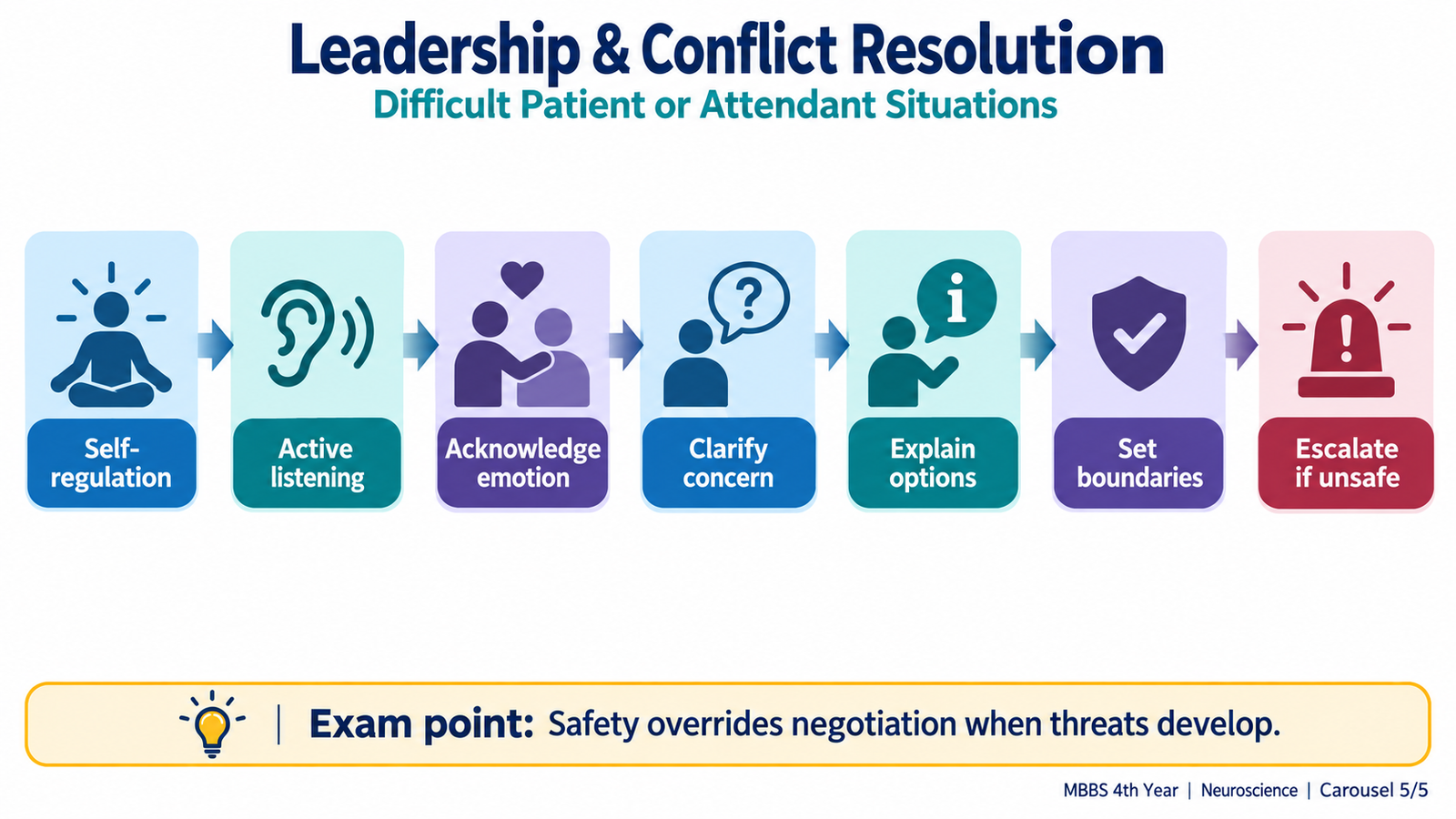
Principles in a Difficult Patient or Attendant Situation
A structured approach prevents the conversation from becoming a cycle of accusation and defensive responses.
- Maintain a calm and respectful manner. A low, controlled tone reduces emotional escalation.
- Allow the concern to be expressed. Interrupting too early may make the patient or attendant feel ignored and may intensify anger.
- Acknowledge emotion. Statements recognizing fear, frustration or distress demonstrate that the concern has been heard.
- Clarify the actual problem. The presenting complaint may be anger, but the underlying issue may be fear, misunderstanding, delay, uncertainty or unmet expectations.
- Explain the situation clearly. Use simple language, provide relevant facts and acknowledge genuine uncertainty instead of giving false reassurance.
- Discuss realistic options. Where possible, involve the patient or attendant in choosing between reasonable next steps.
- Set professional boundaries. Respectful communication does not require accepting verbal abuse, threats, unsafe behaviour or unreasonable demands.
- Avoid blame and unnecessary confrontation. Focus on the current problem and its solution.
- Seek help when needed. Senior staff, appropriate team members or institutional safety support should be involved when the situation cannot be resolved safely at the current level.
- Document significant interactions. Important concerns, explanations, decisions and escalation should be recorded clearly when relevant to patient care.
3. Integrated Mechanism Flow
Biological, psychological and social influences
Vulnerability may increase or be buffered
Well-being, distress or mental disorder
Individual, family and community consequences
Reduce risk, detect early and limit disability
4. Important Comparison: Levels of Prevention in Mental Health
| Level | When It Acts | Main Aim | Typical Approach |
|---|---|---|---|
| Primary | Before disorder develops | Reduce risk and strengthen protection | Mental-health promotion, supportive environments, risk reduction |
| Secondary | Early stage of illness | Detect and intervene early | Early recognition, assessment and timely referral or care |
| Tertiary | Established disorder | Reduce disability and relapse | Treatment continuity, rehabilitation and social reintegration |
⭐ 5. AIM High-Yield Review
🎥 Video 1 — Population Mental Health
WHO: There Is No Health Without Mental Health
Reinforces the global importance of mental health, access to care and the population-health perspective.
🎥 Video 2 — Managing Difficult Patients
Effective Patient Communication — Managing Difficult Patients
Supports active listening, de-escalation, communication and management of challenging patient interactions.