
This chapter follows the supplied KMU learning outcomes and explains the poisons in a logical sequence. First understand how each poison depresses or damages the nervous system, then connect the mechanism with its clinical features, treatment and forensic importance. Use the final High-Yield Review for revision after completing the explanation. :contentReference[oaicite:0]{index=0}
Cerebral Depressant Poisons: Opioids, Alcohols and Sedative–Hypnotics
Neuroscience Module • Forensic Medicine
A structured approach to neurotoxin classification, opioid poisoning, ethyl and methyl alcohol toxicity, chloral hydrate and barbiturate poisoning, diagnosis, treatment, fatal doses, autopsy findings and medico-legal significance.
1. Topic Introduction
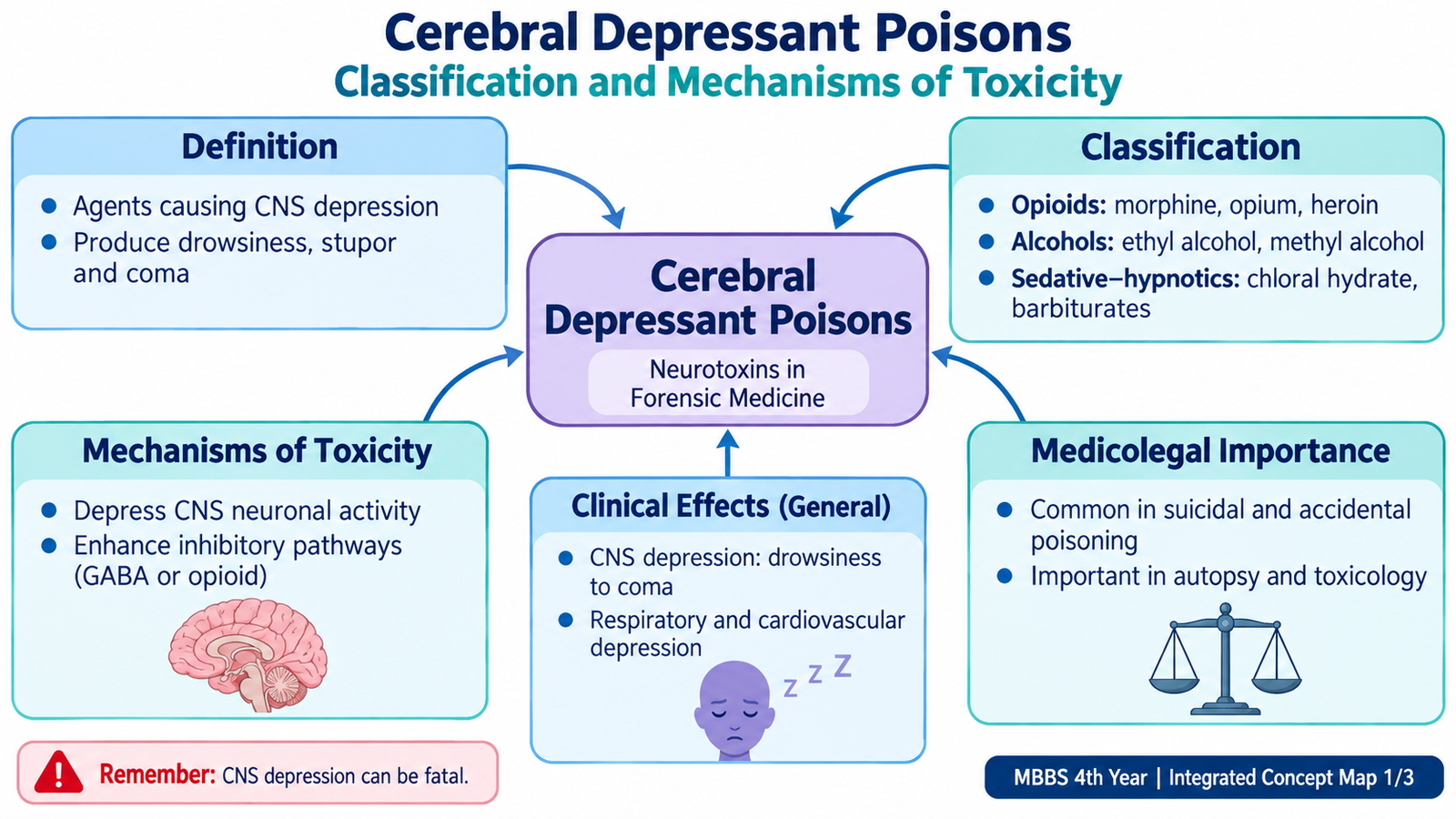
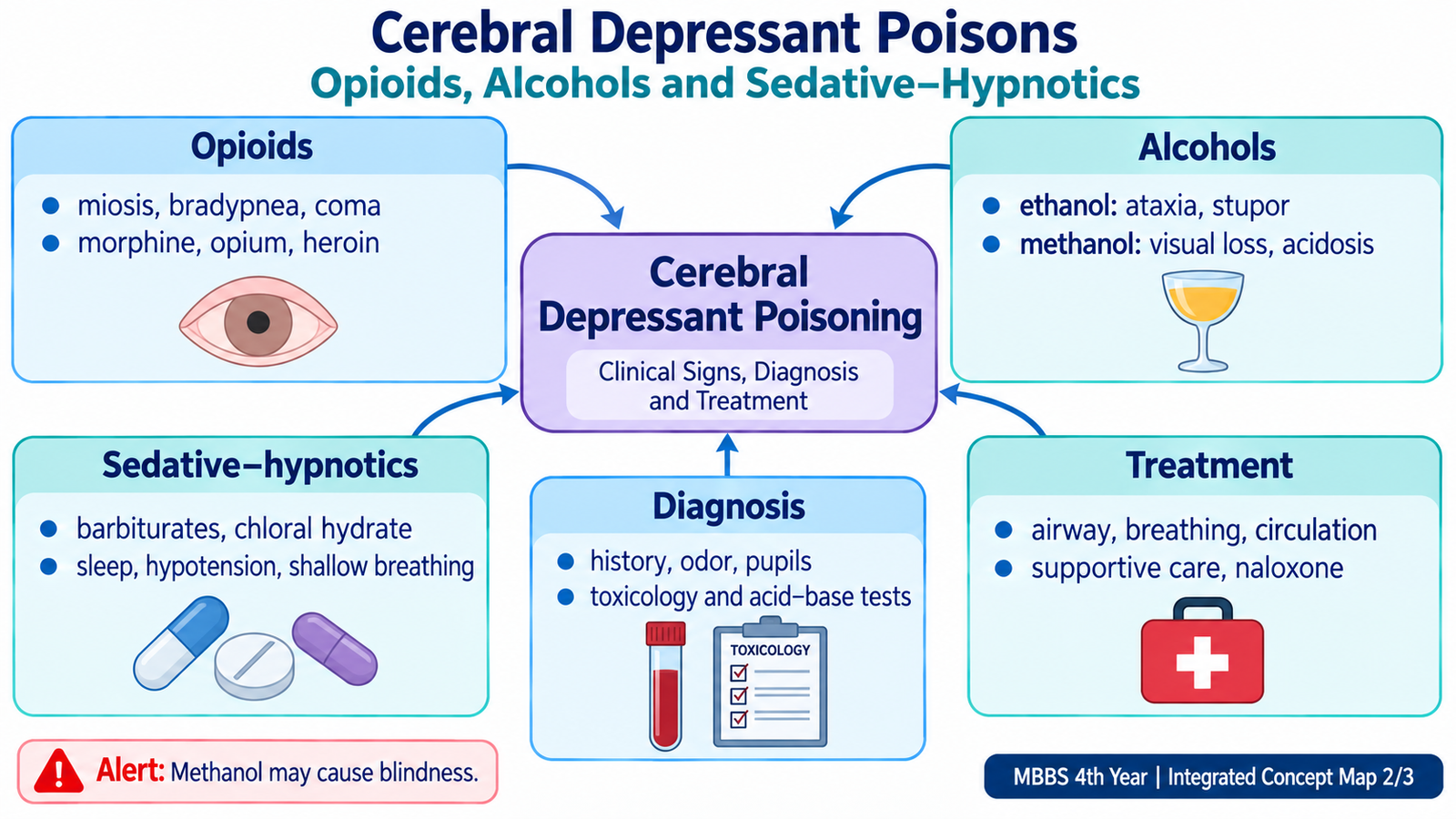
Cerebral depressant poisons reduce normal activity of the brain and may progress from impaired judgement or drowsiness to stupor, coma, respiratory failure and death. This topic focuses on three important forensic groups: somniferous poisons such as opium, morphine and heroin; inebriant poisons such as ethyl and methyl alcohol; and sedative–hypnotic poisons such as chloral hydrate and barbiturates. Although all may affect consciousness, their mechanisms and characteristic findings are not identical. Opioids primarily suppress respiration, ethanol produces dose-dependent CNS depression, methanol causes severe metabolic and visual toxicity through its metabolites, while barbiturates and chloral hydrate may cause profound sedation and cardiorespiratory depression. Understanding these differences is central to diagnosis, treatment and medico-legal interpretation.
A. Neurotoxins and Classification of Cerebral Depressant Poisons
A neurotoxin is a poisonous substance that produces its important toxic effects by interfering with the structure or function of the nervous system. In forensic toxicology, poisons affecting the nervous system may be grouped according to the part of the nervous system involved and the type of functional disturbance produced. In this topic, the important group is the cerebral depressant group because these substances reduce higher cerebral activity and, in severe poisoning, may depress vital centres in the brainstem.
Core classification in this topic
- Somniferous poisons: opium, morphine and heroin.
- Inebriant poisons: ethyl alcohol and methyl alcohol.
- Sedative–hypnotic poisons: chloral hydrate and barbiturates.
The term somniferous means sleep-producing. Opioid poisoning therefore typically progresses from drowsiness to deep coma and respiratory depression. Inebriants initially produce behavioural and coordination changes resembling drunkenness, although methanol later develops a very different pattern because its metabolites injure the optic system and produce metabolic acidosis. Sedative–hypnotic poisons mainly suppress neuronal activity, and severe exposure causes unconsciousness, hypotension and respiratory failure.

B. Somniferous Poisons: Opium, Morphine and Heroin
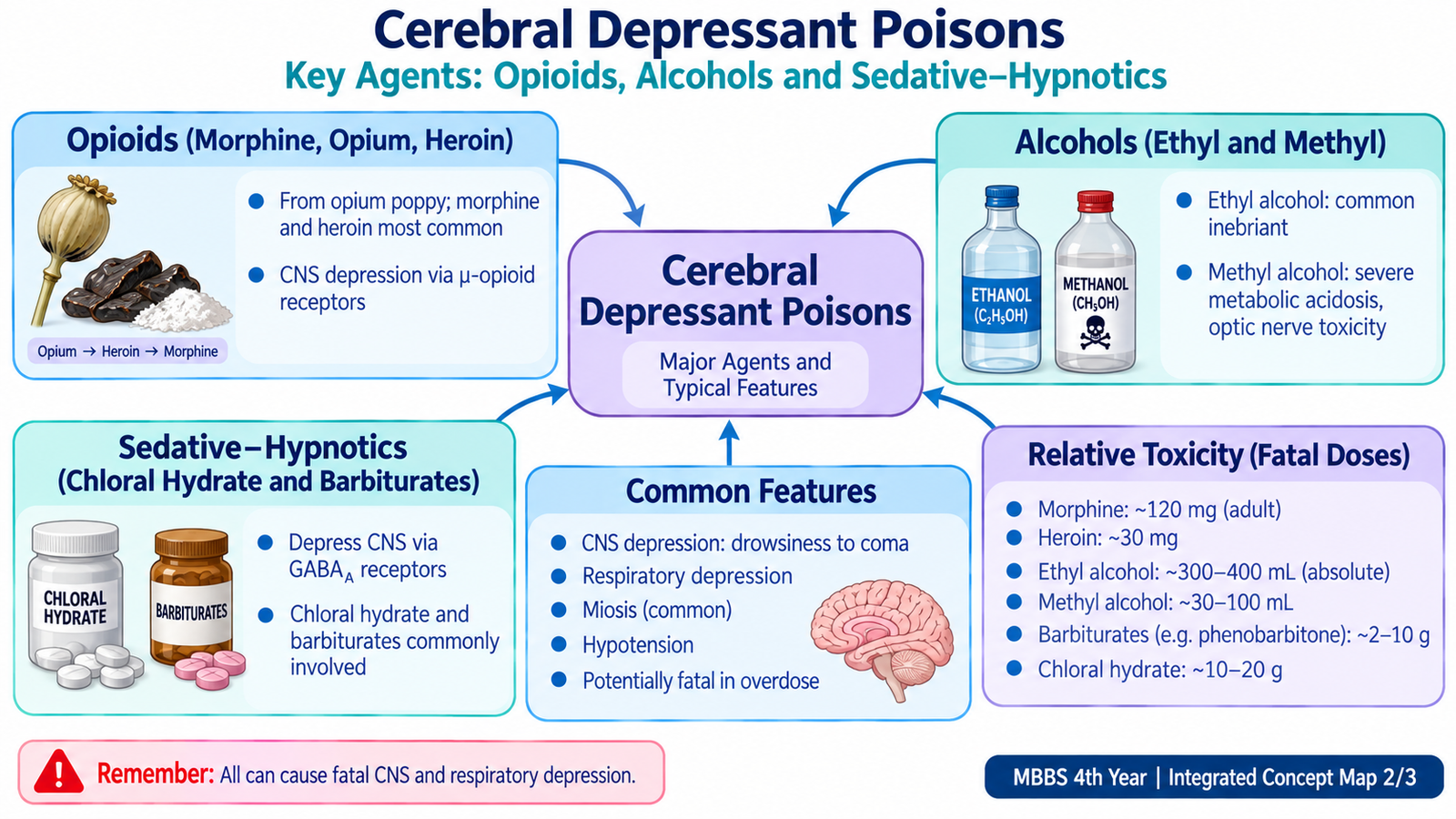
Opium is obtained from the poppy Papaver somniferum and contains several alkaloids, of which morphine is the most important narcotic component. Heroin, or diacetylmorphine, is a highly potent opioid derivative. Although their potency and routes of use differ, severe poisoning with these substances produces the same fundamental toxic effect: excessive opioid-receptor stimulation causes progressive depression of consciousness and, most importantly, depression of respiration.
Mechanism of toxicity
Opioids act mainly through μ-opioid receptors in the brain and spinal cord. These receptors are inhibitory G-protein-coupled receptors. Their activation reduces neurotransmitter release and decreases neuronal excitability. Excessive stimulation of opioid receptors in the medullary respiratory centres reduces the brain’s response to carbon dioxide.
Clinical features
The classic severe opioid toxidrome is the combination of coma, marked respiratory depression and pinpoint pupils. The pupils may become less constricted or even dilated in terminal hypoxia, so pupil size alone should never be used to exclude opioid poisoning.
- Initial euphoria, drowsiness or mental clouding may occur.
- Progressive stupor followed by deep coma develops in severe poisoning.
- Respiration becomes slow, shallow and inadequate.
- Pupils are typically markedly constricted.
- Skin may become cold and cyanosed because of hypoxia.
- Blood pressure and body temperature may fall.
- Protective airway reflexes become impaired, increasing aspiration risk.
- Non-cardiogenic pulmonary oedema may occur in serious opioid overdose.
Diagnosis
Diagnosis is based on the history, examination and recognition of the opioid toxidrome. Respiratory rate and adequacy of ventilation are more important than simply assessing consciousness. Toxicological testing of appropriate clinical or forensic specimens can support the diagnosis, but the result must be interpreted with the circumstances, tolerance, route of administration and other substances taken.
Treatment principles
The immediate priority is correction of the life-threatening respiratory depression.
- Maintain the airway and support breathing and oxygenation.
- Provide assisted ventilation when spontaneous breathing is inadequate.
- Naloxone is the specific opioid antagonist and reverses opioid-induced respiratory and CNS depression.
- Because some opioids act longer than naloxone, recurrence of respiratory depression must be anticipated and monitored.
- Manage aspiration, pulmonary oedema, hypotension and other complications when present.
Fatal doses
Traditional undergraduate forensic teaching quotes an approximate fatal dose of opium about 2 g and morphine about 0.2 g (200 mg). Heroin is considerably more potent; a commonly quoted fatal dose is approximately 50 mg. These figures are teaching values rather than absolute thresholds because tolerance, purity, route of administration and co-ingestion can greatly alter lethality. :contentReference[oaicite:1]{index=1}
Autopsy findings
There is no single pathognomonic autopsy finding. Findings mainly reflect hypoxia and respiratory failure. Pulmonary congestion and oedema are common. Cyanosis and visceral congestion may be present. In an injecting drug user, recent or old injection marks may provide an important contextual clue. Toxicological confirmation and scene information are therefore essential.
Medico-legal importance
Opioids are important in accidental overdose, substance dependence and deaths involving combinations of opioids with alcohol or other CNS depressants. Suicidal poisoning may occur. In a forensic death, the presence of an opioid does not by itself establish the manner of death; the circumstances, tolerance, toxicology and autopsy findings must all be considered.

C. Ethyl Alcohol Poisoning
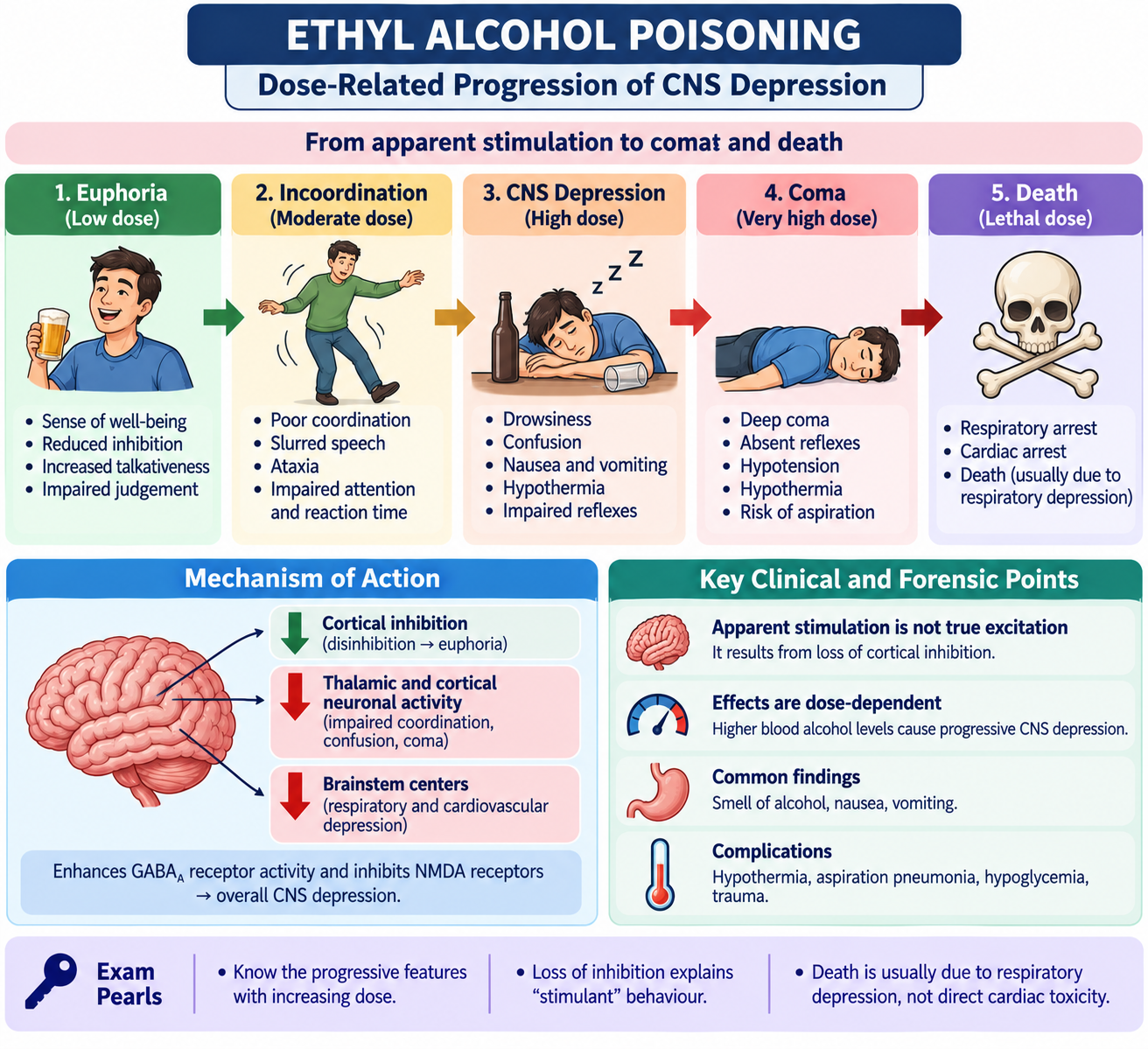
Ethyl alcohol, or ethanol, is the alcohol present in alcoholic beverages. It is classified as an inebriant poison because increasing concentrations progressively impair judgement, behaviour, coordination and consciousness. Although a person may initially appear stimulated or disinhibited, ethanol is pharmacologically a CNS depressant. The apparent early “stimulation” results mainly from depression of inhibitory and judgement-related cortical functions.
Mechanism of toxicity
Ethanol enhances inhibitory neurotransmission, particularly through GABA-related mechanisms, while reducing excitatory glutamatergic activity. As exposure rises, higher cortical functions are affected first, followed by coordination, consciousness and eventually the brainstem centres responsible for vital functions.
Clinical features
The manifestations depend on the amount consumed, speed of drinking, tolerance, food intake and associated drugs or illness. Clinical assessment is therefore more important than assuming that the same quantity will affect every person equally.
- Early disinhibition, talkativeness and impaired judgement.
- Reduced attention and slowing of reaction time.
- Slurred speech and impaired fine motor control.
- Unsteady gait and incoordination.
- Nystagmus may occur.
- Nausea and vomiting are common with increasing intoxication.
- Severe poisoning may produce stupor, coma, hypothermia, hypotension and respiratory depression.
- Vomiting with impaired consciousness creates an important risk of aspiration.
Diagnosis
Alcoholic odour may support the diagnosis but does not prove that alcohol is the sole cause of altered consciousness. Head injury, hypoglycaemia, stroke, other poisons and sedative drugs can mimic or accompany intoxication. Clinical assessment should therefore include consciousness, airway and breathing, circulation, neurological status, blood glucose and evidence of trauma. Measurement of alcohol in an appropriate biological sample provides objective evidence when required for clinical or medico-legal purposes.
Treatment principles
There is no routine specific antidote for ethanol intoxication. Treatment is mainly supportive.
- Protect the airway and support ventilation when necessary.
- Correct hypoglycaemia when present.
- Correct dehydration, electrolyte disturbance and hypothermia as required.
- Look actively for trauma or another cause of reduced consciousness.
- Severe poisoning requires close monitoring until consciousness and vital functions recover.
Fatal dose
A traditional forensic teaching value is approximately 150–200 mL of absolute alcohol consumed over a short period. This is not an absolute biological threshold because tolerance and rate of consumption strongly influence toxicity. :contentReference[oaicite:2]{index=2}
Autopsy and medico-legal importance
Acute ethanol deaths may show non-specific findings such as visceral congestion, pulmonary oedema and gastric mucosal congestion. Odour alone is unreliable, and toxicological analysis is important. Ethanol has major medico-legal importance in accidental poisoning, impaired driving and other activities requiring judgement and coordination. In a deceased person, alcohol results must be interpreted cautiously with sampling circumstances and the possibility of postmortem change in mind.
D. Methyl Alcohol Poisoning
Methyl alcohol, or methanol, is an industrial alcohol that can produce intoxication but is particularly dangerous because the parent alcohol is converted into highly toxic metabolites. Unlike uncomplicated ethanol poisoning, severe methanol poisoning characteristically causes high-anion-gap metabolic acidosis and visual toxicity. This mechanism explains why a patient may initially have relatively non-specific symptoms and later develop severe systemic illness and visual impairment.
Mechanism of toxicity
Methanol itself contributes to CNS depression, but the major damage occurs after metabolism. Alcohol dehydrogenase converts methanol to formaldehyde, which is then converted to formic acid. Formate interferes with cellular oxidative metabolism and is particularly toxic to the retina and optic nerve.
Clinical features
- Headache, dizziness and weakness.
- Nausea, vomiting and abdominal pain.
- Variable CNS depression, confusion or coma.
- Rapid or deep breathing may develop as the body attempts to compensate for metabolic acidosis.
- Blurred or misty vision, photophobia and visual field disturbance may occur.
- Severe toxicity may progress to marked visual loss or blindness.
- Pupillary abnormalities may appear in advanced ocular toxicity.
- Convulsions, circulatory failure and respiratory failure can occur in severe poisoning.
Diagnosis
The diagnosis is suspected from the history and characteristic combination of visual disturbance and metabolic acidosis. Laboratory evaluation may show a raised osmolar gap earlier in poisoning and an increasing anion gap as toxic acidic metabolites accumulate. Direct measurement of methanol, when available, supports confirmation. A normal-looking patient soon after exposure does not necessarily exclude dangerous poisoning because toxic metabolite formation may be delayed.
Treatment principles
Treatment aims to stop additional toxic metabolite formation, correct the metabolic disturbance and remove methanol and formate in severe cases.
- Stabilize airway, breathing and circulation.
- Correct significant metabolic acidosis.
- Fomepizole inhibits alcohol dehydrogenase and prevents conversion of methanol into toxic metabolites.
- Ethanol can also compete for alcohol dehydrogenase where used as an alternative antidotal strategy.
- Folate therapy supports metabolism of formate to less toxic products.
- Haemodialysis is important in severe poisoning because it removes methanol and formate while helping correct acidosis.
Fatal dose
A traditionally quoted fatal dose of methanol is approximately 60–200 mL, although considerably smaller amounts may cause severe visual injury. Individual susceptibility and treatment substantially influence the outcome. :contentReference[oaicite:3]{index=3}
Autopsy findings
Findings may include visceral congestion, pulmonary oedema, cerebral oedema and congestion or inflammation of the upper gastrointestinal mucosa. Cerebral haemorrhagic changes may occur in severe toxicity. Damage involving the retina and optic pathways explains the characteristic visual manifestations, although many postmortem findings are not specific enough to establish the diagnosis alone.
Medico-legal importance
Methanol poisoning may occur accidentally through industrial exposure or ingestion of products containing methanol. It is particularly important in outbreaks involving illicit, contaminated or adulterated alcoholic preparations. A cluster of patients with visual symptoms and severe metabolic acidosis therefore has major public-health and forensic significance.

E. Sedative–Hypnotic Poisons: Barbiturates and Chloral Hydrate
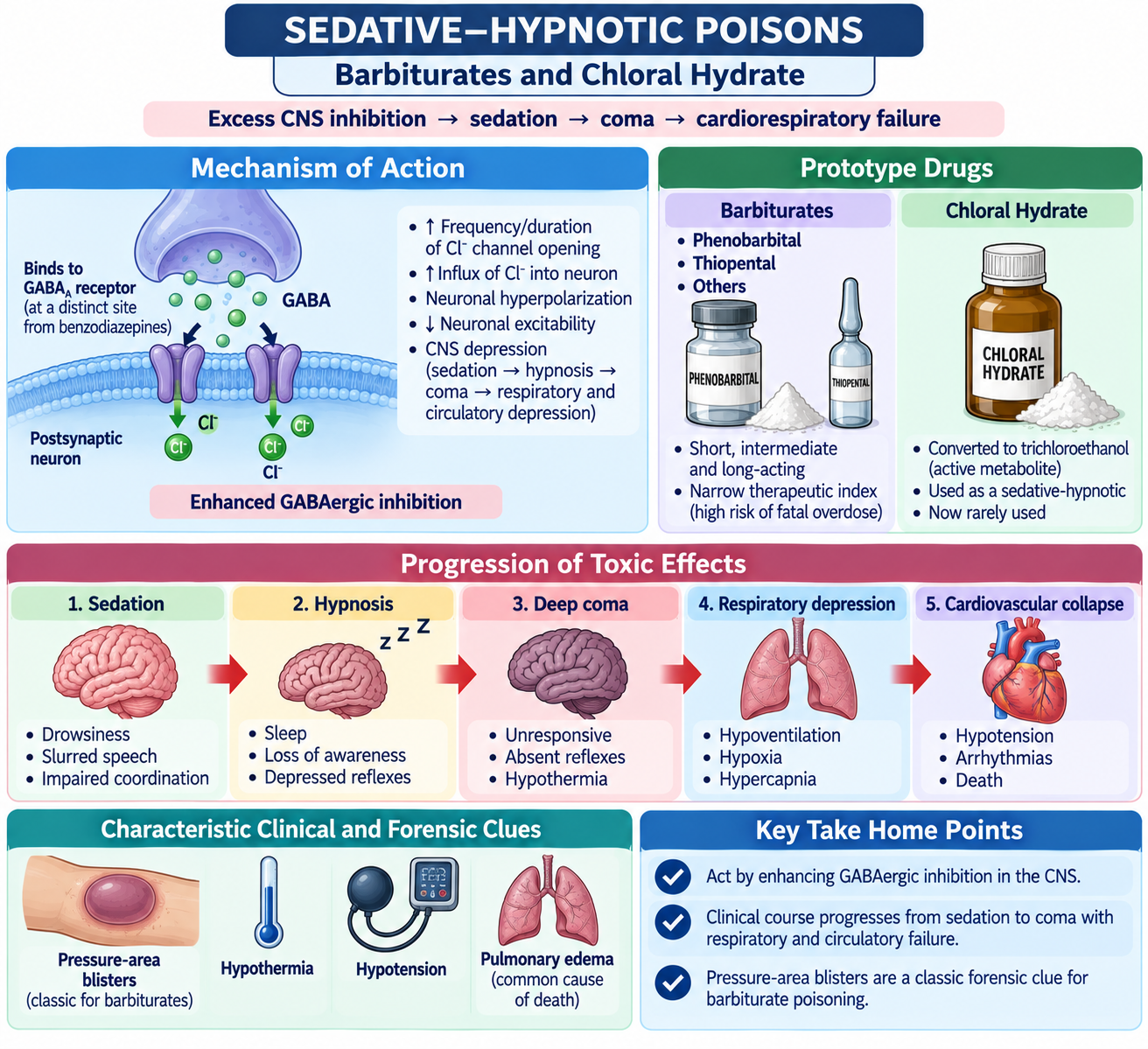
Barbiturates and chloral hydrate are sedative–hypnotic substances capable of producing profound CNS depression in overdose. Their toxic presentation may resemble severe alcohol intoxication, but deep coma, respiratory depression and circulatory failure become increasingly important as poisoning progresses. Unlike opioid poisoning, marked pinpoint pupils are not a reliable defining feature and there is no routinely used specific antidote for barbiturate or chloral hydrate poisoning.
Barbiturates: mechanism of toxicity
Barbiturates facilitate inhibitory neurotransmission at the GABAA receptor. They characteristically prolong chloride-channel opening, increasing neuronal inhibition. At toxic concentrations, CNS and medullary respiratory depression become profound. Cardiovascular depression and vasodilatation may contribute to hypotension and shock.
Clinical features of barbiturate poisoning
- Drowsiness followed by stupor and coma.
- Slurred speech, ataxia and impaired coordination may precede coma.
- Reflexes become reduced or absent in severe poisoning.
- Respiration becomes inadequate and may eventually cease.
- Hypotension and hypothermia are common in severe poisoning.
- Pupils may initially be small but generally retain some light reaction; terminal hypoxia can cause dilation.
- Barbiturate blisters may occur, particularly over pressure areas, and are a useful classical forensic clue.
Diagnosis and treatment of barbiturate poisoning
Diagnosis depends on the clinical picture, exposure history and toxicological evidence. Other causes of coma must be excluded. Treatment is mainly intensive supportive care because there is no specific routinely used antidote.
- Protect the airway and support ventilation.
- Treat hypotension and maintain adequate circulation.
- Prevent complications of prolonged unconsciousness, including aspiration and pressure injury.
- Appropriate gastrointestinal decontamination may be considered in selected early presentations after clinical assessment.
- Enhanced elimination is particularly relevant to severe poisoning with long-acting agents such as phenobarbital.
Fatal dose of barbiturates
Traditional forensic teaching gives approximate fatal doses according to duration of action: short-acting barbiturates 1–2 g, intermediate-acting agents 2–3 g and long-acting agents about 3–5 g. These are approximate historical teaching values and should not be interpreted as rigid toxic thresholds. :contentReference[oaicite:4]{index=4}
Chloral hydrate
Chloral hydrate is a sedative–hypnotic that is rapidly absorbed and converted to the active metabolite trichloroethanol. Its poisoning resembles that of other sedative–hypnotic drugs, producing drowsiness, impaired coordination, progressive unconsciousness and respiratory depression. Cardiovascular instability and cardiac arrhythmias may also occur in serious poisoning.
The traditionally quoted fatal dose is approximately 5–10 g. Severe poisoning is treated with airway and respiratory support, cardiovascular stabilization and management of complications. There is no specific antidote routinely used. :contentReference[oaicite:5]{index=5}
Autopsy findings and medico-legal importance
Barbiturate deaths usually show non-specific signs of cardiorespiratory failure, including pulmonary congestion and oedema. Barbiturate blisters may provide an external clue but are not by themselves proof of poisoning. Chloral hydrate may cause congestion or irritation of the gastric mucosa, while internal findings otherwise remain largely non-specific.
Barbiturates have medico-legal importance in accidental and suicidal overdose and in mixed-drug poisoning. Chloral hydrate is historically important as a rapidly acting stupefying agent and has been described in drinks used to incapacitate victims. Such historical associations should never replace proper toxicological and circumstantial evidence when interpreting an actual case.
F. Forensic Diagnosis, Autopsy Interpretation and Medico-Legal Importance
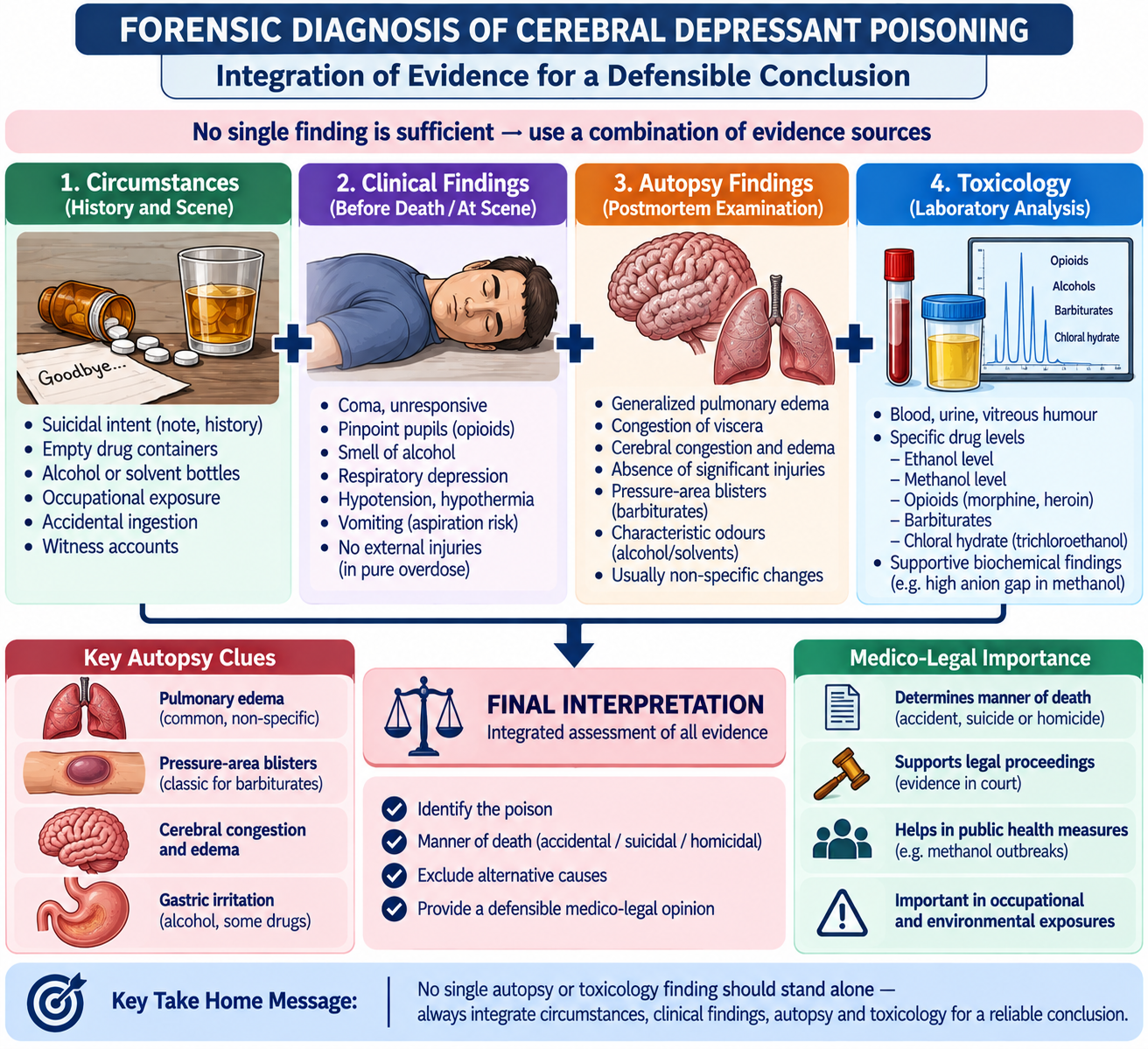
Forensic interpretation of cerebral depressant poisoning requires more than identifying a chemical in the body. Many postmortem findings are non-specific, and toxic substances may be present at concentrations influenced by tolerance, metabolism, treatment, survival time, redistribution after death and co-ingested drugs. The correct approach therefore combines the circumstances, clinical history when available, autopsy findings and toxicological examination.
Approach to diagnosis
- Scene and history: containers, medicines, alcohol products, syringes, witness accounts and previous substance use may provide important clues.
- Clinical pattern: opioid triad, ethanol-like inebriation, methanol-associated visual toxicity or sedative–hypnotic coma may guide suspicion.
- Laboratory evidence: biochemical abnormalities such as metabolic acidosis may identify the toxic mechanism.
- Toxicology: appropriate biological specimens should be collected, documented and transferred with an intact chain of custody.
- Interpretation: a positive toxicological result must be evaluated together with the complete case rather than treated as automatic proof of fatal poisoning.
Characteristic and supportive autopsy clues
Most cerebral depressant deaths share non-specific signs of hypoxia such as pulmonary congestion, pulmonary oedema, cyanosis and visceral congestion. More helpful clues include injection marks in some opioid deaths, pressure-area blisters in barbiturate poisoning and pathological evidence compatible with severe methanol toxicity. None of these findings should be interpreted in isolation.
Cause, mechanism and manner of death
These three forensic concepts should be kept separate. For example, the cause of death may be acute opioid poisoning. The mechanism of death may be respiratory depression leading to hypoxia. The manner of death may be accidental, suicidal, homicidal or undetermined depending on the circumstances and evidence. Toxicology alone does not determine manner.
Major medico-legal situations
- Accidental overdose in drug misuse or therapeutic exposure.
- Suicidal ingestion of alcohols or sedative–hypnotic drugs.
- Mixed poisoning involving alcohol with opioids or sedatives, producing additive CNS and respiratory depression.
- Impaired judgement, coordination and driving ability associated with ethanol.
- Deaths and outbreaks from methanol-containing illicit or adulterated alcohol.
- Use of sedative substances to incapacitate a person.
3. Integrated Mechanism Flow
The important exception to a simple “CNS depression” model is methanol: its metabolites, particularly formate, produce metabolic acidosis and optic toxicity in addition to CNS effects.
4. Important Comparison — Differentiating the Major Cerebral Depressant Poisons
| Poison | Main toxic mechanism | Key clinical clue | Major danger | Specific treatment principle |
|---|---|---|---|---|
| Opioids | μ-receptor-mediated neuronal inhibition | Coma + pinpoint pupils + respiratory depression | Respiratory failure | Naloxone plus ventilatory support |
| Ethanol | General CNS depression | Disinhibition, slurred speech, ataxia | Coma, aspiration, respiratory depression | Supportive care |
| Methanol | Formate formation causing cellular toxicity | Visual disturbance + metabolic acidosis | Blindness, severe acidosis, coma | Fomepizole/ethanol; dialysis when severe |
| Barbiturates | Enhanced GABA-mediated neuronal inhibition | Deep coma ± pressure-area blisters | Respiratory and circulatory failure | Supportive care; enhanced elimination in selected severe cases |
| Chloral hydrate | Sedative–hypnotic CNS depression | Rapid sedation progressing to coma | Respiratory depression and cardiovascular instability | Supportive care |
⭐ 5. AIM High-Yield Review
- Cerebral depressants in this topic include somniferous opioids, inebriant alcohols and sedative–hypnotics.
- ⭐ Opioid poisoning: coma + pinpoint pupils + respiratory depression is the classic triad.
- Naloxone reverses opioid toxicity, but airway and ventilation remain immediate priorities.
- Ethanol is a CNS depressant despite the apparent early behavioural stimulation or disinhibition.
- ⭐ Methanol → formic acid/formate → metabolic acidosis + optic toxicity.
- Visual disturbance together with severe unexplained metabolic acidosis is a major clue to methanol poisoning.
- Fomepizole prevents toxic methanol metabolite formation by inhibiting alcohol dehydrogenase.
- Barbiturates enhance GABA-mediated CNS inhibition and may cause deep coma, respiratory depression and hypotension.
- ⭐ Barbiturate blisters, especially over pressure areas, are a useful classical forensic clue.
- Chloral hydrate produces sedative–hypnotic toxicity resembling barbiturate poisoning.
- Fatal-dose figures in forensic textbooks are approximate teaching values; tolerance, route, purity and co-ingestion can markedly change lethality.
- Most autopsy findings in cerebral depressant poisoning are supportive rather than pathognomonic.
- Forensic diagnosis requires integration of circumstances + examination/autopsy + toxicology.
- Cause, mechanism and manner of death are different concepts: toxicology may establish exposure, but manner requires evaluation of the complete evidence.
Cerebral Depressant Poisons
Use these videos after completing the AIM learning material to reinforce the mechanisms, clinical features and management principles of alcohol and sedative–hypnotic poisoning.
1. Ethanol & Methanol Poisoning
Focus on ethanol intoxication, toxic alcohol metabolism, methanol toxicity, metabolic acidosis and treatment principles.
2. Barbiturate Poisoning
Review the mechanism of CNS depression, important manifestations and general treatment principles of barbiturate poisoning.