
Dementia, Alzheimer Disease, Forensic Psychiatry and Mental Health Law
A focused chapter covering dementia and Alzheimer disease, core forensic psychiatric terminology, insanity and criminal responsibility, medico-legal tests, mental-health-law principles and testamentary capacity.
1. Topic Introduction
Dementia is an acquired decline in cognitive function severe enough to interfere with everyday independence. Alzheimer disease is its most important neurodegenerative cause and produces progressive impairment of memory and other cognitive abilities. The same topic also introduces forensic psychiatry, where mental disorders are considered in relation to criminal responsibility, civil capacity, mental-health legislation and the validity of decisions such as making a will. The aim is not to turn the student into a lawyer or specialist psychiatrist, but to explain the medical concepts that allow a doctor to understand cognitive decline, recognize important psychiatric terms and give careful medico-legal opinions about mental capacity and responsibility. :contentReference[oaicite:0]{index=0}
A. Dementia: Core Concept, Types and Causes
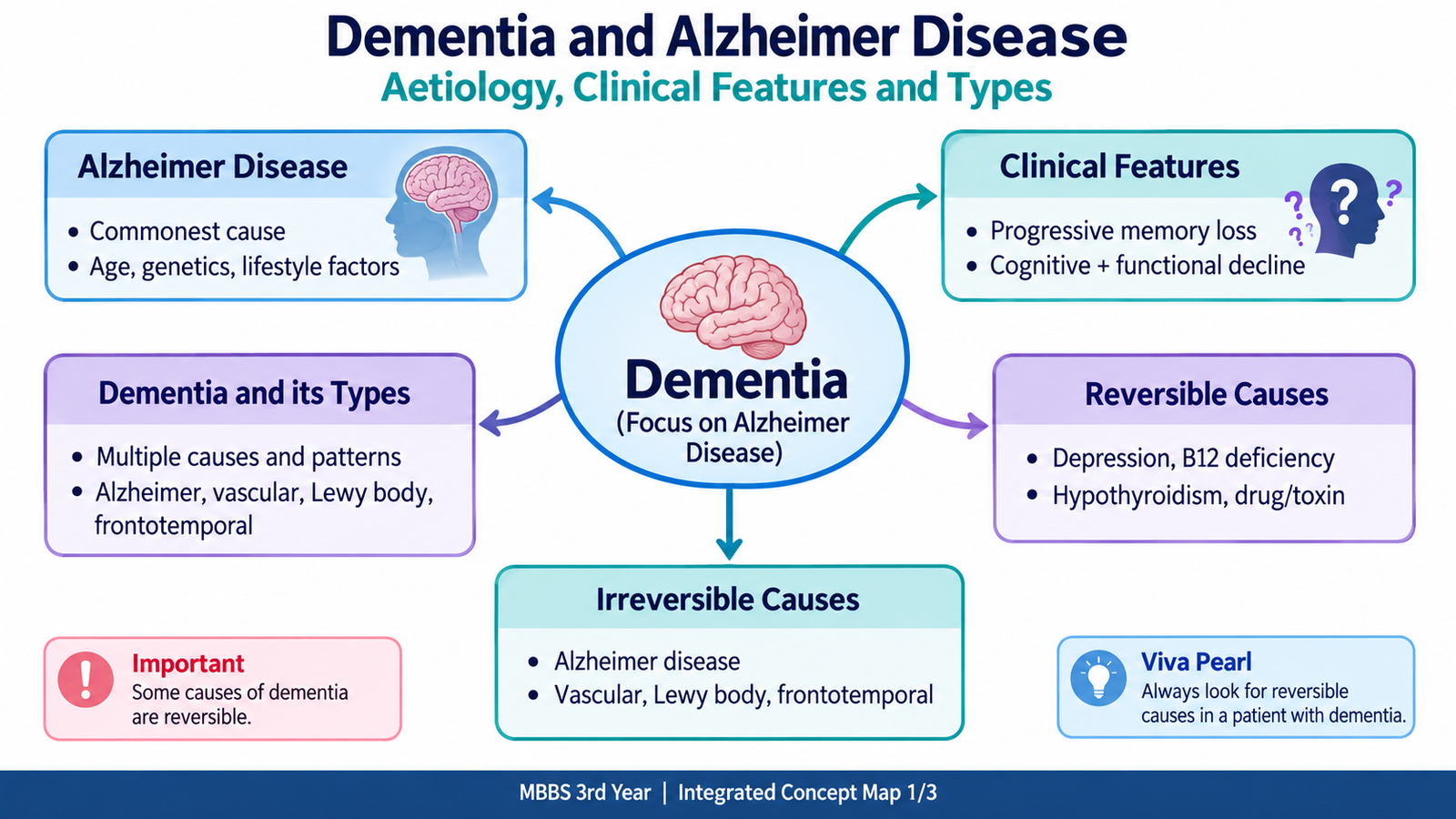
Dementia is a syndrome of acquired and usually persistent decline in cognitive abilities compared with the person’s previous level of functioning. The decline becomes clinically important when it interferes with independent activities such as managing money, medication, work, communication or personal care. Memory is commonly affected, but dementia is not simply “forgetfulness.” Language, attention, executive function, visuospatial ability, judgment and social behaviour may also deteriorate.
Unlike delirium, dementia usually develops over months or years and consciousness is generally clear until very advanced disease. This distinction matters because a patient with sudden fluctuating confusion should first be assessed for an acute cause rather than automatically being labelled as having dementia.
Clinically useful types of dementia
Dementia can be classified according to its underlying disease. The major patterns relevant at undergraduate level are:
- Alzheimer dementia: progressive neurodegenerative dementia, classically beginning with impairment of recent episodic memory.
- Vascular dementia: cognitive impairment caused by cerebrovascular disease. The course may be stepwise, although mixed patterns are common.
- Dementia with Lewy bodies: dementia associated with fluctuating cognition, visual hallucinations and parkinsonian features.
- Frontotemporal dementia: degeneration predominantly involving frontal and temporal regions, often presenting with early behavioural, personality or language change.
- Mixed dementia: more than one pathological process is present, commonly Alzheimer pathology together with cerebrovascular disease.
- Secondary dementia: cognitive decline caused by another medical, neurological, metabolic, nutritional or drug-related problem.
Potentially reversible causes
Before assuming that progressive cognitive impairment is caused by an irreversible neurodegenerative disease, potentially treatable causes must be considered. Treating the underlying problem may improve cognition, particularly when detected early.
- Medication effects, particularly sedating or strongly anticholinergic drugs.
- Depressive illness producing prominent cognitive symptoms.
- Hypothyroidism and other important metabolic disturbances.
- Vitamin B12 deficiency and other significant nutritional deficiency states.
- Normal-pressure hydrocephalus.
- Chronic subdural collection or another treatable intracranial lesion.
- Selected infections or systemic disorders affecting cerebral function.
Usually irreversible causes
Neuronal loss from established neurodegenerative disease is generally irreversible. Cerebrovascular injury may also leave permanent cognitive deficits even when further vascular events can potentially be prevented.
- Alzheimer disease.
- Dementia with Lewy bodies.
- Frontotemporal degeneration.
- Established vascular dementia.
- Dementia associated with advanced degenerative neurological disease.

B. Alzheimer Disease: Etiology, Pathology and Clinical Features
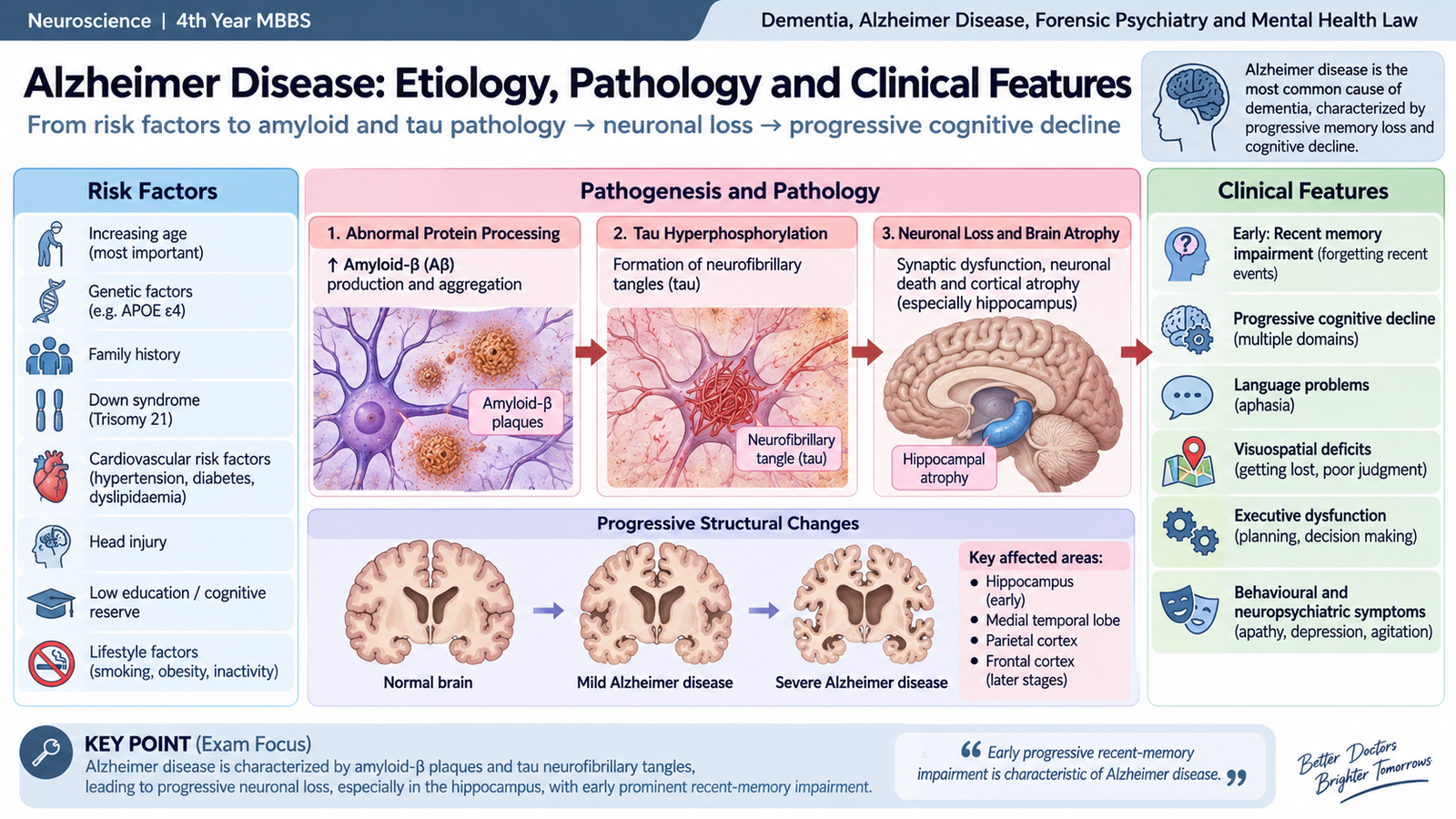
Alzheimer disease is a progressive neurodegenerative disorder in which neurons and synapses are gradually lost, particularly in regions involved in memory and higher cortical function. It is the classic cause of a slowly progressive dementia. The disease usually begins insidiously: there is no single moment at which cognition suddenly becomes abnormal. Instead, memory and other functions decline over time and eventually interfere with normal daily life.
Etiology and risk factors
Most Alzheimer disease is sporadic and multifactorial. Aging is the strongest general risk factor because the pathological processes responsible for neuronal degeneration accumulate over time. Genetic susceptibility also contributes, but the presence of a risk gene does not mean that dementia is inevitable.
- Increasing age: the most important general risk factor.
- Family history and genetic susceptibility: risk is greater when close relatives are affected.
- Rare familial early-onset disease: pathogenic alterations involving amyloid processing genes such as APP, PSEN1 and PSEN2 can produce strongly inherited disease.
- APOE ε4: increases susceptibility to late-onset Alzheimer disease but is neither necessary nor sufficient to cause it.
- Down syndrome: extra genetic material involving chromosome 21 increases amyloid precursor protein expression and predisposes to Alzheimer-type pathology.
- Cerebrovascular and metabolic risk: vascular disease can contribute to cognitive decline and may coexist with Alzheimer pathology.
Why cognitive decline develops
Two characteristic pathological processes help explain Alzheimer disease. Abnormal processing of amyloid precursor protein leads to accumulation of amyloid-β in extracellular plaques. At the same time, abnormal phosphorylation and aggregation of tau protein produces intracellular neurofibrillary tangles. These processes are associated with synaptic dysfunction, neuronal injury and progressive neuronal loss.
Morphological basis
The hippocampus and medial temporal structures are affected early, explaining why recent episodic memory is commonly one of the first obvious problems. With progression, association areas of the cerebral cortex become increasingly involved.
At the gross level, advanced disease produces cerebral cortical atrophy with widened sulci and narrowed gyri. Loss of cerebral tissue may produce secondary enlargement of the ventricular system. Microscopically, the two classic abnormalities are neuritic amyloid plaques and neurofibrillary tangles.
Clinical features
The clinical picture progresses gradually. Early disease may be subtle enough to be mistaken for normal aging, but normal aging does not usually cause progressive loss of everyday independence.
- Early recent-memory impairment: the patient repeatedly forgets recent conversations, appointments or newly learned information.
- Difficulty learning new information: hippocampal dysfunction interferes with formation of new memories.
- Word-finding and language difficulty: naming and fluent communication deteriorate as cortical involvement progresses.
- Visuospatial impairment: patients may become lost in familiar environments or have difficulty judging spatial relationships.
- Executive dysfunction: planning, organizing, problem-solving and managing finances become difficult.
- Impaired judgment: decisions become increasingly inappropriate or unsafe.
- Behavioural and personality change: apathy, irritability, suspiciousness or other behavioural symptoms may occur, usually becoming more prominent with progression.
- Loss of activities of daily living: complex activities are affected first; later the patient may require assistance with basic personal care.
- Advanced disease: severe global cognitive impairment, communication difficulty, immobility and complete dependency may develop.
C. Forensic Psychiatry and Essential Forensic Psychiatric Terminology
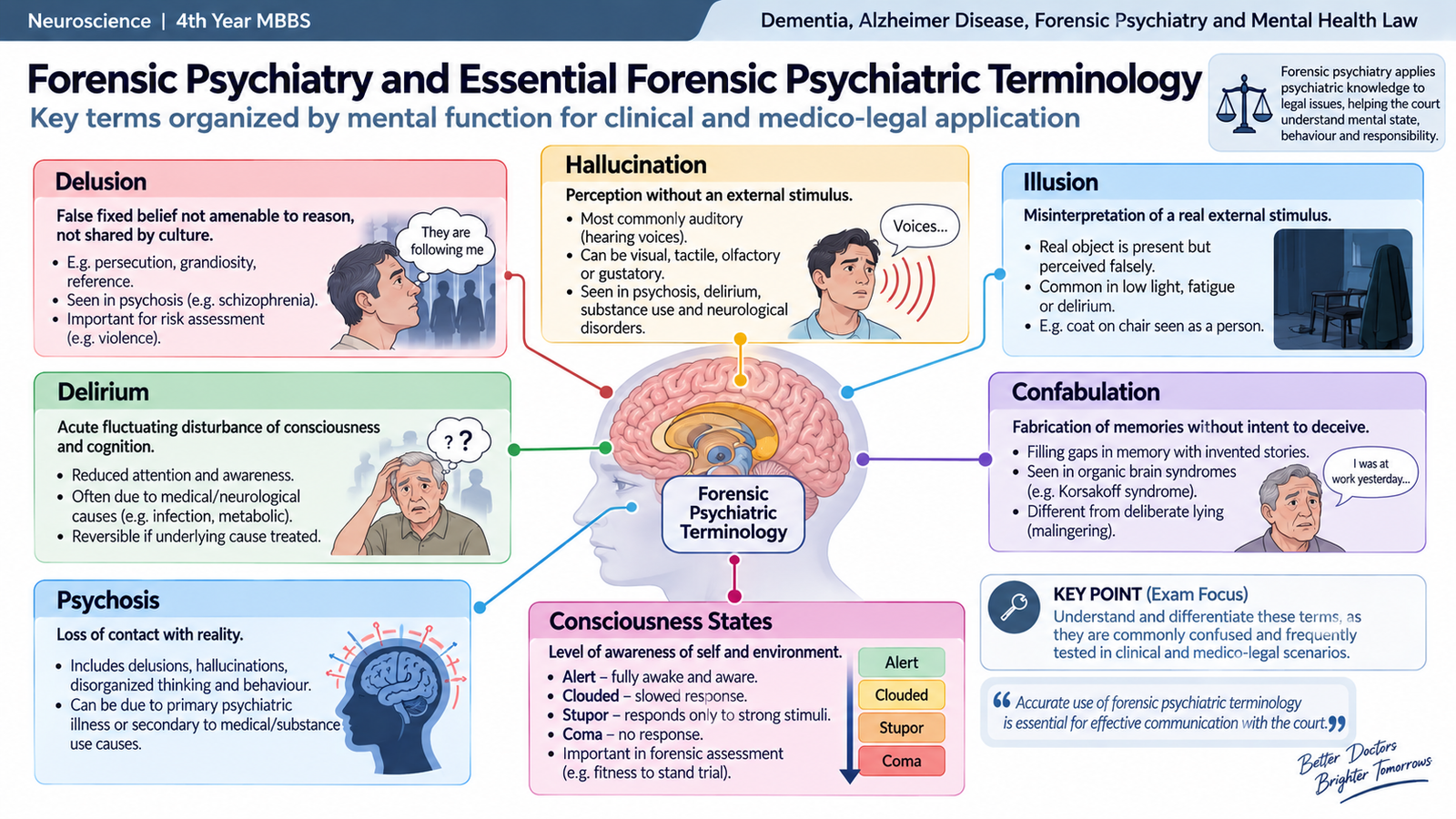
Forensic psychiatry is the area in which psychiatric knowledge is applied to legal and medico-legal questions. It deals with issues such as the effect of mental disorder on criminal responsibility, the person’s ability to make legally important decisions, the assessment of mentally disordered offenders and medical opinions about mental capacity. The doctor’s role is to describe the patient’s mental condition objectively; the final legal decision belongs to the appropriate legal authority.
Important terminology
Affect: the externally observable expression of emotion. It may be described as appropriate, restricted, blunted, flat, labile or incongruent depending on what is seen during examination.
Confabulation: unintentional production of incorrect or fabricated information to fill gaps in memory. The patient is not consciously trying to deceive the examiner. This distinguishes confabulation from deliberate lying.
Delirium: an acute and usually fluctuating disturbance of attention and awareness accompanied by impaired cognition. It commonly develops over a short period and suggests an underlying medical, toxic or metabolic cause.
Delusion: a firmly held false belief that persists despite convincing evidence to the contrary and is not explained by the person’s cultural or religious background. Delusions represent a disturbance of thought content.
Fugue: a dissociative state characterized by unexpected travel or wandering associated with loss of autobiographical memory and disturbance of personal identity. Behaviour may appear organized despite later amnesia for the episode.
Hallucination: a perception-like experience occurring without a corresponding external stimulus. It may involve hearing, vision, smell, taste or bodily sensation.
Illusion: misinterpretation of a real external stimulus. For example, a shadow that is actually present may be misperceived as a person. This differs from a hallucination because an external stimulus exists.
Intelligence quotient (IQ): a standardized expression of intellectual performance derived from formal cognitive testing. Modern IQ testing compares performance with age-appropriate population norms rather than relying simply on the historical mental-age formula.
Lucid interval: a period during which a person with an episodic or fluctuating mental disorder temporarily regains sufficient clarity of thought and judgment. Medico-legally, the person’s capacity must be assessed during the actual period in which the relevant act or decision occurs.
Neurosis: a historical psychiatric term traditionally used for disorders producing anxiety, distress or maladaptive symptoms while reality testing remains largely intact. Modern classifications use more specific diagnostic categories rather than “neurosis.”
Psychopath: a traditional forensic term describing a person with marked persistent antisocial, callous and irresponsible personality traits. It is not synonymous with psychosis and should not be used loosely as a medical diagnosis.
Psychosis: a state in which reality testing is significantly impaired. Features may include delusions, hallucinations, severely disorganized thinking or behaviour.
Stupor: a state of markedly reduced spontaneous movement and responsiveness in which the person appears awake but reacts minimally to the environment. It can occur in psychiatric, neurological or medical conditions.
Twilight state: a brief state of impaired or narrowed consciousness in which behaviour may appear partially organized but awareness of the environment is reduced. The episode may later be poorly remembered or followed by amnesia.
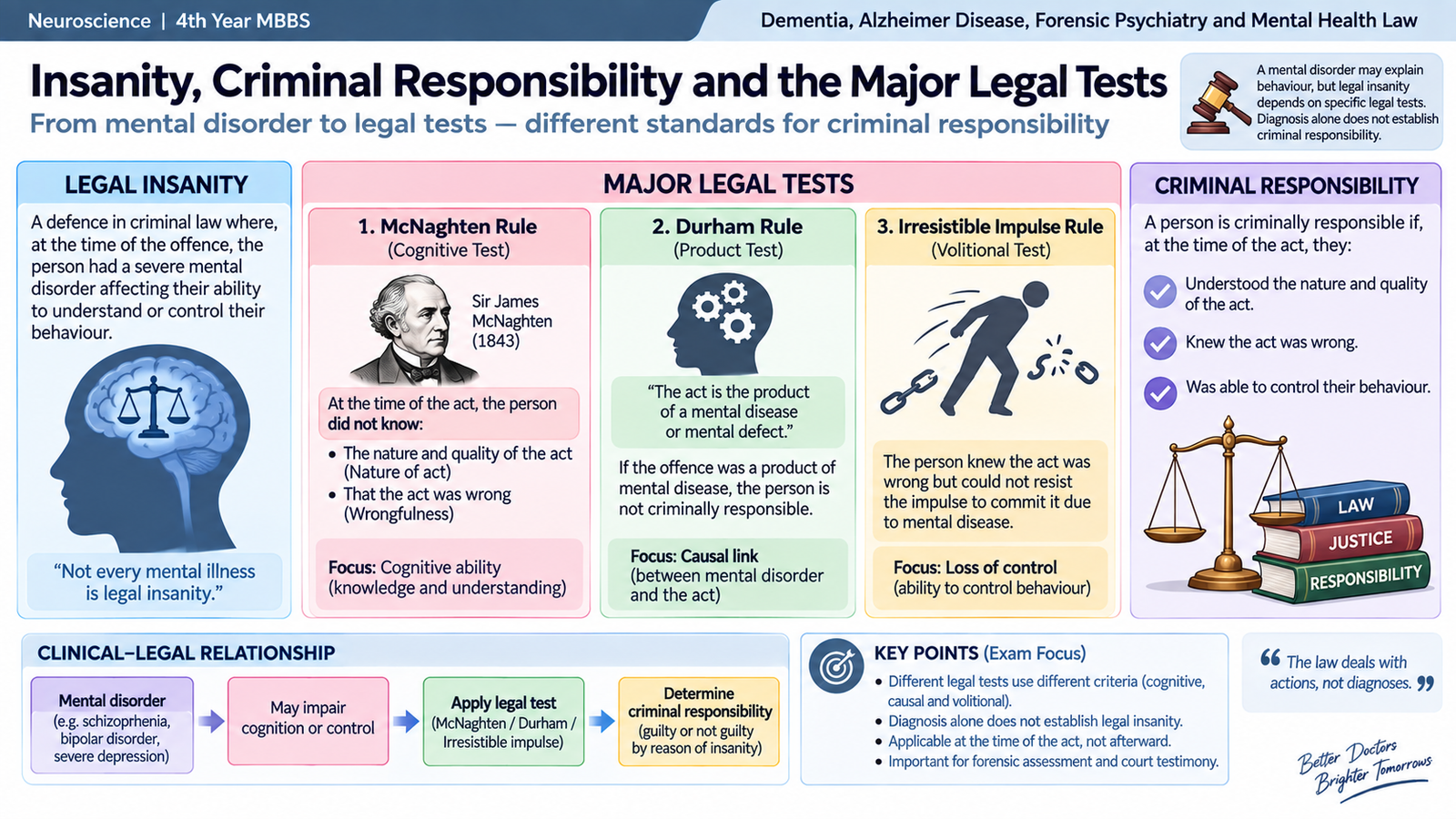
D. Insanity, Criminal Responsibility and the Major Legal Tests
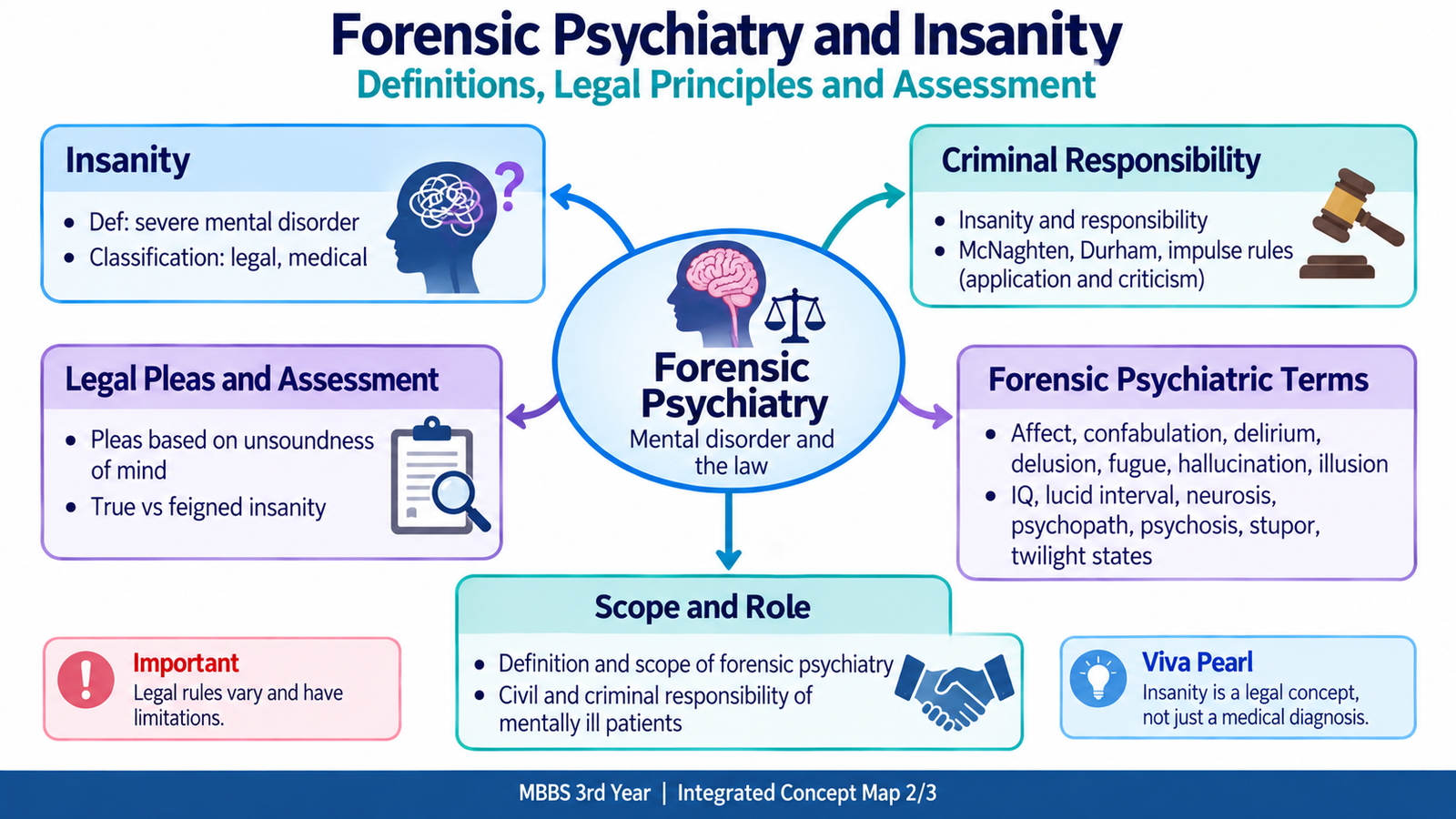
Insanity is primarily a traditional medico-legal term rather than a modern psychiatric diagnosis. In law, the important question is not simply whether a person has a mental illness. The question is whether the mental disorder was severe enough, at the relevant time, to satisfy the legal test governing responsibility or capacity.
A person may therefore have schizophrenia, bipolar disorder, dementia or another psychiatric diagnosis and still retain legal responsibility for a particular act. Conversely, severe mental disease may sometimes interfere so greatly with understanding or judgment that a legal defence based on unsoundness of mind is considered.
Useful forensic classification
For undergraduate purposes, insanity can be approached in several complementary ways:
- Medical insanity: the broad presence of a psychiatric or cognitive disorder recognized by medicine.
- Legal insanity: a mental disorder fulfilling the particular legal standard required to alter legal responsibility.
- Temporary or episodic disturbance: mental incapacity present only during a defined episode.
- Persistent disturbance: continuing mental impairment affecting functioning over a longer period.
- True mental disorder versus feigned insanity: genuine illness must be differentiated from intentional simulation for external gain.
Insanity and criminal responsibility
Criminal responsibility concerns the mental state of the accused at the time of the alleged act. A diagnosis made before or after the incident is relevant evidence, but it does not by itself answer the legal question. The examiner must consider the nature and severity of the disorder, behaviour around the event, understanding of the act, appreciation of wrongfulness and available collateral evidence.
A plea based on unsoundness of mind therefore requires more than unusual behaviour or a history of psychiatric treatment. There should be evidence that the mental disorder impaired the particular mental capacity required by the applicable legal test.
McNaghten rule
The McNaghten rule is a cognitive test. In essence, a person may be regarded as legally insane if, because of a disease of the mind producing a defect of reason, the person did not understand the nature and quality of the act, or did not understand that the act was wrong.
Criticism: the rule concentrates mainly on intellectual understanding. A severely mentally ill person may intellectually recognize that an act is wrong but still have profound impairment of other aspects of mental functioning.
Durham rule
The Durham or “product” test asks whether the unlawful act was the product of mental disease or mental defect. It attempted to broaden the defence beyond a purely cognitive test.
Criticism: the term “product” is difficult to define. The test can become excessively broad and may place too much responsibility on psychiatric experts to decide what is ultimately a legal question.
Irresistible impulse rule
This rule considers the ability to control behaviour. A person may understand the nature and wrongfulness of an act yet, because of severe mental disease, be unable to resist the pathological impulse to perform it.
Criticism: it is difficult to distinguish scientifically between an impulse that genuinely could not be resisted and one that simply was not resisted. Retrospective assessment is particularly difficult and symptoms can potentially be exaggerated or fabricated.
| Rule | Main question | Main strength | Main criticism |
|---|---|---|---|
| McNaghten | Did the person understand the act and its wrongfulness? | Clear cognitive framework | May underemphasize impaired volitional control |
| Durham | Was the act a product of mental disease or defect? | Broader view of mental illness | Very broad and difficult to define objectively |
| Irresistible impulse | Could the person control the behaviour? | Recognizes impaired volitional control | “Could not resist” is difficult to distinguish from “did not resist” |
E. True versus Feigned Insanity
Feigned insanity means intentional production or exaggeration of psychiatric symptoms for an external advantage, such as avoiding punishment or obtaining another benefit. In clinical terminology this deliberate simulation is often considered a form of malingering. Genuine mental illness and feigned illness must be distinguished carefully because an incorrect conclusion can have major medical and legal consequences.
No single sign proves that illness is genuine or feigned. Assessment should combine history, mental-state examination, observation over time, collateral information and the consistency of symptoms with recognized psychiatric syndromes.
| Feature | Genuine mental disorder | Possible feigned disorder |
|---|---|---|
| History | Often supported by previous symptoms, treatment or collateral history | May begin abruptly when a clear external incentive appears |
| Symptom pattern | Usually forms a clinically coherent syndrome | May be exaggerated, stereotyped, improbable or internally inconsistent |
| Behaviour over time | Disturbance often persists when the person does not realize they are being observed | Symptoms may become less evident when observation is not expected |
| Hallucinations or delusions | Usually show phenomenological features compatible with known disorders | Descriptions may be excessively dramatic or inconsistent with usual phenomenology |
| Functional impairment | Often affects several areas of real-life functioning | Claimed impairment may conflict with observed abilities |
| Assessment | Diagnosis supported by longitudinal clinical evidence | Repeated observation may reveal discrepancies between claimed and demonstrated function |

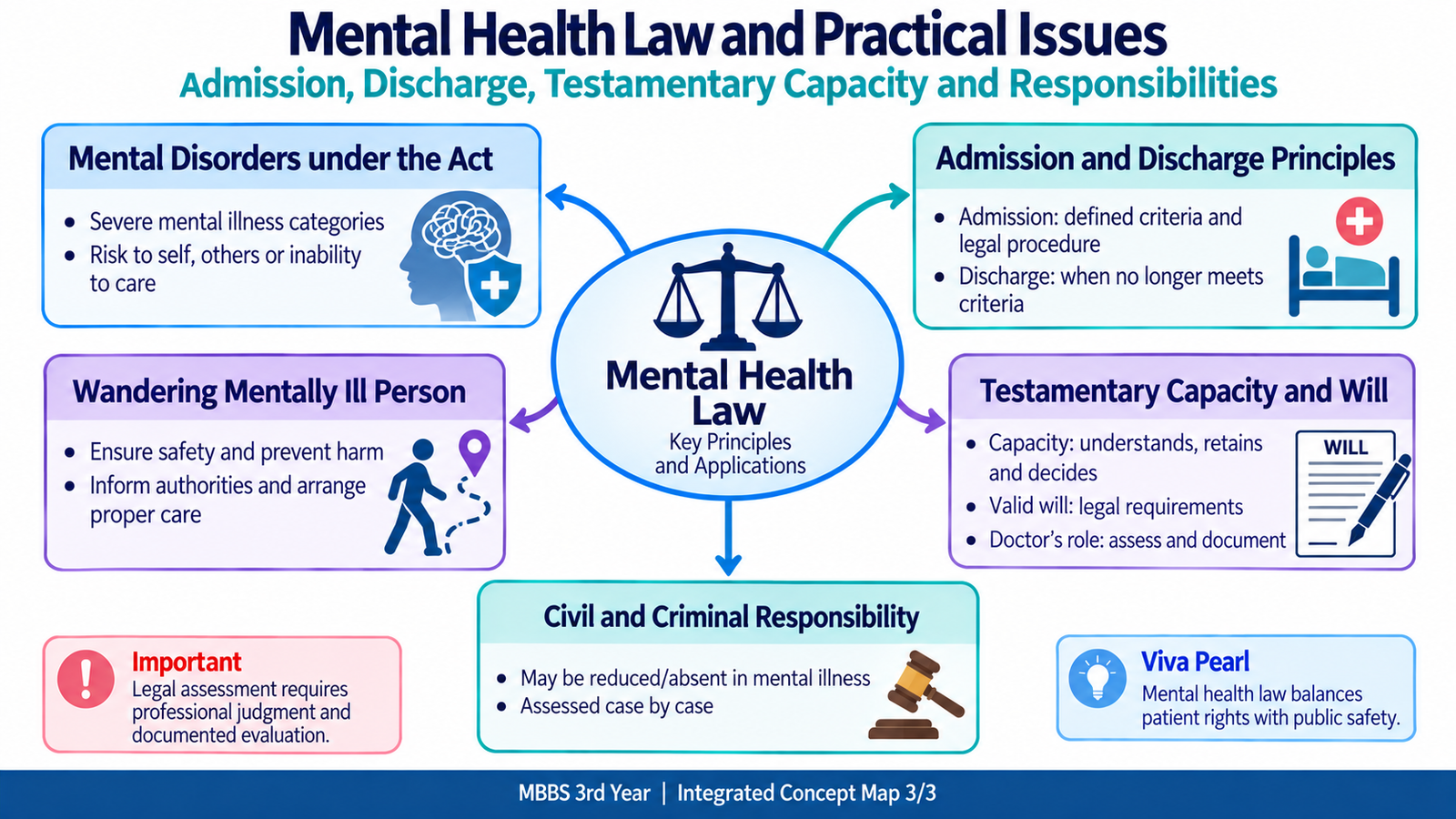
F. Mental Health Law: Mental Disorder, Admission, Discharge and the Wandering Patient
Mental-health legislation provides a legal framework for the care and treatment of people with mental disorders while also addressing safety, responsibility and the management of their affairs. In the KMU/Khyber Pakhtunkhwa context, the relevant provincial statute is the Khyber Pakhtunkhwa Mental Health Act, 2017. Its stated scope includes treatment and care of mentally disordered persons and management of their affairs. :contentReference[oaicite:1]{index=1}
Mental disorder under the Act
The Act uses a broad medico-legal definition. It describes mental disorder as including mental illness, mental impairment, personality disorder and other disorder or disability of mind. This legal definition should not be confused with one specific psychiatric diagnosis. :contentReference[oaicite:2]{index=2}
An important principle is that the existence of unusual, socially unacceptable or irresponsible behaviour alone does not automatically establish a qualifying mental disorder. The doctor must identify an actual disorder and assess its effects on the person’s mental functioning.
Admission principles
Whenever safe and appropriate, mental-health care can occur on an informal or voluntary basis. Under the Act, a person who seeks care, is brought by a relative, is referred by a medical practitioner or requires forensic psychiatric assessment may be examined, the findings recorded and an appropriate plan made. :contentReference[oaicite:3]{index=3}
When voluntary or community care is not sufficient and the disorder creates a significant need for formal assessment or treatment, the law provides structured forms of admission. The undergraduate student should understand the broad categories rather than memorize every procedural detail:
- Admission for assessment: used when formal psychiatric assessment is required.
- Admission for treatment: used when continuing treatment under formal legal authority is justified.
- Urgent admission: provides a mechanism when assessment cannot safely wait for ordinary procedures.
- Emergency holding: allows temporary holding of an appropriate patient already within a healthcare setting while urgent assessment is arranged.
Formal admission should be linked to the nature and degree of mental disorder, the patient’s health or safety, protection of other persons and the inability to manage the situation adequately through less restrictive voluntary or community care. :contentReference[oaicite:4]{index=4}
Discharge principles
Detention should not continue merely because a person once had a mental disorder. Discharge depends on the current clinical and safety situation. Under the Act, the psychiatrist in charge may direct discharge when appropriate, but discharge may be withheld when the patient remains unfit because of risks to the patient’s own health or safety or the safety of others. A person who is found after assessment not to be mentally disordered and who is capable of caring for himself and managing his affairs should not continue to be detained simply because he was originally admitted for assessment. :contentReference[oaicite:5]{index=5}
Person with apparent mental disorder found wandering or in a public place
The practical aim is safety, humane care and prompt psychiatric assessment, not punishment. The Act provides that when the officer in charge of a police station finds in a public place a person reasonably believed to have a mental disorder and to require immediate care or control, the person may be taken to a place of safety or handed to a willing relative when appropriate. The purpose is to permit psychiatric or medically supervised assessment and arrange necessary treatment or care. :contentReference[oaicite:6]{index=6}
G. Testamentary Capacity, a Valid Will and Civil versus Criminal Responsibility
Testamentary capacity means the mental capacity required for a person to make a valid will. The crucial point is that capacity is assessed at the time the will is made. The mere diagnosis of dementia, psychosis or another psychiatric disorder does not automatically invalidate a will. A person may retain sufficient capacity in mild illness or during a genuine lucid interval.
Core requirements of testamentary capacity
A person making a will should have a sufficiently “sound disposing mind” to understand the decision being made. In practical medical terms, the person should be able to:
- understand that he or she is making a will and appreciate its general effect;
- understand, in broad terms, the property and assets being disposed of;
- recognize the persons who would reasonably be considered potential beneficiaries or have a natural claim on the estate;
- understand the proposed distribution of property and its consequences;
- make the decision voluntarily rather than because of coercion or undue influence;
- remain free from a delusion or other mental disturbance that directly determines an irrational disposition of the property.
A psychiatric diagnosis is therefore less important than the person’s functional ability to understand and decide at the relevant moment.
Requirements for a valid will
From the medical student’s perspective, a valid will requires a competent testator acting voluntarily with adequate testamentary capacity, together with compliance with the formal legal requirements governing wills. Exact execution and witnessing requirements may vary according to the applicable succession and personal law, so the doctor’s role is mainly to establish and document the patient’s mental capacity rather than to certify every legal formality.
Doctor’s role when a sick person makes a will
A doctor may be asked to assess a patient who is seriously ill, elderly, cognitively impaired or close to death. The doctor’s responsibility is to make a careful, contemporaneous medical assessment rather than simply sign a statement saying that the patient is “of sound mind.”
The doctor should:
- assess orientation, attention, memory, understanding, reasoning and relevant mental-state findings;
- determine whether delirium, dementia, psychosis, severe depression, intoxication, medication effects or another condition is impairing decision-making;
- ask the patient in simple language to explain the nature and purpose of the will;
- confirm that the patient has a reasonable understanding of the property concerned and the persons likely to have claims on it;
- look for evidence of delusions, coercion or undue influence affecting the decision;
- record the findings, time and circumstances of the examination clearly;
- avoid exceeding the medical role: the doctor assesses capacity, while legal validity is ultimately a legal determination.
Civil responsibility of a mentally ill patient
Civil capacity relates to legally significant personal and property decisions. Mental illness does not automatically remove all civil capacity. Capacity is decision-specific and may change with time. Depending on the severity of illness, questions may arise about the person’s ability to manage property, enter agreements, consent to treatment or execute a will.
Where severe mental disorder makes a person unable to manage personal or property affairs, legal mechanisms may be used for appropriate guardianship or management. The medical assessment provides evidence about mental functioning; the relevant authority makes the legal determination.
Criminal responsibility
Criminal responsibility is a different question. It asks whether mental disorder affected the accused person’s legally relevant mental capacity at the time of the offence. The presence of psychiatric illness before or after the offence is evidence but is not, by itself, a defence.
Civil capacity asks, “Can this person understand and make this particular legal decision?”
Criminal responsibility asks, “What was the effect of mental disorder on the person’s legally relevant understanding or control when the alleged offence occurred?”

Integrated Mechanism Flow — Alzheimer Disease
Age/genetic susceptibility
Amyloid-β accumulation and abnormal tau
Synaptic dysfunction and neuronal injury
Hippocampal and cortical neuronal loss
Memory then multidomain cognitive decline
Progressive loss of independence
⭐ AIM High-Yield Review
🎥 Recommended Video Learning
Watch these videos after completing the AIM Learning Material to reinforce the major concepts of dementia, Alzheimer disease and forensic psychiatry.
1. Alzheimer Disease & Dementia
Focus: risk factors, pathophysiology, clinical features and disease progression.
2. Forensic Psychiatry
Focus: legal insanity, criminal responsibility, McNaghten rule, mental-health law, testamentary capacity and civil competency.