
This chapter follows the supplied KMU learning outcomes and builds the topic in a logical sequence from anaesthetic techniques to local-anaesthetic pharmacology. First understand how and why each technique or drug works; then use the final AIM High-Yield Review for revision.
Regional and Neuraxial Anaesthesia, Local Anaesthetics, Preoperative Assessment and Monitoring
Neuroscience • Anaesthesia and Pharmacology
1. Topic Introduction
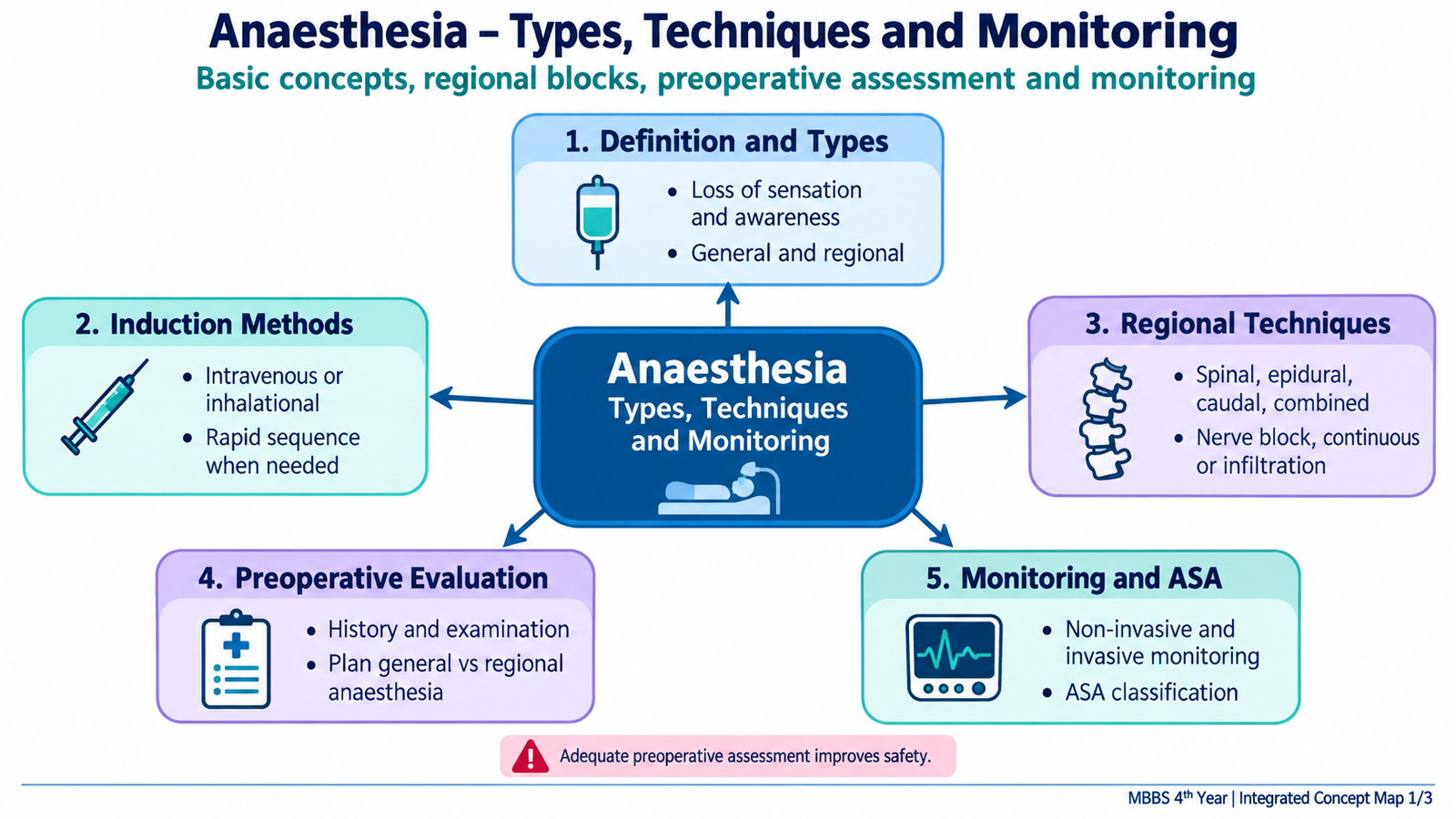
Anaesthesia allows surgery and other procedures to be performed without unacceptable pain and distress. Depending on the procedure and the patient’s condition, anaesthesia may produce complete unconsciousness or may selectively block sensation from one region of the body. Safe anaesthesia also depends on careful assessment before surgery and continuous monitoring during the procedure. Local anaesthetic drugs are central to regional, neuraxial and local techniques because they temporarily interrupt nerve conduction by blocking sodium channels. In this chapter, you will learn the main types and methods of anaesthesia, spinal and epidural techniques, preoperative assessment and ASA classification, basic monitoring, and the classification, mechanism, uses and adverse effects of local anaesthetic drugs.
A. Anaesthesia: Definition, Types and Methods of Induction
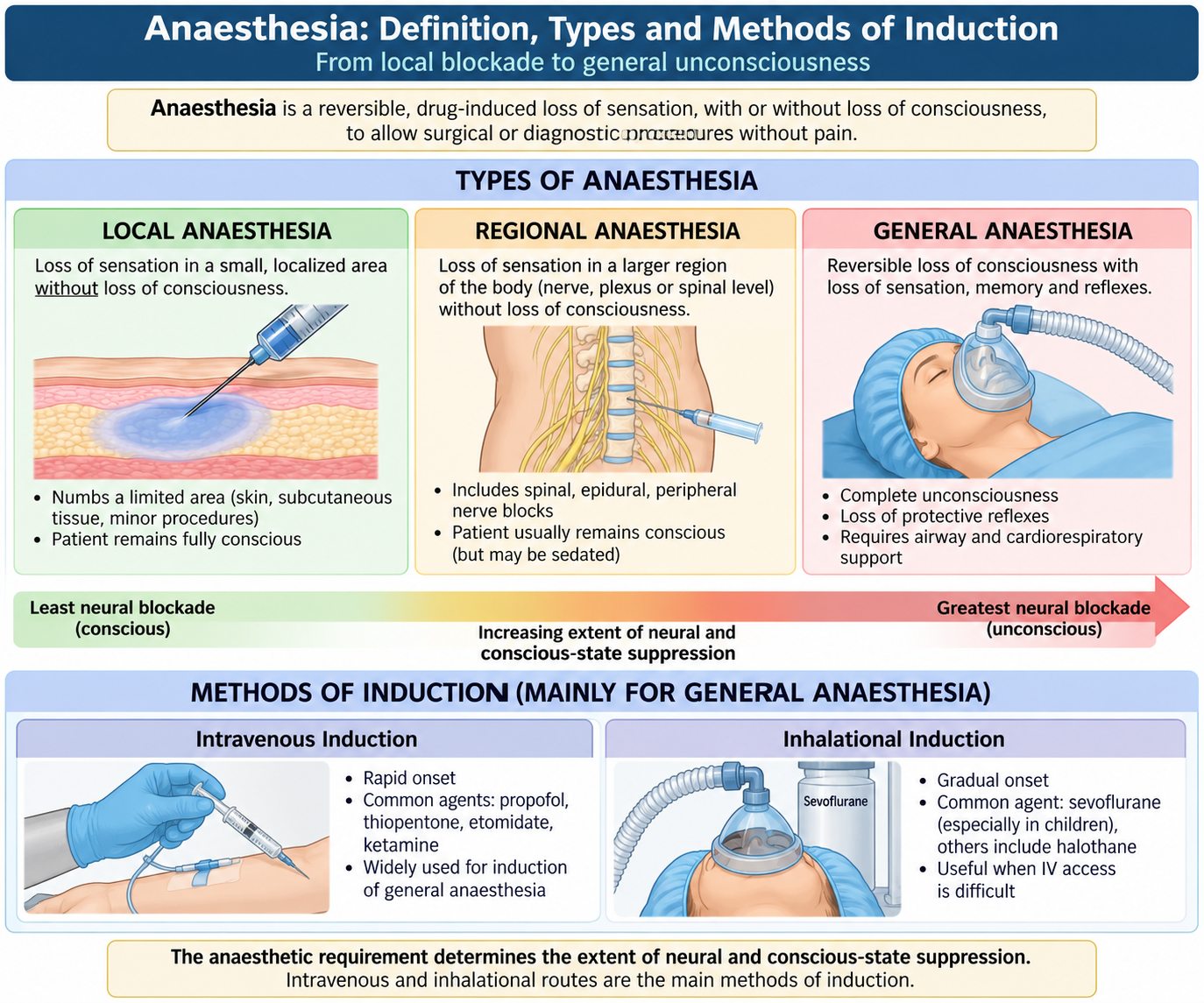
Anaesthesia is a controlled state produced by drugs or anaesthetic techniques so that diagnostic or surgical procedures can be performed without unacceptable pain. The extent of anaesthesia can vary from loss of sensation in a very small area to complete unconsciousness with suppression of responses to surgical stimulation.
Types of anaesthesia
The type chosen depends on the procedure, the anatomical area involved, the patient’s condition and the need for unconsciousness or muscle relaxation.
- General anaesthesia: produces reversible unconsciousness, amnesia and lack of awareness of painful surgical stimulation. Airway and ventilatory support may be required.
- Regional anaesthesia: blocks nerve transmission from a larger part of the body while the patient may remain conscious. It includes neuraxial blocks and peripheral nerve blocks.
- Local anaesthesia: produces loss of sensation in a small, limited area, usually by infiltration or topical application.
- Sedation: reduces anxiety and awareness to varying degrees and may accompany local or regional techniques. It does not necessarily produce complete unconsciousness.
Induction of general anaesthesia
Induction is the transition from the awake state to the state of general anaesthesia. The method is selected according to patient characteristics, airway considerations and the clinical situation. Intravenous induction is commonly used in adults because loss of consciousness is rapid after an induction drug enters the circulation. Inhalational induction uses a volatile anaesthetic delivered through the respiratory tract and is particularly useful when establishing intravenous access before induction is difficult, such as in some children. In selected situations, other routes may be used, but intravenous and inhalational induction are the main undergraduate methods. A rapid-sequence induction is a modified approach used when aspiration of gastric contents is an important concern. Its purpose is to achieve unconsciousness and secure the airway rapidly while limiting the period during which the airway is unprotected.
B. Regional and Neuraxial Anaesthetic Techniques
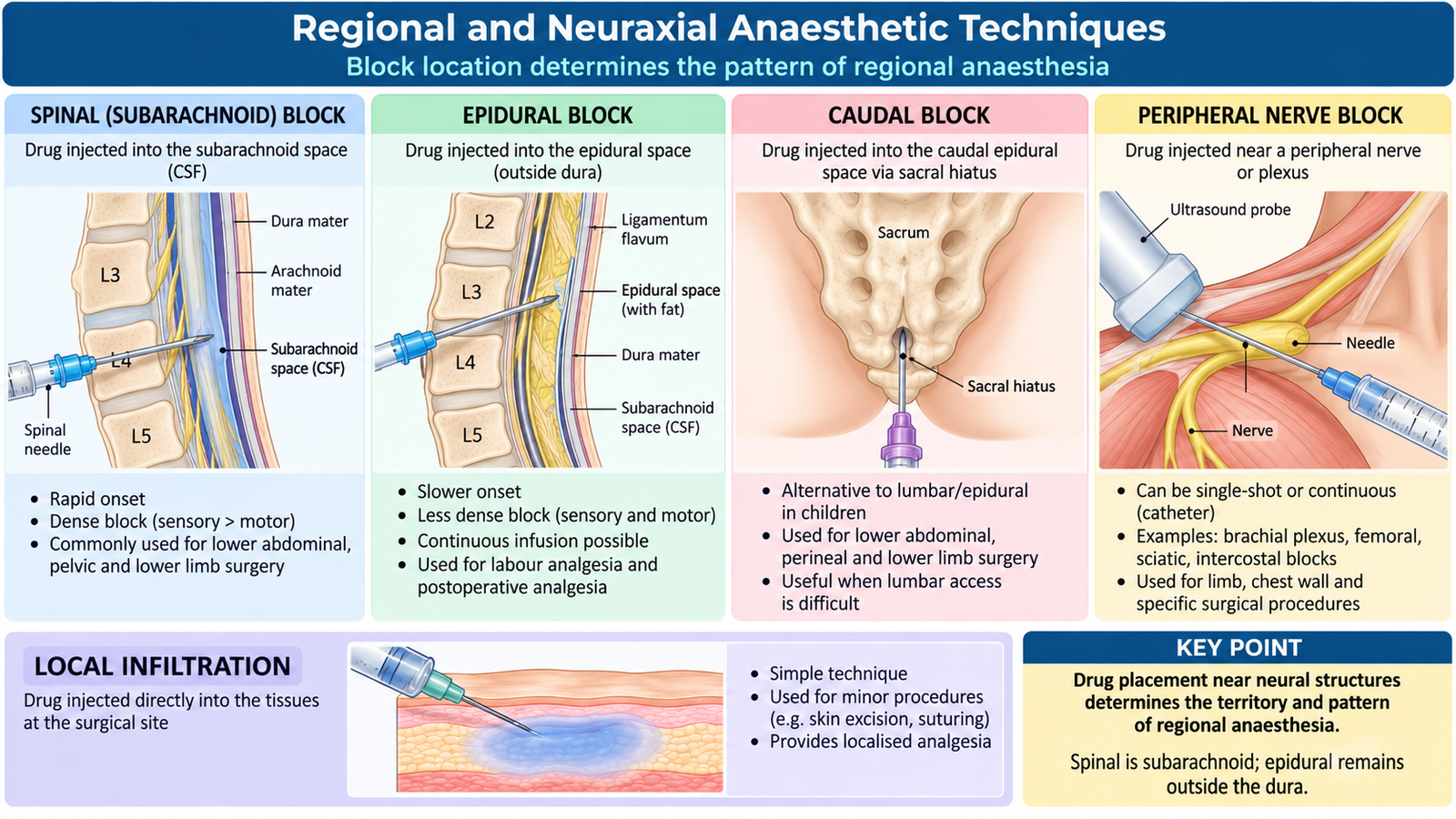
Regional anaesthesia interrupts nerve conduction between the operative area and the central nervous system. The patient therefore loses sensation in the region supplied by the blocked nerves. When the block is produced around the spinal cord and its nerve roots, it is called neuraxial anaesthesia.
Spinal anaesthesia
In spinal anaesthesia, local anaesthetic is injected into the subarachnoid space, where it mixes with cerebrospinal fluid and acts on spinal nerve roots. Because the drug is deposited close to the nerves, only a relatively small amount is required. The block develops rapidly and usually produces a dense sensory block together with varying degrees of motor and sympathetic block. The fall in sympathetic vascular tone may cause vasodilatation and hypotension. Sequence: local anaesthetic in cerebrospinal fluid → blockade of spinal nerve roots → interruption of sensory and sympathetic conduction → loss of sensation below the level of the block.
Epidural anaesthesia
In epidural anaesthesia, local anaesthetic is placed in the epidural space outside the dura mater. The drug must diffuse from the epidural space toward the nerve roots, so onset is generally slower than with spinal anaesthesia and larger quantities of local anaesthetic are required. An important advantage is that a catheter can remain in the epidural space. Additional doses or a continuous infusion can then extend the duration of analgesia or anaesthesia.
Caudal block
A caudal block is an epidural technique in which the epidural space is approached through the sacral hiatus. Local anaesthetic spreads upward within the sacral epidural space to block the relevant nerve roots. It is particularly useful for procedures involving lower body regions and is commonly used in pediatric anaesthetic practice.
Combined spinal–epidural anaesthesia
Combined spinal–epidural (CSE) anaesthesia uses both techniques. The spinal component provides a rapid and reliable initial block, while the epidural catheter allows the anaesthetist to prolong or modify the block when required.
| Feature | Spinal | Epidural | Caudal | Combined spinal–epidural |
|---|---|---|---|---|
| Drug location | Subarachnoid space | Epidural space | Sacral epidural space | Spinal plus epidural |
| Onset | Rapid | More gradual | Gradual | Rapid initial block |
| Catheter | Not routinely retained | Can be retained | Can be used in selected techniques | Epidural catheter available |
| Main advantage | Rapid dense block | Block can be extended | Sacral epidural access | Rapid onset plus extendability |
Peripheral nerve block
In a peripheral nerve block, local anaesthetic is deposited close to an individual nerve or a nerve plexus. The anaesthetic enters the nerve and prevents action potentials from traveling through it. Sensation is therefore lost in the anatomical region supplied by that nerve. A block may be performed as a single-shot technique, in which one administration provides anaesthesia for a limited period, or through a continuous catheter, through which local anaesthetic can be infused or repeated to extend analgesia.
Local infiltration
With local infiltration, the local anaesthetic is injected directly into tissues around the operative site. Small terminal nerve endings are blocked before painful impulses can enter larger peripheral nerves. It is therefore suitable for relatively limited procedures.
C. Preoperative Evaluation, Anaesthetic Planning and ASA Classification
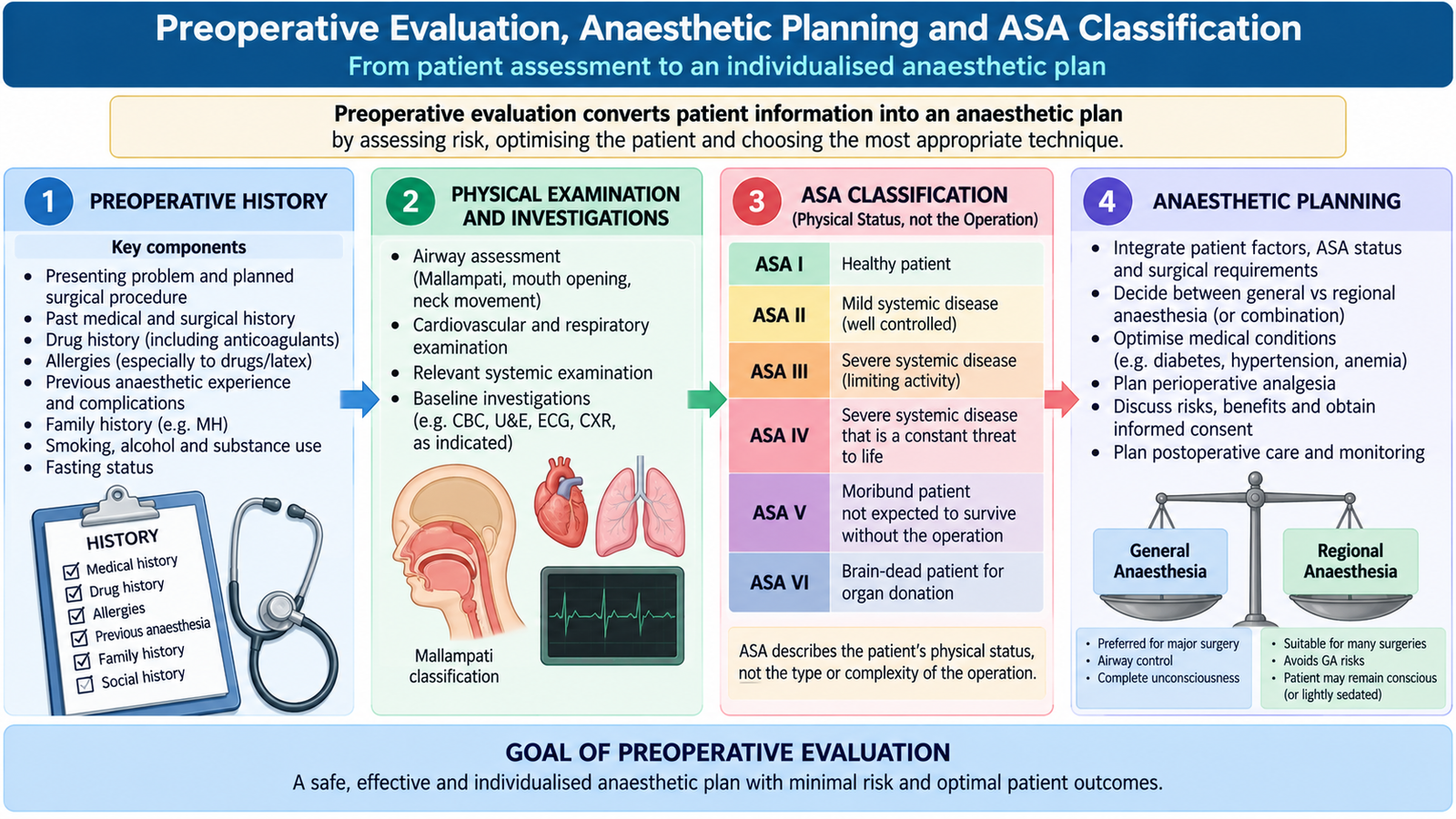
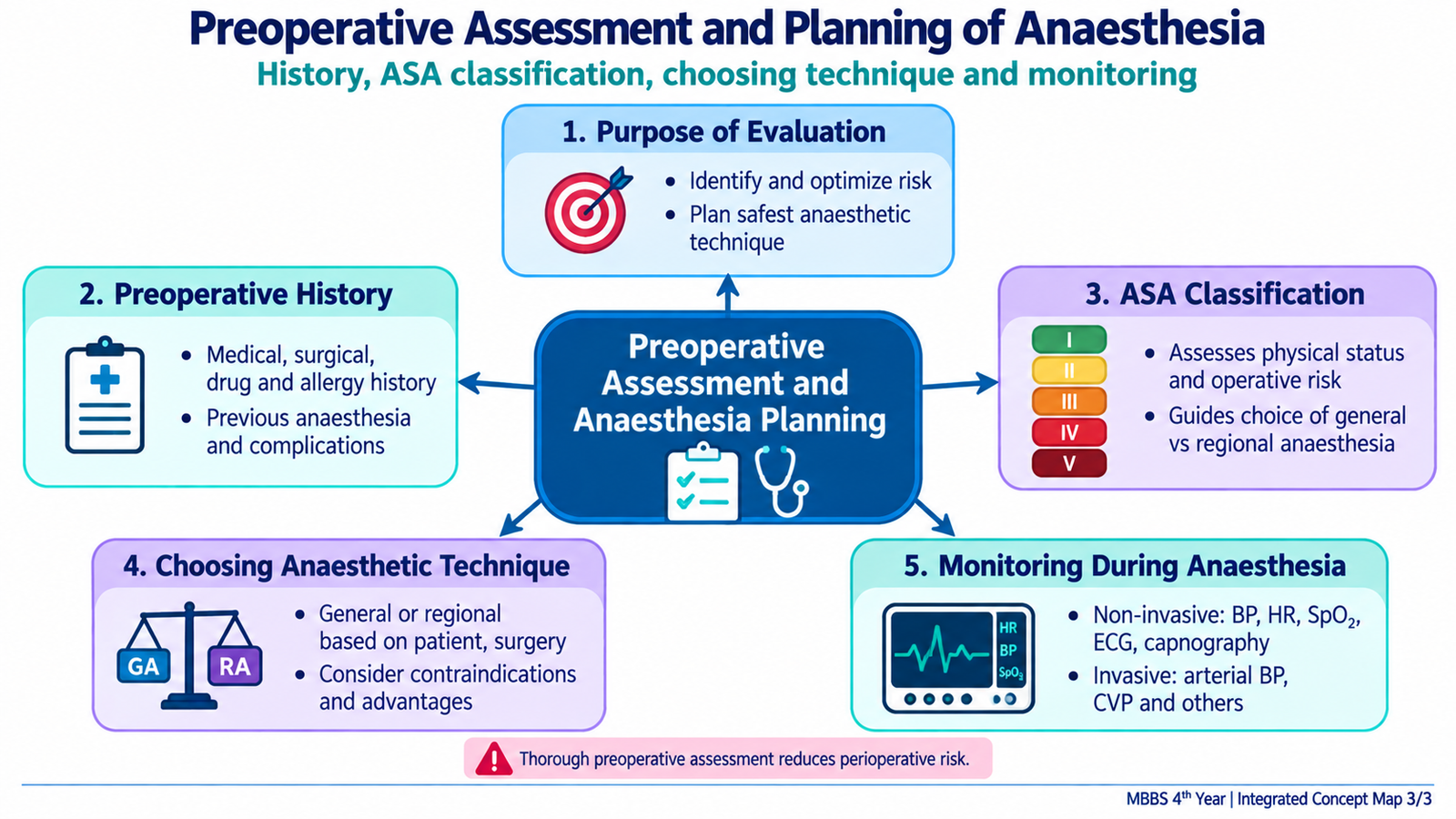
Safe anaesthesia begins before the patient enters the operating room. The purpose of preoperative evaluation is to identify factors that may increase anaesthetic risk, understand the patient’s current physiological reserve, recognize problems that may require optimization, and select an appropriate anaesthetic technique and monitoring plan.
Purpose of preoperative evaluation
Preoperative assessment helps the anaesthetist answer four practical questions:
- Is there an important medical problem that increases perioperative risk?
- Is further optimization needed before the procedure?
- Is general, regional or local anaesthesia most appropriate?
- What level of monitoring and postoperative observation is likely to be required?
Preoperative history
The history is targeted toward conditions that could alter anaesthetic management rather than simply repeating a complete general medical history.
- Current medical illnesses: especially cardiovascular, respiratory, neurological, renal, hepatic and endocrine disease.
- Previous surgery and anaesthesia: including difficult airway, severe nausea, unexpected prolonged recovery or other previous anaesthetic problems.
- Drug history: regular medicines, recent medicines and drugs that may influence bleeding, circulation or anaesthetic drug effects.
- Allergies and previous drug reactions.
- Bleeding history: abnormal bleeding, anticoagulant use or a known coagulation disorder is particularly relevant when neuraxial techniques are being considered.
- Respiratory symptoms: breathlessness, wheezing, recent respiratory illness or smoking-related symptoms.
- Cardiovascular symptoms: chest pain, palpitations, syncope, exertional limitation and known cardiovascular disease.
- Airway-related history: previous difficult intubation, restricted neck movement, dental problems or conditions likely to affect airway management.
- Relevant social history: smoking, alcohol and other substance use where these may influence perioperative care.
- Pregnancy possibility where clinically relevant.
Planning general versus regional anaesthesia
No single technique is best for every patient. Selection should combine the requirements of the operation with patient factors and the advantages and limitations of the proposed technique.
| Consideration | General anaesthesia | Regional anaesthesia |
|---|---|---|
| Consciousness | Patient unconscious | Consciousness may be maintained |
| Area affected | Whole patient | Selected body region |
| Airway | Airway management commonly required | May avoid airway instrumentation |
| Choice influenced by | Procedure, airway, aspiration risk and need for unconsciousness | Operative site, coagulation status, anatomy and suitability for block |
ASA Physical Status Classification
The American Society of Anesthesiologists (ASA) Physical Status Classification describes the patient’s preoperative physical condition. It helps communicate the degree of systemic illness, but it does not by itself predict the entire operative risk because the type and urgency of surgery also matter.
| ASA Class | Meaning |
|---|---|
| ASA I | A healthy patient. |
| ASA II | A patient with mild systemic disease. |
| ASA III | A patient with severe systemic disease. |
| ASA IV | Severe systemic disease that is a constant threat to life. |
| ASA V | A moribund patient who is not expected to survive without the operation. |
| ASA VI | A declared brain-dead patient whose organs are being removed for donation. |
An “E” suffix is added when the operation is an emergency.
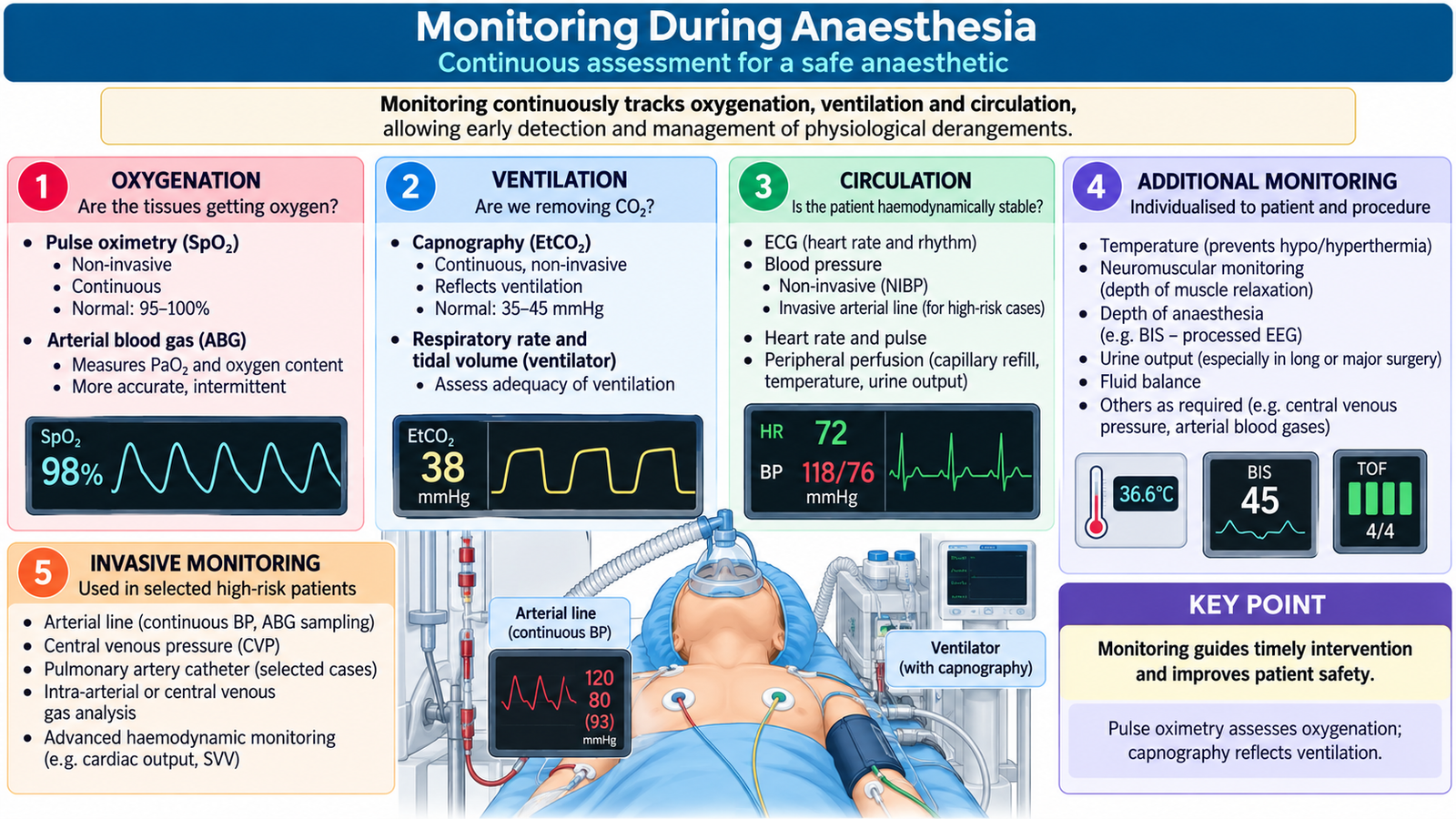
D. Monitoring During Anaesthesia
Anaesthetic drugs and regional blocks can alter consciousness, ventilation and circulation. Continuous monitoring allows these changes to be recognized early so that deterioration can be corrected before significant organ injury occurs. Monitoring may be non-invasive or invasive, depending on the patient’s risk and the procedure.
Non-invasive monitoring
Non-invasive monitors obtain physiological information without inserting a vascular catheter into the patient.
- Clinical observation: includes colour, chest movement, breathing pattern and response to stimulation.
- Pulse oximetry: estimates arterial oxygen saturation and provides continuous information about oxygenation.
- Non-invasive blood pressure: measures blood pressure intermittently using an inflatable cuff.
- Electrocardiography: continuously displays cardiac electrical activity and helps detect abnormalities in heart rate and rhythm.
- Capnography: measures carbon dioxide in exhaled gas. It provides important information about ventilation and is particularly valuable when the airway is being supported or mechanically ventilated.
- Temperature monitoring: identifies perioperative hypothermia or abnormal temperature changes.
Invasive monitoring
Invasive monitoring is used when continuous or more detailed physiological information is required, particularly in patients with major illness or during major operations.
- Arterial catheter: provides continuous beat-to-beat arterial blood-pressure measurement and permits repeated arterial blood sampling.
- Central venous catheter: provides central venous access and can be used to assess central venous pressure trends in appropriate clinical settings.
- More advanced invasive haemodynamic monitoring: may be used selectively in major surgery or severe cardiovascular disease when more detailed information is needed.
E. Local Anaesthetics: Classification, Preparations and Routes of Use
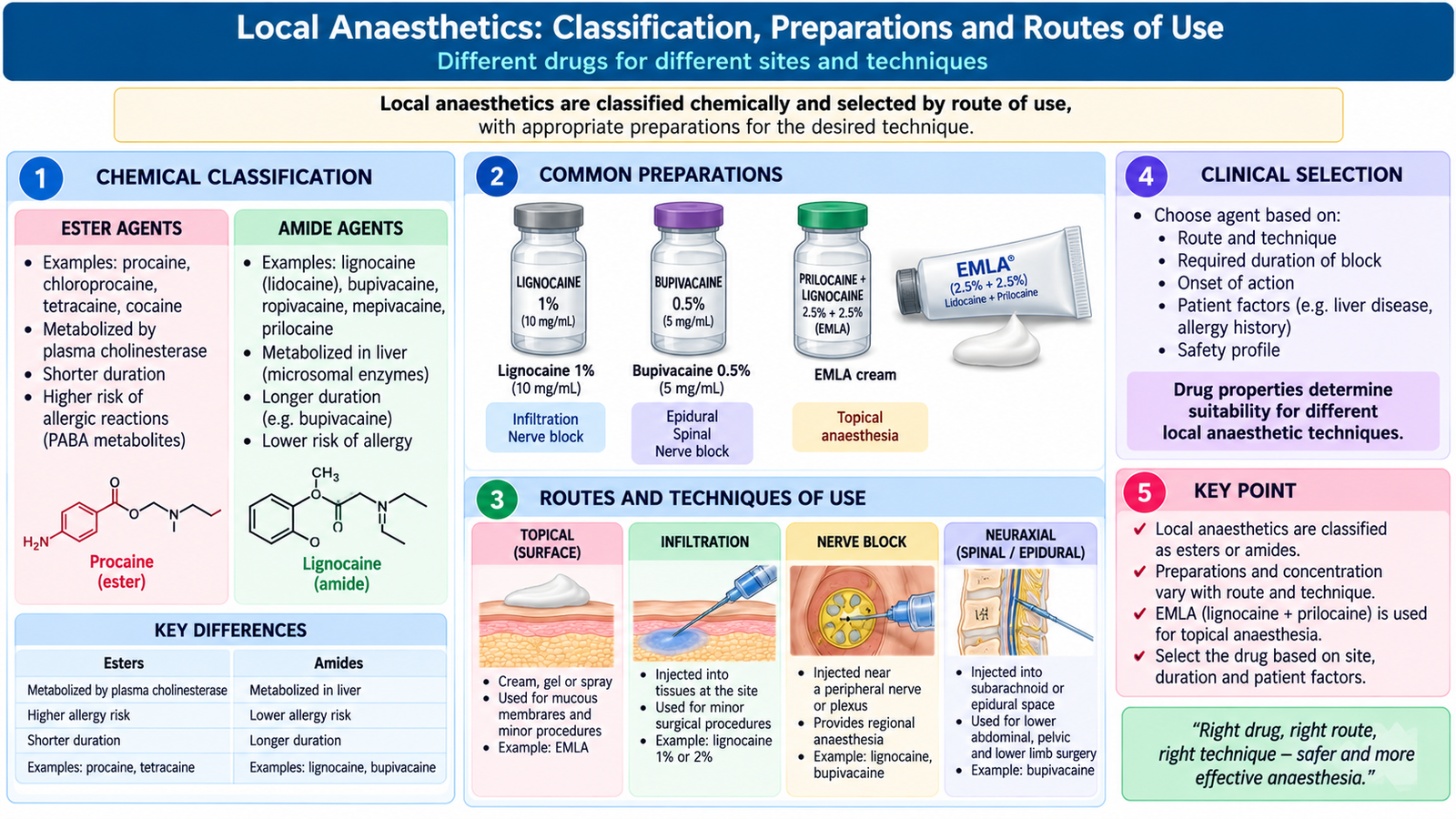
Local anaesthetics are drugs that reversibly block nerve conduction when applied locally to nervous tissue. The patient therefore loses sensation in the area supplied by the blocked nerves without requiring general unconsciousness. Chemically, most local anaesthetics are divided into ester and amide groups.
Classification by chemical linkage
| Group | Examples | Important pharmacokinetic point |
|---|---|---|
| Esters | Procaine, chloroprocaine, tetracaine, benzocaine, cocaine | Usually hydrolysed rapidly by plasma esterases. |
| Amides | Lignocaine, bupivacaine, ropivacaine, prilocaine, mepivacaine | Predominantly metabolised in the liver. |
Agents according to clinical route
The same local anaesthetic may be suitable for more than one technique. Choice depends on onset, duration, tissue penetration, desired degree of motor block and toxicity profile.
- Surface or topical anaesthesia: lignocaine, tetracaine and benzocaine are examples used on appropriate mucosal or surface tissues. Cocaine also has local anaesthetic activity and causes vasoconstriction.
- Infiltration anaesthesia: lignocaine and bupivacaine are commonly used examples.
- Peripheral nerve block: lignocaine, bupivacaine and ropivacaine may be used depending on the required onset and duration.
- Spinal anaesthesia: bupivacaine is an important commonly used agent.
- Epidural anaesthesia: lignocaine, bupivacaine and ropivacaine are important examples.
EMLA
EMLA means Eutectic Mixture of Local Anaesthetics. It contains lignocaine and prilocaine in a preparation that remains suitable for topical application to intact skin. The eutectic mixture lowers the melting point of the component drugs, allowing them to form an effective topical preparation. EMLA is useful when temporary cutaneous anaesthesia is required, for example before selected superficial needle or skin procedures. Because absorption through intact skin takes time, topical application does not produce the almost immediate effect seen when a drug is injected directly around a nerve.

F. Local Anaesthetic Mechanism, Pharmacokinetics and Differential Nerve Blockade
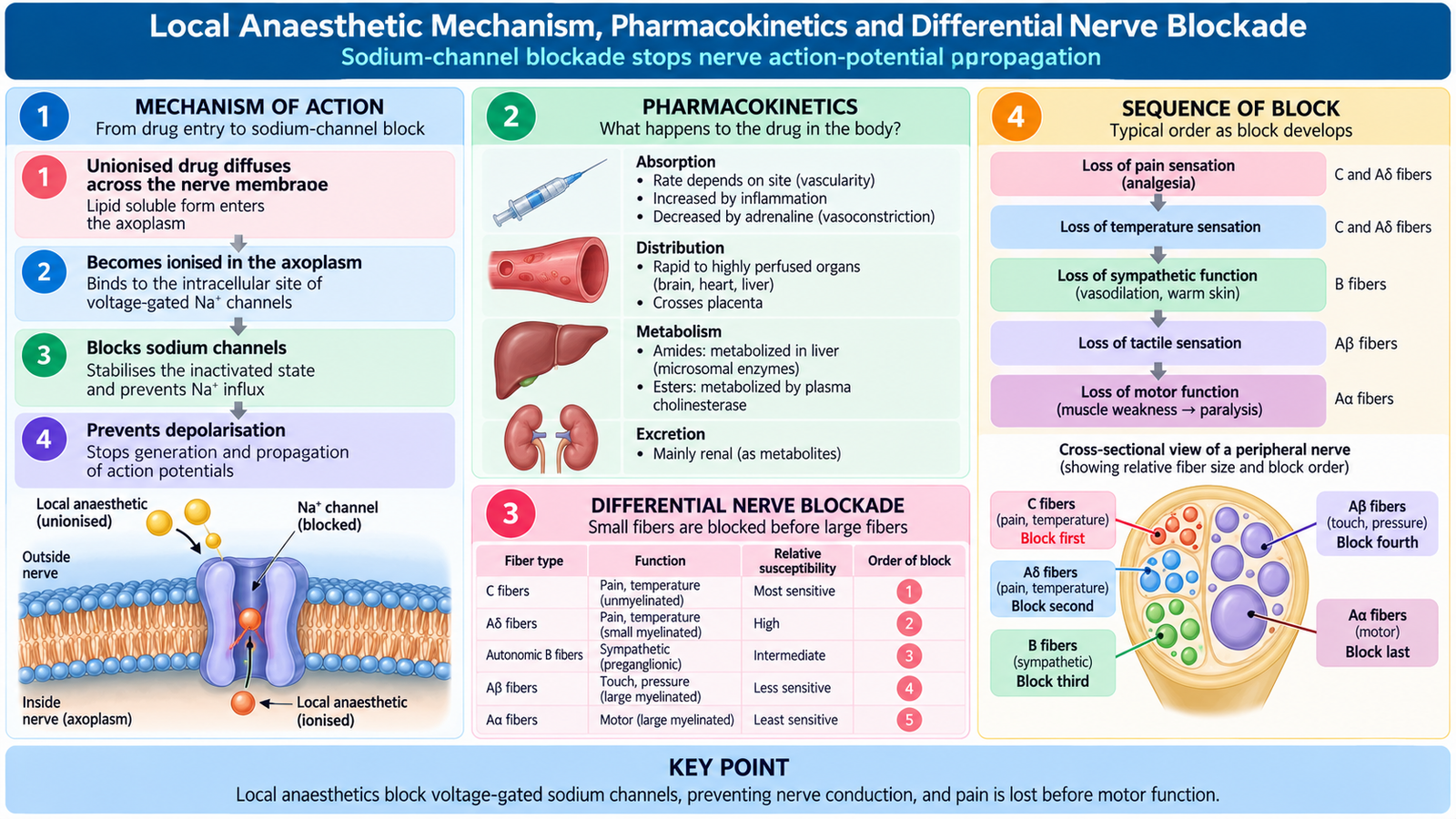
To understand local anaesthetics, remember that a nerve impulse depends on the opening of voltage-gated sodium channels. Sodium entry produces the rapid depolarization required for an action potential. Local anaesthetics interrupt this process and therefore stop the nerve from carrying sensory information.
Mechanism of action
Most local anaesthetics are weak bases. A proportion of the drug exists in an uncharged form that can cross the lipid nerve membrane. Once inside the axon, part of the drug becomes ionized. The active form binds to the inner aspect of voltage-gated sodium channels, particularly when channels are open or inactivated.
This blockade is reversible. When the local anaesthetic concentration around the nerve falls, sodium-channel function returns and nerve conduction recovers.
Use-dependent blockade
Frequently activated nerves repeatedly open their sodium channels. Local anaesthetics therefore tend to block rapidly firing fibers more effectively because the drug gains repeated access to its preferred channel states. This is called use-dependent or frequency-dependent blockade.
Pharmacokinetic factors that influence effect
The duration and systemic absorption of a local anaesthetic depend on the drug itself and on the site where it is administered.
- Blood flow at the injection site: highly vascular tissues remove the drug more rapidly into the circulation, shortening local exposure and increasing systemic absorption.
- Lipid solubility: influences penetration of lipid nerve membranes and is related to anaesthetic potency.
- Protein binding: greater binding within tissues generally contributes to longer drug action.
- Tissue pH: acidic tissue increases the ionized fraction outside the nerve and reduces penetration of the nerve membrane. This helps explain why local anaesthesia may work poorly in severely inflamed or infected acidic tissue.
- Metabolism: ester local anaesthetics are usually hydrolysed by plasma esterases, whereas amide local anaesthetics undergo mainly hepatic metabolism.
- Vasoconstrictors: reduction in local blood flow can slow removal of some local anaesthetics from the injection site.
Differential nerve blockade
Not all nerve fibers are blocked with equal ease. Smaller fibers and fibers with particular patterns of myelination and firing are generally blocked before large motor fibers. Therefore, sympathetic and pain transmission can be interrupted while some touch or motor function is still present. A useful clinical sequence is:
This is a clinical teaching sequence rather than an absolute rule; the precise pattern depends on drug concentration, nerve anatomy and the technique used.
Effects on other excitable membranes
Voltage-gated sodium channels are also present in other excitable tissues. If enough local anaesthetic reaches the systemic circulation, it can therefore affect the central nervous system and cardiovascular system. This explains why excessive systemic concentrations can produce neurological and cardiac toxicity rather than remaining confined to the intended nerve block.
G. Clinical Uses, Adrenaline with Lignocaine and Adverse Effects
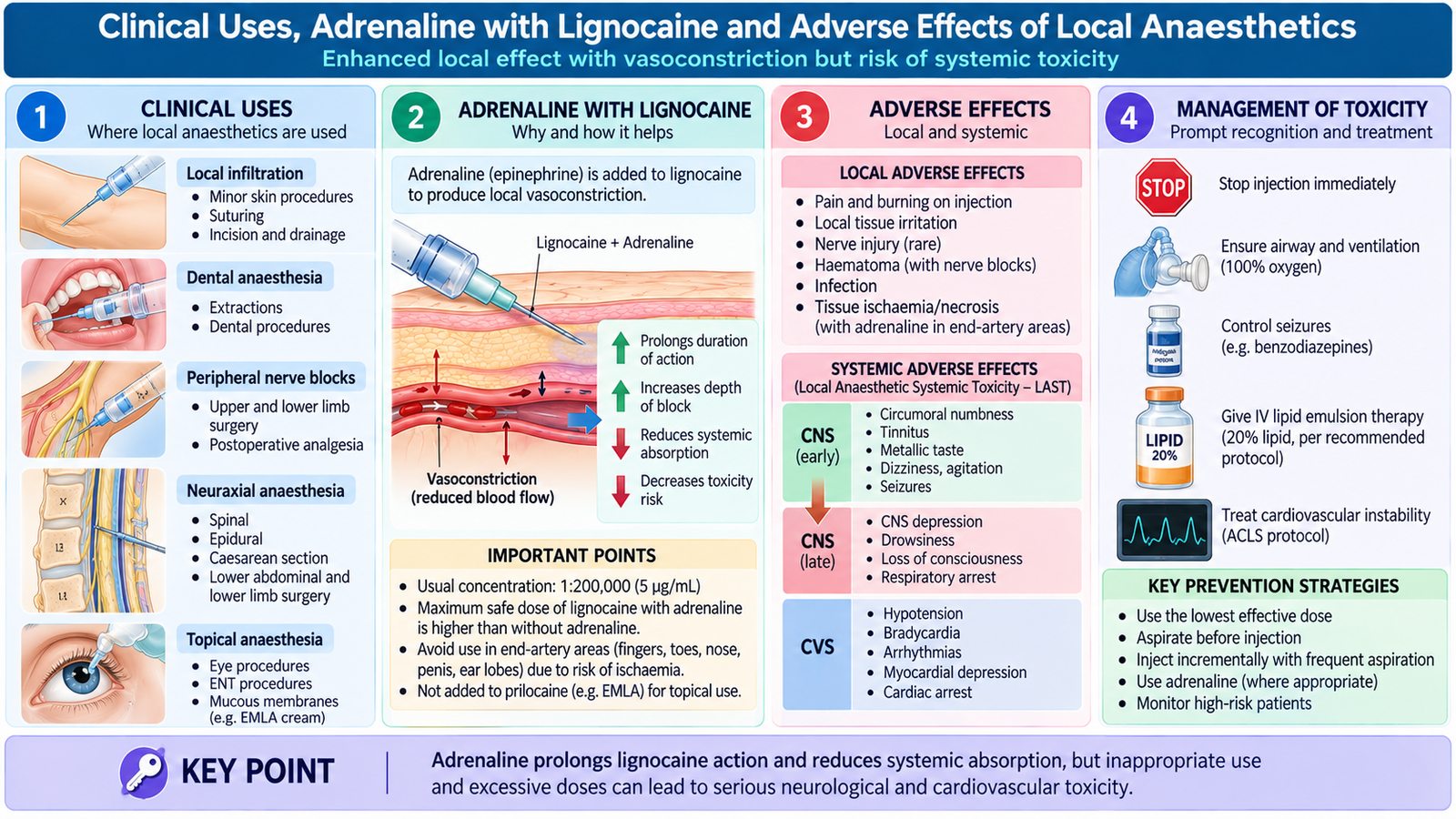
Local anaesthetics are clinically useful whenever temporary interruption of nerve conduction can prevent pain while preserving consciousness. Their use ranges from superficial mucosal anaesthesia to neuraxial blockade. Safe use requires attention to the technique, site, systemic absorption and toxicity of the chosen drug.
Clinical uses
- Surface anaesthesia: anaesthetizing accessible skin or mucosal surfaces with a topical preparation.
- Local infiltration: blocking small terminal nerves around a minor operative field.
- Peripheral nerve block: producing anaesthesia in the distribution of a named nerve or plexus.
- Spinal anaesthesia: producing neuraxial blockade after drug administration into cerebrospinal fluid.
- Epidural anaesthesia or analgesia: producing segmental neuraxial block with the possibility of repeated administration or continuous infusion.
Why is adrenaline combined with lignocaine?
Adrenaline activates vascular α-receptors and produces local vasoconstriction. When appropriately combined with lignocaine, this reduces blood flow through the injection site. The drug is consequently removed from the site more slowly.
Important advantages include:
- Prolonged duration of local anaesthetic action.
- Reduced systemic absorption and therefore a lower peak plasma concentration.
- Reduced local bleeding because of vasoconstriction.
- Possibility of achieving an effective local block while limiting systemic exposure.
Adrenaline-containing preparations require caution when local tissue perfusion is already compromised because excessive vasoconstriction can further reduce blood flow.
Understanding adrenaline concentrations
A ratio such as 1:200,000 means that there is 1 gram of adrenaline in 200,000 mL of solution. Converting 1 gram to 1000 mg makes the calculation straightforward.
1:200,000 adrenaline
1000 mg ÷ 200,000 mL = 0.005 mg/mL
0.005 mg/mL = 5 micrograms/mL
1:80,000 adrenaline
1000 mg ÷ 80,000 mL = 0.0125 mg/mL
0.0125 mg/mL = 12.5 micrograms/mL
Adverse effects of local anaesthetics
Most serious reactions occur when an excessive amount of local anaesthetic reaches the systemic circulation. This may occur because of excessive administration, rapid absorption from a vascular area or accidental intravascular injection. The resulting syndrome is called local anaesthetic systemic toxicity (LAST).
Central nervous system effects
The central nervous system may initially show excitation because inhibitory pathways can be affected before widespread neuronal depression develops. Early manifestations may include circumoral numbness, abnormal taste, tinnitus, agitation or other neurological symptoms. Increasing toxicity can produce tremor or seizures, followed by CNS depression and loss of consciousness.
Cardiovascular effects
Local anaesthetics can block sodium channels in cardiac tissue and may also influence vascular tone. Severe toxicity may therefore cause hypotension, slowing of cardiac conduction, arrhythmias and cardiovascular collapse. Bupivacaine is particularly important because severe cardiotoxicity can occur with excessive systemic exposure.
Allergic reactions
True allergy to local anaesthetics is uncommon. Allergic reactions occur more often with ester local anaesthetics, partly because some are metabolised to compounds related to para-aminobenzoic acid.
Methemoglobinemia
Prilocaine and benzocaine are particularly associated with methemoglobinemia when systemic exposure is excessive. Oxidized haemoglobin cannot carry oxygen normally, so clinically important accumulation can impair tissue oxygen delivery.
Integrated Mechanism Flow: How a Local Anaesthetic Produces Regional Loss of Sensation
⭐ AIM High-Yield Review
Regional, Neuraxial & Local Anaesthesia — Video Review
Use this video after completing the learning material to reinforce general, regional and local anaesthesia, including spinal, epidural and peripheral nerve-block concepts.