
Neurotoxic Paralysis: Spinal Poisons, Neurotoxic Snakebite, Botulism and Peripheral Poisons
Topic Introduction
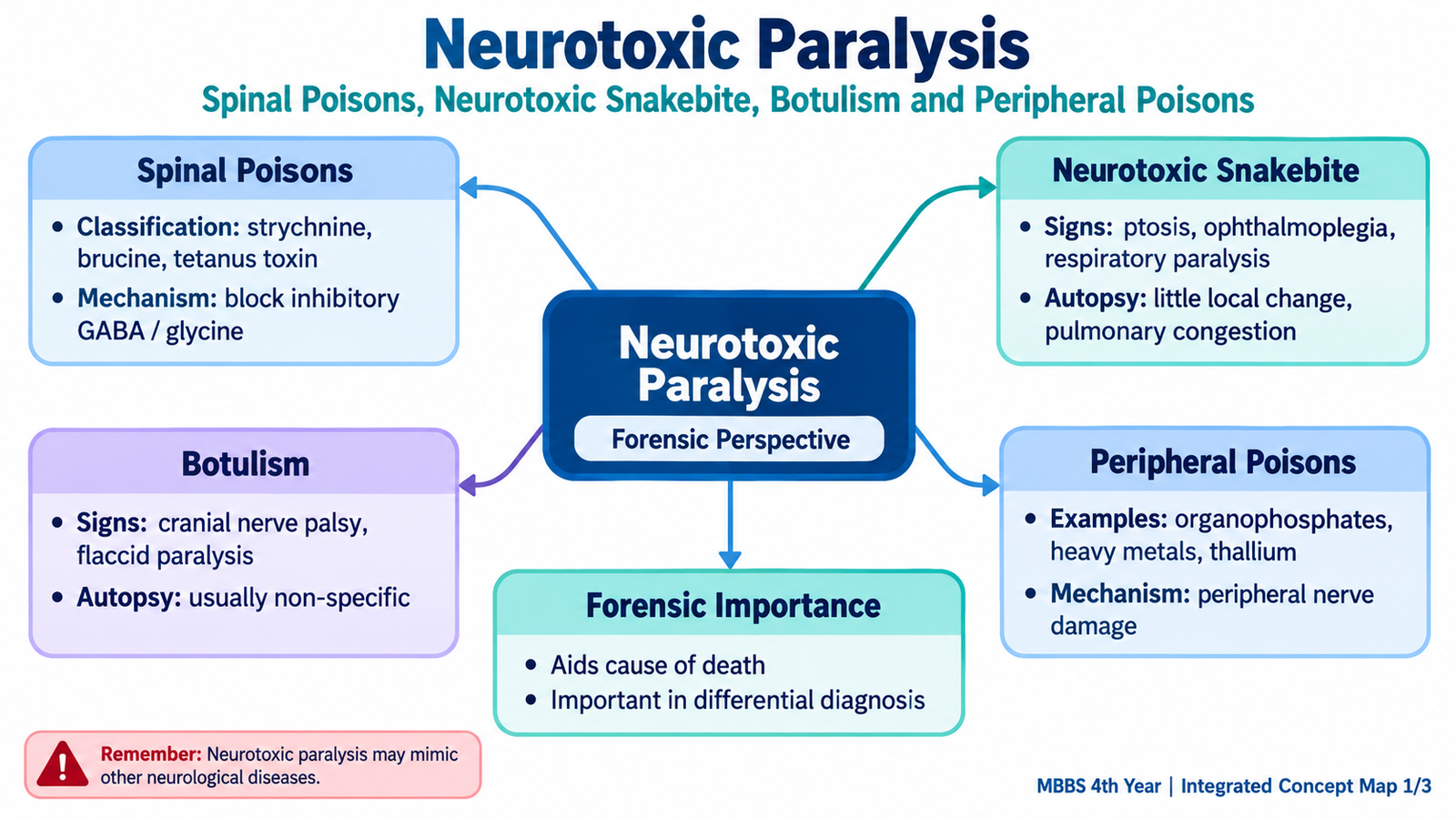
Neurotoxic paralysis develops when a poison interferes with the nervous control of skeletal muscle. The exact pattern depends on the site of action. Strychnine removes normal inhibitory control in the spinal cord and therefore produces severe painful spasms, whereas gelsemium depresses neurological function and causes progressive weakness. Neurotoxic snake venom, botulinum toxin, curare and conium mainly interfere with neuromuscular transmission and therefore produce weakness or flaccid paralysis. In severe poisoning, failure of the respiratory muscles is the major life-threatening event. This chapter will help you distinguish these mechanisms, recognize their characteristic clinical features, understand the expected autopsy findings and apply the important diagnostic, treatment and medico-legal principles.
A. Neurotoxic Paralysis: Classification and Site of Action
Neurotoxic poisons can be understood more easily by asking one question: where does the poison disturb motor control? Some poisons primarily alter activity within the spinal cord, while others interfere with the peripheral motor system, particularly the neuromuscular junction. Neurotoxic snake venom and botulinum toxin also disturb neuromuscular transmission, although they are considered separately because they have their own characteristic mechanisms and clinical patterns.
Spinal poisons
In classical forensic toxicological classification, the important spinal poisons are:
- Nux vomica and its main toxic alkaloid strychnine — predominantly spinal excitatory poisoning.
- Gelsemium — predominantly produces neurological depression, weakness and respiratory paralysis.
Peripheral poisons
The important peripheral nerve poisons in undergraduate forensic toxicology are:
- Curare — blocks nicotinic acetylcholine receptors at the neuromuscular junction.
- Conium maculatum or poison hemlock — its alkaloids disturb nicotinic transmission and produce progressive muscular paralysis.
Neuromuscular blockade/depression → failure of effective muscle contraction → weakness and flaccid paralysis

B. Nux Vomica and Strychnine: Spinal Excitatory Poisoning
Nux vomica is obtained from the seeds of Strychnos nux-vomica. Its major toxic alkaloid is strychnine; brucine is also present but is considerably less potent. Strychnine is the classical example of a spinal excitatory poison. The characteristic feature is not weakness but extreme reflex excitability with repeated generalized painful spasms. Consciousness usually remains clear during the early and major part of poisoning because the toxin primarily disturbs inhibitory motor control rather than producing primary cerebral unconsciousness.
Mechanism
Glycine is an important inhibitory neurotransmitter in the spinal cord and brainstem. Strychnine competitively blocks postsynaptic glycine receptors. Normal inhibitory control of motor neurons is therefore lost, and minor sensory stimuli can produce an exaggerated motor response.
This mechanism explains why a noise, bright light, touch or movement may precipitate another convulsive episode. It also explains why the muscles can become completely relaxed between attacks: the abnormality is repeated stimulus-triggered excitation rather than continuous structural rigidity.
Signs and symptoms
Symptoms usually develop rapidly after significant exposure. The early complaint may be anxiety, restlessness or a feeling of muscular stiffness. This progresses to characteristic generalized spasms.
- Painful muscular stiffness and twitching.
- Marked increase in reflex excitability.
- Generalized tonic spasms that may be triggered by minor sensory stimulation.
- Opisthotonus may occur when powerful extensor spasm arches the body backward.
- Risus-like facial contraction may occur during severe spasm.
- Difficulty breathing and cyanosis during contraction of the respiratory muscles.
- Dilated pupils and a frightened or anxious appearance may be present.
- Consciousness is characteristically preserved until severe hypoxia or late physiological deterioration develops.
- Between attacks, the muscles may become relatively relaxed.
Repeated powerful contractions greatly increase muscular oxygen consumption and lactate production. Severe poisoning can therefore produce hyperthermia, metabolic acidosis, muscle injury and rhabdomyolysis in addition to direct interference with ventilation.
Cause of death
Death mainly results from respiratory failure and hypoxia because sustained contraction of the diaphragm and chest-wall muscles prevents effective ventilation. Severe metabolic consequences of repeated contractions may contribute.
Fatal dose
Classical undergraduate forensic texts commonly quote an approximate fatal dose of 50–100 mg of strychnine, and one crushed nux-vomica seed is traditionally regarded as potentially fatal. Fatal-dose figures are approximate because outcome depends on the amount absorbed, formulation, individual susceptibility and speed of treatment.
Diagnosis
Diagnosis is based on the combination of exposure history and the characteristic clinical pattern. Important clues are sudden painful generalized spasms, extreme sensitivity to external stimuli, preserved consciousness and relaxation between attacks.
- History of exposure to nux-vomica, strychnine-containing material or an unidentified bitter poison.
- Identification of seed fragments in gastric contents when relevant.
- Toxicological demonstration of strychnine in appropriate biological samples.
- Assessment for metabolic acidosis, muscle injury and complications in a living patient.
Treatment
There is no specific antidote. Management aims to prevent stimulation, suppress severe muscular activity and maintain oxygenation until the toxin is eliminated.
- Keep the patient in a quiet, dark environment and minimize unnecessary stimulation.
- Secure the airway and provide oxygen and ventilatory support when required.
- Control convulsions and severe muscular activity, commonly with benzodiazepine sedation.
- Activated charcoal may be considered after recent ingestion when the airway is adequately protected.
- Induced vomiting should be avoided because stimulation and loss of airway control can be dangerous.
- Treat hyperthermia, acidosis, rhabdomyolysis and other complications supportively.
Autopsy appearance
There is no pathognomonic autopsy lesion. Findings mainly reflect hypoxia, asphyxia and intense premortem muscular activity.
- Cyanosis and general asphyxial changes may be present.
- Visceral congestion and pulmonary congestion or edema may occur.
- Small hemorrhages may occur as nonspecific hypoxic/asphyxial findings.
- Rigor mortis may appear early after severe convulsive activity.
- Fragments of crushed nux-vomica seed may sometimes remain in the stomach and should be sought during examination.
Medico-legal importance
Strychnine has historical importance as a homicidal and suicidal poison and has also been used in animal or vermin poisons. Accidental poisoning may occur through mistaken ingestion or inappropriate exposure to toxic preparations. Because autopsy findings are nonspecific, the final forensic interpretation should combine circumstances, clinical history, scene information and toxicological confirmation rather than rely on morphology alone.

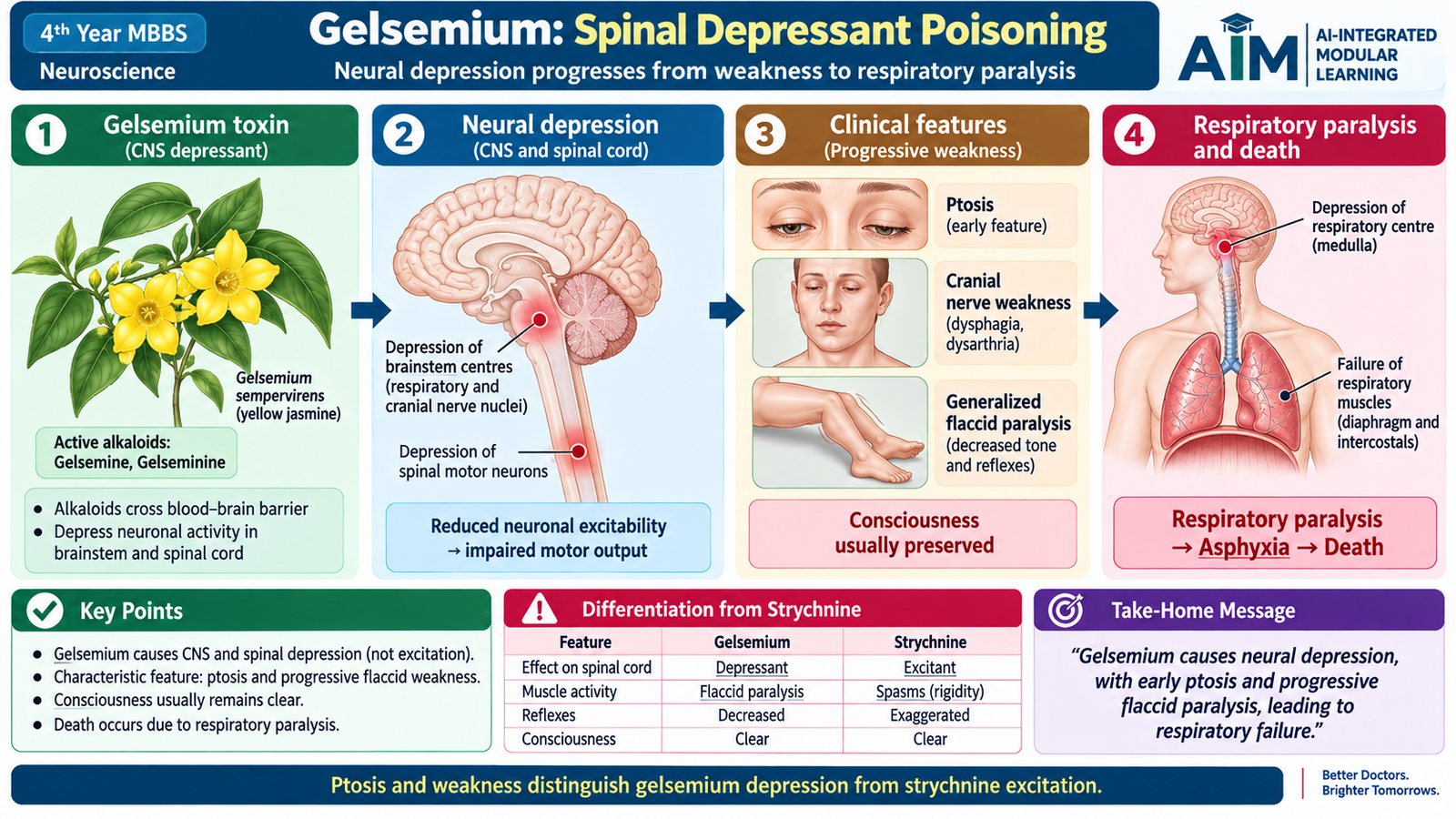
C. Gelsemium: Spinal Depressant Poisoning
Gelsemium, traditionally called yellow or Carolina jessamine in descriptions of Gelsemium sempervirens, contains toxic alkaloids such as gelsemine and related compounds. Unlike strychnine, its important clinical effect is progressive neurological depression with weakness and respiratory impairment. Severe poisoning therefore resembles a paralytic state rather than the violent stimulus-induced spasms of strychnine poisoning.
Mechanism
Gelsemium alkaloids depress neurological function involving spinal and brainstem pathways, including pathways responsible for motor activity and respiration. The result is progressive loss of muscular power together with depression of breathing. Different alkaloids within the plant may contribute through several neuroreceptor mechanisms, so the clinically important undergraduate concept is neurological depression leading to paralysis and respiratory failure.
Signs and symptoms
- Giddiness and headache.
- Marked muscular weakness and incoordination.
- Ptosis and diplopia.
- Visual disturbance with pupillary abnormalities.
- Difficulty speaking and swallowing as bulbar muscles become weak.
- Progressive paralysis of voluntary muscles.
- Slow or depressed respiration.
- Cardiovascular depression may accompany severe poisoning.
- Convulsive movements may occasionally occur, but progressive weakness is the more characteristic overall pattern.
- The patient may remain conscious until advanced hypoxia develops.
Fatal dose
Plant preparations vary considerably in alkaloid concentration, so a single volume is not reliable for all exposures. Classical forensic reports describe approximately 10 mg of gelsemine as a potentially fatal adult exposure in concentrated preparations. The figure should therefore be remembered as an approximate forensic teaching value rather than an absolute threshold.
Diagnosis
Diagnosis is suggested by a history of plant or herbal-preparation exposure together with ptosis, diplopia, progressive muscular weakness and respiratory depression.
- Identify or preserve suspected plant or preparation when available.
- Appropriate toxicological analysis can demonstrate gelsemium alkaloids in biological or scene samples.
- The absence of characteristic postmortem lesions means toxicological confirmation is particularly valuable in fatal cases.
Treatment
There is no established specific antidote for the overall syndrome. Treatment is therefore mainly supportive, with particular attention to respiratory function.
- Immediate assessment and protection of the airway.
- Oxygen and assisted ventilation when respiratory weakness develops.
- Early gastrointestinal decontamination may be considered when clinically appropriate and the airway is protected.
- Support circulation and treat neurological or cardiovascular complications symptomatically.
Autopsy appearance
Autopsy findings are usually nonspecific. Visceral congestion and pulmonary congestion or edema may be seen, reflecting respiratory failure and terminal hypoxia. Identification of plant material and toxicological demonstration of the alkaloids are therefore more useful than any single morphological finding.
Medico-legal importance
Poisoning is commonly associated with accidental ingestion, mistaken identification of toxic plants or inappropriate use of herbal preparations. Deliberate poisoning is possible but uncommon. In a suspected fatal exposure, interpretation requires correlation of the circumstances, plant material, symptoms before death, autopsy findings and toxicological analysis.

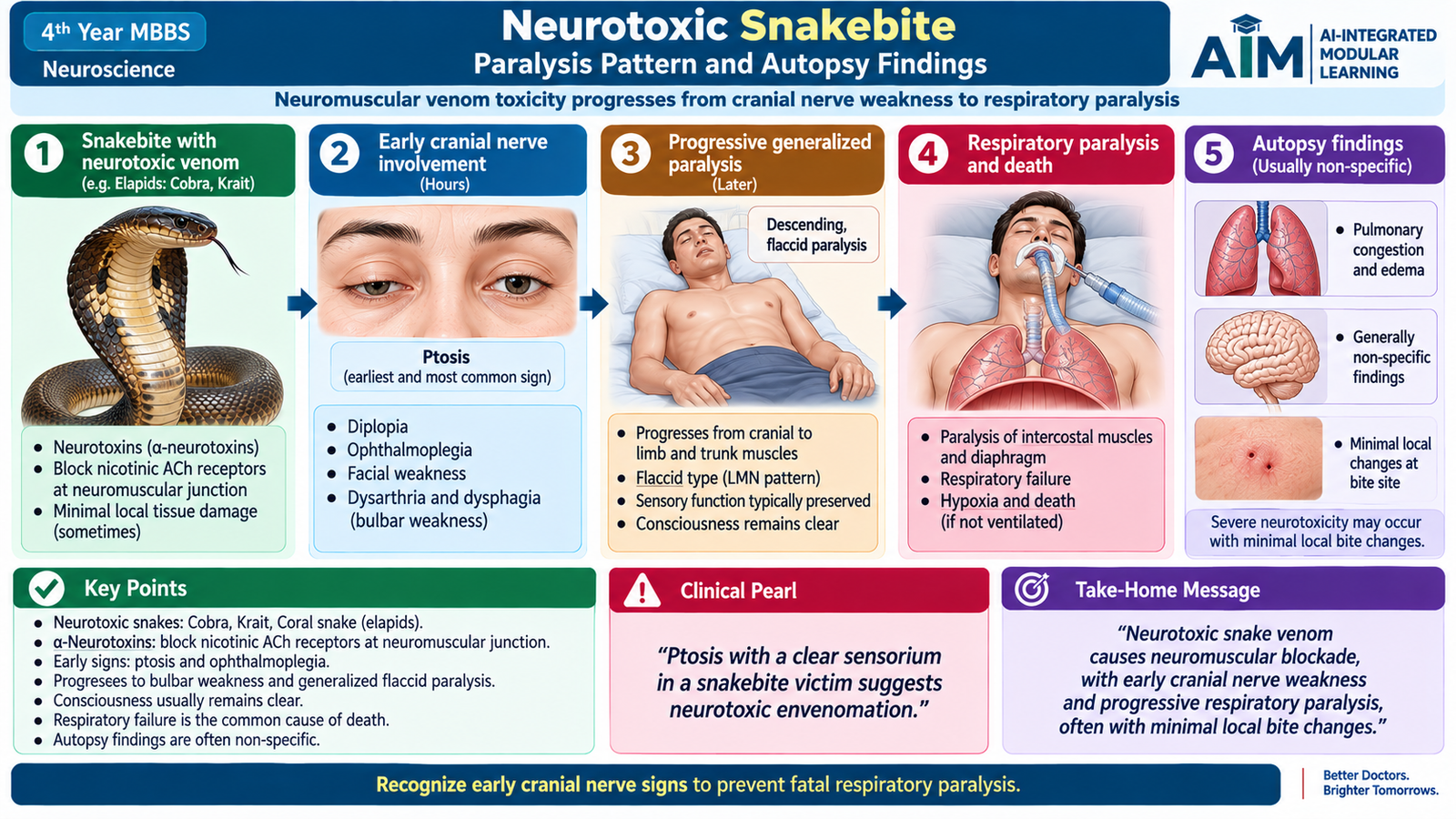
D. Neurotoxic Snakebite: Paralysis Pattern and Autopsy Findings
Neurotoxic envenomation is classically associated with elapid snakes such as cobras and kraits. Their venom contains neurotoxins that interfere with transmission between motor nerves and skeletal muscle. Some toxins act before acetylcholine is released, while others interfere with the postsynaptic nicotinic acetylcholine receptor. The final effect is failure of neuromuscular transmission, producing progressive weakness and potentially fatal respiratory paralysis.
Signs and symptoms
Cranial muscles are often affected early. For this reason, ptosis is one of the most important early clinical clues to neurotoxic envenomation.
- Ptosis, often bilateral.
- Diplopia and external ophthalmoplegia.
- Blurred vision.
- Facial weakness.
- Dysarthria or nasal speech.
- Dysphagia and difficulty handling oral secretions.
- Weakness of the neck muscles, sometimes producing difficulty holding up the head.
- Progressive generalized flaccid weakness.
- Weak cough and inability to clear secretions.
- Respiratory muscle paralysis leading to respiratory failure.
Sensorium may remain clear until hypoxia becomes severe. Local findings depend on the snake. Cobra bites may produce local pain, swelling or tissue injury, whereas krait bites may show very little local reaction. Therefore, severe paralysis does not require a dramatic local wound.
Typical autopsy appearance
There is no single autopsy finding that proves neurotoxic snakebite. Fatal cases commonly show changes related to respiratory failure and hypoxia.
- One or more fang punctures may be identifiable, but they can be small or difficult to demonstrate.
- Local swelling, bruising or tissue injury may occur, although these may be minimal in some neurotoxic bites.
- Pulmonary congestion and pulmonary edema may be present.
- General visceral congestion may occur.
- Petechial hemorrhages can occur as nonspecific terminal changes.
- Cerebral congestion or edema may occur following severe hypoxia.
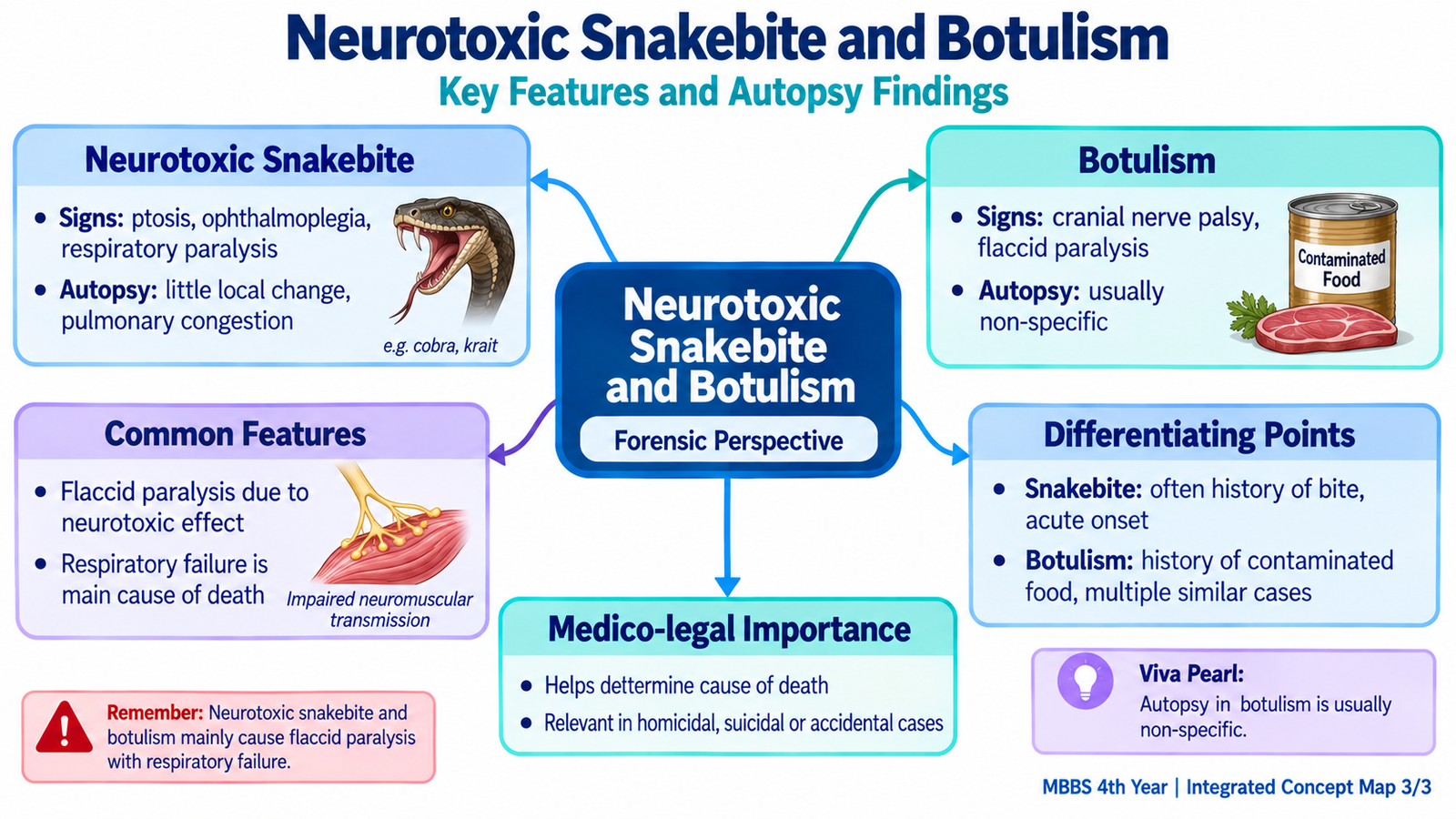
E. Botulism: Descending Neuroparalysis and Autopsy Findings
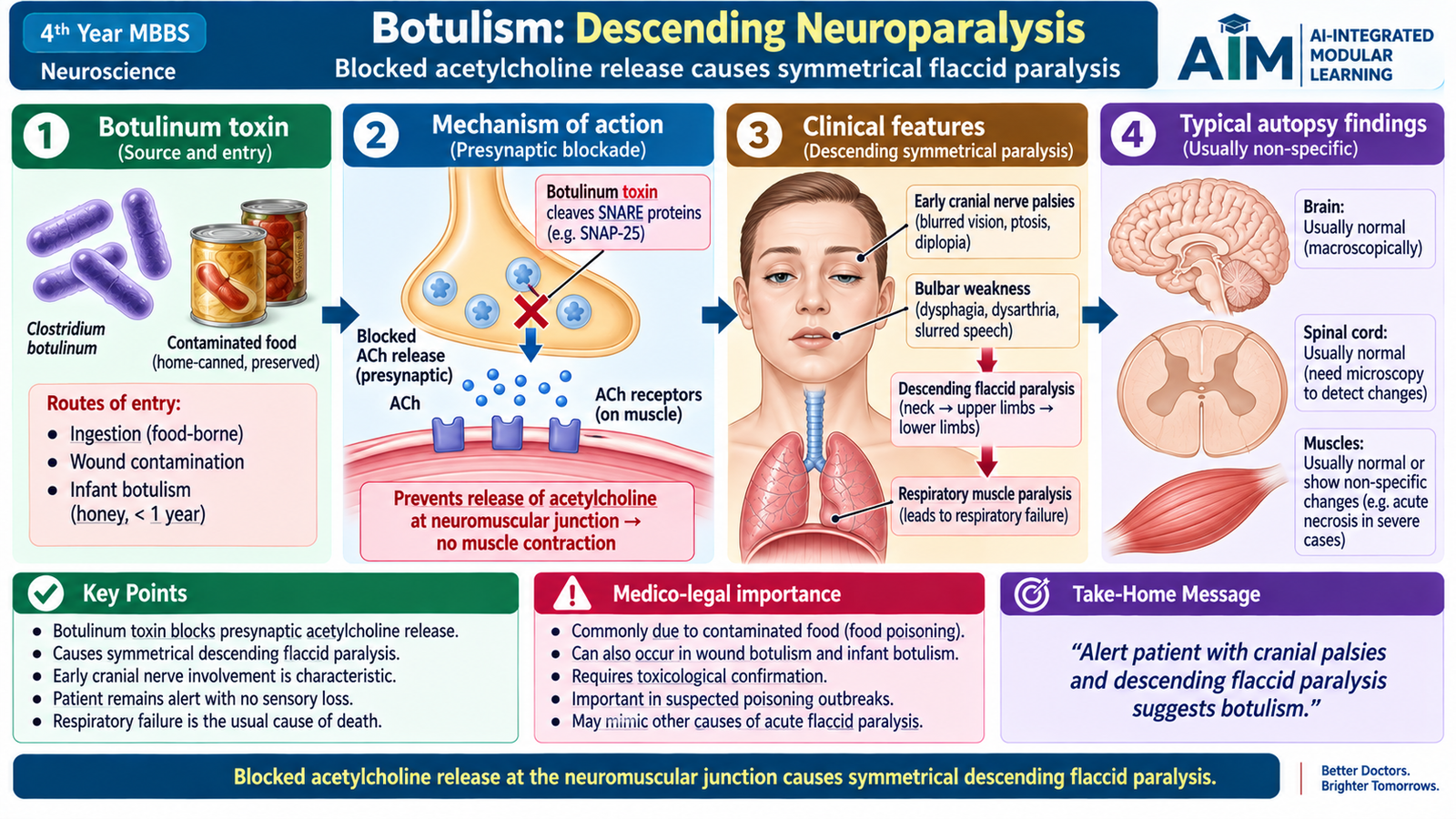
Botulism is a neuroparalytic syndrome caused by botulinum neurotoxin produced by Clostridium botulinum and certain related clostridia. The toxin acts at presynaptic cholinergic nerve terminals. It prevents release of acetylcholine, so the motor nerve impulse cannot activate skeletal muscle normally. The result is a characteristic bilateral, symmetrical descending flaccid paralysis that usually begins with cranial nerve dysfunction. :contentReference[oaicite:1]{index=1}
Mechanism behind the clinical pattern
Botulinum toxin enters cholinergic nerve endings and disrupts proteins required for acetylcholine-containing vesicles to fuse with the presynaptic membrane. Acetylcholine release therefore fails. Skeletal muscle cannot contract normally, and autonomic cholinergic function is also impaired.
Signs and symptoms
Cranial nerve manifestations are prominent early. Weakness then progresses downward to the neck, upper limbs, trunk and respiratory muscles.
- Diplopia and blurred vision.
- Ptosis.
- External ophthalmoplegia.
- Dilated or poorly reactive pupils may occur because autonomic cholinergic transmission is affected.
- Dysarthria and change in voice.
- Dysphagia and impaired gag or palatal function.
- Dry mouth.
- Facial and neck weakness.
- Symmetrical descending flaccid limb weakness.
- Constipation or other autonomic manifestations.
- Respiratory distress progressing to respiratory failure in severe disease.
Foodborne botulism may begin with nausea, vomiting, abdominal discomfort or diarrhea before the neurological syndrome becomes obvious. A particularly useful diagnostic concept is that the patient is generally alert, has no major sensory loss and develops symmetrical descending paralysis. :contentReference[oaicite:2]{index=2}
Typical autopsy appearance
Botulism is primarily a functional blockade of neurotransmission, so a characteristic gross structural lesion is usually absent. The postmortem examination may therefore be relatively nonspecific.
- Pulmonary congestion and edema may accompany terminal respiratory failure.
- Aspiration or bronchopneumonia may occur, particularly after prolonged bulbar weakness or respiratory support.
- General visceral congestion may be present.
- Prolonged intensive care may produce secondary treatment-related or hypoxic changes.
- No single gross lesion is diagnostic of botulism.
Consequently, a forensic diagnosis depends heavily on the premortem neurological pattern, exposure circumstances and demonstration of botulinum toxin or the responsible organism in appropriate clinical, food or postmortem material rather than on autopsy morphology alone.
F. Peripheral Poisons: Curare and Conium
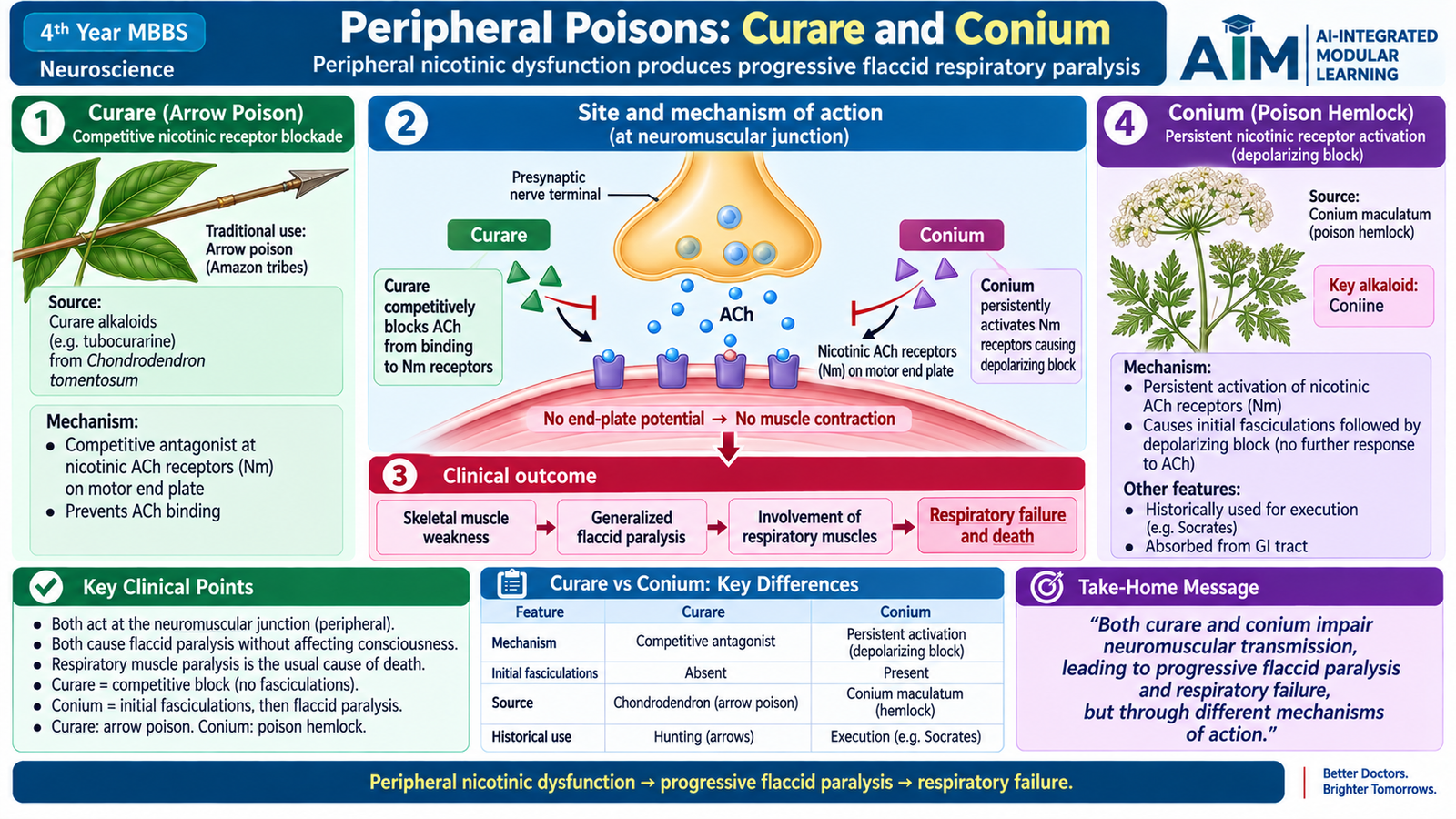
Peripheral nerve poisons interfere with transmission between the peripheral motor nerve and skeletal muscle. The two classical examples in forensic toxicology are curare and Conium maculatum. Both can eventually cause respiratory paralysis, but their sources and toxicological behaviour differ. Curare is best understood as a direct neuromuscular-blocking poison, whereas conium produces a broader nicotinic toxic syndrome followed by progressive neuromuscular paralysis.
Curare
Curare is a traditional arrow poison prepared from plants including species of Chondrodendron and Strychnos. Tubocurarine and related alkaloids produce the characteristic toxic action. Curare is poorly absorbed through the gastrointestinal tract, so poisoning is much more important when it enters through a wound or is given parenterally.
Mechanism
Curare acts as a competitive non-depolarizing antagonist at nicotinic Nm acetylcholine receptors on the skeletal-muscle end plate. Acetylcholine is released from the motor nerve, but it cannot activate the blocked receptor effectively.
Signs and symptoms
- Progressive skeletal-muscle weakness.
- Ptosis and visual difficulty may occur as small skeletal muscles become weak.
- Weakness spreads to larger muscle groups.
- Flaccid paralysis develops.
- Respiratory muscles eventually become paralyzed.
- Consciousness and sensation may remain intact because the main action is at the neuromuscular junction.
Fatal dose
Classical forensic teaching quotes approximately 30–60 mg for curare when it reaches the body by an effective parenteral or wound route. The route is crucial because gastrointestinal absorption is poor.
Diagnosis and treatment
Diagnosis depends on the exposure history and a pattern of rapidly developing flaccid paralysis without primary loss of consciousness. Toxicological analysis should be used where available.
- Maintain the airway and provide assisted ventilation when necessary.
- Support circulation.
- For a reversible non-depolarizing neuromuscular block, an anticholinesterase such as neostigmine may antagonize the blockade when clinically appropriate; an antimuscarinic is used with it to control muscarinic effects.
- Continue respiratory support until neuromuscular function recovers.
Autopsy findings and medico-legal importance
Autopsy generally shows nonspecific signs of respiratory failure, including pulmonary and visceral congestion and other asphyxial changes. Curare has historical importance as an arrow poison. Deliberate homicidal poisoning is rare, while accidental or iatrogenic exposure to neuromuscular-blocking agents has medico-legal importance in appropriate circumstances.
Conium maculatum — Poison Hemlock
Conium maculatum, or poison hemlock, contains toxic alkaloids such as coniine and related compounds. All parts of the plant may be toxic. Poisoning is especially important when the plant is mistaken for an edible herb. Coniine acts on nicotinic cholinergic receptors and can first produce stimulation and then functional blockade.
Mechanism
Coniine affects nicotinic receptors at autonomic ganglia and the neuromuscular junction. Early receptor stimulation may produce autonomic and muscular excitatory symptoms. Persistent exposure is followed by receptor dysfunction and neuromuscular blockade, causing progressive flaccid paralysis.
Signs and symptoms
- Nausea, vomiting and abdominal discomfort.
- Salivation and sweating may occur.
- Dizziness, tremor and weakness.
- Pupillary abnormalities.
- Early tachycardia may be followed by cardiovascular depression.
- Progressive muscular weakness and flaccid paralysis.
- Paralysis may progress upward and eventually involve the respiratory muscles.
- Severe poisoning may produce hypotension, coma and respiratory failure.
Fatal dose
Classical undergraduate forensic teaching commonly quotes approximately 60 mg of coniine as a fatal dose. Published estimates vary, so this should be regarded as an approximate forensic teaching value rather than a fixed biological threshold.
Diagnosis
- History of ingestion of a wild plant or herb is an important clue.
- Plant identification may establish the source.
- A characteristic unpleasant or mousy odor has traditionally been described with conium-containing material.
- Toxicological demonstration of coniine or related alkaloids can support the diagnosis.
- Progressive flaccid paralysis together with gastrointestinal and autonomic manifestations supports the clinical diagnosis.
Treatment
There is no specific routinely established antidote. Management is mainly supportive.
- Protect the airway.
- Provide oxygen and mechanical ventilation when respiratory muscles are weak.
- Consider activated charcoal after appropriate early ingestion when the airway is protected.
- Control convulsions if they occur.
- Support blood pressure and manage complications such as rhabdomyolysis or renal injury when present.
Autopsy findings
Findings are mainly those of respiratory failure and are not specific:
- Pulmonary and visceral congestion.
- Other general asphyxial changes.
- Plant leaves, stems, roots or other fragments may remain in the stomach.
- A characteristic odor from plant material may occasionally provide a clue but is not sufficient for diagnosis.
Medico-legal importance
Conium poisoning is most importantly associated with accidental ingestion after the plant is mistaken for an edible herb. Deliberate self-poisoning or homicidal use is uncommon. Poison hemlock also has historical medico-legal significance because it was used for execution in antiquity. In modern forensic practice, plant identification and toxicological confirmation are more important than the historical association.
Integrated Mechanism Flow
⭐ AIM High-Yield Review
🎥 AIM Video Learning
Watch these videos after completing the learning material to reinforce the major neurotoxic mechanisms and clinical patterns.