
Foundations of CNS Pharmacology: Neurotransmission, Receptors, Blood–Brain Barrier and CNS Stimulants
A first-learning guide to chemical signalling in the brain, CNS receptor systems, the blood–brain barrier and the pharmacology of respiratory stimulants, methylxanthines and sibutramine.
1. Topic Introduction
CNS pharmacology becomes easier when drugs are understood in relation to normal neuronal communication. Neurons communicate through neurotransmitters that act on receptors or ion channels, while neuromodulators alter the strength and pattern of this signalling. The blood–brain barrier then determines which substances can efficiently reach the brain. CNS drugs act by changing one or more of these processes. In this chapter, you will first learn the major signalling molecules, receptors and ion channels of the CNS. You will then see how CNS drugs are broadly classified before focusing on important stimulants: respiratory analeptics, methylxanthines and sibutramine. The emphasis is on linking each drug target to its physiological effect, clinical use and important adverse effects.
A. Chemical Signalling in the CNS: Neurotransmitters, Neuromodulators and Trophic Factors
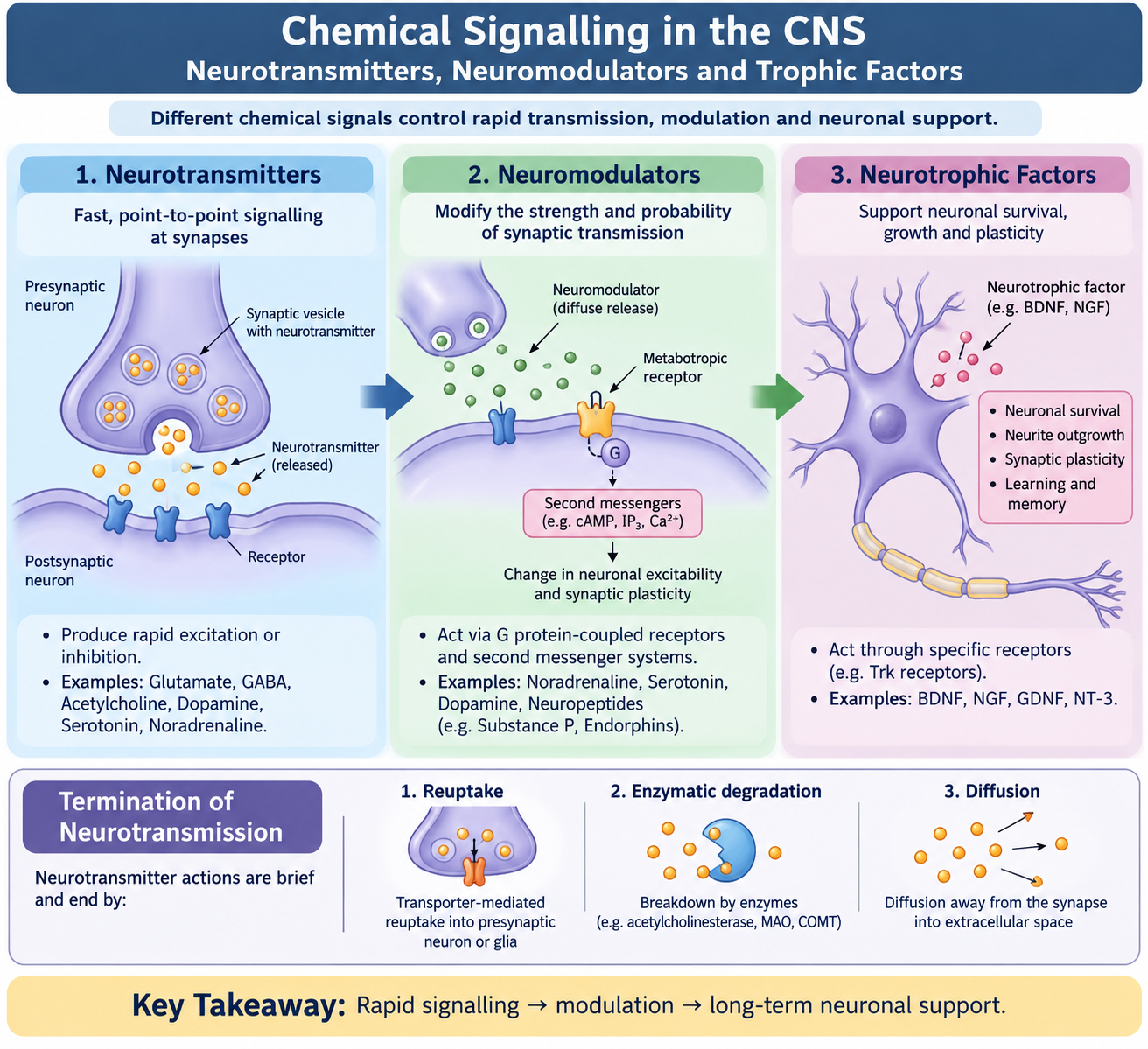
Neurons do not act in isolation. They communicate at synapses and within wider neuronal networks through chemical messengers. Understanding the type of messenger involved is important because most CNS drugs modify either the amount of a chemical messenger or the way its receptor responds.
Neurotransmitters
A neurotransmitter is a chemical messenger released from a neuron, usually from a presynaptic terminal, in response to neuronal activity. It crosses the synaptic cleft and binds to receptors on a postsynaptic neuron or another target cell. Depending on the transmitter and receptor involved, the target cell may become more excitable or less excitable.
Action potential reaches nerve terminal → voltage-gated Ca2+ channels open → Ca2+ enters → transmitter-containing vesicles fuse with the membrane → transmitter is released → receptor activation produces a cellular response.
Transmission must also be terminated. Depending on the transmitter, this occurs through reuptake into neurons or glial cells, enzymatic degradation, or diffusion away from the synapse. These termination mechanisms are important drug targets. For example, blocking transmitter reuptake increases the amount of transmitter available to stimulate receptors.
Neuromodulators
A neuromodulator does not simply produce a rapid excitatory or inhibitory postsynaptic response. Instead, it changes how neurons or neuronal circuits respond to other signals. Its effects are often slower, more widespread and longer lasting than those of rapid synaptic transmission.
Many monoamines, such as dopamine, noradrenaline and serotonin, can therefore behave mainly as neuromodulatory transmitters in the CNS. They influence functions such as alertness, attention, mood, motivation, sleep and autonomic activity by altering the activity of entire neuronal networks.
Neurotropic and neurotrophic factors
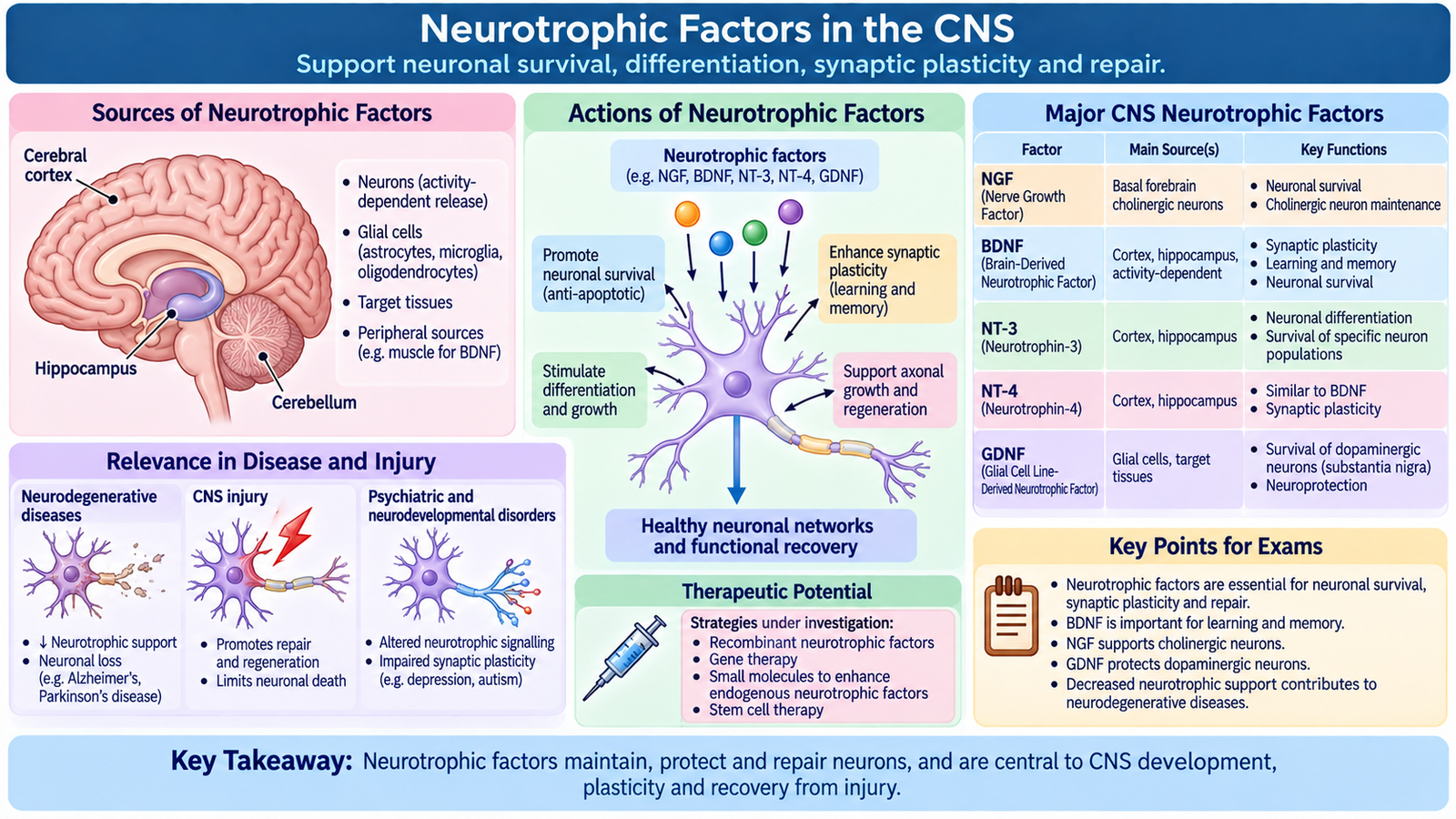
Neurotropic factors are factors that preferentially influence nervous tissue. Neurotrophic factors are particularly important because they support neuronal survival, growth, differentiation and synaptic plasticity. Examples include nerve growth factor (NGF) and brain-derived neurotrophic factor (BDNF).
Unlike classical transmitters, neurotrophic factors mainly produce slower changes in neuronal structure and function. Their importance lies in maintaining neurons and allowing nervous tissue to adapt over time rather than simply transmitting one rapid electrical message.

B. Blood–Brain Barrier and Its Clinical Significance
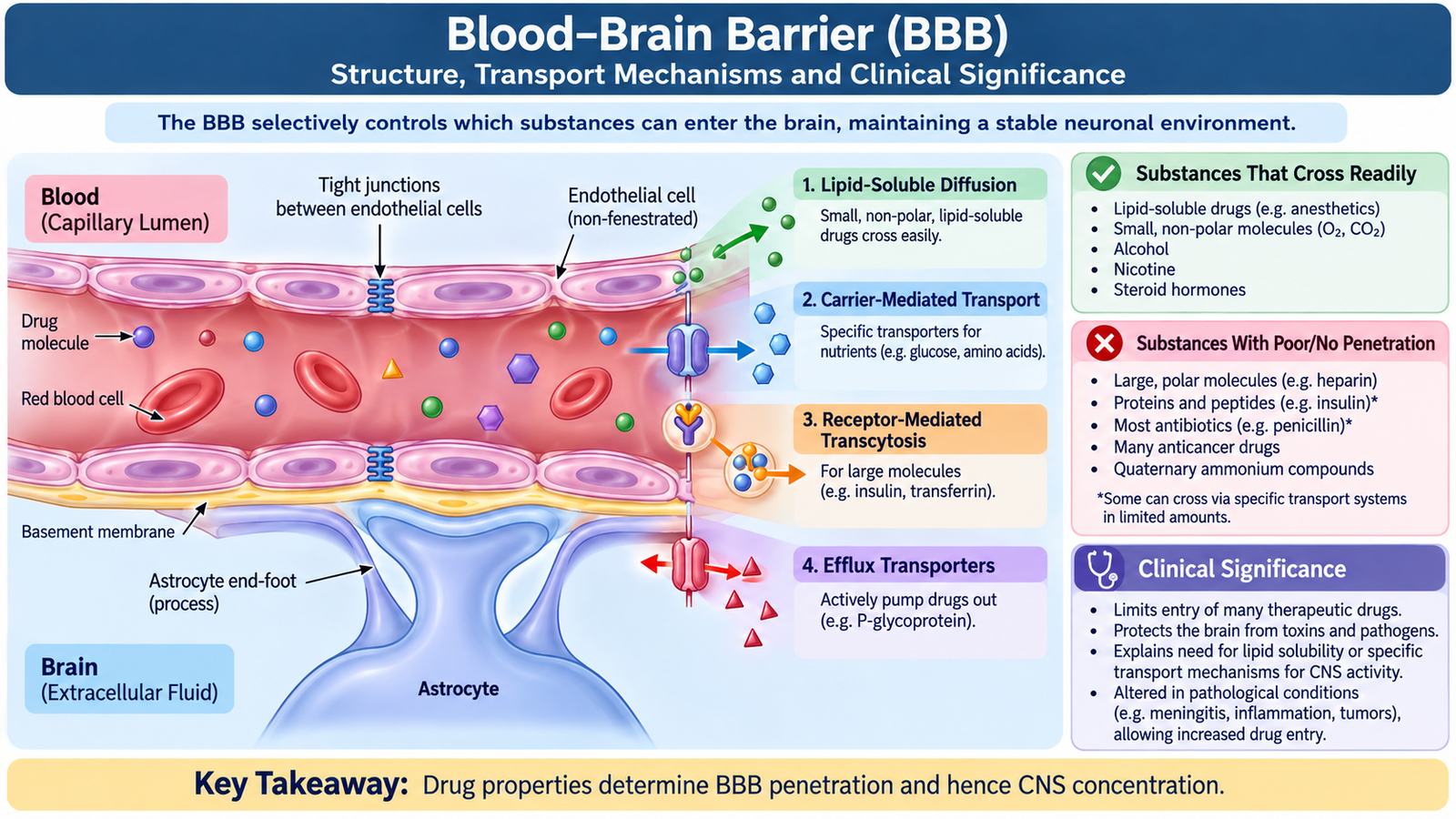
The blood–brain barrier (BBB) is a specialized barrier between the circulating blood and the extracellular environment of most of the brain. Its purpose is to maintain a stable environment for neurons while protecting the CNS from many circulating chemicals and potentially harmful substances.
The major structural basis of the BBB is the presence of tight junctions between cerebral capillary endothelial cells. These endothelial cells have much less free movement of substances between them than capillaries in many other tissues. Pericytes and astrocytic processes support and regulate the barrier, although the endothelial tight junction is the main physical barrier.
What crosses the BBB?
A drug reaches the CNS efficiently only if it can cross this barrier or use a specific transport mechanism. In general, small lipid-soluble and largely non-ionized molecules cross more readily by diffusion than large, highly polar or strongly ionized substances.
- Lipid-soluble substances: generally penetrate the CNS more readily.
- Water-soluble or highly ionized substances: usually penetrate poorly unless a transporter is available.
- Essential nutrients: such as glucose and certain amino acids use specific carrier systems.
- Efflux transporters: can pump some drugs back toward the blood and reduce their CNS concentration.
Clinical significance
The BBB has an important pharmacological consequence: a drug may be highly active at a receptor in laboratory conditions but clinically ineffective in the CNS if it cannot reach that receptor in adequate concentration. CNS drug design therefore depends not only on receptor affinity but also on brain penetration.
Barrier function may become altered in some pathological states, especially when inflammation or tissue injury affects cerebral vessels. This can change the entry of substances into nervous tissue. Some specialized areas of the brain also have a less complete barrier because they need to monitor substances circulating in the blood.
C. Principal CNS Neurotransmitters, Receptors and Ion Channels
The effect of a neurotransmitter depends not simply on the transmitter itself but on the receptor subtype present on the target cell. The same transmitter can therefore produce different effects in different neurons. CNS receptors can be understood most easily by separating them into ionotropic receptors, which directly control ion channels, and metabotropic receptors, which signal through intracellular pathways. In addition, neurons depend on voltage-gated ion channels for generation and propagation of electrical signals.
Principal neurotransmitters and receptor families
Glutamate is the major excitatory neurotransmitter in the CNS. Its important ionotropic receptors include NMDA, AMPA and kainate receptors. It also acts on metabotropic glutamate receptors. Excessive glutamate receptor activation can produce excessive Ca2+ entry and neuronal injury, which illustrates why excitatory signalling must be carefully controlled.
GABA (gamma-aminobutyric acid) is the major inhibitory neurotransmitter in the brain. GABAA receptors are ligand-gated chloride channels. Their activation increases inhibitory Cl− conductance and reduces neuronal excitability. GABAB receptors are metabotropic G-protein-coupled receptors and produce slower inhibitory effects.
Glycine is another inhibitory transmitter, particularly important in the spinal cord and brainstem. Its receptor is a ligand-gated chloride channel.
Acetylcholine acts through two broad receptor families. Nicotinic receptors are ionotropic cation channels, whereas muscarinic receptors are metabotropic receptors. Central cholinergic pathways participate in attention, arousal, memory and several other functions.
Dopamine acts through metabotropic dopamine receptors. D1-like receptors generally activate stimulatory intracellular signalling, whereas D2-like receptors generally reduce cyclic AMP signalling. Dopamine pathways are important in movement, motivation, reward and neuroendocrine regulation.
Noradrenaline acts through α- and β-adrenoceptors, all of which are metabotropic. Central noradrenergic pathways influence alertness, attention and autonomic responses.
Serotonin (5-hydroxytryptamine; 5-HT) acts through several receptor families involved in mood, sleep, appetite, pain and many other CNS functions. Most serotonin receptors are metabotropic, but 5-HT3 is an important exception because it is a ligand-gated ion channel.
Histamine acts mainly through metabotropic histamine receptors in the CNS and contributes particularly to wakefulness and arousal.
Ligand-gated or ionotropic receptors
An ionotropic receptor contains an ion channel as part of the receptor itself. When a neurotransmitter binds, the channel opens rapidly. The movement of ions changes the membrane potential within milliseconds, so these receptors are particularly suited for fast synaptic transmission.
Examples include nicotinic acetylcholine receptors, GABAA receptors, glycine receptors, NMDA/AMPA/kainate glutamate receptors and 5-HT3 receptors.
Metabotropic receptors
Metabotropic receptors do not form an ion channel themselves. Most are G-protein-coupled receptors. Receptor activation changes intracellular signalling molecules, enzymes or ion-channel activity. Their onset is usually slower than that of ionotropic receptors, but their effects can be amplified and may last longer.
Voltage-gated ion channels
Voltage-gated channels open or close in response to changes in membrane voltage rather than direct neurotransmitter binding. They are essential for neuronal excitability.
- Voltage-gated Na+ channels generate the rapid depolarizing phase of the action potential.
- Voltage-gated K+ channels help repolarize the membrane and regulate firing frequency.
- Voltage-gated Ca2+ channels allow Ca2+ entry, particularly at presynaptic terminals, where Ca2+ triggers neurotransmitter release.
Because electrical activity depends on these channels, changing their function can strongly alter CNS activity. Ion channels are therefore important pharmacological targets.
| Feature | Ionotropic receptor | Metabotropic receptor | Voltage-gated channel |
|---|---|---|---|
| Activated by | Neurotransmitter | Neurotransmitter | Membrane voltage |
| Mechanism | Directly opens ion channel | Activates intracellular signalling | Channel opens with voltage change |
| Typical speed | Very rapid | Slower, often prolonged | Rapid during electrical activity |
| Example | GABAA, NMDA, nicotinic | GABAB, dopamine, muscarinic | Na+, K+, Ca2+ channels |


D. Broad Classification of CNS Drugs and CNS Stimulants
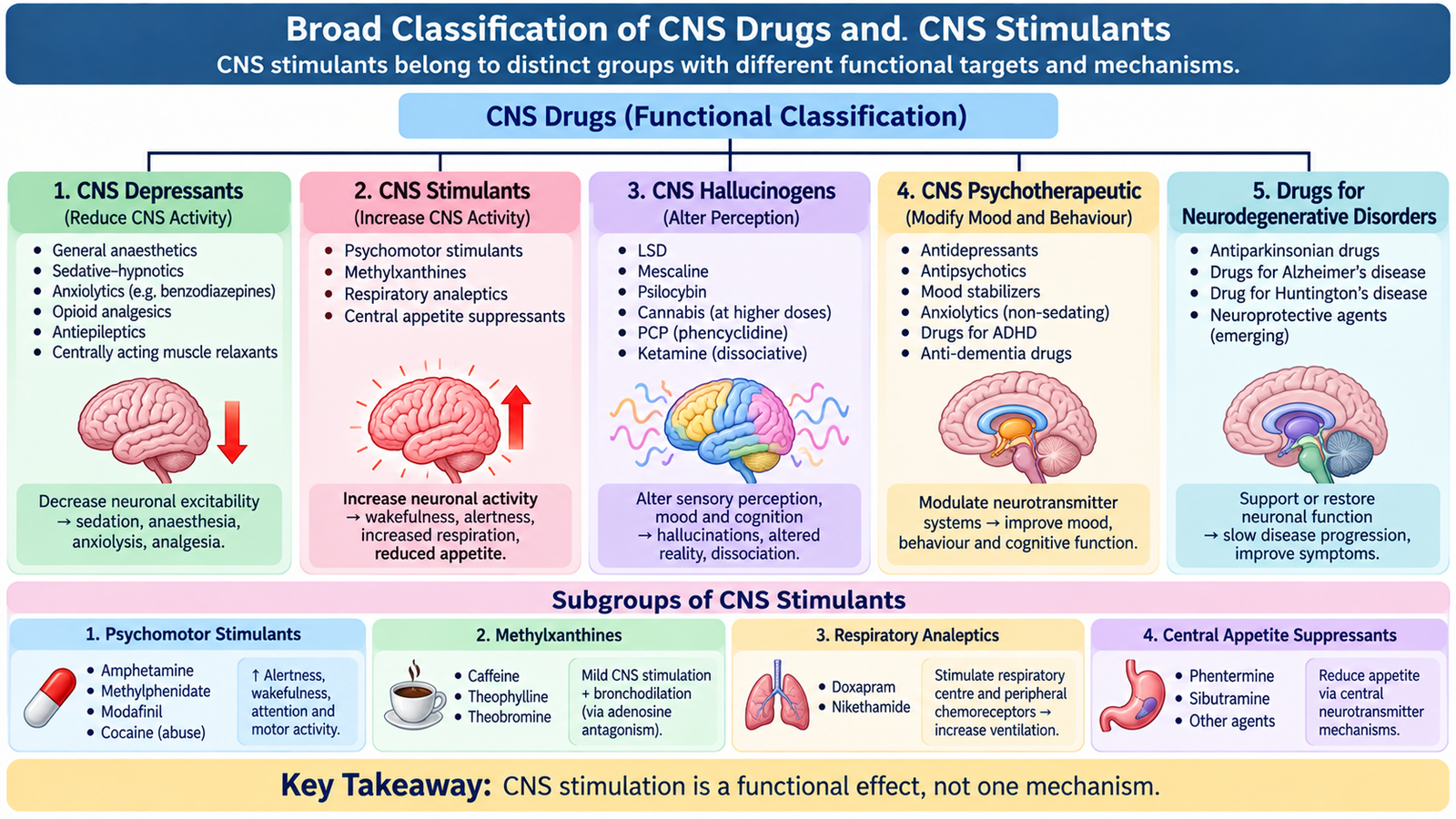
CNS drugs can alter neuronal activity at many levels. Some suppress excessive activity, some increase activity, and others selectively modify particular neurotransmitter systems. A broad classification is useful because it provides a map of where individual drug groups belong before their detailed pharmacology is studied.
Broad classification of CNS drugs
- CNS depressant drugs: drugs that reduce neuronal activity, such as sedative–hypnotics and general anesthetic drugs.
- Antiseizure drugs: drugs that reduce abnormal synchronized neuronal firing.
- Psychiatric drugs: drugs used to modify mood, thought, anxiety or other psychiatric symptoms through specific neurotransmitter systems.
- Drugs affecting movement: drugs that modify pathways involved in disorders such as parkinsonism.
- Centrally acting analgesic drugs: drugs that modify CNS pathways involved in pain perception.
- CNS stimulants: drugs that increase selected aspects of neuronal activity, arousal, respiration or psychomotor performance.
This is a functional classification rather than an absolute separation. A single drug can have several CNS actions depending on its dose, target and the neuronal pathway involved.
Classification of CNS stimulants
CNS stimulants are drugs that increase activity in selected areas of the central nervous system. They should not be viewed as drugs that uniformly activate every neuron. Each group works through a particular mechanism and therefore produces a characteristic pattern of effects.
- Psychomotor stimulants: increase alertness, attention and motor activity mainly by altering monoamine transmission.
- Methylxanthines: caffeine, theophylline and theobromine.
- Respiratory stimulants or analeptics: particularly doxapram; nikethamide is a historically used non-selective respiratory stimulant.
- Appetite-related centrally acting stimulatory drugs: sibutramine increases central monoaminergic signalling and was used to enhance satiety in obesity.

E. Respiratory Analeptics: Doxapram and Nikethamide
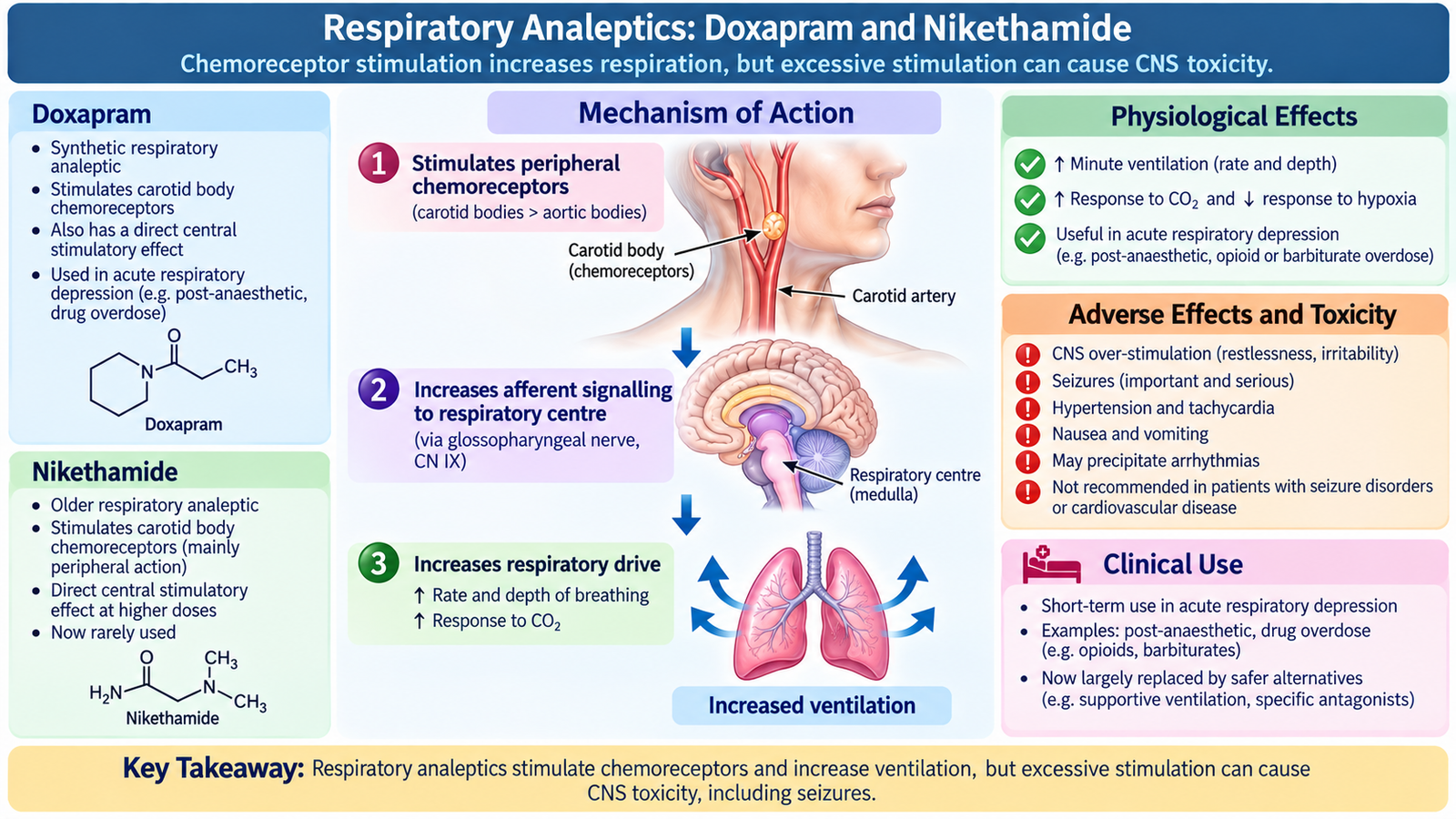
A respiratory analeptic is a stimulant that increases respiratory activity. These drugs have historically been used when ventilation is depressed, but their usefulness is limited because excessive CNS stimulation can cause serious adverse effects, particularly seizures. Among the drugs in this group, doxapram has a more clearly defined pharmacological action, whereas nikethamide is an older and less selective respiratory stimulant.
Doxapram
Doxapram stimulates breathing mainly by increasing the activity of peripheral chemoreceptors in the carotid bodies. At greater exposure it can also stimulate central respiratory pathways. The result is an increase in respiratory drive, with increased ventilation.
Clinical uses
Doxapram has been used for short-term stimulation of respiration, particularly in selected situations involving respiratory depression, including recovery from anesthesia. Its role is limited because respiratory depression must primarily be managed by maintaining the airway, supporting ventilation and treating the underlying cause.
Adverse effects
Because doxapram stimulates the CNS and sympathetic responses, excessive stimulation may produce:
- restlessness and agitation;
- nausea and vomiting;
- tachycardia and increased blood pressure;
- cardiac rhythm disturbances in susceptible patients;
- muscle overactivity or tremor;
- convulsions with excessive CNS stimulation.
The possibility of marked CNS stimulation explains why increasing the dose does not simply provide progressively safer respiratory support.
Nikethamide
Nikethamide is an older, relatively non-selective CNS and respiratory stimulant. It was used to stimulate respiration by increasing activity in respiratory pathways, but its therapeutic margin is poor because the dose required for stimulation may approach the dose producing generalized CNS excitation.
Uses
Nikethamide was historically used as a respiratory stimulant. It has largely lost therapeutic importance because more reliable respiratory support and treatment of the underlying cause are safer than non-specific CNS stimulation.
Adverse effects
- nausea and vomiting;
- restlessness and excessive excitation;
- tremor;
- convulsions at excessive doses.
F. Methylxanthines: Caffeine, Theophylline and Theobromine
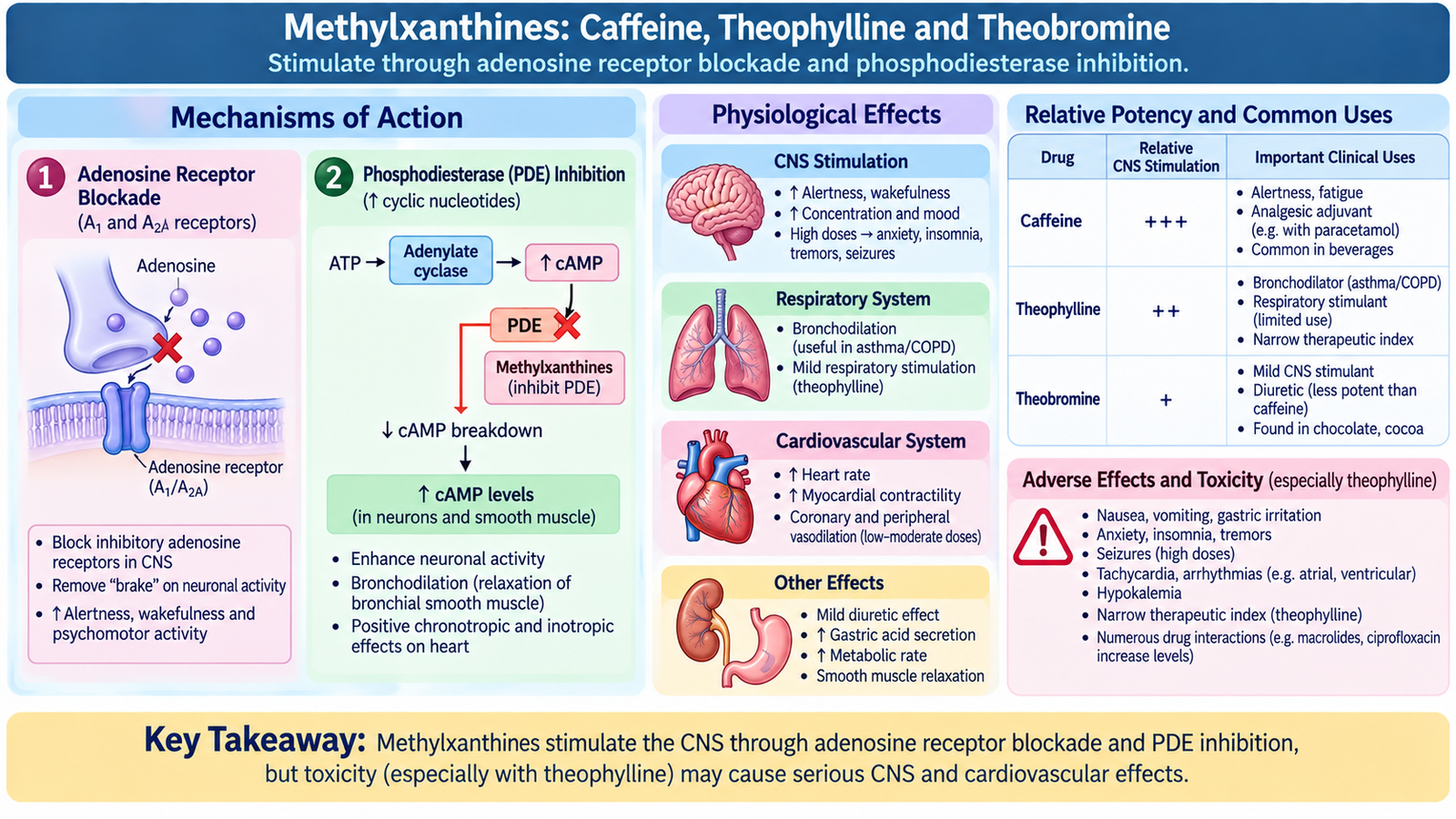
Methylxanthines are naturally occurring xanthine derivatives that include caffeine, theophylline and theobromine. They share a chemical family but differ in the strength of their CNS, cardiovascular and smooth-muscle effects. Caffeine is the most familiar CNS stimulant, while theophylline has greater clinical importance as a bronchodilator. Theobromine has relatively weak CNS effects.
Mechanism of action
Two mechanisms are particularly important in understanding methylxanthines. First, they can antagonize adenosine receptors. Adenosine normally reduces neuronal activity and promotes sleepiness in several CNS pathways. Blocking this inhibitory influence increases alertness, particularly with caffeine.
Second, methylxanthines can inhibit phosphodiesterase (PDE), especially at higher concentrations. PDE normally breaks down cyclic nucleotides such as cyclic AMP. Inhibition therefore increases intracellular cyclic AMP and contributes to smooth-muscle relaxation and other effects. The relative importance of these mechanisms varies with the drug and concentration.
Caffeine
Caffeine readily enters the CNS and is the most important methylxanthine for central stimulation. By antagonizing adenosine receptors, it reduces fatigue and drowsiness and increases alertness. Moderate stimulation may improve wakefulness and attention, whereas excessive exposure produces unwanted CNS and cardiovascular stimulation.
Clinical use
In addition to its common dietary consumption, caffeine is pharmacologically important as a respiratory stimulant in apnea of prematurity. Its stimulation of respiratory control helps reduce episodes of apnea in premature infants.
Adverse effects
- insomnia;
- restlessness and nervousness;
- tremor;
- palpitations and tachycardia;
- gastrointestinal discomfort;
- marked CNS stimulation and seizures with severe toxicity.
Repeated regular intake can produce tolerance and physical dependence. Abrupt cessation after regular use may produce headache, fatigue and reduced alertness.
Theophylline
Theophylline has weaker routine psychostimulant importance than caffeine but greater pharmacological importance in the respiratory system. Its actions include phosphodiesterase inhibition and adenosine receptor antagonism. These effects promote bronchial smooth-muscle relaxation and may improve respiratory muscle function.
Clinical use
Theophylline has been used as a bronchodilator in obstructive airway disease. Its clinical use is limited by its relatively narrow margin between therapeutic and toxic concentrations and by the availability of better tolerated treatments.
Pharmacokinetic relevance
Theophylline undergoes hepatic metabolism, and its elimination can vary substantially between patients. Drugs or physiological factors that change its metabolism can therefore alter plasma concentrations. This is important because excessive concentrations can rapidly convert expected pharmacological stimulation into toxicity.
Adverse effects
- nausea and vomiting;
- headache and restlessness;
- tremor and insomnia;
- tachycardia and potentially serious arrhythmias;
- seizures in severe toxicity.
The combination of arrhythmias and seizures is particularly important in severe theophylline toxicity.
Theobromine
Theobromine is another naturally occurring methylxanthine. Compared with caffeine, it is a much weaker CNS stimulant. It has smooth-muscle and cardiovascular effects but has little routine therapeutic importance as a CNS stimulant.
G. Sibutramine: Mechanism and Clinical Use
Sibutramine is a centrally acting drug that was developed for the treatment of obesity. Rather than producing weight loss by directly acting on gastrointestinal fat absorption, it acts mainly on central monoaminergic pathways involved in appetite and satiety.
Mechanism of action
Sibutramine and its active metabolites inhibit the neuronal reuptake of noradrenaline and serotonin, with a smaller effect on dopamine reuptake. Blocking reuptake keeps these monoamines in the synaptic region for longer and enhances their signalling.
Clinical use
Sibutramine was used as an anti-obesity drug to support weight reduction by increasing satiety and reducing appetite. Its enhanced noradrenergic activity, however, can also increase sympathetic cardiovascular activity.
This creates the important pharmacological link between its mechanism and its safety problem: increased noradrenergic signalling may raise heart rate and blood pressure. Because of cardiovascular safety concerns, sibutramine has been withdrawn or substantially restricted in many settings and is mainly important for understanding its pharmacological mechanism and historical clinical role.
3. Integrated Mechanism Flow
CNS pharmacology can be understood as a sequence from drug access to its final functional effect:
Therapeutic and adverse effects arise from the same underlying pharmacology. Increasing CNS activity sufficiently may improve alertness or respiration, but excessive stimulation may produce tremor, cardiovascular activation or seizures.
4. Important Comparison: Major CNS Stimulants in This Topic
| Drug / group | Main target or mechanism | Main pharmacological result | Important use / significance | Major concern |
|---|---|---|---|---|
| Doxapram | Peripheral chemoreceptor stimulation | Increased respiratory drive | Short-term respiratory stimulation in selected settings | Excessive CNS stimulation and seizures |
| Nikethamide | Non-selective CNS/respiratory stimulation | Respiratory stimulation | Historical respiratory stimulant | Poor selectivity and convulsions |
| Caffeine | Mainly adenosine receptor antagonism | Wakefulness and CNS stimulation | Alertness; apnea of prematurity | Insomnia, tremor, tachycardia |
| Theophylline | PDE inhibition plus adenosine antagonism | Bronchodilation with CNS/cardiac stimulation | Obstructive airway disease | Narrow safety margin; arrhythmias and seizures |
| Sibutramine | Noradrenaline and serotonin reuptake inhibition | Increased satiety | Historical anti-obesity therapy | Cardiovascular stimulation |
⭐ 5. AIM High-Yield Review
Introduction to CNS Pharmacology
Use this video to reinforce CNS neurotransmission, receptors and the basic principles that determine how drugs act within the central nervous system.