
📌 AIM Study Tip
This chapter follows the supplied KMU learning outcomes in a logical sequence. First understand how wounds heal and how their age is assessed, then study the medico-legal classification of hurt and the main injury-related laws. Revise the final high-yield points after completing the explanations.
Wound Healing, Medicolegal Classification of Hurt and Injury Laws
MSK Module — Forensic Medicine
Understand the biological sequence of wound healing, the cautious assessment of wound age, the legal classification of hurt, and the duties created by medical-aid and workplace-compensation laws.
Topic Introduction
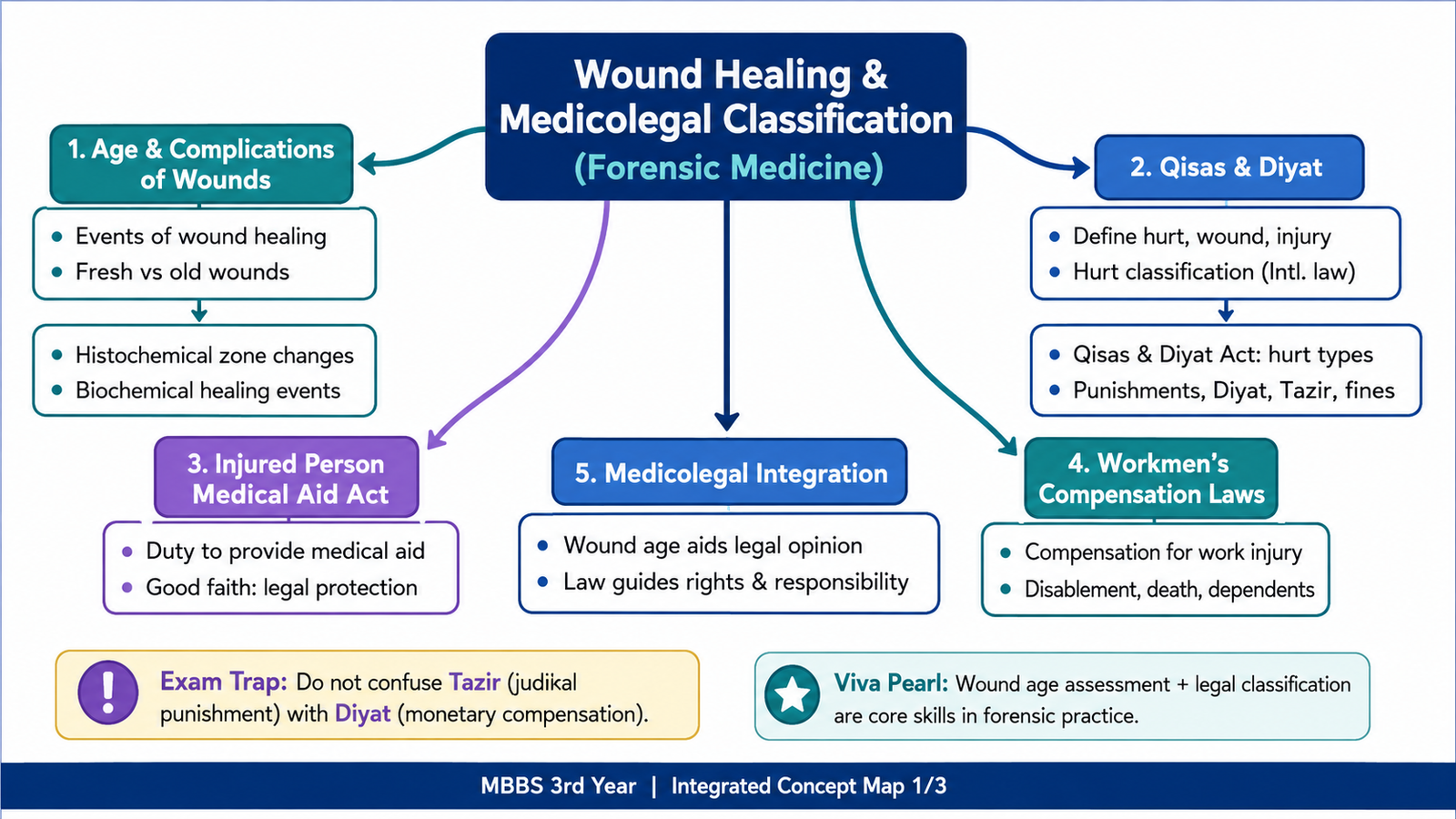
A wound is a disruption of the normal continuity of living tissue caused by mechanical or another form of injury. After a wound occurs, the body begins an organized repair process involving haemostasis, inflammation, formation of new tissue and remodelling. These changes can help a forensic examiner estimate whether a wound is relatively fresh or older, but no single finding can provide an exact age in every case. Forensic medicine also connects medical findings with legal categories of hurt. This chapter explains the biological and biochemical events of healing, histochemical injury zones, the classification of hurt under the Qisas and Diyat framework, and the main principles of laws concerning emergency treatment of injured persons and compensation for occupational injury.
A. Wounds and the Basic Process of Healing
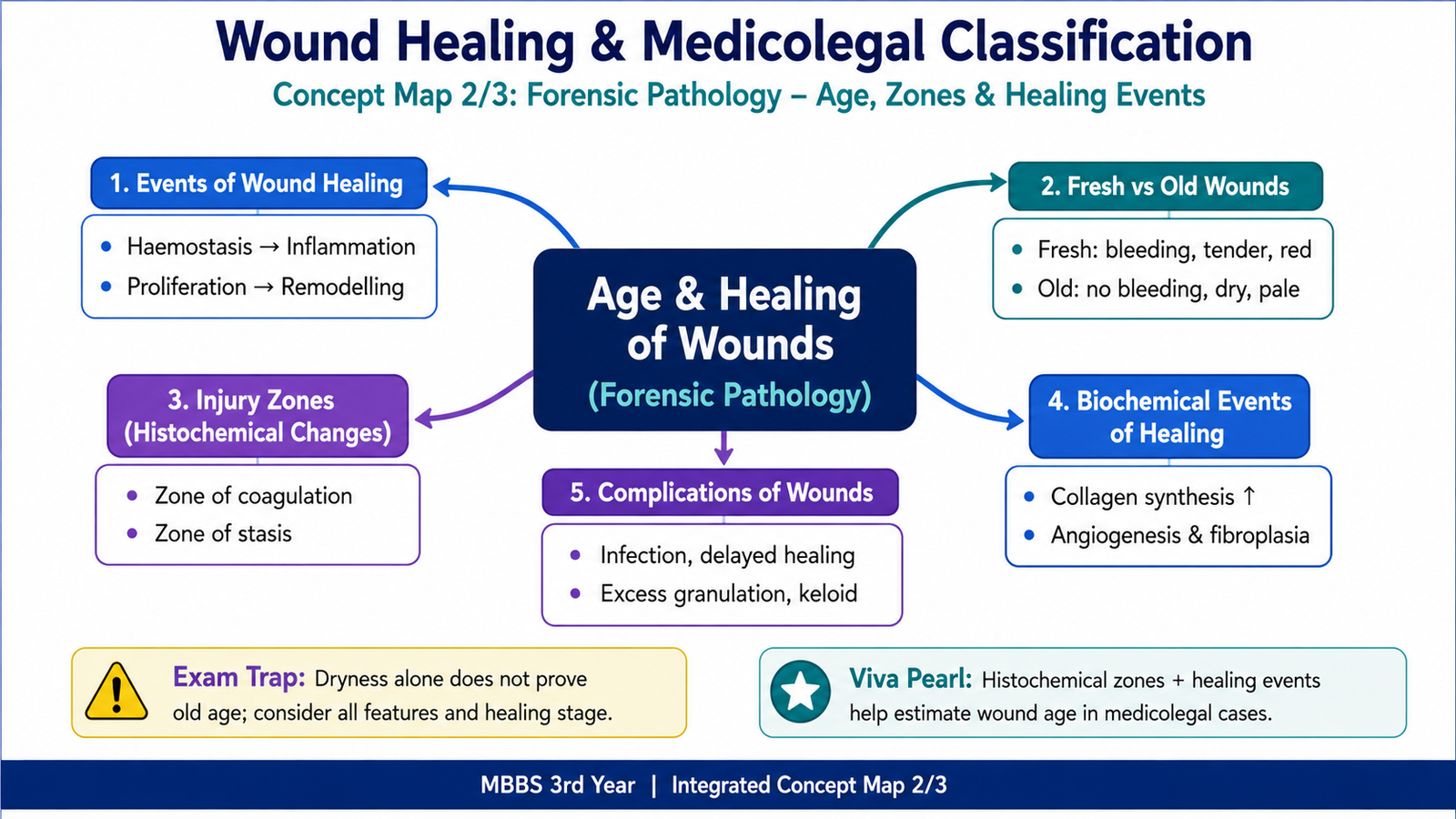
A wound is a break or disturbance in the normal structure of tissue. An injury is a broader term that includes any harmful effect produced in the body, whether or not the skin is visibly broken. The word hurt is mainly a legal term. It refers to bodily harm recognized and classified by law. Wound healing is the body’s attempt to stop bleeding, remove damaged tissue, prevent or control contamination and restore tissue strength. It is a continuous process. Its phases overlap rather than starting and ending at sharply separated times.
1. Haemostasis
Healing begins immediately after injury. Damaged vessels constrict for a short period, and platelets adhere to exposed subendothelial structures. Platelets aggregate and support formation of a fibrin clot. The clot reduces blood loss and provides a temporary framework through which inflammatory and repair cells can later move.
2. Inflammation
Vascular permeability increases and inflammatory cells enter the damaged area. Neutrophils are prominent early and help remove bacteria and surface debris. Macrophages later become the main coordinating cells. They remove dead tissue and release mediators that stimulate angiogenesis, fibroblast migration, collagen production and epithelial repair.
3. Proliferation and granulation tissue
New capillaries grow into the wound, fibroblasts multiply and extracellular matrix is deposited. This soft, vascular repair tissue is called granulation tissue. Its pink or red granular appearance results from numerous newly formed capillaries. Surface epithelium grows from the wound margins and gradually covers the defect.
4. Maturation and remodelling
Collagen is reorganized and cross-linked. Many newly formed vessels regress, so the scar becomes less red. The amount and arrangement of collagen change gradually, increasing the tensile strength of the healed area. However, repaired skin does not usually regain the complete strength and specialized structures of normal uninjured skin.

B. Biochemical Events and Factors Affecting Wound Healing
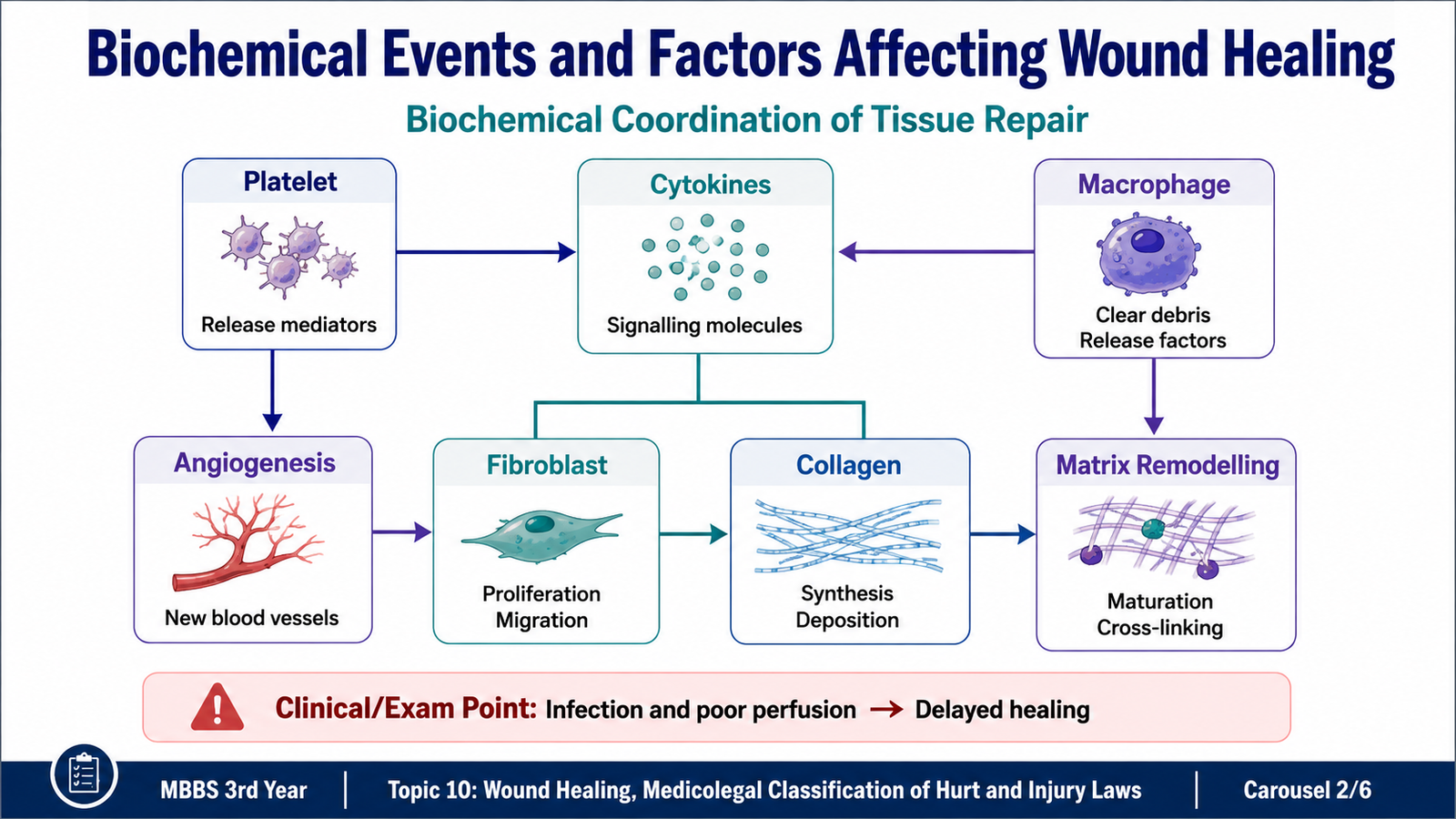
The visible changes in a healing wound are produced by biochemical signals between platelets, inflammatory cells, endothelial cells, fibroblasts and epithelial cells. These signals control cell migration, cell multiplication, formation of new vessels, production of collagen and remodelling of the extracellular matrix.
Important biochemical events
- Coagulation activation: tissue injury activates clotting pathways, producing thrombin and fibrin. Fibrin stabilizes the platelet plug and forms an early matrix.
- Release of growth factors: platelets and macrophages release signals that attract fibroblasts and promote tissue repair.
- Cytokine activity: inflammatory cytokines recruit leukocytes and coordinate removal of damaged tissue.
- Angiogenesis: endothelial cells form new capillaries under the influence of pro-angiogenic mediators. These vessels deliver oxygen and nutrients to the repairing tissue.
- Fibroplasia: fibroblasts migrate into the wound and produce collagen, fibronectin and other extracellular-matrix components.
- Collagen formation: collagen production provides increasing structural support. Adequate oxygen, amino acids and vitamin C are important for normal collagen synthesis and stabilization.
- Matrix remodelling: enzymes called matrix metalloproteinases break down selected matrix components, while their inhibitors regulate this activity. This balance allows the scar to be reshaped rather than continuously enlarged.
- Wound contraction: myofibroblasts develop contractile properties and pull the wound margins toward the centre, reducing the size of the defect.
Why healing may be delayed
Healing becomes slow when the wound does not receive sufficient oxygen and nutrients or when inflammation remains excessive. Local and systemic conditions may therefore alter the expected appearance of a wound and reduce the reliability of age estimation.
Local factors
- Infection
- Poor blood supply
- Foreign material
- Repeated movement or trauma
- Large tissue loss
- Excessive tension at the wound
Systemic factors
- Poor nutritional state
- Reduced oxygen delivery
- Diabetes mellitus
- Advanced age
- Severe systemic illness
- Drugs that suppress inflammation or cell proliferation
C. Fresh and Old Wounds: Estimation of Wound Age
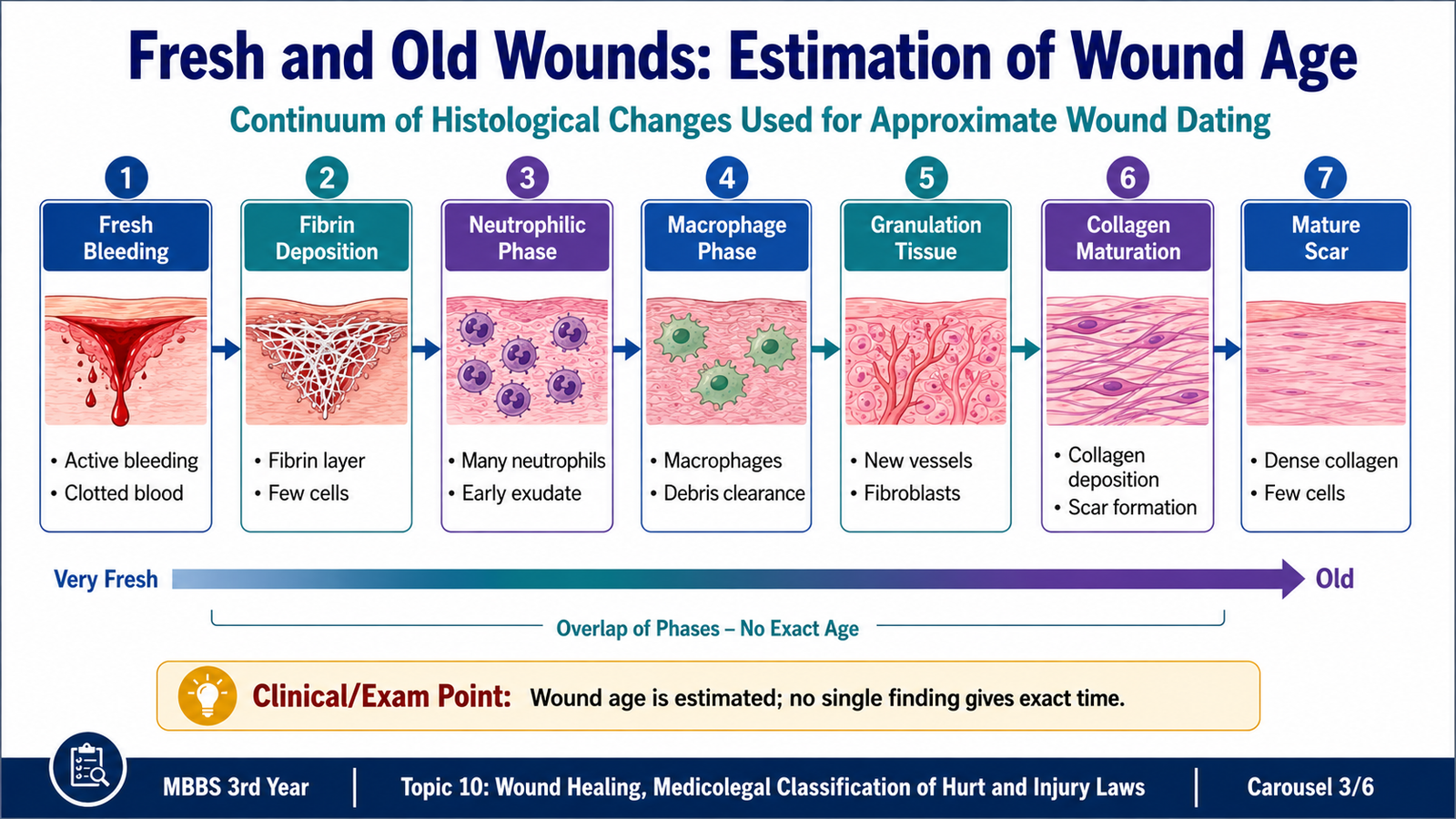
The age of a wound means the approximate period between infliction of the injury and medical examination. Estimation is based on the combined appearance of the wound, microscopic findings, inflammatory response, repair tissue and the circumstances of the case. It is an approximation, not an exact calculation.
Features suggesting a relatively fresh wound
A fresh wound shows changes produced mainly by recent tissue disruption, bleeding and early inflammation.
- Fresh bleeding, blood clot or moist wound surfaces may be present.
- The margins may be swollen and tender because vascular permeability has increased.
- Early inflammatory redness may develop around the wound.
- Microscopy may show haemorrhage, fibrin and early leukocyte migration.
- There is little or no mature granulation tissue, collagen remodelling or established scar formation.
Features suggesting an older wound
An older wound shows evidence that the body has progressed from acute inflammation toward tissue reconstruction and scar formation.
- The wound surface may become drier and may be covered by an organized scab.
- Macrophages become more prominent as they remove damaged tissue.
- Granulation tissue develops with new capillaries and fibroblasts.
- Collagen deposition increases and epithelial covering progresses.
- With further maturation, vascularity decreases and a paler, firmer scar develops.
| Feature | Relatively Fresh Wound | Relatively Old Wound |
|---|---|---|
| Surface | Moist blood or recent clot may be present | Drying, scab formation or epithelial covering |
| Main cellular response | Early leukocyte response, often neutrophil-predominant | Macrophages, fibroblasts and repair cells |
| Repair tissue | Absent or minimal | Granulation tissue and collagen become visible |
| Scar | Not established | Developing or mature scar may be present |
| Interpretation | Supports recent injury | Supports progression through healing |
Vital reaction
A vital reaction is a tissue response showing that an injury occurred while circulation and cellular activity were present. Haemorrhage into tissues, inflammation, enzyme activity and repair responses may support antemortem injury. However, individual findings must be interpreted cautiously because very early antemortem wounds may show only limited reaction.
D. Histochemical Injury Zones
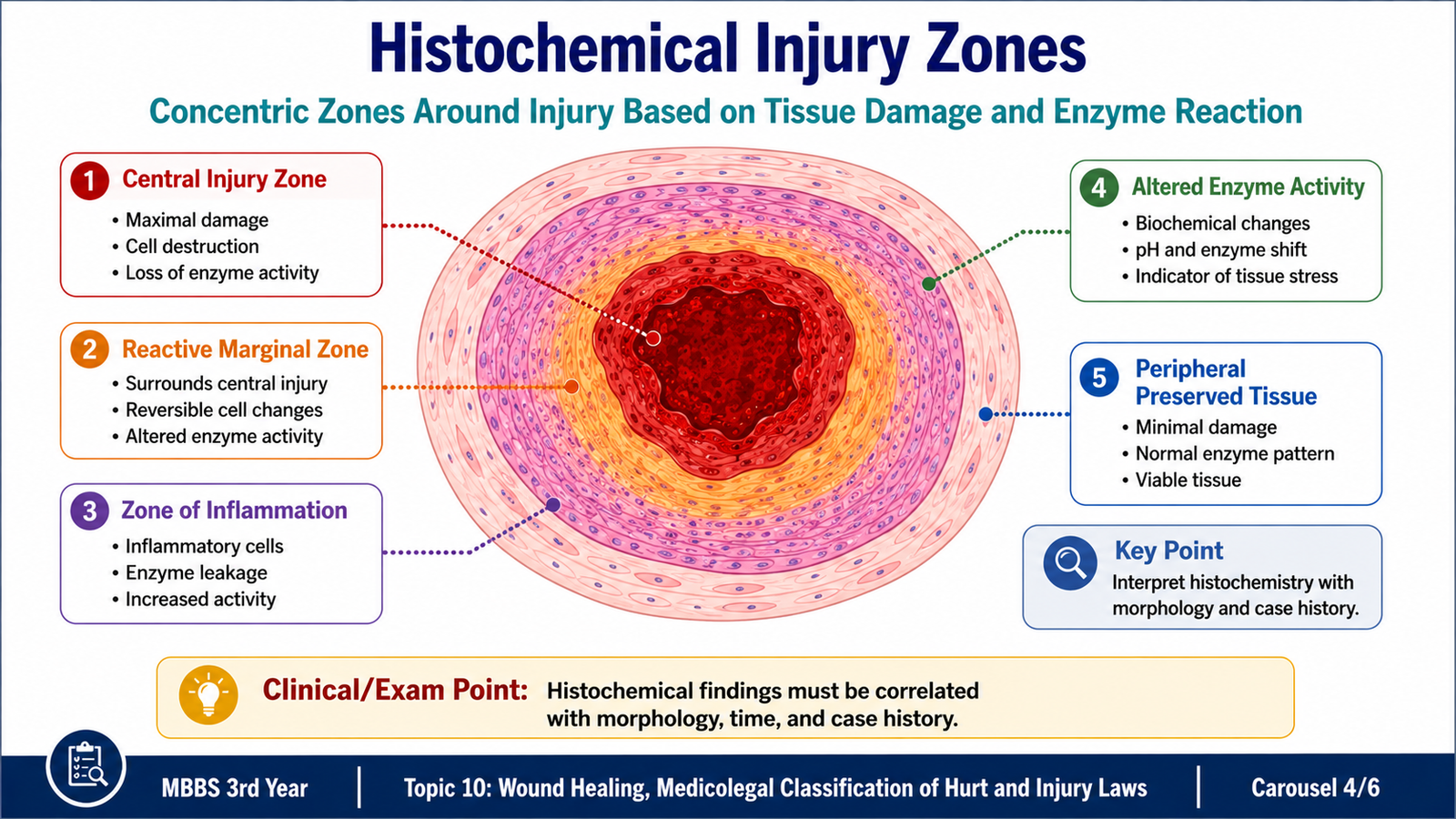
Histochemistry demonstrates chemical or enzymatic activity within tissue sections. Around a wound, different tissue zones may show different levels of damage and metabolic activity. These zones help explain how cells respond to mechanical injury and may support assessment of vitality and wound evolution. They do not, by themselves, provide an exact time of injury.
1. Central zone of direct injury
This is the area receiving the greatest mechanical force. Cells may be disrupted or necrotic, blood vessels may be torn and tissue architecture may be lost. Because severely damaged cells cannot maintain normal metabolism, enzyme activity may be markedly reduced or absent.
2. Marginal zone of tissue reaction
This zone surrounds the central damage. Cells are injured but may remain viable. Local metabolism, inflammatory signalling and enzyme activity may change as the tissue responds to injury. Vascular leakage and leukocyte migration develop in this region.
3. Peripheral zone of relatively preserved tissue
Farther from the wound, the tissue remains more structurally intact. It may show less intense reaction and provides a comparison with the directly damaged and reactive zones.
Histochemical changes that may be assessed
- Alteration in oxidative-enzyme activity caused by cellular injury or increased metabolic response.
- Changes in hydrolytic enzymes released during inflammation and tissue breakdown.
- Changes related to vascular permeability, leukocyte migration and tissue repair.
- Loss of normal enzyme activity in severely damaged or necrotic cells.
E. Medicolegal Classification of Hurt and the Qisas and Diyat Framework
Medical examination describes the injury objectively, while the final legal classification is made by the competent legal authority. The doctor should document the site, dimensions, depth, structures involved, functional loss, complications, investigations and treatment without exceeding the limits of medical evidence.
Basic terms
- Injury: any harm caused to the body. It is the broadest medical term in this group.
- Wound: disruption of the normal continuity of a tissue, commonly caused by mechanical force.
- Hurt: bodily harm classified for legal purposes. Its exact legal meaning depends on the applicable statute.
General medicolegal classification
Across legal systems, injuries are commonly grouped according to severity and consequences. Terminology differs between jurisdictions, so the examiner must use the classification required by the applicable law.
- Simple or minor hurt: injury without the serious consequences required for a higher legal category.
- Grievous or serious hurt: injury producing a legally specified major consequence such as loss of an organ, permanent loss of function, serious fracture or another severe outcome defined by law.
- Dangerous or life-endangering injury: injury that creates a real risk to life because of its site, depth, physiological effect or complications.
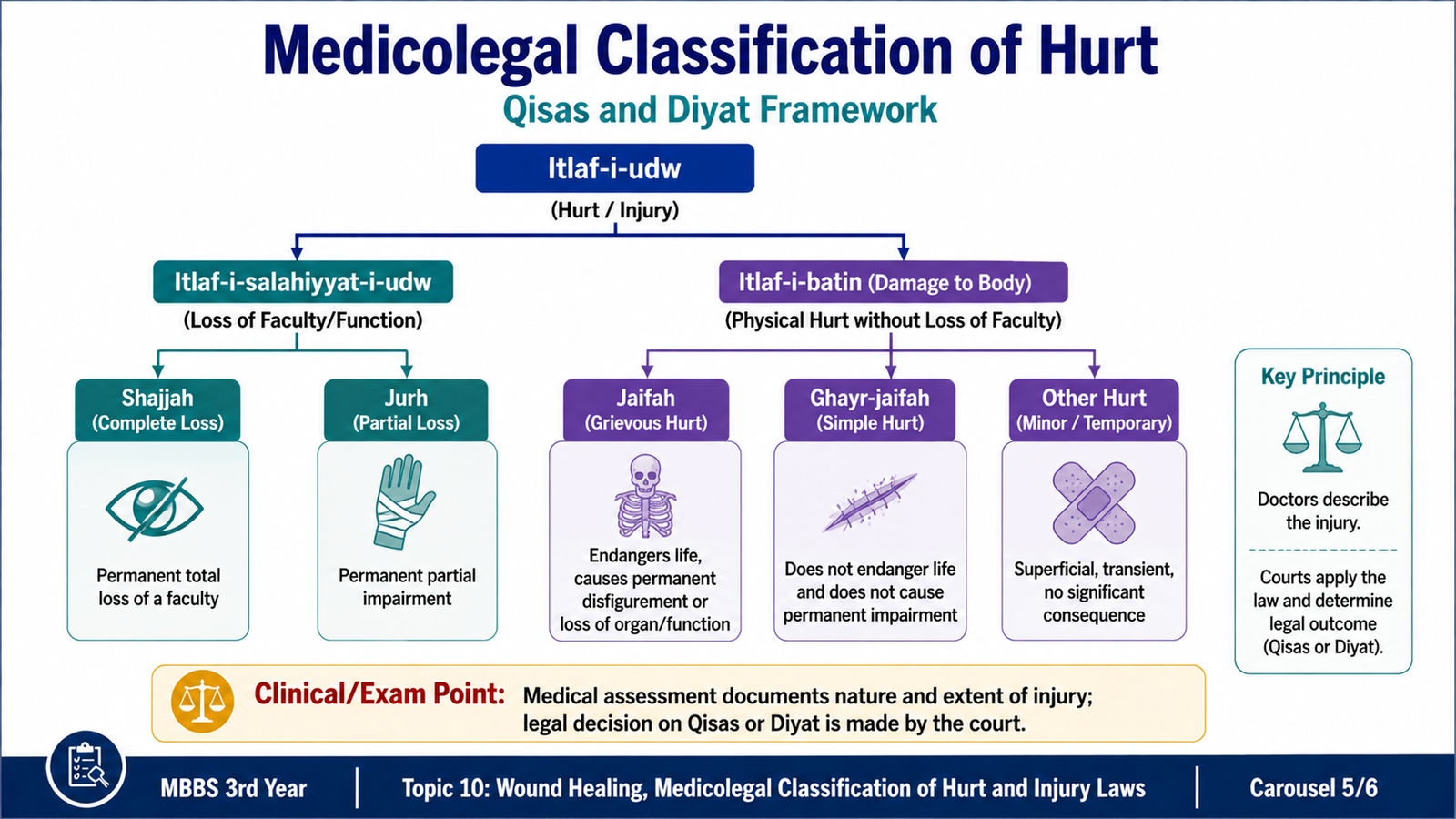
Main forms of hurt under the Qisas and Diyat framework
The Pakistan Penal Code classifies hurt according to the anatomical structure damaged and the degree of tissue or functional loss. The major categories relevant to undergraduate forensic medicine are outlined below.
1. Itlaf-i-udw
This means dismemberment, severance or destruction of an organ or limb. The essential feature is anatomical loss or destruction of the bodily part.
2. Itlaf-i-salahiyyat-i-udw
This means destruction or permanent impairment of the function or capacity of an organ without necessarily removing the organ itself. The organ may remain anatomically present but may no longer perform its normal function.
3. Shajjah
Shajjah refers to hurt on the head or face that does not amount to loss of an organ or its function. It is subclassified according to increasing depth and severity.
| Type of Shajjah | Essential Injury |
|---|---|
| Shajjah-i-khafifah | Head or facial injury without exposing bone. |
| Shajjah-i-mudihah | Bone is exposed without fracture. |
| Shajjah-i-hashimah | A fracture of the underlying bone occurs without displacement. |
| Shajjah-i-munaqqilah | The underlying bone is fractured and displaced. |
| Shajjah-i-ammah | The wound reaches the membrane covering the brain but does not rupture it. |
| Shajjah-i-damighah | The membrane is ruptured and the injury reaches or affects the brain. |
4. Jurh
Jurh is a wound on a part of the body other than the head or face that leaves a mark and may enter a body cavity.
- Jaifah: a wound that penetrates into a body cavity.
- Ghayr-jaifah: a wound that does not enter a body cavity.
5. Other hurt
Injuries that do not fall within the major categories above may be classified as other hurt according to their medical effect and the applicable legal provision. Examples include bodily pain, illness or impairment that does not meet the defining criteria of itlaf, shajjah or jurh.
Qisas, Arsh, Daman, Diyat and Tazir
- Qisas: punishment by causing a similar injury to the offender under judicial authority and only when all legal conditions are fulfilled.
- Diyat: legally determined compensation payable in cases involving death where the law makes diyat applicable.
- Arsh: compensation specified by law for particular types of hurt.
- Daman: compensation determined by the court for hurt where a fixed amount of arsh is not prescribed. The consequences of the injury, treatment expenses, disability and suffering may be relevant to judicial assessment.
- Tazir: punishment imposed by the state or court, commonly involving imprisonment or another legally authorized penalty, where applicable.
The medical examiner does not decide the final punishment or financial amount. The examiner supplies accurate medical evidence concerning the nature, site, depth, severity and consequences of the hurt. The court applies the relevant legal provisions.
F. Medical Aid for Injured Persons and Workmen’s Compensation
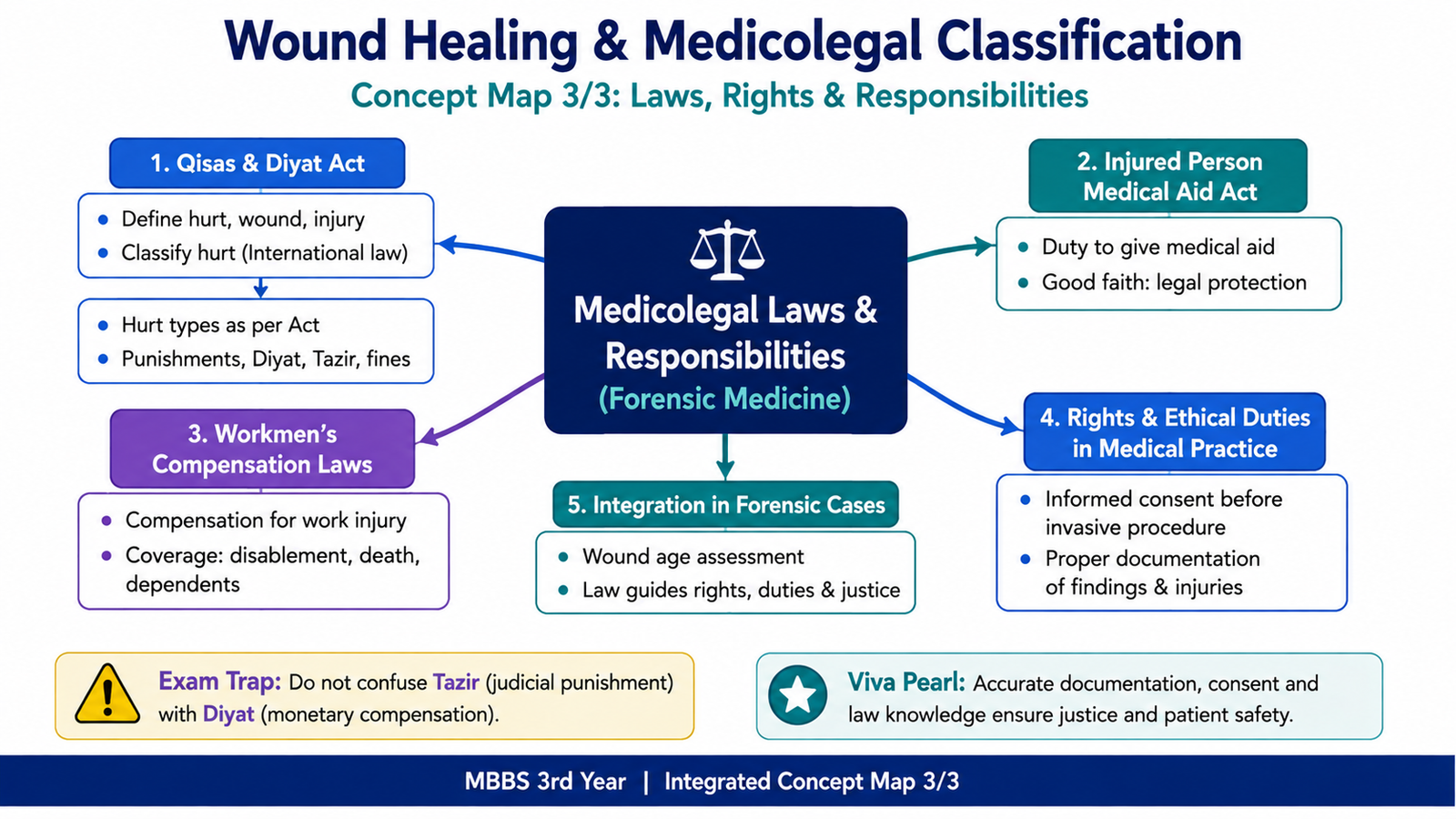
Forensic practice is not limited to describing wounds. Doctors and healthcare institutions also have legal and ethical responsibilities toward injured persons. Separate workplace laws provide compensation where injury, disability or death is connected with employment.
Injured Persons (Medical Aid) Act
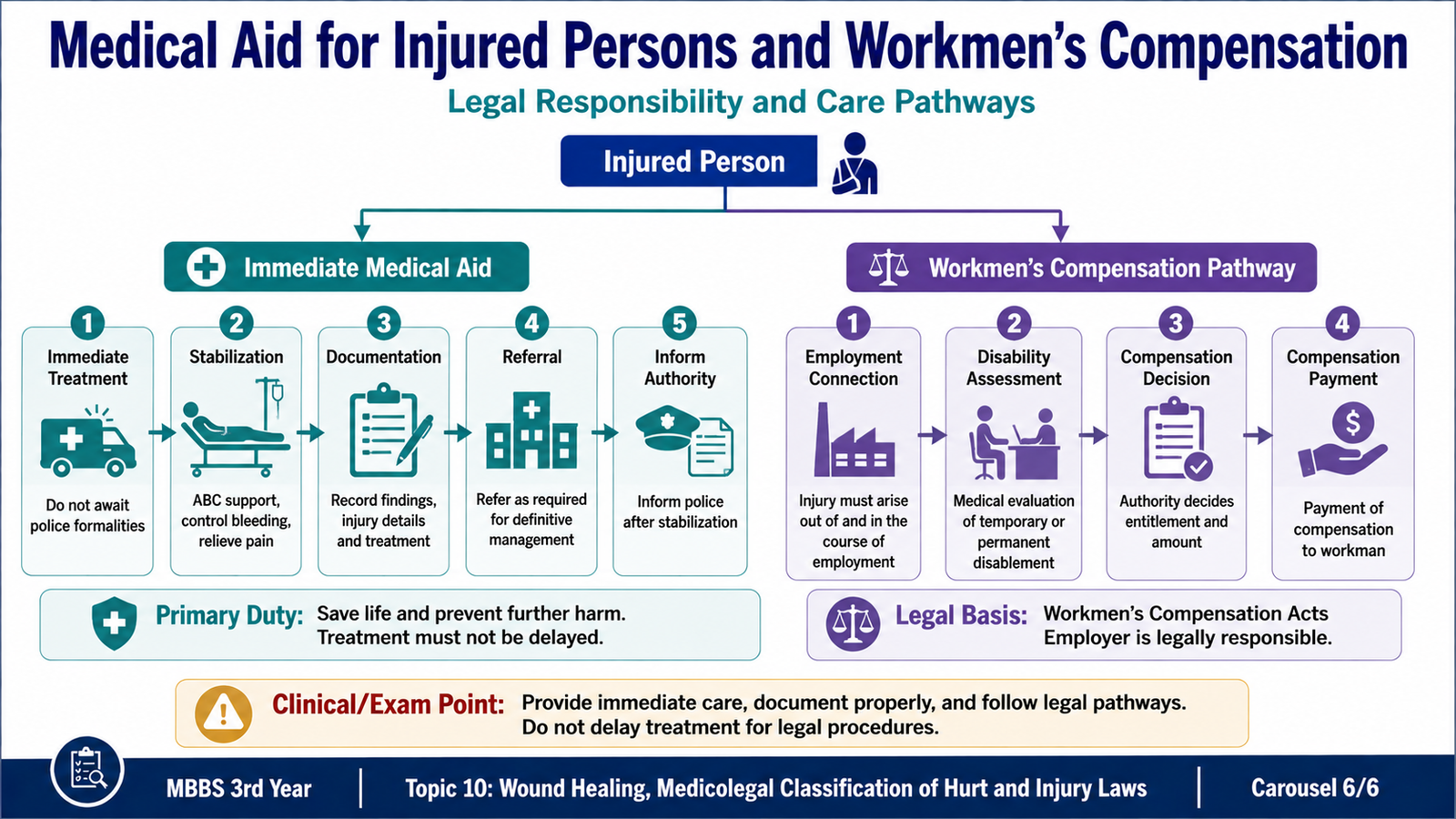
The central purpose of the Injured Persons (Medical Aid) Act is to ensure that an injured person receives necessary medical attention without avoidable delay. Saving life and preventing further harm take priority over completion of police or administrative formalities.
Salient principles
- An injured person should be provided medical aid promptly.
- Emergency examination and stabilizing treatment should not be delayed merely to complete medico-legal or police procedures.
- Healthcare personnel should assess the patient, preserve life and prevent deterioration.
- Where facilities are insufficient, essential stabilization should be followed by appropriate transfer or referral.
- The patient’s injuries, condition, treatment and transfer should be documented accurately.
- Relevant authorities may be informed according to applicable medico-legal procedure, but necessary care remains the immediate priority.
- Unjustified refusal or delay in providing required medical aid may create legal consequences.
Workmen’s compensation laws
Workmen’s compensation law provides financial protection when a worker suffers injury, occupational disease, disability or death arising out of and in the course of employment. The key legal connection is between the employment and the harmful event or occupational exposure.
Salient principles
- Employment relationship: the affected person must fall within the legally covered category of worker or employee.
- Work connection: the injury should arise out of and occur in the course of employment.
- Occupational disease: disease caused by a recognized workplace exposure may be treated as employment-related where the legal requirements are fulfilled.
- Compensable consequences: compensation may relate to death, permanent total disability, permanent partial disability or temporary disability.
- Medical assessment: the doctor records the injury, treatment, functional limitation, likely duration of incapacity and any permanent disability.
- Employer responsibility: the employer may be required to pay compensation according to the applicable law and the established degree of harm.
- Dependants: where an employment-related injury causes death, legally recognized dependants may be entitled to compensation.
- Dispute resolution: disputes concerning liability, disability or compensation are decided by the authorized legal forum rather than by the examining doctor.
Types of disability
| Category | Meaning | Medical Focus |
|---|---|---|
| Temporary disability | Work capacity is reduced for a limited period. | Expected recovery and period of incapacity. |
| Permanent partial disability | A lasting impairment reduces some work capacity. | Permanent functional loss and affected occupation. |
| Permanent total disability | A lasting condition prevents the worker from performing work within the legal meaning. | Overall functional capacity, not diagnosis alone. |
| Death | Employment-related injury or disease results in death. | Cause of death and causal relation with employment. |
Integrated Wound-to-Medicolegal Flow
⭐ AIM High-Yield Review
- Wound healing is a continuous, overlapping sequence of haemostasis, inflammation, proliferation and remodelling.
- Platelets help form the clot, while macrophages coordinate removal of debris and initiation of repair.
- Granulation tissue contains proliferating capillaries, fibroblasts and loose extracellular matrix.
- Myofibroblasts reduce wound size by contraction, while collagen deposition and remodelling increase strength.
- ⭐ Wound age is always an approximation; no isolated colour, cell or enzyme change gives an exact universal time.
- A fresh wound mainly shows bleeding, clot and early inflammation; an older wound progressively shows macrophages, granulation tissue, collagen and scar formation.
- The central injury zone has maximum tissue damage, while the surrounding zone shows active tissue reaction.
- Itlaf-i-udw means anatomical loss or destruction of an organ; itlaf-i-salahiyyat-i-udw means loss or permanent impairment of its function.
- Shajjah involves the head or face and is classified by increasing depth from khafifah to damighah.
- Jurh jaifah enters a body cavity; ghayr-jaifah does not.
- Qisas is retaliation under judicial authority; arsh and daman relate to compensation for hurt; diyat relates to compensation where legally applicable to death; tazir is punishment imposed by the state or court.
- ⭐ The doctor documents and interprets medical findings but does not determine the final punishment or compensation.
- Emergency medical care should not be delayed merely for police or medico-legal formalities.
- Workmen’s compensation requires a legally recognized connection between employment and the injury, occupational disease, disability or death.
- Disability assessment should describe actual functional loss; the final compensability and financial award are legal decisions.
“`
Wound Healing — Stages of Healing and Pathology
Watch this video after reading the learning material. Focus on haemostasis, inflammation, granulation tissue formation, collagen deposition and scar remodelling.
“`