
This chapter follows the KMU learning outcomes for late postmortem changes. First understand how and why each change develops, then use the final high-yield review to revise the distinguishing and medico-legal points.
Late Postmortem Changes: Putrefaction, Maceration, Adipocere and Mummification
Infection and Inflammation • Forensic Medicine
Topic Introduction
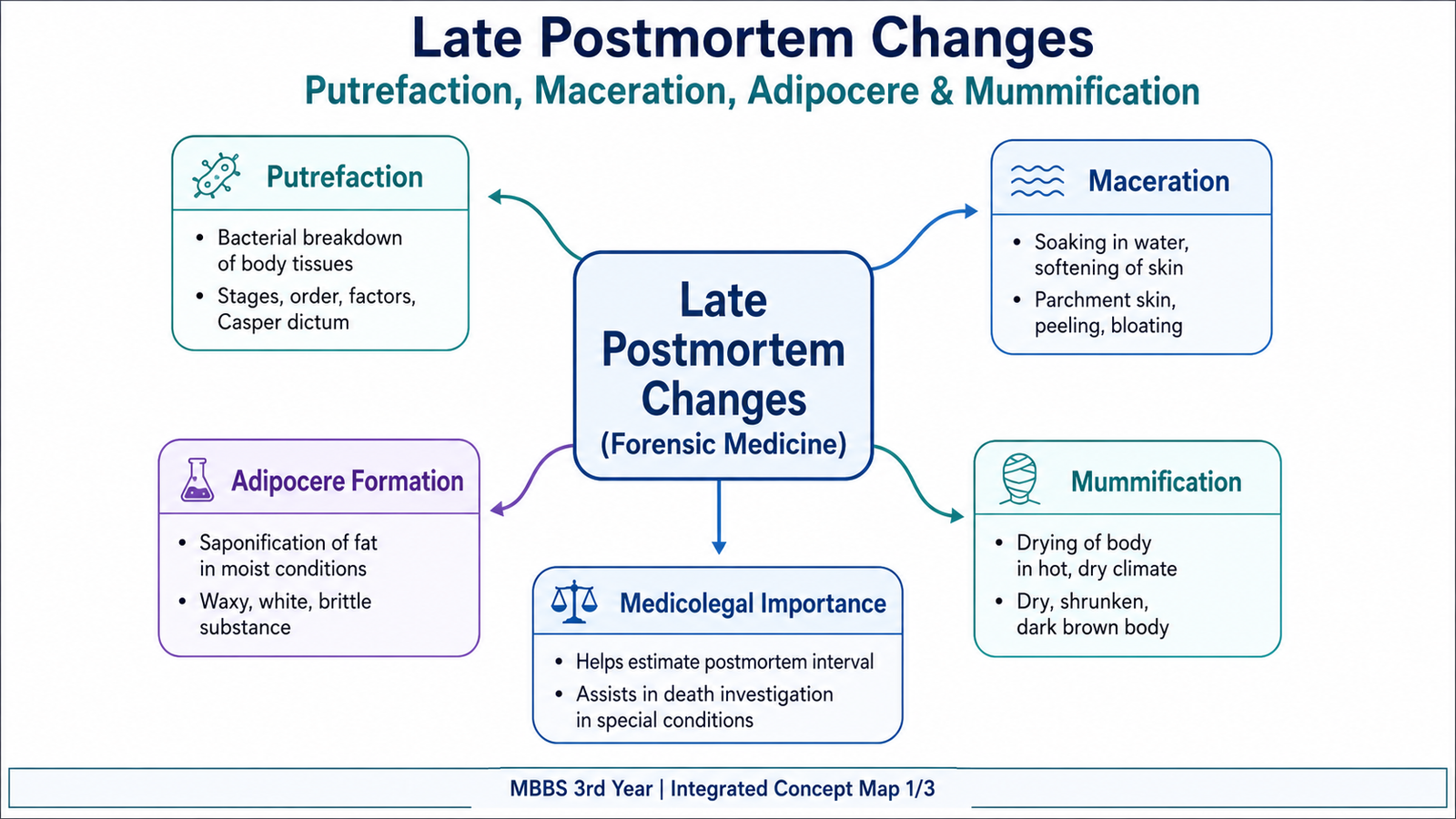
After death, the body undergoes a series of changes. Some appear relatively early, while others develop later as tissues break down or become altered by the surrounding environment. The major late postmortem changes in this topic are putrefaction, maceration, adipocere formation and mummification. Putrefaction is decomposition mainly produced by bacterial activity and tissue breakdown. Maceration is a special form of aseptic postmortem change seen in a dead fetus retained in the uterus. Adipocere develops when body fat is converted into a waxy material, usually in moist conditions, while mummification results from drying and dehydration of the body. Understanding their appearance, development and medico-legal significance helps in interpreting postmortem findings appropriately.
A. Putrefaction: Definition and Basic Process
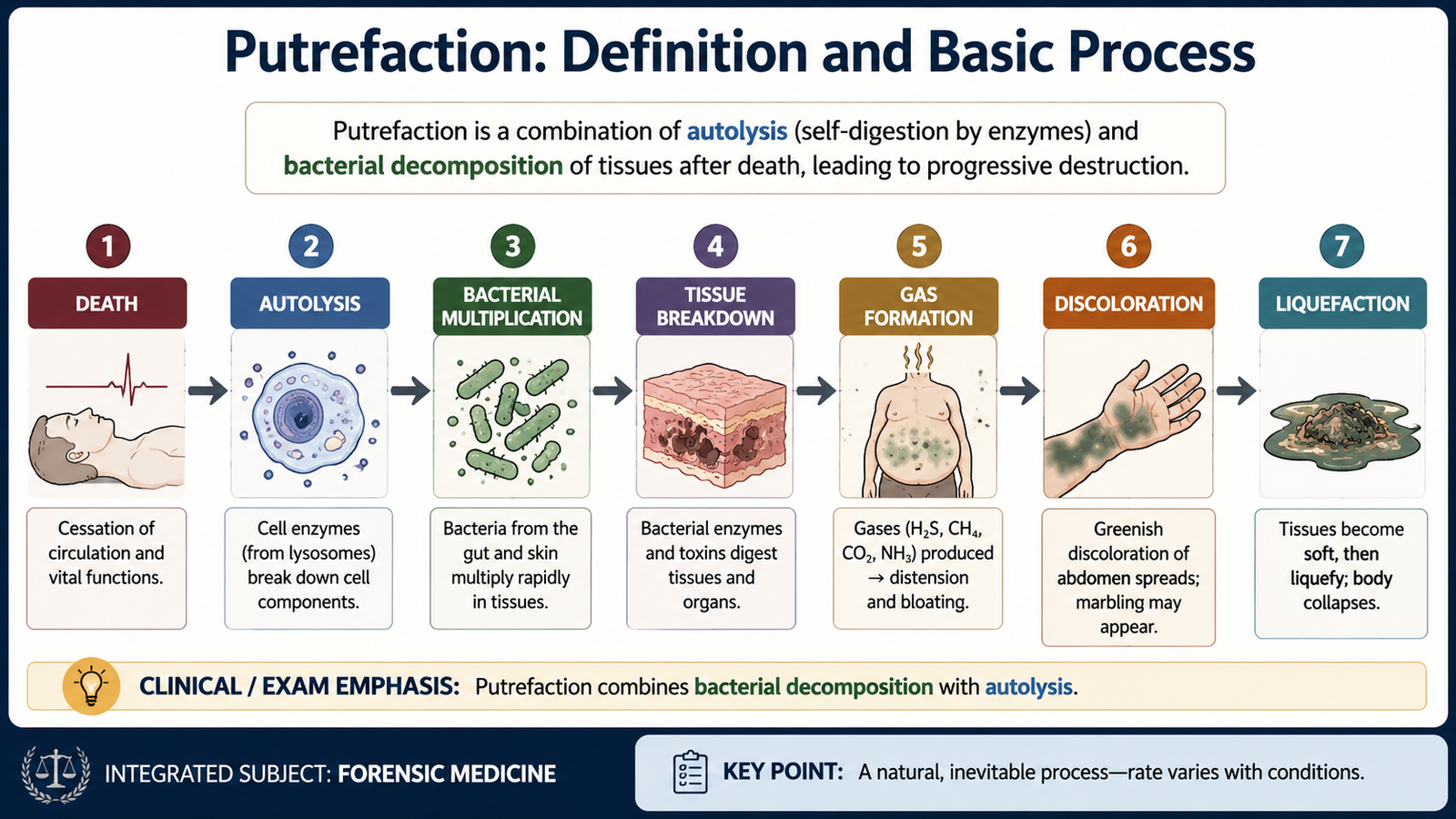
Putrefaction is the postmortem decomposition of the body produced mainly by the action of microorganisms, especially bacteria, together with tissue autolysis. After death, circulation stops and normal cellular control is lost. Tissue cells begin to undergo self-digestion, while bacteria already present in the body, particularly in the gastrointestinal tract, multiply and spread into surrounding tissues.
As proteins, carbohydrates and other tissue components are broken down, gases and various decomposition products are formed. These processes produce the characteristic changes of putrefaction, including discoloration, offensive odor, gas formation, tissue softening and eventual destruction of soft tissues.
How putrefaction develops
The gastrointestinal tract is an important source of bacteria after death. Once normal tissue defenses and circulation have ceased, bacteria can extend beyond the bowel and participate in widespread decomposition. Putrefaction therefore becomes progressively more obvious as bacterial activity and enzymatic tissue breakdown continue.
B. Stages and Order of Progression of Putrefaction
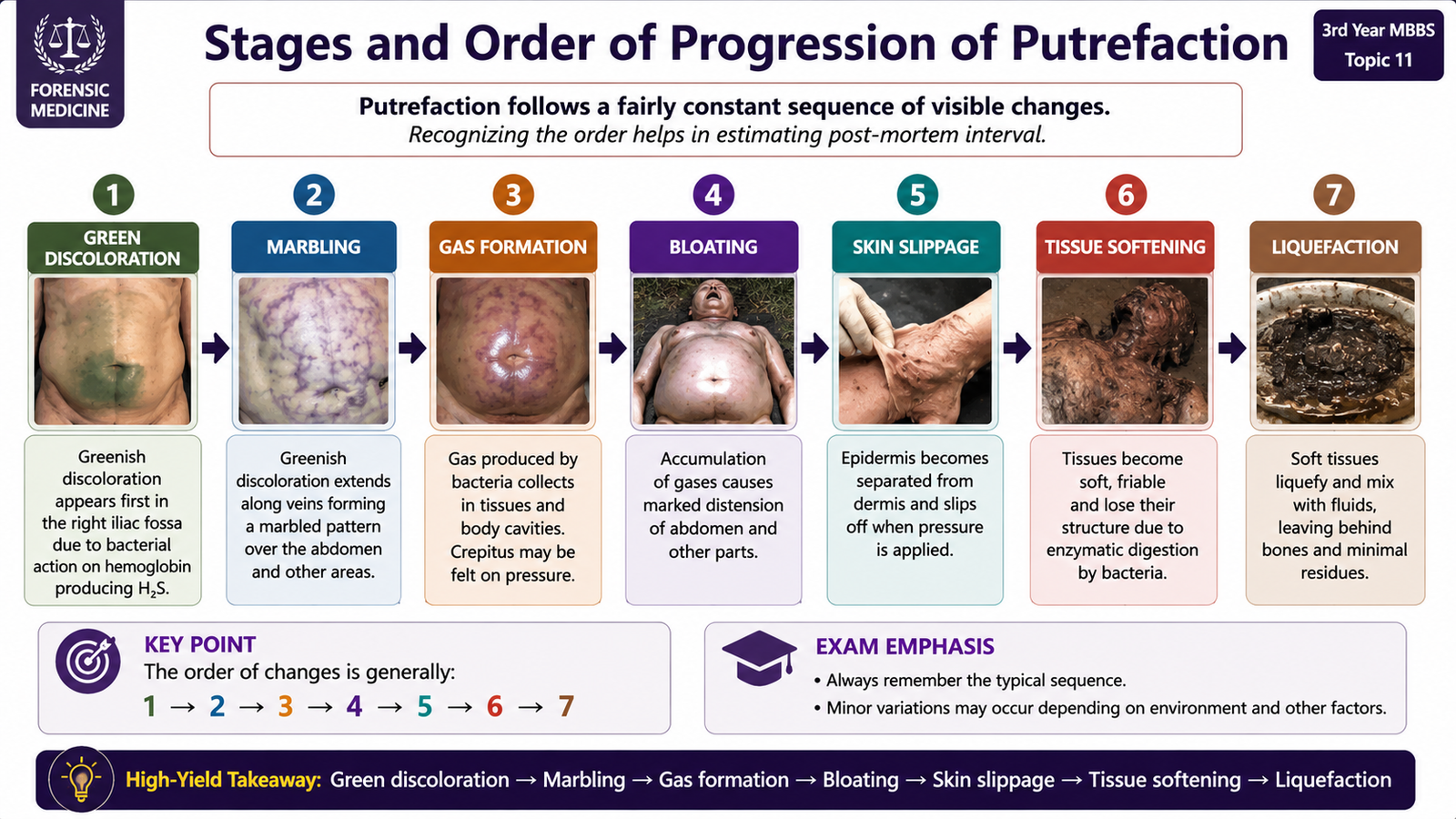
Putrefaction is a progressive process rather than a single event. The external appearance changes as decomposition advances. Although the exact rate varies with environmental and individual factors, the usual sequence is important because it provides a framework for describing a decomposing body.
Early discoloration
One of the earliest visible signs is a greenish discoloration of the skin, classically first noticed over the right lower abdomen in ordinary circumstances. This region overlies the caecal area, where intestinal bacteria are abundant. As decomposition progresses, the discoloration becomes more widespread.
Venous marbling
Decomposition pigments may become visible along superficial veins, producing a branching pattern commonly described as marbling. The venous pattern becomes prominent because decomposition affects blood and vascular tissues while bacterial products spread through the body.
Gas formation and bloating
Bacterial metabolism produces gases within tissues and body cavities. This causes distension and bloating. The face and abdomen may become swollen, and pressure from gases may force fluids or decomposed material from natural openings.
Skin and soft-tissue changes
With continuing decomposition, the epidermis loosens, blisters may form, and the skin may peel. Hair and nails may appear loose because the surrounding epidermal tissues are breaking down. Internal organs soften progressively and lose their normal structure.
Liquefaction and advanced decomposition
Eventually, soft tissues undergo extensive decomposition and liquefaction. At a still later stage, most soft tissue may disappear, leaving increasingly exposed skeletal structures.
| Stage | Main Change | Underlying Reason |
|---|---|---|
| Early | Green discoloration | Bacterial decomposition and formation of decomposition pigments |
| Progressive | Marbling | Changes along superficial venous channels |
| Gas stage | Bloating and distension | Accumulation of gases produced during bacterial decomposition |
| Advanced | Skin slippage and tissue softening | Progressive tissue destruction |
| Late | Liquefaction and loss of soft tissue | Extensive decomposition |
C. Factors Affecting Putrefaction and Casper’s Dictum
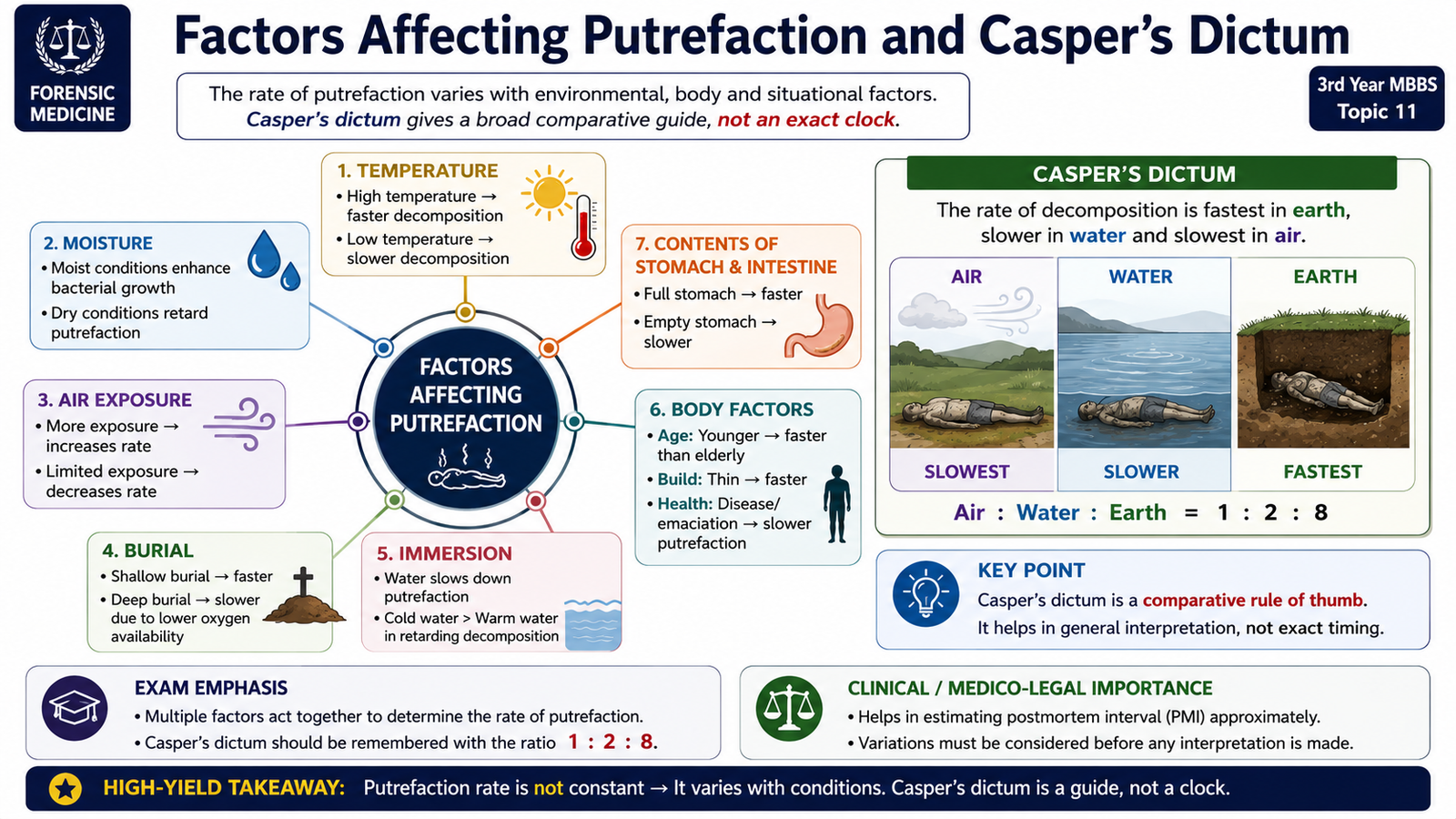
The rate of putrefaction is not fixed. It depends on the environment surrounding the body and on characteristics of the body itself. For this reason, decomposition findings should never be interpreted as an exact clock. A condition that favors bacterial growth and tissue breakdown accelerates putrefaction, whereas a condition that inhibits bacterial activity or removes water tends to slow it.
Environmental factors
- Temperature: Warm conditions generally favor bacterial activity and accelerate decomposition. Very low temperatures retard decomposition.
- Moisture: Moist conditions support bacterial activity and usually favor putrefaction, while marked dryness may promote preservation by mummification.
- Air exposure: The surrounding environment influences decomposition and the activity of organisms involved in tissue breakdown.
- Burial or immersion: A body decomposes at a different rate in air, water and soil because temperature, oxygen, moisture and microbial exposure differ.
Factors related to the body
- The amount and distribution of body tissue influence how decomposition develops.
- Conditions associated with increased bacterial burden may favor more rapid decomposition.
- Conditions causing major fluid loss or dehydration may retard ordinary putrefaction and favor drying.
- Clothing and coverings can modify heat loss, moisture and environmental exposure and therefore influence decomposition.
Casper’s dictum
Casper’s dictum is a traditional forensic principle used to compare the relative rate of decomposition in different environments. It states that, under broadly comparable conditions, the degree of putrefaction occurring in approximately one week in air corresponds roughly to that occurring in two weeks in water and eight weeks in earth.
Air : Water : Earth ≈ 1 : 2 : 8 for comparable degrees of decomposition. This is a general comparative rule, not an exact method for determining time since death.
The dictum must therefore be interpreted cautiously. Real decomposition is affected by temperature, depth of burial, clothing, body composition, microbial activity and many other conditions.
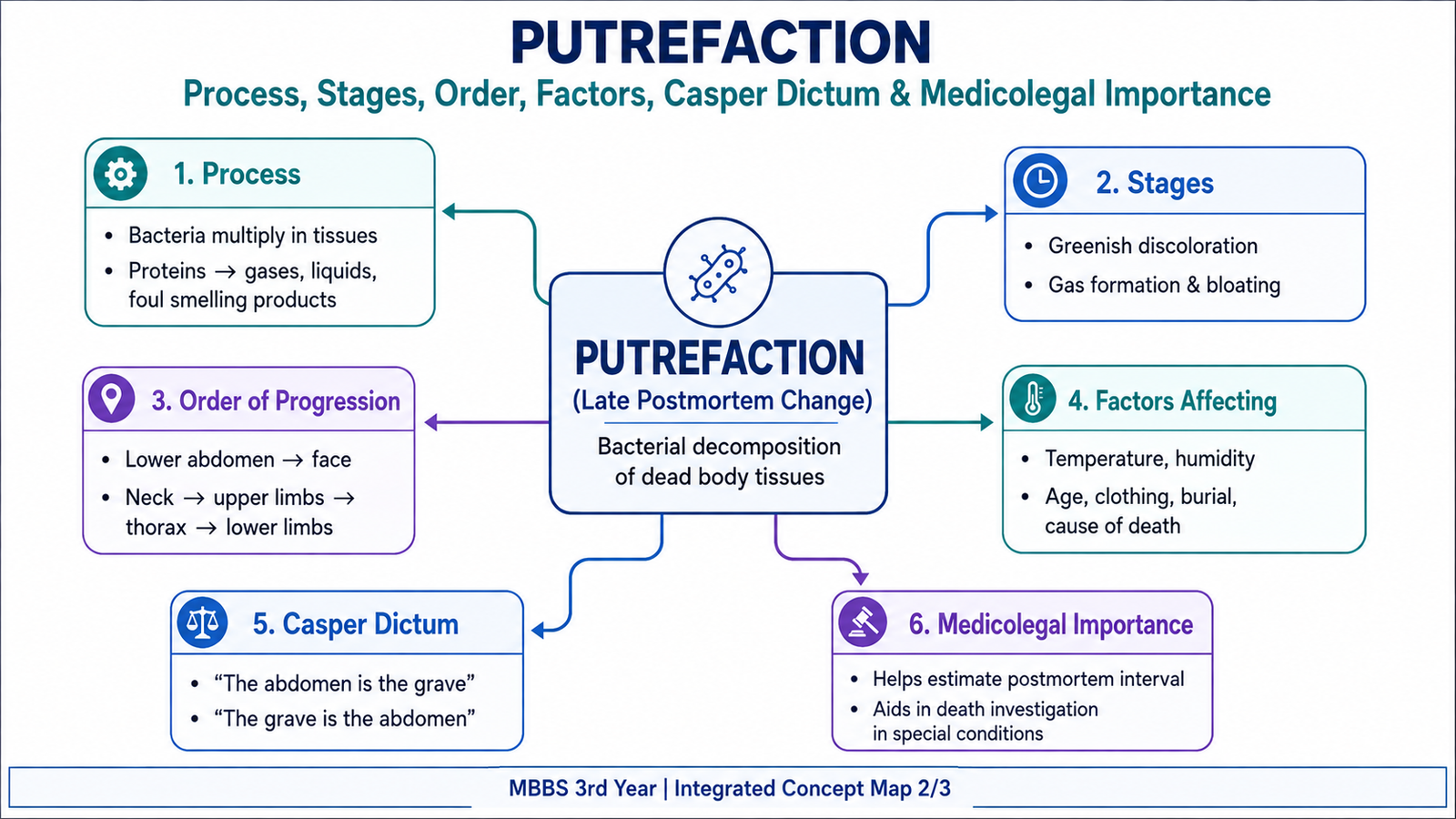
D. Medico-Legal Importance of Putrefaction
Putrefaction is important in forensic examination because it confirms that postmortem decomposition has progressed and can provide supportive information about the postmortem interval and the environment in which the body remained. However, the rate is highly variable, so decomposition alone cannot give an exact time of death.
Advanced putrefaction may also make examination more difficult because tissues become discolored, swollen, fragile and eventually destroyed. These changes can alter or obscure injuries and may interfere with recognition of natural disease.
Main medico-legal uses and limitations
- Supports estimation of time since death: The stage of decomposition may contribute to a broad postmortem interval assessment when interpreted with the circumstances and environment.
- Helps assess environmental exposure: The degree and type of decomposition may be influenced by whether the body remained in air, water, moist soil or a dry setting.
- May obscure injuries: Skin slippage, discoloration and tissue breakdown can make wounds difficult to interpret.
- May simulate injury: Decomposition-related discoloration, blisters and tissue defects can sometimes resemble pathological or traumatic lesions.
- May complicate identification: Destruction and distortion of soft tissues can reduce visible identifying features.
- Does not provide an exact postmortem interval: Findings must be interpreted together with temperature, environment, body condition and other postmortem changes.
A decomposed body should be assessed by combining all available findings. No single putrefactive feature should be treated as a precise measure of the time since death.
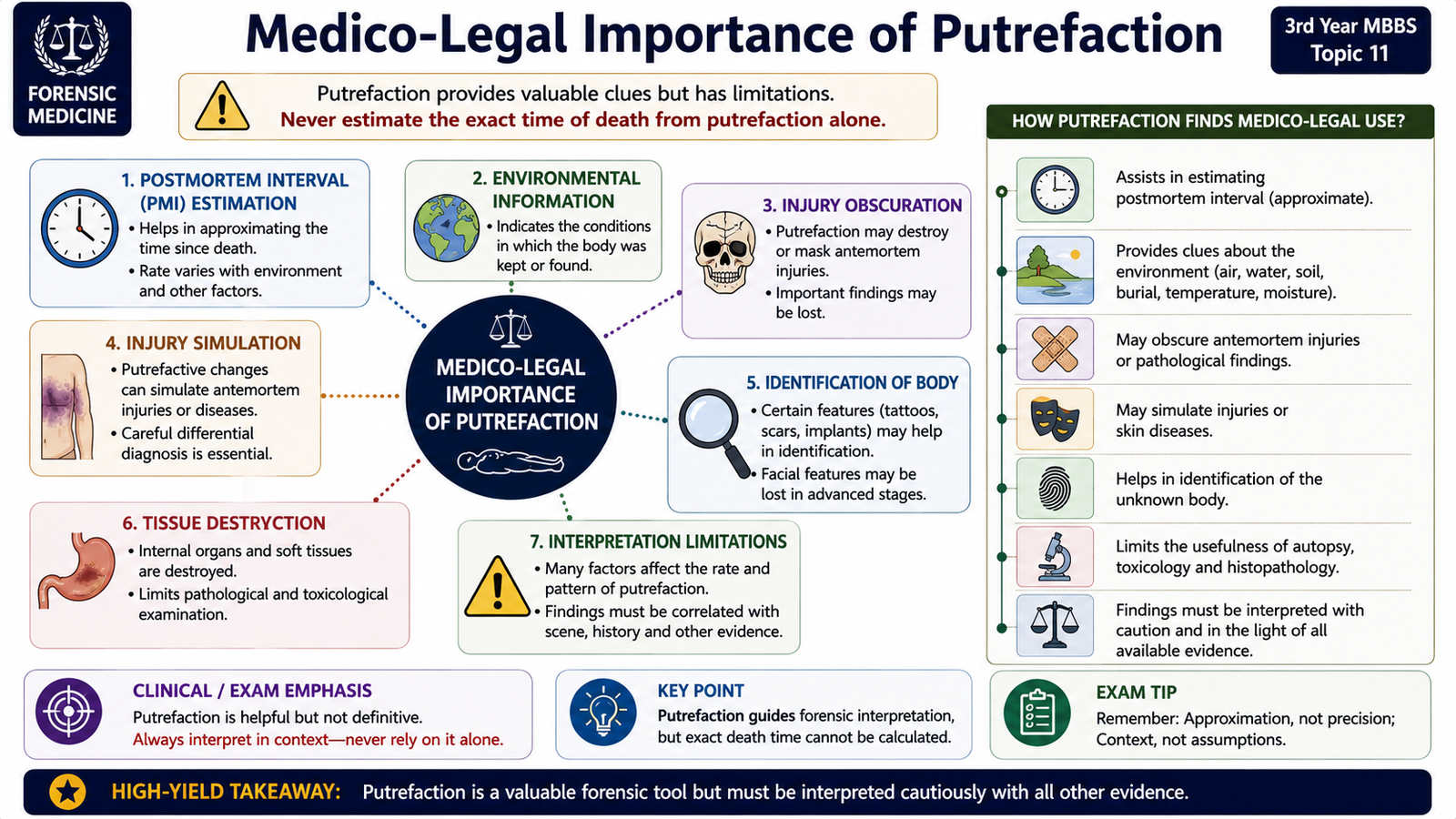
E. Maceration
Maceration is a postmortem change occurring in a fetus that dies in the uterus and remains surrounded by amniotic fluid before delivery. Unlike ordinary putrefaction, maceration is primarily an aseptic autolytic process. Fetal tissues undergo self-digestion while remaining in fluid, producing characteristic softening and skin changes.
The distinction is important because maceration indicates that fetal death occurred before delivery and that the dead fetus remained in the uterus for a period after death.
Features of maceration
- The body is generally soft and flaccid.
- The skin becomes reddish or brownish and may show loosening or peeling of the epidermis.
- Blister-like skin changes may occur as the epidermis separates from deeper tissues.
- Soft tissues and internal organs progressively soften because of autolysis.
- Changes occur in the fluid environment of the uterus rather than through ordinary external putrefactive exposure.
- Typical gas-producing putrefaction is not the defining process of maceration.
Important differentiation
The key conceptual distinction is that maceration represents intrauterine aseptic autolysis, whereas ordinary putrefaction is strongly associated with bacterial decomposition. This difference helps distinguish fetal death before delivery from decomposition occurring after delivery.
| Feature | Maceration | Putrefaction |
|---|---|---|
| Main setting | Dead fetus retained in uterus | Dead body undergoing ordinary decomposition |
| Dominant process | Aseptic autolysis | Bacterial decomposition with autolysis |
| Environment | Amniotic fluid | Depends on external environment |
| Major interpretation | Supports fetal death before delivery | Supports postmortem decomposition after death |
Medico-legal importance
Maceration supports the conclusion that the fetus died before delivery and remained within the uterus after death. Its presence can therefore assist in interpreting the timing and circumstances of fetal death. Like other postmortem changes, it should be interpreted with the complete obstetric and postmortem findings rather than in isolation.
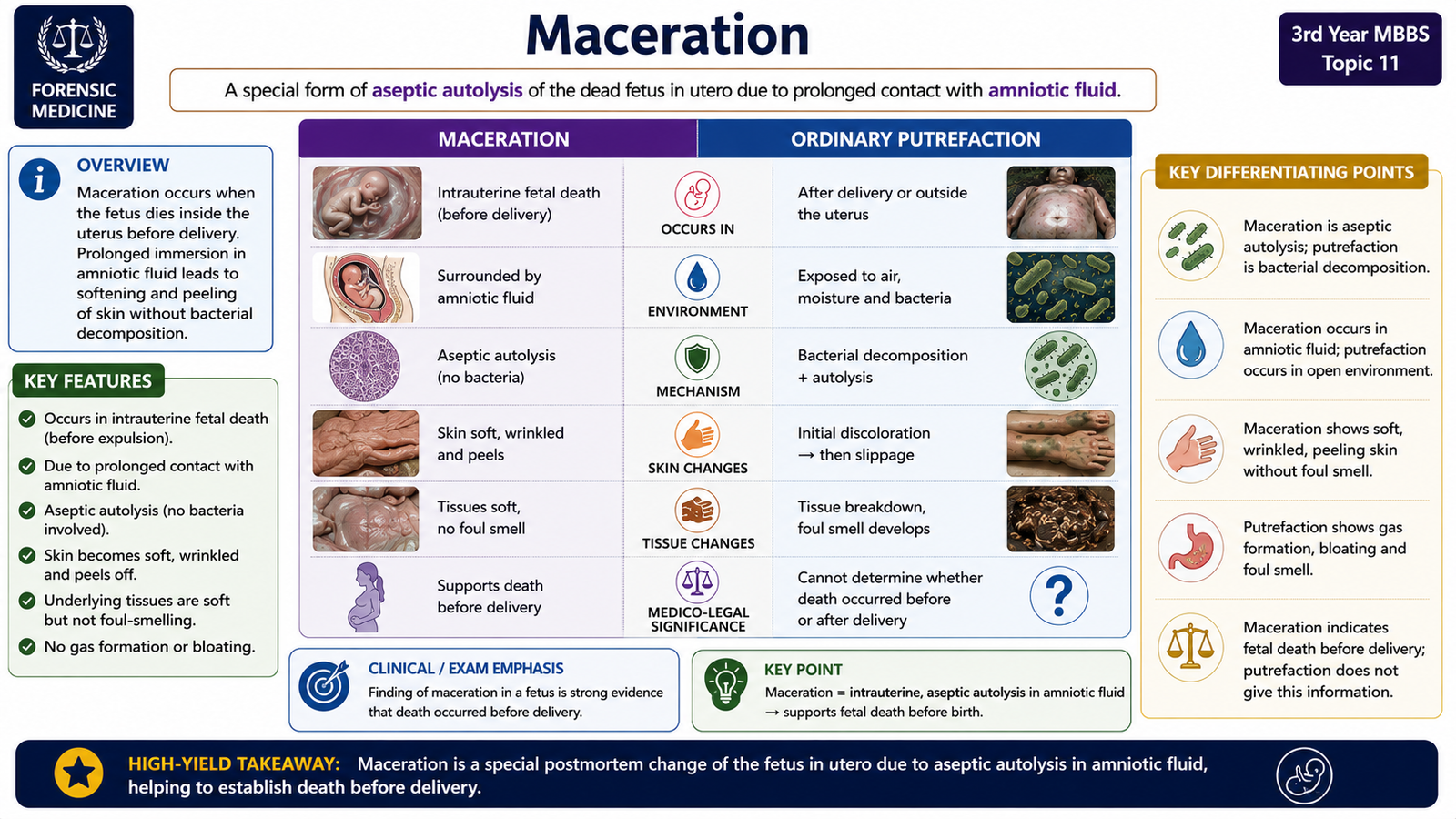
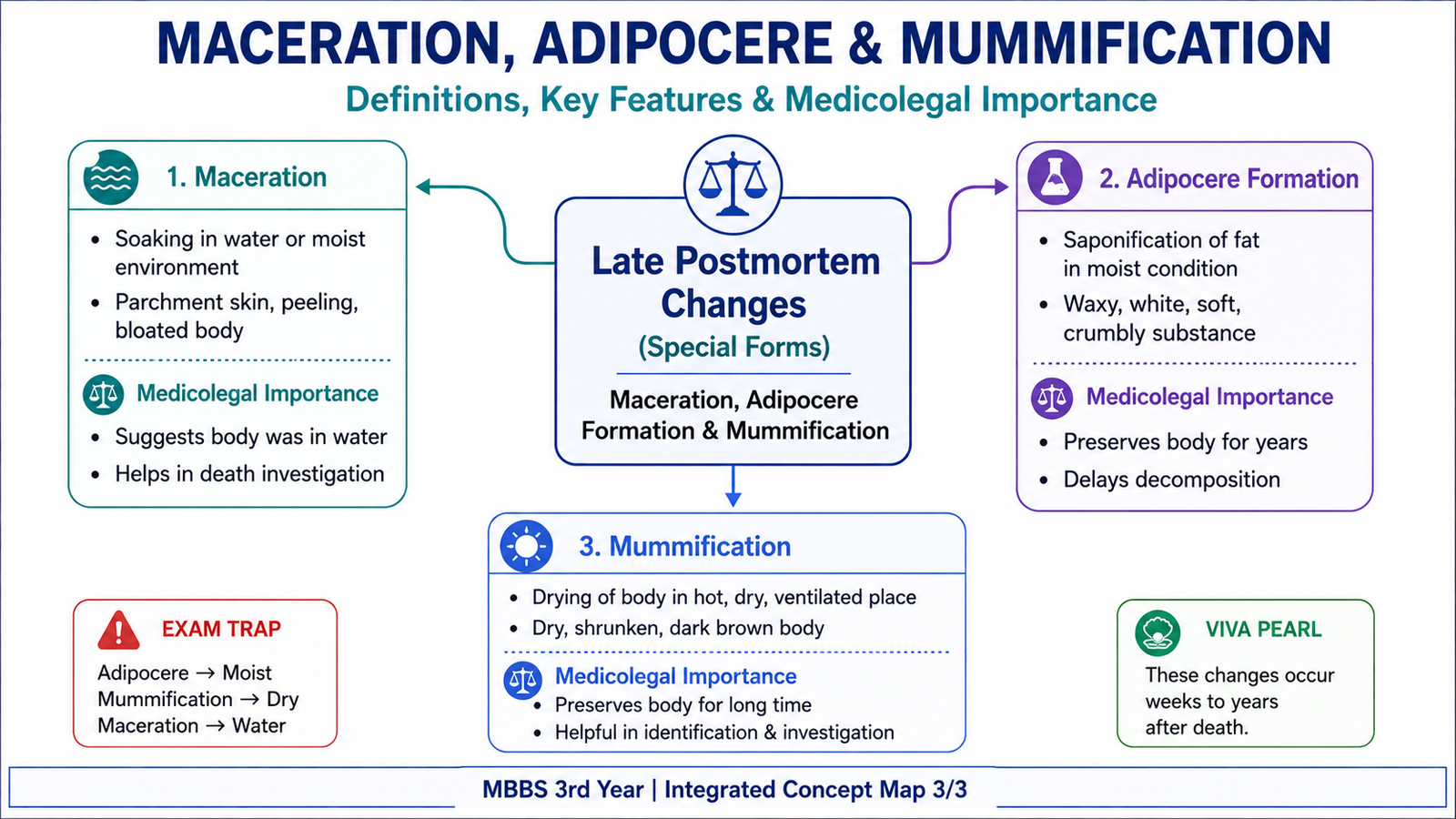
F. Adipocere Formation
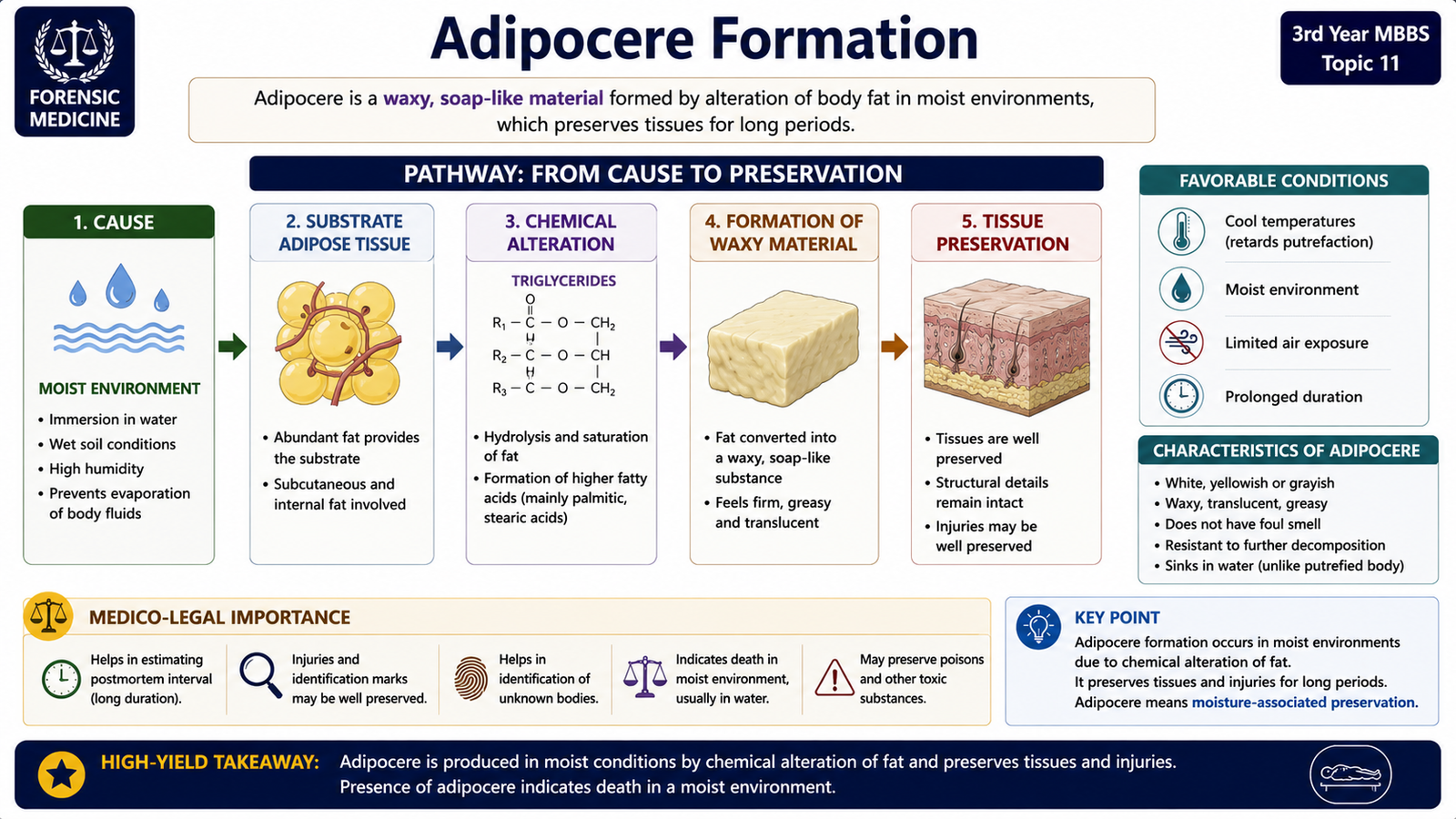
Adipocere is a postmortem transformation in which body fat is converted into a waxy, soap-like material under favorable environmental conditions. It is particularly associated with moist environments. Instead of undergoing rapid ordinary decomposition, fatty tissues are chemically altered and may become relatively preserved.
The process involves breakdown and alteration of triglycerides within adipose tissue. The resulting fatty material becomes more resistant to further decomposition. Because of this preservation, body contours, facial features and traumatic lesions may sometimes remain recognizable for longer than they would during ordinary putrefaction.
Mechanism
Features
- It develops mainly in fatty tissues.
- The affected tissue acquires a waxy or soap-like appearance and consistency.
- Moisture strongly favors its development.
- Body form and external features may be preserved to varying degrees.
- Injuries in preserved tissue may remain demonstrable.
- Once formed, adipocere tends to resist further ordinary decomposition better than unaltered soft tissue.
Medico-legal importance
Adipocere can be important because preservation of body shape, facial features or lesions may assist identification and examination of injuries. Its presence also provides information about the environmental conditions in which the body remained, particularly prolonged exposure to moisture. It may support broad postmortem interval interpretation, but it cannot provide an exact time since death.
Think of adipocere as moisture-associated preservation of fatty tissues.
G. Mummification and Comparison of Late Postmortem Changes
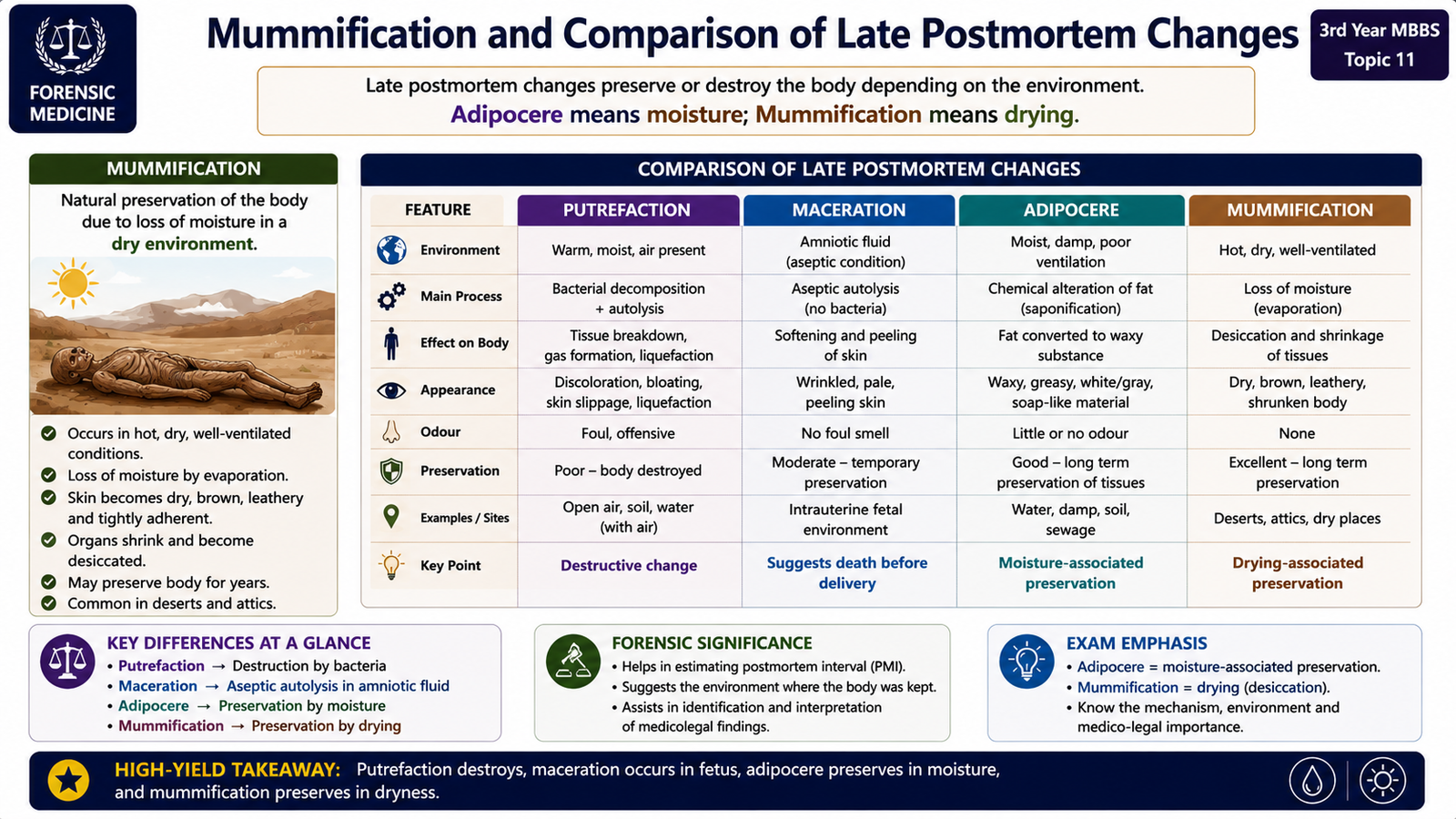
Mummification is a postmortem change produced by marked dehydration and drying of the body. It develops when environmental conditions promote rapid loss of moisture from tissues, particularly in dry surroundings with sufficient air movement. Because water is essential for many decompositional processes, drying inhibits bacterial activity and slows ordinary putrefaction.
The body therefore becomes dry, shrunken and relatively preserved. The skin commonly becomes leathery and tightly adherent to underlying tissues. External body form and some injuries may remain recognizable.
Mechanism
Features
- The body becomes markedly dry and dehydrated.
- Soft tissues shrink and lose volume.
- The skin becomes dry, tough and leathery.
- The body may become lighter because of loss of water.
- Facial configuration and certain external lesions may remain recognizable.
- Ordinary putrefaction is reduced because the dry environment is unfavorable for bacterial activity.
Medico-legal importance
Mummification may preserve identifying features and external injuries, which can assist forensic examination. Its presence also suggests that the body remained in an environment favorable for dehydration. Like adipocere, it is a preservative postmortem change rather than a precise clock for determining the time since death.
Important comparison
| Feature | Putrefaction | Maceration | Adipocere | Mummification |
|---|---|---|---|---|
| Basic process | Decomposition | Aseptic autolysis | Fat transformation | Dehydration |
| Typical setting | Variable environments | Dead fetus retained in uterus | Moist conditions | Dry conditions |
| Main appearance | Discoloration, gas, tissue breakdown | Softening and skin peeling | Waxy, soap-like tissue | Dry, shrunken, leathery tissue |
| Effect on preservation | Progressive destruction | Progressive fetal tissue softening | Relative preservation | Relative preservation |
| Major forensic clue | Stage and environment of decomposition | Death occurred before delivery | Moisture-associated preservation | Drying-associated preservation |
Integrated Mechanism Flow
⭐ AIM High-Yield Review
- Putrefaction is postmortem decomposition mainly due to bacterial activity together with autolysis.
- The classical early external change of putrefaction is greenish discoloration, commonly beginning over the right lower abdomen.
- Marbling is a branching discoloration following superficial venous channels during decomposition.
- Bacterial gas production causes bloating and distension.
- Putrefaction progresses from discoloration and gas formation to skin slippage, tissue softening, liquefaction and eventual loss of soft tissues.
- Warmth and moisture generally favor decomposition; cold and marked dryness retard ordinary putrefaction.
- ⭐ Casper’s dictum: comparable decomposition in air, water and earth is traditionally expressed as approximately 1 : 2 : 8.
- Casper’s dictum is a comparative guide, not an exact postmortem clock.
- Maceration is aseptic autolysis of a dead fetus retained within the uterus.
- Maceration supports fetal death before delivery.
- Adipocere is a waxy transformation of body fat favored by moist conditions and can preserve body features and injuries.
- Mummification results from marked dehydration in a dry environment and produces a dry, shrunken, leathery body.
- Adipocere is associated with moisture; mummification is associated with drying.
- Preservative postmortem changes may assist identification and injury assessment.
- No single late postmortem change provides an exact time since death; findings must be interpreted with the surrounding circumstances.