
This chapter follows the supplied KMU learning outcomes in a logical sequence. First understand the public-health reasoning behind smoking control, international health and travel protection, then use the final high-yield section for revision.
Topic 5 — Smoking, International Health and Global Public-Health Agencies
Infection and Inflammation • Community Medicine
A structured introduction to the epidemiology, causes, health effects and control of smoking, together with international health regulations, travel-health prevention and the functions of WHO and UNICEF.
Topic Introduction
Community medicine deals not only with diseases within one community or country, but also with health problems that cross national borders. Smoking is an important example because it is influenced by social and behavioral factors and contributes to disease in many organ systems. International travel and movement of populations can also spread communicable diseases rapidly between countries. For this reason, countries cooperate through international health regulations and global health agencies. In this chapter, you will understand the distribution and causes of smoking, its important health effects and methods of control; the purpose of international health regulations; preventive measures for travelers; and the major functions of international health agencies, particularly the World Health Organization (WHO) and UNICEF.
A. Smoking: Epidemiology and Causes
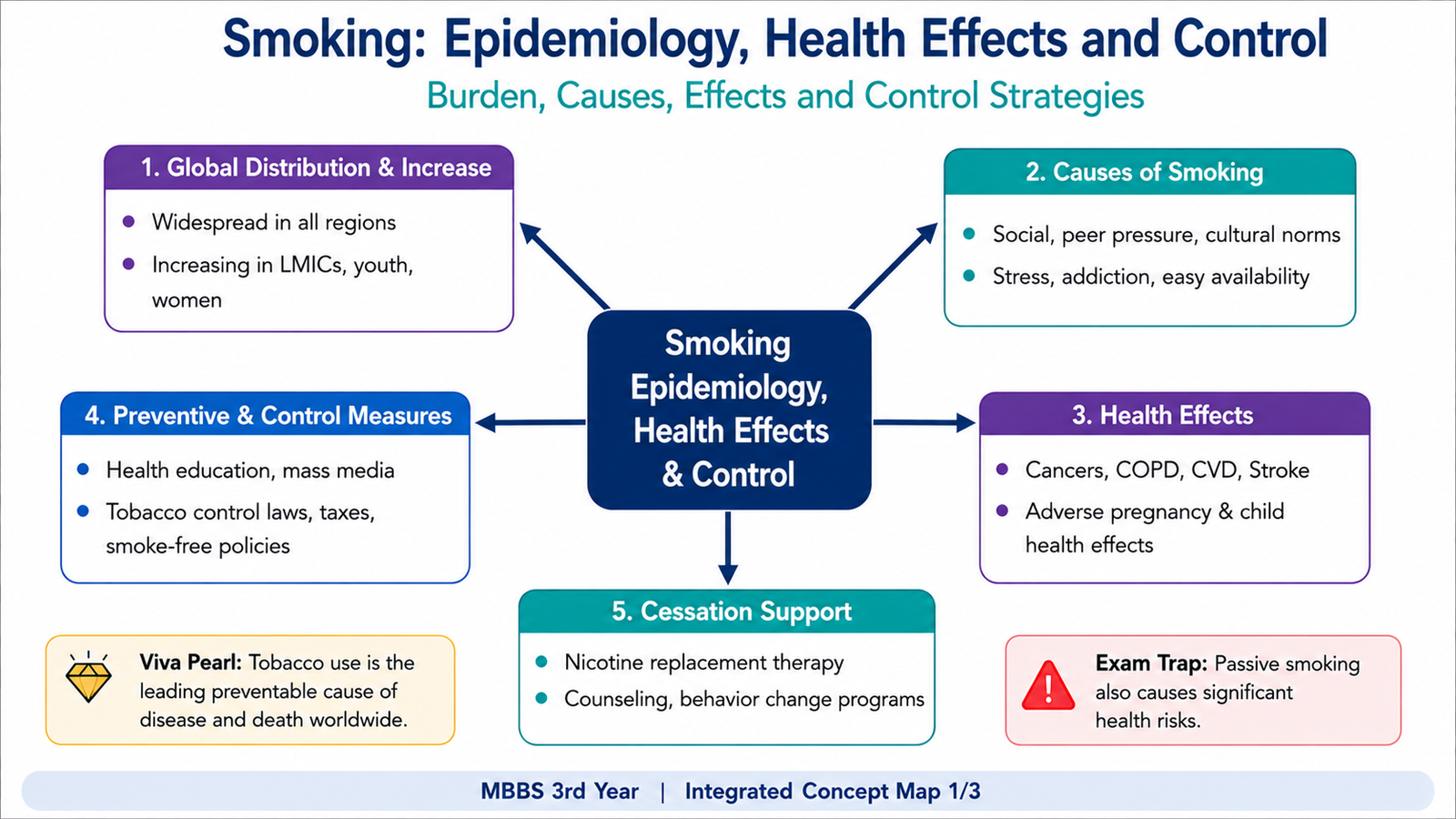
Smoking is the inhalation of smoke produced by burning tobacco, most commonly through cigarettes. From a public-health perspective, smoking is important because exposure is widespread, initiation often occurs before adulthood, dependence can maintain the behavior for many years, and both smokers and people exposed to tobacco smoke may suffer harmful effects.
Global distribution and changing pattern
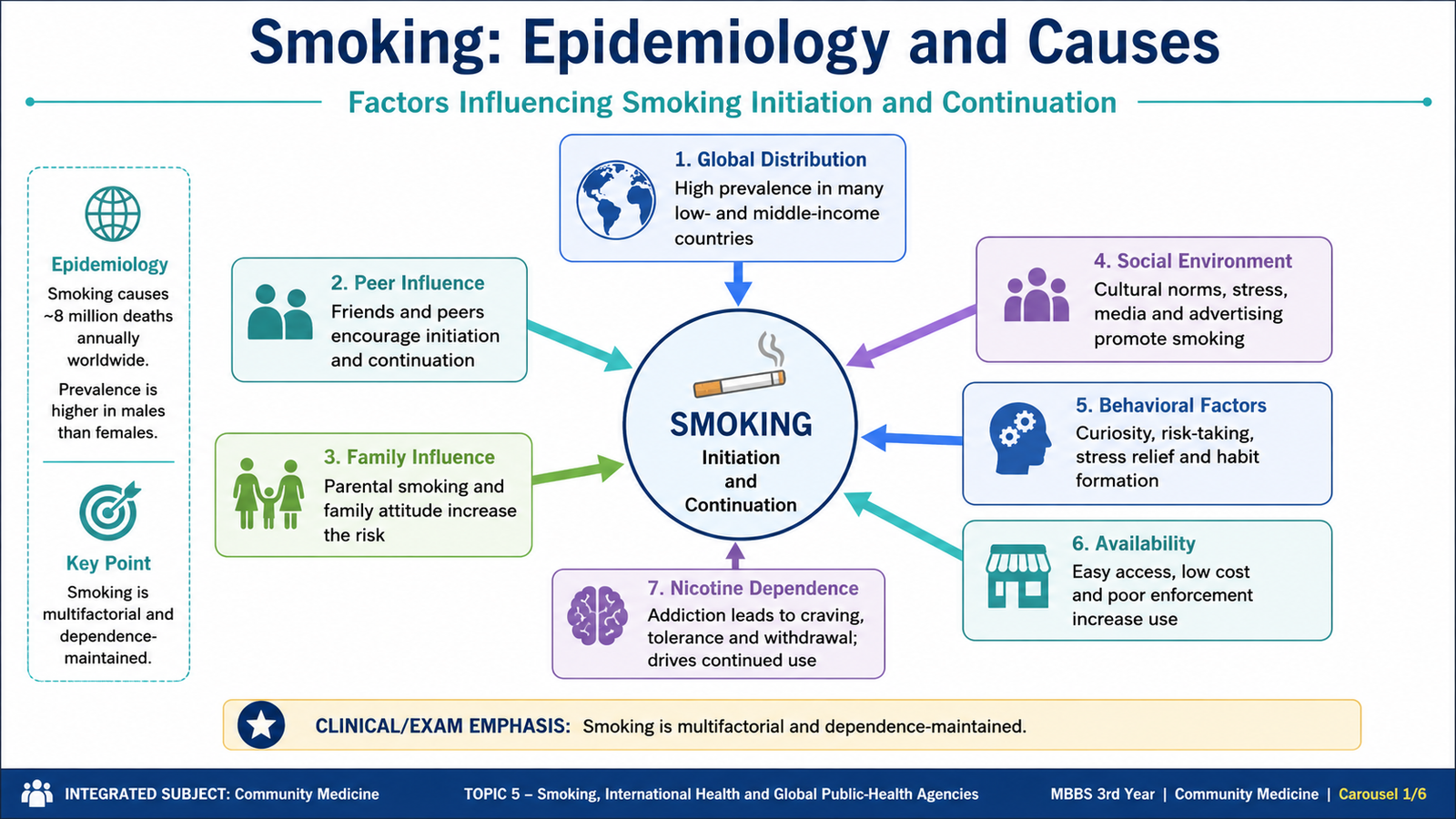
Smoking occurs throughout the world, but its frequency is not uniform. The proportion of smokers varies between countries, age groups, sexes and socioeconomic groups. Historical patterns also differ: in some populations smoking became common earlier and subsequently declined after stronger awareness and control measures, whereas in others tobacco use continues to represent a major health problem.
The burden of smoking must therefore be understood as a population phenomenon rather than only an individual habit. Changes in social acceptability, affordability, marketing exposure, education and tobacco-control policies can influence how commonly people start or continue smoking.
Why do people start or continue smoking?
Smoking usually develops through interaction between personal, social and environmental factors. Once nicotine dependence develops, stopping may become difficult even when a person understands the health risks.
- Peer influence: young people may start smoking because friends or social groups smoke.
- Family influence: smoking by parents or other household members can normalize the behavior.
- Curiosity and experimentation: initial use may occur without an intention to become a regular smoker.
- Psychological and behavioral factors: some people associate smoking with stress relief, social confidence or routine activities.
- Social acceptability: environments in which smoking is viewed as normal may encourage initiation.
- Promotion and availability: visibility and easy access can support initiation and continued use.
- Nicotine dependence: repeated nicotine exposure reinforces continued smoking and makes cessation more difficult.
B. Effects of Smoking on Health
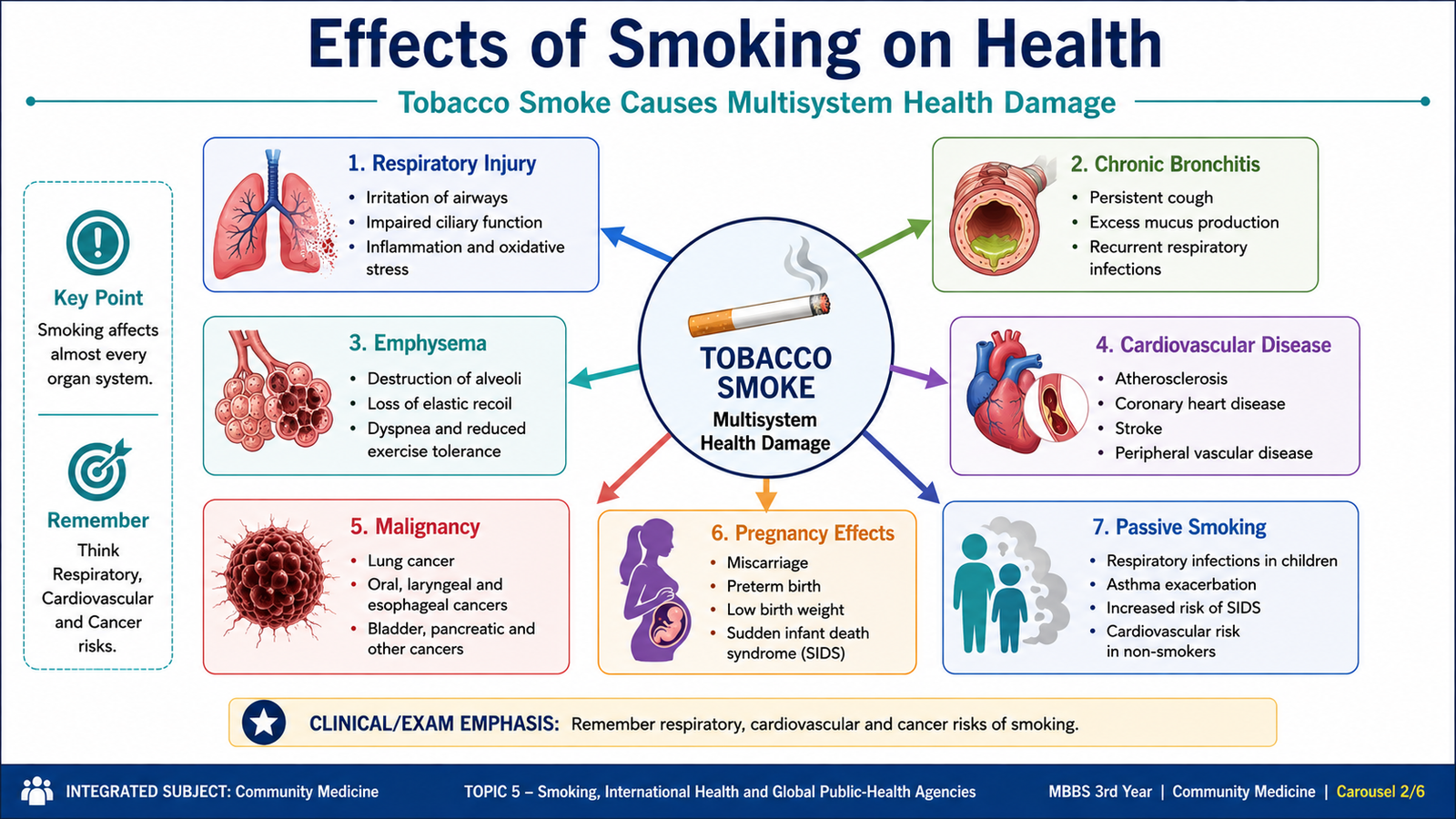
Tobacco smoke contains many substances capable of damaging tissues. The important point for an MBBS student is that smoking does not affect only the lungs. Repeated exposure produces respiratory injury, cardiovascular damage and carcinogenic effects, while smoking during pregnancy can affect both mother and fetus.
The harm develops through several interacting mechanisms. Irritants damage respiratory epithelium, toxic substances increase oxidative and inflammatory injury, carbon monoxide reduces effective oxygen transport, nicotine produces cardiovascular stimulation and dependence, and carcinogenic chemicals contribute to malignant transformation.
Respiratory effects
Smoking irritates the respiratory tract and interferes with normal protective mechanisms. Chronic exposure damages airway epithelium and reduces effective mucociliary clearance. Persistent irritation promotes inflammation and contributes to chronic respiratory disease.
- Chronic cough and sputum production may develop because of airway irritation and excess mucus production.
- Persistent airway inflammation contributes to chronic bronchitis.
- Damage to lung parenchyma contributes to emphysematous change and reduced respiratory reserve.
- Smoking markedly increases the risk of lung cancer.
Cardiovascular effects
Smoking promotes cardiovascular disease through effects on blood vessels, the heart and blood constituents. Nicotine can increase sympathetic activity, while other smoke constituents contribute to endothelial injury and atherogenesis.
- Increased risk of ischemic heart disease.
- Increased risk of cerebrovascular disease.
- Acceleration of atherosclerotic vascular disease.
- Carbon monoxide exposure reduces the oxygen-carrying effectiveness of blood.
Cancer risk
Carcinogenic substances in tobacco smoke repeatedly expose epithelial cells to DNA-damaging chemicals. The risk is especially important for lung malignancy, but smoking is also associated with cancers involving other organs exposed directly or indirectly to tobacco-related carcinogens.
Effects during pregnancy and on children
Maternal smoking exposes the developing fetus to harmful substances. Reduced oxygen delivery and other tobacco-related effects can impair fetal growth and adversely influence pregnancy outcomes. Exposure of children to second-hand smoke also increases respiratory irritation and illness.
Passive or second-hand smoking
A person does not need to smoke actively to be exposed. Non-smokers may inhale tobacco smoke present in the surrounding environment. This is why smoking is a community-health issue and why smoke-free environments form part of population-level prevention.
C. Prevention and Control of Smoking
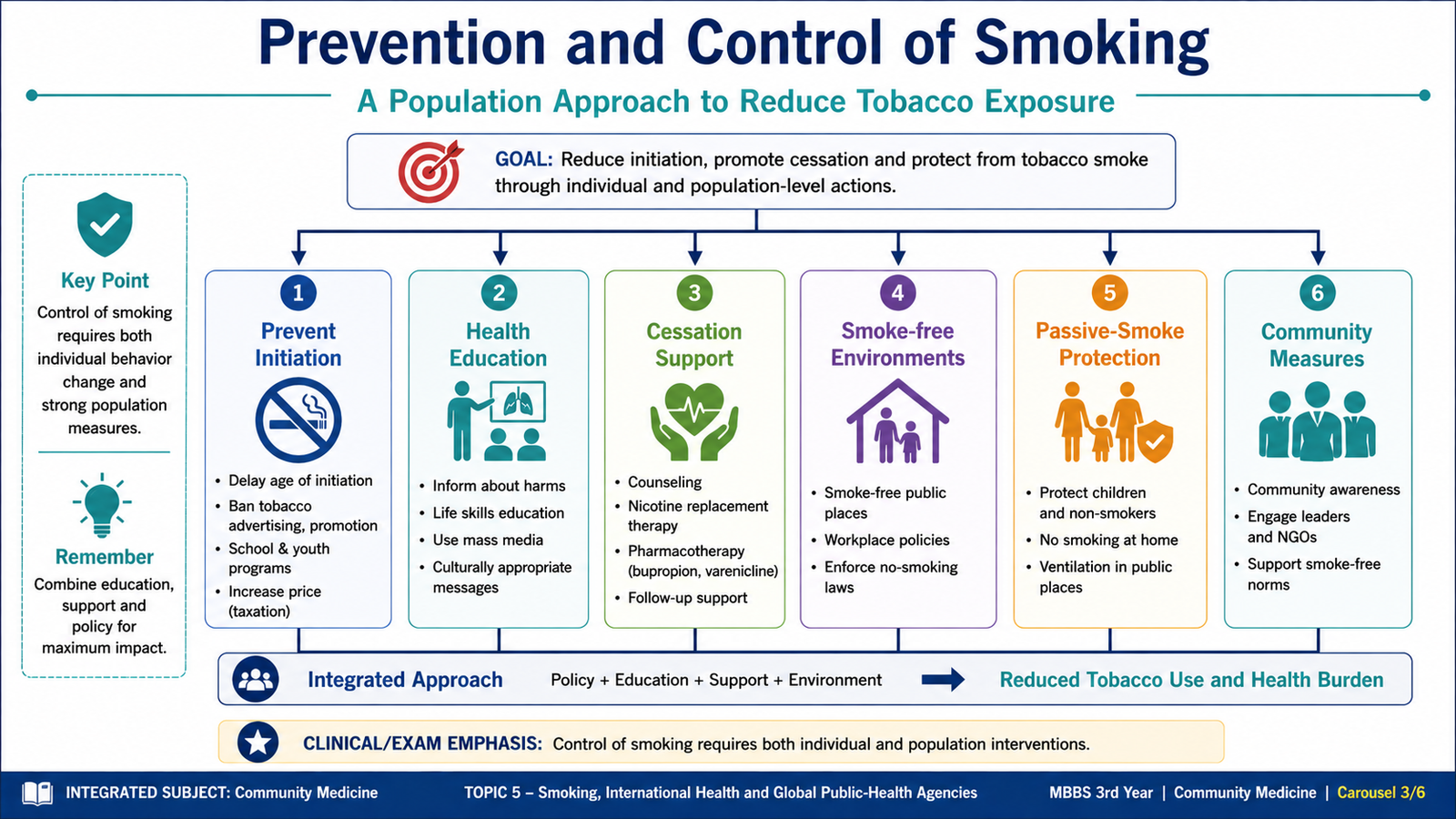
Because smoking is influenced by individual behavior as well as the wider social environment, effective control requires more than advising one smoker to stop. Prevention aims to reduce initiation, protect non-smokers from exposure and help existing smokers quit.
Primary prevention
Primary prevention acts before smoking-related disease develops. An important goal is to prevent young people from starting tobacco use.
- Health education regarding the harmful effects of smoking.
- School and community-based awareness.
- Reduction of social acceptance of smoking.
- Limiting exposure to tobacco promotion.
- Creating smoke-free environments.
- Discouraging tobacco initiation among adolescents and young adults.
Helping smokers stop
Existing smokers benefit from cessation support. The role of the health professional is to identify tobacco use, advise cessation clearly and support the patient’s attempt to stop. Nicotine dependence should be recognized as an important reason why repeated attempts may be required.
Protection from passive smoking
Smoke-free homes, workplaces and public environments protect non-smokers from involuntary exposure. This approach is especially important for children, pregnant women and people with respiratory or cardiovascular disease.
Population-level control
Population strategies aim to make smoking less attractive, less socially acceptable and less easily maintained. These approaches complement clinical cessation advice and help reduce exposure across the whole community.
| Approach | Main objective | Example |
|---|---|---|
| Prevention of initiation | Stop non-smokers becoming smokers | Health education |
| Cessation | Help current smokers stop | Professional cessation support |
| Environmental protection | Reduce involuntary exposure | Smoke-free environments |
| Population control | Reduce tobacco use at community level | Public-health tobacco-control measures |
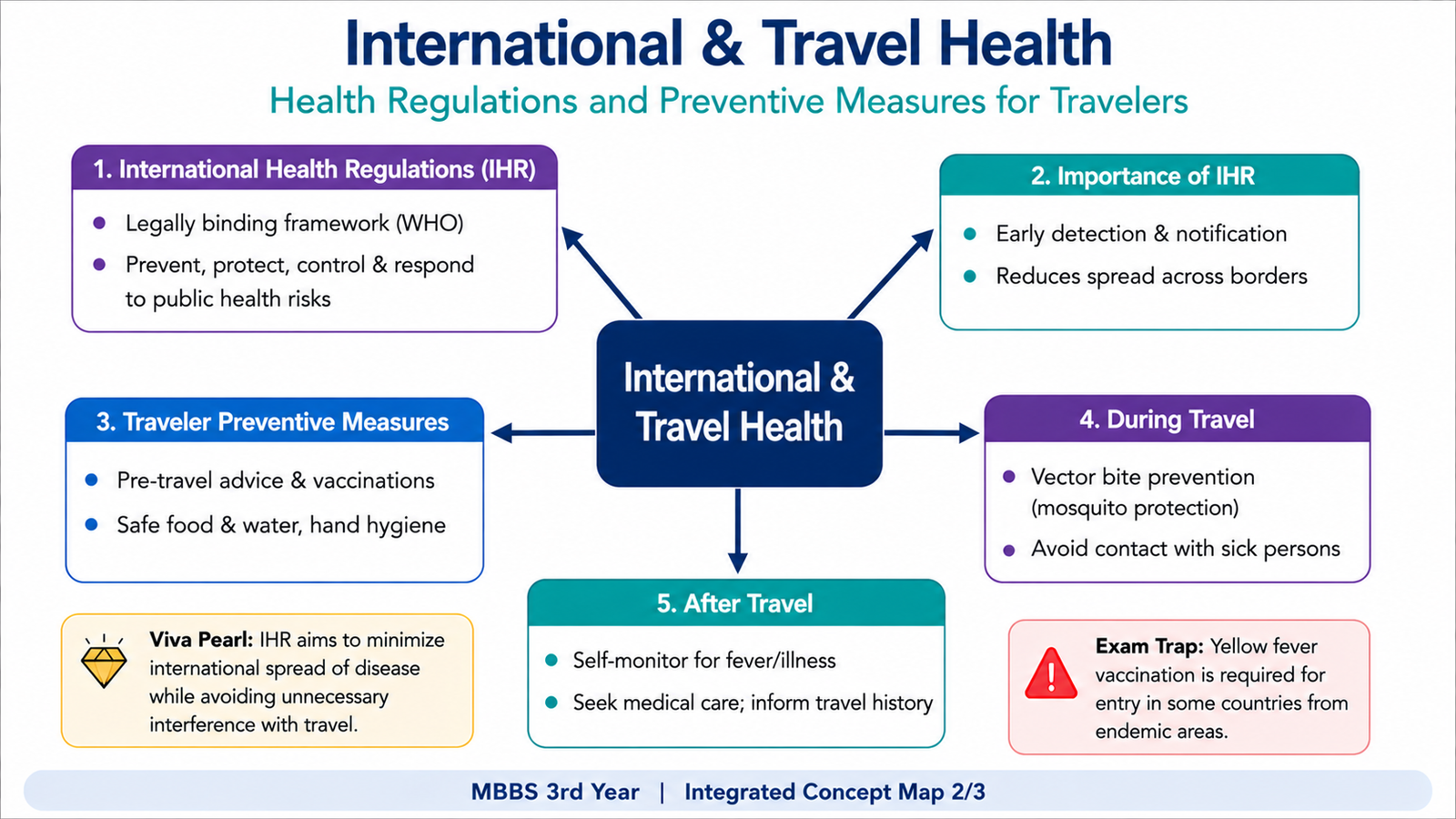
D. International Health Regulations and Their Importance
Modern travel allows people and goods to move rapidly between countries. An infectious disease event that begins in one location may therefore become relevant to many countries within a short period. International health requires cooperation so that important public-health threats can be detected, communicated and managed without relying only on isolated national action.
The International Health Regulations (IHR) provide an international framework for preventing and responding to public-health risks that may cross borders. They are coordinated through the World Health Organization and are intended to strengthen cooperation between countries.
Why are the IHR important?
- Early detection: countries need systems capable of recognizing important public-health events.
- Notification and communication: relevant events can be communicated through established international mechanisms.
- Coordinated response: international collaboration can reduce uncontrolled spread across borders.
- Preparedness: countries require public-health capacity for surveillance, assessment and response.
- International cooperation: shared information supports better decisions by affected and potentially affected countries.
- Balance: disease control should be achieved while avoiding unnecessary interference with international travel and trade.
The IHR should not be viewed simply as “rules for quarantine.” Their broader purpose is international preparedness, detection, assessment, reporting and coordinated response to significant public-health threats.
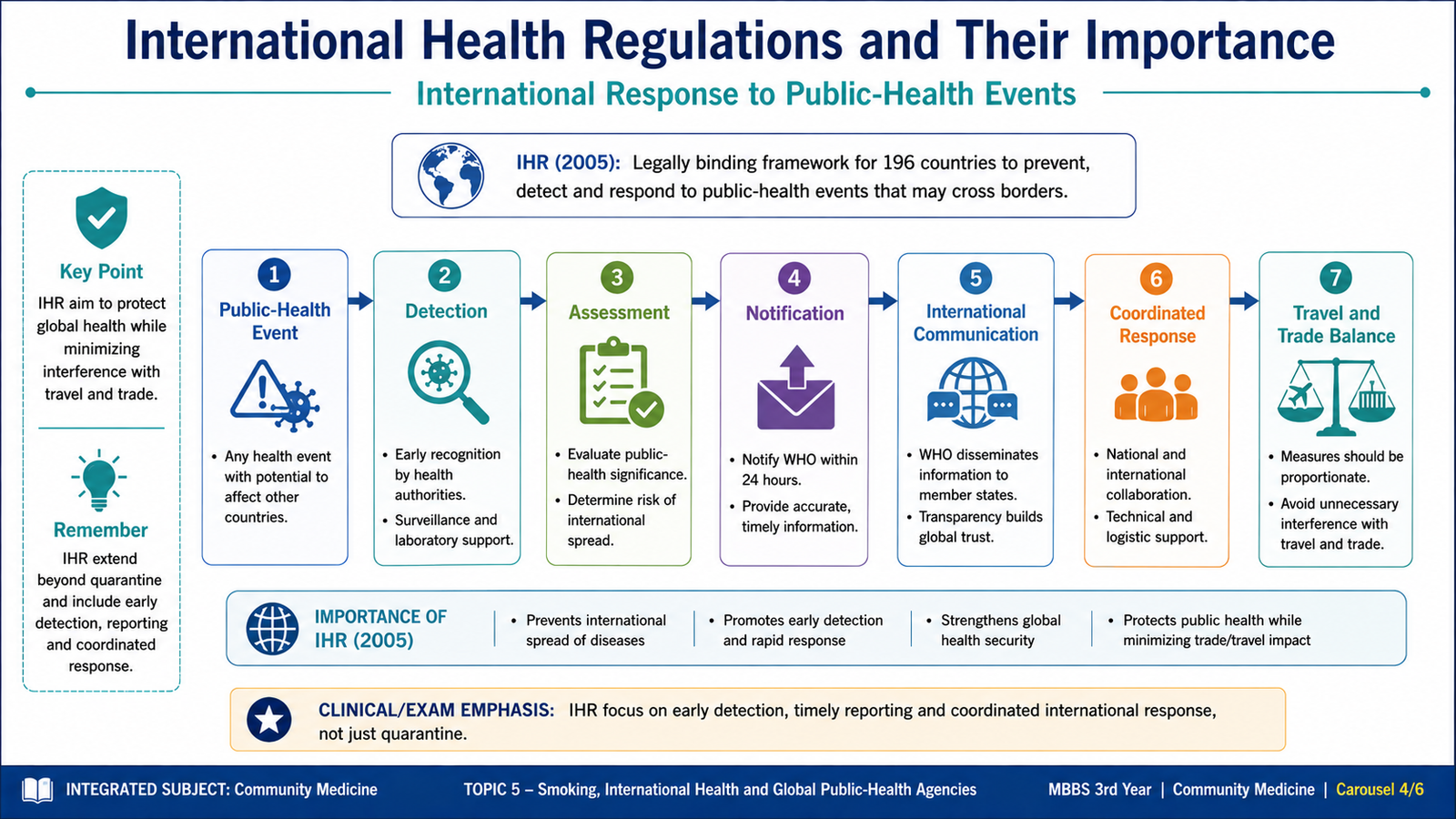
E. Preventive Measures for Travelers Visiting Disease-Endemic Areas
Travelers may encounter infections or other health risks that are uncommon in their usual environment. Prevention begins before travel and continues during and after the journey. The exact precautions depend on the destination, duration of stay, type of accommodation, planned activities and individual health status.
Before travel
Pre-travel preparation allows risks to be identified before exposure occurs. Travelers should obtain appropriate health advice sufficiently before departure, particularly when visiting areas where important communicable diseases are endemic.
- Review the destination and likely health risks.
- Ensure routine immunization is appropriate and discuss any destination-related vaccination requirements or recommendations.
- Assess whether preventive medication is needed for diseases for which chemoprophylaxis is available.
- Plan how essential regular medicines will be carried and used safely during travel.
- Seek additional medical advice when underlying illness, pregnancy, very young age or advanced age increases travel risk.
Food and water precautions
Many travel-associated infections are acquired through contaminated food or water. Safe eating and drinking practices reduce fecal-oral transmission.
- Use safe drinking water.
- Avoid food that appears inadequately cooked or unhygienically handled.
- Maintain hand hygiene, particularly before eating.
- Take special care where sanitation is poor.
Protection against vector-borne disease
In areas where mosquitoes or other vectors transmit disease, prevention should reduce contact between the traveler and the vector.
- Use protective clothing when appropriate.
- Use suitable insect-repellent measures.
- Use screened or otherwise protected sleeping environments where necessary.
- Follow disease-specific preventive advice when traveling to an endemic region.
Personal and environmental precautions
- Avoid unnecessary exposure to potentially infected blood or body fluids.
- Use appropriate precautions against sexually transmitted infections.
- Avoid unsafe contact with animals in areas where zoonotic disease is a concern.
- Observe respiratory and hand-hygiene practices where communicable respiratory disease is circulating.
After travel
If illness develops after returning from a disease-endemic area, the travel history becomes an important diagnostic clue. The patient should inform the healthcare professional about recent destinations, exposures and activities because these may change the likely diagnosis.
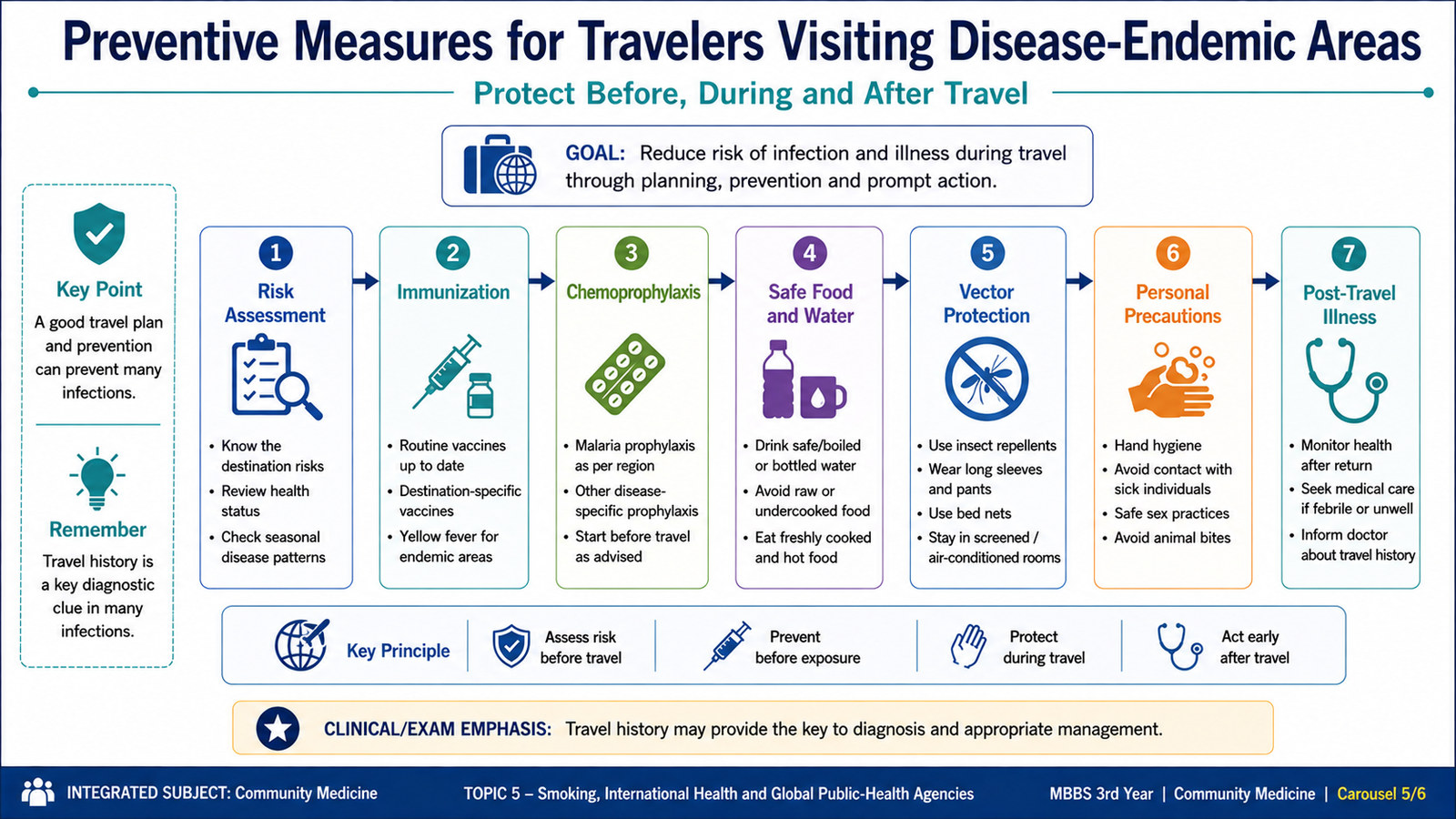
F. International Health Agencies: WHO and UNICEF
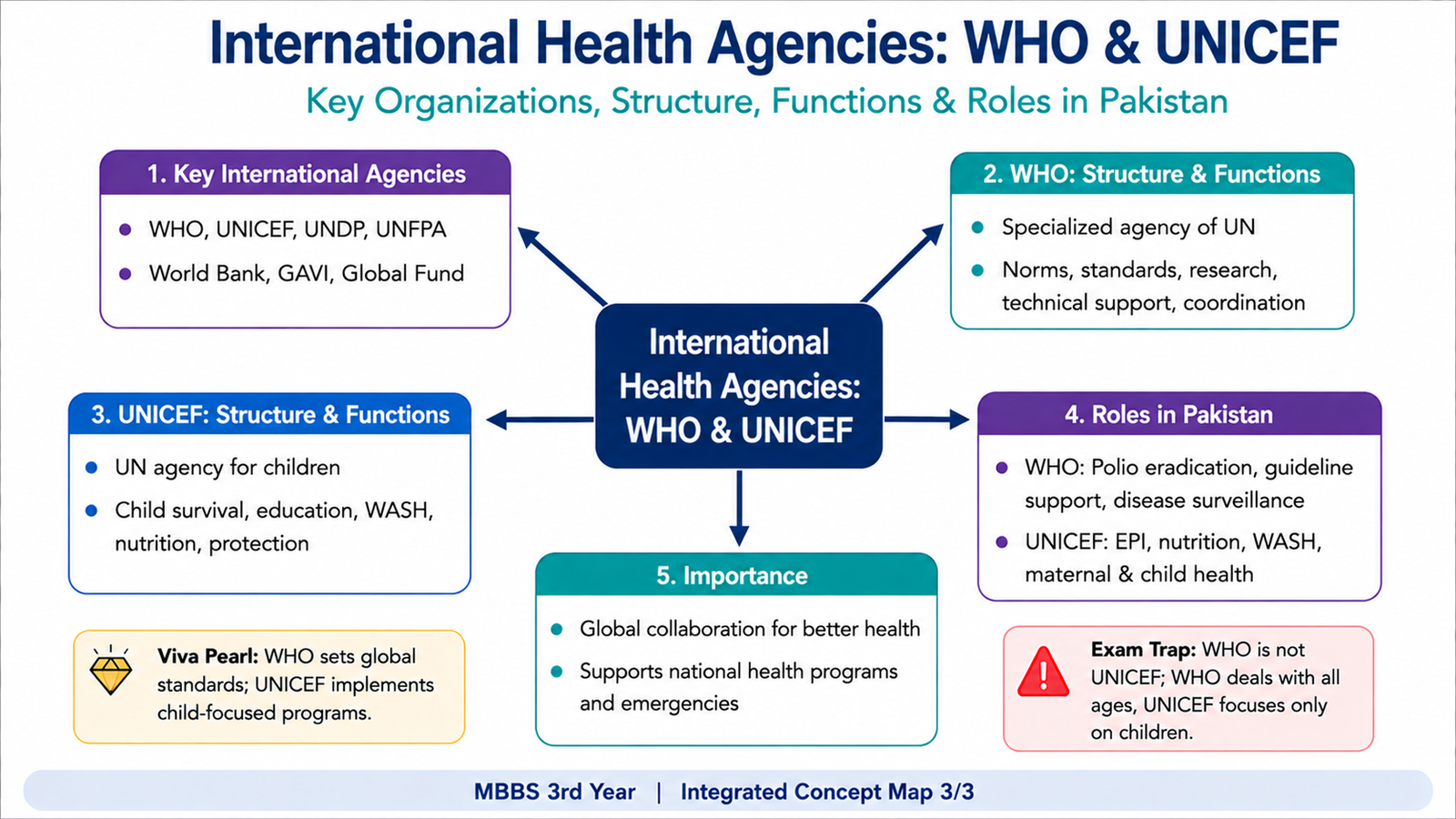
Many health problems require resources, coordination and technical expertise beyond the capacity of a single community or country. International health agencies support countries through cooperation, technical guidance, disease control, maternal and child health activities, emergency response and improvement of health systems. Important agencies working in the health sector include the World Health Organization (WHO), UNICEF and several other international bodies.
Examples of international health agencies
- World Health Organization (WHO)
- United Nations Children’s Fund (UNICEF)
- United Nations Population Fund (UNFPA)
- Food and Agriculture Organization (FAO)
- International Labour Organization (ILO)
- World Bank and other international development organizations involved in health-related support
- International Red Cross and Red Crescent movement
World Health Organization (WHO)
WHO is the specialized health agency of the United Nations. Its central purpose is to promote international cooperation for better health. Rather than functioning as a hospital or direct clinical service for every patient, WHO mainly works by coordinating international health action, developing technical guidance, supporting disease surveillance and control, and assisting countries in strengthening public-health capacity.
Basic structure of WHO
WHO functions through a global structure that includes its governing bodies, headquarters, regional organization and country-level presence. At the highest level, member states participate in setting broad health priorities and policies. Technical and administrative work is then carried out through WHO’s secretariat and its different organizational levels.
- World Health Assembly: the main decision-making body in which member states participate.
- Executive Board: supports implementation and preparation of the work of the Health Assembly.
- Secretariat: carries out technical and administrative work under the leadership of the Director-General.
- Regional and country structures: adapt and support WHO activities according to regional and national health needs.
Major functions of WHO
- Provides leadership and coordination in international health.
- Supports surveillance and control of communicable and non-communicable diseases.
- Develops technical standards, recommendations and public-health guidance.
- Assists countries in strengthening health systems and public-health capacity.
- Supports health information, research cooperation and dissemination of technical knowledge.
- Coordinates international response during important health emergencies.
- Supports programs related to maternal, child, environmental and community health.
Role of WHO in Pakistan
In Pakistan, WHO works with national and provincial health authorities by providing technical cooperation and public-health support. Its role may include strengthening disease surveillance, supporting communicable-disease control, improving preparedness and response to health emergencies, assisting immunization-related public-health work, developing health-system capacity and providing technical guidance based on international health standards.
UNICEF
UNICEF is a United Nations agency with a major focus on the survival, development and well-being of children and mothers. Its work recognizes that child health depends on more than treatment of illness; nutrition, safe water, sanitation, immunization, education and protection all influence health and development.
Basic structure of UNICEF
UNICEF operates through a central international organization with regional and country-level offices. Its governing structure establishes overall policy and priorities, while field offices work with governments and partner organizations to support programs for children and families.
Major functions of UNICEF
- Supports maternal, newborn and child health.
- Supports childhood immunization activities.
- Promotes adequate nutrition and prevention of childhood malnutrition.
- Supports safe water, sanitation and hygiene.
- Promotes child development, education and protection.
- Provides assistance to children and families during emergencies and disasters.
- Works with governments and communities to improve services affecting child survival and development.
Role of UNICEF in Pakistan
In Pakistan, UNICEF works with government institutions and other partners in areas that affect maternal and child health. Its contribution includes support for immunization, nutrition, water and sanitation, health education, maternal and newborn care, child development and humanitarian response. These activities are directed toward improving survival, health and development of children and mothers.
| Feature | WHO | UNICEF |
|---|---|---|
| Main orientation | International public health across populations | Children, mothers and child development |
| Major role | Technical leadership, coordination, standards and health-system support | Program support for child health, nutrition, immunization, WASH and protection |
| Country cooperation | Works with health authorities on broad public-health priorities | Works with government and partners on maternal and child priorities |
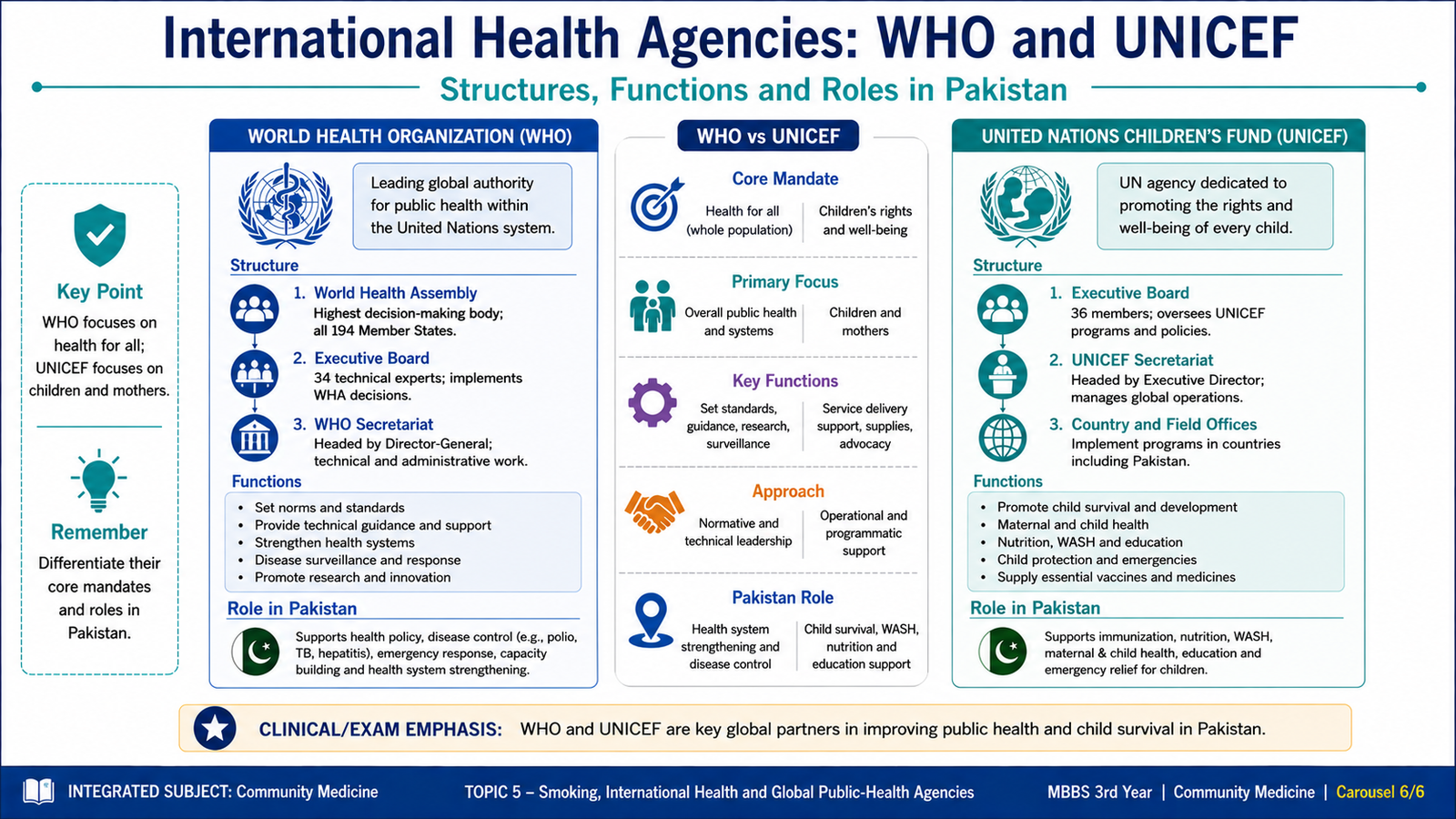
Integrated Public-Health Flow
⭐ AIM High-Yield Review
- Smoking is a population-health problem influenced by social, behavioral, environmental and dependence-related factors.
- Nicotine dependence is an important reason why smoking persists after repeated exposure.
- Smoking causes important respiratory, cardiovascular and carcinogenic effects.
- Passive smoking exposes non-smokers to harmful tobacco smoke and therefore justifies community-level control.
- Smoking control includes prevention of initiation, cessation support and protection from second-hand smoke.
- The International Health Regulations provide a framework for international detection, assessment, communication and response to important public-health threats.
- The IHR aim to control international health risks while avoiding unnecessary interference with travel and trade.
- Travel-health prevention begins with destination-specific risk assessment before travel.
- Key traveler protections include appropriate immunization, prophylaxis where indicated, safe food and water, vector control and personal precautions.
- Recent travel to an endemic area can be an important diagnostic clue in a patient who becomes ill after returning home.
- WHO is the specialized United Nations agency responsible for international leadership and coordination in health.
- The World Health Assembly is the principal decision-making body of WHO.
- UNICEF focuses particularly on maternal and child health, nutrition, immunization, water, sanitation, education and child protection.
- In Pakistan, WHO mainly provides broad public-health and technical support, whereas UNICEF has a particularly strong maternal and child health orientation.
🎥 AIM Video Learning — Smoking and Its Effects on Health
Watch this video to reinforce the health effects of smoking, including respiratory disease, cardiovascular disease, cancer risk and the importance of smoking cessation.