
This chapter follows the supplied KMU learning outcomes for sympathomimetic drugs. First understand how receptor stimulation produces organ effects, then use the comparison tables and High-Yield Review for revision. :contentReference[oaicite:0]{index=0}
Sympathomimetic Drugs: Adrenergic Pharmacology and Clinical Applications
Module/Theme: Infection and Inflammation
Understand how adrenergic receptor stimulation explains the actions, clinical uses, adverse effects and important interactions of sympathomimetic drugs.
Topic Introduction
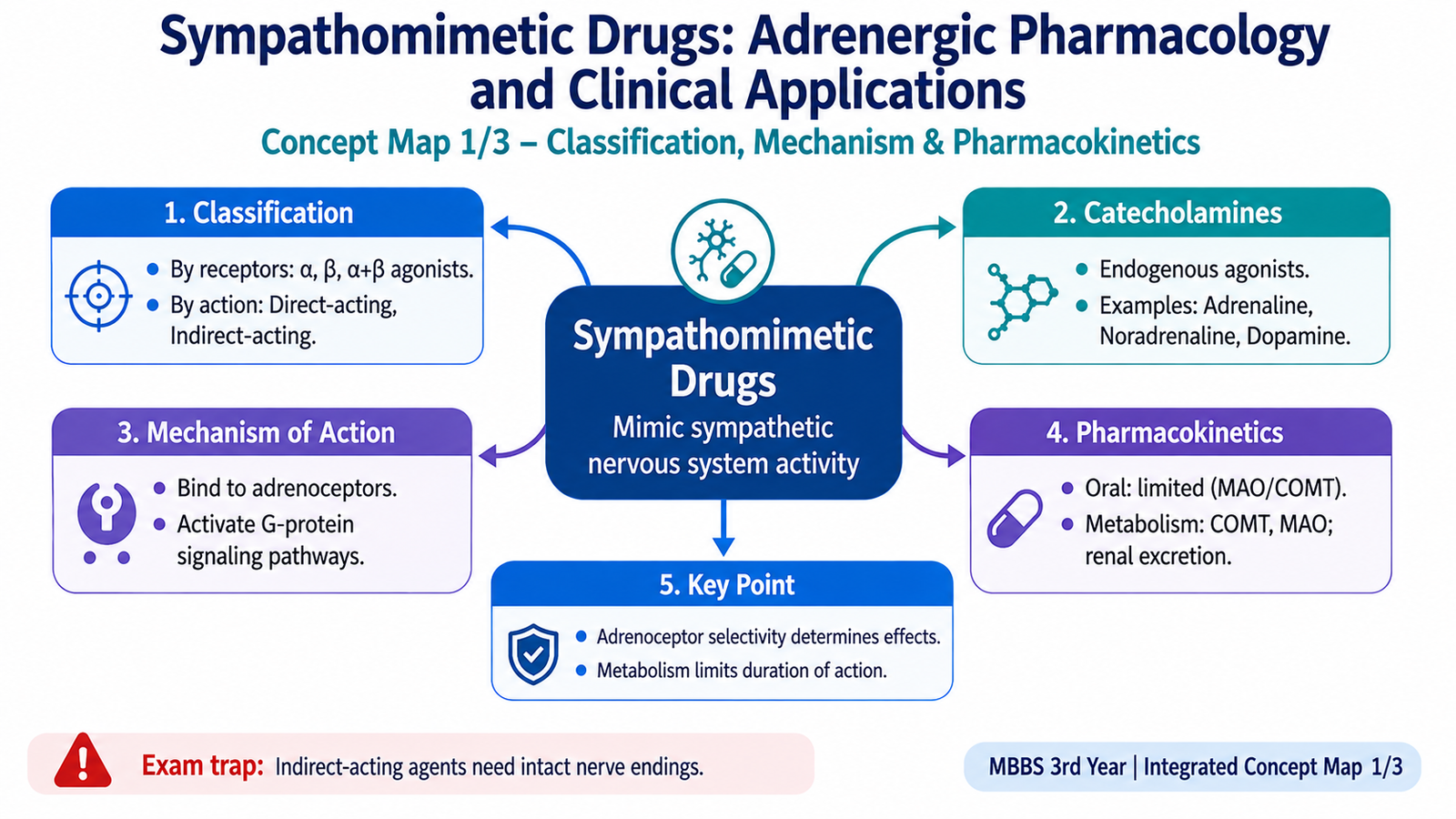
Sympathomimetic drugs imitate or enhance the effects of sympathetic nervous system activity. They act either directly on adrenergic receptors or indirectly by increasing the amount or action of endogenous catecholamines such as noradrenaline. Their effects depend mainly on which receptors they stimulate: α1, α2, β1, β2 or dopaminergic receptors. Because these receptors are distributed differently in the heart, blood vessels, airways, eye and other organs, the drugs can produce markedly different cardiovascular and clinical effects. In this chapter, you will learn their classification, pharmacokinetics, receptor-based actions, major prototype drugs, therapeutic uses, adverse effects, important interactions, anaphylaxis treatment, dopamine dose-response effects and their role in glaucoma.
A. Classification, Catecholamines and Basic Pharmacokinetics
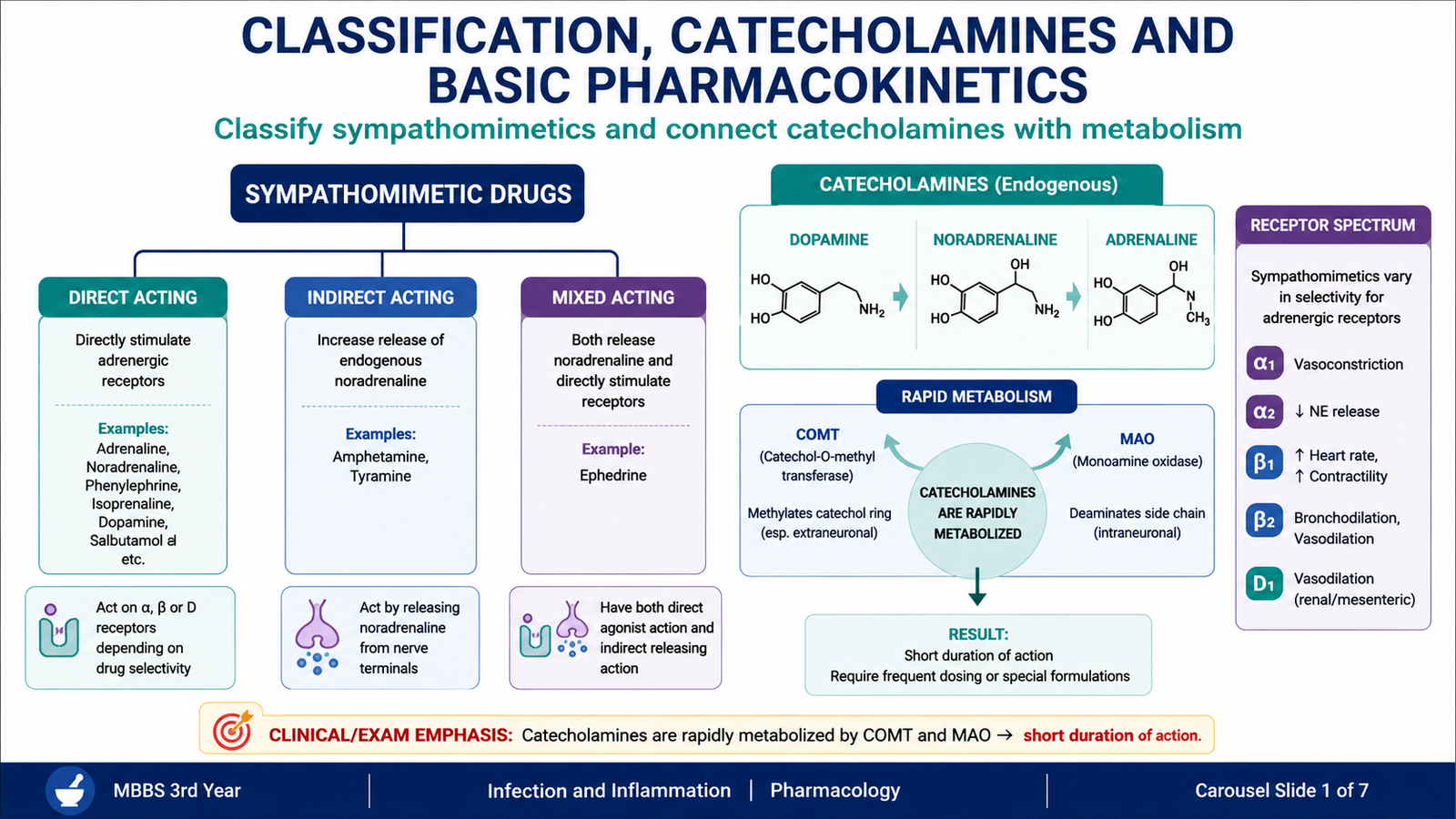
Sympathomimetics can be understood most easily by asking two questions: How does the drug increase adrenergic activity? and which receptor spectrum does it affect? Some drugs directly bind adrenergic receptors, whereas others increase the availability of endogenous catecholamines. A third group combines both mechanisms.
Classification by Mode of Action
- Directly acting: directly stimulate adrenergic receptors. Examples include adrenaline, noradrenaline, phenylephrine, isoprenaline, dopamine and selective β2 agonists.
- Indirectly acting: increase sympathetic activity without primarily activating the receptor themselves. They may promote noradrenaline release, inhibit its reuptake or reduce its metabolism.
- Mixed acting: both directly stimulate receptors and promote release of endogenous noradrenaline.
Classification by Receptor Spectrum
| Drug | Major receptor activity | Main functional effect |
|---|---|---|
| Adrenaline | α1, α2, β1, β2 | Broad sympathetic activation |
| Noradrenaline | α1, α2, β1; little β2 | Strong vasoconstriction with cardiac stimulation |
| Phenylephrine | Mainly α1 | Vasoconstriction and mydriasis |
| Isoprenaline | β1, β2 | Cardiac stimulation with vasodilation |
| Dopamine | Dose-dependent D1, β1, α1 | Dose-dependent vascular and cardiac actions |
Catecholamines
Catecholamines are sympathomimetic compounds containing a catechol ring and an amine group. Important examples include adrenaline, noradrenaline and dopamine. Their chemical structure strongly influences their pharmacokinetics.
Pharmacokinetic Importance
Catecholamines are rapidly metabolized, particularly by catechol-O-methyltransferase (COMT) and monoamine oxidase (MAO). Because they are rapidly inactivated in the gastrointestinal tract and liver, they have poor oral effectiveness and are usually administered parenterally when a systemic action is required. Their duration of action is generally short.
Non-catechol sympathomimetics are often more resistant to COMT metabolism and may have better oral activity and a longer duration of action.
B. Mechanism of Action and Receptor-Based Organ Effects
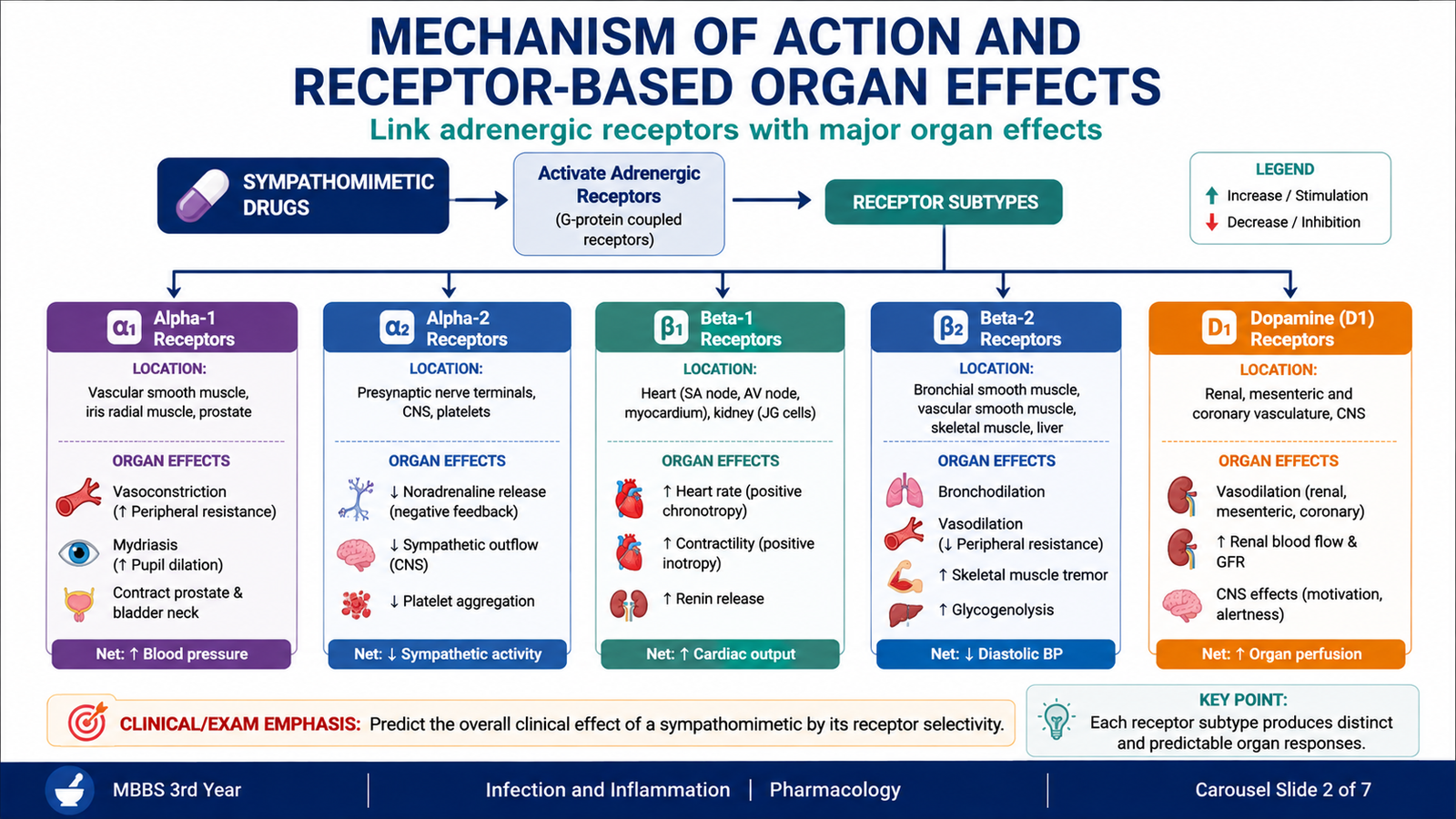
Adrenergic receptors are G-protein-coupled receptors. The clinical effect of a sympathomimetic therefore depends on which receptor is stimulated and where that receptor is located. Receptor activation changes intracellular signalling, which then alters smooth-muscle tone, heart activity or transmitter release.
Major Adrenergic Receptors
| Receptor | Important site | Main effect |
|---|---|---|
| α1 | Vascular smooth muscle, radial muscle of iris | Vasoconstriction and mydriasis |
| α2 | Presynaptic adrenergic terminals | Reduces transmitter release |
| β1 | Heart | Increases rate, conduction and contractility |
| β2 | Bronchial and selected vascular smooth muscle | Smooth-muscle relaxation, including bronchodilation and vasodilation |
| D1 | Vascular beds including renal and mesenteric circulation | Vasodilation |
Mechanism Chains
α1 stimulation
Receptor activation → increased intracellular Ca2+-dependent smooth-muscle contraction → vasoconstriction → increased peripheral vascular resistance → rise in arterial pressure.
β1 stimulation
Receptor activation → increased cAMP in cardiac cells → increased rate and force of contraction → increased cardiac output.
β2 stimulation
Receptor activation → increased cAMP in smooth muscle → reduced contractile activity → bronchodilation and vasodilation in susceptible vascular beds.
These receptor actions explain why one sympathomimetic may increase blood pressure, another may increase heart rate, and another may primarily dilate the bronchi.
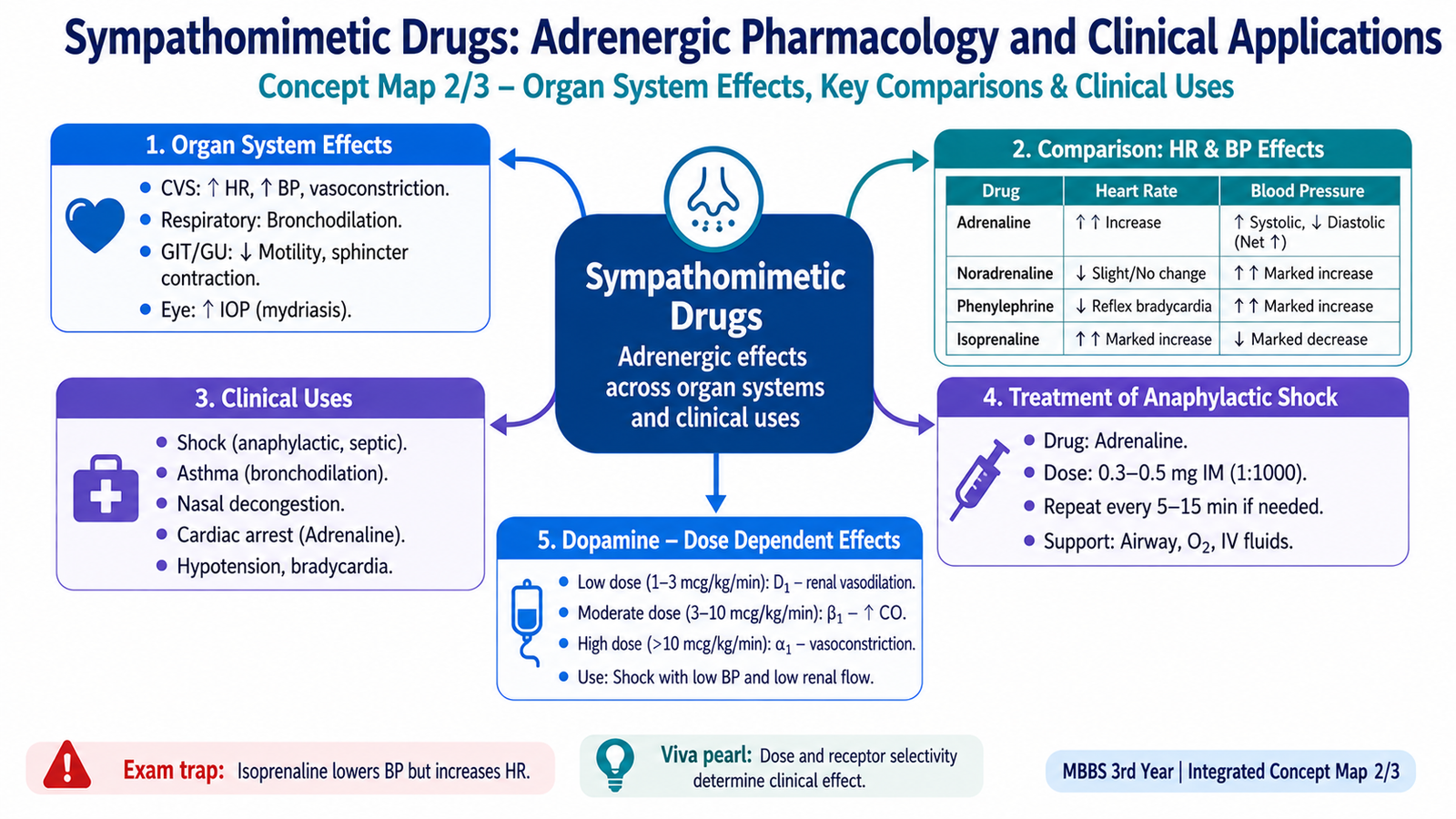
C. Adrenaline, Noradrenaline, Phenylephrine and Isoprenaline: Heart Rate and Blood Pressure
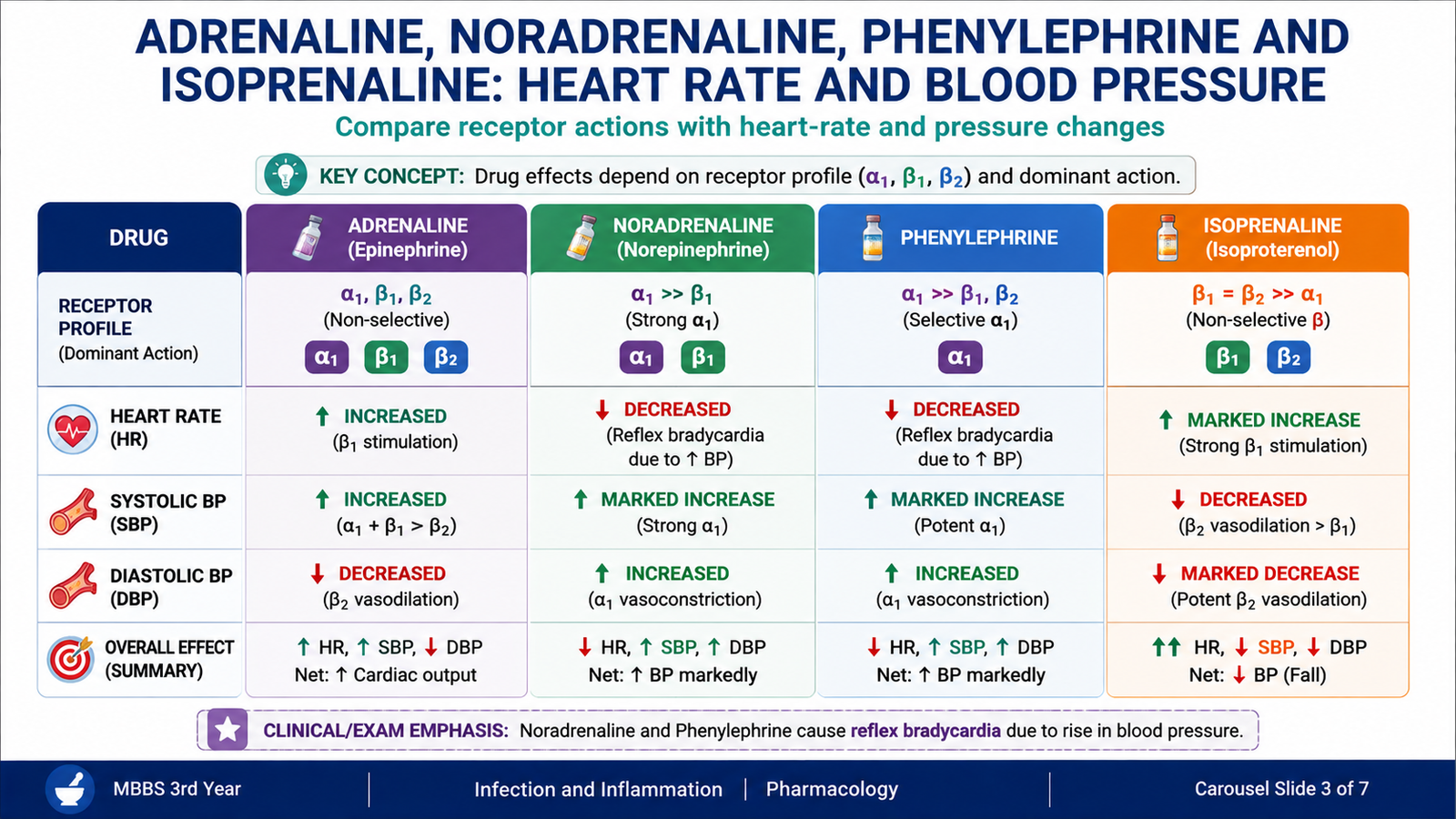
The cardiovascular response to a sympathomimetic reflects the balance between its direct cardiac action and its effect on vascular resistance. A rise in blood pressure may activate the baroreceptor reflex and produce reflex bradycardia, even when the drug itself can stimulate β1 receptors.
| Drug | Key receptors | Systolic BP | Diastolic BP | Heart rate |
|---|---|---|---|---|
| Adrenaline | α + β | Usually rises | May fall at usual lower concentrations because of β2 vasodilation | Usually increases |
| Noradrenaline | α1, α2, β1 | Rises | Rises | Often falls because of reflex bradycardia |
| Phenylephrine | α1 | Rises | Rises | Falls reflexly |
| Isoprenaline | β1 + β2 | May rise slightly or remain near baseline | Falls | Markedly increases |
D. Clinical Uses and Anaphylactic Shock
Sympathomimetics are used when their receptor-mediated physiological actions provide a therapeutic benefit. Therefore, their clinical uses can be predicted from receptor pharmacology: α1 agonists constrict vessels, β1 stimulation increases cardiac performance, and β2 stimulation relaxes bronchial smooth muscle.
Important Clinical Uses
- Vasopressor action: α-mediated vasoconstriction can support arterial pressure in appropriate hypotensive states.
- Bronchodilation: β2 agonists relax bronchial smooth muscle.
- Nasal decongestion: α-receptor stimulation constricts vessels in nasal mucosa and decreases mucosal edema.
- Local vasoconstriction: adrenaline may reduce local blood flow and prolong the action of some local anesthetics.
- Ophthalmic uses: selected adrenergic agonists alter aqueous humour dynamics or produce mydriasis.
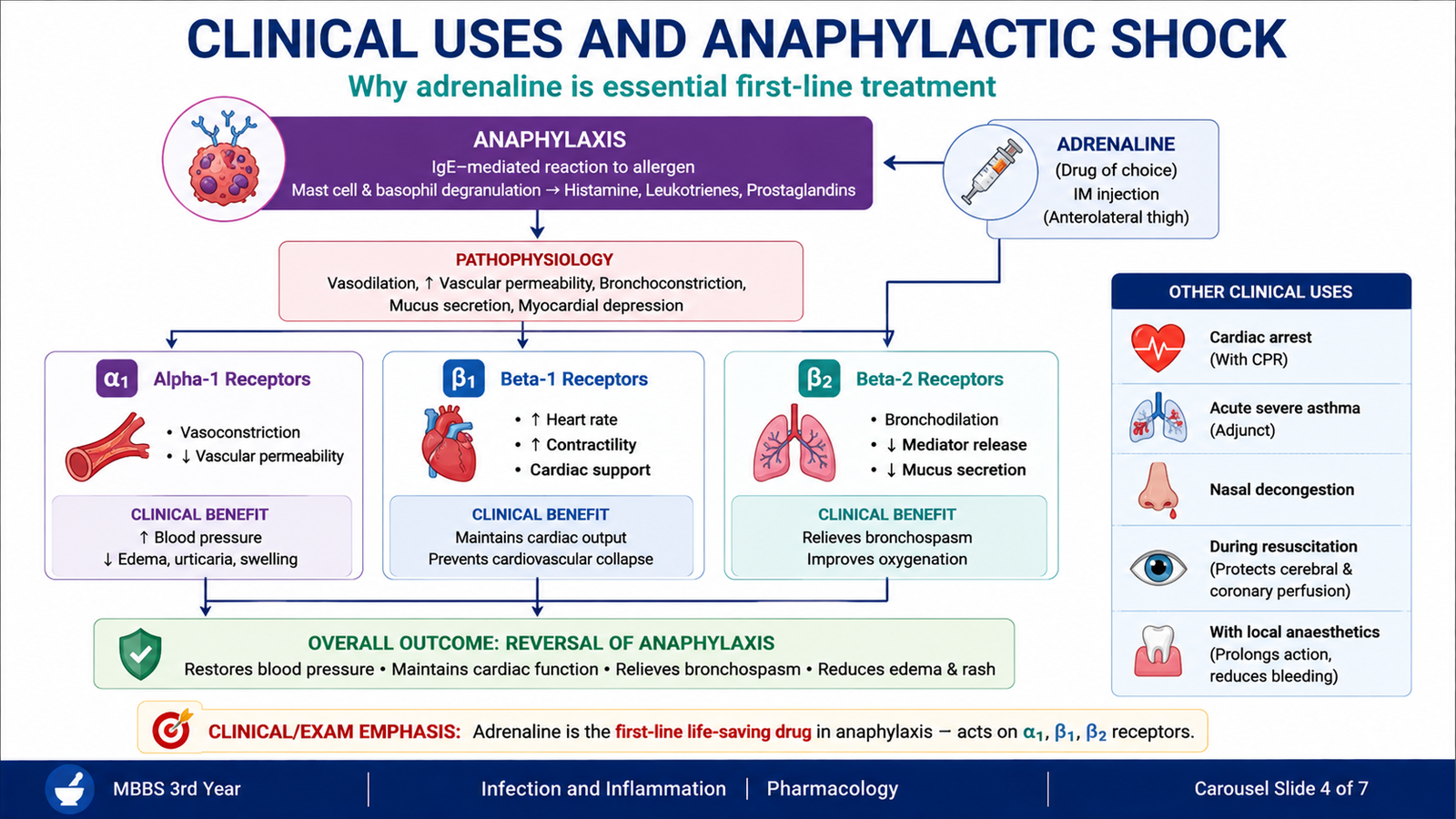
Drug Treatment of Anaphylactic Shock
Adrenaline is the key sympathomimetic drug in anaphylaxis. It is particularly effective because it simultaneously corrects several life-threatening components of the reaction.
Adrenaline → α1 stimulation → vasoconstriction → increased vascular resistance and reduced mucosal edema.
Adrenaline → β1 stimulation → increased cardiac contractility and output.
Adrenaline → β2 stimulation → bronchodilation and reduction of mediator release from mast cells.
Other supportive measures may be required depending on clinical severity, but they do not replace adrenaline.
E. Dopamine: Dose-Dependent Effects and Clinical Importance
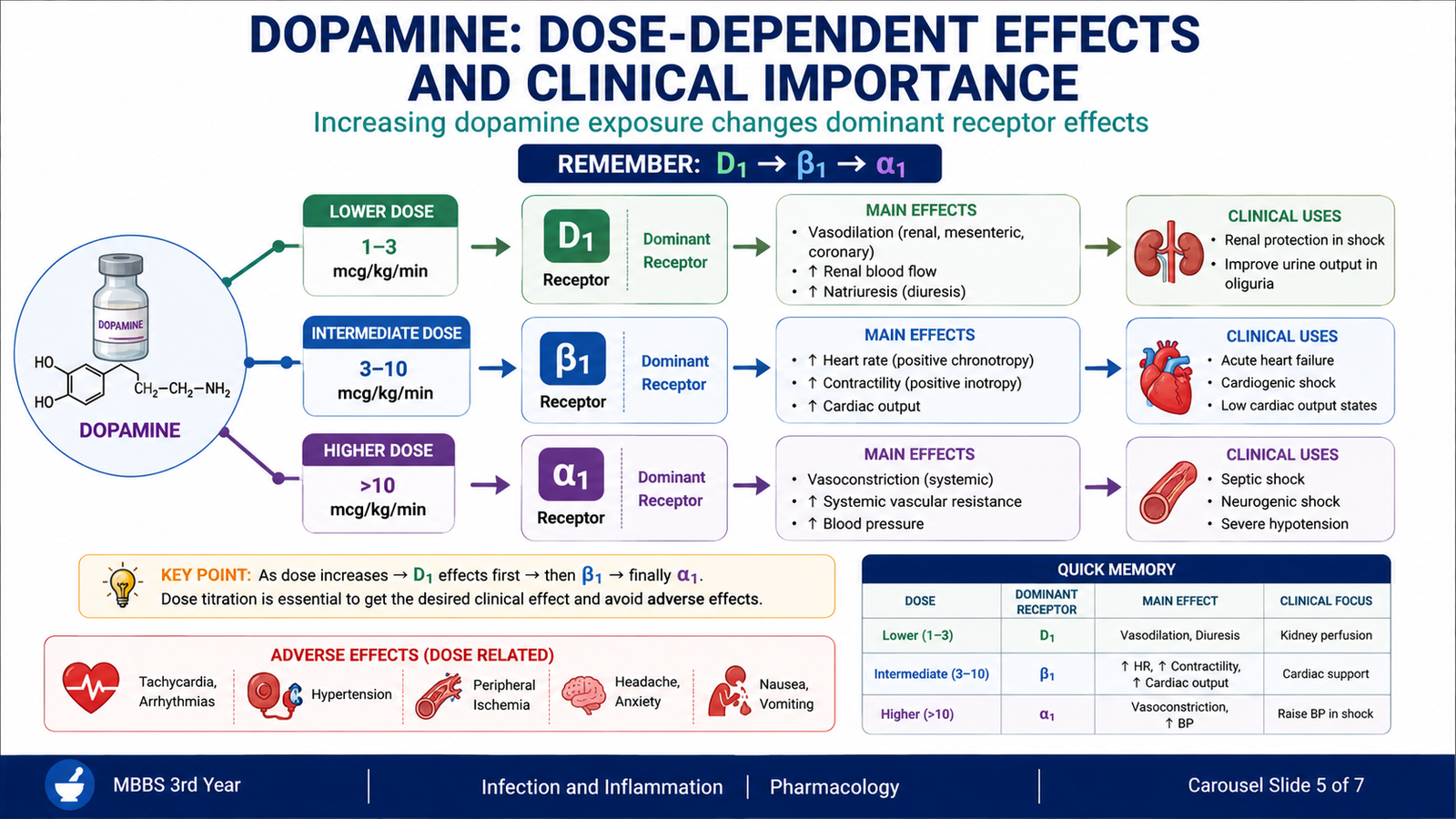
Dopamine is unusual because its predominant receptor effect changes as the administered concentration increases. This makes its pharmacology easier to remember as a progression from dopaminergic receptors to β1 receptors and then α1 receptors.
| Relative dose | Predominant receptor | Main effect |
|---|---|---|
| Lower range | D1 | Vasodilation in selected vascular beds |
| Intermediate range | β1 | Increased cardiac contractility and cardiac output |
| Higher range | α1 | Peripheral vasoconstriction and increased vascular resistance |
The clinical importance of this sequence is that dopamine may shift from predominantly vascular dopaminergic effects to cardiac stimulation and finally to significant vasoconstriction as exposure increases. Its haemodynamic effect therefore cannot be understood without considering dose.
F. Sympathomimetics and Related Drugs in Glaucoma
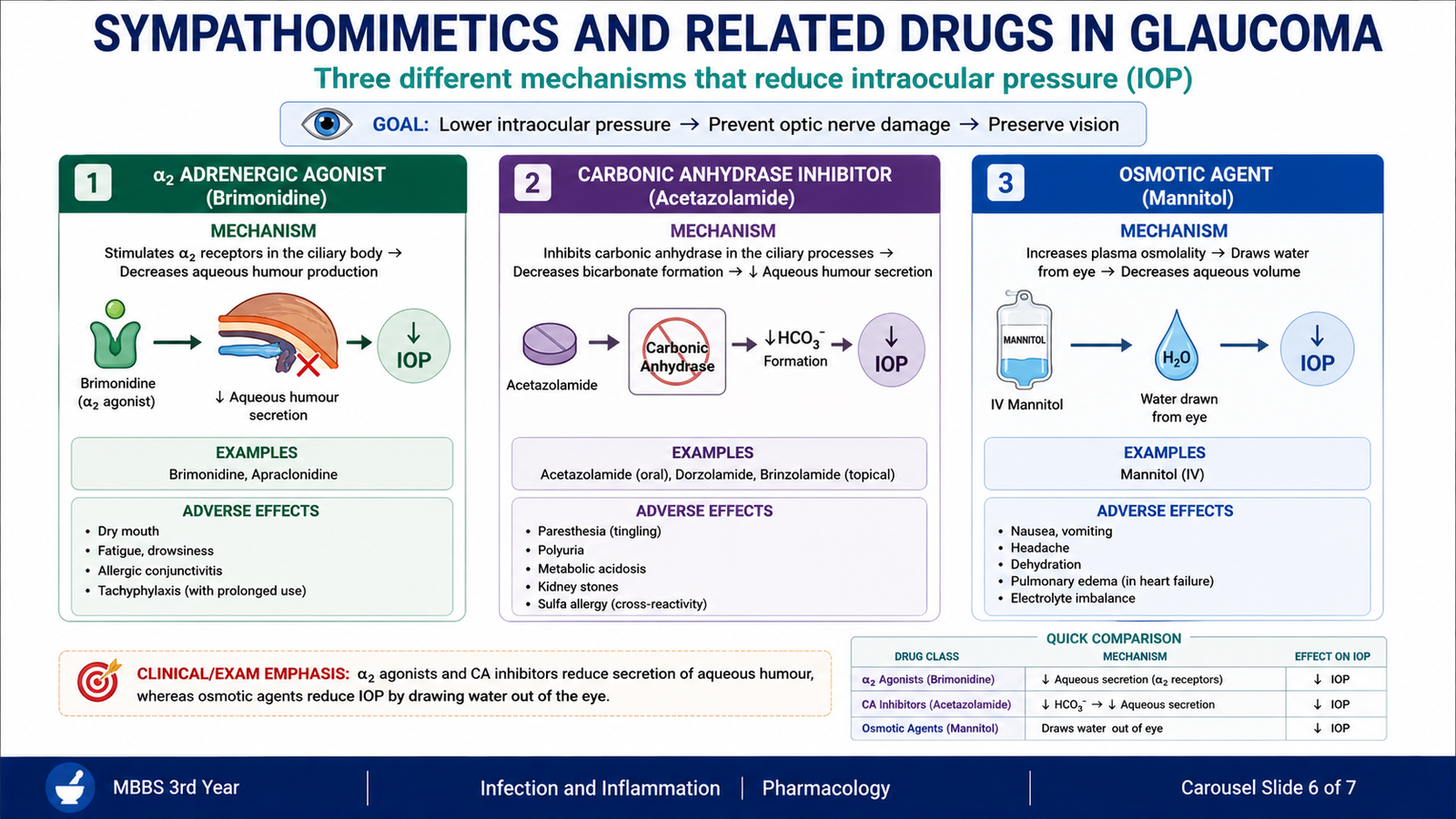
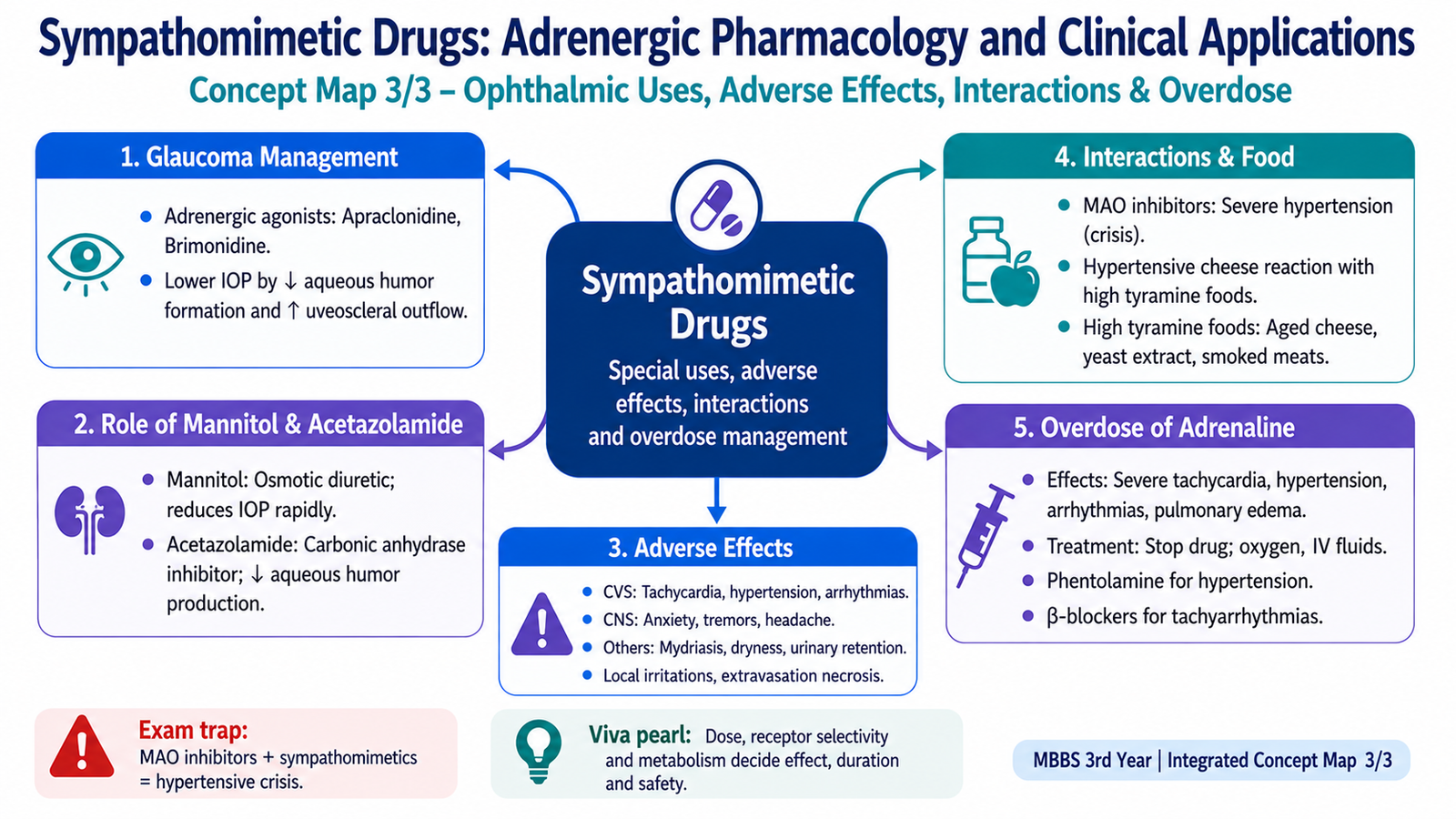
In glaucoma, the therapeutic goal is to lower intraocular pressure by either decreasing formation of aqueous humour or improving its drainage. Some adrenergic agonists contribute by altering aqueous humour production and outflow. The supplied learning outcomes also require understanding the roles of acetazolamide and mannitol, which reduce intraocular pressure through different mechanisms.
Adrenergic Drugs
α2-adrenergic agonists such as brimonidine reduce aqueous humour production and can also improve outflow. Their overall effect is a reduction in intraocular pressure.
Acetazolamide
Acetazolamide inhibits carbonic anhydrase in the ciliary processes. This decreases bicarbonate-dependent fluid secretion and therefore reduces formation of aqueous humour.
Acetazolamide → carbonic anhydrase inhibition → reduced aqueous humour secretion → lower intraocular pressure.
Mannitol
Mannitol is an osmotic agent. It raises plasma osmolarity and creates an osmotic gradient that draws water from ocular tissues into the circulation. It can therefore reduce intraocular pressure rapidly when a substantial acute reduction is required.
Mannitol → increased plasma osmolarity → movement of water from eye to plasma → reduced ocular volume → reduced intraocular pressure.
G. Adverse Effects, Tyramine–MAOI Interaction and Adrenaline Overdose
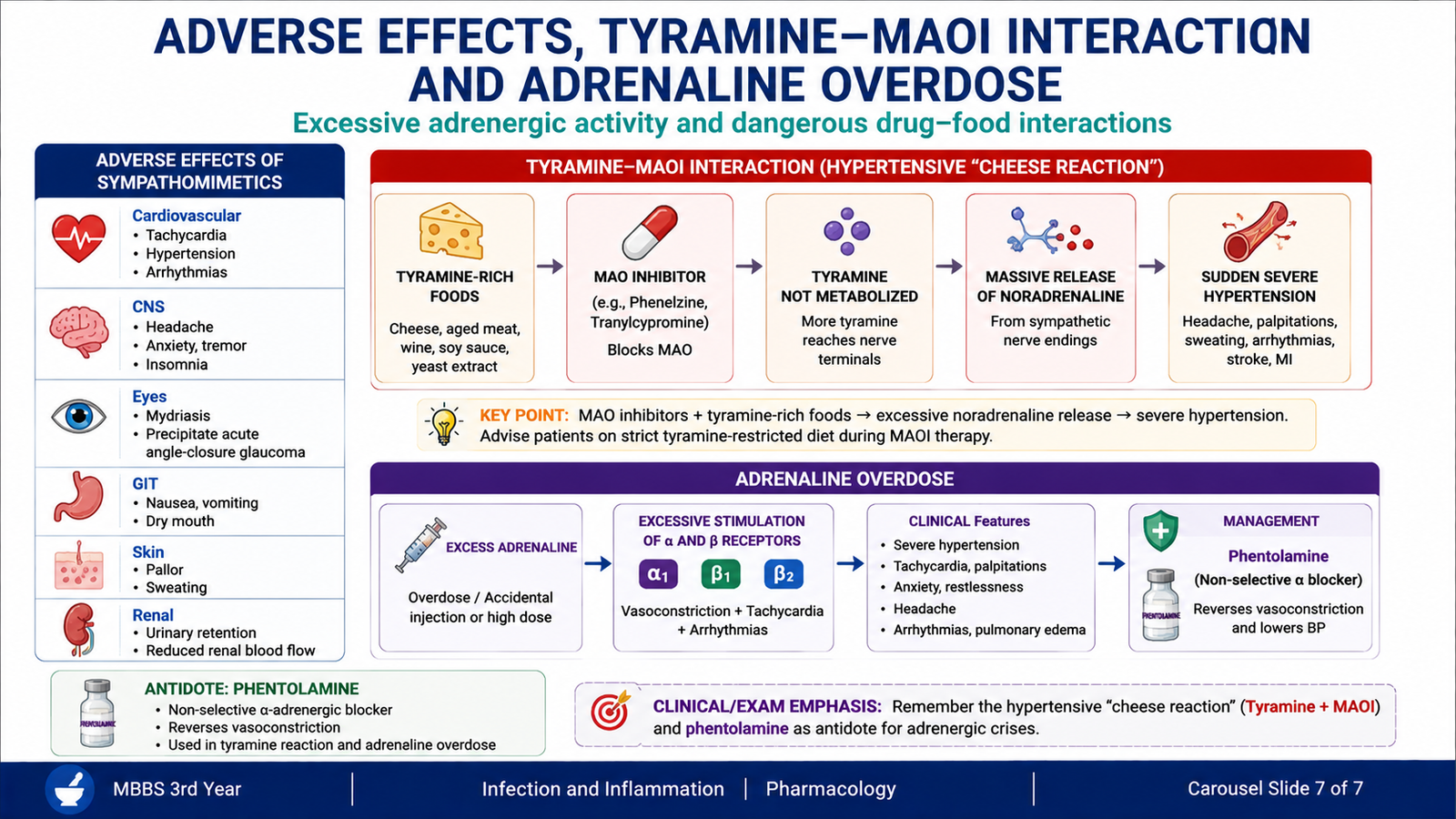
Most adverse effects of sympathomimetics are exaggerated forms of their normal adrenergic actions. Excessive cardiac stimulation may cause palpitations or arrhythmias, while excessive vascular α-receptor activation can produce marked hypertension. Central or metabolic effects vary with the individual drug and receptor profile.
Important Adverse Effects
- Palpitations and tachycardia
- Cardiac arrhythmias
- Hypertension
- Headache
- Tremor, particularly with β2 stimulation
- Anxiety or restlessness with drugs that significantly stimulate the central nervous system
These effects occur because sympathomimetics may increase myocardial activity, vascular tone or skeletal-muscle β-receptor activity beyond the desired therapeutic level.
Hypertensive Cheese Reaction
Tyramine is normally metabolized in the gastrointestinal tract and liver by monoamine oxidase. In a patient receiving an MAO inhibitor, this metabolism is reduced. Tyramine can then reach adrenergic nerve terminals and promote a large release of noradrenaline.
MAO inhibition + tyramine intake → reduced tyramine breakdown → increased noradrenaline release → intense vasoconstriction → severe hypertension.
This dangerous interaction is called the hypertensive cheese reaction.
Foods Rich in Tyramine
Tyramine is particularly associated with foods that are aged, fermented, cured or stored for prolonged periods. Important examples include:
- Aged cheeses
- Cured or fermented meats
- Some fermented or pickled foods
- Yeast-containing fermented products
- Some aged or fermented soy products
MAO Inhibitors and Sympathomimetics
MAO inhibitors can greatly enhance the effects of indirectly acting sympathomimetics because catecholamine handling is altered and adrenergic transmitter concentrations may rise excessively. The combination may therefore cause severe hypertension and other adrenergic toxicity.
Accidental Adrenaline Overdose
An excessive dose of adrenaline may cause severe hypertension, tachyarrhythmias, myocardial stress and other manifestations of excessive α- and β-receptor stimulation. Management begins by stopping further exposure and providing careful cardiovascular monitoring and supportive treatment.
When severe α-mediated hypertension is present, an α-adrenoceptor antagonist such as phentolamine can oppose excessive vasoconstriction. Significant arrhythmias require appropriate monitored management. Treatment should be directed at the dominant toxic effect rather than simply adding another sympathomimetic.
Integrated Mechanism Flow
↓
Direct receptor stimulation or increased endogenous catecholamine activity
↓
α, β or dopaminergic receptor activation
↓
Change in vascular tone, cardiac activity, bronchial tone or aqueous humour dynamics
↓
Characteristic organ-system effect
↓
Therapeutic benefit when controlled
↓
Hypertension, tachyarrhythmia or other toxicity when excessive
Important Comparison: Major Prototype Sympathomimetics
| Drug | Dominant receptors | Vascular effect | Heart-rate tendency | High-yield clue |
|---|---|---|---|---|
| Adrenaline | α + β | Dose-dependent; α vasoconstriction and β2 vasodilation | ↑ | Drug of choice in anaphylaxis |
| Noradrenaline | α > β1 | Strong vasoconstriction | Reflex ↓ | Raises both systolic and diastolic BP |
| Phenylephrine | α1 | Vasoconstriction | Reflex ↓ | Pure α-like cardiovascular response |
| Isoprenaline | β1 + β2 | Vasodilation | Marked ↑ | Diastolic BP falls |
| Dopamine | D1 → β1 → α1 | Changes with dose | May increase at β1-active range | Dose-dependent receptor profile |
⭐ AIM High-Yield Review
- Sympathomimetics act directly, indirectly or by mixed mechanisms.
- Catecholamines include adrenaline, noradrenaline and dopamine.
- Catecholamines are rapidly metabolized mainly by COMT and MAO and therefore generally have short actions.
- α1 stimulation causes vasoconstriction and raises peripheral resistance.
- β1 stimulation increases heart rate and contractility.
- β2 stimulation produces bronchodilation and smooth-muscle relaxation.
- Noradrenaline strongly raises arterial pressure but may cause reflex bradycardia.
- Phenylephrine produces α1-mediated vasoconstriction with reflex slowing of the heart.
- Isoprenaline stimulates β1 and β2 receptors, increasing heart rate while lowering peripheral resistance.
- ⭐ Adrenaline is the key drug in anaphylaxis because α1, β1 and β2 actions simultaneously correct major life-threatening abnormalities.
- Dopamine shows the classic sequence D1 → β1 → α1 as dose increases.
- Brimonidine lowers intraocular pressure through α2-mediated effects on aqueous humour.
- Acetazolamide lowers aqueous formation by carbonic anhydrase inhibition, whereas mannitol acts osmotically.
- MAO inhibitors can produce dangerous interactions with indirectly acting sympathomimetics and tyramine.
- ⭐ Tyramine plus MAO inhibition may cause the hypertensive cheese reaction through excessive noradrenaline release.
🎥 AIM Video Learning — Sympathomimetic Drugs
Watch this video after completing the learning material to reinforce the classification, receptor actions and major sympathomimetic drugs.