
This chapter follows the supplied KMU learning outcomes in a logical sequence. First understand which adrenoceptors each drug blocks and how that changes organ function; then use the AIM High-Yield Review for rapid revision.
Sympatholytic Drugs: Alpha, Beta and Mixed Adrenoceptor Antagonists
Infection and Inflammation — Pharmacology
Topic Introduction
Sympatholytic drugs reduce the effects of the sympathetic nervous system. In this chapter, the important sympatholytic drugs are adrenoceptor antagonists, which block alpha (α) receptors, beta (β) receptors, or both. Their actions become easy to understand when receptor blockade is connected with the normal function of each receptor. Blocking α1 receptors mainly causes vascular and smooth-muscle relaxation, whereas blocking β1 receptors reduces cardiac activity and renin release. Blocking β2 receptors can affect the bronchi and peripheral circulation. We will build from classification and receptor mechanisms to organ effects, clinical uses, adverse effects, contraindications, special drug properties and the important mixed α/β blockers labetalol and carvedilol.
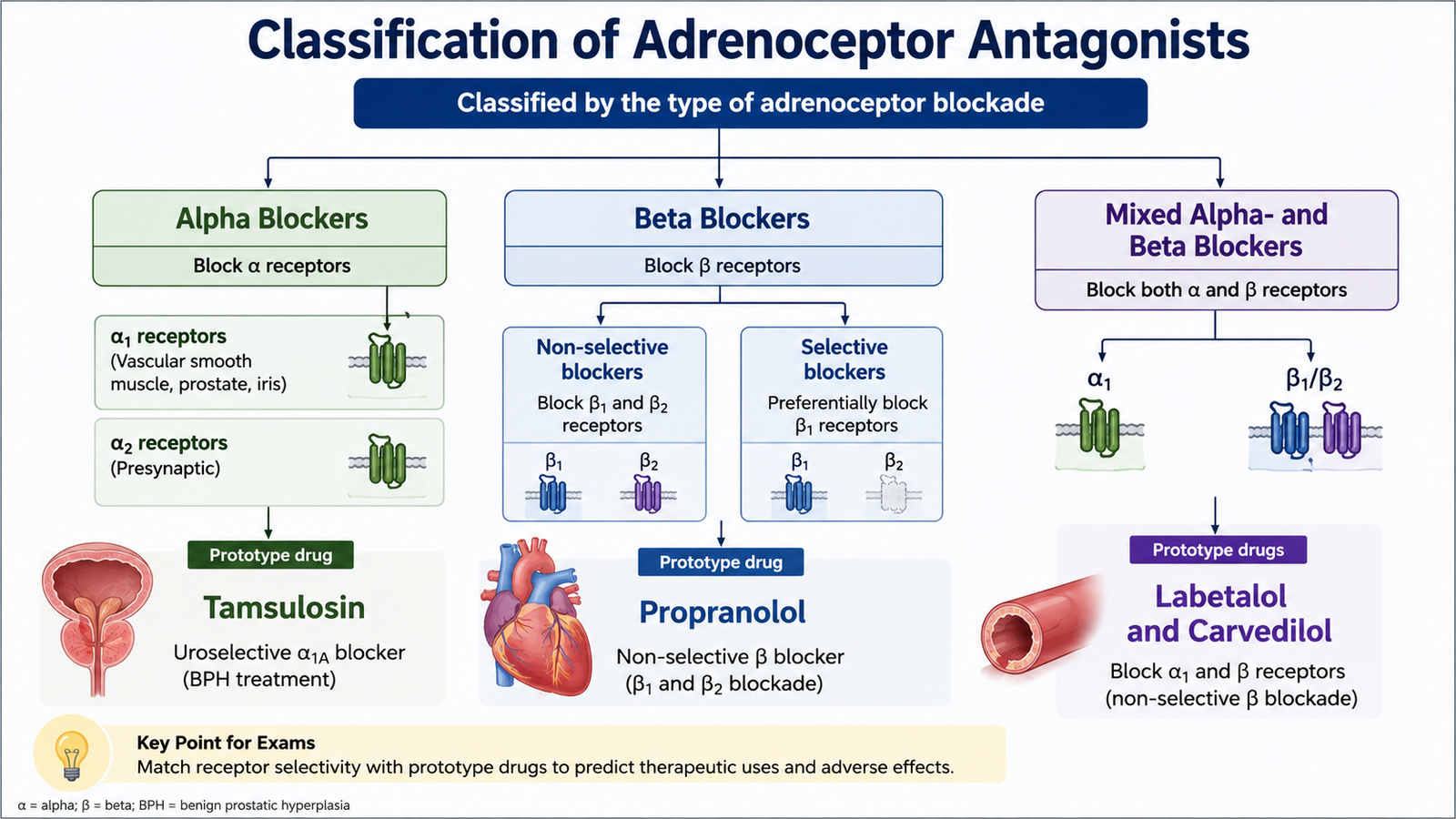
A. Classification of Adrenoceptor Antagonists
Adrenoceptor antagonists prevent catecholamines such as noradrenaline and adrenaline from producing some or all of their effects at adrenergic receptors. They are classified mainly according to the receptors they block. This receptor-based classification is important because it predicts both their therapeutic actions and their adverse effects.
1. Alpha-adrenoceptor antagonists
Alpha blockers may inhibit both α1 and α2 receptors or may selectively block one alpha-receptor subtype.
| Class | Receptor action | Important examples | Key point |
|---|---|---|---|
| Non-selective α blockers | α1 + α2 | Phenoxybenzamine, phentolamine | Block vascular α1 as well as presynaptic α2 |
| Selective α1 blockers | α1 | Prazosin, terazosin, doxazosin | Cause vasodilation with less presynaptic α2 blockade |
| Uroselective α1A blockers | Preferential α1A | Tamsulosin | Greater action on prostate and bladder-neck smooth muscle |
Phenoxybenzamine is the traditional prototype non-selective α-adrenoceptor blocker. Prazosin is the classic prototype of the selective α1-blocker group. Tamsulosin has greater selectivity for α1A receptors found in prostatic and bladder-neck smooth muscle and is therefore particularly useful when urinary outflow obstruction is the therapeutic target.
2. Beta-adrenoceptor antagonists
Beta blockers are divided mainly into non-selective drugs that block both β1 and β2 receptors and cardioselective drugs that preferentially block β1 receptors.
- Non-selective β blockers: propranolol, timolol, nadolol, pindolol.
- β1-selective blockers: metoprolol, atenolol, bisoprolol, esmolol, acebutolol.
- Prototype β blocker: propranolol.
3. Mixed alpha- and beta-adrenoceptor antagonists
Labetalol and carvedilol block β receptors while also antagonizing α1 receptors. Their α1-blocking action adds peripheral vasodilation to the usual cardiac effects of β blockade.
B. Alpha Blockers: Mechanism and Organ-System Effects
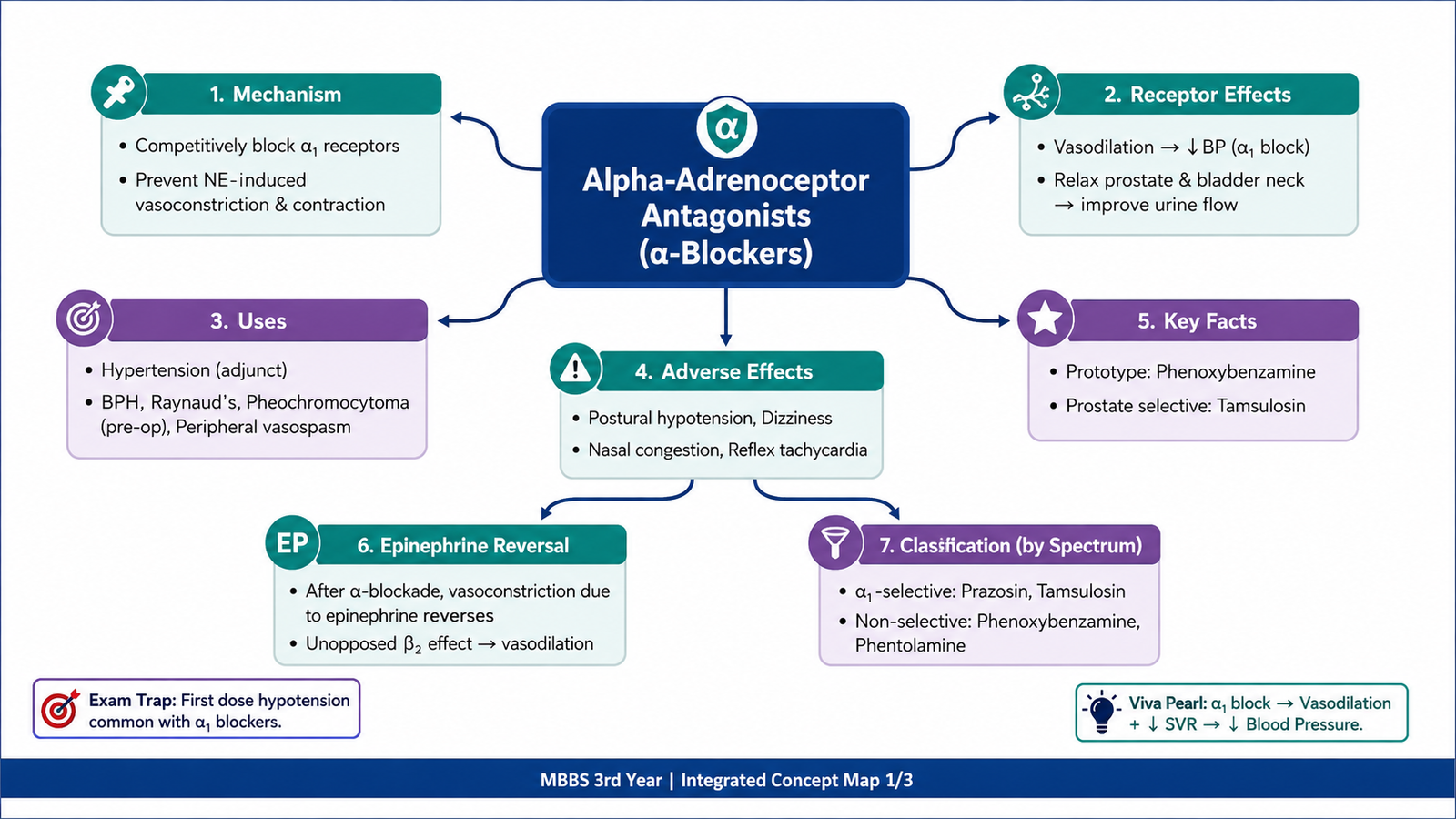
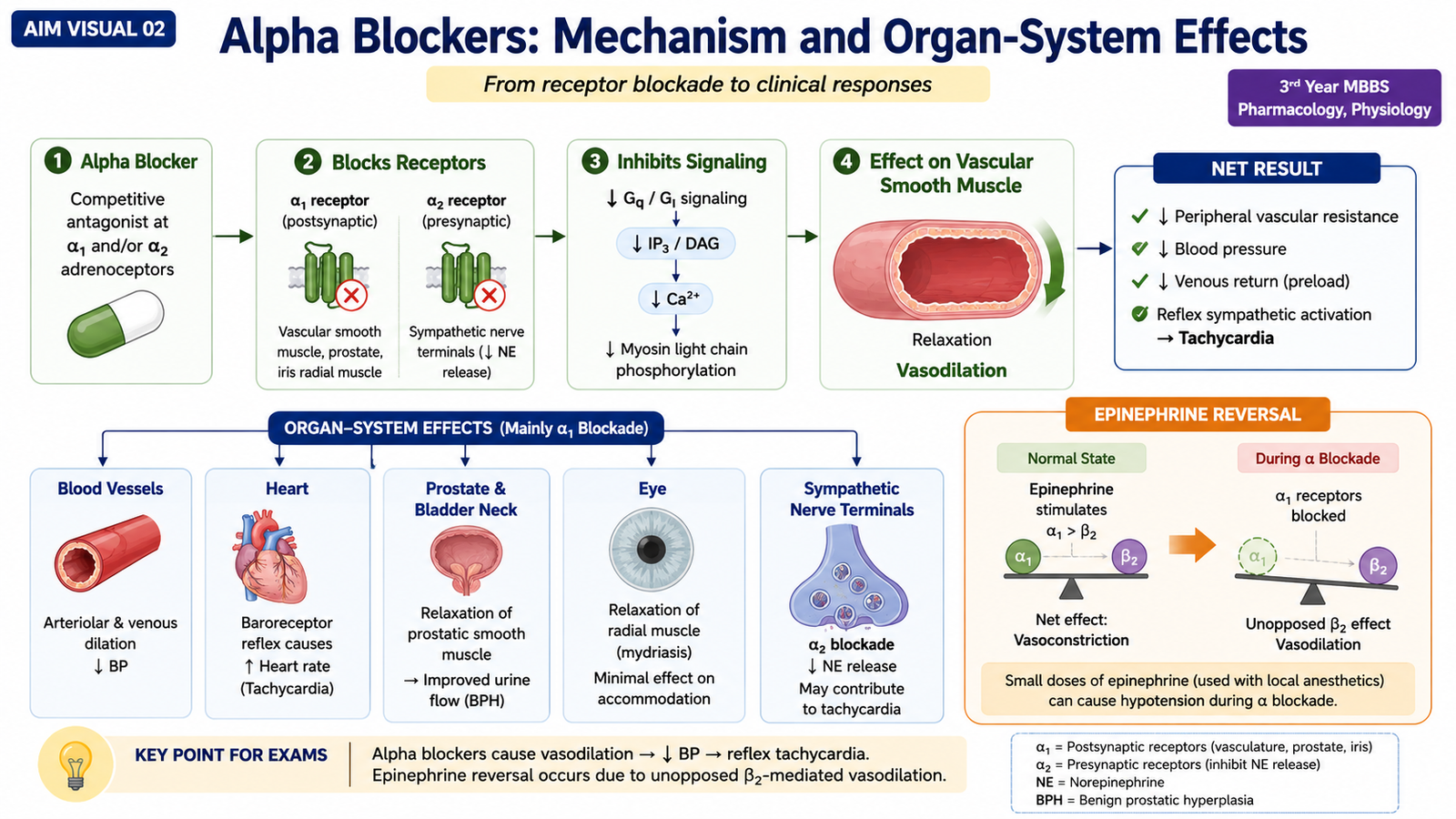
Alpha-adrenoceptor antagonists prevent catecholamines from activating alpha receptors. Their most important effects result from blockade of α1 receptors on vascular smooth muscle and other smooth muscles. Non-selective drugs additionally block presynaptic α2 receptors, which normally reduce noradrenaline release.
Mechanism of action
↓ catecholamine-mediated smooth-muscle contraction → relaxation of arterioles and veins → ↓ peripheral vascular resistance and venous return → ↓ blood pressure
In the urinary tract, α1 blockade relaxes smooth muscle in the prostate and bladder neck. This reduces resistance to urinary flow. The effect is especially useful with drugs that preferentially act on α1A receptors.
Cardiovascular effects
Vascular α1 receptors normally mediate vasoconstriction. Blocking them therefore causes vasodilation, reduces peripheral vascular resistance and lowers arterial pressure.
The fall in blood pressure can activate the baroreceptor reflex and increase sympathetic activity to the heart. This may produce reflex tachycardia. Reflex tachycardia is generally more marked with non-selective α blockers because α2 blockade also removes the normal presynaptic inhibition of noradrenaline release.
Effects on the urinary tract
α1 receptors help maintain tone in the prostate and bladder neck. Their blockade relaxes this smooth muscle, decreases resistance to urinary flow and improves symptoms caused by functional obstruction. Tamsulosin preferentially blocks α1A receptors and therefore acts strongly on this urinary smooth muscle with relatively less effect on systemic vascular tone than conventional non-selective α1 blockade.
Epinephrine reversal
Epinephrine reversal is an important pharmacological demonstration of alpha blockade. Normally, adrenaline stimulates α1, β1 and β2 receptors. Its α1-mediated vasoconstriction usually contributes importantly to its pressor response.
After effective α-receptor blockade, the α-mediated vasoconstrictor component is removed. Adrenaline can still stimulate vascular β2 receptors, causing vasodilation. As a result, the usual rise in blood pressure may be converted into a fall in blood pressure. This conversion of the pressor response into a depressor response is called epinephrine reversal.
After α blockade: α1 effect removed → β2 vasodilation becomes dominant → ↓ blood pressure
C. Alpha Blockers: Clinical Uses and Adverse Effects
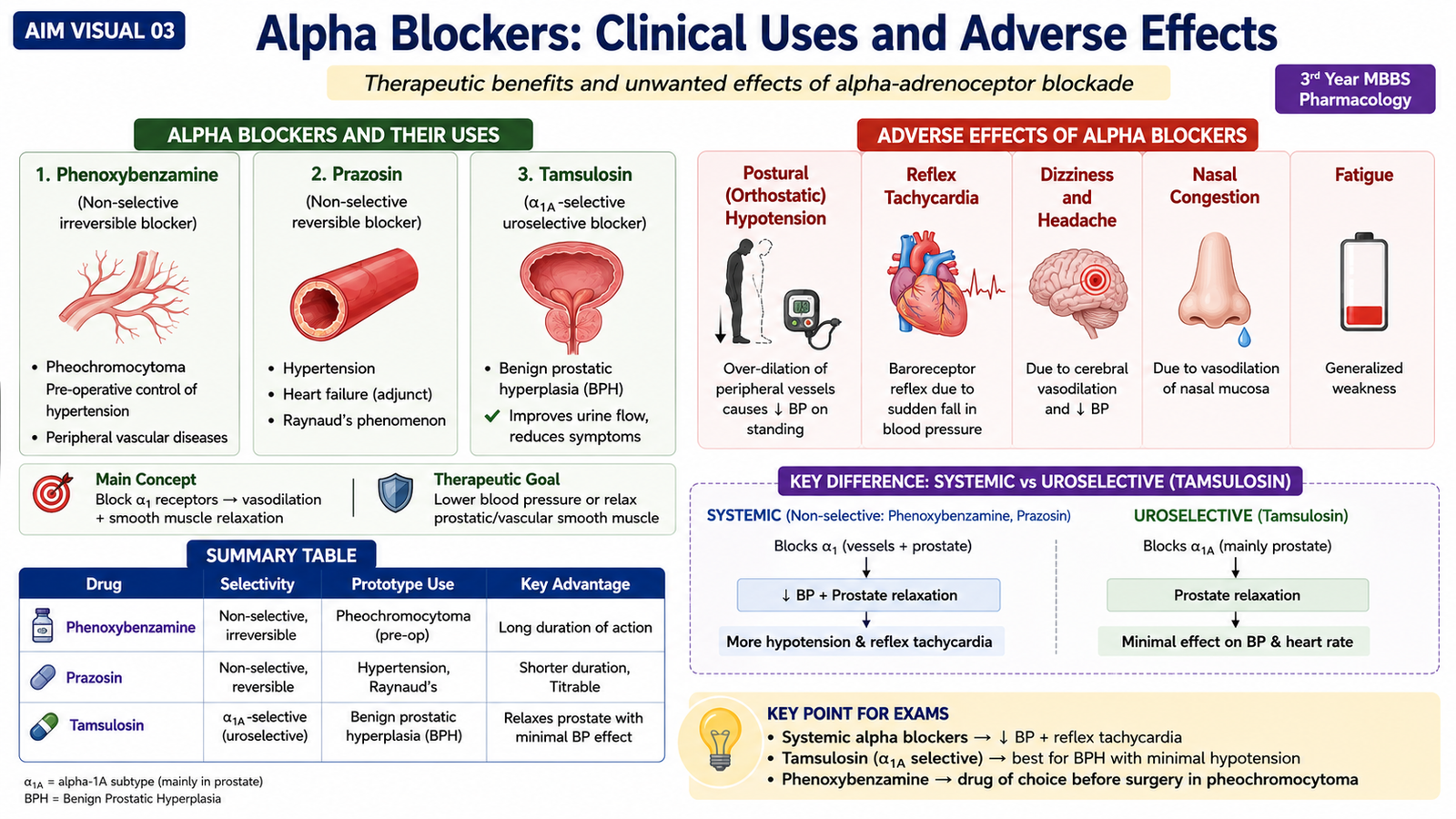
The therapeutic uses of alpha blockers follow directly from their ability to relax vascular or genitourinary smooth muscle. Their important adverse effects also follow from excessive reduction of vascular α1-mediated tone.
Clinical uses
1. Pheochromocytoma
Pheochromocytoma can expose tissues to excessive catecholamine stimulation, producing severe α-mediated vasoconstriction and hypertension. Phenoxybenzamine provides prolonged non-selective α blockade and is classically used to control catecholamine-mediated effects. Phentolamine is a shorter-acting non-selective α antagonist and can be useful when rapid, reversible alpha blockade is needed.
2. Hypertension
Selective α1 blockers such as prazosin, terazosin and doxazosin lower vascular resistance by preventing α1-mediated vasoconstriction. They are not defined simply by lowering pressure; their usefulness must be understood from the direct link between vascular α blockade and vasodilation.
3. Benign prostatic hyperplasia
α1 blockade relaxes prostate and bladder-neck smooth muscle and improves urinary flow. Tamsulosin has greater specificity for the α1A receptor subtype associated with prostatic smooth muscle, making it especially suitable when urinary symptoms are the main target.
Adverse effects
- Postural or orthostatic hypotension: standing normally requires reflex vasoconstriction; α1 blockade interferes with this response.
- First-dose phenomenon: some α1 blockers, particularly prazosin, may cause marked postural hypotension or syncope after the first dose.
- Reflex tachycardia: the fall in blood pressure activates baroreceptor-mediated sympathetic activity.
- Dizziness and weakness: commonly related to reduced blood pressure.
- Nasal congestion: vasodilation of nasal mucosal vessels may produce a blocked-nose sensation.
- Disturbance of ejaculation: blockade of alpha receptors in the genitourinary tract can interfere with normal emission or ejaculation.
D. Beta Blockers: Classification, Special Properties and Propranolol Pharmacokinetics
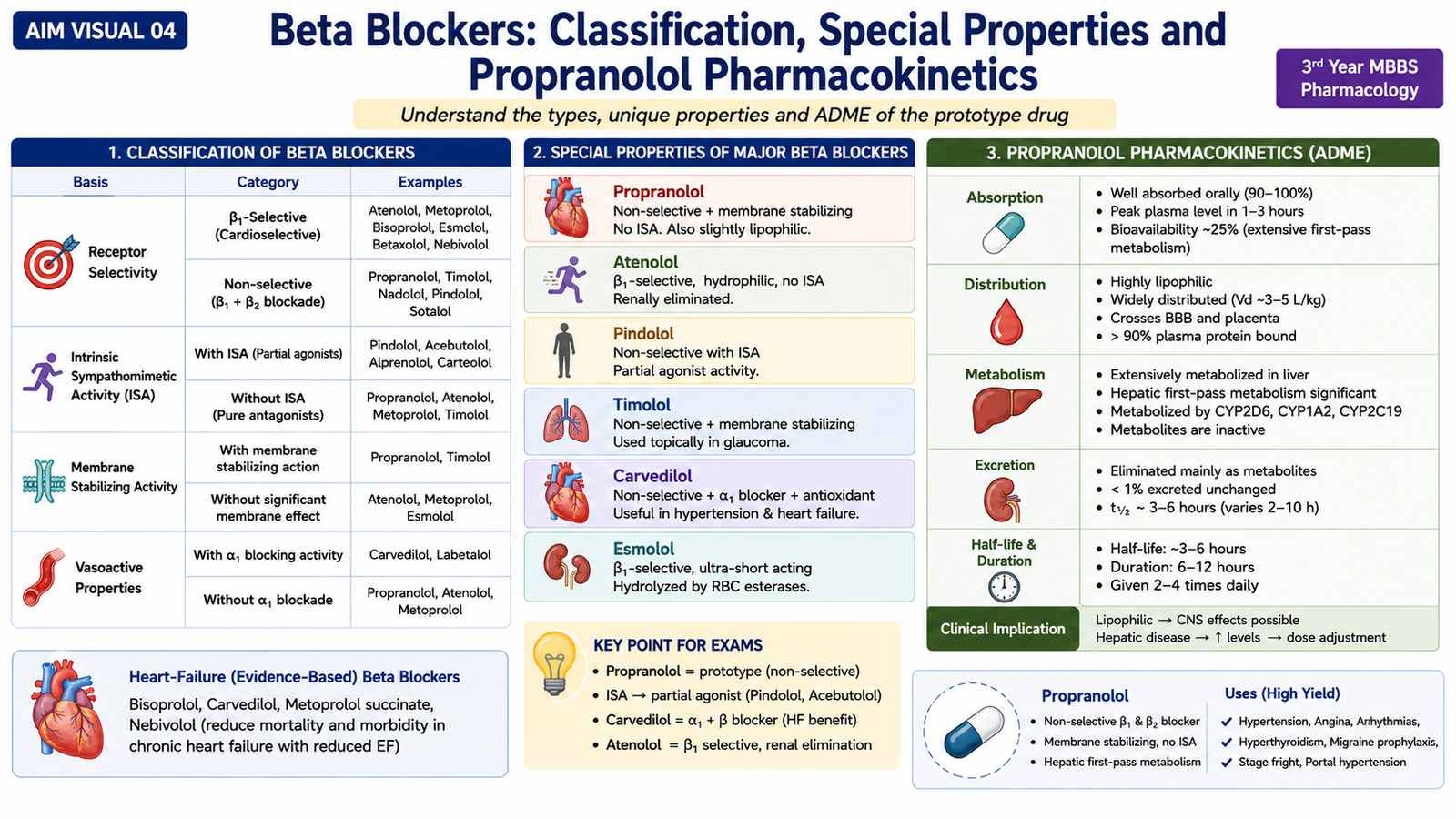
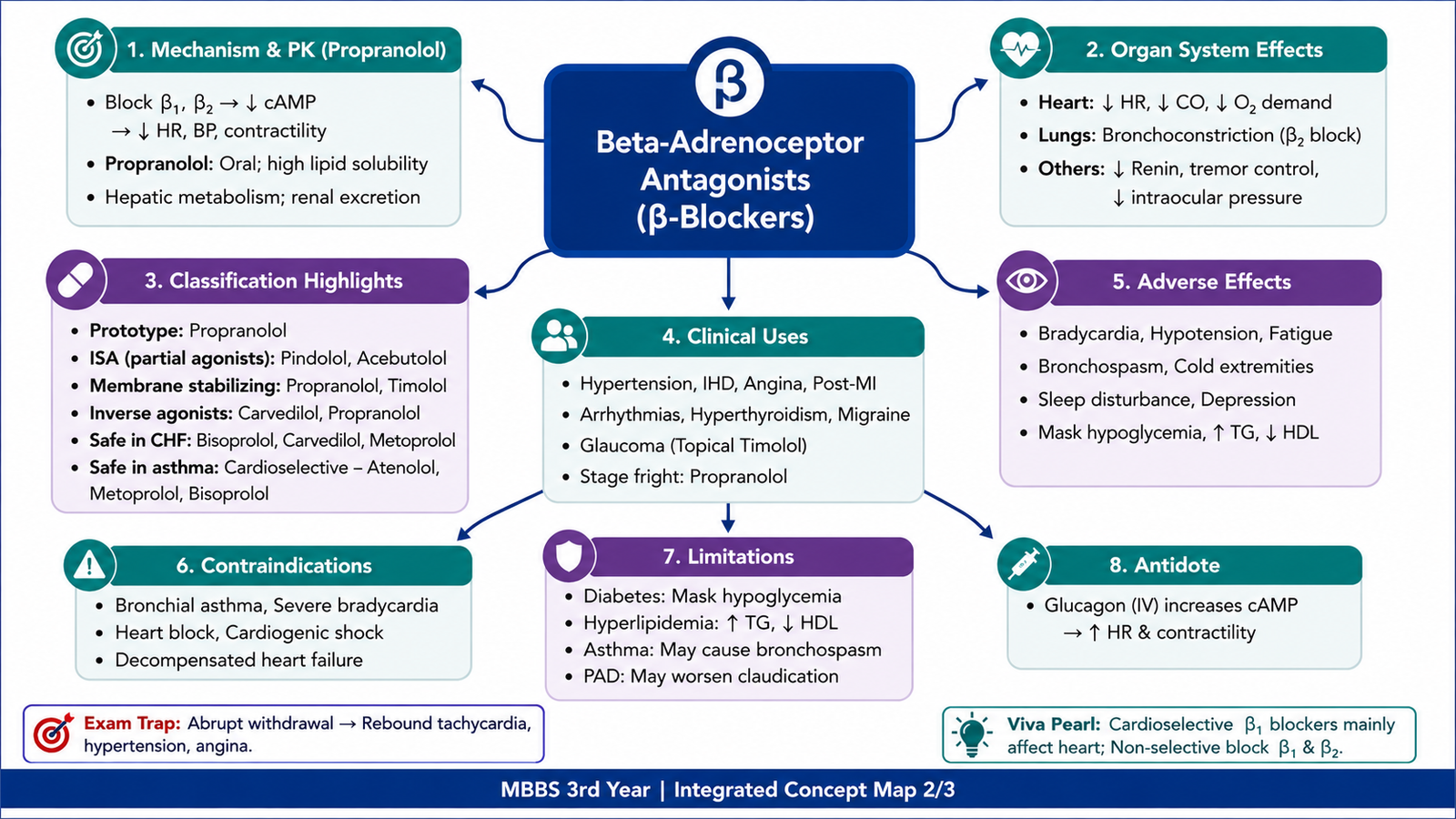
Beta blockers are not identical drugs. They differ in β1 selectivity, intrinsic sympathomimetic activity, membrane-stabilizing activity and additional vasodilator properties. These differences help explain why one β blocker may be preferred over another in a particular clinical situation.
Classification according to receptor selectivity
| Group | Main receptor action | Examples | Important implication |
|---|---|---|---|
| Non-selective | β1 + β2 | Propranolol, timolol, nadolol, pindolol | Greater risk of β2-related bronchial and vascular effects |
| β1-selective | Preferential β1 blockade | Metoprolol, atenolol, bisoprolol, esmolol, acebutolol | Relatively less β2 blockade at usual therapeutic exposure |
| Mixed α/β blockers | β blockade + α1 blockade | Carvedilol, labetalol | Additional vasodilation |
Propranolol is the prototype non-selective β-adrenoceptor antagonist.
Intrinsic sympathomimetic activity
Some β blockers are partial agonists. They block the stronger effects of endogenous catecholamines but can weakly activate β receptors themselves. This property is called intrinsic sympathomimetic activity (ISA).
Important examples include:
- Pindolol
- Acebutolol
- Carteolol
- Penbutolol
Because partial agonists retain some receptor stimulation, they may produce less resting bradycardia than β blockers without ISA. However, this property is not desirable when strong β blockade is required for important cardiac indications.
Membrane-stabilizing activity
Some β blockers can also reduce fast sodium-channel-dependent membrane excitability at concentrations higher than those required for ordinary β blockade. This is called membrane-stabilizing or local-anesthetic-like activity. It is not the main mechanism responsible for their usual therapeutic β-blocking effects.
Examples with this property include propranolol, acebutolol and some other β blockers. The property is mainly pharmacological and should not be confused with β-receptor antagonism itself.
Inverse agonism
Some β receptors have a small degree of spontaneous activity even without an agonist. An inverse agonist not only prevents catecholamines from stimulating the receptor but also reduces this basal receptor activity. Commonly used β blockers demonstrating inverse agonist behavior include propranolol, metoprolol, bisoprolol and carvedilol.
Beta blockers useful in chronic stable heart failure
β blockade can initially reduce cardiac contractility, so beta blockers are not interchangeable in heart failure. The β blockers with established usefulness in stable chronic heart failure include:
- Carvedilol
- Metoprolol in the appropriate long-acting formulation
- Bisoprolol
They are used in stable patients because long-term sympathetic overactivity contributes to harmful cardiac stress and remodeling. β blockade reduces this chronic adrenergic burden.
Beta blockers relatively safer in asthma
Bronchial smooth muscle contains β2 receptors, which promote bronchodilation. Non-selective blockade may therefore precipitate bronchoconstriction. When β blockade is necessary in a patient with bronchial asthma, β1-selective drugs such as metoprolol, atenolol or bisoprolol are relatively safer than non-selective agents. Selectivity is not absolute, however, so caution remains necessary.
Pharmacokinetics of propranolol
Propranolol is well absorbed after oral administration but undergoes extensive first-pass hepatic metabolism, which reduces and makes its systemic bioavailability variable. It is highly lipid soluble and can cross the blood-brain barrier, helping explain some central nervous system adverse effects. It is extensively metabolized in the liver, and metabolites are ultimately eliminated mainly through the kidneys.
E. Beta Blockers: Mechanism and Organ-System Effects
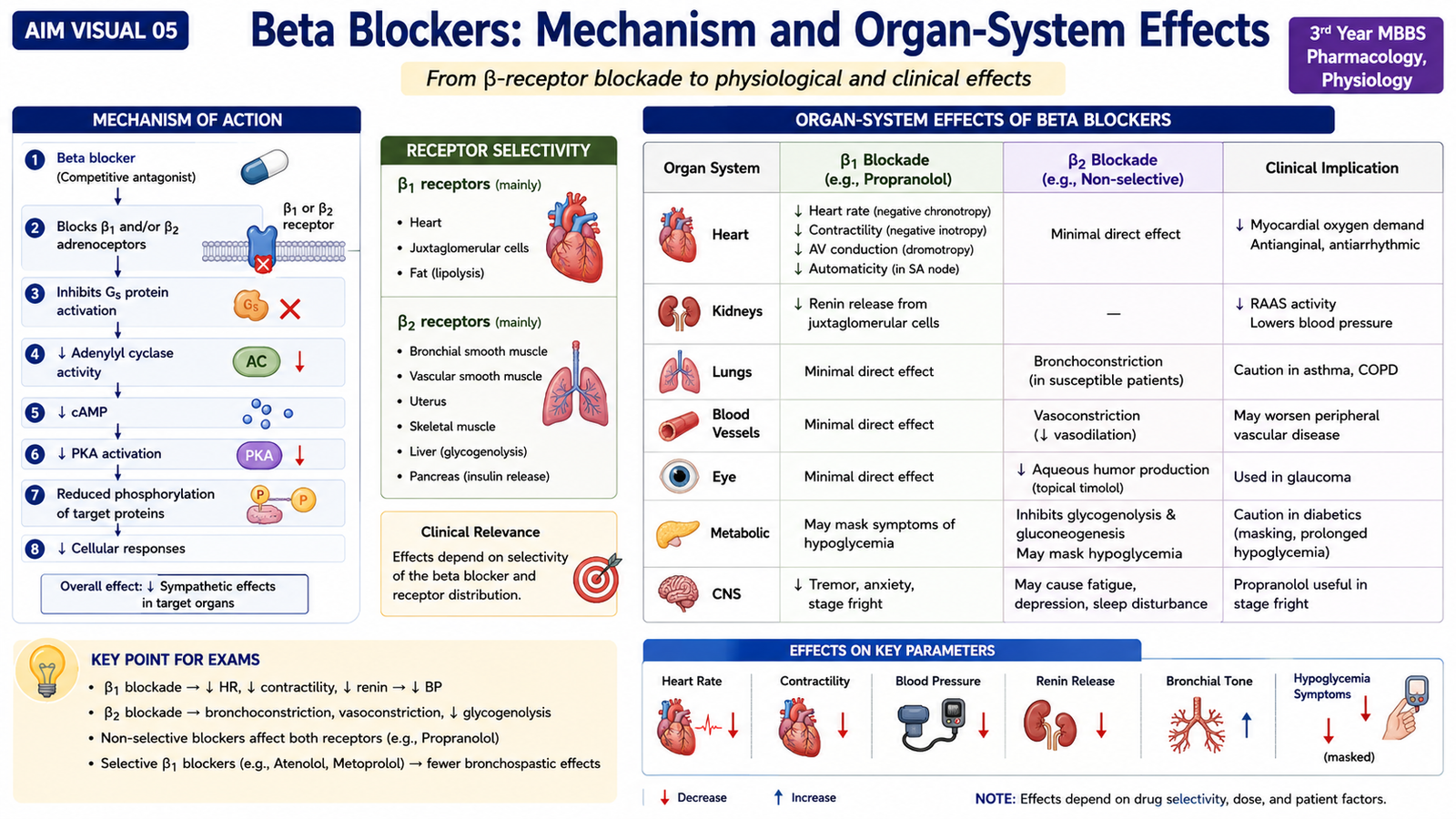
Most therapeutic effects of beta blockers can be predicted by asking one question: what normally happens when β receptors are stimulated? Blocking β1 receptors mainly affects the heart and renin release, while blocking β2 receptors affects bronchial, vascular and metabolic responses.
Mechanism of action
1. Heart — β1 blockade
β1 stimulation normally increases heart rate, contractility and conduction. Therefore, β1 blockade produces:
- Negative chronotropic effect: decreased heart rate.
- Negative inotropic effect: decreased force of contraction.
- Negative dromotropic effect: slowed atrioventricular conduction.
- Reduced myocardial oxygen demand because the heart works less intensely.
These effects explain why beta blockers are useful in conditions in which excessive heart rate or sympathetic cardiac stimulation is harmful.
2. Kidney — β1 blockade
β1 receptors on juxtaglomerular cells promote renin release. Beta blockade therefore reduces renin secretion, decreasing activity of the renin-angiotensin-aldosterone system. This contributes to the antihypertensive effect.
3. Blood vessels
β2 receptors contribute to vasodilation in some vascular beds. Non-selective β blockade can remove this vasodilator influence and may therefore worsen symptoms in patients whose peripheral circulation is already compromised. With continued treatment, however, reduction of cardiac output, renin release and sympathetic influences contributes to an overall fall in blood pressure.
4. Bronchi — β2 blockade
β2 receptor activation normally relaxes bronchial smooth muscle. Blocking these receptors can cause bronchoconstriction, particularly in susceptible patients such as those with bronchial asthma. This is why non-selective beta blockers such as propranolol are problematic in asthma.
5. Eye
β blockade in the ciliary epithelium decreases production of aqueous humor. This reduces intraocular pressure and explains the use of topical beta blockers in glaucoma.
6. Metabolic responses
Sympathetic β receptors participate in metabolic responses that help restore blood glucose during hypoglycemia. Beta blockade can interfere with these responses. In addition, the usual adrenergic warning sign of tachycardia may be reduced or masked. This is particularly important in patients with diabetes who are at risk of hypoglycemia.
F. Clinical Uses of Beta Blockers
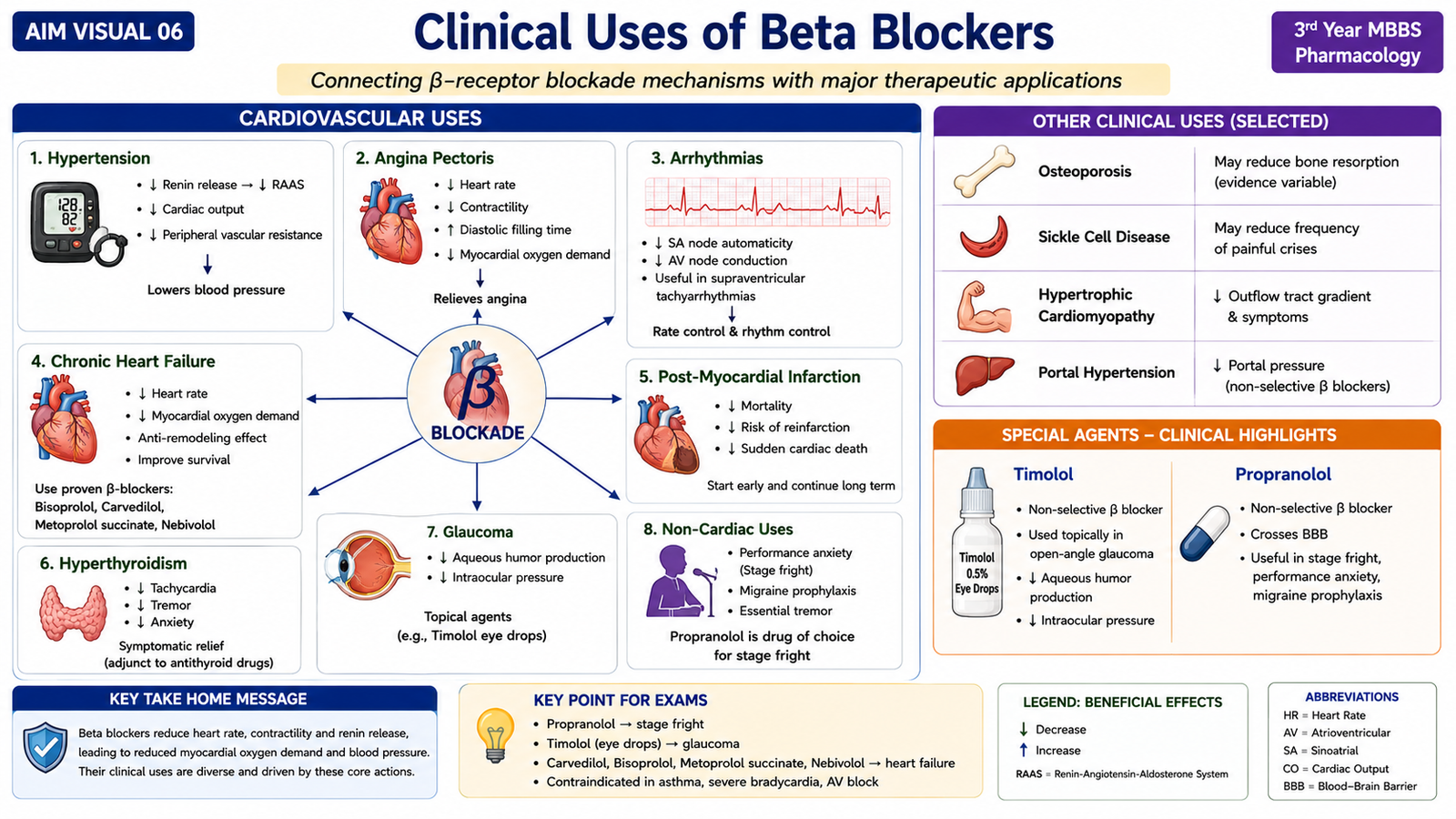
The clinical applications of beta blockers are best remembered by linking each indication with the physiological effect of β-receptor blockade. Their uses are especially important in cardiovascular disease, but they also have important ophthalmic and situational uses.
Hypertension
Beta blockers can lower blood pressure by decreasing cardiac output and reducing β1-mediated renin release. These actions reduce both direct cardiac contribution to arterial pressure and activation of the renin-angiotensin-aldosterone system.
Angina pectoris
By decreasing heart rate and contractility, beta blockers reduce myocardial oxygen demand. This is beneficial when myocardial oxygen supply is limited.
Cardiac arrhythmias
β1 blockade slows sinoatrial activity and atrioventricular conduction and reduces catecholamine-driven automaticity. Beta blockers are therefore useful in important tachyarrhythmias in which sympathetic activity contributes to rapid cardiac activity.
After myocardial infarction
Reduction of sympathetic cardiac stimulation lowers heart rate, contractility and myocardial oxygen demand and reduces the tendency toward catecholamine-related arrhythmias. This explains the important role of suitable beta blockers after myocardial infarction.
Chronic stable heart failure
Although beta blockade acutely decreases contractility, carefully selected beta blockers improve the long-term condition of appropriate patients with stable chronic heart failure by reducing persistent harmful sympathetic stimulation. Important examples are carvedilol, bisoprolol and appropriate long-acting metoprolol.
Glaucoma
Topical beta blockers reduce aqueous humor formation and therefore decrease intraocular pressure.
- Timolol: non-selective β blocker commonly associated with this use.
- Betaxolol: β1-selective blocker used topically in glaucoma.
- Carteolol: another beta blocker that may be used ophthalmically.
Stage fright
Stage fright, or performance anxiety, may produce prominent peripheral sympathetic manifestations such as tremor, palpitations and tachycardia. Propranolol can reduce these peripheral adrenergic manifestations by blocking β receptors. It does not remove the psychological cause of anxiety; its value lies mainly in suppressing the physical sympathetic response.
Propranolol → β blockade → ↓ tachycardia and tremor → reduced physical manifestations of performance anxiety.
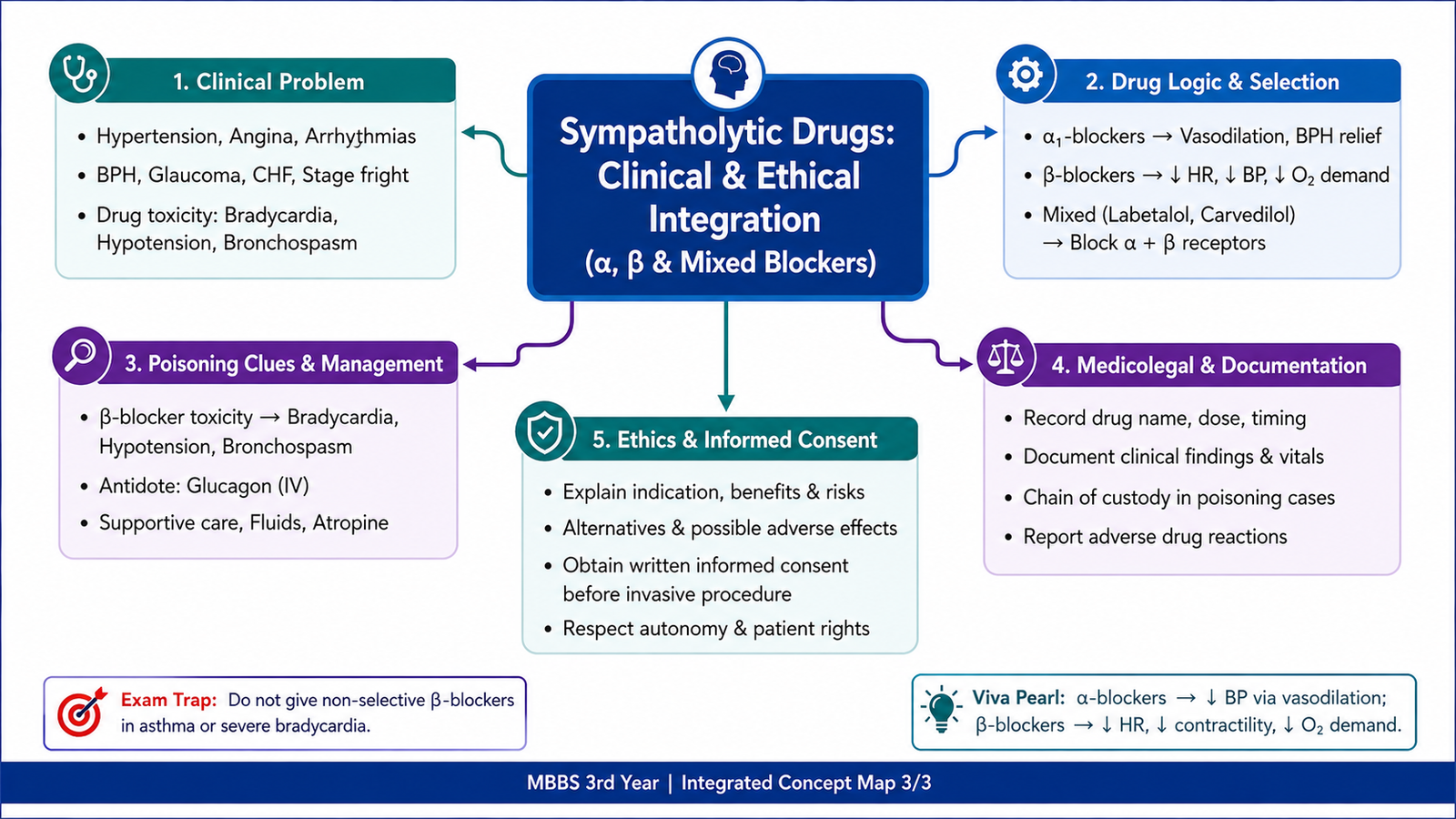
G. Adverse Effects, Contraindications, Clinical Limitations and Beta-Blocker Toxicity
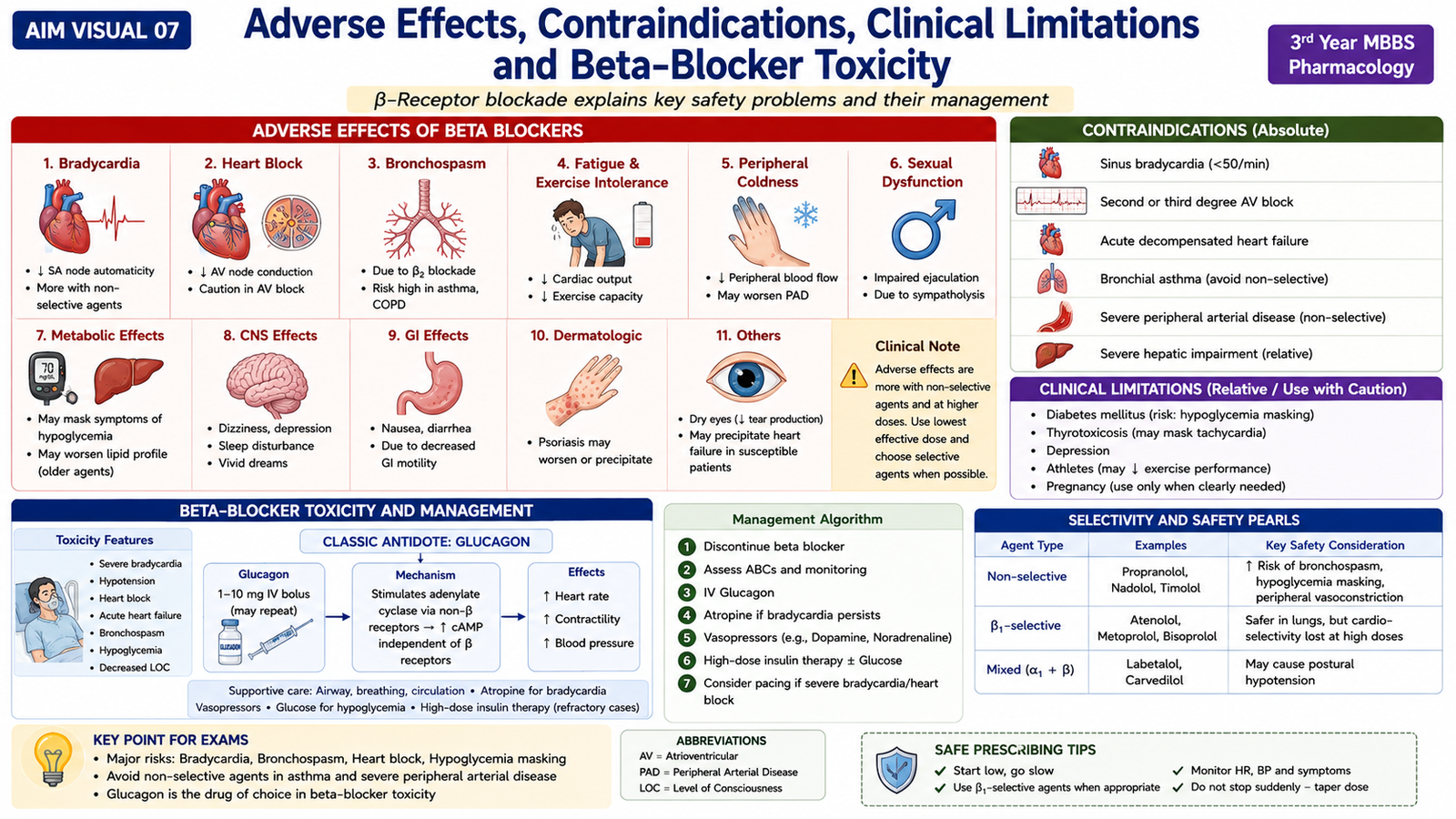
The adverse effects of beta blockers are predictable consequences of excessive β blockade. The same receptor actions that are therapeutic in one situation can become harmful when the patient depends on sympathetic stimulation to maintain heart rate, conduction, bronchial dilation, peripheral blood flow or recognition of hypoglycemia.
Important adverse effects
- Bradycardia: due to excessive cardiac β1 blockade.
- AV conduction slowing or heart block: β blockade depresses conduction through the AV node.
- Worsening of acute cardiac failure: reduction in myocardial contractility can be harmful when cardiac function is already unstable.
- Bronchospasm: especially with non-selective β blockers because β2-mediated bronchodilation is inhibited.
- Cold extremities or worsening peripheral circulatory symptoms: partly related to loss of β2-mediated vasodilator influence and reduced cardiac output.
- Fatigue and reduced exercise tolerance: the normal sympathetic increase in cardiac output during exertion is limited.
- Central effects: lipid-soluble drugs such as propranolol can enter the central nervous system and may cause sleep disturbance or other CNS symptoms in some patients.
- Masking of hypoglycemia: adrenergic warning signs, particularly tachycardia, may be reduced.
- Rebound effects after abrupt withdrawal: sudden discontinuation after chronic therapy may expose sensitized adrenergic pathways to endogenous catecholamines, producing excessive sympathetic effects.
Major contraindications and cautions
| Condition | Why beta blockade is a problem |
|---|---|
| Severe bradycardia | Further β1 blockade may reduce heart rate excessively. |
| Significant AV conduction block | AV nodal conduction may be slowed further. |
| Acute decompensated heart failure | Negative inotropic action can worsen unstable pump failure. |
| Bronchial asthma, especially with non-selective drugs | β2 blockade can cause bronchoconstriction. |
| Severe peripheral arterial disease | Loss of β2-mediated vasodilation may worsen peripheral symptoms. |
Limitations in diabetes mellitus
Beta blockers require caution in diabetes because they can make hypoglycemia harder to recognize. Tachycardia is an important adrenergic warning feature of hypoglycemia, and β blockade can suppress it. Non-selective blockade can also interfere with β2-dependent metabolic responses involved in glucose recovery. Therefore, when beta blockade is needed, drug selection and monitoring are important.
Limitations in hyperlipidemia
Some beta blockers can produce unfavorable changes in lipid metabolism, including a tendency toward increased triglycerides and reduced HDL cholesterol. This metabolic effect is not identical for every drug but explains why the patient’s lipid profile may influence beta-blocker selection.
Limitations in bronchial asthma
Non-selective beta blockers block bronchial β2 receptors and may precipitate bronchospasm. If β blockade is clinically necessary, a β1-selective agent is relatively safer, but cardioselectivity is not absolute and caution is still required.
Limitations in peripheral arterial disease
In peripheral arterial disease, tissue perfusion is already compromised. Blocking β2-mediated vasodilator influences and reducing cardiac output may aggravate cold extremities or symptoms of reduced peripheral circulation, particularly with non-selective agents.
Beta-blocker toxicity and antidote
Severe beta-blocker toxicity may produce marked bradycardia, hypotension, impaired cardiac conduction and reduced myocardial contractility. Glucagon is the classic pharmacological antidote emphasized for beta-blocker poisoning because it can increase cardiac cyclic AMP through a receptor pathway that does not depend on β-adrenoceptor activation.
H. Mixed Alpha- and Beta-Adrenoceptor Antagonists
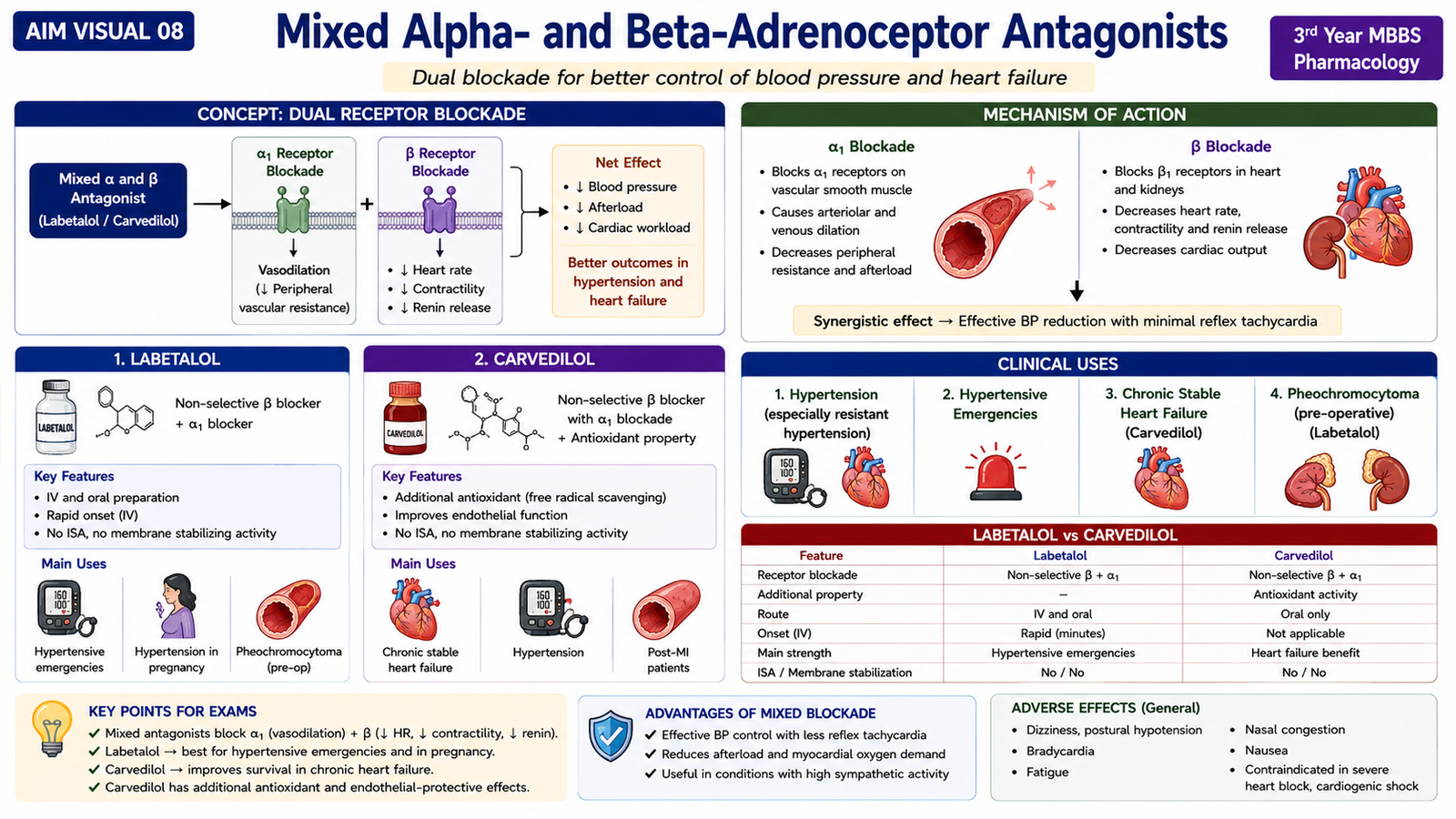
Labetalol and carvedilol combine β-adrenoceptor blockade with α1-adrenoceptor blockade. This combination produces a useful pharmacological pattern: β blockade limits cardiac sympathetic stimulation, while α1 blockade reduces peripheral vascular resistance.
+ α1 blockade → vasodilation → ↓ peripheral vascular resistance
→ reduced cardiovascular workload and blood pressure
Labetalol
Labetalol blocks β receptors and also antagonizes α1 receptors. Its α1-blocking component causes vasodilation, while β blockade prevents excessive sympathetic cardiac stimulation. Its important clinical applications are related particularly to the treatment of hypertension, including situations in which relatively rapid control of markedly elevated blood pressure is required.
Carvedilol
Carvedilol also blocks β receptors together with α1 receptors. The resulting reduction in cardiac adrenergic stimulation and peripheral vascular resistance makes it useful in hypertension. More importantly for undergraduate pharmacology, carvedilol is one of the beta blockers with established usefulness in stable chronic heart failure.
| Drug | Receptors blocked | Major pharmacological result | Important clinical emphasis |
|---|---|---|---|
| Labetalol | α1 + β1 + β2 | Vasodilation plus β blockade | Hypertension; useful when effective BP control is required |
| Carvedilol | α1 + β1 + β2 | Reduced sympathetic cardiac effects plus vasodilation | Stable chronic heart failure and hypertension |
Integrated Mechanism Flow
↓
α1 blockade removes vascular and genitourinary smooth-muscle contraction
↓
Vasodilation + relaxation of prostate/bladder neck
↓
β1 blockade reduces heart rate, contractility, conduction and renin release
↓
Reduced cardiac workload and blood pressure
↓
β2 blockade may simultaneously remove bronchodilator, vasodilator and metabolic sympathetic responses
↓
Therapeutic benefit therefore depends on matching receptor selectivity to the patient’s clinical condition.
Important Comparison: Alpha vs Beta vs Mixed Blockade
| Feature | α Blockers | β Blockers | Mixed α/β Blockers |
|---|---|---|---|
| Main receptors | α1 ± α2 | β1 ± β2 | α1 + β receptors |
| Major cardiovascular effect | Vasodilation | ↓ heart rate, contractility and renin | Vasodilation + reduced cardiac stimulation |
| Prototype / key example | Phenoxybenzamine; prazosin for selective α1 blockade | Propranolol | Labetalol, carvedilol |
| Characteristic use | Pheochromocytoma / BPH | Cardiovascular disorders, glaucoma, stage fright | Hypertension; carvedilol in stable chronic HF |
| Characteristic safety issue | Postural hypotension | Bradycardia / bronchospasm | Combined effects of α and β blockade |
⭐ AIM High-Yield Review
- ⭐ Phenoxybenzamine is the classic prototype non-selective α blocker; propranolol is the prototype non-selective β blocker.
- Tamsulosin preferentially blocks α1A receptors and is particularly useful for prostatic smooth-muscle relaxation.
- α1 blockade → vasodilation → ↓ peripheral resistance → postural hypotension and possible reflex tachycardia.
- ⭐ Epinephrine reversal: after α blockade, adrenaline’s β2-mediated vasodilation can convert its usual pressor response into a fall in blood pressure.
- β1 blockade → ↓ heart rate, ↓ contractility, ↓ AV conduction and ↓ renin release.
- β2 blockade explains important problems such as bronchoconstriction and interference with metabolic responses to hypoglycemia.
- Pindolol and acebutolol are important examples of β blockers with intrinsic sympathomimetic activity.
- Propranolol undergoes extensive hepatic first-pass metabolism and is sufficiently lipid soluble to enter the CNS.
- ⭐ Beta blockers useful in stable chronic heart failure include carvedilol, bisoprolol and appropriate long-acting metoprolol.
- β1-selective blockers are relatively safer than non-selective blockers when β blockade is necessary in a patient with asthma, but selectivity is not absolute.
- Timolol reduces aqueous-humor production and is an important beta blocker used in glaucoma.
- ⭐ Propranolol is the classic beta blocker used to suppress peripheral manifestations of stage fright.
- In diabetes, beta blockers may mask adrenergic warning signs of hypoglycemia, especially tachycardia.
- ⭐ The classic antidote emphasized for severe beta-blocker toxicity is glucagon.
- Labetalol and carvedilol combine β blockade with α1 blockade; carvedilol is especially important in stable chronic heart failure.
Use this video after completing the AIM learning material to reinforce the classification, mechanisms, major drugs and clinical applications of alpha- and beta-adrenoceptor antagonists.