
Research Ethics, Research Misconduct and Referencing
Topic Introduction
Medical research must be scientifically useful and ethically acceptable. Researchers have a responsibility to protect participants, obtain valid consent, report findings honestly and give proper credit to the work of others. This topic covers the basic principles of research ethics, common forms of research misconduct, and the essentials of referencing.
A. Research Ethics: Meaning and Importance
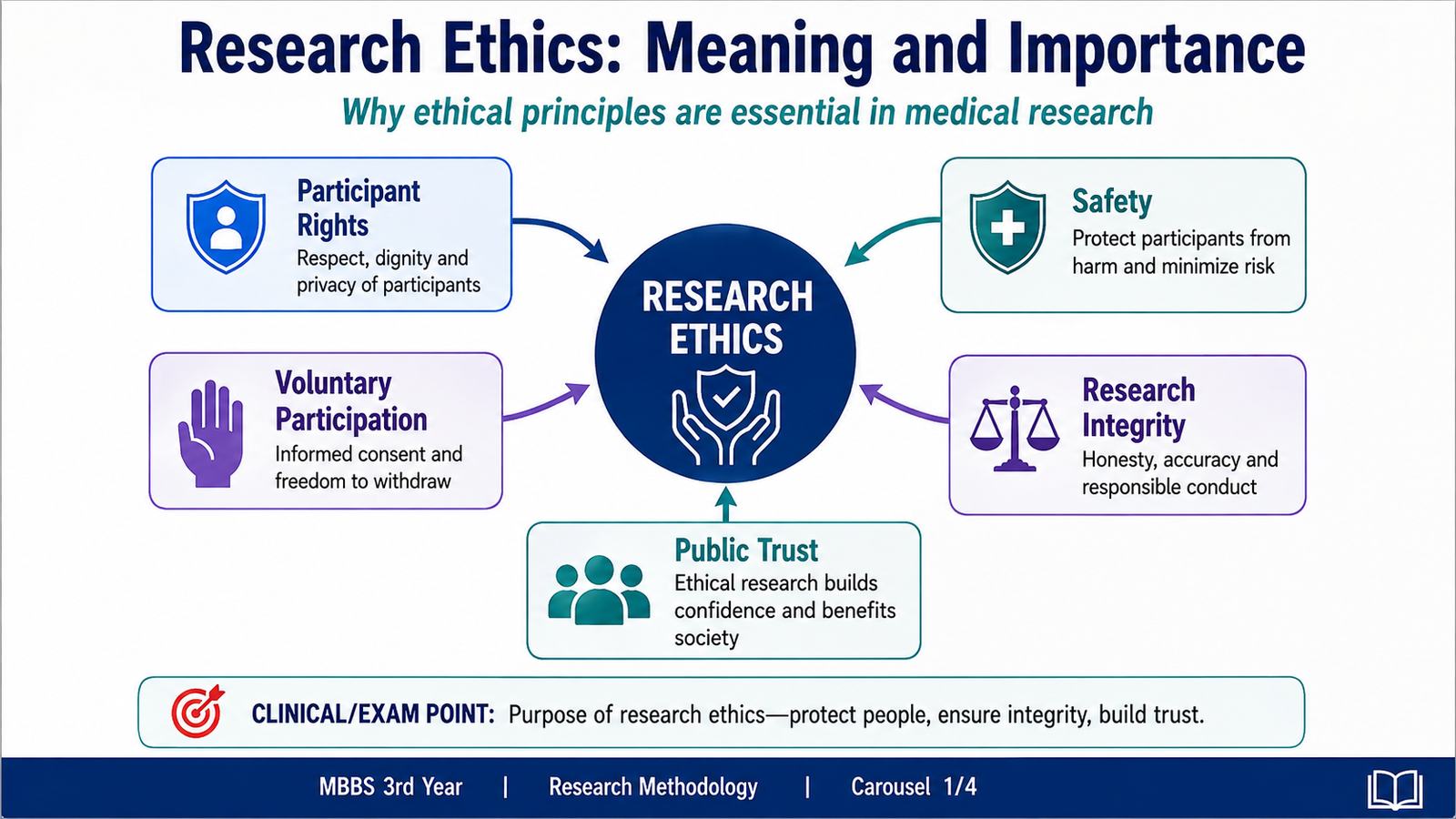
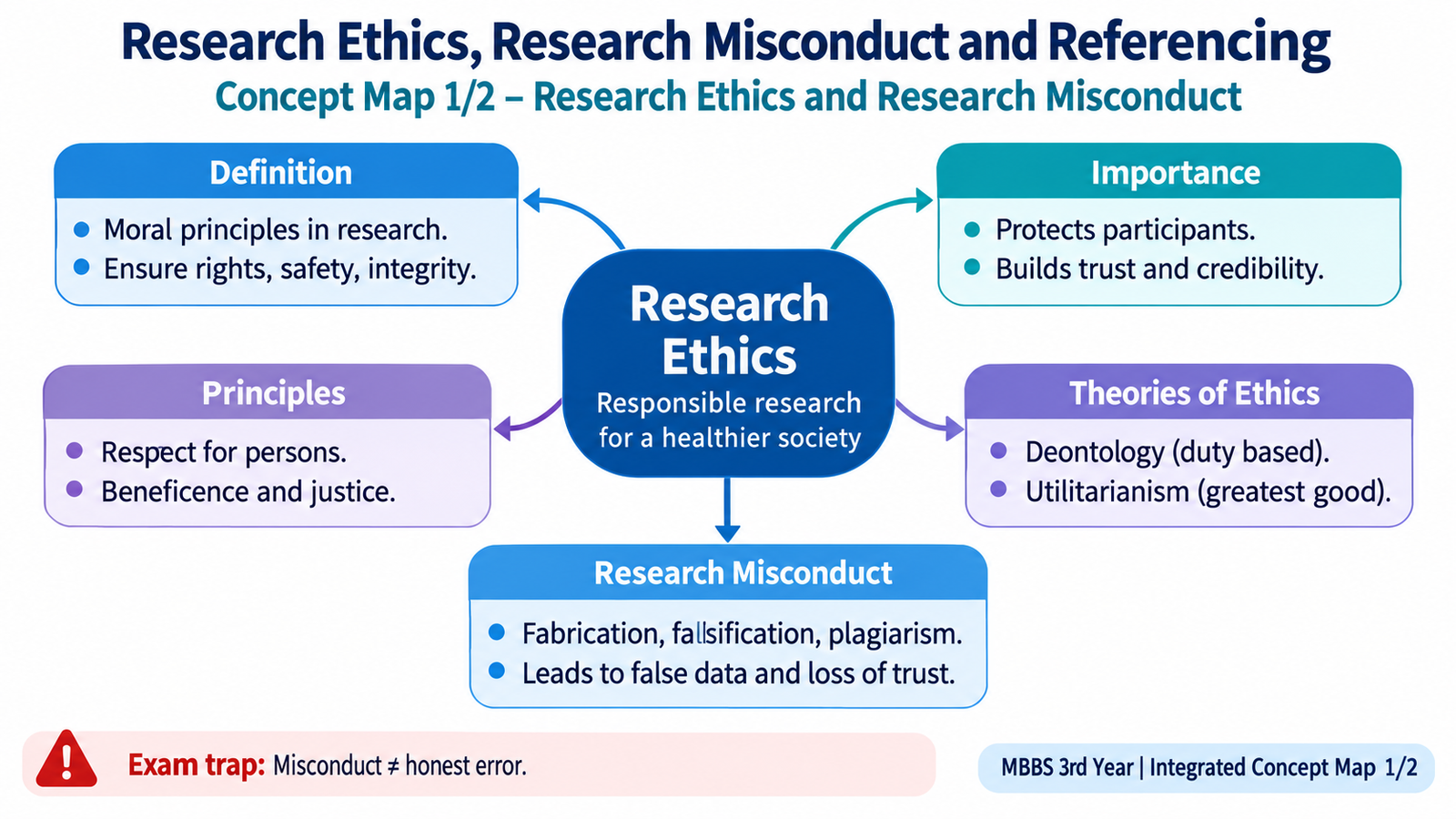
Research ethics refers to the moral principles that guide the planning, conduct and reporting of research. In medical research, ethics is particularly important because research may involve human participants, their personal information or biological samples. Research ethics is important because it:
- Protects the rights, dignity and safety of research participants.
- Ensures that participation is voluntary and based on adequate information.
- Promotes honesty and integrity in research.
- Reduces unnecessary harm and exploitation.
- Improves public trust in medical research.
B. Principles and Theories of Research Ethics
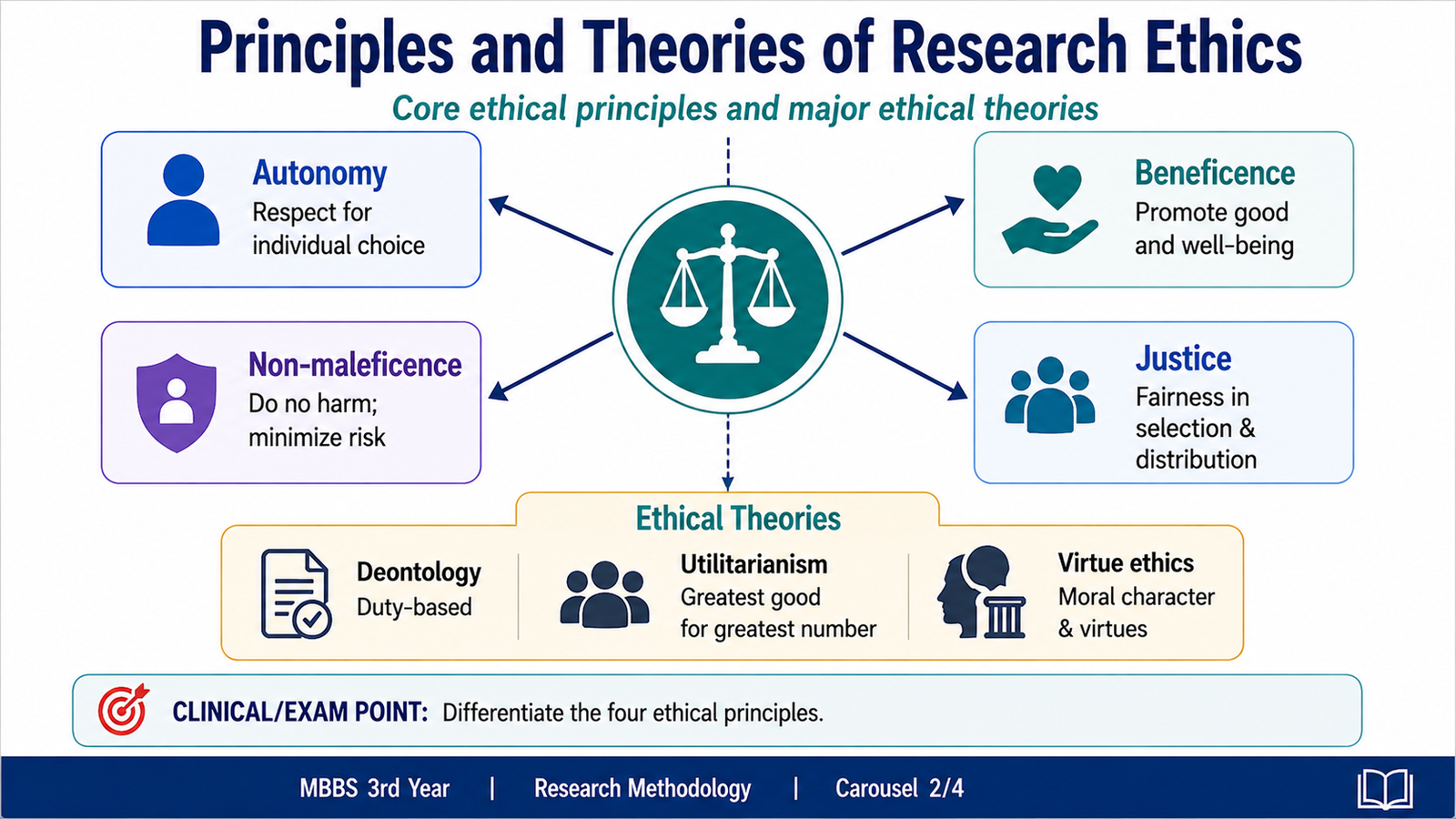
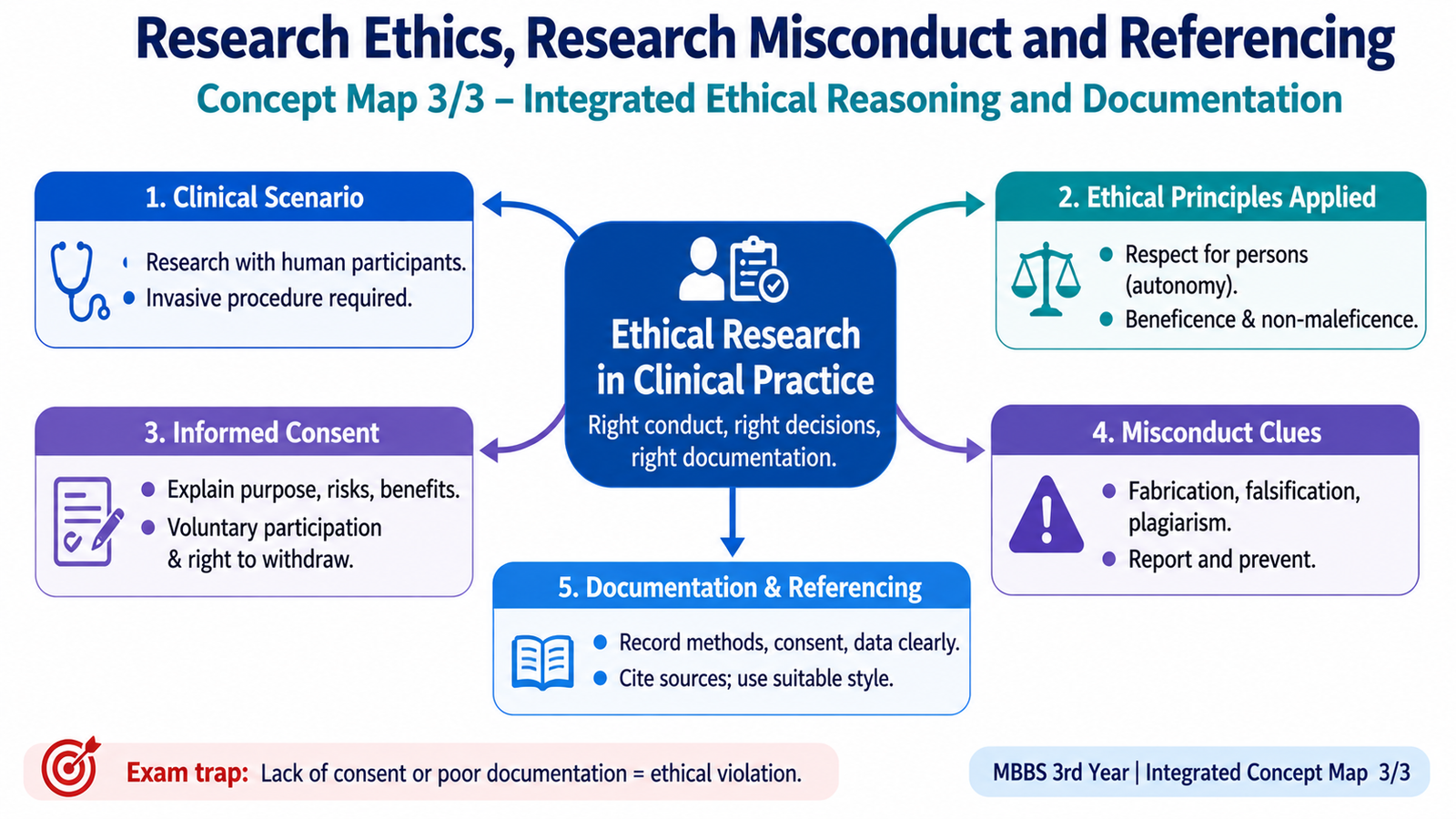
Ethical research is based on a few central principles. These help researchers decide whether a study respects participants and whether its benefits justify its risks.
- Autonomy: Respect the participant’s right to make an informed and voluntary decision.
- Beneficence: Research should aim to produce benefit.
- Non-maleficence: Avoid or minimize unnecessary harm.
- Justice: Benefits and burdens of research should be distributed fairly.
Major ethical theories include:
- Deontology: Focuses on duties, rules and moral obligations.
- Utilitarianism: An action is judged mainly by its consequences and overall benefit.
- Virtue ethics: Focuses on the moral character and virtues of the person performing the action.
C. Research Misconduct
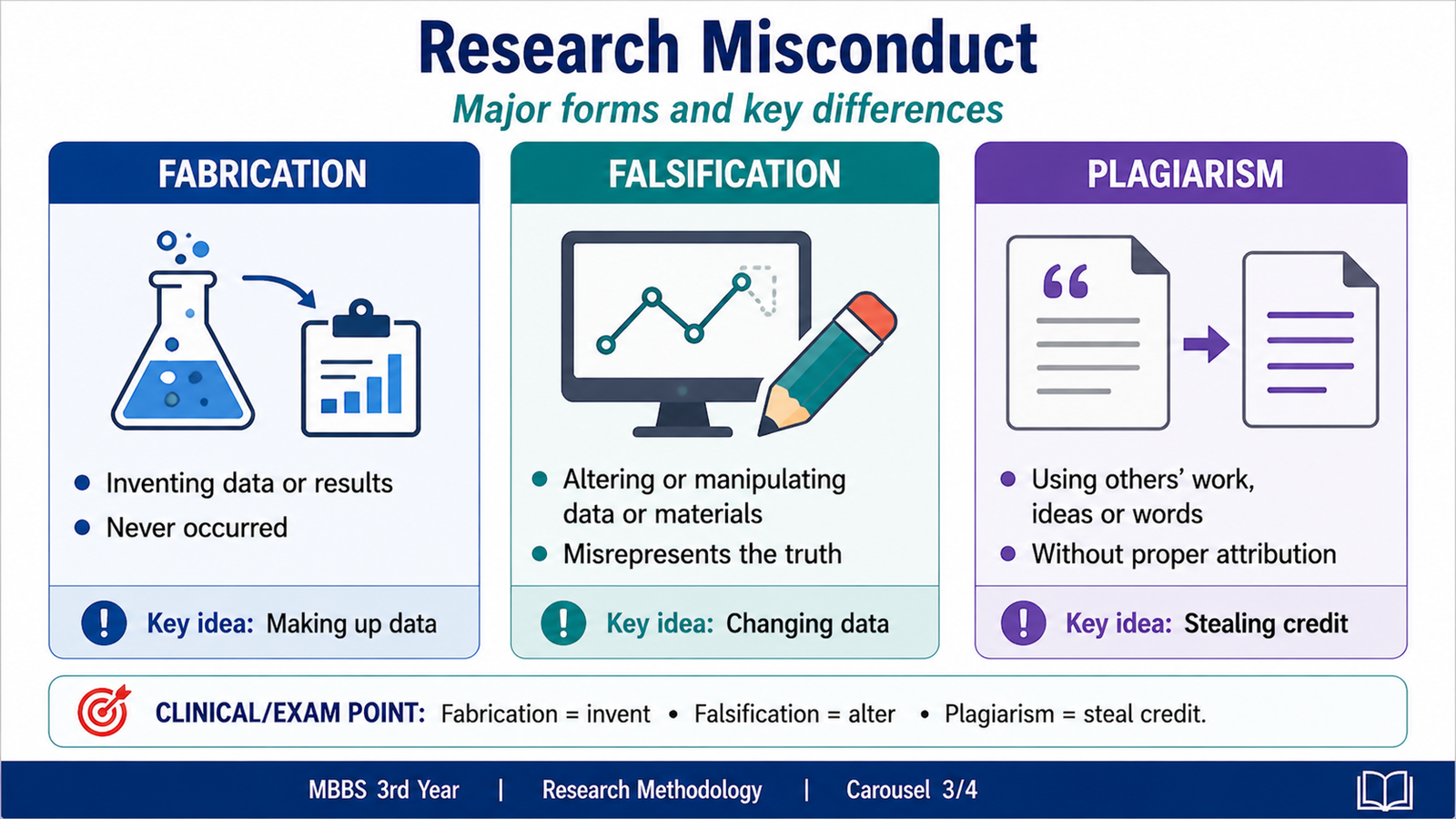
Research misconduct means serious dishonest or unacceptable behavior during research or its reporting. The three classic forms are fabrication, falsification and plagiarism.
| Misconduct | Meaning |
|---|---|
| Fabrication | Making up data or results that never actually existed. |
| Falsification | Manipulating research materials, methods or data so that the research record becomes inaccurate. |
| Plagiarism | Using another person’s words, ideas or work without appropriate acknowledgment. |
D. Referencing in Research
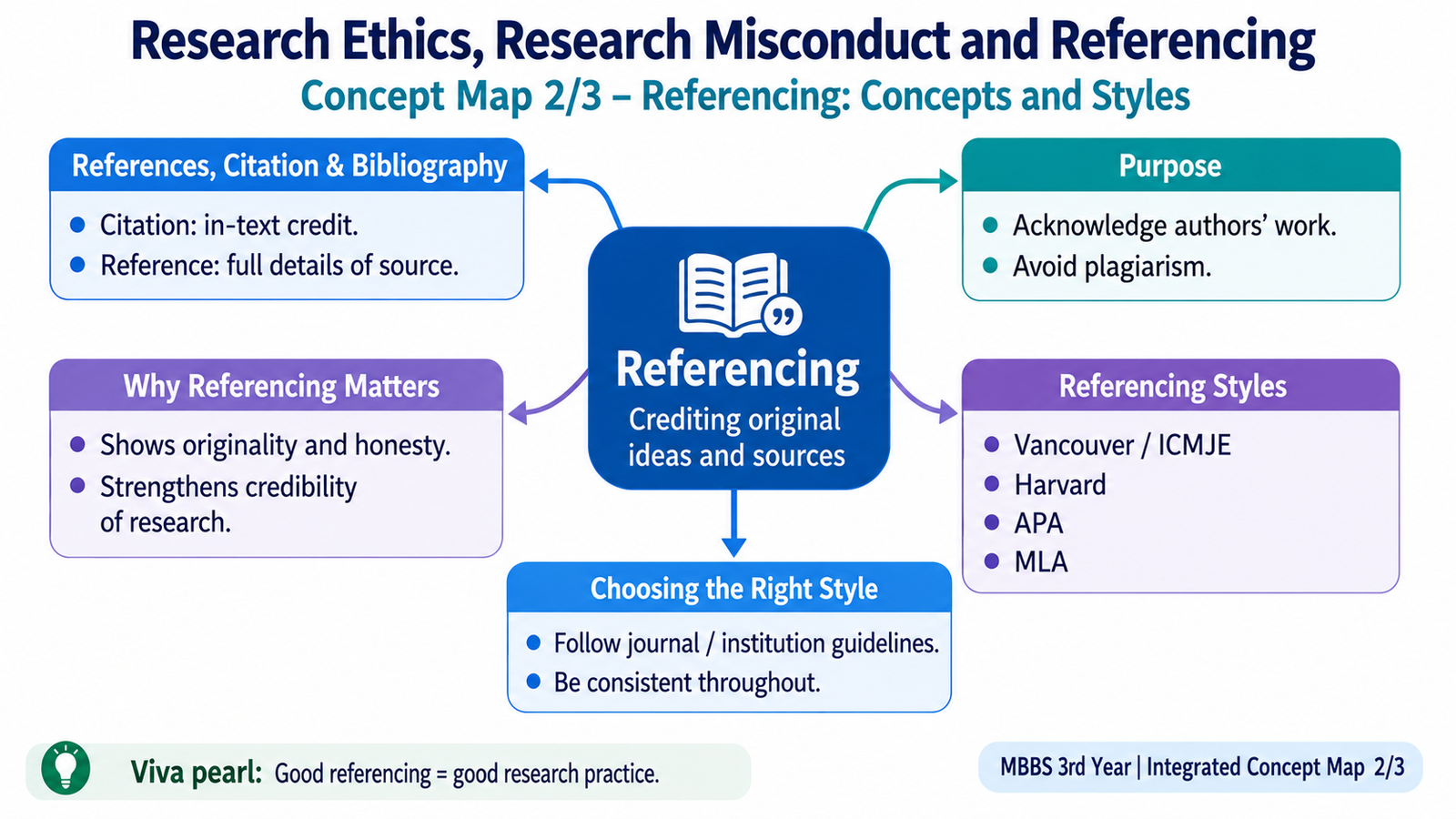
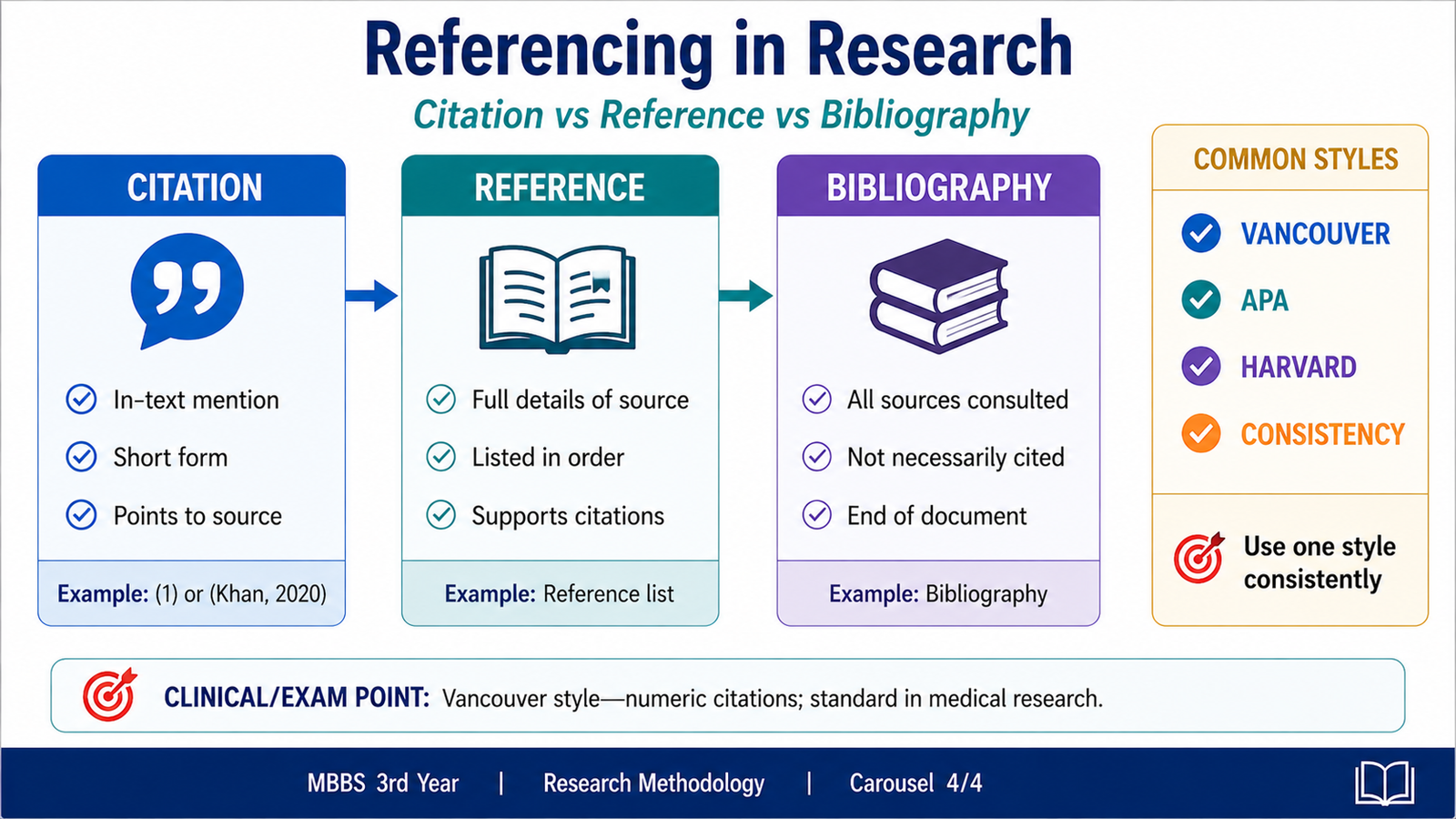
Referencing identifies the sources used in research and gives appropriate credit to the original authors. It also allows readers to locate and verify the sources.
| Term | Meaning |
|---|---|
| Citation | A brief indication within the text that information came from another source. |
| Reference | Full details of a source that has been cited in the work. |
| Bibliography | A broader list of sources consulted during preparation, which may include sources not directly cited. |
Common referencing styles include:
- Vancouver — commonly used in medicine and biomedical sciences; uses numbered citations.
- APA — commonly uses an author-date system.
- Harvard — also generally uses an author-date approach.
The referencing style should be selected according to the requirements of the university, research project, journal or institution. Once a style is selected, it should be used consistently throughout the work.
⭐ AIM High-Yield Review
- Research ethics guides the ethical planning, conduct and reporting of research.
- The major principles are autonomy, beneficence, non-maleficence and justice.
- Deontology emphasizes duties and rules.
- Utilitarianism emphasizes consequences and overall benefit.
- Virtue ethics emphasizes moral character.
- Fabrication = making up data.
- Falsification = manipulating data or the research process.
- Plagiarism = using another person’s work without proper acknowledgment.
- Citation appears within the text; a reference provides full source details.
- A bibliography may include material consulted but not directly cited.
- Vancouver is commonly used in medical and biomedical writing.
- Use the referencing style required by the institution, project or journal and apply it consistently.
🎥 Video Learning — Research Ethics & Research Misconduct
Watch this short supplementary video to strengthen your understanding of plagiarism, fabrication and falsification in research.