
A. Child Labour — Definition and Core Concept
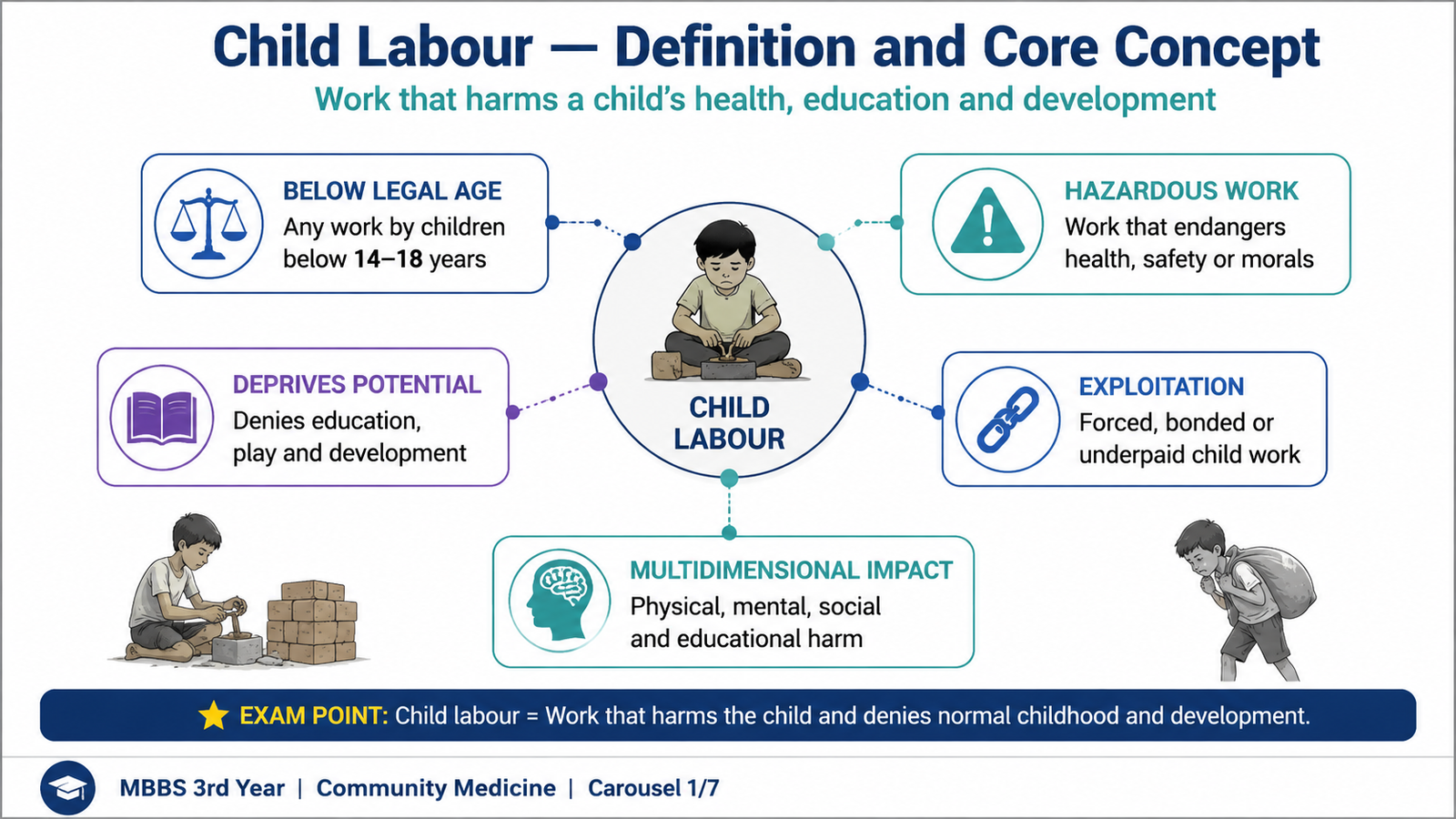
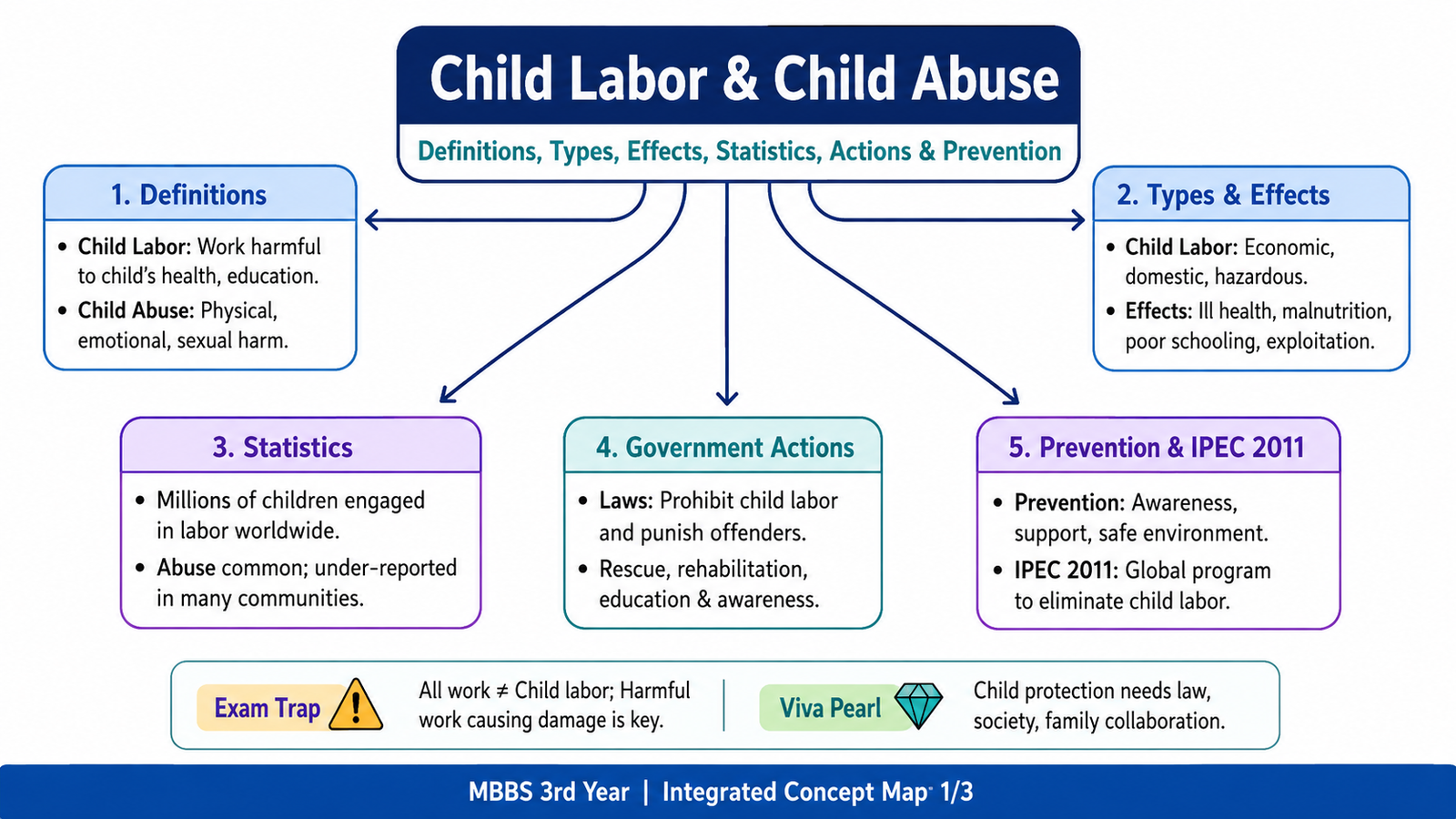
Child labour refers to work performed by a child that is inappropriate for the child’s age, interferes with education, or is harmful to physical, mental, social or moral development. The important point is that not every activity performed by a child is child labour. Simple age-appropriate household tasks or permitted light work that does not harm health or schooling may be part of normal development.
Work becomes child labour when the child is too young for the work, when the work is dangerous, when it requires excessive hours, or when it prevents the child from attending school, studying, resting and developing normally. Therefore, child labour is both a social problem and a public-health problem.
Child work that is safe, age-appropriate and does not interfere with schooling is not automatically child labour. Harmful, hazardous, exploitative or age-inappropriate work is child labour.
Poverty, lack of access to education, unemployment or low income of adults, family debt, social inequality, displacement and weak enforcement of labour protections can increase the likelihood that children enter labour. Once a child leaves school to work, poor education may later limit employment opportunities, allowing poverty to continue into the next generation.
B. Types of Child Labour and Their Effects
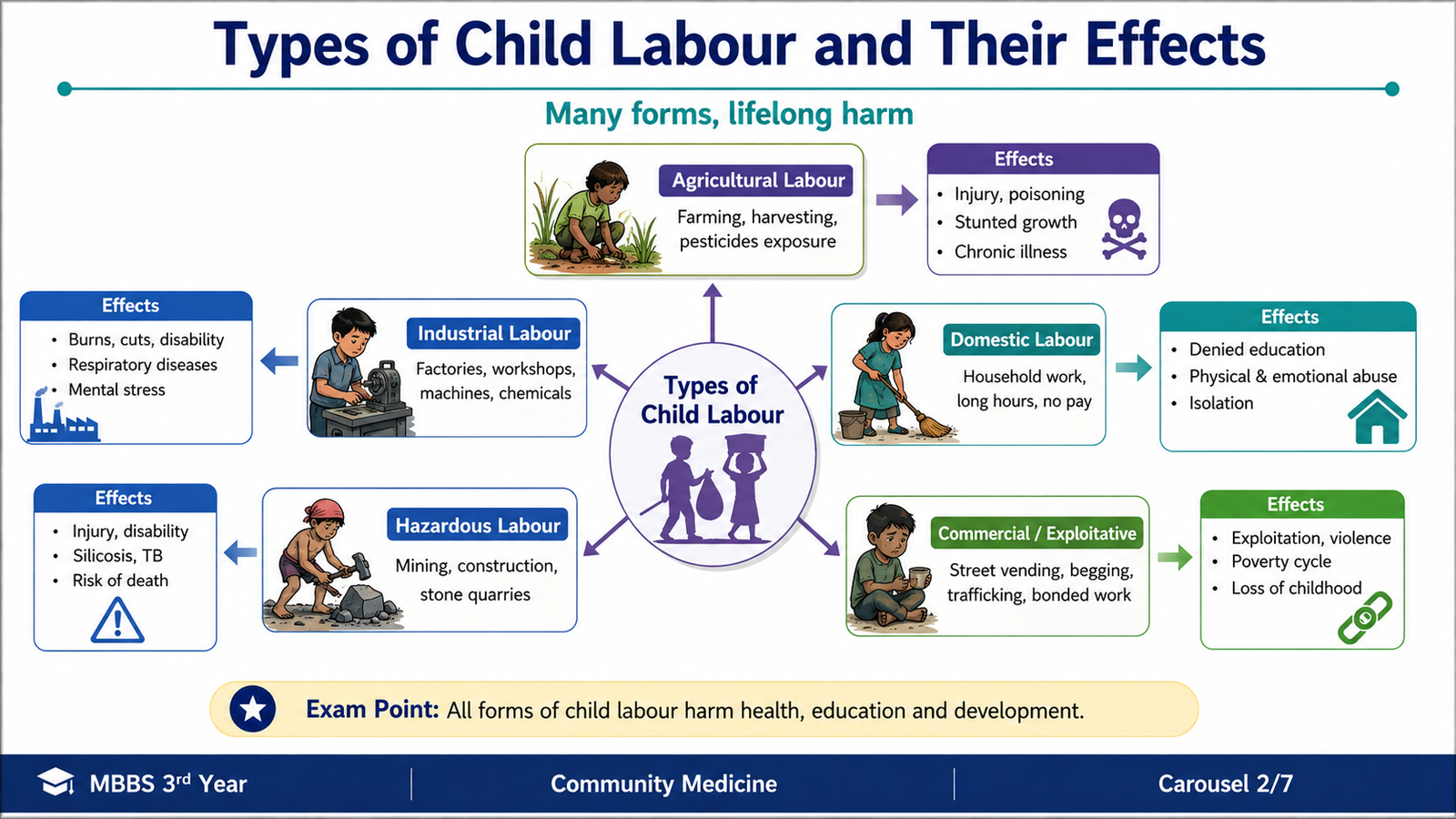
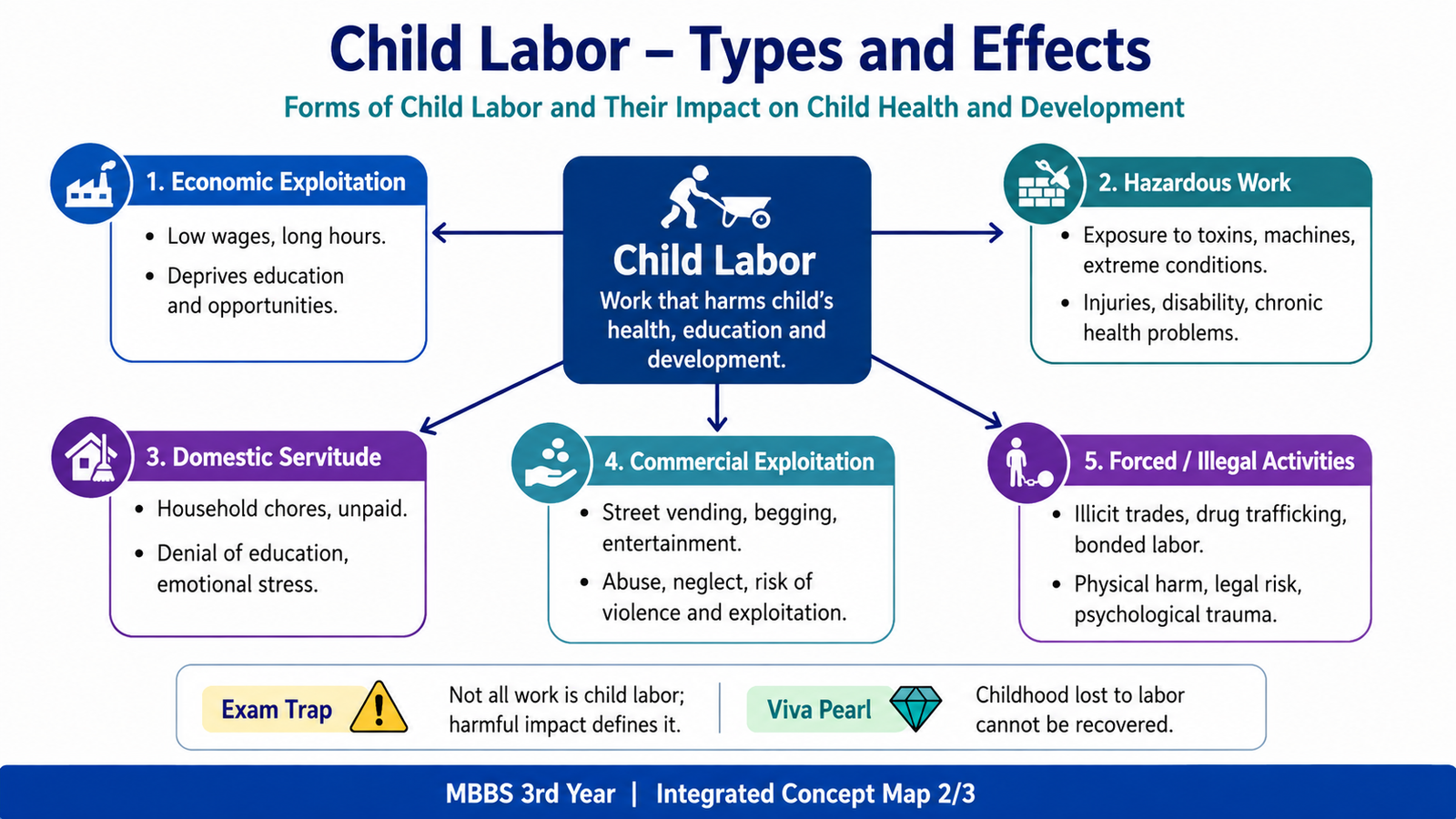
Child labour occurs in many settings. Some children work openly in agriculture, factories or markets, while others work in homes, workshops or informal businesses where their work may be difficult to detect. The severity depends not only on the type of job but also on the child’s age, working hours, exposure to hazards and degree of exploitation.
Important forms
- Agricultural labour: farming, livestock work and related activities.
- Industrial labour: manufacturing, workshops, construction, mining and similar work.
- Service-sector labour: shops, restaurants, street vending and other services.
- Domestic child labour: work in another person’s household, particularly when excessive, exploitative or hazardous.
- Hazardous child labour: work likely to damage the child’s health, safety or morals.
- Forced or bonded labour: work performed under coercion, debt or restriction of freedom.
- Worst forms of child labour: slavery-like practices, trafficking, forced labour, commercial sexual exploitation, use of children in illicit activities and hazardous work.
Why child labour is harmful
Children are still growing physically and psychologically. The same occupational exposure that may be tolerated by an adult can therefore produce greater harm in a child. Long working hours also reduce time available for sleep, schooling, recreation and normal social development.
- Physical effects: injuries, burns, fractures, chronic pain, exhaustion and impaired growth.
- Occupational exposure: dust, chemicals, pesticides, heat, noise, dangerous machinery or heavy loads.
- Educational effects: absenteeism, poor academic performance and school dropout.
- Psychological effects: anxiety, fear, low self-esteem and emotional distress, especially in exploitative environments.
- Social effects: reduced opportunity for play, peer interaction and normal childhood development.
- Long-term effects: low educational attainment may limit future employment and perpetuate poverty.
C. Statistics and Public-Health Burden of Child Labour
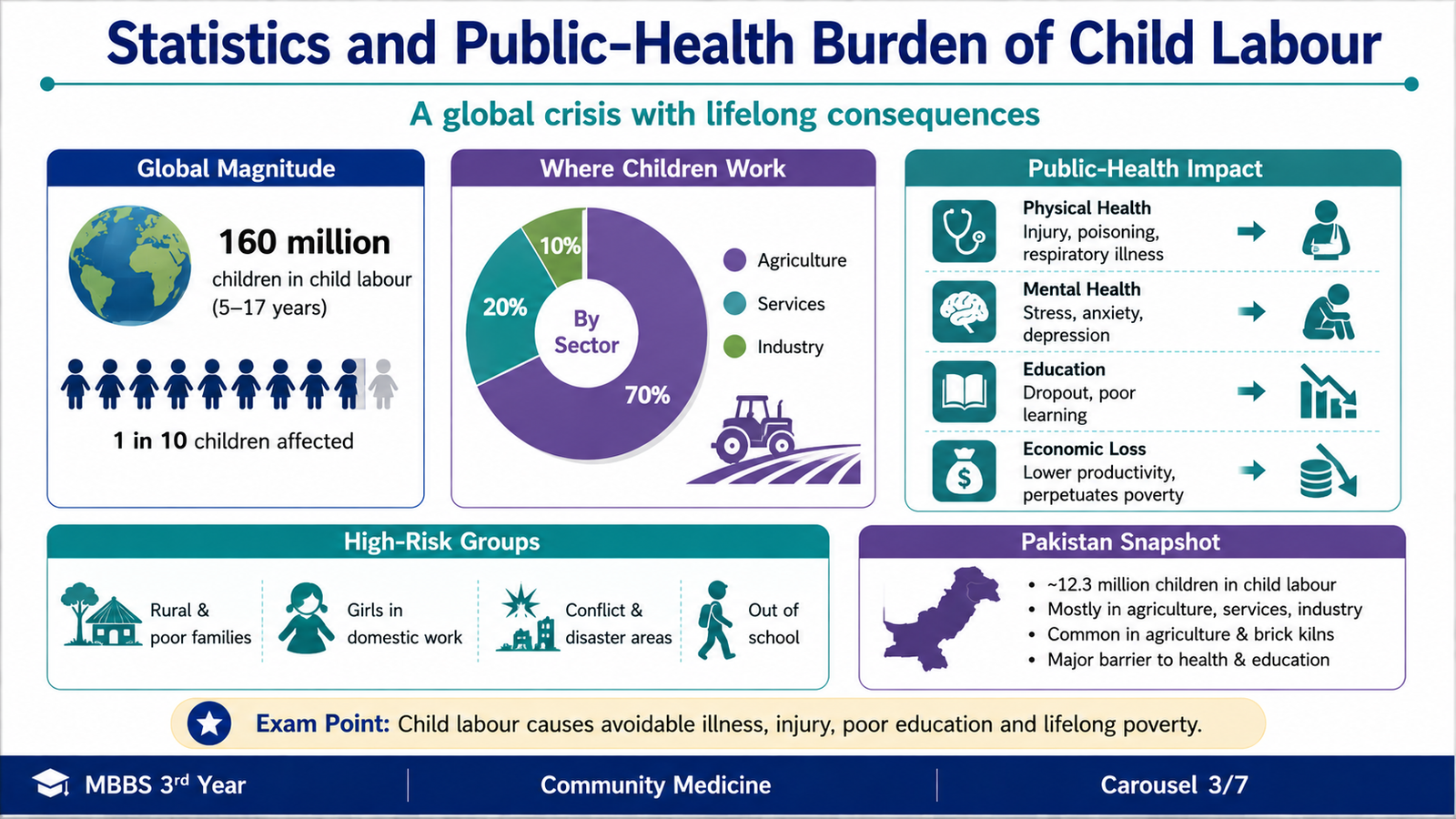
Child labour remains a major worldwide problem, although substantial progress has occurred over recent decades. Statistics must be interpreted carefully because estimates depend on the age group studied, the definition of child labour and the survey methods used.
| Indicator | Current estimate | Meaning |
|---|---|---|
| Children in child labour worldwide | 138 million | About 7.8% of children aged 5–17 years |
| Children in hazardous work | 54 million | Work likely to harm health, safety or morals |
| Largest occupational sector | Agriculture | Approximately 61% of global child labour |
The ILO and UNICEF 2024 global estimates reported about 138 million children in child labour, including approximately 54 million in hazardous work. The number decreased from 2020, but the global goal of eliminating child labour by 2025 was not achieved. :contentReference[oaicite:0]{index=0}
Agriculture accounts for the largest proportion of child labour globally, followed by services and industry. This is important for prevention because many affected children work in rural, family-based or informal settings rather than in easily inspected formal workplaces. :contentReference[oaicite:1]{index=1}
Pakistan also has an important child-labour burden. UNICEF’s Pakistan country data currently lists approximately 11% of children aged 5–17 years as engaged in child labour when economic activities and relevant household chores are considered. Recent provincial and Islamabad Capital Territory child-labour surveys have also been brought together to provide a broader national picture. :contentReference[oaicite:2]{index=2}
D. Government Action Against Child Labour and IPEC
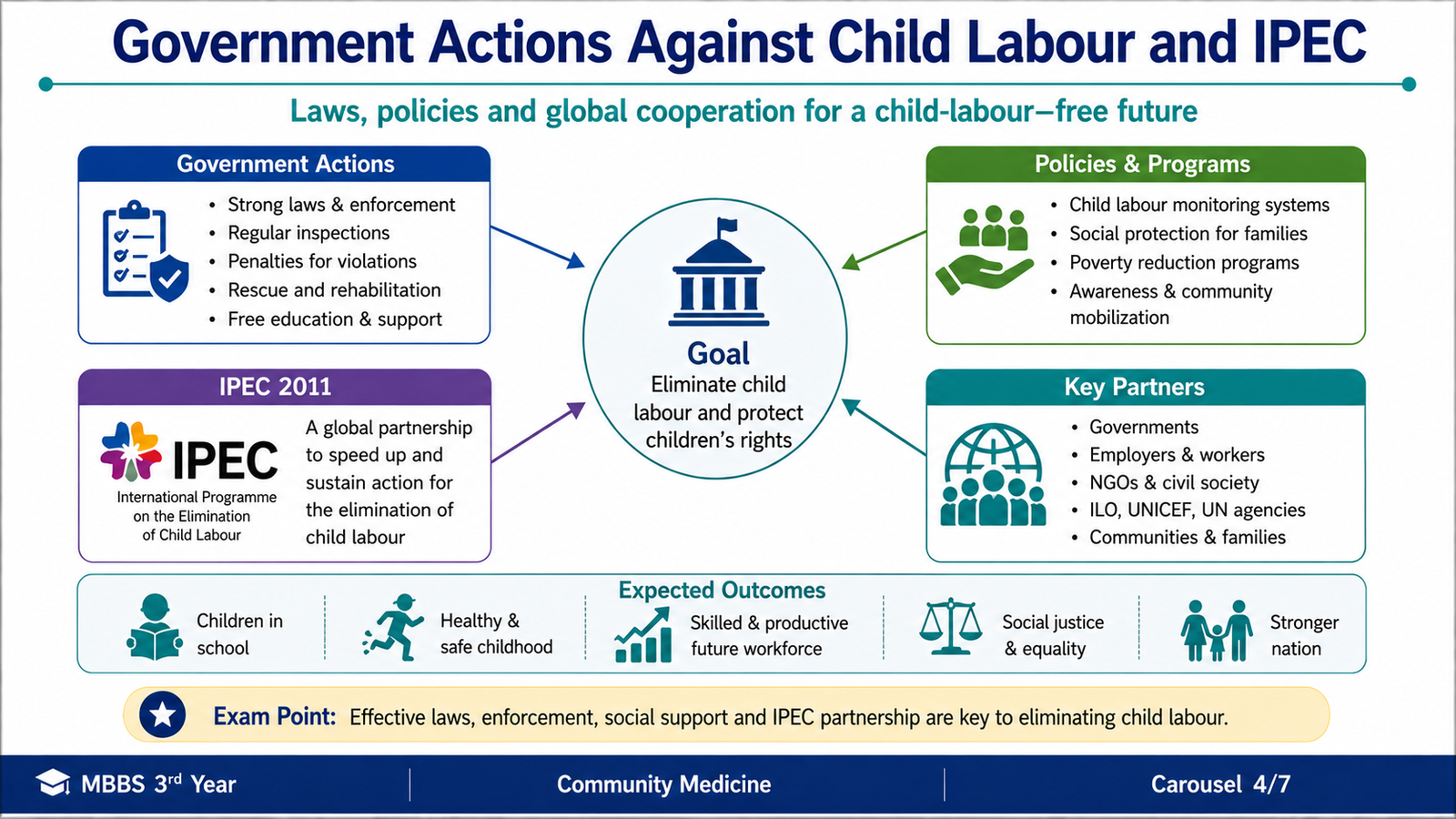
Child labour cannot usually be eliminated by simply removing a child from a workplace. The conditions that led the child to work—such as poverty, interrupted education, family debt and lack of adult employment—must also be addressed. Effective government action therefore combines legislation, enforcement, education, social protection and rehabilitation.
Major areas of government action
- Legislation: establishing minimum ages for employment and prohibiting hazardous and exploitative work.
- Labour inspection: identifying workplaces where children are employed illegally or exposed to hazards.
- Compulsory education: improving school access and reducing dropout so that work does not replace education.
- Social protection: supporting vulnerable families so that household survival does not depend on children’s earnings.
- Adult employment: promoting decent work and adequate income for parents and caregivers.
- Birth registration: providing reliable proof of age, which helps enforcement of minimum-age protections.
- Data collection: conducting child-labour surveys to identify high-risk populations and occupations.
- Rehabilitation: helping children withdrawn from hazardous labour return to education and normal development.
In Pakistan, government efforts include constitutional support for free and compulsory education, provincial child-labour legislation and enforcement activities, labour departments, child and bonded-labour units, surveillance mechanisms and policy coordination. The National Strategic Framework to Eliminate Child and Bonded Labour has also provided a framework for provincial action. :contentReference[oaicite:3]{index=3}
IPEC
IPEC stands for the International Programme on the Elimination of Child Labour. It is an International Labour Organization programme created to strengthen countries’ ability to prevent and eliminate child labour and to promote coordinated international action against it.
A useful correction for examination understanding is that IPEC was established in 1992, not in 2011. References to “IPEC 2011” in learning material generally refer to IPEC activities, reports or guidance published around 2011. IPEC’s work involved governments, workers’ and employers’ organizations, NGOs, communities and other partners. :contentReference[oaicite:4]{index=4}
IPEC = International Programme on the Elimination of Child Labour; its overall goal is the progressive elimination of child labour through national capacity building and coordinated action.
E. Child Abuse — Definition and Forms
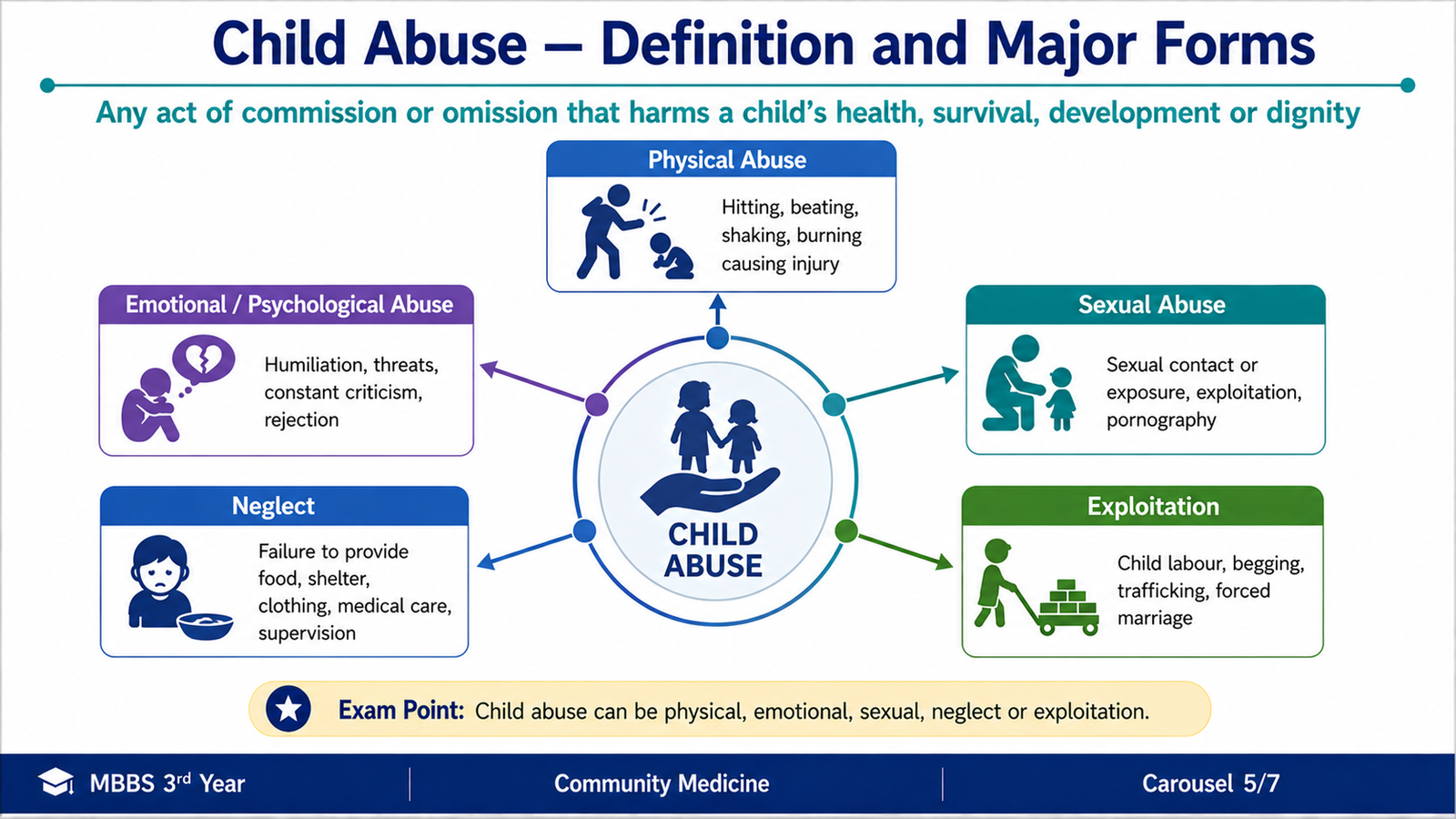
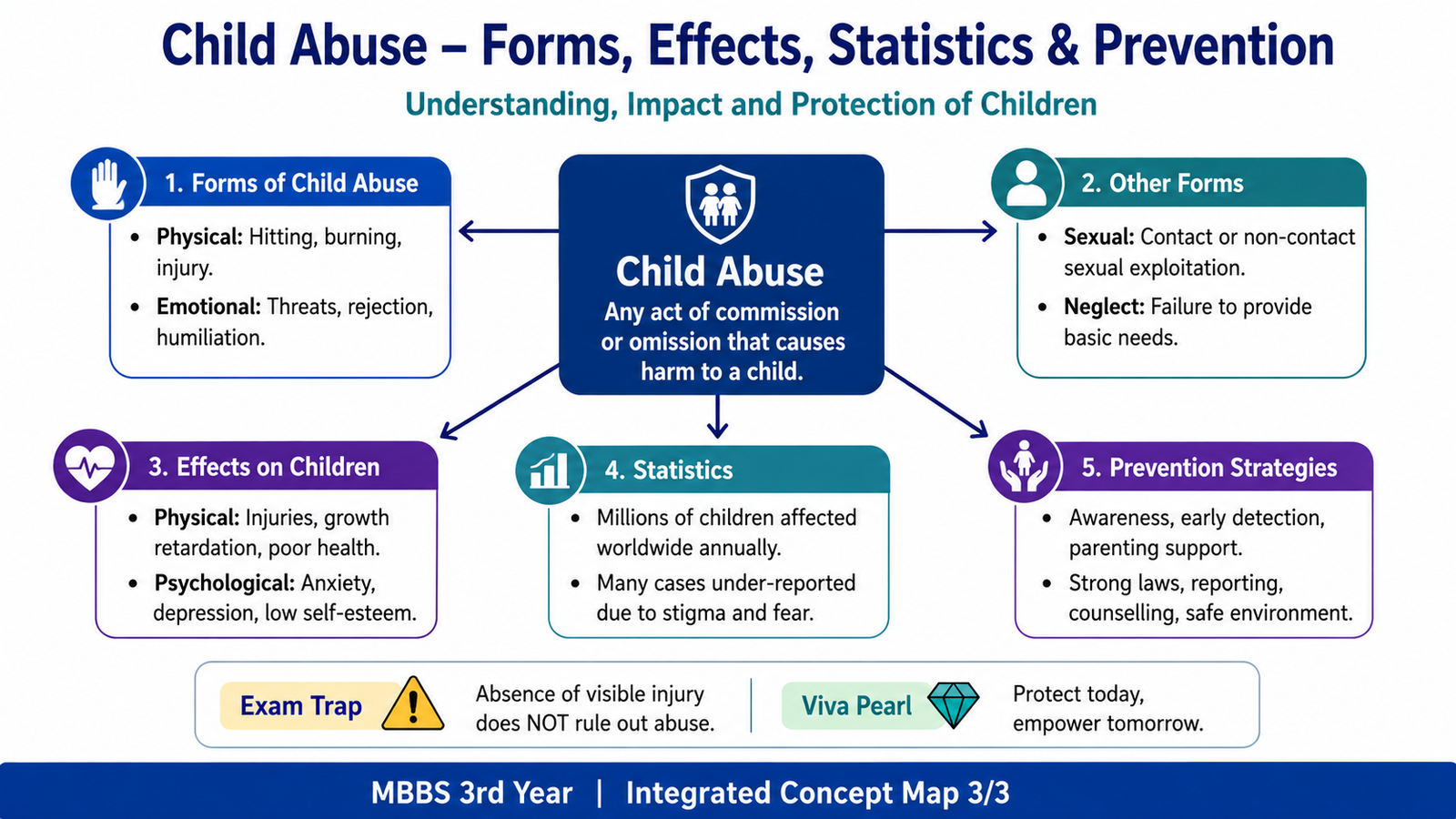
Child abuse or child maltreatment refers to abuse, neglect or exploitation of a person under 18 years that causes, or has the potential to cause, harm to the child’s health, survival, development or dignity. It commonly occurs in a relationship in which an adult or another person has responsibility, trust or power over the child.
Abuse is not limited to visible physical injury. A child may be harmed physically, emotionally or sexually, or may be harmed because essential care and protection are repeatedly withheld.
Major forms of child abuse
| Form | Core concept |
|---|---|
| Physical abuse | Intentional physical force that causes or risks injury. |
| Emotional or psychological abuse | Repeated humiliation, threats, rejection, intimidation or other behaviour that damages emotional development. |
| Sexual abuse | Involving a child in sexual activity that the child cannot understand, consent to or is not developmentally prepared for. |
| Neglect | Failure to provide necessary nutrition, shelter, health care, education, supervision, protection or emotional care. |
| Exploitation | Using a child for another person’s benefit in a way that harms the child’s rights or development. |
These forms frequently overlap. For example, a sexually exploited child may simultaneously suffer physical violence, emotional trauma and neglect. Therefore, health and social-care workers should consider the child’s overall safety rather than focusing only on a single injury.
F. Effects and Statistics of Child Abuse
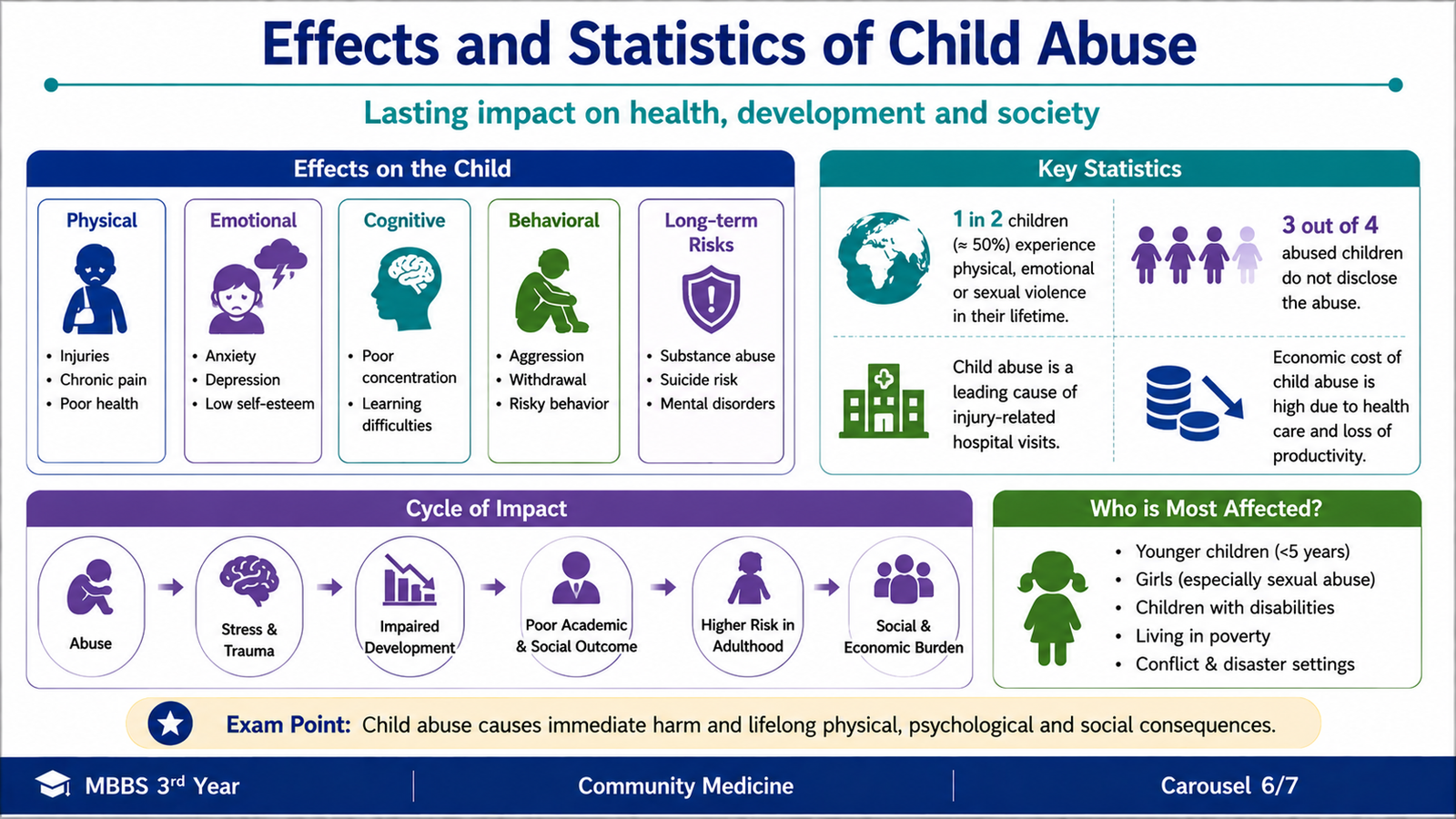
Child abuse can affect almost every aspect of development. Immediate effects may include injury, pain, fear or emotional distress. Repeated or severe maltreatment may alter the child’s psychological development, interfere with schooling and produce health consequences that remain into adulthood.
Important effects
- Physical: bruises, wounds, fractures, burns, head injury, disability and, in severe cases, death.
- Psychological: anxiety, depression, fear, low self-esteem and post-traumatic stress symptoms.
- Behavioural: aggression, withdrawal, disturbed behaviour and later risk-taking behaviour.
- Educational: difficulty concentrating, poor school performance, absenteeism and dropout.
- Developmental: chronic severe stress can disturb normal emotional, cognitive and social development.
- Long-term health: childhood maltreatment is associated with increased risk of mental-health problems and harmful behaviours later in life.
- Social consequences: impaired relationships, social isolation and possible continuation of violence from one generation to another.
Magnitude of the problem
Child abuse is greatly underreported because many children are afraid to disclose abuse, depend on the abuser, do not recognize what is happening, or lack access to a trusted adult or service.
WHO estimates that globally up to one billion children aged 2–17 years experience physical, sexual or emotional violence or neglect within a year. This makes violence against children one of the largest preventable threats to child health and development worldwide. :contentReference[oaicite:5]{index=5}
WHO also reports that approximately 6 in 10 children younger than five years regularly experience physical punishment and/or psychological violence from parents or caregivers. Estimates of sexual abuse also demonstrate a substantial lifetime burden. :contentReference[oaicite:6]{index=6}
Reported cases represent only part of the true burden because child maltreatment is commonly hidden and underreported.
G. Prevention of Child Abuse
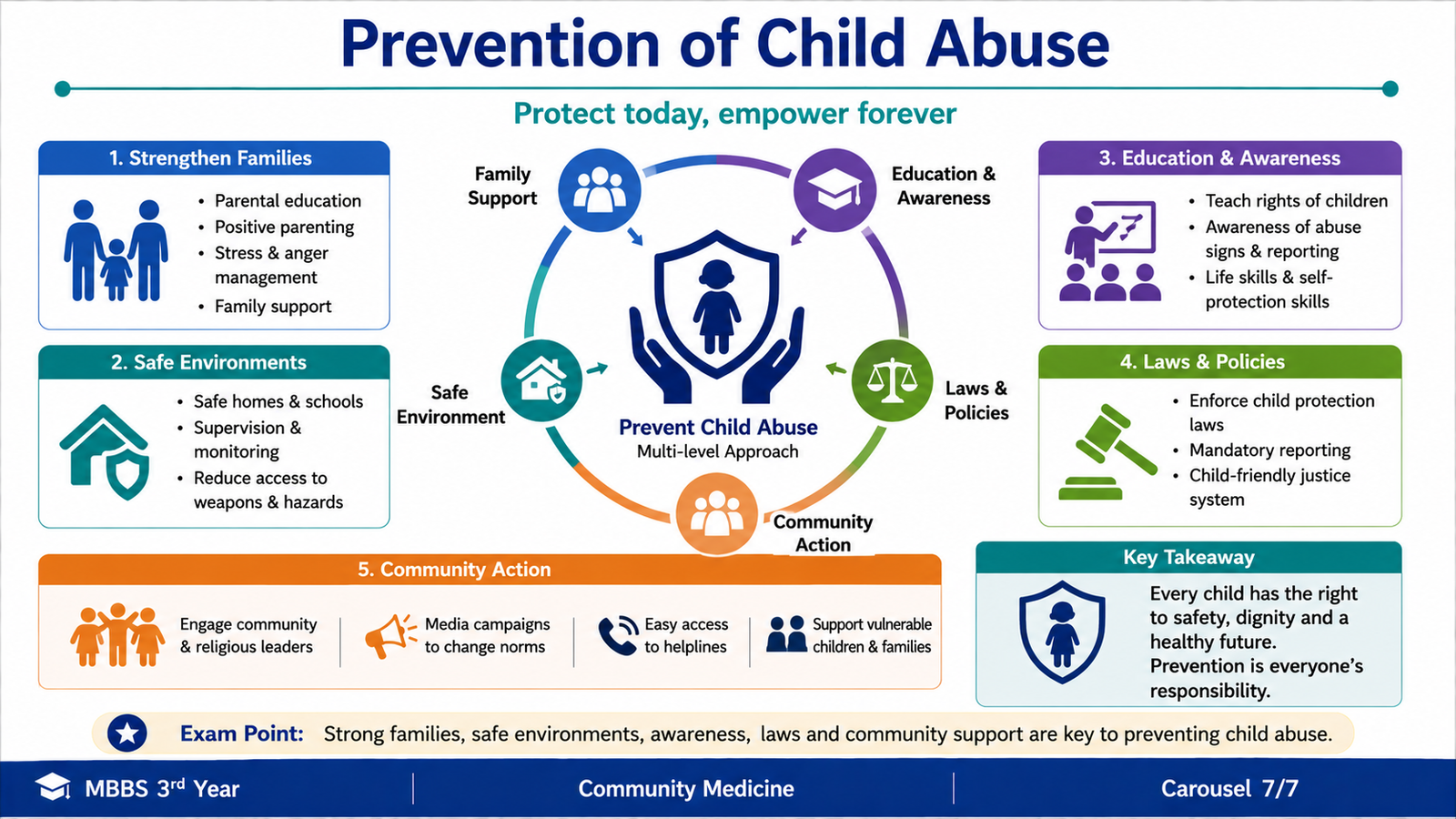
Child abuse is preventable, but prevention requires action at several levels. Focusing only on the child after abuse has occurred is not enough. Effective prevention also supports parents, strengthens families, creates safer schools and communities, improves legal protection and ensures that health, education and social services can identify and respond to children at risk.
1. Primary prevention — prevent abuse before it occurs
- Educate parents about normal child development and positive, non-violent discipline.
- Provide support to families affected by poverty and severe social stress.
- Promote safe and supportive school environments.
- Educate children about personal safety in an age-appropriate manner.
- Reduce social acceptance of violence and humiliating punishment.
- Develop and enforce laws and policies that protect children from violence and exploitation.
- Improve birth registration and access to education and social protection.
2. Secondary prevention — identify children at increased risk
Secondary prevention aims to detect unsafe situations early, before severe or repeated harm occurs.
- Train health-care workers and teachers to recognize possible maltreatment.
- Identify families experiencing severe psychosocial stress.
- Provide early family support and counselling.
- Establish safe referral pathways between health, social welfare, education and child-protection services.
- Take concerning disclosures or unexplained injuries seriously and assess the child’s safety.
3. Tertiary prevention — reduce harm after abuse
- Ensure immediate safety of the child.
- Treat physical injuries and other health consequences.
- Provide appropriate psychological and social support.
- Prevent repeated exposure to the abusive environment.
- Support educational and social rehabilitation.
- Coordinate care with appropriate child-protection and legal services.
- Provide continuing follow-up where required.
WHO emphasizes a combination of stronger protective laws, positive parenting, safer schools and communities, family support and improved recognition and response by professionals. Prevention is most effective when health, education, social welfare, legal services and communities work together. :contentReference[oaicite:7]{index=7}
Protect the child, strengthen the family, reduce exposure to violence, detect risk early and provide coordinated support.
Child Labour and Child Abuse
Watch these short videos after completing the learning material to reinforce the public-health concepts of child labour, child protection and prevention of violence against children.
Say No to Child Labour and Yes to Education
This International Labour Organization video highlights hazardous child labour, its effects and the importance of withdrawing children from harmful work and supporting their education.
Source: International Labour Organization (ILO)
Ending Violence Against Children Is Possible
This UNICEF video reinforces prevention of violence against children through family support, safe schools, protective services and coordinated community action.
Source: UNICEF